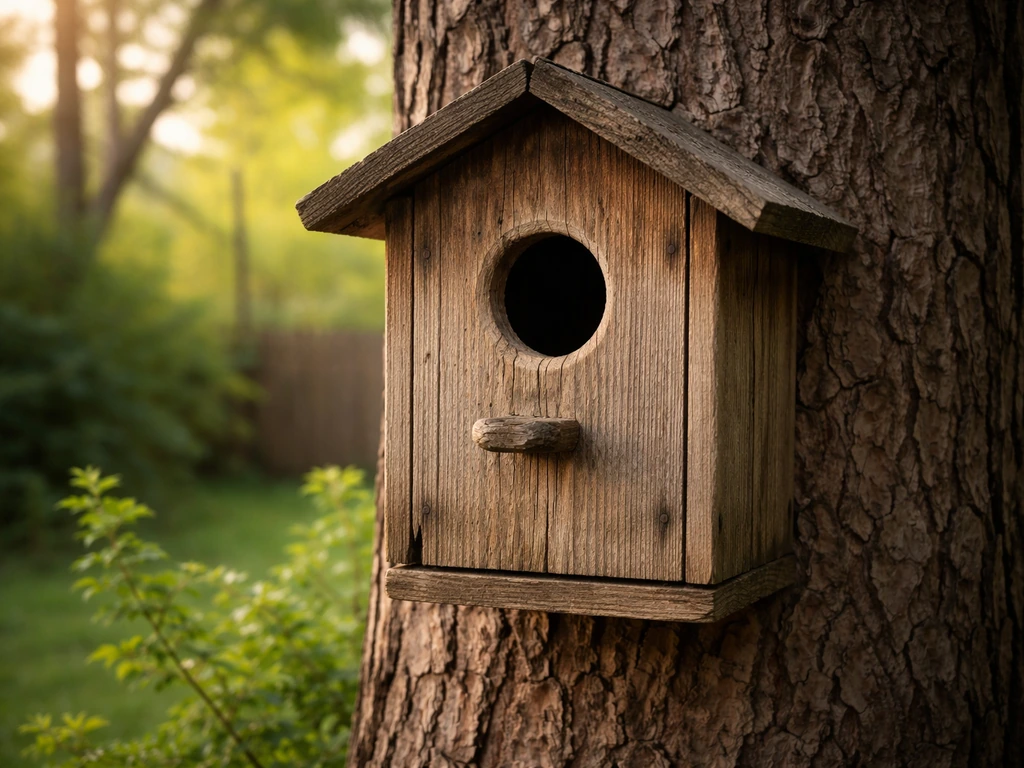
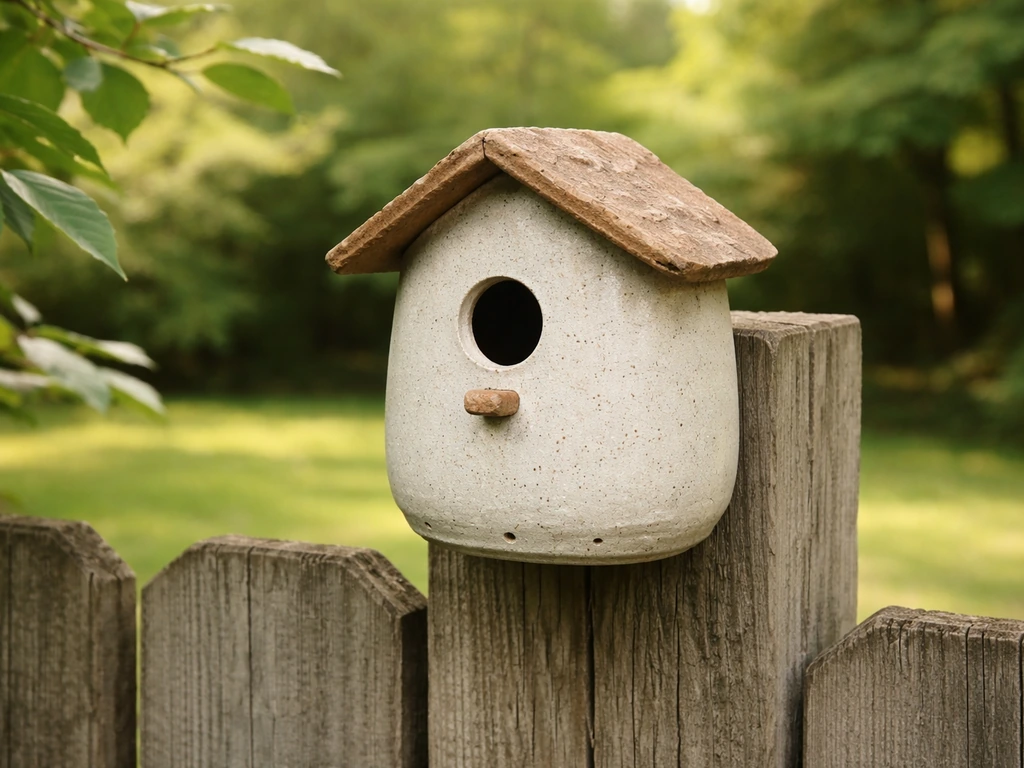
Yes, birds will use ceramic bird houses, but only if the house meets their actual nesting requirements. If you are wondering where to buy one, many people start by checking major retailers like Home Depot for ceramic bird houses. Material is not the deciding factor. What matters is entrance-hole size, interior dimensions, placement height, predator protection, ventilation, drainage, and whether the interior stays at a safe temperature. Ceramic can work, but it comes with one significant caveat: it retains heat more than wood and can make the interior dangerously hot in direct sun. Get the placement and setup right, and cavity-nesting birds will move in just as readily as they would with a wooden box.
Do Birds Like Ceramic Bird Houses? How to Get Use
Maya Thompson
11 Jun 2026
How to tell if birds will use your ceramic bird house
Birds choose a nest site based on a simple internal checklist: is the cavity the right size, is the entrance the right diameter, is it in a safe location, and does it feel thermally comfortable? They are not evaluating the aesthetics or the material of the walls. So when a ceramic bird house sits unused through spring and summer, the cause is almost always one of those practical factors rather than some inherent rejection of ceramic.
The clearest sign that your setup is working is prospecting behavior: a bird lands on or near the entrance hole, peers inside, and may enter briefly. Chickadees and wrens will often investigate a box multiple times over several days before committing. Bluebirds tend to approach more deliberately, with the male checking the interior first and then perching nearby while the female inspects. If you are seeing this behavior and the bird still does not nest, something about the interior conditions or immediate environment is failing the inspection. If no bird is visiting at all, the problem is usually placement, hole size, or the absence of suitable habitat nearby.
One useful quick check: stick your hand inside the box on a sunny afternoon and hold it there for ten seconds. If it feels uncomfortably warm or hot, it is too hot for a clutch of eggs or nestlings. This is the most common failure point with ceramic houses in summer, and it is entirely fixable with shade and correct orientation.
What materials birds prefer and why
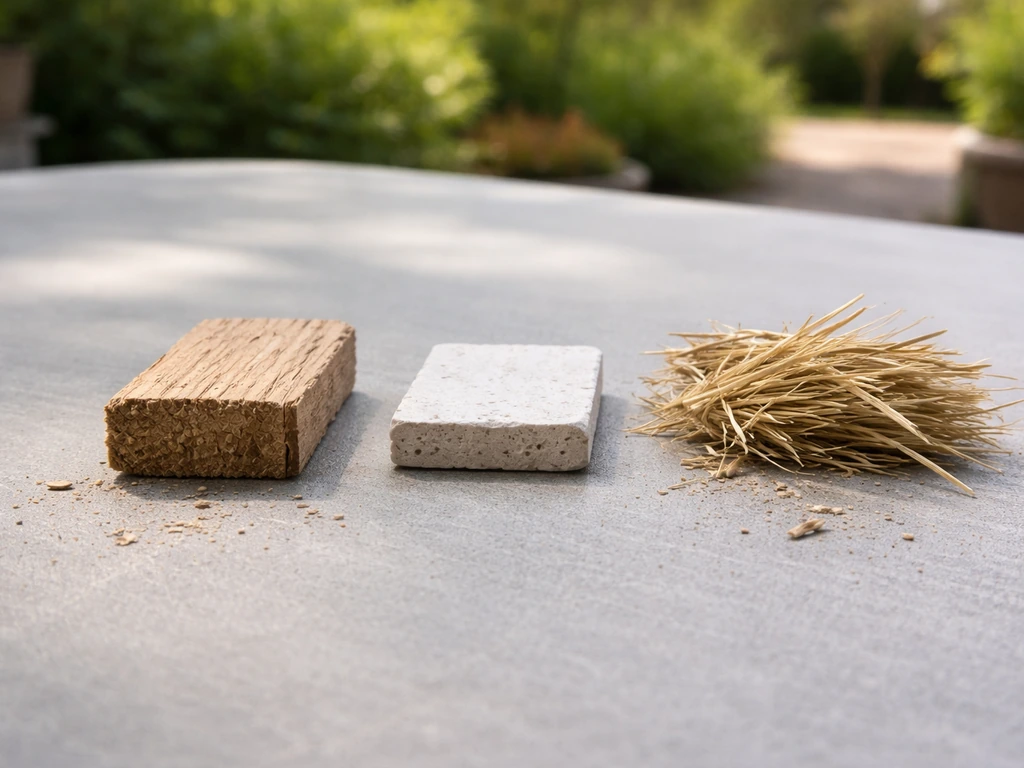
Birds do not have a preference for wood over ceramic in any meaningful behavioral sense. What they respond to is what the material produces: a dark, thermally stable, dry, correctly sized cavity. Wood, particularly untreated cedar or pine, is the benchmark material because it breathes naturally, insulates reasonably well, and stays cooler than ceramic or metal in direct sun. But it is not magic. A poorly ventilated wooden box in full afternoon sun will overheat just as surely as a ceramic one.
| Material | Heat retention | Moisture behavior | Durability | DIY workability | Overall verdict |
|---|---|---|---|---|---|
| Untreated cedar or pine | Low to moderate | Breathes well, dries quickly | Good if sealed at joints | Easy to cut and drill | Best all-around choice |
| Ceramic / pottery | High | Non-porous, can trap humidity without drainage | Excellent if unglazed and thick | Limited without a kiln | Works with shading and good drainage |
| Metal (galvanized or tin) | Very high | Sheds water but condenses inside | Very durable | Moderate | Avoid for nesting boxes |
| Plastic / PVC | Moderate to high | Non-porous, condensation risk | Good | Easy | Acceptable with ventilation, not ideal |
Metal is the one material to avoid outright. It heats up fastest and can reach lethal interior temperatures within minutes of direct sun exposure. NestWatch and most wildlife agencies strongly recommend against it for cavity nesting. Ceramic sits between wood and metal on the heat-retention scale. Thick-walled, unglazed ceramic is meaningfully better than thin-walled or glazed pieces because the extra mass slows heat transfer and the unglazed surface allows a small degree of evaporative cooling. If you are choosing between a decorative thin-glazed ceramic house and a solid wooden one, go with wood. If you already own a well-made ceramic house with thick walls and you manage placement carefully, it can perform well.
NestWatch specifically warns against pressure-treated wood in nest boxes because of the pesticide and fungicide chemicals it contains, so if you are building a companion wooden box for comparison, stick with untreated cedar, pine, or plywood. The same conservation-minded principle applies to ceramic: avoid pieces with interior glazes or painted inner surfaces that could off-gas or trap moisture against eggs and chicks.
Where to place ceramic bird houses for acceptance
Placement is the single highest-leverage variable you control. A mediocre box in the right spot will outperform a perfect box in the wrong one every time. For ceramic specifically, two placement rules are non-negotiable: keep the box out of prolonged direct afternoon sun, and face the entrance hole away from prevailing winds and driving rain. The North American Bluebird Society specifically recommends facing the opening away from direct sun exposure for Eastern Bluebirds, and that guidance holds for virtually all cavity-nesting species.
For most backyard species, the ideal orientation is somewhere between north-facing and east-facing. East-facing gets gentle morning sun that warms the interior slowly and naturally, and avoids the intense heat of western afternoon exposure. North-facing is the safest choice for hot climates. In colder northern regions, a slight southeastern tilt can help birds warm the nest in early spring without overheating in summer.
Height varies by species, but a practical general range for common backyard birds is 5 to 10 feet off the ground. Black-capped Chickadees are comfortable anywhere from 5 to 15 feet. Eastern Bluebirds prefer 4 to 6 feet. House Wrens are flexible, often using boxes as low as 4 feet. Mountain Bluebird Trails monitoring suggests 4 to 7 feet as a broadly useful target height. Mount the box on a smooth metal pole if possible rather than on a tree or fence post, which gives predators and squirrels easy climbing access.
Distance from cover matters too. Bluebirds want open foraging territory in front of the box (a mowed lawn or meadow works well) with some nearby perching structure like a fence post or low branch. Wrens prefer edges near shrubs or brush. NestWatch's placement guidance also accounts for territorial spacing: if you want multiple boxes, place them at least 100 yards apart for bluebirds and other territorial species to avoid competition that suppresses occupancy.
Sizing and entrance-hole details that determine use
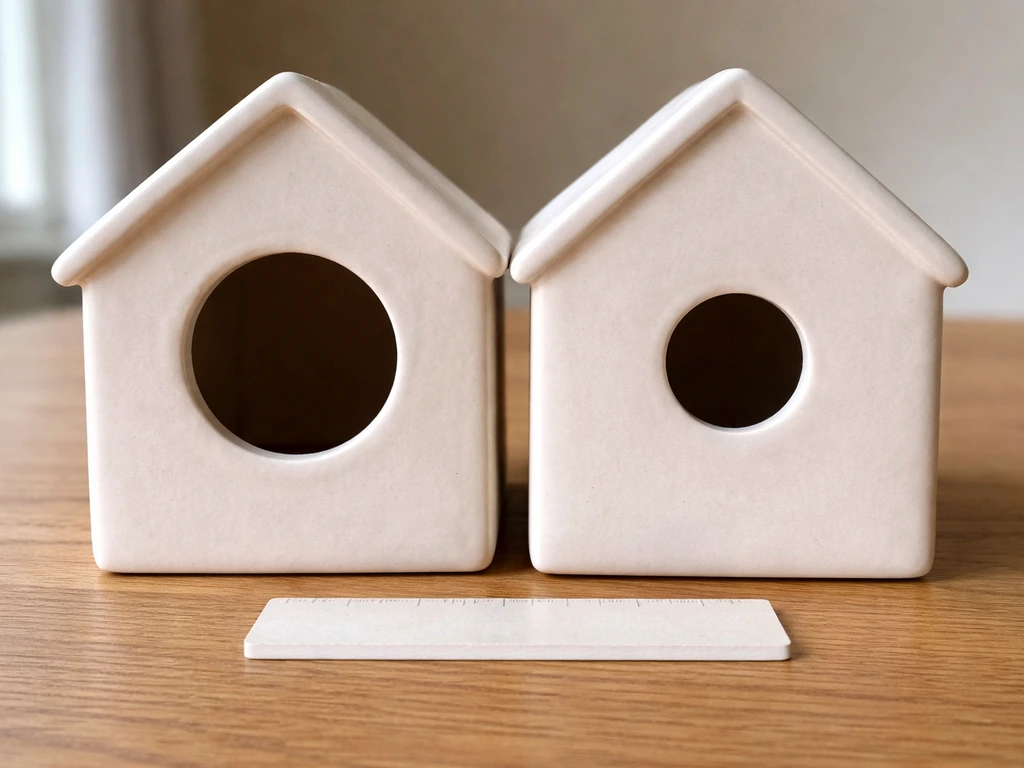
Entrance-hole diameter is the most critical dimension in any bird house, and it is where most ceramic houses fail. Many decorative ceramic bird houses are sold with holes that are too large, which invites House Sparrows and European Starlings into boxes intended for native cavity nesters. A hole that is even 1/8 inch too large can change which species uses the box entirely.
| Species | Entrance hole (round) | Interior floor size | Interior depth | Mounting height |
|---|---|---|---|---|
| Eastern Bluebird | 1-1/2" round (or 1-3/8" x 2-1/4" oval slot) | 4" x 4" to 5" x 5" | 8–10" | 4–6 ft |
| Mountain Bluebird | 1-9/16" round | 5" x 5" | 8–10" | 4–7 ft |
| Black-capped Chickadee | 1-1/8" round | 4" x 4" | 8–10" | 5–15 ft |
| House Wren | 1" to 1-1/8" round | 4" x 4" | 6–8" | 4–10 ft |
| Tree Swallow | 1-1/2" round | 5" x 5" | 6–8" | 4–8 ft |
| Downy Woodpecker | 1-1/4" round | 4" x 4" | 9–12" | 6–20 ft |
When you purchase or receive a ceramic bird house, measure the entrance hole before mounting it. Use a drill with the correct bit to resize it if needed. For ceramic, a diamond-tipped or carbide-tipped hole-saw bit works cleanly. Go slowly to avoid cracking the piece. The interior floor dimensions and cavity depth also need to match your target species. A House Wren will not reject a slightly oversized interior, but a bluebird needs a box that feels appropriately cave-like in depth. The California Bluebird Recovery Program provides a reliable entrance-hole and mounting-height reference table covering wrens, bluebirds, and other common cavity nesters that is worth printing and keeping on hand.
One additional detail specific to ceramic: check that the interior surface near the entrance hole is rough enough for fledglings to grip as they climb out. Smooth glazed interiors can trap young birds that cannot get purchase on the wall. If the inside surface is slick, score it with a carbide tool to create some texture, or glue a small strip of hardware cloth just below the entrance hole on the interior wall.
Care, cleaning, and heat management for ceramic
Managing heat in summer
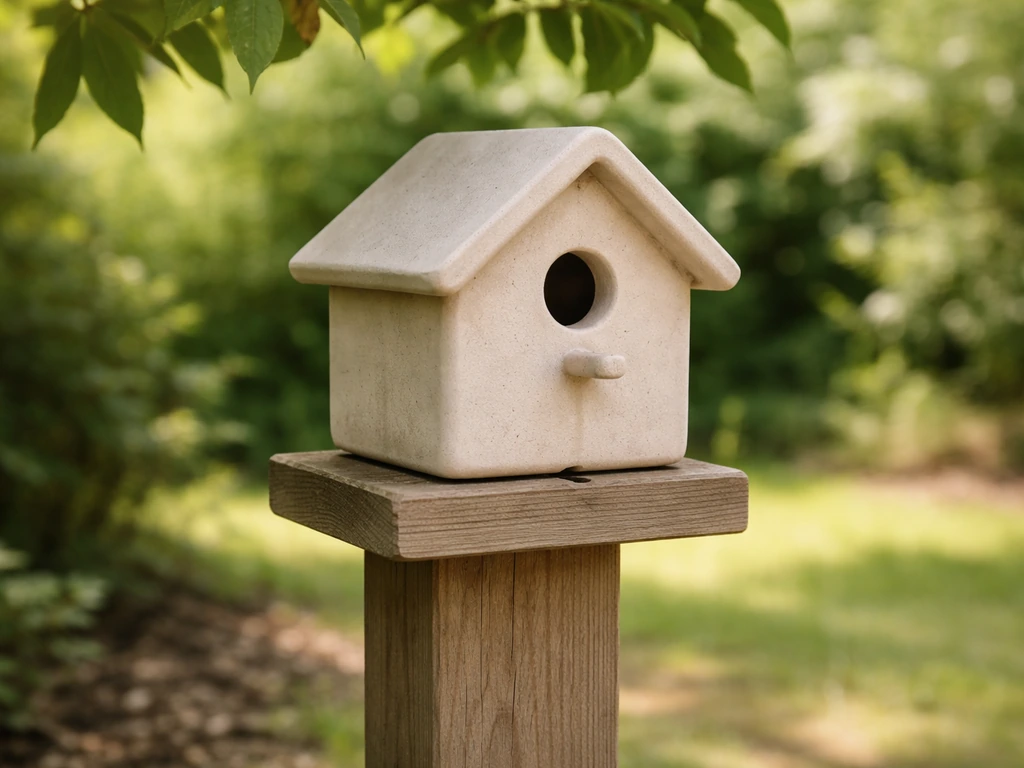
The biggest practical concern with ceramic is interior temperature. On a hot summer day in full sun, a ceramic bird house can reach temperatures that kill eggs and nestlings within hours. The fix is shading. Mount the box where a tree branch, eave, or fence overhang blocks direct afternoon sun from June through August. You can also attach a small wooden shade board to the top of the ceramic house, extending a few inches over the entrance hole side, which acts like a roof overhang without altering the box itself. Check interior temperature on the hottest expected days of your local summer before birds arrive.
Ventilation and drainage in a ceramic house require some attention because most pottery does not come pre-drilled. NestWatch recommends at least four drainage holes in the floor, each about 3/8 to 1/2 inch in diameter, so any water that enters can drain away rather than pooling under the nest. Ventilation gaps near the top of the side walls allow hot air to escape. If your ceramic house lacks these features, a diamond-tipped drill bit can add them. Work on a flat surface, go slowly, and use water as a coolant to prevent cracking. These two modifications alone, drainage and ventilation, will meaningfully improve bird acceptance and chick survival.
Cleaning between broods and seasons
Cleaning a ceramic bird house is actually easier than cleaning wood because the non-porous surface does not harbor parasites in the wall material itself. After each brood fledges, remove the old nest completely. The Virginia Bluebird Society recommends removing the nest, sweeping out remaining debris, and disposing of it well away from the box. This reduces parasite load and makes the box more attractive for a second brood or next season's occupants.
The recommended cleaning window is September through February, well outside the primary nesting season. This gives you time to do a thorough job without disrupting active nesting. For routine cleaning, a stiff brush and warm water are sufficient on ceramic. If you find evidence of mice or heavy rodent use, Sialis.org recommends using a 10 percent bleach solution to control dust and disinfect. Rinse thoroughly and allow the box to dry completely before the next nesting season, ideally leaving it open or off its mount for a few days of air drying.
- After fledging: remove the complete nest and sweep out all debris with a stiff brush
- Dispose of nest material away from the box area
- Scrub interior with warm water and a stiff brush; use diluted bleach (1 part bleach to 9 parts water) only if rodents were present
- Rinse thoroughly with clean water
- Allow to dry completely in open air for at least 24 hours before remounting
- Inspect drainage holes and ventilation gaps; clear any blockages
- Check entrance hole for chips or sharp ceramic edges and smooth them if needed
- Remount before late February so early nesters can begin prospecting
Common problems and how to fix them
No birds using the box
If the box sits completely unused through spring and into June, work through this checklist in order. First, confirm the entrance hole is the right diameter for a species that actually exists in your area. A 1-1/2 inch hole is useless in a neighborhood with no bluebird territory. Second, check placement height and habitat context: the right species need to have a reason to be in your yard.
Third, evaluate whether there is an abundance of natural cavities nearby. Research from the US Forest Service notes that nest-box occupancy drops significantly where natural tree cavities are plentiful, because birds simply use what is already available. If you back onto mature woodland, this may be working against you. Finally, consider timing: most cavity nesters begin prospecting in late February through April in temperate regions.
A box put up in May may simply be too late for that season.
Overheating
If birds start a nest but abandon eggs or you find dead nestlings, overheating is the first thing to investigate. Rotate the box to face north or east if it is currently south or west-facing. Add a shade structure above the entrance-hole side. Check that ventilation gaps exist near the roof line and are not blocked. In extremely hot climates (desert Southwest, for example), ceramic bird houses are a difficult choice and a wooden box with proven ventilation design is a more reliable option.
Predator access
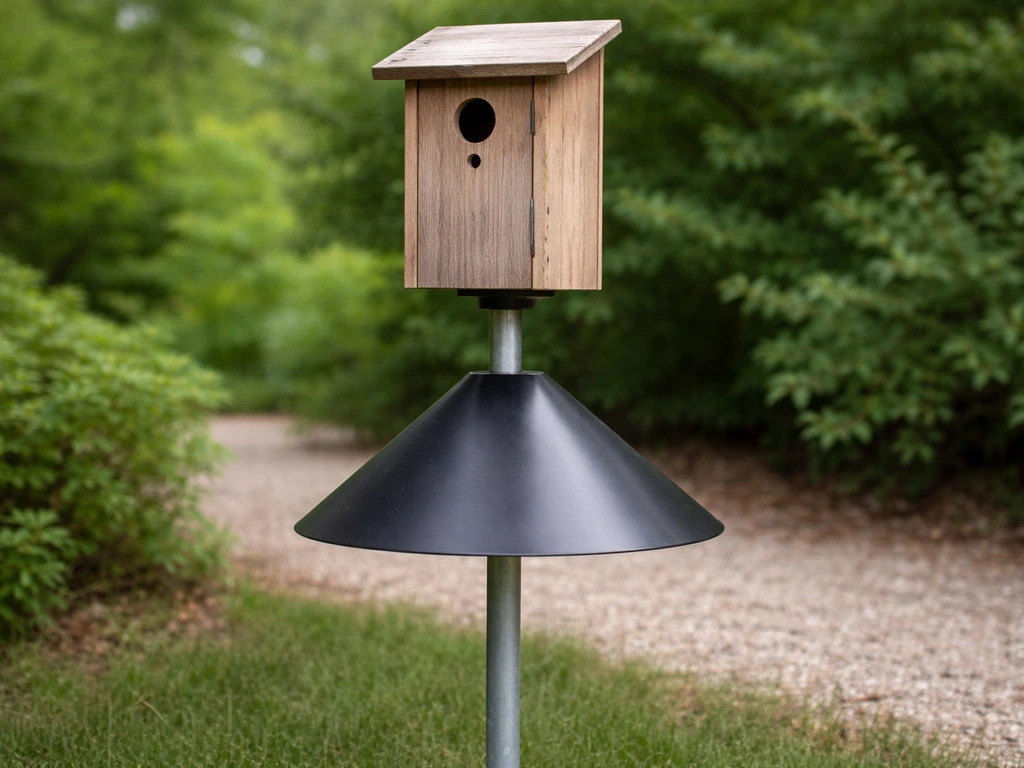
Cats, raccoons, and rat snakes are the main predators at nest boxes in most backyard settings. The most effective single intervention is a smooth metal pole with a baffle: either a cone-style or a stovepipe baffle mounted below the box. Avoid attaching the ceramic house to a wooden fence post, tree trunk, or any surface a climbing predator can scale easily. Do not add a perch below the entrance hole; it gives predators a foothold and serves no benefit to the nesting birds. The New York State Bluebird Society specifically addresses predator-related nest-box features in their specifications, including ensuring predators cannot reach into the interior through the entrance opening.
House Sparrows and European Starlings taking over
Both of these non-native invasive species aggressively displace native cavity nesters. If they are claiming your ceramic box, the entrance hole is likely too large. House Sparrows can enter a 1-1/2 inch hole, so for chickadees and wrens, a 1-1/8 inch or smaller hole is a meaningful deterrent. Starlings need a hole of at least 1-1/2 inches and are excluded by anything smaller. Consistent monitoring and removal of their nesting material (House Sparrow nests can be legally removed in the US and Canada) is necessary on trails and in yards where these species are persistent.
Species-specific expectations for backyard birds
Not every cavity-nesting bird is equally likely to use a ceramic house in a typical backyard. Here is what to realistically expect from the most common species.
- Eastern and Western Bluebirds: Good candidates if you live in open, rural, or semi-rural areas with short grass or open fields nearby. They readily use artificial boxes and are well-studied. The entrance hole and mounting height specs are precise and non-negotiable for success. Community records on birding forums document repeated seasonal use of the same bluebird box when conditions are right.
- Mountain Bluebirds: Similar to Eastern Bluebirds but favor higher elevation open country. Will use ceramic if placement and hole size are correct and shade is managed. Mounting height of 4 to 7 feet is the practical target.
- Black-capped and Carolina Chickadees: Highly adaptable and among the most willing users of artificial nest boxes in suburban settings. They will investigate novel materials including ceramic with curiosity. The 1-1/8 inch hole size is critical. NestWatch placement guidance recommends 40 to 60 percent sunlight exposure for chickadee habitat context, meaning dappled shade is actually appropriate.
- House Wrens: Very likely to use any box with the right hole size (1 to 1-1/8 inch) placed near brushy cover. They are among the most tolerant of imperfect conditions and will sometimes even use boxes with sub-optimal ventilation. A reliable first success species for ceramic houses.
- Tree Swallows: Good candidates in open areas near water. They want an open approach flight path and will compete with bluebirds for boxes. A 1-1/2 inch hole and 4 to 8 feet mounting height works well.
- Downy Woodpeckers: Less likely to use a pre-made ceramic house because they prefer to excavate their own cavities or use rough-textured wooden boxes. They may use ceramic if the interior dimensions and rough texture mimic a natural cavity closely enough.
- Owls (screech owls, saw-whet owls): Larger boxes with appropriate entrance holes can attract small owls in wooded suburban settings, but USFS research notes that boxes are typically used only where natural cavities are genuinely limited. Ceramic is not ideal for owls due to weight and thermal concerns.
Timing also shapes species-specific success. Most songbird cavity nesters begin prospecting in late February to April in temperate North America. Bluebirds are among the earliest, sometimes checking boxes in February in the southern US. Wrens arrive later, often in April or May. Having the box cleaned, mounted, and correctly oriented before late February gives you the best shot at first-season occupancy. The cleaning window of September through February lines up perfectly with this goal.
If you are weighing whether a ceramic house is the right choice from the start, it is worth noting that the material question connects to other design decisions you might be researching, such as whether to use a hanging versus fixed-mount setup, whether to add a perch, or whether bright colors on the exterior affect bird behavior. The consistent answer across all of those variables is the same as it is for material: birds respond to function, not form. Nail the dimensions, placement, ventilation, drainage, and predator protection, and the material becomes a secondary concern.
Your practical next steps
- Measure your entrance hole diameter and compare it to the species table above. Resize with a diamond-tipped bit if needed.
- Check for drainage holes in the floor (you need at least four, each 3/8 to 1/2 inch). Add them if absent.
- Check for ventilation gaps near the top of the side walls. If the box is solid with no gaps, drill two or three 1/4 inch holes near the roofline on each side.
- Orient the entrance hole away from prevailing winds and afternoon sun. East or north-facing is the safest default.
- Mount at the species-appropriate height on a smooth metal pole with a baffle, or ensure the existing mount prevents predator climbing.
- On the first hot sunny day, do a hand-temperature check inside the box. If it is uncomfortably warm, add shade above the entrance-hole side.
- Confirm the interior surface is rough enough for fledgling grip. Score smooth glaze with a carbide tool if needed.
- Remove any decorative perch below the entrance hole.
- Clean the box between September and February each year using the steps above.
- Monitor for prospecting behavior starting in late February. If no birds investigate by late May, reassess placement and habitat before next season.
FAQ
Can I use a ceramic bird house that was used last year, or should I replace it?
Yes, but only if you offer a nest site that matches the species’ needs. If you’re reusing a ceramic house from a previous brood, first remove all old nest material, check for a safe interior temperature on hot days, and verify the entrance-hole diameter still fits your target bird (a slightly too-large opening often brings House Sparrows or Starlings back).
What should I do if my ceramic bird house has a smooth or glazed interior?
Slick, glazed interiors near the entrance are a common reason fledglings get stuck or struggle to climb out. Add grip by scoring the wall surface near the exit or installing a small strip of hardware cloth just below the entrance (do this before the nesting season, after cleaning and drying).
My ceramic bird house has been unused all spring, how do I troubleshoot it fast?
If a box is unused, don’t assume the birds dislike ceramic. Confirm three quick items in order: entrance-hole diameter for species in your area, correct placement (out of prolonged afternoon sun, and correct wind/rain orientation), and habitat context (open foraging for bluebirds, edge habitat for wrens).
Can predators still reach a ceramic bird house if the box is well ventilated and drained?
It’s possible, especially if a cat, raccoon, or snake can reach the box or climb to it. Use a smooth metal pole with a baffle (cone or stovepipe), and avoid mounting on fences, trees, or posts that climbing predators can grip. Also keep the box off any perch below the entrance.
Do ceramic bird houses need drainage holes and ventilation gaps, even if they look like they’re designed well?
Yes, and it’s not just a temperature issue. A lack of drainage holes can pool water, making interiors damp and unsuitable. If your ceramic box came undrilled, add at least four floor drainage holes in the sizes the article recommends, then add or confirm ventilation gaps near the top so the interior can dry and breathe.
What if I can’t mount the box at the exact recommended height?
For many cavity nesters, mounting height is about reducing risk and matching typical site preferences. If you can’t hit the ideal range, prioritize safety: keep it high enough to deter predators, and place it where the birds have nearby foraging cover appropriate to the species (open ground for bluebirds, brush/edges for wrens).
Is it too late to install a ceramic bird house if it’s already May?
Yes, but timing matters. If you add a box in late May after most species have already started prospecting, you may miss that season even if the box is perfect. Put up and fully set boxes before late February through April (depending on your region) so birds can check them early.
How can I tell if the entrance hole size is attracting invasive birds?
It can be. If the entrance-hole is enlarged, or if you choose the wrong diameter for your target bird, you can attract invasive or unwanted cavity nesters. Measure the opening every time (including after any repairs), and if you suspect House Sparrows or Starlings, the fix is almost always correcting the hole size for your species goal.
What should I check first if I find eggs but no chicks later?
If a bird starts nesting and then abandons eggs or nestlings, treat overheating as the first check for ceramic. Rotate the box to reduce sun exposure (north or east when currently south or west), add a shade structure, and verify ventilation gaps are open and not blocked by debris.
Will changing from a tree mount to a pole mount improve occupancy or just prevent predators?
They can, because the key factor is predator access and surface grip, not the box material. If you mount on a tree or rough fence, squirrels and raccoons can climb. Choose a smooth mounting pole and baffle, and keep the area under the entrance clear of any foothold surfaces.
Can I clean my ceramic bird house whenever I want, or only at certain times?
Cleaning timing is mostly about avoiding disruption. If the box contains an active nest, leave it alone. Otherwise, do your thorough clean during September through February, and for routine maintenance use a stiff brush and warm water, then let the box fully dry before the next season.
Why is it a bad idea to add a perch below the entrance hole?
Do not add a perch under the entrance, it can increase predator success by providing a foothold. Birds generally do not need an extra step to enter the cavity, and removing that “landing aid” makes predator prevention more effective.
Next Article
Do Birds Like Bird Houses? Which Birds and How to Choose
Learn which birds use bird houses and how to pick the right box, size, placement, and timing for success.