Most birds do not care much about bright colors on a bird house. What actually drives a bird to nest somewhere is cavity size, entrance hole diameter, mounting height, habitat, and safety from predators. Color is rarely the deciding factor, and research backs this up: a 2023 review of artificial nest box studies found no consensus that brighter or more visible colors consistently increase use rates. That said, color is not completely irrelevant. It affects interior temperature, predator visibility, and in a handful of species it may influence initial curiosity. So the practical answer is: skip the bright paint for most cavity nesters, lean toward natural wood tones or light neutral finishes, and spend your energy on getting dimensions and placement right. If you want to know whether birds like bird houses in general, start by matching the box to local cavity-nesting birds rather than focusing on color.
Do Birds Like Bright Colored Bird Houses? Expert Tips
Color preferences by species (and why most birds don't have one)
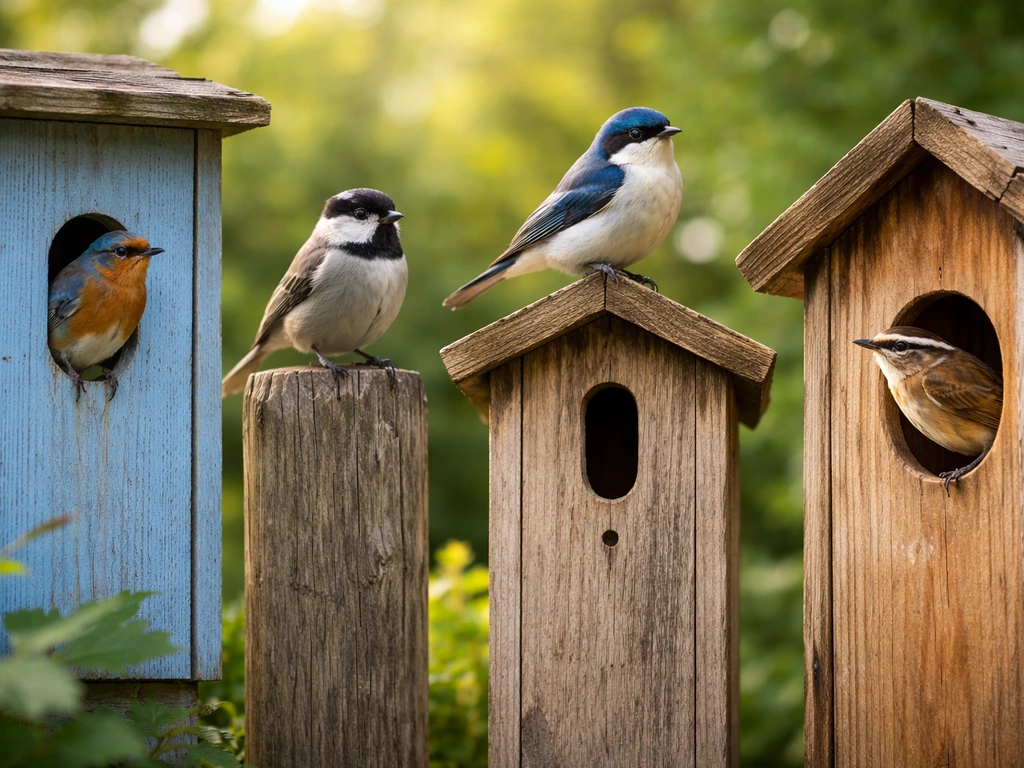
The overwhelming majority of cavity-nesting birds, including Eastern Bluebirds, Black-capped Chickadees, Tree Swallows, Carolina Wrens, and House Wrens, are selecting for a hole that fits them, a cavity that feels safe, and a location that matches their habitat. They are not shopping by exterior color. Studies on nest-box color have returned contradictory results across species, climates, and study designs. Some report slightly higher initial investigation rates for certain colors like black, white, or red, but those differences rarely hold up as consistent rules you can bank on.
Purple Martins are a notable exception. The Purple Martin Conservation Association recommends white or light-colored housing specifically because martins are attracted to bright white structures and the lighter color also manages heat in their large colony houses. Beyond martins, the best rule of thumb is species-neutral: natural wood finish or a light neutral exterior gets you in the safe zone for almost every cavity nester.
It is also worth noting that birds match nest materials to their surroundings instinctively, which suggests their color-related instincts are oriented toward camouflage and concealment, not toward bright, conspicuous structures. If anything, that instinct argues against painting a bird house in bold, saturated colors.
Why bright colors can attract some birds (and push others away)
There are scenarios where a brighter exterior makes a difference, but they are narrower than most people assume. Purple Martins aside, some research has noted that high-contrast or bright colors may increase the rate at which birds notice and initially investigate a box, especially in open habitats where a box stands out. Birds do investigate swinging bird houses too, but the bigger factors are usually the box's placement, entrance size, and safety from predators. Initial investigation is not the same as occupancy, though. A bird may check out a bright box and still reject it if the hole size, interior dimensions, height, or predator risk is wrong.
On the other side of the ledger, a brightly colored or glossy bird house can actively work against you. High visibility attracts predators alongside birds. A shiny or reflective surface creates glare that may startle or deter nesting birds. And dark or deeply saturated colors absorb significantly more solar radiation, raising interior temperatures to levels that can stress or kill eggs and nestlings, especially in summer climates where daytime temps exceed 95°F. Research modeling nest-box reflectance confirms that darker exterior colors produce measurably hotter internal profiles compared to lighter ones, which is a real welfare issue, not a hypothetical.
What to put on the outside: natural finishes, neutral colors, and durability
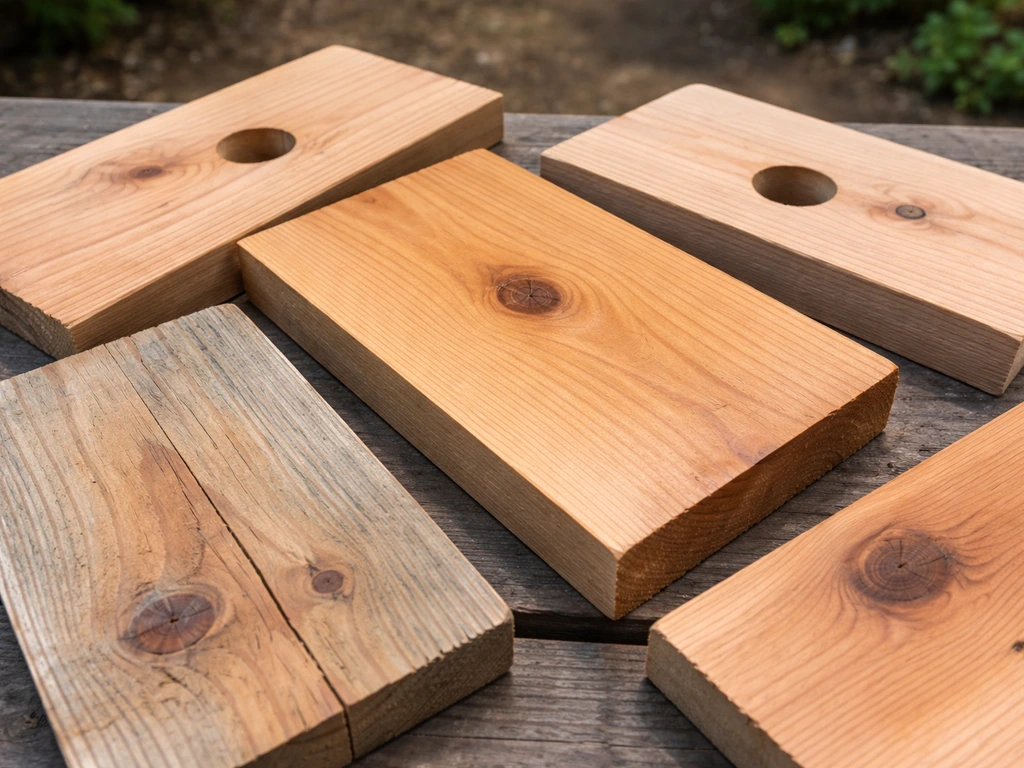
If you are building or buying a bird house from untreated wood like cedar, pine, or Douglas fir, a raw natural finish is your safest and often best option. Cedar and redwood weather gracefully, resist rot without any coating, and blend into garden settings in a way that does not flag the box to predators. If you want to extend the life of a softer wood like pine, a light exterior coating is fine as long as you follow a few non-negotiable rules.
Penn State Extension recommends that light, neutral-colored paint or stain can be applied to the outside only, and it must be fully dried and aired out before any bird has access to the box. NestWatch suggests tan, gray, or dull green for most cavity nesters to reduce predator visibility, and white specifically for Purple Martin housing. The North American Bluebird Society approves water-based latex paint, raw linseed oil, or a product like Thompson's Water Seal for exterior surfaces. All are non-toxic once cured.
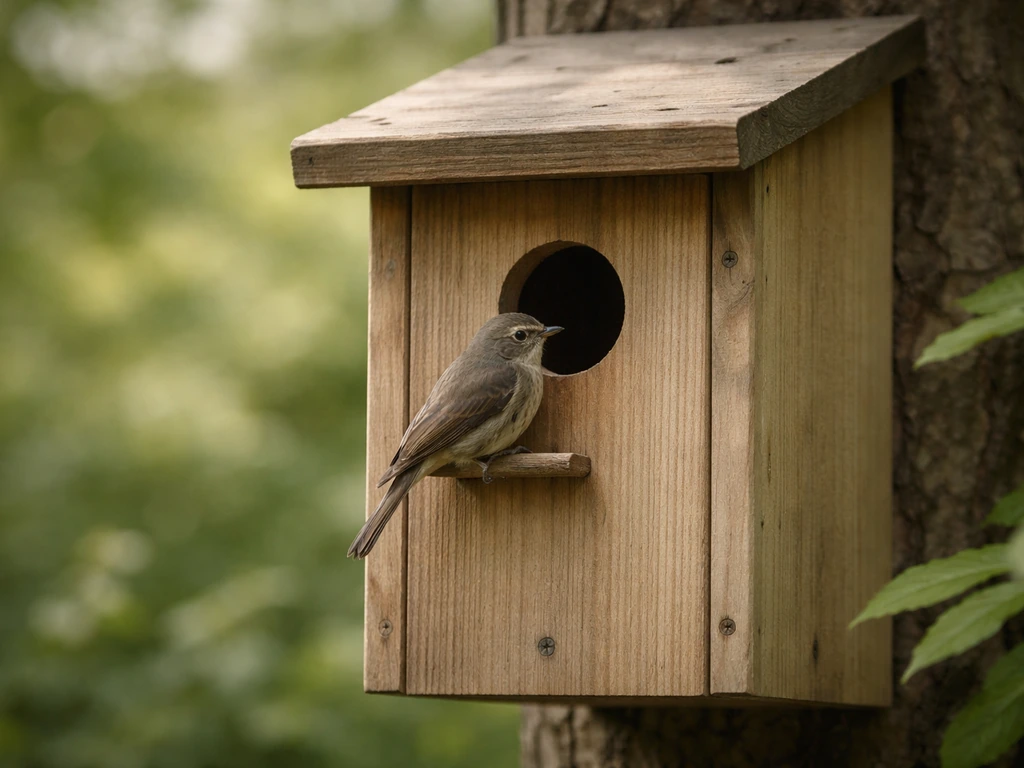
Never paint or stain the interior of any nest box. Bird houses also need proper ventilation, and that starts with keeping the interior uncoated so air can circulate Never paint or stain the interior of any nest box.. The inside should always be bare, unfinished wood. Rough interior walls (use a saw or chisel to score horizontal grooves below the entrance hole) help fledglings grip and climb out. Paint fills the wood grain, reduces insulating capacity, and can off-gas in a confined, warm space.
| Finish type | Safe for exterior? | Safe for interior? | Best for |
|---|---|---|---|
| Raw/unfinished cedar or redwood | Yes | Yes | All species, best default |
| Water-based latex paint (light/neutral) | Yes, once fully cured | No | Pine or softer woods in humid climates |
| Raw linseed oil | Yes | No | All exterior wood types |
| Thompson's Water Seal | Yes | No | Extending box lifespan in wet climates |
| White latex paint | Yes, once cured | No | Purple Martin housing specifically |
| Oil-based paint or stain | Use with caution, must fully cure | No | Not recommended if alternatives available |
| Pressure-treated lumber coating or stain | No | No | Avoid entirely |
Placement and habitat matter far more than any color choice
This is the part most people underestimate. A perfectly painted bird house hung in the wrong spot will sit empty for years. Getting placement right is the single highest-leverage thing you can do. Birds also need suitable entry access and safe placement, which is why a perch can matter depending on the species and how the entrance is designed do bird houses need a perch. Every species has specific requirements for height, habitat type, entrance orientation, and distance from other boxes or cover.
| Species | Entrance hole size | Mounting height | Habitat/siting notes |
|---|---|---|---|
| Eastern Bluebird | 1 1/2" | 4–6 ft typical, up to 50 ft | Open fields, fence lines, 100+ ft from tree cover |
| Western Bluebird | 1 9/16" | 4–6 ft typical | Open woodland edges, orchards |
| Black-capped Chickadee | 1 1/8" | 4–8 ft | Hole faces away from prevailing wind, near woods |
| Carolina Wren | 1 1/2" | 5–10 ft | Near trees, tall shrubs, or thick underbrush |
| Tree Swallow | ~1 3/8" | 4–8 ft | Open fields near water, 100+ ft between boxes |
| Purple Martin | 2 1/8" (gourd/colony) | 12–20 ft on pole | Open areas, near water, white housing preferred |
| House Wren | 1 1/8" | 5–10 ft | Near shrubs or woodland edge |
Entrance orientation is another detail that gets overlooked. New Jersey Audubon and Alaska Fish and Game both emphasize facing the entrance away from prevailing winds so rain does not blow in and the interior stays dry. For most locations in North America, that means orienting the hole to the east or southeast. This protects eggs and nestlings from temperature swings and keeps the box dry without any paint or coating at all.
Height varies more than most guides suggest. Eastern Bluebirds have been documented nesting anywhere from about 2 to 50 feet up, so a range of 4 to 6 feet works well for most backyards because it also makes monitoring and cleaning easier. Chickadees and wrens prefer a bit more concealment and do fine at 4 to 8 feet in brushier settings. Purple Martins require a pole at 12 to 20 feet in open airspace.
Hazards to avoid: toxic finishes, glare, and overheating
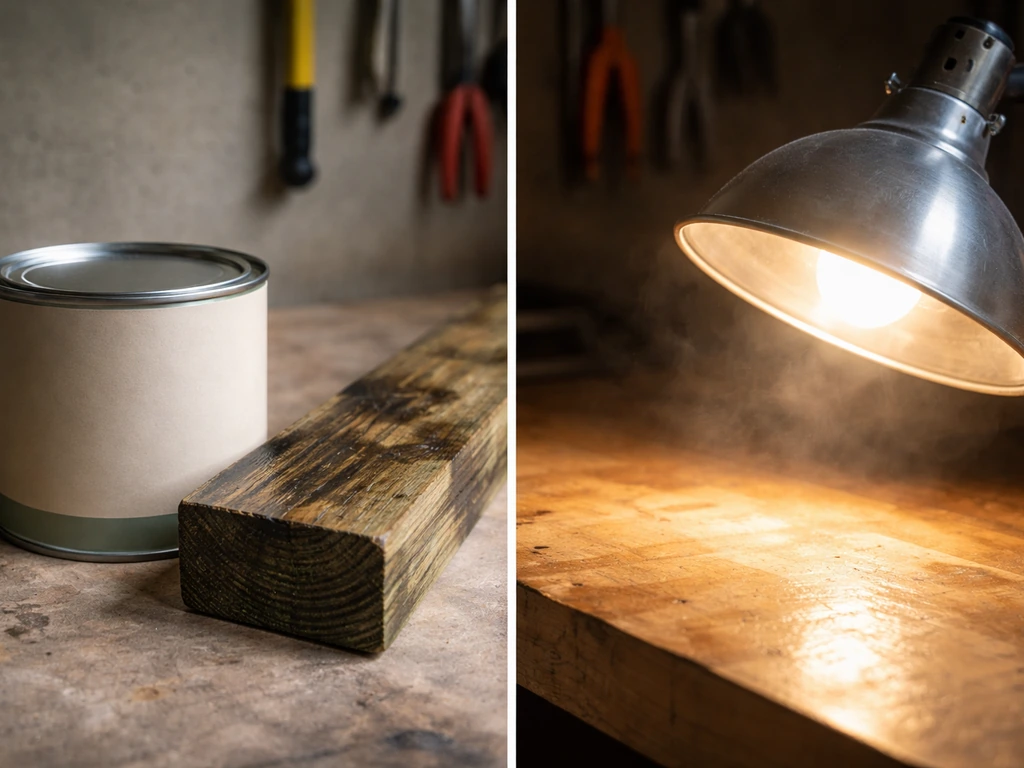
Three real hazards come from poor color and finish choices, and all three are avoidable with a little upfront attention. Do birds like ceramic bird houses? Usually they care more about safety, size, ventilation, and placement than the material itself.
Toxic off-gassing
Pressure-treated lumber is a hard no for nest boxes. Connecticut DEEP, Penn State Extension, Missouri Extension, and OSU Extension all say the same thing: do not use pressure-treated wood, and do not paint or stain the interior. OSU Extension also cautions against treated, stained, or painted lumber for nest boxes because toxic fumes may harm birds and paint can fill pores and reduce wood insulation blank" rel="noopener noreferrer">do not use pressure-treated wood. Good drainage is also important, so you should provide drainage holes to keep the nest box dry do not paint or stain the interior. Pressure-treated wood contains pesticides and fungicides that off-gas in a warm, enclosed box. Oil-based paints and stains on the exterior need to be fully cured for several weeks before a bird gets access. Water-based latex is safer and cures faster, but still needs at least a week of open-air drying before installation.
Overheating from dark colors
Surface reflectance has a direct and measurable effect on interior nest-box temperature. Dark colors absorb more solar energy and raise interior temps significantly above ambient air temperature. In climates where summer days hit 95°F or above, a dark-painted box can reach temperatures that kill eggs and nestlings. If you live somewhere hot, paint the exterior, especially the roof, in a light color. White is ideal for Purple Martins. For other species, a light tan, gray, or pale green keeps temps down while reducing the visual conspicuousness that attracts predators.
Glare and reflective surfaces
High-gloss or metallic finishes create glare that can startle birds and deter repeated visits. They also make the box more visible to passing predators like crows and hawks. Stick to flat or satin finishes. If you have a box with a shiny metal roof, a coat of flat paint or a simple wooden overhang reduces glare and adds a bit of extra rain protection.
How to pick, paint, and mount the right bird house today
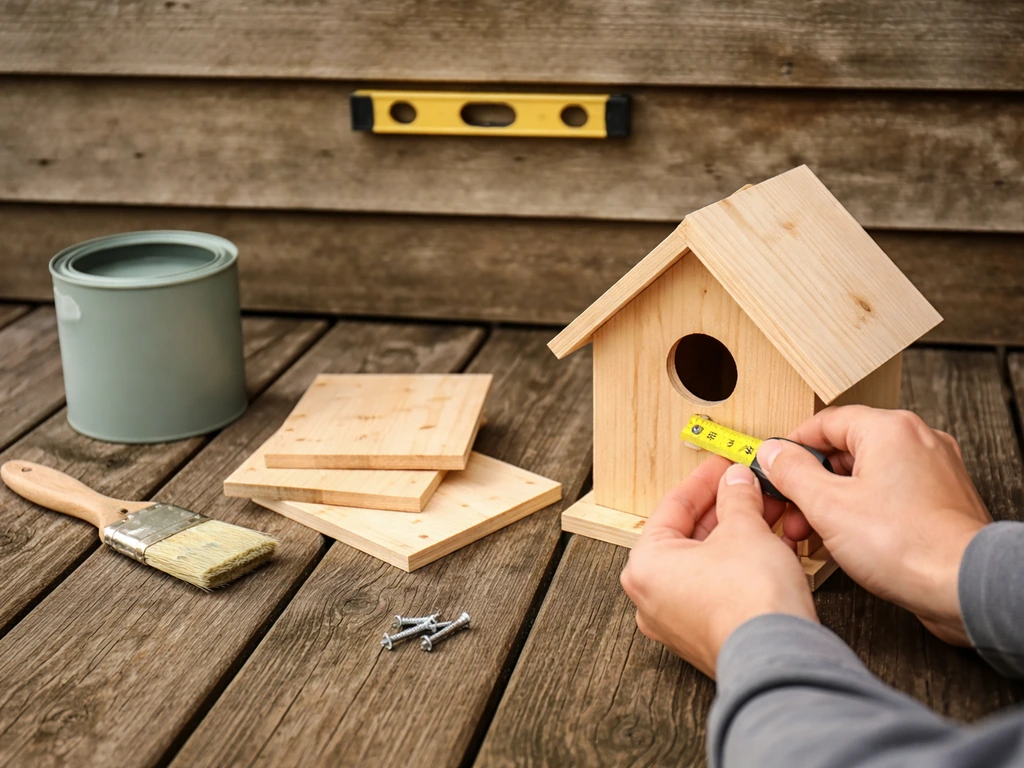
Here is a practical sequence you can follow today, whether you are starting from scratch or improving a box you already have. If you are wondering where to buy one, many big home-improvement retailers carry bird houses, though availability varies by season and location.
- Identify your target species first. Look at what cavity nesters are already in your yard or neighborhood. Check the species-specific entrance hole size and habitat requirements before you buy or build anything. Getting this wrong is the most common reason boxes go unused.
- Choose the right box dimensions and wood. Use untreated cedar, pine, or Douglas fir with walls at least 3/4 inch thick for insulation. Floor dimensions and cavity depth vary by species: a bluebird box typically has a 4x4 inch floor and 8-inch cavity depth, while a chickadee box uses a 4x4 floor and 8 to 10-inch depth.
- Decide on your exterior finish. If you have cedar, leave it bare. If you are using pine or a store-bought box in a hot climate, apply a light-colored water-based latex paint or raw linseed oil to the exterior only. Skip the interior completely. Let the finish cure for at least 7 to 14 days outdoors in open air before hanging.
- Skip bright colors unless you are targeting Purple Martins. For all other cavity nesters, use flat or satin finishes in light gray, tan, pale green, or natural wood tone. Avoid glossy finishes, reflective surfaces, and anything darker than a medium earth tone.
- Score the interior wall below the entrance hole. Use a saw or chisel to cut a few horizontal grooves into the wood beneath the hole. This gives fledglings grip when climbing out, which is critical for nesting success.
- Mount at the correct height and orientation for your species. Face the entrance away from prevailing winds (usually east or southeast). Use a metal baffle on the mounting pole or post to block climbing predators like raccoons and snakes. A 6-inch diameter metal cone baffle at least 4 feet off the ground is the standard starting point.
- Check for and eliminate a perch under the entrance hole if one exists. Perches help House Sparrows and European Starlings compete for boxes without benefiting target species like bluebirds or tree swallows. Remove any factory-installed perch dowels.
- Set a cleaning schedule. After fledglings leave (wait until you see absolutely no activity), remove the old nest and wipe the interior with a 1:10 bleach-to-water solution if there is any fecal buildup. Rinse and let the box air dry completely before closing it up. The safest cleaning window is September through February in most of North America.
One timing note: if you are painting a new box, do it now in June so it has the rest of summer to cure and off-gas before fall and next spring's nesting season. Boxes installed in February or March for the spring season need a finish that was applied and aired in the fall before. Never rush a fresh coat of paint onto a box and hang it the same week.
Color is a small piece of the puzzle, and getting it right mostly means avoiding the mistakes (dark colors, glossy finishes, painted interiors, toxic products) rather than finding some magic shade that birds love. If you also want to know about birdhouse placement beyond color, the same principles about cavity size and safety apply birds love. Nail the entrance hole size, cavity dimensions, mounting height, orientation, predator guard, and sanitation routine, and the color of the exterior becomes almost incidental. That is the real answer to the question.
FAQ
If color matters so little, what exterior finish should I use on a wood bird house?
Start with the species you want to attract, then choose a light neutral, flat or satin finish that reduces heat and glare (tan, gray, dull green, or natural wood). If you are unsure, prioritize entrance diameter, cavity dimensions, mounting height, and predator safety first, because those usually determine occupancy far more than the exterior shade.
Will birds at least investigate a brightly colored bird house even if they do not nest in it?
Yes, and that is the part people miss. Many birds will investigate but later reject the box if the entrance is the wrong size for that species, if the interior is too warm or dry, or if predators can reach the entrance. Plan for rejection even with a “good-looking” box if the fit and placement are off.
Does bright color matter more on the roof or the walls?
For hot summers, treat the roof and upper walls as the highest-risk areas for overheating. Use a light color and avoid dark or glossy coatings, because direct sun on the roof can create internal temperatures high enough to harm eggs and nestlings even when the rest of the box is shaded.
Can I paint a bird house now and hang it right away?
If you must paint or stain, do only the exterior. Keep the interior bare and unfinished wood, and let exterior coatings fully cure and air out before installing. A safe rule is to avoid installing until the smell has disappeared and the coating has had at least days to weeks in open air, depending on product and weather.
What should I do if my bird house is made from older or unknown treated wood?
Avoid pressure-treated lumber and any interior coating. If you are already using an older box that was previously sealed or painted, do not assume it is bird-safe, especially if the interior was ever coated. Scrape and rework to return the inside to bare wood where possible, and if you cannot, use a different box.
Is a shiny or metallic bird house ever a good idea?
Glossy coatings can increase glare and predator visibility, which can reduce repeated visits. Choose flat or satin finishes and, if your existing box has a shiny metal roof, add a matte exterior layer on the roof surface (exterior only) or use an overhang to block direct reflections.
How do I choose entrance direction if I want to avoid wet interiors and overheating?
Color orientation matters because you want the entrance to stay dry and reduce rain blow-in. In many places, facing the entrance away from prevailing winds helps, and east or southeast is a common starting point, but adjust for local wind and sun exposure.
In an open yard, will bright colors increase the chance of birds noticing my box?
Yes, especially in open habitats where a box stands out. Even then, initial attention does not equal nesting, so you still need correct entrance size, ventilation, height, and predator guarding. If you want “visibility,” use an appropriate species-approved color (white for Purple Martins) rather than saturated colors for general cavity nesters.
Should I add a perch to a bird house, and does color affect whether birds tolerate it?
A perch is species- and entrance-design dependent. Some species prefer no perch or need a specific landing style to enter easily and safely, while others accept a simple landing. If you add one, keep it low and aligned with the species’ entrance needs, because a poorly placed perch can also help predators access the box.
What cleaning and maintenance routine matters most after I hang the box?
Keep the placement consistent with the species’ behavior, then add a simple “management” step: clean out old nesting material at the right time (after the nesting attempt ends) and avoid disturbing during active nesting. Bright or dark exteriors will not compensate if you leave debris in place or mount the box where it is easy for predators to reach.