No, bird houses do not need a perch. In fact, most experts recommend leaving the perch off entirely. Cornell Lab's NestWatch puts it plainly: a perch is unnecessary for the birds and can actually help predators gain access to the box. Mass Audubon agrees, warning that a perch gives predators easier access to the inside. So if your birdhouse came without one, that is the correct design. If it came with one, you can remove it.
Do Bird Houses Need a Perch? When to Add or Skip One
Maya Thompson
29 Apr 2026
Do bird boxes need perches?
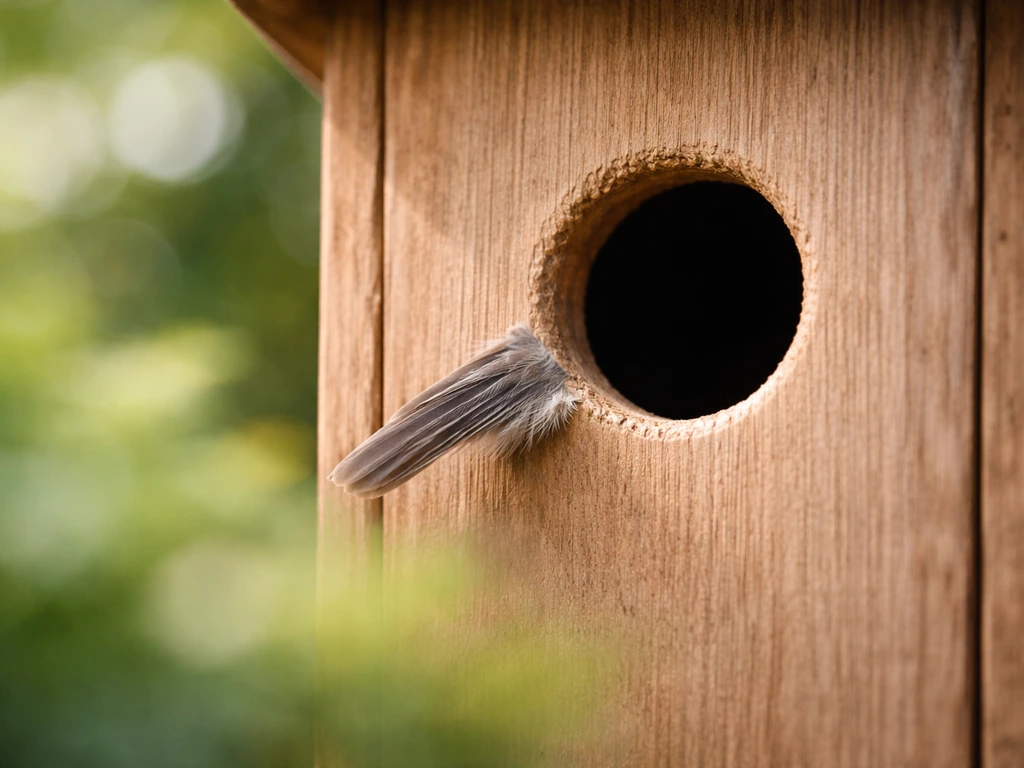
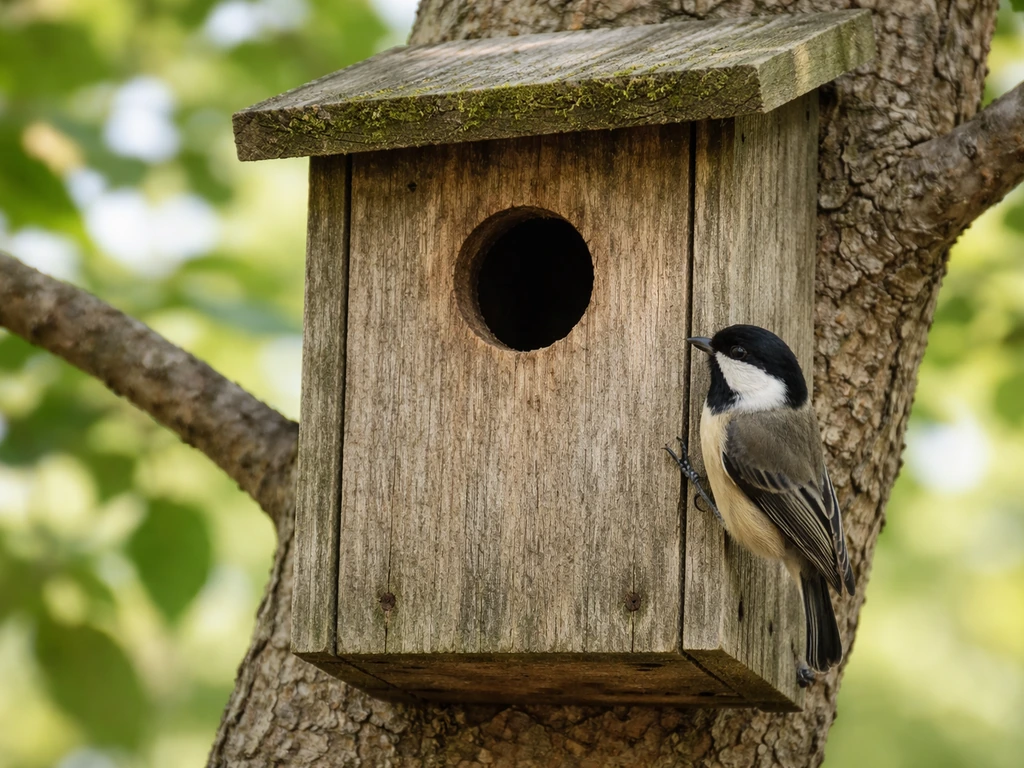
The short version: cavity-nesting birds, which are the birds that actually use enclosed birdhouses, do not land on a perch before entering. They fly directly to the hole and cling to the rough edge of the entrance with their feet. A protruding dowel or rod below the hole does nothing useful for them. What it does do is give squirrels, raccoons, snakes, and House Sparrows a convenient foothold right at the entrance. That foothold makes it significantly easier for a predator or competitor to reach inside and raid eggs, chicks, or even an incubating adult.
The North American Bluebird Society, the Texas Bluebird Society, Michigan Bluebirds, Friends of the Bluebirds, and Clemson Extension all say the same thing: no perch on the front of the box. This is not a minor stylistic preference. It is standard cavity-nesting-box design, and you will find it repeated in nearly every credible nestbox plan.
Why perches can help, or hurt, birds
The logic for adding a perch usually goes: birds like to perch, so a perch near the hole must help them enter. You may also be wondering whether birds are drawn to bright colored bird houses, and the answer depends on the other safety factors around the entrance do birds like bright colored bird houses. The problem is that cavity nesters already have everything they need built into the box itself. The rough wood around the entrance hole gives them grip. The inner front wall below the hole (typically left rough or with horizontal kerfs cut into it) lets fledglings climb out when they are ready to leave. A separate exterior perch is genuinely redundant for these species.
The harm, on the other hand, is real. A perch rod adds a stable platform right at the entrance, and any animal trying to reach into the box now has much better balance and leverage. This is especially true for raccoons and cats, which can hook a paw around the hole far more effectively from a stable perch than from bare wood. Research reviewed by MDPI confirms that modifying nestbox entrances to reduce outside footholds is one of the most effective predator-proofing strategies available. NestWatch data suggests that boxes with predator guards see nesting success rates about 6.7 percentage points higher than boxes without them. Removing a perch is part of the same logic.
There is also a competition problem. Invasive House Sparrows are bold, opportunistic birds that readily exploit any perch near a nest hole. Michigan Bluebirds and Clemson Extension both flag the perch as a feature that actively encourages House Sparrow occupation, which pushes out native cavity nesters like bluebirds and tree swallows. Michigan Bluebirds provides practical bluebird nest box guidance and emphasizes placement and entrance design choices that support bluebird use Michigan Bluebirds and Clemson Extension both flag the perch as a feature that actively encourages House Sparrow occupation. Removing the perch does not guarantee House Sparrows stay away, but it removes one attractant.
Which birds use box perches and which ones need none
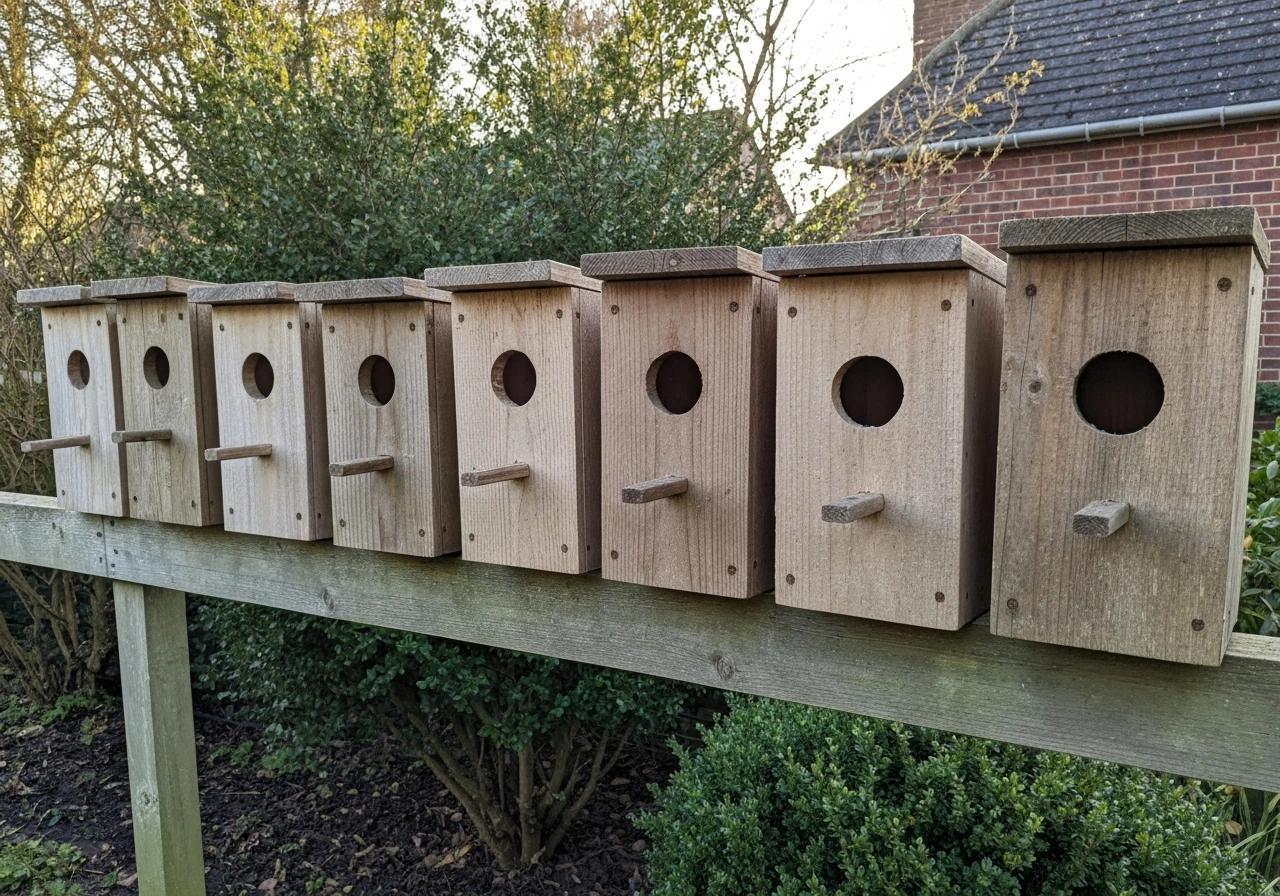
Nearly every common backyard cavity nester is perfectly comfortable entering a hole with no perch. The birds most likely to use a typical backyard birdhouse, including bluebirds, wrens, chickadees, nuthatches, tree swallows, and small woodpeckers, are all natural cavity nesters that evolved entering tight tree holes. None of those holes had a perch nailed below them.
| Species | Entrance Hole (diameter) | Perch needed? | Notes |
|---|---|---|---|
| Eastern Bluebird | 1.5 inches | No | One of the most perch-sensitive boxes; remove any perch |
| Western Bluebird | 1 9/16 inches | No | Same guidance as eastern |
| Mountain Bluebird | 1 9/16 to 1.5 inches | No | Hole placement just below roof matters more than perch |
| House Wren | 1.25 inches | No | Small hole excludes sparrows; no perch required |
| Carolina Wren | 1.5 inches | No | Clings well; perch not needed |
| Black-capped Chickadee | 1.125 inches | No | Tight hole is the key feature |
| Tree Swallow | 1.5 inches | No | Open area in front of box is more important than a perch |
| Downy Woodpecker | 1.25 inches | No | Uses rough inner walls to cling and climb |
If you are putting up a multi-compartment martin house or a feeder-style open platform, that is a different situation, but those are not enclosed birdhouses for cavity nesters. For any enclosed box with a round entrance hole, the answer is the same: no perch.
Choosing or building a birdhouse without a perch
When you are shopping for or building a box, the entrance hole diameter is the single most important dimension. If you are wondering whether a store like Home Depot carries birdhouses designed without a perch, check the product listings for the entrance-hole details and any included hardware does home depot sell bird houses. It is what determines which species can use the box and which ones are physically excluded. Getting this number right matters far more than whether there is a perch. Here is a quick reference for the most common backyard species.
What to look for in a commercial birdhouse
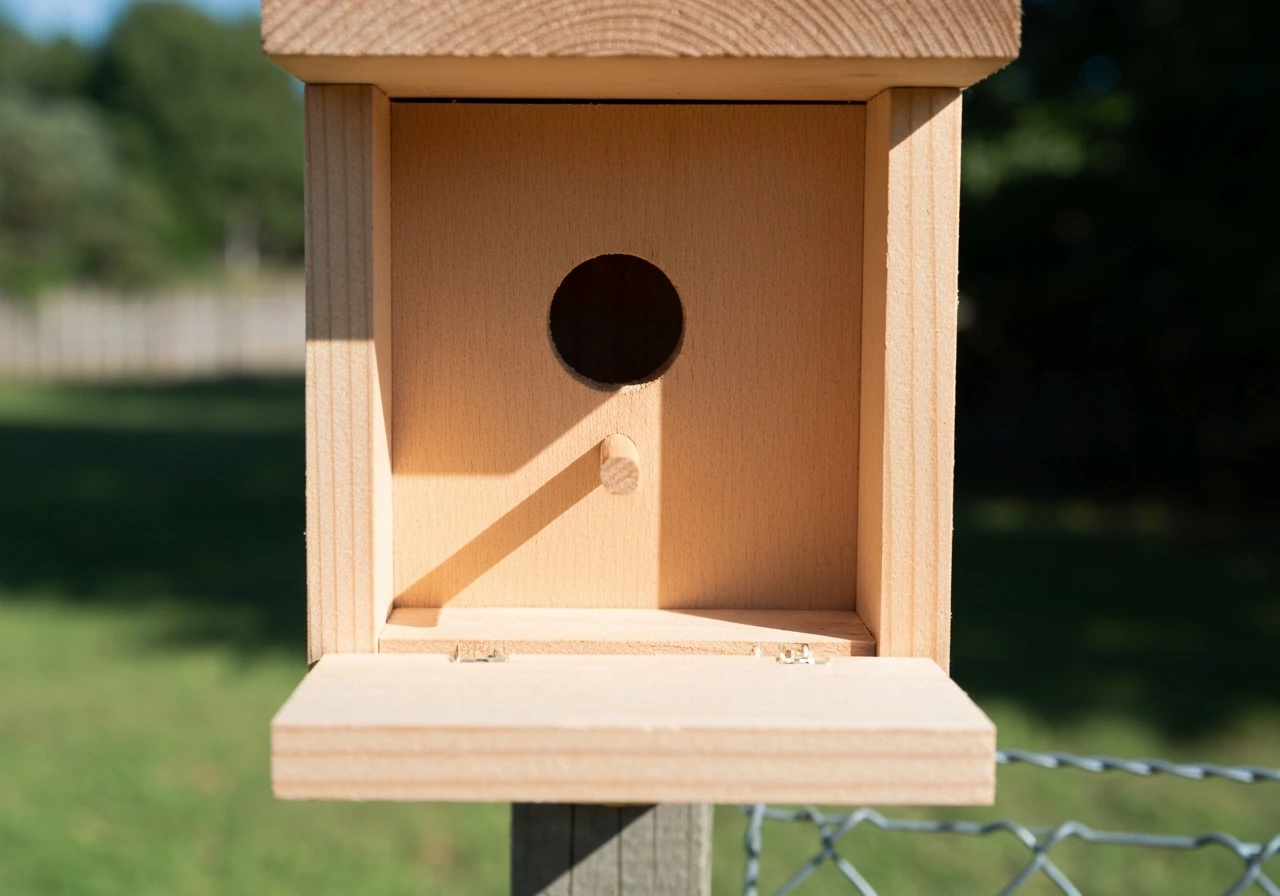
- Correct hole diameter for your target species (see the table above)
- No exterior perch rod or dowel below the entrance
- Rough interior front wall below the hole, or horizontal grooves cut in, so fledglings can climb out
- Ventilation gaps near the roof (small gaps, not wide-open spaces a predator can exploit)
- Drainage holes in the floor corners so water does not pool on eggs or chicks
- A door or panel that opens for seasonal cleaning
If the box you like comes with a perch dowel, it is almost always a 3/8-inch rod pressed or screwed into a pre-drilled hole. You can pull it out with pliers or unscrew it in a few seconds. Fill the hole left behind with a small wooden plug and a dab of exterior wood glue. That is the only modification you need.
Building your own box without a perch
If you are building from scratch, simply do not include a perch in the plan. Cut the entrance hole to the correct diameter for your target species, position it about 1 to 2 inches below the roof overhang so rain does not blow directly in, and leave the wood around the hole bare and rough. The rough surface is all the grip your birds need. Mass Audubon also suggests orienting the entrance hole slightly downward (by tilting the front face a few degrees outward at the top) to shed rain, which is more useful than any perch.
As a substitute for a perch, consider reinforcing the entrance hole with a metal plate drilled to the same diameter. This prevents squirrels and woodpeckers from enlarging the hole over time, which is one of the most common ways a box becomes accessible to unwanted animals. Mass Audubon specifically recommends metal reinforcement around the opening as a safer alternative to adding a perch.
Installation and placement to keep birds safe without a perch
Removing a perch reduces predator risk at the entrance, but the box still needs to be mounted correctly to stay safe. Here is how to do it.
- Mount on a smooth metal pole, not a tree or wooden post. Raccoons, squirrels, and snakes can climb wood easily. A metal conduit pole (1-inch EMT conduit works well) is slippery enough to discourage most climbers on its own.
- Add a baffle below the box. A cone-shaped or cylindrical stovepipe baffle mounted 4 to 5 feet above the ground on the pole stops climbing predators reliably. NestWatch and NSIS both recommend this approach for pole-mounted boxes.
- Mount at the right height for your species. Bluebirds and tree swallows: 4 to 6 feet above ground. Wrens: 5 to 10 feet. Chickadees: 4 to 15 feet. The right height keeps the box accessible for monitoring while putting it above easy reach.
- Face the entrance away from prevailing wind and afternoon sun. In most of North America, facing the box east or southeast works well. This keeps the interior cool and reduces rain entry, both things that matter more than a perch.
- Keep at least 100 feet between boxes for the same species (bluebirds and tree swallows are territorial), or pair boxes 5 to 15 feet apart if you want both species in the same area (they tolerate each other better than they tolerate their own kind).
- Clear a low flight path in front of the entrance. Bluebirds and swallows need open space to approach and hover. Dense shrubs right in front of the hole make entry harder and give predators cover.
Connecticut DEEP's nestbox guidance emphasizes that weather-tight, durable construction combined with smart placement does more for nesting success than any add-on feature. The entrance hole and the mounting setup are what matter. Everything else, including a perch, is secondary at best and counterproductive at worst.
Maintenance and sanitation after installing
Once your box is up, the work is not done. Regular monitoring and cleaning keep the box healthy and give birds the best chance of raising multiple broods successfully.
During the breeding season
Check the box every week or two by opening the clean-out door and taking a quick look. You are watching for signs of predator damage (scratches around the hole, claw marks on the face), wasp nests forming before birds move in, or House Sparrow nests (loose grasses and debris stuffed untidily into the box).
On r/Ornithology, commenters specifically recommend removing any perch in front of the hole to reduce House Sparrow pressure House Sparrow nests (loose grasses and debris stuffed untidily into the box). If a nesting attempt is active, keep your visit brief and do not disturb eggs or chicks.
NestWatch's monitoring protocols suggest waiting until nestlings are at least 13 days old before skipping a check, to avoid startling them into premature fledging.
For species that raise more than one brood per season, including bluebirds and wrens, clean out the old nest material as soon as the first brood has fledged. Mass Audubon and SOMD Audubon both note that timely removal of spent nesting material allows a second or even third brood in the same season. Just remove and dispose of the old nest. Do not leave it in the box.
End-of-season cleaning
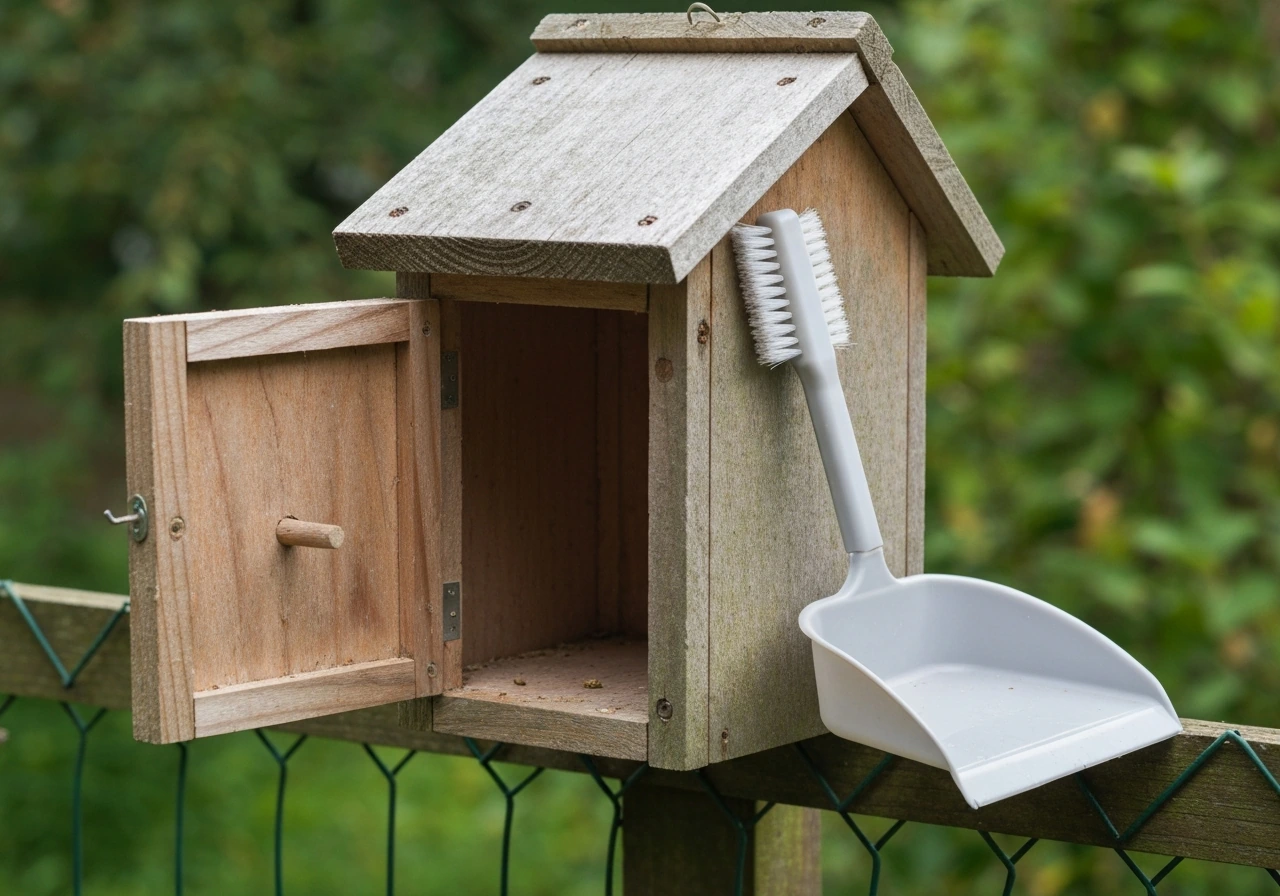
- Wait until the breeding season is clearly over. In most of North America, October through February is a safe cleaning window. San Juan Preservation Trust recommends September through February specifically for cavity nester boxes.
- Open the clean-out panel and remove all old nest material. Bag it and dispose of it. NestWatch notes that leaving nest debris behind attracts insects and increases parasite loads for the next season's occupants.
- Scrub the interior walls, floor, and roof with a stiff brush. Wildlife Trusts recommends scalding the interior with boiling water rather than using chemical cleaners, which can leave residue harmful to birds. Let the box dry completely before closing it.
- Inspect the exterior for wear: check that the entrance hole has not been enlarged, that the roof still sheds water, and that fasteners are tight. Replace any metal hole reinforcement that has rusted through.
- Rehang or recheck the baffle and make sure the mounting pole is still plumb. A tilted box can let rain in through the entrance.
- Leave the cleaned box closed or slightly propped open through winter. Some species use empty boxes for winter roosting, and a clean box is safer for that than one full of old parasites.
Ventilation and drainage are worth checking at this stage too. Bird house ventilation is also worth verifying so airflow stays adequate without making the interior too drafty. Make sure the small vent gaps near the roofline are not blocked by debris, and that the drainage holes in the floor corners are clear. Do bird houses need drainage holes to keep the interior dry, reduce mold, and protect chicks?
These features work together with the no-perch entrance design to give cavity nesters a dry, temperature-controlled, predator-resistant space, which is exactly what makes birds come back to the same box year after year. If you are wondering whether do birds like hanging bird houses, the safest answer is to focus on an entrance design that cavity nesters can use and predators cannot exploit birds come back to the same box year after year. So if you want birds to use a hanging bird house, focus on the entrance design and placement rather than adding a perch do birds like hanging bird houses.
FAQ
I bought a birdhouse with a perch, can I just leave it and rely on a predator guard?
If you remove an existing perch, also inspect the front of the box for any hardware that can create a foothold, like extra screws, wide gaps, or a roughened surface right below the hole. After you pull the rod, plug the hole and smooth any leftover burrs so the entrance area does not become a new climbing point for predators.
Do predator guards make it okay to keep the perch on the birdhouse?
A perch can be risky even if the entrance has a predator guard, because footholds often let predators get better balance and reach. If you want maximum safety, remove the perch and then verify the guard tightly covers the entrance and does not leave a usable gap for paws or bills.
Does the perch rule apply to open birdhouses and feeders too?
No. For open-front decorative boxes or feeders, birds that land on nearby surfaces may use them differently, but cavity nesters that use enclosed round-hole houses do not need a landing bar at the entrance. If your goal is cavity nesting, keep the entrance area free of exterior dowels or steps.
How do I know whether removing the perch will affect the species I want?
It depends on the species you are trying to attract. If you want birds like bluebirds, wrens, chickadees, nuthatches, tree swallows, or similar cavity nesters, the entrance should be designed with the correct hole size and no perch. If you are targeting birds that prefer open structures, the “no perch” guidance for enclosed cavity boxes may not apply.
What is the best way to remove a perch without damaging the entrance area?
For a perch mounted through a pre-drilled hole, removal is usually quick. Pull or unscrew it, then fill with a tight wood plug and exterior glue so the front face stays solid. If the perch is attached with a bracket or leaves exposed screws, remove the bracket hardware and cover any rough edges that could become climbing points.
If I remove the perch, what other “hidden perches” should I watch for?
Yes, other features besides a perch can create footholds, including thick horizontal wood strips, decorative ledges directly under the hole, and nearby branches that act like steps. If predators are a concern, keep mounting hardware and nearby vegetation from aligning with the entrance, and avoid adding anything under the hole.
Will birds stop using a box if I remove the perch, even if everything else is correct?
If the entrance is still safe for cavity nesters, a perchless design usually does not slow them down. However, if you changed the entrance hole size, positioned it too high or too exposed, or blocked ventilation or drainage during repairs, you may inadvertently reduce use. Focus on correct hole diameter, clean rough edges, proper overhang placement, and clear drainage.
Is it worth adding metal reinforcement if I already removed the perch?
A perch can become more harmful after years of use because predators, woodpeckers, and squirrels can widen the entrance. Metal reinforcement around the opening (drilled to the same diameter) helps prevent enlarging and reduces access over time, so it is a good complement to removing a perch.
Does perch removal change how often I should clean the box or monitor it?
Cleaning schedules matter. Even without a perch, old nests can attract pests or House Sparrows. Remove old nesting material after fledging (especially for multi-brood species), and do not use the entrance area as a “staging spot” for tools or feeders, which can disturb birds and increase scrutiny by competitors.
If there is no perch, is box placement less important?
Not exactly. You still need correct mounting and predator-resistant placement. Make sure the box is secure, weather-tight, and positioned so the entrance faces away from prevailing wind-driven rain, while the mounting does not allow predators to climb to the front.