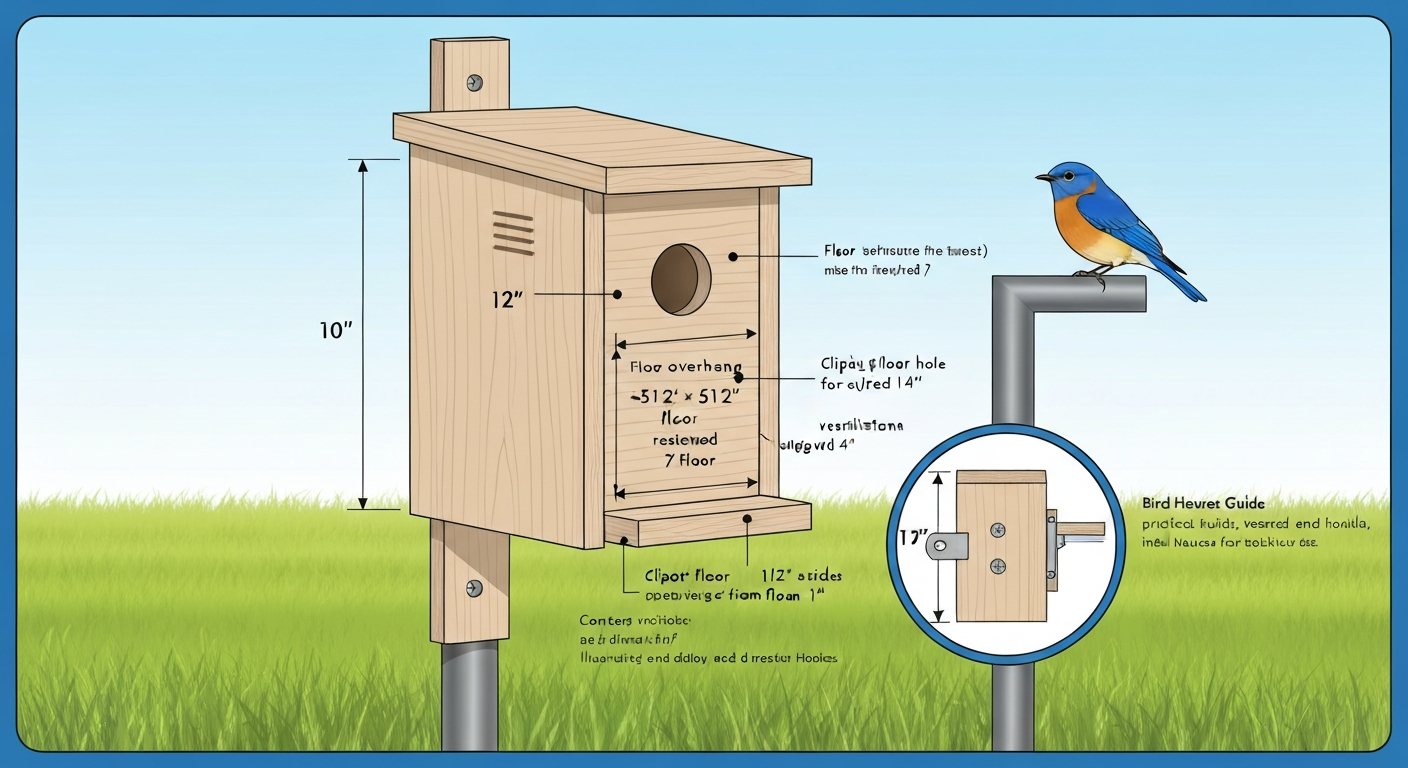
Yes, birds do use hanging bird houses, but only when the design, placement, and species match are right. A hanging box that swings from a branch or porch eave is not inherently better or worse than a post-mounted one. What matters is whether the box fits the target bird's cavity requirements: the right entrance hole, the right interior dimensions, the right height off the ground, and enough protection from predators and weather. Get those details right and a hanging house works just as well as any other mounting style. Get them wrong and the box will sit empty all season.
Do Birds Like Hanging Bird Houses? What Works Best
Maya Thompson
16 Apr 2026
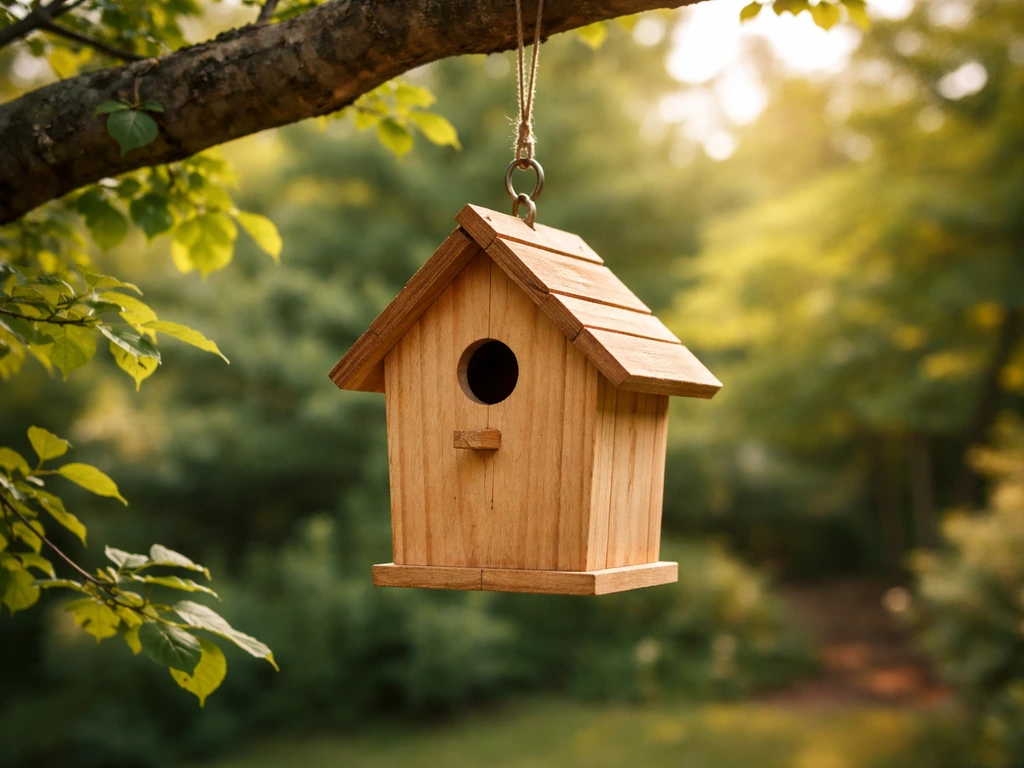
Do birds actually use hanging bird houses
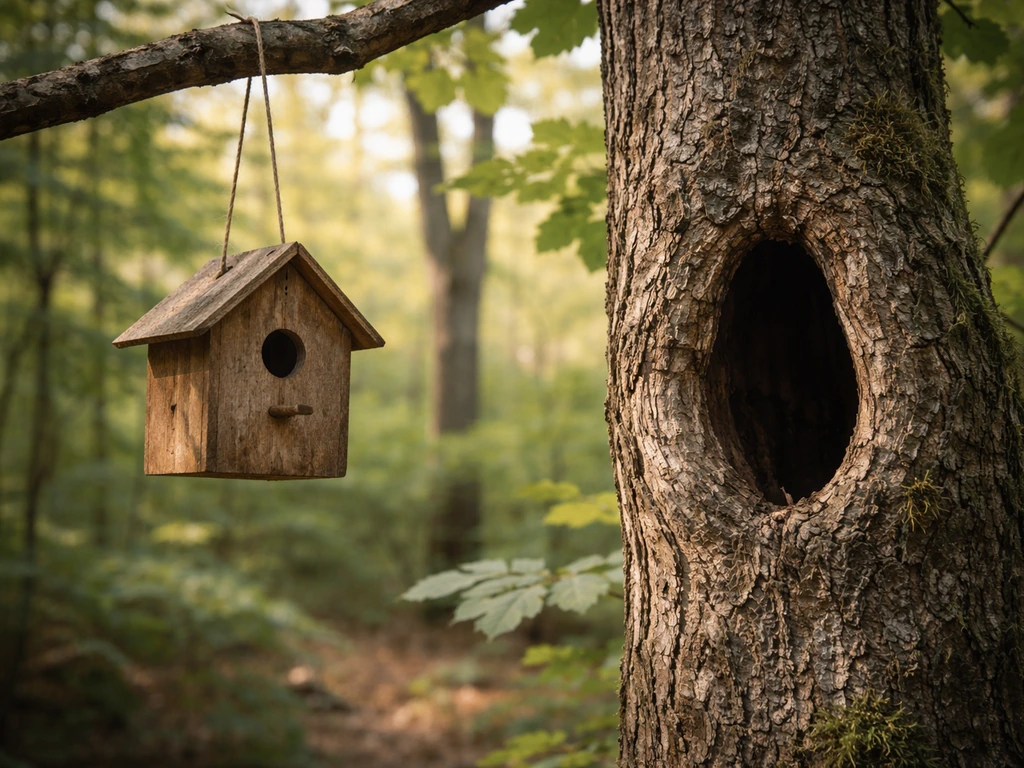
Cavity-nesting birds are not picky about whether a box hangs or is bolted to a post, as long as the box itself meets their standards. In the wild, natural cavities in snags and branches often sway in the wind, so movement alone does not deter birds. What deters them is a box that fails on the fundamentals: wrong hole size, poor ventilation, no drainage, unstable sway that goes beyond gentle movement, or a location that exposes the entrance to predators and heavy foot traffic.
If you're wondering more broadly whether birds like bird houses at all, the short answer is that cavity-nesters actively seek out enclosed spaces to nest, and a well-built box genuinely fills a real ecological gap, especially in suburban yards where dead trees get removed. Hanging boxes tap into that same behavior. The key is that the bird has to choose your box over every other option available to it, which means your box needs to win on location, safety, and fit.
Which bird species prefer hanging setups (and which don't)
House wrens are the most enthusiastic users of hanging bird houses. They naturally nest in low, sheltered cavities close to shrubby cover and take readily to a box hung from a branch or porch eave at 5 to 10 feet. Chickadees (both Carolina and black-capped) are also strong candidates for hanging boxes positioned near woodland edges. Nuthatches will use hanging boxes in wooded yards. These species are all small, agile, and accustomed to entering cavities in branches that naturally move.
Eastern and Western Bluebirds are the classic post-mounted species. They prefer open-field placement on a fixed post at 4 to 6 feet, with a clear sightline across the grass. Eastern bluebirds use boxes with an entrance hole sized to 1 1/2 inches diameter, and NJ Audubon’s nest-box placement table also suggests a box height in the 3 to 6 feet range [1 1/2-inch diameter entrance hole](https://njaudubon. org/wp-content/uploads/2020/07/NJ-Audubon-Nest-Box-Placement.
pdf). A hanging box is not ideal for bluebirds, not because of the hang itself, but because the typical hanging locations near trees and eaves do not match their open-habitat preference. If you want bluebirds, go with a sturdy wooden post. Tree swallows share bluebird habitat and also prefer a fixed pole or post in open areas over a hanging setup.
Wood ducks and screech owls use larger boxes mounted on posts over or near water, or bolted to trees. These are not good candidates for hanging setups. Flickers and other woodpeckers tend to prefer boxes screwed directly to tree trunks rather than hanging free. Purple martins use specialized colony houses on tall poles and are not relevant to hanging single-box setups.
| Species | Hanging box suitable? | Preferred mounting style | Notes |
|---|---|---|---|
| House Wren | Yes | Hang from branch or eave | Very adaptable to hanging |
| Carolina / Black-capped Chickadee | Yes | Hang from branch or post | Prefers wooded edge habitat |
| White-breasted Nuthatch | Yes | Hang or mount on tree | Works well near mature trees |
| Eastern / Western Bluebird | Not ideal | Fixed post in open field | Needs stable, open placement |
| Tree Swallow | Not ideal | Fixed post in open area | Shares bluebird habitat preferences |
| Wood Duck | No | Post over water or tree trunk | Requires very stable mounting |
| Screech Owl | No | Mounted to tree trunk | Needs solid, non-swinging box |
How to choose the right size and entrance hole
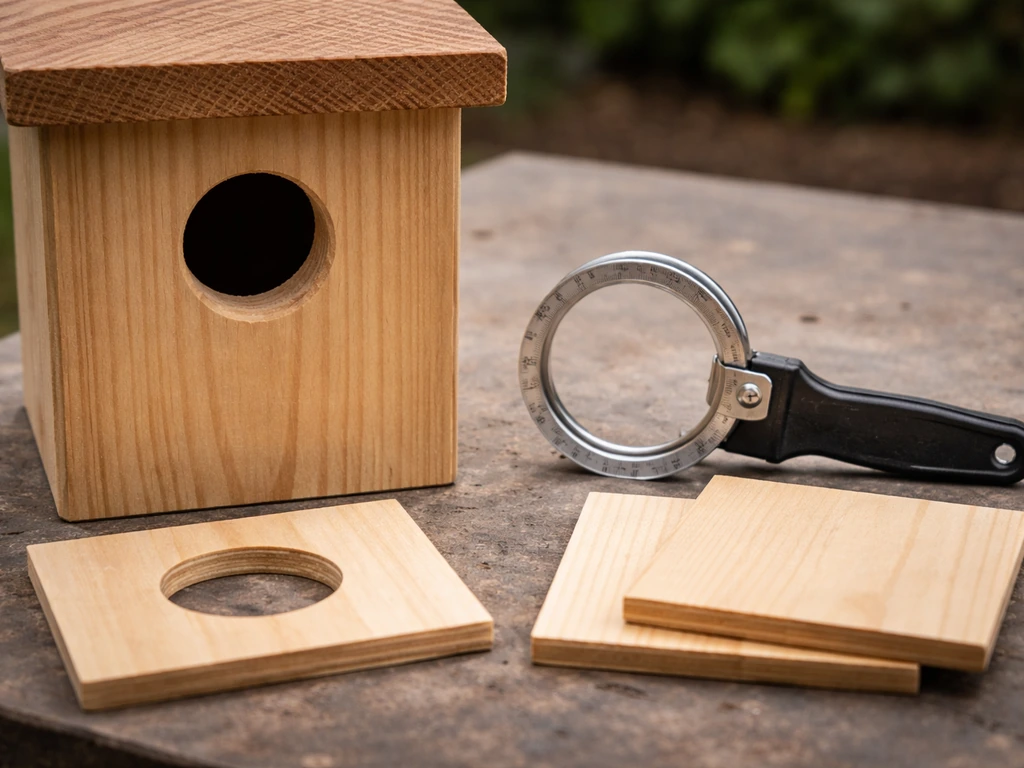
Entrance hole diameter is the single most important dimension on any bird house. It acts as a filter: the right size lets your target species in and keeps larger, competing birds out. A house wren needs a 1.5-inch hole. A Carolina chickadee does best with a 1.25-inch hole, which is slightly smaller than what you would use for a bluebird box. Getting this wrong by even a quarter-inch can block your target species entirely or invite starlings and house sparrows to take over.
Interior floor size and depth matter too. A box that is too deep makes it hard for small nestlings to thermoregulate and climb out at fledging time. For reference, bluebird box guidelines from the North American Bluebird Society recommend an internal depth of roughly 4. North American Bluebird Society guidance cited by Sialis.
org recommends a 1. 5-inch diameter entrance hole for Eastern bluebirds (with a slightly different size for Mountain bluebirds) [bluebird box guidelines from the North American Bluebird Society recommend an internal depth of roughly 4. 5 to 6 inches from the bottom of the entrance hole to the floor](https://www. sialis.
org/entrance-hole-debate/). 5 to 6 inches from the bottom of the entrance hole to the floor. Wren and chickadee boxes are typically a bit smaller overall, with a 4x4-inch floor being a common spec. For a full species-by-species breakdown of floor sizes and depths, check a resource like CARERI's nest box placement framework, which lays it all out clearly.
Make sure the hanging box you choose or build also includes drainage holes in the floor (at least four small holes drilled in the corners) and ventilation gaps near the top of the side walls. Bird houses need drainage holes to prevent water pooling on the nest floor, which can chill eggs and kill nestlings. Equally important, bird houses need ventilation to prevent heat buildup in summer, especially in a hanging box exposed to afternoon sun. Both are non-negotiable.
One design question that comes up often is perches. Most commercially sold bird houses include a small wooden dowel below the entrance, but cavity-nesting birds do not need one and predators can use it to reach inside. If you want to know more about this, the topic of whether bird houses need a perch is worth a read before you buy or build. The short version: skip the perch, or remove it if your box already has one.
Best placement: height, location, orientation, and timing
For the species most likely to use hanging boxes (wrens, chickadees, nuthatches), hang the box between 5 and 15 feet off the ground. Wrens will use boxes as low as 5 feet when cover is close. Chickadees and nuthatches prefer 8 to 15 feet, ideally near the edge of mature trees. Avoid hanging the box in the center of a dense canopy where predators can reach it easily from multiple branches.
Orientation of the entrance hole matters more than most people expect. Face the entrance away from prevailing winds and driving rain, which in most of North America means orienting it toward the east or southeast. This also gives the box morning sun, which warms the interior early in the day. Avoid west-facing entrances in hot climates because afternoon heat inside a closed box can be lethal to eggs and nestlings.
Hang the box in a spot with partial shade, especially for species that nest in summer heat. A box under leafy canopy cover is much safer thermally than one dangling in full afternoon sun. Keep the box at least 10 feet from your active bird feeders. Feeders attract traffic and noise that nesting birds find stressful. Similarly, keep the box well away from windows, ideally more than 30 feet, to reduce collision risk as adults come and go.
Timing is critical. Birds in most of North America begin scouting for nest sites in late winter to early spring, often February through March. Get your hanging boxes up by late February or early March at the latest for the best chance of occupancy that season. If you are shopping for a hanging house right now in April, some birds are still in early nest-building stage, so it is not too late, but do not wait. Home Depot does sell bird houses if you need one quickly, though building your own lets you control the exact dimensions.
Why hanging bird houses go unused (troubleshooting checklist)
If your hanging box sat empty last season, run through this list before assuming the location is just wrong. Most unused boxes have a fixable problem.
- Wrong entrance hole size: a 1.5-inch hole meant for wrens won't attract chickadees (1.25 inch), and either will let house sparrows in if not monitored.
- Excessive sway: gentle movement is fine, but a box that spins or swings dramatically in the wind is uncomfortable for nesting birds. Use a short, rigid hanging setup rather than long rope.
- Entrance faces prevailing rain or hot afternoon sun: rotate the box so the hole faces east or southeast.
- Box is too close to feeders or high foot-traffic areas: move it at least 10 feet from feeders and away from paths or patios.
- No nearby perching spot: nesting birds like to pause and survey the area before entering. A small branch or stub nearby (not on the box itself) helps.
- Interior too large or too small: an oversized interior loses heat; an undersized one crowds the nest. Match floor dimensions to the target species.
- No drainage or ventilation: standing water and heat are nest killers. Drill four corner drainage holes and add ventilation slots if missing.
- Old nesting material still inside from last year: cavity-nesters often refuse a box that already contains a used nest. Clean it out every fall.
- Predator pressure: if cats, raccoons, or squirrels are regularly in the area, birds will abandon even a well-placed box. See the mounting and predator-proofing section below.
- Installed too late in the season: birds may have already committed to a natural cavity or another box.
Material and color can also play a role. Brightly painted or ceramic boxes can look attractive in a garden but may behave differently in terms of heat and moisture. If you are curious about specific material effects, there is useful information on whether birds like ceramic bird houses and also on whether birds like bright colored bird houses, both of which affect how birds perceive a box and how well it manages interior temperature.
How to mount and predator-proof hanging bird houses
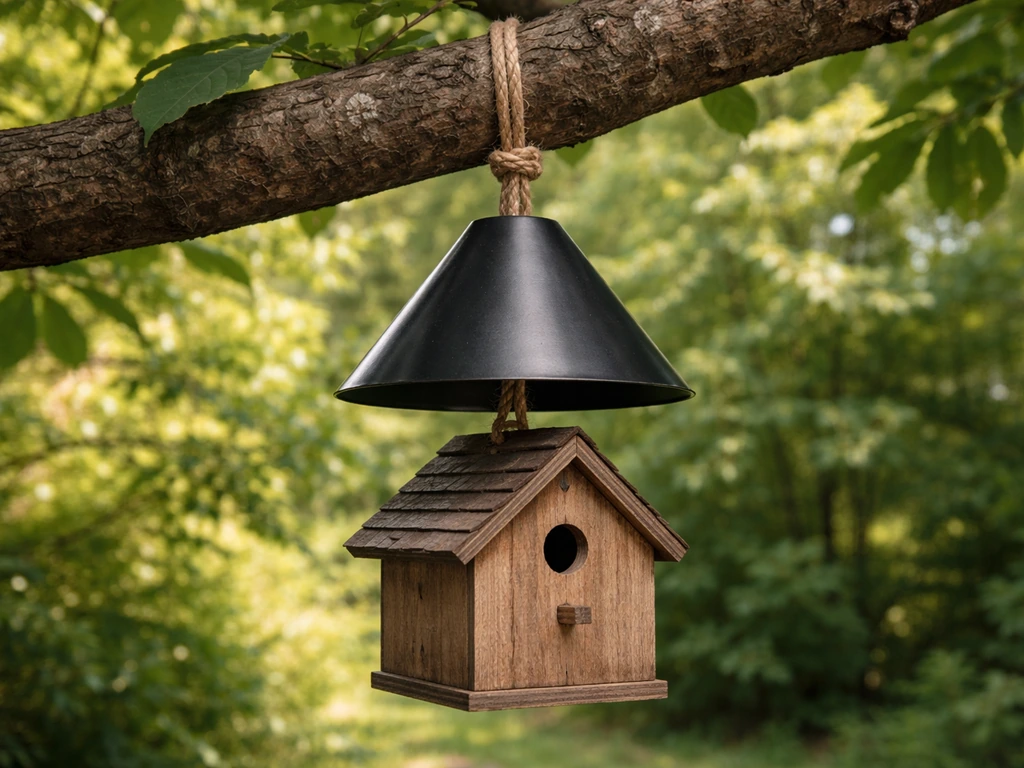
The hanging method determines both stability and predator access. Long rope or cord creates too much movement and gives squirrels an easy shimmy down to the box. Use a short length of galvanized chain (12 to 18 inches) or a rigid hook-and-eye setup to hang the box from a branch or hook screwed into an eave. This limits sway to a gentle rock rather than a full pendulum swing, which birds are much more comfortable with.
For boxes hung from a branch, consider adding a cone-shaped metal baffle above the hanging point. Squirrels jumping from nearby branches are harder to stop than squirrels climbing a pole, but a wide cone baffle (at least 18 inches in diameter) mounted on the chain above the box makes it much harder for them to reach the entrance. Raccoons are the bigger nighttime threat: their long arms can reach inside any box with less than 4 inches of depth above the entrance hole, so make sure your box has adequate interior depth.
OSU Extension recommends adding a predator guard (also called an entrance block or hole protector) around the entrance hole. This is a small wooden or metal plate with the same hole diameter as the box, screwed flush against the entrance face. It extends the depth of the entrance tunnel to about 1.5 inches, making it much harder for a raccoon paw or squirrel to reach inside from the front. This is one of the cheapest and most effective upgrades you can make.
NestWatch also notes that reducing attractants near the nest box helps. Leaving pet food or bird seed right below a hanging box draws predators directly to that spot. Keep the area under the box clear, and move feeders at least 10 feet away. For boxes hung from eaves or fences where cats are a threat, a metal collar or spiky baffle on the hanging wire will discourage climbing.
One final design consideration worth mentioning: swinging bird houses are a popular decorative option, but significant movement can stress nesting birds during incubation and can make it easier for predators to destabilize the box and access the contents. If you have a swinging-style box, limit the arc of movement with a short anchor cord tied from the bottom of the box to the branch or structure below it.
Maintenance and sanitation between and after nesting
The golden rule of nest box maintenance is: never disturb an active nest. Once eggs are laid or chicks are present, leave the box completely alone. Checking too often, especially by lifting the lid repeatedly, can cause parent birds to abandon the nest. If you want to monitor progress, do a single, brief check per week at most, standing back and observing whether adults are entering and exiting before opening the box.
After fledging (typically 2 to 6 weeks after eggs hatch, depending on species), the nestlings will leave and the box will be empty. This is when you clean. Remove the old nest completely. If the interior shows fecal matter or is damp, clean it with a diluted bleach solution, specifically 1 part bleach to 10 parts water, as recommended by NestWatch at Cornell Lab. Wipe all interior surfaces, rinse thoroughly, and let the box dry completely in open air before closing it back up. This kills mites, bacteria, and fungal spores that could harm the next clutch.
Many species attempt a second or even third clutch in the same season if the first is successful. After cleaning, rehang the box promptly so it is available for a second nesting attempt. In many parts of the country, wrens and chickadees start a second round by mid-summer. After the final clutch of the season (usually by late August or September), do a full cleaning and leave the box open or bring it inside until late winter, when you can rehang it and inspect the hardware for wear.
Check the hanging chain or hook annually for rust or stress fractures. A box that falls during active nesting is devastating and entirely preventable. Inspect the wood for cracks that could let in water or cold air, and re-caulk or replace panels as needed. A well-maintained hanging box can serve birds for a decade or more.
FAQ
Can I hang a bird house even if I do not know which species will use it?
They can, but the box must still match the target species. Many cavity nesters will ignore a house that is the wrong entrance size or lacks proper ventilation and drainage. Also, if the hanging spot is very exposed, parent birds may avoid it even when the dimensions are correct.
What happens if my hanging bird house faces west?
Usually not. In warmer climates, a west-facing entrance can overheat the interior in afternoon sun, and overheating can fail an entire clutch. If you only have a west-facing option, increase shade (for example, canopy cover) and ensure strong ventilation gaps near the top, but east or southeast is still the safer default.
Will hanging a bird house near a busy path or driveway work?
Yes, but it often changes what birds pick it. If the box is high enough and the area below is quiet, some wrens and chickadees may still use it. If it becomes difficult for the birds to enter and exit safely, or traffic increases predator pressure, occupancy drops.
Does trimming shrubs around the hanging bird house hurt bird activity?
It can reduce use. If you keep mowing or trimming right around the hanging box, you remove the shrubby or sheltered cover that wrens and chickadees often rely on. Try to leave a buffer zone of natural cover within a few feet of the box when possible.
How often can I check a hanging bird house?
Do it only when the area is not occupied and after fledging. Opening the box frequently during incubation can cause abandonment. A safer approach is one brief observation per week, then full cleaning after the nest is empty.
My hanging bird house swings a lot in wind, will birds still nest there?
Yes, and it is a common failure point. If the box sways like a pendulum or swings far in wind, adults may avoid it and predators can destabilize access. Use a short chain or rigid hook setup, and for swinging styles limit the arc with an anchor cord.
Can entrance-hole size be “close enough” for birds to use it?
If the entrance hole lets in a larger competitor or predators, yes. Even a small diameter mismatch can shift which species can enter, and it may invite starlings or house sparrows. Measure carefully, then use the hole sizes that match your intended species.
If my hanging bird house stays empty, should I just move it higher?
Sometimes, but it is not the best way to solve a placement problem. If the box is in the wrong habitat (like an open-field species placed near eaves or dense trees), raising or lowering height may not fix the issue. First confirm entrance size, interior dimensions, and predator protection.
Should I remove the built-in perch on a hanging bird house?
Not ideal. Perches can increase predator reach and may attract wrong users. If your box includes a dowel perch, remove it if it is easily detachable, or choose a model designed without a perch for cavity nesters like wrens and chickadees.
What is the safest way to hang a bird house from a tree branch?
It depends on the installation. Rope and long cords usually create too much movement and give squirrels easier access, especially if they can climb to the top and shimmy. Chains that keep movement gentle, and metal or wood hardware mounted securely, typically perform better.
How can I reduce cat risk with a hanging bird house?
Yes, cats can be the main issue even if the box is otherwise perfect. For eaves or fence-mounted setups where cats can reach, use a hanging wire collar or a spiky anti-climb baffle, and avoid placing the box on the same access route cats use to reach indoor doors or windows.
Next Article
Blue Bird House Instructions: DIY Plans, Sizes & Mounting
DIY bluebird house: step-by-step build, exact cuts and hole sizes, mounting, predator guards, cleaning, and care.