Yes, birds absolutely use bird houses, but only if the box matches what a specific species actually needs. There is no universal birdhouse that every backyard bird will love. The birds most likely to move into a box in a typical North American backyard are Eastern Bluebirds, Black-capped Chickadees, House Wrens, Tree Swallows, and nuthatches. Each one has a preferred entrance-hole size, interior depth, mounting height, and habitat type. Get those details right, and you have a real shot at occupancy. Get them wrong, and the box will sit empty while birds nest in a shrub ten feet away.
Do Birds Like Bird Houses? Which Birds and How to Choose
Maya Thompson
7 May 2026
Do birds actually use bird houses (and what "like" really means)
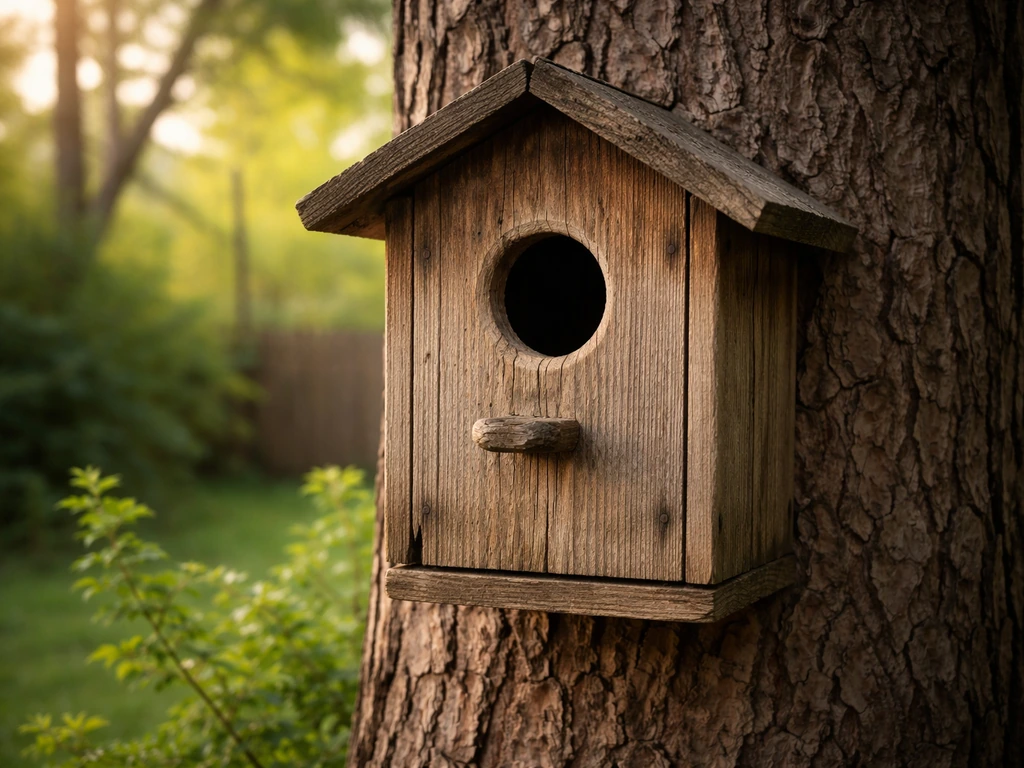
Birds do not "like" birdhouses the way a person likes a cozy chair. What they respond to is whether a box resembles a natural tree cavity well enough to trigger their nesting instincts. Cavity-nesting species like bluebirds, chickadees, and wrens evolved to find hollow spaces in trees, and a well-built box is simply a wooden cavity that checks the same boxes: the right entrance-hole diameter to keep predators out and rivals away, a dark interior deep enough to feel protected, no perch on the outside (which actually helps predators, not birds), and a location in the right habitat at the right height.
Research backs this up. Studies confirm that birds do use nest boxes and that box characteristics, especially entrance-hole size, wood vs. plastic construction, and placement, directly affect whether a box gets accepted. One study found wooden nest boxes had significantly higher occupancy rates than plastic ones. Another found overall occupancy rates of only 15 to 31 percent across sites, which is a useful reality check: not every box you put up will be used, and that is often a placement or design problem rather than proof that birds dislike birdhouses. The US Forest Service has also noted that nest-box productivity and predation outcomes can differ from natural cavities, so "used" does not always mean "perfect," but it does mean birds genuinely choose boxes when those boxes fit their needs.
Which birds are most likely to use bird houses in backyards
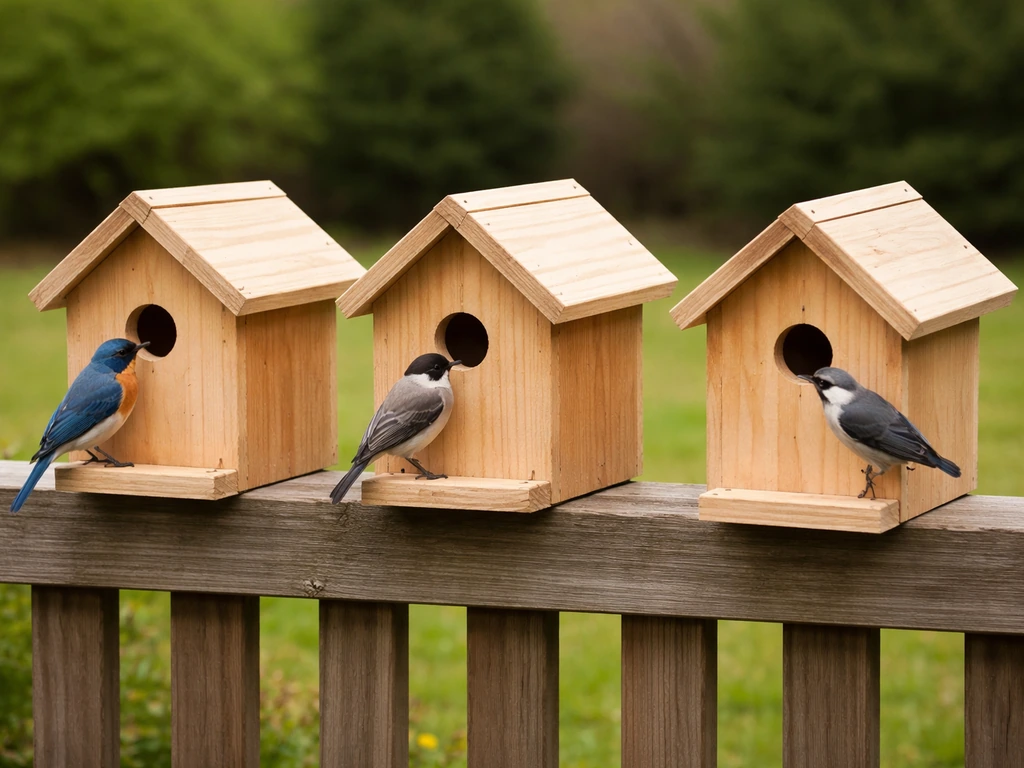
Only cavity-nesting species will use a birdhouse. Robins, cardinals, and most songbirds build open-cup nests in trees or shrubs and will never enter a box, no matter how nice it looks. The species below are the ones realistically likely to use a properly sized and placed box in a typical backyard across much of North America.
| Species | Entrance Hole | Floor Size (inside) | Interior Depth (inside) | Height Above Ground | Habitat Notes |
|---|---|---|---|---|---|
| Eastern Bluebird | 1.5 in diameter | 5 x 5 in | 8 in | 3–6 ft | Open fields, meadows, fence lines |
| Black-capped Chickadee | 1.125 in diameter | 4 x 4 in | 8–10 in | 5–15 ft | Woodland edges, yards with trees |
| House Wren | 1–1.25 in diameter | 4 x 4 in | 6–8 in | 5–10 ft | Shrubby yards, garden edges |
| Tree Swallow | 1.5 in diameter | 5 x 5 in | 6–8 in | 4–8 ft | Open areas near water |
| White-breasted Nuthatch | 1.25–1.375 in diameter | 4 x 4 in | 8–10 in | 5–15 ft | Mature deciduous woods, large yards |
| Northern Flicker | 2.5 in diameter | 7 x 7 in | 17 in | 10–15 ft | Open woods, yards with large trees |
| Downy/Hairy Woodpecker | 1.25–1.5 in diameter | 4 x 4 in | 10–12 in | 8–20 ft | Wooded yards, forest edges |
| Purple Martin | 2.125 in diameter | 6 x 6 in (per unit) | 6 in | 12–20 ft (colony house) | Open areas near water, community housing |
Your region matters too. Bluebirds are a strong target across the eastern US, western US (Western Bluebird), and parts of Canada. Chickadees and House Wrens are found nearly everywhere. If you live near water or open farmland, Tree Swallows are excellent candidates. In the Pacific Northwest or mountain West, you might target Western Bluebirds, Mountain Chickadees, or Violet-green Swallows with the same basic box specs. Check what cavity nesters actually live in your area before you build or buy.
Birdhouse types and design features birds prefer
Wood is the material birds respond to best. A plain cedar, pine, or plywood box without paint on the inside will outperform a decorative ceramic or plastic house in nearly every study and in practical experience. If you are weighing material options, an unpainted or naturally finished wooden box is your safest bet. Ceramic houses can look attractive but tend to heat up, hold moisture poorly, and show lower occupancy in research. Ceramic bird houses can look nice, but the material tends to heat up and perform worse for nesting occupancy than better options like unpainted wood. Plastic houses share similar problems. The interior should be rough or have shallow grooves below the entrance hole so nestlings can climb out when it is time to fledge.
Entrance hole: the single most important dimension
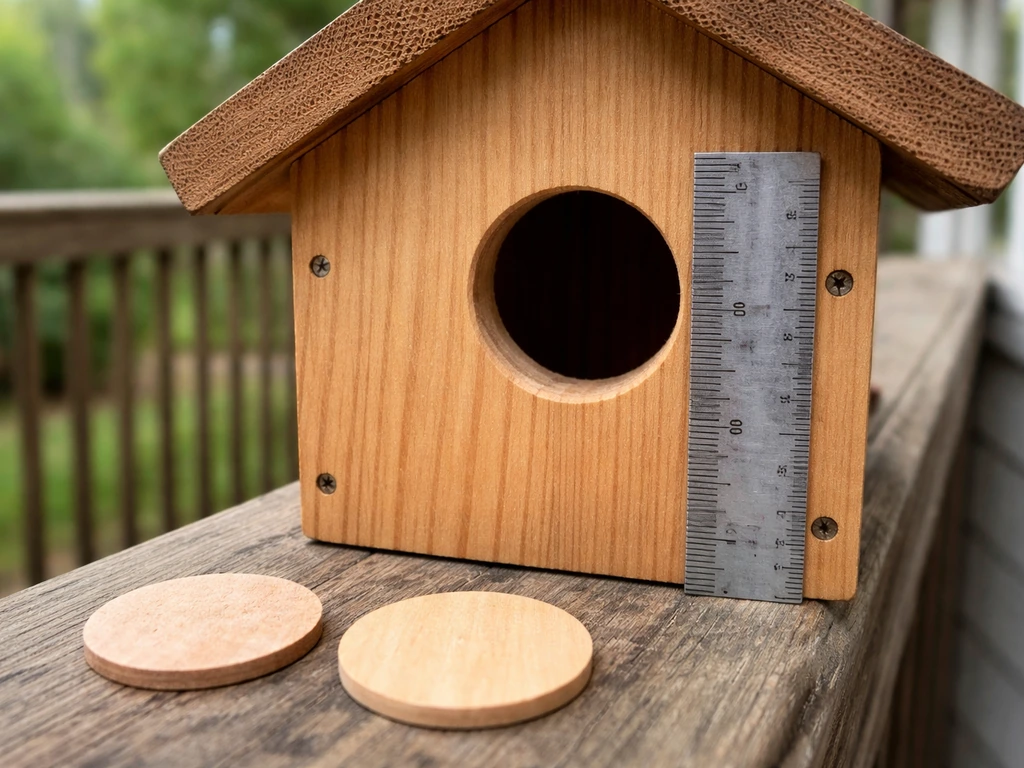
The entrance-hole diameter controls everything. A hole that is too large lets in House Sparrows, European Starlings, squirrels, and raccoon paws. A hole that is too small keeps your target bird out. An Audubon-affiliated birdhouse sizing chart lists recommended entrance-hole diameters for species like Eastern Bluebirds (about 1 1/2 inches) and Black-capped Chickadees (about 1 1/8 inches) blank" rel="noopener noreferrer">A hole that is too small keeps your target bird out.. Audubon’s bluebird box guidance also specifies entrance-hole sizes by species, including 1 1/2 inches for eastern and western bluebirds, to improve acceptance blank" rel="noopener noreferrer">A hole that is too small keeps your target bird out.. The Alaska Department of Fish and Game specifically flags this as the most critical design element: get it wrong and predators and competing species will dominate the box. Use a hole saw or spade bit and measure twice. A 1.5-inch hole is correct for bluebirds and Tree Swallows. A 1.125-inch hole is right for chickadees and excludes House Sparrows. A 1.25-inch hole suits wrens. Do not add a perch below the entrance hole. Perches do not help cavity-nesting birds (they cling naturally to rough wood) and give predators and House Sparrows a convenient foothold.
Ventilation, drainage, and weather protection
Drill small ventilation gaps or holes near the top of the side walls so heat can escape on hot days. Drill four small drainage holes (about 0.25 inches each) in the corners of the floor so any water that gets in can drain out rather than soaking the nest. For the entrance hole itself, tilt it very slightly downward when you cut it, or angle the front panel of the box so the hole faces a few degrees toward the ground. Mass Audubon recommends this specifically to keep wind-driven rain from blowing straight in. Wood Magazine seconds the approach for both entrance and ventilation holes. These are small details that make a real difference in whether birds stick around after prospecting the box.
Predator guards: not optional
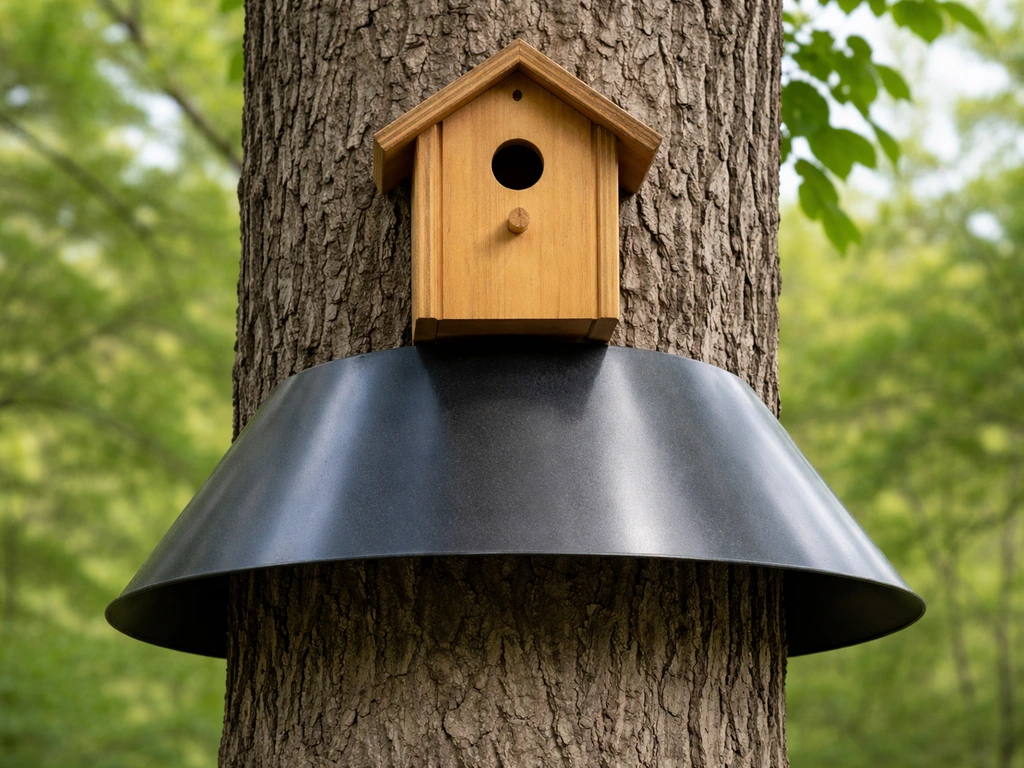
A predator guard is one of the most important additions you can make, and the Tennessee Wildlife Resources Agency is blunt about it: predators will eat eggs, nestlings, and adults if given the chance, and a guard is critical to reducing nest predation. Install the guard before you mount the box, not after. The most common options are a metal baffle on the pole below the box (to stop climbing mammals), a metal hole-protector plate around the entrance to prevent gnawing and enlargement, and an extender block (a 2-inch thick wood block with the same-size hole) to increase the depth of the entrance tunnel so predators cannot reach inside. For Purple Martin houses specifically, the NC Purple Martin Society recommends guards on all active houses and notes that electric guards are non-injuring deterrents that work well.
How to choose the right birdhouse for your yard and target species
Start with your habitat, not the box. Walk your yard and note what surrounds it: open lawn with scattered trees, dense shrubs, a nearby pond or stream, mature forest edge, or wide-open meadow. That habitat tells you which cavity nesters are realistic targets. If you have open lawn and a fence line, bluebirds and Tree Swallows are your best bets. If you have a shrubby, woody yard with trees, go for chickadees or wrens. If you back up to woods, nuthatches and woodpeckers become possible.
Once you have a target species, look up its exact box specifications before you build or buy. The dimensions in the table above are a starting point, but always cross-check with a species-specific chart (Audubon, NestWatch, or your state wildlife agency all publish them). Interior depth matters because it affects how safe birds feel inside. Floor size matters because it needs to fit a nest and a clutch of eggs. A box that is too shallow or too small will be investigated and then abandoned.
If you are buying rather than building, check the entrance-hole diameter on the label before you buy. Many decorative birdhouses sold in garden centers have holes that are either too large (1.75 to 2 inches, which invites starlings) or have perches that work against you. A simple unfinished cedar wren or bluebird box from a hardware store or wildlife organization is often a better choice than a painted decorative house. If you are shopping in person, a hardware store is also a common place to find basic birdhouse options. Questions about hanging versus mounted boxes, whether your box needs a perch, and whether bright colors matter are all worth thinking through since design choices like those affect acceptance. Birds also tend to be pickier about fit and safety than about bright colors, so focus on the box specs first.
Placement basics: height, direction, habitat, and timing
Height and facing direction
Mount the box at the height your target species expects. Bluebird boxes go at 3 to 6 feet on a smooth metal pole with a baffle. Chickadee boxes go at 5 to 15 feet on a tree or pole. House Wrens are flexible at 5 to 10 feet but prefer to be near shrubby cover. Nuthatches like 5 to 15 feet on tree trunks at woodland edges. Northern Flickers need 10 to 15 feet up, ideally on a tree. Face the entrance hole away from prevailing winds (generally toward the east or southeast in most of North America) and away from the hottest afternoon sun. Tilting the box very slightly forward, so the entrance hole angles a few degrees downward, also helps shed rain.
Spacing between boxes
Most cavity nesters are territorial about their nesting site. NJ Audubon specifies a minimum of 300 feet between Eastern Bluebird boxes to avoid competition between pairs. House Wrens are aggressively territorial and will puncture eggs in nearby boxes, so do not put multiple wren boxes close together. Tree Swallows are more tolerant of each other and can be paired (two boxes 15 to 25 feet apart), because the paired boxes reduce same-species competition while the birds defend their immediate box area.
When to install the box
Earlier is better. Most cavity nesters start scouting for nest sites weeks before they begin building. In the eastern US, have bluebird boxes up by late February or early March. Chickadee and wren boxes should be up by April at the latest. In northern states and Canada, aim for as soon as the ground thaws if you are putting up a pole. If you already have a box from last year, clean it out now (more on that below) and it is ready to go. Birds will sometimes roost in boxes over winter, so a box that goes up in fall can still be used before nesting season starts.
How to troubleshoot when no birds use the house (and how to fix it)
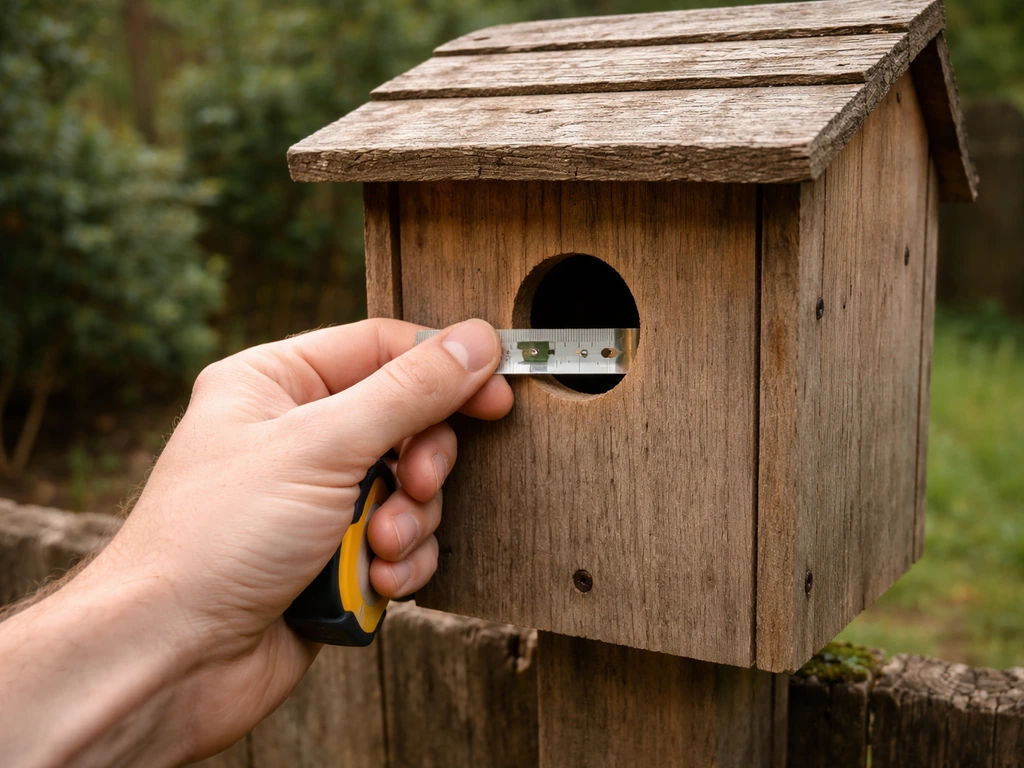
If birds are not using the box after four to six weeks during active breeding season, work through this checklist before giving up. Most empty-box problems have a fixable cause. If you want to try a swinging bird house, start by choosing the right cavity specs for your target cavity-nesting species.
- Check the entrance-hole size. Measure it. Even a sixteenth of an inch matters. If a hole saw cut it slightly large, the wrong species may be keeping your target birds away.
- Check the mounting height. Is it within the species-appropriate range? A bluebird box at 15 feet is much less likely to be used than one at 4 feet.
- Check the habitat. Is the box in open space with a clear flight path to the entrance? Bluebird boxes should not be in dense shrubs. Wren boxes should not be in wide-open fields with no nearby cover.
- Check for predator activity. Look for scratch marks, gnawed wood, or a hole that has been enlarged. Add or improve a predator guard immediately.
- Check for competing species. House Sparrows will take over a bluebird box fast. Monitor weekly. If House Sparrows are nesting, remove their nest (they are an introduced, invasive species and not protected under the Migratory Bird Treaty Act).
- Check the interior. Is the box full of old nesting material from a previous year? Birds often avoid a box with an old nest in it. Clean it out.
- Check the entrance direction. Is it facing into prevailing winds or harsh afternoon sun? Reorient the box if possible.
- Check for internal moisture. If there is water staining or mold inside, the drainage and ventilation holes may be blocked or missing. Drill them if needed.
- Consider moving the box. If the location has had no activity for a full season, try relocating it 50 to 100 feet in a direction with more appropriate habitat.
Cleaning: when and how
Sanitation directly affects whether birds will reuse a box. Cornell Lab's NestWatch recommends removing old nesting material and scrubbing the interior with a mild detergent and water solution at the end of the season. You can wait until fall if you want to avoid disturbing late broods. Only clean an active box when there is absolutely no sign of current breeding activity, no eggs, no young, no attending adults. Some nest monitors clean after every brood. The point is simple: a clean box is more likely to be used again the following year. The same PMC research that found wooden boxes had higher occupancy also found they carried higher parasite and bacterial loads, which is exactly why cleaning matters. A quick scrub once a season dramatically reduces flea and pathogen buildup.
The overall picture is this: birds are not being picky for the sake of it. They are responding to real physical cues that tell them whether a cavity is safe, the right size, in the right place, and worth raising a family in. Match the box to the bird, place it in the right habitat at the right height, protect it from predators, and keep it clean. Do those things and your odds of attracting cavity nesters go up dramatically. Start with one species, get the specs right, and put the box up this week while the season is still early enough to matter.
FAQ
What should I check first if birds do not use my bird house after I put it up?
If a box stays empty, first confirm it is for a cavity-nesting species in your area, then check the entrance-hole diameter and mounting location. Many “empty box” cases are actually predation or competition, for example a hole that is slightly too large inviting House Sparrows or starlings, or placement that is in a habitat the target bird avoids.
Can I clean out a bird house right away if it looks messy or has old nests?
Remove nesting material and scrub the box after breeding season, but only when there is no active nesting activity. If you see eggs, young, or attentive adults, leave the box alone. If birds roost in it over winter, do the cleaning after you confirm nesting has finished.
Why might birds stop after they initially inspect the box?
Many cavity nesters will inspect and abandon a box if it is too exposed. Avoid placing boxes in direct afternoon sun when possible, and face the entrance away from prevailing winds. Small ventilation and drainage holes help, but shade and correct orientation still strongly affect whether birds keep prospecting.
Is it okay to move or reposition a bird house during nesting season?
Yes, you can reduce the chance of disturbance by choosing a less disruptive schedule, but you should still clean between broods only when the box is truly inactive. If multiple broods are possible, do not rush to clean during the season, and avoid moving the box once birds begin using it.
Do birds care whether the bird house is painted bright colors?
Bright color is usually not the deciding factor, but surface temperature is. A highly reflective or dark-painted exterior can overheat the interior in hot sun, which reduces acceptance. Use unpainted or naturally finished wood on the inside, and if you paint, keep it to exterior surfaces and avoid dark colors.
What does it mean if birds are using the box but eggs never appear?
If you see birds using a box but not nesting, the issue is often safety or interior fit. Examples include predator access (missing or weak baffles/guards), wrong entrance-hole size, or interior depth being too shallow for the species. Also check for water pooling, blocked ventilation, or a box mounted at an incorrect height for that species.
Can I use one birdhouse design to attract multiple bird species?
A “universal” birdhouse often fails because cavity nesters have species-specific entrance sizes and interior dimensions, and non-target species may take over. If you want to support more than one species, use species-specific boxes spaced appropriately rather than trying to compromise on a single design.
Should I treat my birdhouse differently depending on where I live (predators, rain, heat)?
Yes. The same cavity specifications can work differently depending on local predators, wind-driven rain, and available cavities. For example, in areas with climbing mammals, prioritize a baffle and a properly installed pole guard before fine-tuning decorative features.
What if my birdhouse is the right size, but my yard habitat does not match the species?
Some birds, like chickadees and wrens, can use boxes but may prefer specific nearby habitat cover. If your yard is mostly open lawn, a box that is “correct” on paper may be ignored until you place it near suitable cover or edge habitat for that species.
How can I tell if predators or other wildlife are taking over my bird house?
Owls and some other wildlife do use cavities too. If you suspect predators or other wildlife are the problem, increase protection with stronger entrance protection and a proper predator baffle, and verify you did not include a perch. Also consider using species-specific tunnel designs (for example extender blocks) so access to the cavity is harder.
Next Articles
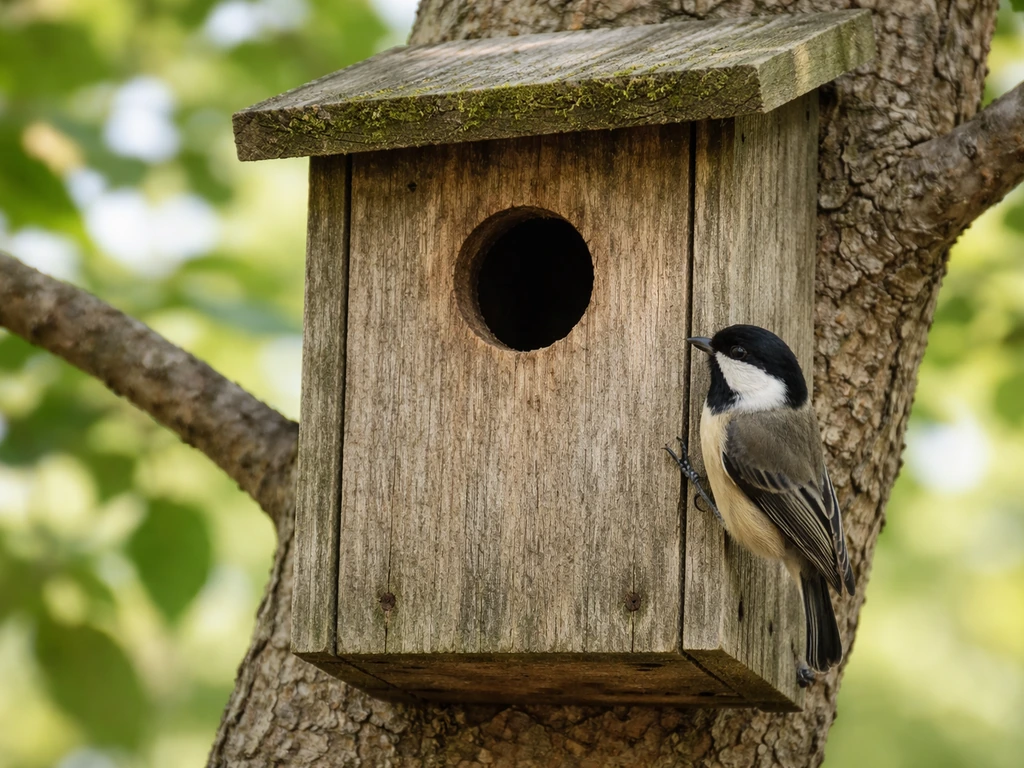
Do Bird Houses Need a Perch? When to Add or Skip One
Find out if bird houses need a perch, when to add or skip it, and how to install safely for your target species.
Do Birds Like Hanging Bird Houses? What Works Best
Yes for some species. Learn which birds use hanging bird houses and how to place, size, secure, and maintain them.
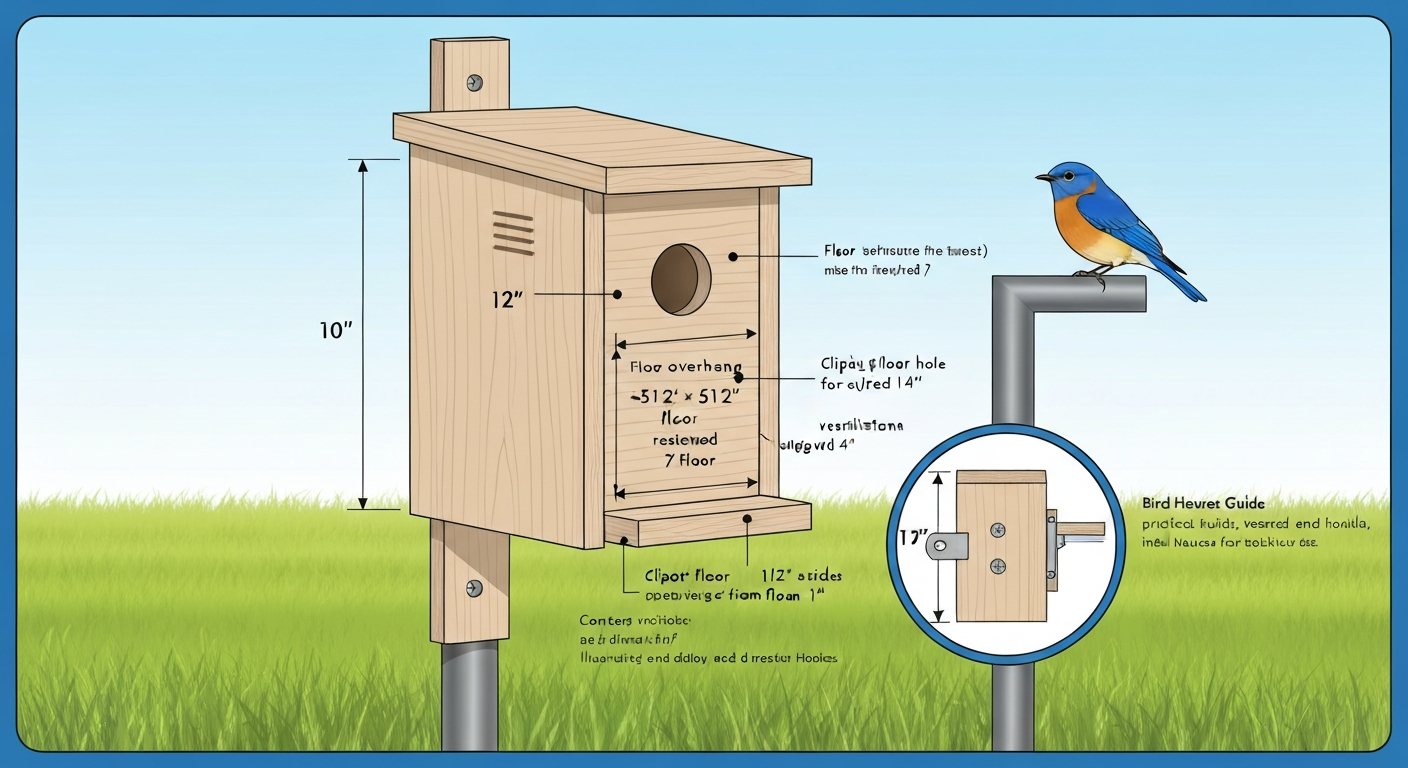
Blue Bird House Instructions: DIY Plans, Sizes & Mounting
DIY bluebird house: step-by-step build, exact cuts and hole sizes, mounting, predator guards, cleaning, and care.