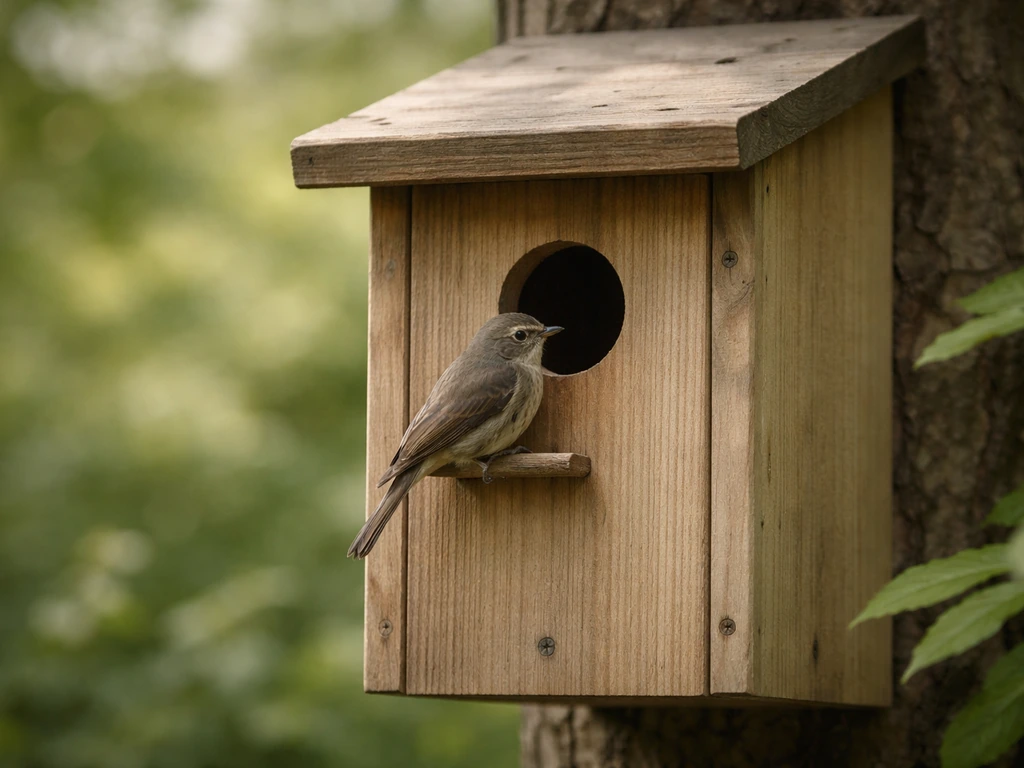
Yes, birdhouses need drainage holes. At least four holes drilled into the floor, each 3/8 to 1/2 inch in diameter, placed near the corners, is the standard recommendation from wildlife agencies and nest box researchers alike. Without them, rainwater that gets inside has nowhere to go, and a wet nest is one of the fastest ways to lose a clutch of eggs or a brood of nestlings.
Do Bird Houses Need Drainage Holes? Easy DIY Guide

Maya Thompson
25 Jun 2026
Do birdhouse drainage holes actually matter?
They do, and more than most people realize. A well-designed nest box controls moisture from two directions: keeping rain out in the first place (via roof overhang and tight construction), and letting any water that does get in escape quickly. Drainage holes handle that second job. When water pools on the floor of a nest box, it soaks into the nesting material, which is usually dry grasses, moss, or pine needles. Once that material is saturated, it can compress and even collapse under the weight of eggs or chicks. Wet, compacted nesting material also becomes a prime breeding ground for mold, bacteria, and parasites, all of which raise serious risks for developing nestlings.
Research on nest box microclimates backs this up. Studies comparing nest box environments have found that dampness and poor moisture control are linked to higher pathogen and parasite loads, and that wet feathers on nestlings can cause dangerous heat loss. Heavy rainfall events are already a documented source of nestling mortality in cavity-nesting birds, so anything that keeps water pooling inside a box works against the birds you are trying to help. Drainage holes are a simple, inexpensive fix that removes the problem entirely.
How drainage works: water, rot, and nestling safety
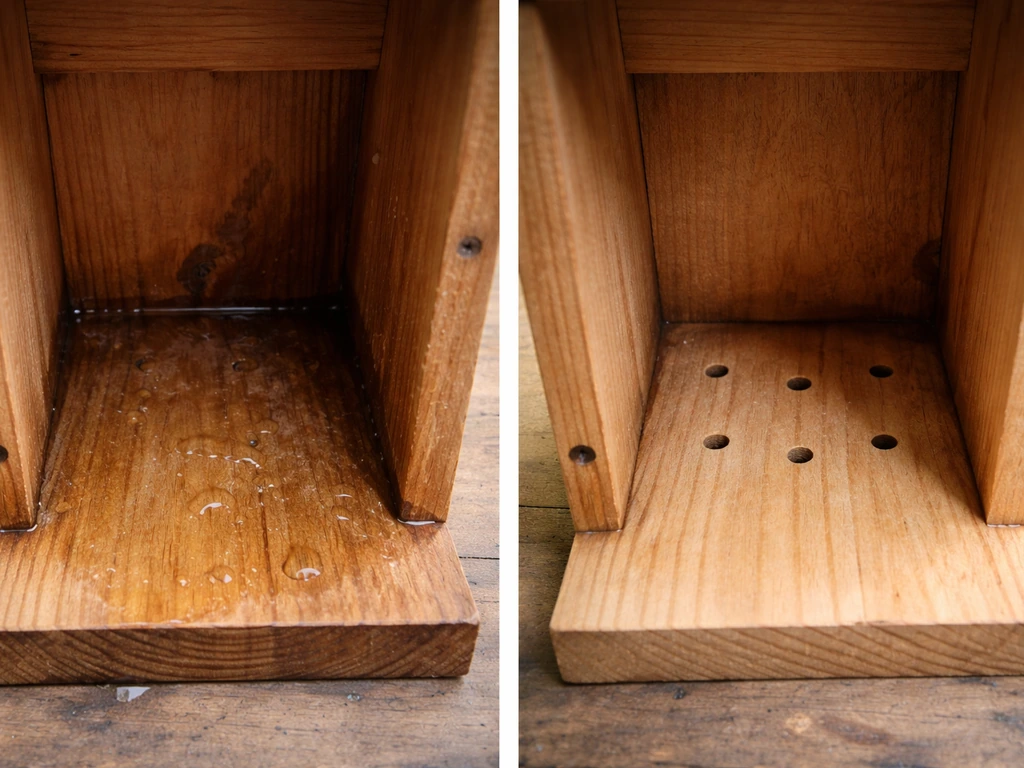
Rain enters a birdhouse mainly through the entrance hole, gaps in poorly fitted joints, or when driving rain gets under the roof. A recessed floor design (where the floor sits up inside the walls rather than flush with the bottom edges) reduces how much moisture wicks in through the sides, but it is not a complete solution on its own. When water does reach the floor, gravity should move it out through the drainage holes. That is why placement matters: holes drilled near the corners of the floor drain better than a single central hole, because water settles along edges and corners as the box shifts or tilts over time.
Rot is the other big issue. A floor that stays damp between nesting seasons will deteriorate faster than one that dries out after each rain event. Untreated wood, which is what you should always use for nest boxes, absorbs moisture readily. Drainage holes speed up drying by allowing airflow through the floor, which also slightly reduces humidity inside the box between uses. This matters for both the longevity of your box and the health of the birds using it season after season.
When you can skip holes (and when you really shouldn't)
There is one scenario where drainage holes may genuinely be optional: a box with a very deep, wide roof overhang that physically prevents rain from reaching the entrance hole, combined with tight, well-fitted joinery and a sheltered mounting location. The Bluebirds Across Nebraska program, for example, notes that some designs with strong rain protection do not require drain holes. But this is the exception, not the rule, and it depends heavily on local weather patterns and how exposed the mount location is.
You should never skip drainage holes if any of the following apply to your situation: Some people also wonder whether birds like bright colored bird houses, but color is usually less important than keeping the box dry and safe do birds like bright colored bird houses.
- The box is mounted on an exposed post or pole with no natural rain shelter nearby
- You are in a region with frequent or heavy summer rain events
- The box has a flat or minimally sloped roof
- The entrance hole faces the prevailing wind or storm direction
- The box has a solid, non-recessed floor with no other moisture escape route
- The box is made from thinner wood (under 3/4 inch) that is more vulnerable to rot
- You are building for ground-level or low-mounted species where water can also enter from splash-back
Many commercially sold birdhouses have no drainage holes at all, and some also lack proper ventilation. Ventilation helps prevent the box from becoming stuffy and damp, which supports healthier nesting conditions proper ventilation. If you bought a box from a store and are not sure whether it has drainage, tip it upside down and look. If the floor is solid, keep reading.
How to add drainage holes safely
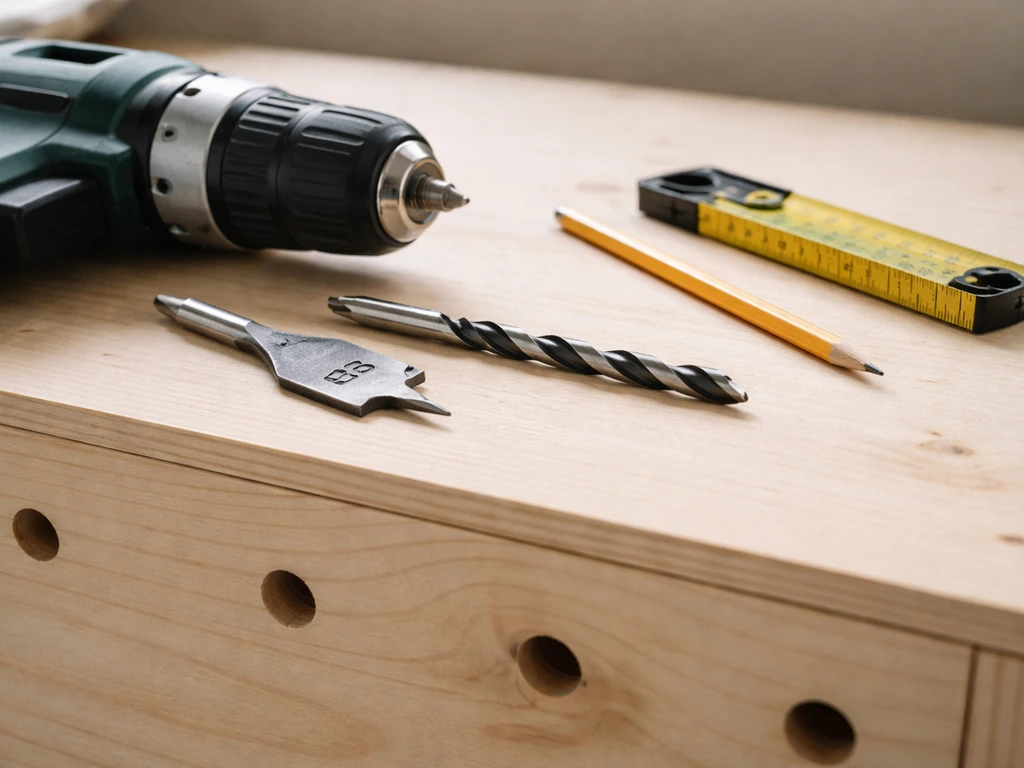
Adding drainage holes to a new build or retrofitting an existing box is straightforward. Here is how to do it correctly.
What you need
- Power drill or hand drill
- Spade bit or twist drill bit: 3/8 inch (standard recommendation from NestWatch and Missouri Extension) or up to 1/2 inch for larger boxes
- Pencil for marking hole locations
- Sandpaper (100 or 120 grit) to smooth hole edges after drilling
Step-by-step instructions
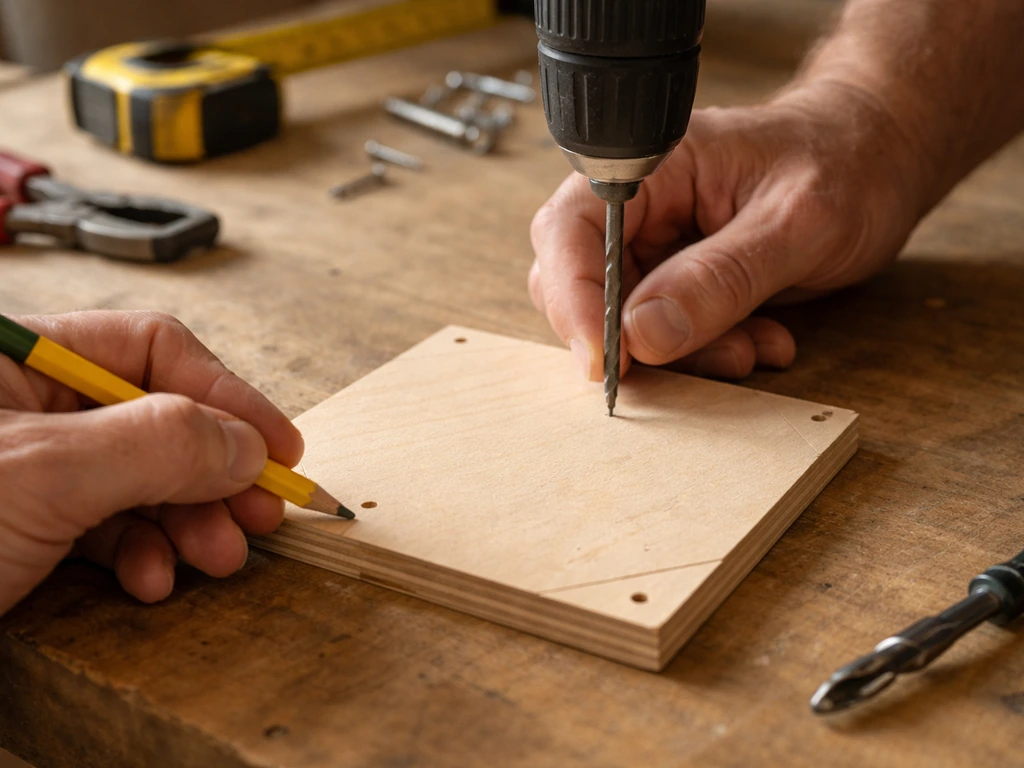
- Remove the box from its mount if it is already installed. You need stable access to the floor panel.
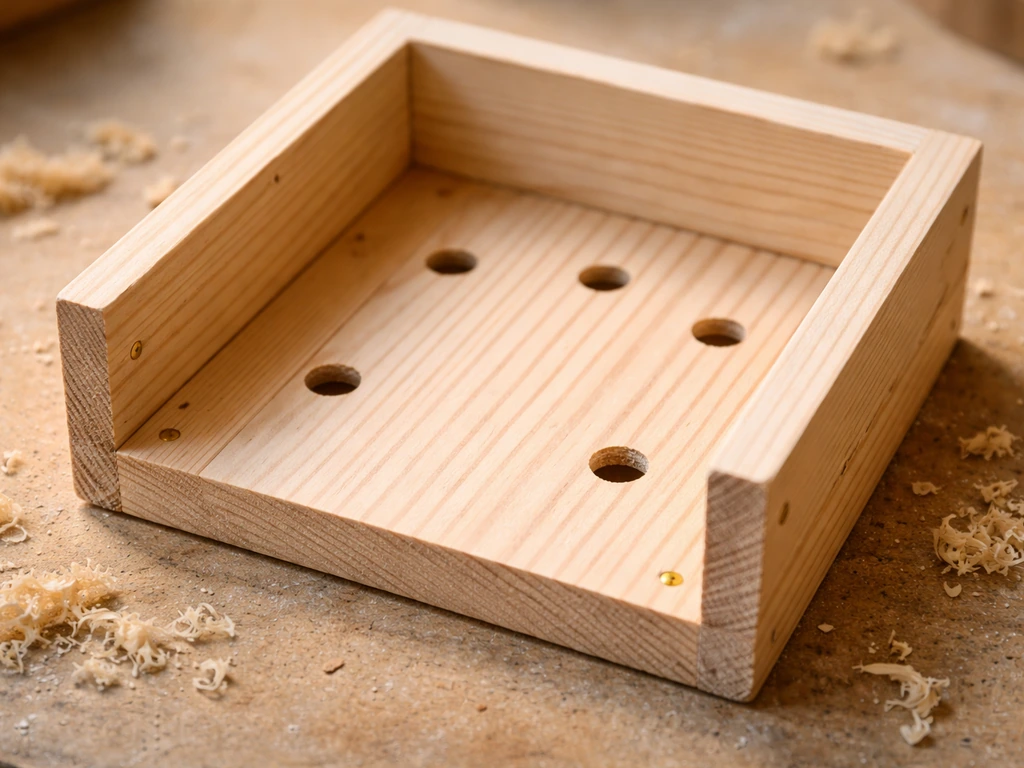
- Mark four hole locations, one near each corner of the floor. Position each mark roughly 1/2 inch in from the corner edges. This keeps the holes away from the wall joints where they could weaken the connection, while still placing them at the lowest drainage points.
- Drill straight down through the floor at each marked location. Use a 3/8-inch bit as your default. Go up to 1/2 inch if you are building for larger cavity nesters like Wood Ducks or large flicker boxes. Alaska Department of Fish and Game specifies 1/4-inch holes, which is acceptable for smaller species but the lower end of useful.
- Sand the edges of each hole smooth on both faces of the board. Rough edges can snag nesting material and pull it downward, blocking the hole.
- Check that nothing underneath the floor will block the holes when the box is remounted. If you are using a baffle or a mounting plate that sits flush against the floor, you may need to use a standoff or spacer so airflow and drainage can still exit.
- For an existing box that already has nesting material inside: wait until after the nesting season before drilling. Never disturb an active nest.
An alternative to drilling is cutting the corners of the floor panel at an angle before assembly. Oklahoma Department of Wildlife Conservation and Texas Parks and Wildlife both recommend trimming the four corners slightly or drilling a half-inch hole at each corner. The corner-cut method works well on new builds because it creates a larger drainage gap without weakening the center of the floor, but it is harder to retrofit on an assembled box.
One thing to avoid: do not make drainage holes larger than 1/2 inch. Oversized holes can allow cold drafts to reach nestlings, and in some cases small predators like snakes or mice can use large floor gaps as entry points. Stick to the 3/8 to 1/2 inch range.
Ventilation vs. drainage: keeping houses dry and comfortable
Drainage and ventilation are two different things, and a well-built nest box needs both. Drainage holes in the floor let water out. Ventilation holes near the top of the side panels let hot air and humidity escape, keeping the interior from overheating in summer and preventing moisture from building up inside. Confusing the two, or thinking one replaces the other, is a common design mistake.
| Feature | Location | Diameter | Purpose |
|---|---|---|---|
| Drainage holes | Floor, near corners | 3/8" to 1/2" | Let pooled water escape |
| Ventilation holes | Upper sides, near roofline | 1/4" (4 per side is typical) | Release heat and humidity, allow airflow |
| Roof overhang | Extends 2"+ beyond walls and entrance | N/A | Deflects rain away from entrance and vents |
Texas Parks and Wildlife's bluebird box plans call for four 1/4-inch ventilation holes drilled into each side wall about an inch below the roofline. The North American Bluebird Society specifies that the roof should extend beyond those ventilation holes so rain cannot enter through them. NC State Extension makes the same point: a sloped, overhanging roof is part of the moisture control system, not just an aesthetic choice. Together, a good roof overhang, upper ventilation holes, and floor drainage holes create a system that keeps the interior cool, dry, and livable.
If you are also thinking about whether your birdhouse needs a perch or how ventilation affects mounting style, those are related design decisions worth looking at alongside drainage. Bird house perches, when included, should be designed for easy use and safe footing so you do not interfere with how the nest area stays dry whether your birdhouse needs a perch. Getting the interior environment right involves several small details working together.
Species and design considerations
Wood type and thickness
Always use untreated wood. Cedar, pine, and Douglas fir are the most common choices. Cedar is naturally rot-resistant and holds up well even without drainage holes functioning perfectly, but it still benefits from them. Avoid plywood for the floor if you can: the layers can delaminate when repeatedly wet, even with drainage holes present. A solid 3/4-inch floor board in cedar or pine is the most durable option.
Species-specific drainage notes
- Eastern Bluebird: Four 1/2-inch floor holes or trimmed corners. TPWD and the Texas Bluebird Society both emphasize this strongly. Bluebirds nest early in spring when rain is frequent.
- Tree Swallow: Four drainage holes in the floor, as specified in Meadowlands Conservation Trust build plans. Tree swallows often take boxes in open, exposed areas where wind-driven rain is common.
- House Wren: Smaller boxes, but drainage is still recommended. Some wren box designs combine floor ventilation openings with under-roof gaps.
- Wood Duck: Larger boxes with 1/2-inch floor holes. Wood Duck boxes are often near water, making drainage especially critical.
- Chickadees and nuthatches: Standard 3/8-inch holes in a smaller floor panel. These species nest in natural cavities that drain passively, so replicating that with drilled holes is good practice.
Roof overhang and floor recess
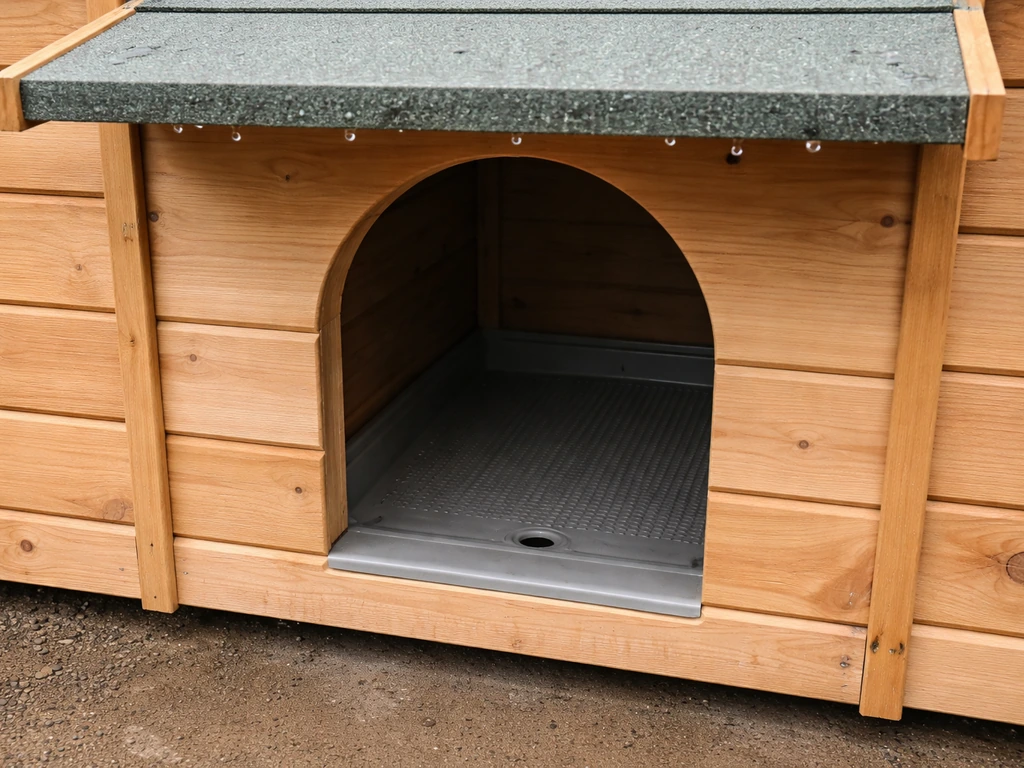
A roof that overhangs the front wall by at least 2 inches reduces how much rain reaches the entrance hole directly. Combined with a recessed floor (the floor panel set up inside the side walls rather than at their base), you significantly cut down the amount of water entering in the first place. Drainage holes then handle the remainder. Whether birds like swinging bird houses or not, keeping their nest boxes dry with proper drainage helps protect eggs and nestlings Drainage holes then handle the remainder.. These three elements, overhang, recessed floor, and drainage holes, work as a system. Skipping one puts more pressure on the others.
Cleaning and seasonal maintenance
Drainage holes do not eliminate the need for annual cleaning. Old nesting material retains moisture and harbors parasites like blowfly larvae and mites that can survive to the next season. NestWatch recommends removing old nests after each breeding season is complete. In most regions that means late summer or early fall. Open the cleanout door, remove all old material, and let the box dry out thoroughly before closing it back up. While you are in there, check that the drainage holes are clear and have not been plugged by compressed nest material or mud.
Common mistakes and quick troubleshooting
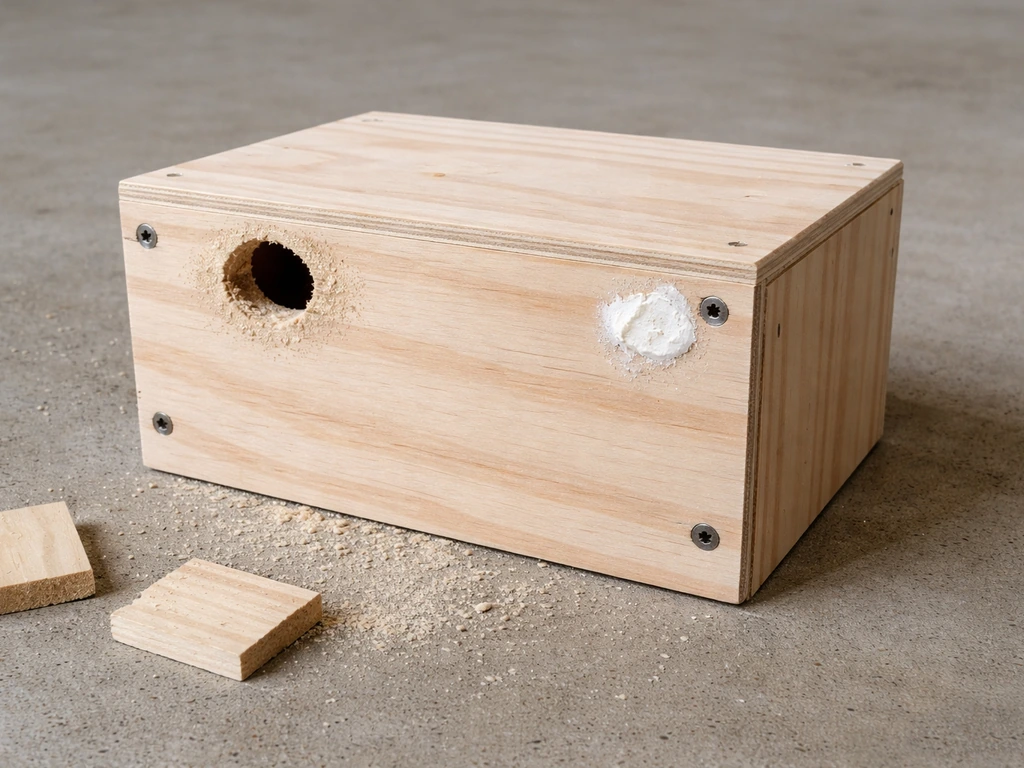
Mistakes to avoid
- Drilling holes that are too large (over 1/2 inch): Creates drafts and potential predator entry points. Stay in the 3/8 to 1/2 inch range.
- Painting or caulking over the floor holes: Happens when people refinish a box without thinking through which openings serve a function. Never seal drainage holes.
- Placing holes in the center of the floor rather than near corners: Water pools at the edges first. Center holes drain less effectively.
- Using a mounting plate or hardware that blocks the floor from below: The box may look fine from above but water has nowhere to go.
- Skipping drainage on a box with a flat or shallow roof: The roof needs to compensate for what drainage holes alone cannot prevent. Both matter.
- Forgetting to check hole clearance during nest removal: Compressed nesting material can plug small holes. A quick poke with a pencil or thin dowel clears them instantly.
- Adding drainage holes during active nesting season: Wait until the nest is empty. Disturbing an active nest is both harmful and often illegal under the Migratory Bird Treaty Act.
Troubleshooting a wet or rotting box
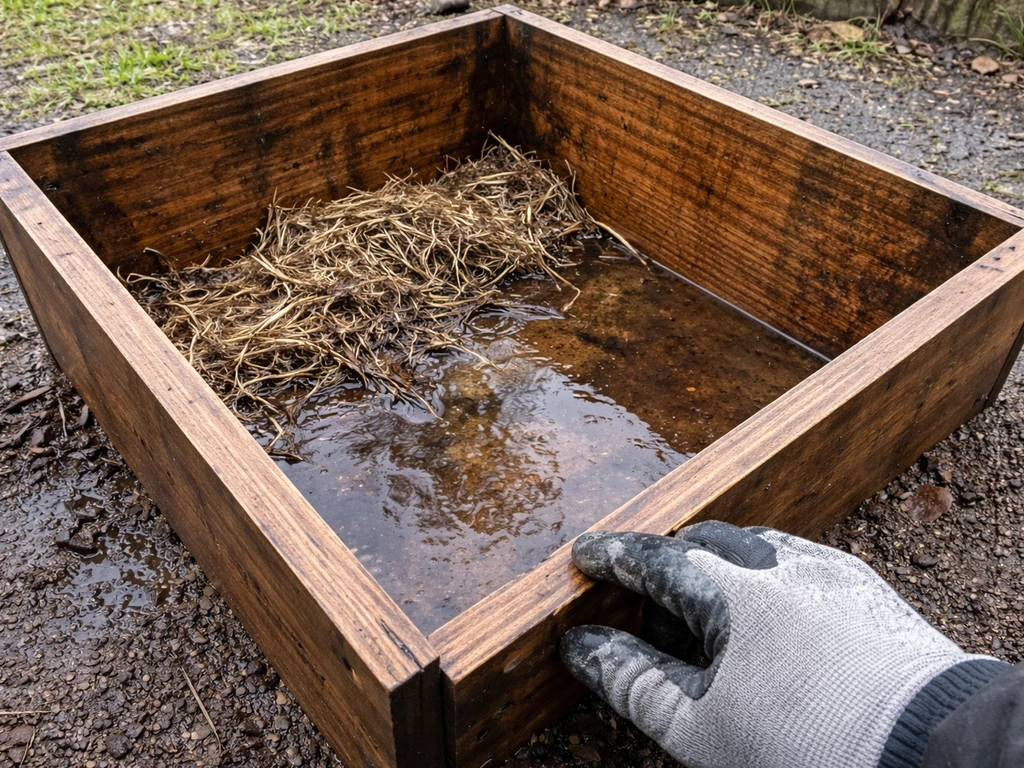
If you open a box after a rain event and find pooled water, soggy nesting material, or dark staining on the floor that suggests rot, work through this checklist: If you are wondering whether a store like Home Depot sells birdhouses, check the seasonal birding or garden section and confirm the design includes drainage holes.
- Check for drainage holes: If there are none, that is your primary problem. Drill four 3/8-inch holes near the floor corners as described above.
- Check for blocked holes: Poke each existing hole with a thin tool to confirm it is clear all the way through and not obstructed by a mounting surface below.
- Check the roof overhang: Hold a level against the roof. If it slopes toward the entrance or overhangs less than an inch, rain is pouring directly at the entrance hole. A simple fix is adding a small angled cedar board to extend the overhang.
- Check the entrance hole orientation: If the entrance faces the direction of your prevailing storms, consider remounting the box to face east or southeast, which avoids the most common storm direction in much of North America.
- Check the mounting: A box that tilts forward catches more rain. It should tilt very slightly forward (about 5 degrees) so water runs away from the interior, not into it.
- Inspect for rot: If the floor is soft, spongy, or crumbling, the box needs a new floor panel or full replacement. A rotting floor will not hold screws reliably and can fail under a nest.
- After any repair, let the box dry completely in a sheltered spot for at least 48 hours before reinstalling it.
A box that stays dry season after season is the result of a few small decisions made correctly at the start: the right wood, a proper roof, a recessed floor, and four simple holes in the corners. Of course, you also want to make sure birds will actually use your hanging bird house, which depends on correct setup and predator-safe placement four simple holes in the corners. None of it is complicated, but each part matters. Get these basics right and your nest box will give cavity-nesting birds a genuinely safe place to raise a family.
FAQ
How many drainage holes should a bird house have, and where exactly should they be placed?
For most DIY nest boxes, drill four holes, placing them near the corners of the floor. Corners drain better than a single center hole because water tends to settle along edges as the box shifts or slightly tilts over time.
Can drainage holes be smaller than 3/8 inch?
You want to stay within about the 3/8 to 1/2 inch range. Holes that are too small can clog more easily with nesting debris or mud, which defeats the whole purpose of keeping the floor dry.
What if my box already has drainage holes, but the floor still stays wet after rain?
Check for blockage first (mud, compressed nest material, or debris). If holes are present but water pools, your floor may be flat with poor water escape paths, or the roof overhang may be too short, allowing water to reach the entrance area and sides more than the drainage can handle.
Should I drill ventilation holes even if I already have drainage holes?
Yes. Drainage removes water from the floor, ventilation manages heat and humidity through the top of the box. Skipping ventilation can still leave the interior damp and stuffy even when the floor drains.
Is it ever okay to drill fewer than four drainage holes?
It’s risky. Four corner holes provide reliable drainage across a wide range of rainfall angles and slight box movement. Using fewer holes can leave parts of the floor that do not drain well, increasing the chance of soaked nesting material.
Do I need drainage holes if the nest box is under a covered porch or in a very sheltered spot?
In some exceptionally sheltered setups, drainage can be less critical, but it’s not something to assume. Even under cover, rain can be driven in by wind or enter around the entrance and joints. If you are unsure, add drainage holes rather than relying on shelter alone.
Will large drainage holes let in cold drafts or predators?
Yes, that’s a real concern. Avoid making holes larger than about 1/2 inch, because bigger gaps can increase cold airflow and may also create entry points for small predators in some situations.
How do I clear drainage holes after a season of use?
During annual cleaning, check that each hole is open, and use a small tool to remove any compacted nesting material. Also let the box dry thoroughly before reassembling, especially if you see stains that suggest dampness between visits.
Can I retrofit drainage holes into an assembled birdhouse?
Sometimes, but it can be harder. If the box is already built, you may need to drill carefully through the floor without weakening the structure. The corner-trim approach works best for new builds because it creates a larger drainage gap without cutting the center area.
Do drainage holes change how deep or recessed the floor should be?
They work together. A recessed floor reduces moisture wicking through the sides, while drainage holes handle water that still reaches the floor. If the floor is flush with the bottom edges, drainage holes alone may not prevent moisture from getting into the nesting area.
Does using cedar or plywood affect drainage hole needs?
Wood choice affects rot resistance, but it does not replace drainage. Cedar helps slow deterioration even when the box gets wet, but it still benefits from proper drainage holes. Plywood floors can delaminate after repeated wetting, so if you are building a floor, solid boards are typically more durable.
Should I clean out a bird house even if the floor drains well?
Yes. Drainage helps prevent pooling water, but it does not prevent old nesting material from retaining moisture and harboring parasites. Plan to remove old nests after each breeding season and ensure the holes remain clear.
Next Article
Do Birds Like Bright Colored Bird Houses? Expert Tips
Birds rarely choose bird houses by color alone. Learn which finishes work, when to paint, and placement for nesting succ