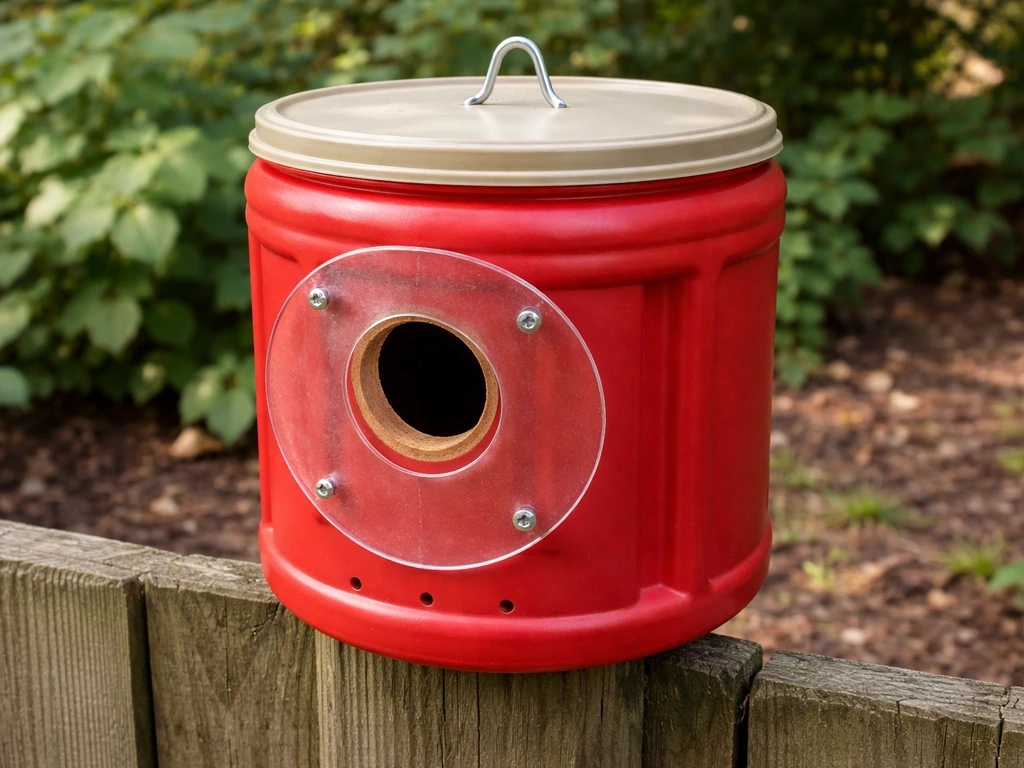
Yes, you can build a working plastic coffee can bird house, but you need to fix a few things first. Out of the box, a plastic coffee can is too hot, has no drainage, no ventilation, and almost certainly the wrong hole size. Spend 30 minutes drilling, smoothing edges, and mounting it correctly and you have a legitimate nesting cavity for wrens or chickadees. Skip those steps and you get a heat trap that birds avoid or, worse, one where eggs bake before they hatch.
Plastic Coffee Can Bird Houses: Safe DIY Setup Guide
Maya Thompson
10 Jun 2026
Is a plastic coffee can bird house actually safe for birds
Plastic is not the ideal material for a nest box, but it is not automatically disqualifying either. The real problems are heat buildup, chemical residues, sharp cut edges, and zero built-in drainage. NestWatch specifically warns that plastic and metal houses can overheat and that coatings and chemical residues can linger long after you think they have off-gassed. A standard 11-ounce or larger plastic coffee canister (the kind with a snap-on lid) is borderline on interior space but can work if you address every one of those issues.
The single biggest concern is temperature. On a sunny afternoon, an unshaded plastic can sitting in direct sun can hit internal temps well above what eggs or nestlings can survive. A well-planned soda can bird house can still be a success when you drill the right ventilation and drainage holes and place it to avoid overheating. The fix is placement in shade, plus adding ventilation holes near the top of the can.
If your can is dark-colored (black or very dark grey), paint the exterior with a non-toxic, light-colored latex paint and give it at least two weeks to fully cure before putting it up. Never use oil-based paint, stains, or any product with fungicide or mildewcide. Untreated and unpainted is the gold standard; if you do paint, stick to light-colored water-based latex and let it off-gas completely.
Thin plastic walls also provide almost no insulation on cold nights early in the nesting season. In northern states (USDA Zones 4 and 5), this can be a problem in late March and April when Carolina wrens and chickadees start prospecting. In warmer southern climates it matters less in spring but heat becomes a bigger threat in summer. Know your region and adjust placement accordingly.
Choose the right bird types (and when to skip the DIY)
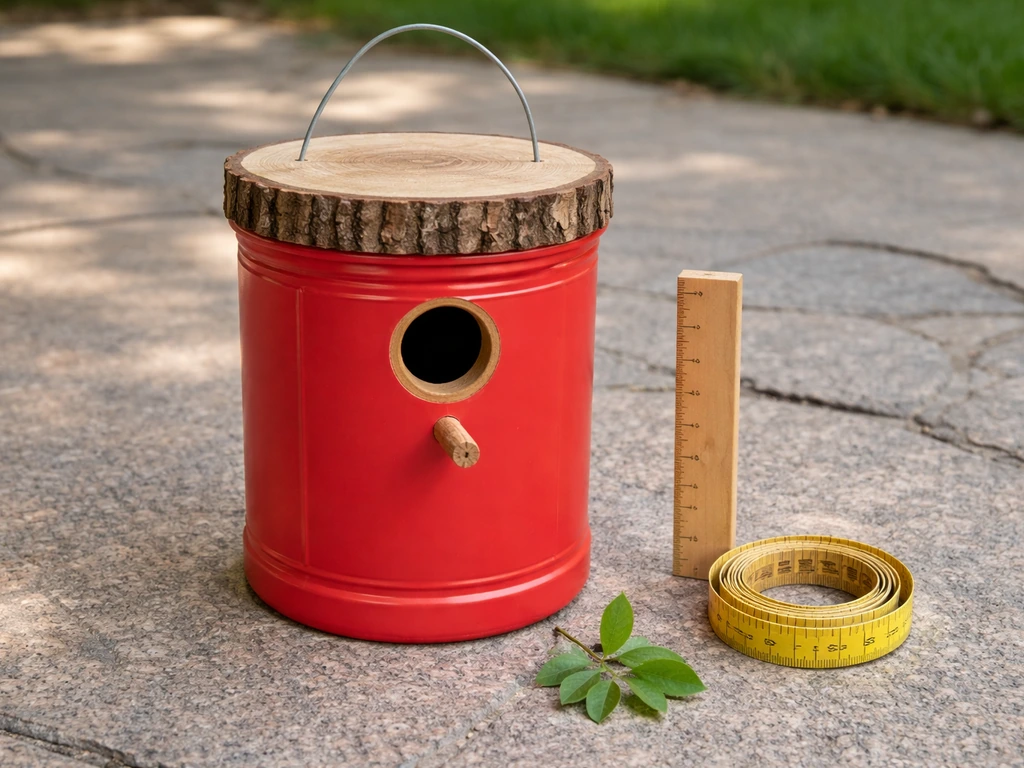
A typical large plastic coffee can (roughly 5–6 inches in diameter, 7–8 inches tall) realistically fits only a narrow set of cavity-nesting species. The birds that will actually consider it are small cavity nesters with modest interior space requirements.
- Carolina Wren and House Wren: ideal candidates; they accept tight quarters, prefer a 1 1/8-inch entrance hole, and nest comfortably in a 4-inch-wide interior
- Bewick's Wren: same entrance hole as wrens above (1 1/8 inch works well), good fit in the western US
- Black-capped Chickadee and Carolina Chickadee: a 1 1/8-inch hole works; they prefer a slightly deeper cavity so a taller can is better
- Eastern Bluebird: can work if the interior floor is at least 4x4 inches and the entrance is exactly 1 1/2 inches; a round plastic coffee can with a roughly 5-inch diameter is borderline, but possible
- Tree Swallow: needs a 1 1/2-inch hole and 5x5-inch floor minimum; most coffee cans are too narrow
Skip the plastic coffee can entirely for woodpeckers, Northern Flickers, Wood Ducks, American Kestrels, Eastern Screech-Owls, or any species requiring a 2-inch or larger entrance hole. Those birds need real depth, structural strength, and wood insulation that plastic simply cannot provide. If bluebirds are your target and your can is narrower than 5 inches across, build or buy a proper wooden bluebird box instead.
If you want a more traditional look or a different material than this plastic approach, copper top bird houses are a related option worth considering. Forcing the wrong species into a marginally sized container is a recipe for failed nests and wasted effort. The coffee can route works best when you are specifically targeting wrens and chickadees.
One species you do not want: House Sparrows. They can squeeze through a hole as small as 1 1/4 inches, which means they can use almost any cavity you put up. House Sparrows will evict native cavity nesters, destroy eggs, and kill nestlings. The 1 1/8-inch entrance hole recommended for wrens is your main mechanical defense against them, though it is not foolproof in areas with heavy House Sparrow pressure.
Prep the can: drilling, hole size, ventilation and drainage
This is where most DIY plastic coffee can houses fail. Take your time on these steps and the rest of the build is straightforward.
- Clean the can thoroughly: wash with hot soapy water, rinse well, and let it dry completely. Remove any paper or foil label and adhesive residue. There should be no food odor remaining.
- Mark the entrance hole: on the side of the can (not the lid), mark the center of your entrance hole. Place it so the bottom of the hole is at least 5 to 6 inches above the floor of the can for wrens and chickadees. This keeps nestlings from tumbling out early.
- Drill the entrance hole: use a hole saw or spade bit. For wrens and chickadees, drill exactly 1 1/8 inches (28–29 mm). For bluebirds in a wider can, drill exactly 1 1/2 inches (38 mm). Drill slowly through plastic to prevent cracking. If you don't have a hole saw, use a sharp utility knife to score and cut the circle, then finish with a round file.
- Smooth every edge: this is critical. Plastic leaves sharp, jagged burrs that can injure birds entering or exiting the hole. Use a round file, fine sandpaper, or a Dremel tool to smooth the inside and outside edge of every hole you drill until you can run your finger around it without catching.
- Drill ventilation holes: drill 4 to 6 holes, each about 1/4 inch in diameter, just below the lid rim near the top of the can. These allow hot air to escape and are your most important defense against overheating.
- Drill drainage holes: drill at least four holes in the floor (bottom) of the can, each 3/8 to 1/2 inch in diameter. If the can sits flat and the bottom is recessed, you may need to add a small platform or tilt the mount slightly forward (about 5 degrees) so water drains out.
- Add interior texture (optional but recommended): young birds need to grip the interior wall to climb up to the entrance. Score the inside of the plastic below the entrance hole with sandpaper or a wire brush to give nestlings traction.
- Secure the lid: the snap-on plastic lid becomes your roof. Make sure it locks firmly. Drill a small hole through the lid edge and the can rim on the back side and run a zip tie or stainless steel wire through it so the lid cannot pop off in wind or during a raccoon attempt.
For mounting hardware, drill or punch two holes near the back top rim and two near the back bottom rim of the can. Thread galvanized or stainless steel wire, a hose clamp, or a 1/4-inch bolt through these holes to attach the can to a wooden backer board or directly to a post. Avoid any hardware that is aluminum or ungalvanized steel; those rust quickly and can stain or weaken the can.
Mounting and placement for real nesting success
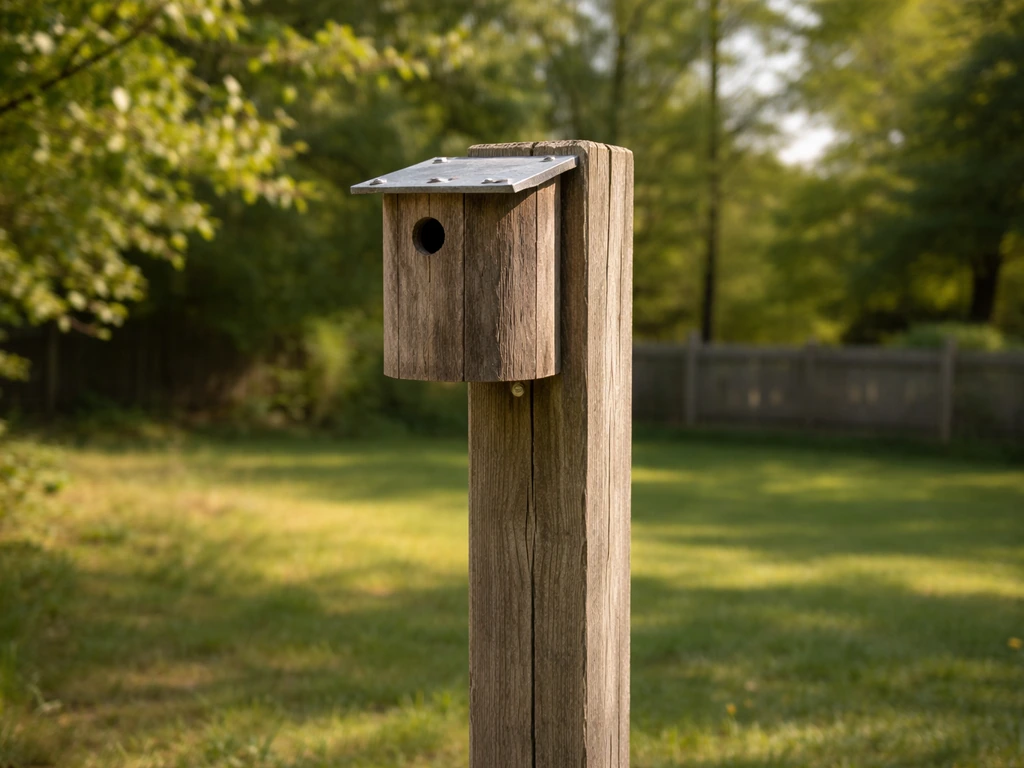
Height and orientation matter more than most beginners expect. For wrens and chickadees, mount the can 5 to 10 feet above the ground. For bluebirds in a coffee can setup, aim for 4 to 6 feet as recommended by the Michigan DNR and NestWatch species tables. Audubon’s DIY bluebird-box plan also uses entrance-hole sizes tied to Eastern/Western bluebirds and adjusts those sizes where mountain bluebird range overlaps 4 to 6 feet. Mount on a smooth metal pole rather than a fence post or tree if you can; it dramatically reduces predator access.
Face the entrance hole away from prevailing winds and afternoon sun. In most of North America, that means facing east or southeast. This gives the box warm morning light and shields the entrance from hot afternoon sun and from rain driven by prevailing westerly winds. In very hot climates (Texas, Arizona, the deep South), a north or northeast-facing entrance is even better to reduce heat stress.
Wrens are generalists and will accept a can mounted on a porch post, a garden stake, or a fence, as long as there is nearby brush or low shrubs for the male to sing from. Chickadees prefer the edge of wooded areas and feel more secure with a tree or large shrub within 20 to 30 feet. Bluebirds want open space: mount their box in a meadow or mowed yard with no dense shrubs directly below and a perch nearby.
A post top bird house can be a great option if you secure it properly and match the entrance size to the species you want to attract. A plastic coffee can in a shaded, cluttered garden corner will not attract bluebirds.
Do not mount a plastic coffee can bird house in full direct sun unless you have painted it a light color and added substantial ventilation. Test it yourself: on a sunny afternoon, stick a thermometer inside a similarly colored closed can in the sun for 20 minutes. If it reads above 95°F, that location is too hot without shade modification.
Predator-proofing and competitor control
Predator control is one area where many DIY coffee can houses fail. Raccoons and cats will reach into an entrance hole, and as NestWatch notes, they often leap onto a mounted container and dip their paws straight down through the opening to grab eggs or young. A baffle is not optional if you want consistent nesting success.
The most effective single step is a smooth metal pole with a cone or stovepipe baffle mounted 4 to 5 feet up the pole, below the box. Clear any vegetation near the pole base so snakes and climbing mammals cannot bypass the baffle using nearby plants. Oklahoma Department of Wildlife Conservation guidance specifically calls this out: clear the ground around the pole before you install the guard, not after. A baffle on a pole with branches touching it at the top is nearly useless.
For tree or fence mounting (less ideal but sometimes the only option), attach a metal cone or wrap a section of PVC pipe around the mounting surface below the box. You can also add a 3-inch-deep entrance hole extender made from a short piece of PVC pipe glued around the outside of the entrance hole. This makes it much harder for a raccoon to reach past the tube and into the nest.
For competitor birds, your entrance hole size is the first line of defense. A 1 1/8-inch hole excludes European Starlings (which need at least 1 1/2 inches) and keeps most House Sparrows out, though determined House Sparrows can sometimes squeeze through if plastic wears and the hole enlarges over time.
A published wren and chickadee nest box information sheet recommends a 1 1/8-inch entrance hole for wrens and notes that you can reduce the hole further for greater exclusivity, such as going down to 7/8 inch to deter some larger competitors 1 1/8-inch entrance hole recommended for wrens. Check hole diameter every season and file it back to the correct size if it has stretched.
If House Sparrows are actively competing for the box despite the correct hole size, consider relocating the box away from buildings, feeders, and heavily developed areas, since House Sparrows are most dense in agricultural and suburban settings.
Seasonal timing and how to set it up today
It is June 10, 2026 right now, which means you are in the middle of the primary nesting season across most of North America. Many bluebirds and tree swallows are already on second clutches in the South and are wrapping up first clutches in the North. However, House Wrens are still very active and are known to use boxes opportunistically throughout June and into July. Carolina Wrens nest multiple times through the summer. Put your box up today and there is a real chance you attract a late-season wren or chickadee pair before summer is over.
If you are reading this in fall or winter, the best time to install boxes is late February to early March before the earliest nesters (Eastern Bluebirds, Tree Swallows) start prospecting. Birds investigate potential cavities weeks before they commit to a nest. A box that goes up in March has a much better occupancy rate than one installed in May. For wrens specifically, boxes can go up anytime from March through June and still attract nesting pairs.
For today's action: prep and drill the can using the steps above, paint it light-colored if it is dark, let paint cure for at least two weeks if freshly applied, then mount it in a shaded east-facing spot on a smooth pole with a baffle. If your can is already light-colored and unpainted plastic, you can mount it today.
Cleaning, maintenance, and troubleshooting failed nests
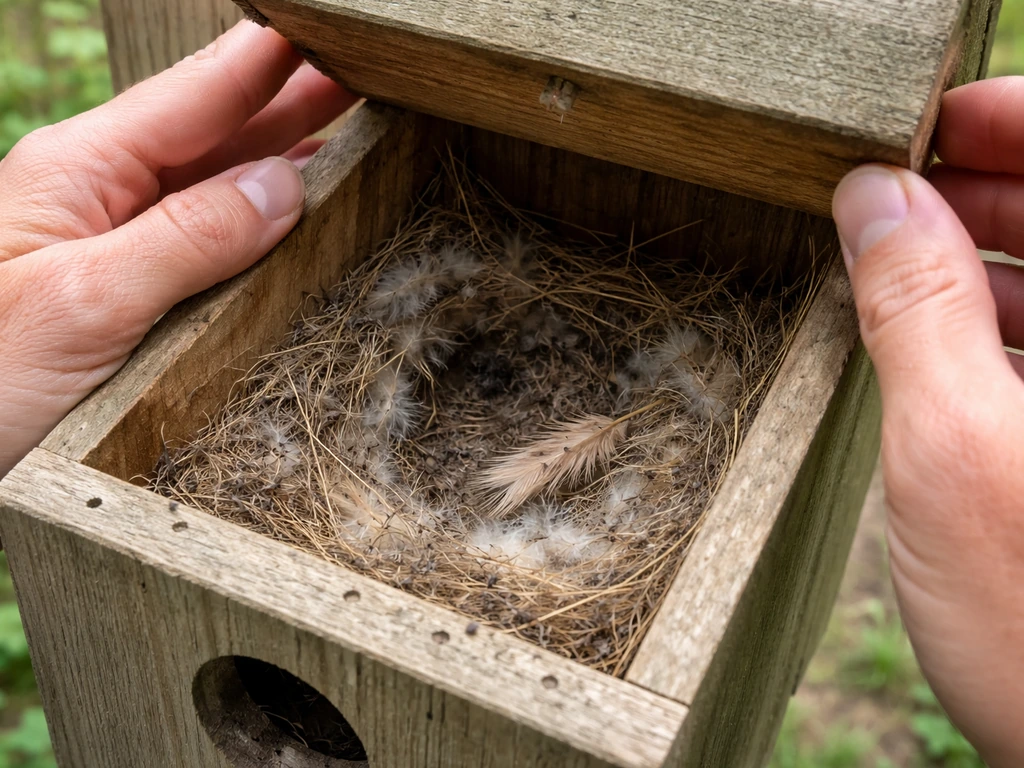
The cleaning schedule that actually works
Check the box weekly from April through August. Weekly monitoring lets you catch problems: House Sparrow takeovers, ant invasions, overheating signs (panting fledglings, nest material pushed toward the entrance), or predator damage. Keep a small notebook or use the NestWatch app to log what you see each visit. Do not open the box when eggs are in the process of hatching or when nestlings are close to fledging (older than 12 days for wrens and chickadees); that can trigger premature fledging.
After each brood fledges, remove the old nest. This is not optional. Old nests harbor mites, blow fly larvae, and bacteria that harm the next clutch. Wear gloves, remove all nesting material, and if fecal matter is visible on the interior walls, scrub with a 1-to-10 bleach-to-water solution and rinse well. For routine end-of-brood cleanouts, mild dish soap and water is enough. Let the can dry in the sun before closing it back up. NestWatch specifically recommends this approach for reducing parasites between clutches and at season end.
At the end of the season (late August or September), do a full teardown clean: remove all material, scrub thoroughly, rinse, dry completely, and inspect the plastic for cracks or hole enlargement. Store it somewhere dry if it is extremely cold where you live, or leave it mounted but open the lid slightly to prevent moisture buildup over winter.
Troubleshooting when things go wrong
| Problem | Most Likely Cause | Fix | |
|---|---|---|---|
| No birds investigating after 3+ weeks | Wrong location, too much foot traffic nearby, or house sparrow pressure scaring off target species | Move box to a quieter spot farther from buildings; try a different direction for the entrance | |
| Eggs abandoned mid-incubation | Predator disturbance, extreme heat, or adult killed by predator | Check for predator sign (claw marks, disturbed soil at base); add baffle; assess shade and ventilation | |
| Nestlings dying before fledging | Overheating or parasites (blow fly larvae in nest base) | Add more ventilation holes; move to shadier location; remove nest and replace if larvae are visible | |
| House Sparrows moving in | Hole too large or location near buildings/feeders | Verify hole is exactly 1 1/8 inch; relocate box 200+ feet from buildings if possible; remove House Sparrow nests promptly (they are not protected) | |
| Water pooling inside the can | Drainage holes clogged or too small, or can is level instead of slightly tilted forward | Clear and enlarge drainage holes to 3/8–1/2 inch; re-mount with a slight forward tilt | |
| Condensation dripping on nest | Temperature swing between cold nights and warm days with poor ventilation | Drill additional ventilation holes near lid; add a small gap between the lid and can rim on the back side | |
| Plastic cracking at hole edges | UV degradation or physical impact | Sand edges smooth immediately; if hole has enlarged beyond tolerance (more than 1/16 inch over spec), replace the can |
One honest truth about plastic coffee can bird houses: they are a short-term or supplemental option, not a permanent installation. UV exposure degrades plastic in 2 to 4 seasons depending on your climate. Inspect the can each spring for brittleness, cracks, and hole enlargement before re-mounting it. When the plastic starts to get chalky or crack around the entrance, retire it and build or buy a cedar box. Traditional wood coffee can bird houses and metal tin can designs each have their own durability trade-offs worth knowing about if you want to compare options. If you specifically want the look, copper top bird houses can be a great alternative to DIY plastic designs.
The best outcome from this guide is that you put up a properly drilled, well-placed, baffled coffee can this week and attract a wren pair before the end of summer. That small success usually converts casual experimenters into serious nest box monitors who eventually add more species-specific wooden boxes to their yard. Start with the can, learn what works in your specific yard and microclimate, and build from there.
FAQ
My coffee can house looks shaded in the morning, is that enough to prevent overheating?,
If you are seeing overheating signs like panting, eggs that fail to progress, or nest material migrating toward the entrance, your fastest fix is not another ventilation hole, it is relocating the box to deeper shade and changing the entrance orientation. After you move it, recheck internal temperature with the same 20-minute thermometer-at-a-similarly-colored-can test, because a few hours of afternoon sun can still push plastic above safe levels even if mornings look fine.
Can I clean a used coffee can with vinegar or disinfectant before building the bird house?,
Do not treat the can with household cleaners, “natural” essential oil sprays, or interior coatings, even if you think they smell gone. Residues can linger on plastics and reduce egg survival, plus they can be absorbed by nesting material. If the can is used, rinse thoroughly with dish soap and water, let it fully dry, and only use light-colored water-based latex paint on the exterior (then allow the full cure time before mounting).
How do I make sure the entrance hole stays the right size across the season?,
House Sparrows can still exploit a slightly oversized hole, so measure the entrance with calipers or a simple hole gauge after installation and again every season. If the hole has stretched (plastic can wear under weathering), file it back to target size and re-smooth the edges, then confirm the mounting is secure because a loose can can wobble and widen the opening over time.
Will a baffle still work if the box is on a post-top or in a windy yard?,
Yes, but only if the can is mounted so it cannot swivel and the baffle still blocks access. For pole mounts, keep the baffle 4 to 5 feet up the pole, and ensure there are no branches or vegetation that touch or hold the baffle area. If the box moves in wind, predators can sometimes get better angles to reach past the opening.
What is the best combined strategy to prevent House Sparrow competition?,
If you need to attract wrens and chickadees but also want to avoid House Sparrow takeovers, prioritize three defenses together: correct entrance size, a true smooth metal pole baffle, and placement away from buildings and feeders. If you only do one of those, House Sparrows may still concentrate on the box site and win by persistence.
Can I check inside the can more than once a week to monitor progress?,
If fledglings have not yet completed the normal fledging window, avoid opening the lid. If you must respond to an emergency (for example, a predator has partially accessed the nest), do it quickly and minimize handling. For routine visits, use a weekly check and record activity from a distance whenever possible to reduce nest disturbance.
What specific signs tell me the box setup is failing beyond “birds not using it”?,
Look for practical overheating and predator clues during your weekly monitoring: panting or heavy open-mouth behavior by adults, nestlings pushed toward the entrance, disturbed nesting material, claw marks, and signs of paw drops into the opening. If you see repeated damage, focus on predator barriers and placement first, because adding ventilation alone will not stop raccoons or cats from reaching in.
How often should I clean the plastic can, and what if there is visible poop or debris?,
A single cleaning after every brood is the safest routine because old nests are where mites and other pests build up. Use mild dish soap for routine cleanouts, but if you see fecal staining or visible debris, scrub with the dilute bleach solution, rinse well, and fully dry in sun before the next nesting period.
When should I retire the plastic coffee can and switch to a different box?,
Plastic boxes are typically short-term, so plan on an inspection-driven replacement cycle. Each spring, check for brittleness, chalky surface, cracks near the entrance, and hole enlargement. If the entrance area deforms or the plastic feels thin or brittle, retire it and switch to a more durable material like cedar.
My summers are very hot, should I still use a plastic can bird house?,
Unpainted plastic in extreme heat or long sun exposure is the biggest risk, so in very hot climates assume you will need shade, plus a light-colored exterior and robust ventilation. Use the thermometer test before fully committing, and if your yard cannot offer stable shade for most of the day, wood is usually the better choice because it insulates better and heats more slowly.
Next Articles
Tin Can Bird Houses: Step-by-Step Safe DIY Guide
Build safe tin can bird houses with size, entrance, ventilation, drainage, predator-proofing, and mounting tips for back
Coffee Can Bird House Plans and Step-by-Step DIY Guide
Step-by-step coffee can bird house plans with cut-drill measurements, safe materials, mounting, placement, and maintenan
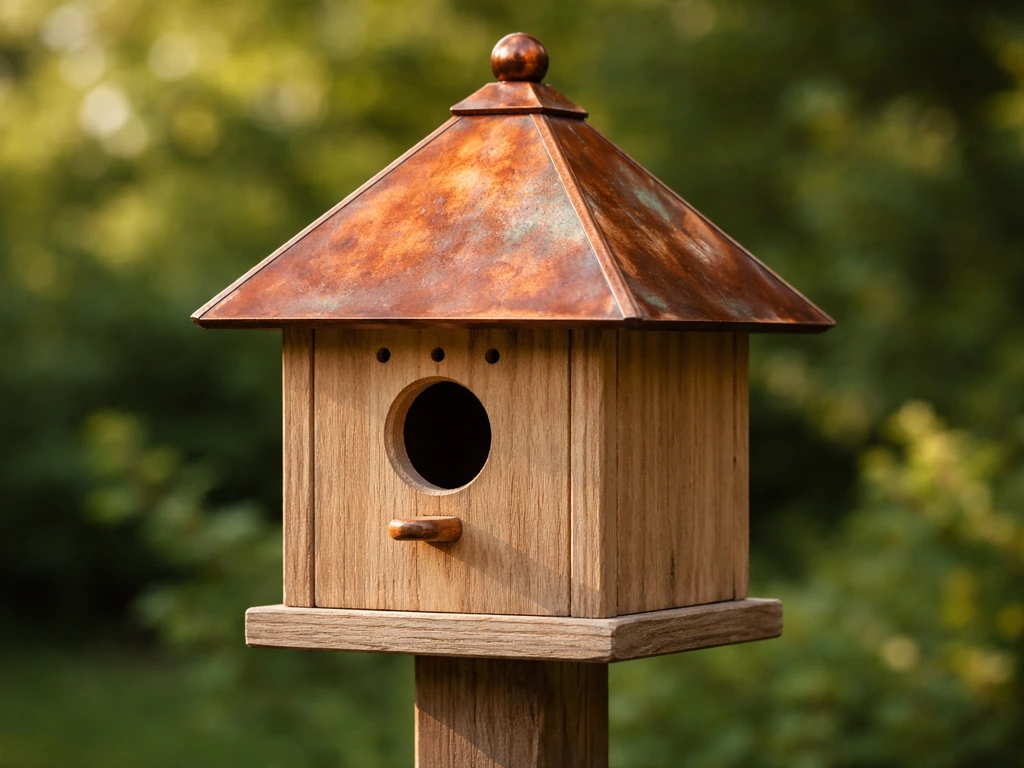
Copper Top Bird Houses Buying and Setup Guide Today
Buy and set up copper top bird houses: size, entrance, ventilation, placement, predator safety, and easy maintenance.