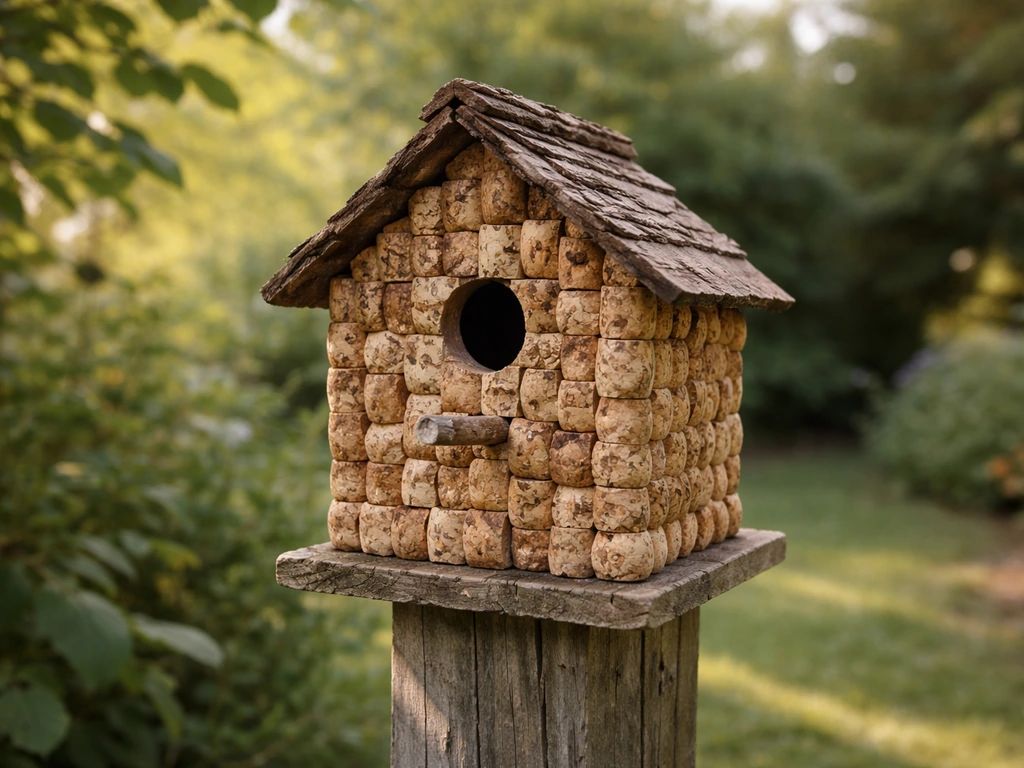
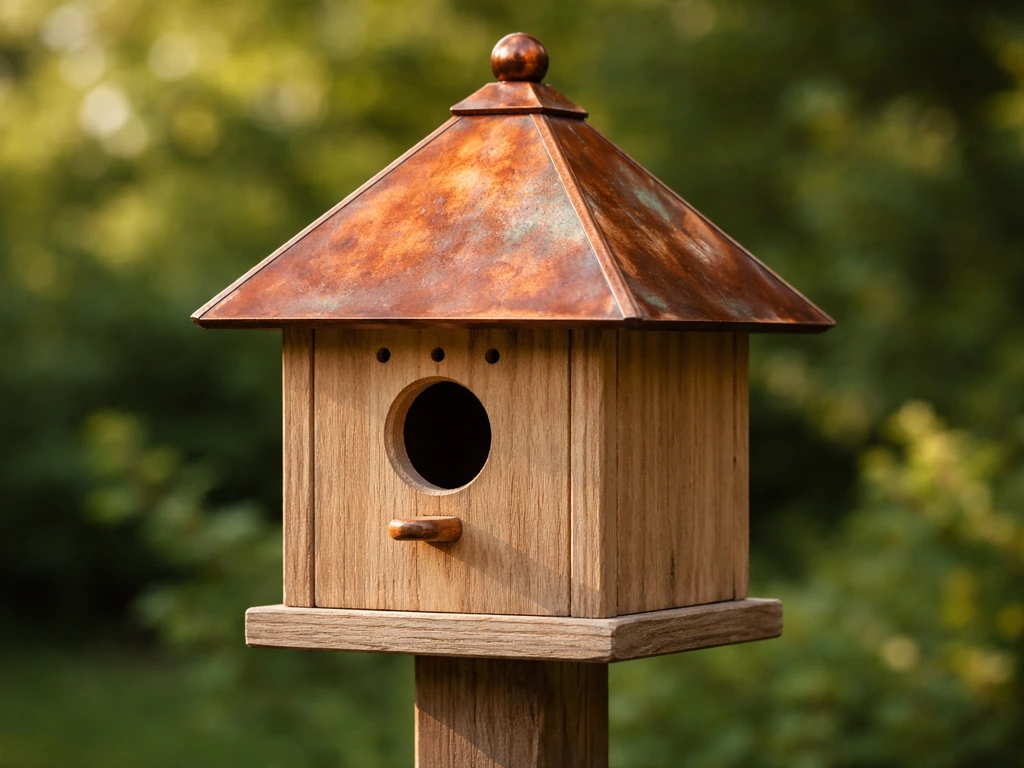
A copper top birdhouse is exactly what it sounds like: a birdhouse with a copper roof. That copper detail is more than decorative. It tells you something about build quality, weather durability, and how the box will age over years in your backyard. If you're shopping for one today, the most important thing to nail down is whether the copper is real, and whether the entrance hole matches the bird you're trying to attract. Get those two things right, and everything else falls into place.
Copper Top Bird Houses Buying and Setup Guide Today
Maya Thompson
15 Apr 2026
What 'copper top' actually means on a birdhouse
The term refers to a birdhouse whose roof panel is made from actual copper sheet or formed copper cap material. Real copper starts bright and warm-toned, then slowly shifts through brown to that familiar blue-green patina over a few years of outdoor exposure. That patina isn't a flaw. It's a protective layer that forms naturally on the surface and actually helps the metal resist further weathering. You shouldn't scrub it off, and you don't need to. A properly patinated copper roof can last indefinitely without any treatment.
Here's the catch worth knowing before you buy: not every birdhouse marketed as 'copper top' actually has a copper roof. Some listings use copper-colored paint or a thin metallic veneer that mimics the look but won't develop a real patina and won't hold up the same way. There's also a middle-ground product where the roof comes pre-weathered with a patina finish already applied, which looks aged from day one but may not behave exactly like naturally weathered copper over time. Neither of these is necessarily bad, but you should know which one you're getting before you pay for it.
One question people ask: is copper safe around nesting birds? The roof itself poses no documented risk. Birds aren't touching the roof material, and the copper surface doesn't leach anything harmful into the interior cavity at normal outdoor temperatures. The interior is what matters for safety, and a well-built copper top birdhouse keeps the nesting chamber made of untreated wood, which is exactly what you want.
Pick the right birdhouse for the birds in your area
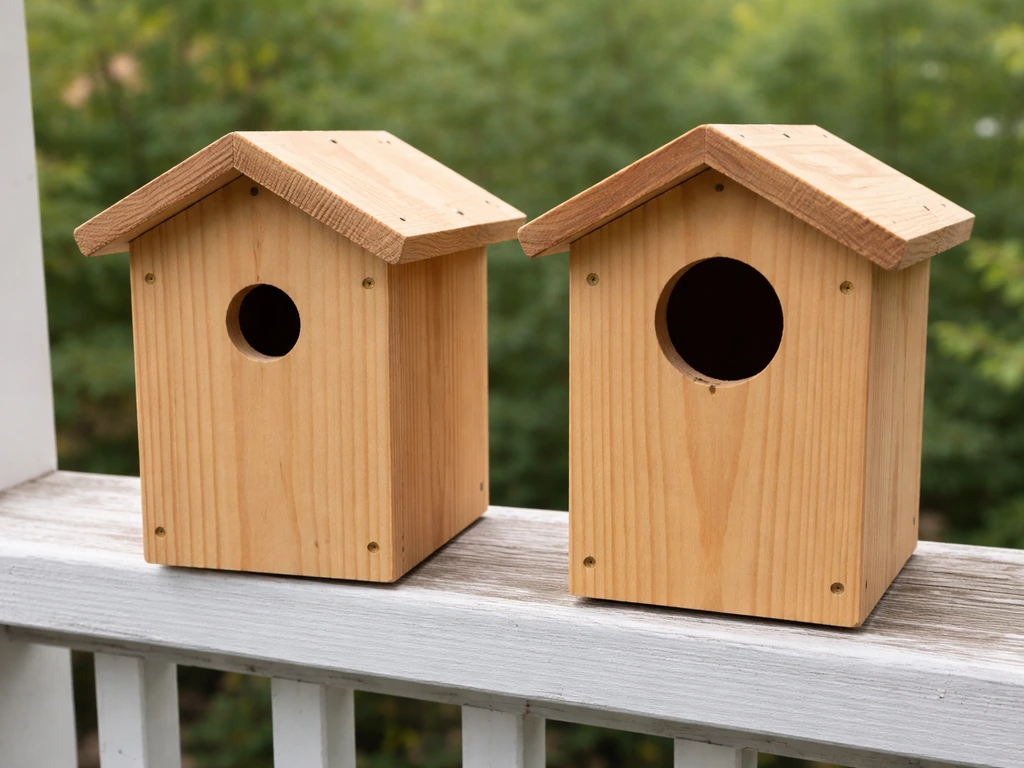
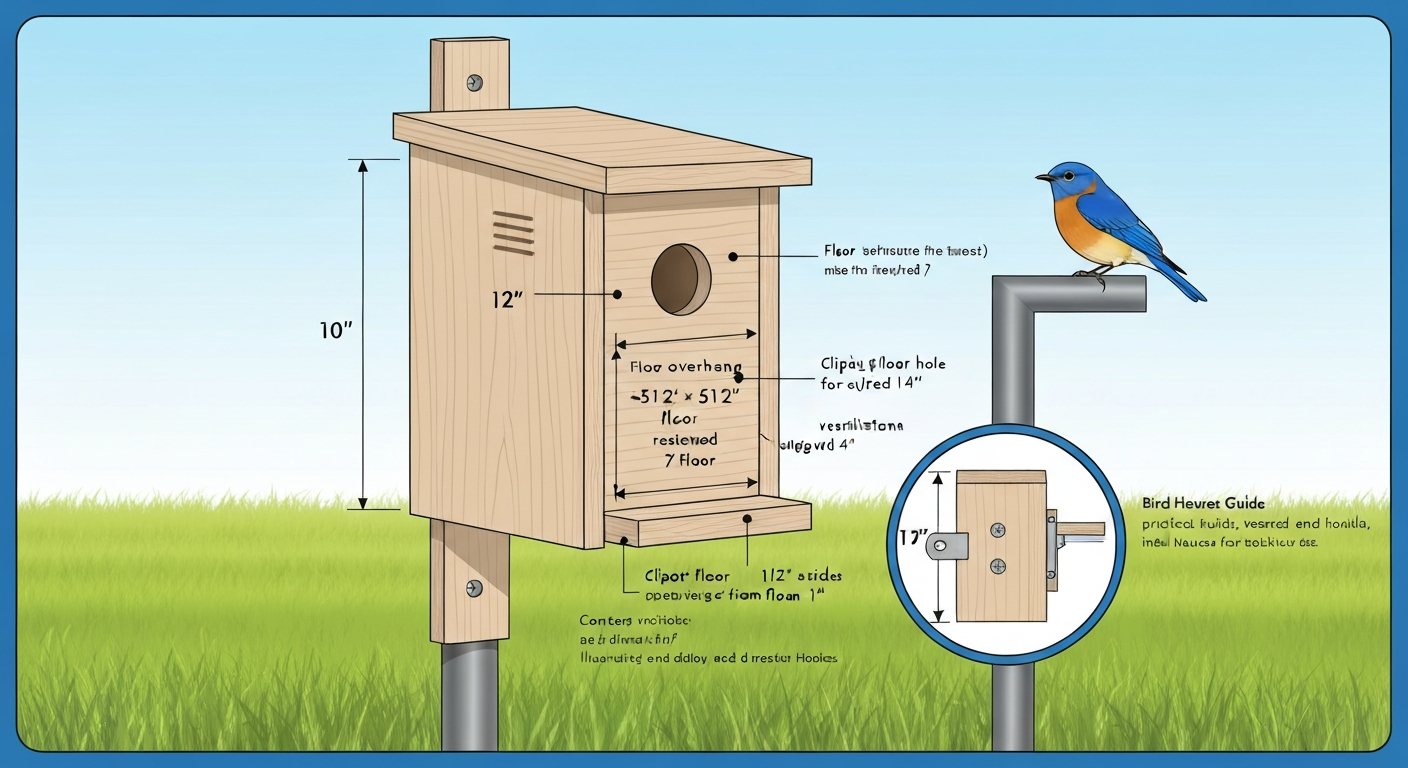
The entrance hole size is the single most important dimension on any nest box. It controls which species can enter and, just as importantly, which predators cannot. Every cavity-nesting species has a preferred hole diameter, and going even a quarter-inch too wide can invite house sparrows or starlings to take over a box meant for bluebirds or wrens. Here are the numbers for the most common backyard species:
| Species | Entrance Hole Diameter | Floor Size | Interior Depth | Mounting Height |
|---|---|---|---|---|
| House Wren | 1 to 1.25 inches | 4 x 4 inches | 6 to 8 inches | 5 to 10 feet |
| Chickadee | 1.125 inches | 4 x 4 inches | 8 to 10 inches | 4 to 15 feet |
| Eastern/Western Bluebird | 1.5 inches | 5 x 5 inches | 8 to 12 inches | 4 to 6 feet |
| Tree Swallow | 1.5 inches | 5 x 5 inches | 6 to 8 inches | 4 to 10 feet |
| Downy Woodpecker | 1.25 inches | 4 x 4 inches | 8 to 10 inches | 6 to 20 feet |
| Northern Flicker | 2.5 inches | 7 x 7 inches | 16 to 18 inches | 6 to 20 feet |
| Wood Duck | 4 x 3 inches (elliptical) | 10 x 18 inches | 22 to 24 inches | 4 to 20 feet over water |
Beyond the hole, floor dimensions and interior depth matter. A house wren can nest in a 4x4 inch floor, but a bluebird needs at least 5x5 inches to raise a brood comfortably. Depth matters too: if the bottom of the cavity is too close to the entrance hole, nestlings can be grabbed from outside. Keep at least 6 inches between the hole and the floor for smaller species, and more for larger ones.
Copper top birdhouses come in a wide range of sizes, so matching the dimensions to your target species is entirely achievable. Just don't assume a 'standard' birdhouse is right for your birds. Check the product specs against the table above before you order or buy.
What to inspect before you buy
Walk through this checklist whether you're buying in a store, at a garden center, or from an online listing. A good-looking birdhouse can still be poorly designed for actual bird nesting, and the copper roof won't save it.
- Roof material: Ask or verify whether the copper is solid sheet copper, a veneer, or paint. Real copper will be slightly heavier and will show subtle texture variation. Paint feels uniform and lightweight.
- Ventilation: There should be small gaps or holes near the roofline or upper walls. Nest boxes without ventilation overheat on summer afternoons and can kill nestlings.
- Drainage: The floor should have corner gaps or small holes (at least 4, roughly 0.25 inches each) to let rain water escape if any gets in.
- No perch below the hole: Perches look charming but they give predators and invasive birds a foothold. Skip them. Cavity nesters don't need them.
- Side or front opens for cleaning: If the box doesn't have a hinged panel or a removable side, cleaning between broods is nearly impossible. Walk away from sealed boxes.
- Untreated interior wood: Stained, painted, or lacquered interiors can off-gas fumes and harm eggs and chicks. Interior surfaces should be bare, rough-sawn wood.
- Roof overhang: A 2-inch or deeper overhang over the entrance hole helps keep rain out and makes it harder for raccoons to reach in from above.
- Hardware quality: Hinges and latches should be rust-resistant. A corroded latch that freezes shut in winter makes cleaning impossible.
Predator resistance deserves extra attention. Raccoons and squirrels are strong enough to enlarge a wooden entrance hole with their claws and teeth within a single season. A metal hole reinforcement plate (usually aluminum or steel) around the entrance is a small feature that makes a big difference. Some copper top birdhouses include this already. If yours doesn't, a metal hole guard is a cheap add-on you can install yourself with two small screws.
How to find copper top bird houses near you or on sale
Local wild bird specialty stores are the best starting point. Staff at these shops usually know their inventory, can confirm whether a roof is real copper, and can tell you which species are actively nesting in your region right now. Hardware stores and garden centers stock birdhouses seasonally, typically February through June in most of the US, so timing matters. If you're shopping in late spring, local inventory may already be picked over.
Online listings give you more options but require more verification. When evaluating a listing, here's what to check before clicking buy:
- Read the materials description carefully. Look for 'solid copper,' 'copper sheet,' or 'copper flashing.' If the listing only says 'copper-colored' or 'copper finish,' assume it's paint or veneer until proven otherwise.
- Check the entrance hole size in the specs, not just the product title. Many listings advertise a general size but bury the actual hole diameter in a table partway down the page.
- Look for photos that show the interior. If no interior shot exists, ask the seller for one or look for a similar product with better documentation.
- Verify the floor dimensions and interior depth against the species table above.
- Check whether the box has a cleanout panel. If the listing doesn't mention it, search for 'removable panel' or 'hinged side' in the description.
- For 'sale' listings, check the original price and whether the discount is being applied to a version with correct specifications or a stripped-down model.
- Read recent reviews specifically for weathering and durability notes, not just aesthetics. A copper top that's peeling after one season is a veneer, regardless of how it was labeled.
- For local 'near me' results, call ahead to confirm stock and ask directly: 'Is the roof actual copper sheet, or is it a coating?'
If you enjoy a DIY approach and want to experiment with non-traditional materials, it's worth knowing that other creative builds, like coffee can bird houses, can make for fun weekend projects, though they require extra attention to ventilation and drainage that factory-made boxes handle automatically.
Where to place a copper top birdhouse for actual nesting success
Height and orientation
Height depends heavily on species. Wrens and chickadees are flexible and will use boxes mounted anywhere from 5 to 15 feet. Bluebirds and tree swallows prefer 4 to 6 feet, which also makes monitoring and cleaning easier for you. Woodpeckers want height, typically 10 to 20 feet up a tree trunk. Mount the box so the entrance hole faces away from prevailing weather, usually facing north to northeast in most of the continental US, to avoid afternoon sun overheating the interior. A Reddit user also described a worst-case temperature test of a metal-roof birdhouse and discussed concerns about potential interior overheating in that community thread blank" rel="noopener noreferrer">avoid afternoon sun overheating the interior.
A slight forward tilt (5 to 10 degrees downward from vertical) helps shed rain away from the entrance hole and discourages water from pooling inside. Don't mount a box perfectly level, and definitely don't tilt it backward.
Habitat matching
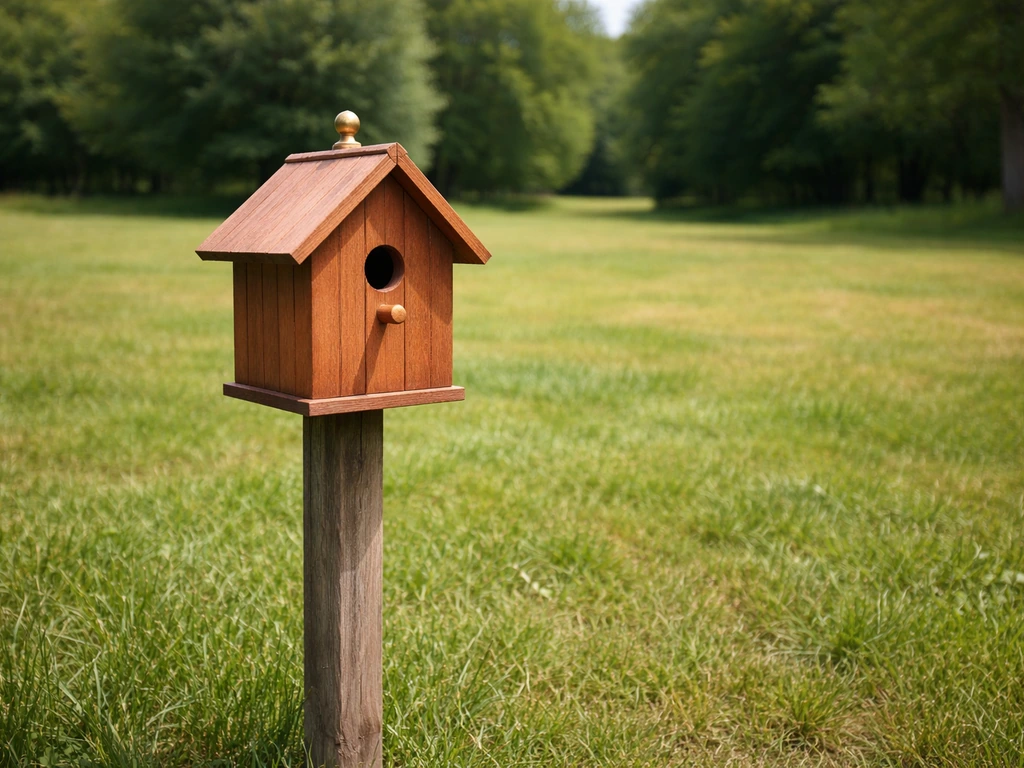
Placement only works if the habitat matches what the target species actually uses. Bluebirds need open fields or lawns with low ground cover and a clear flight path. They won't nest in wooded backyards. Wrens are the opposite: they prefer shrubby, brushy areas near trees. Tree swallows need open areas near water. Chickadees like forest edges and yards with mature trees. Putting the right box in the wrong habitat is a common reason birdhouses go unused season after season.
Spacing matters too if you're putting up multiple boxes. Two bluebird boxes work well when spaced 100 yards apart (bluebirds are territorial with their own species), but a bluebird box and a tree swallow box can go much closer because they don't compete. If you're thinking about a post top bird house setup, pairing species this way on adjacent posts is a classic and effective approach.
Predator deterrence built into placement
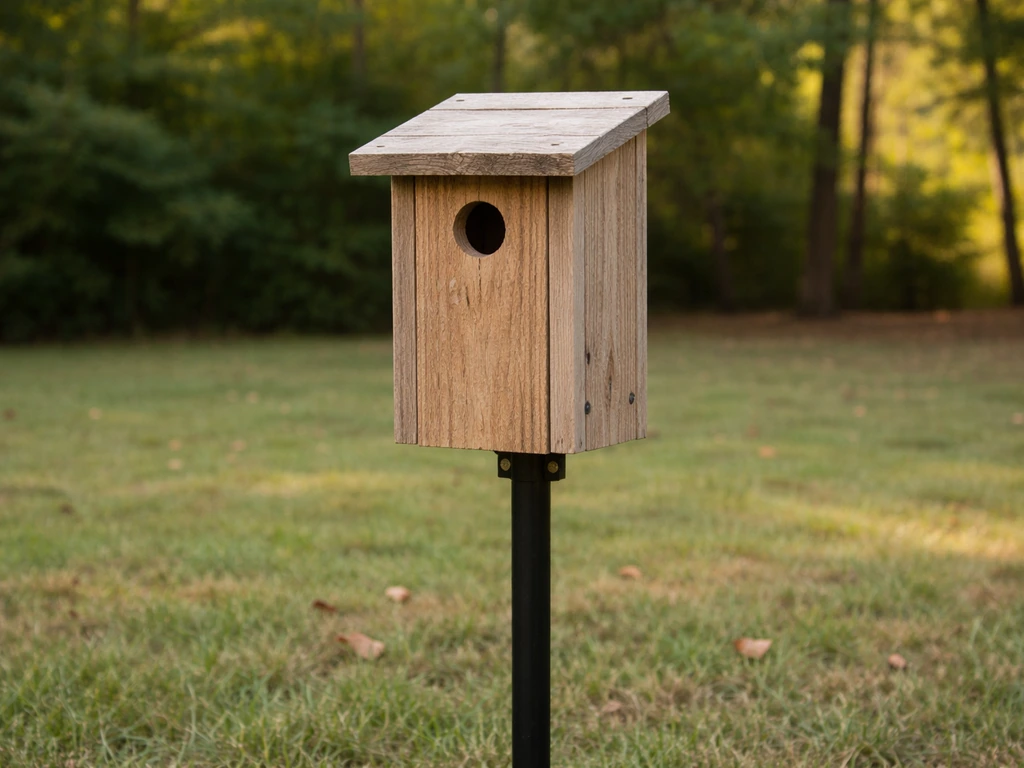
Where you mount the box affects predator exposure as much as what hardware you add. Avoid mounting on tree trunks or wooden fence posts without a baffle. Raccoons, squirrels, and cats can climb both easily. A metal pole with a smooth-surfaced predator baffle (cone or cylindrical, mounted about 4 feet high) is the most reliable setup for ground-level predators. US Fish and Wildlife Service guidance is clear on this point: without predator deterrence, even well-designed nest boxes are vulnerable to repeated failures. Removing perches from the box is the single easiest step, and it makes a real difference because it eliminates the foothold that house sparrows and predators both rely on.
Installation tips for getting it right the first time
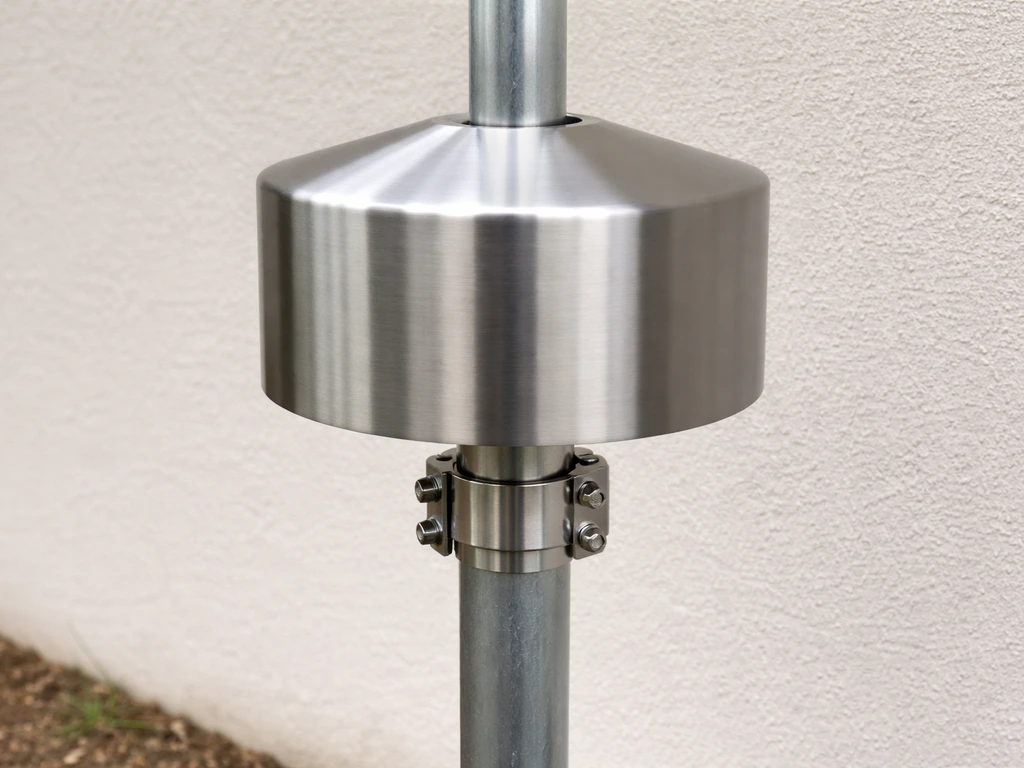
- Use a smooth metal pole rather than a wooden post whenever possible. Pair it with a cylindrical or cone-shaped baffle mounted 4 feet above the ground.
- Secure the box firmly. It should not wobble or swing in wind. Use a mounting bracket rated for outdoor use and check it after the first major storm.
- Check that the entrance hole is at the correct height above the floor before you mount. You can't fix this after installation without dismounting the whole box.
- Face the entrance hole toward the habitat the target species uses, not toward your house. You'll get better occupancy rates and less disturbance.
- Install the box before nesting season starts. For most species in the continental US, that means late February to mid-March.
- Mark the date of installation so you know how old the box is each year and when it may need structural inspection.
- If mounting near a fence or structure, leave at least 3 feet of clearance on all sides so predators can't bridge the gap.
If you're curious how different materials affect installation ease, it's useful to compare. Tin can bird houses and plastic coffee can bird houses are lightweight DIY options that mount quickly, but they lack the thermal mass and weather durability of a solid wood box with a real copper roof. For a long-term backyard setup, the copper top box wins on durability. For a quick project or a kids' activity, the repurposed-container approach has its place.
Cleaning, maintenance, and keeping things safe season to season
Cleaning between broods and after the season
Old nest material is a parasite hotel. Mites, blowfly larvae, and other pests overwinter in used nesting material and can harm or kill the next brood before it even hatches. Remove all old nesting material after each brood fledges and again at the end of the season in fall. You don't need chemicals: scrape out the material, rinse the interior with a 1:9 bleach-to-water solution, let it air dry completely before closing it back up, and you're done. Don't use pesticide sprays inside the box.
A soda can bird house or similar small DIY build is actually easier to fully replace than to deep-clean, which is one honest advantage of disposable materials. A wood box with a copper roof, on the other hand, is built to be cleaned and reused for many years, which is why the cleanout panel is so important.
The copper roof: what maintenance it actually needs
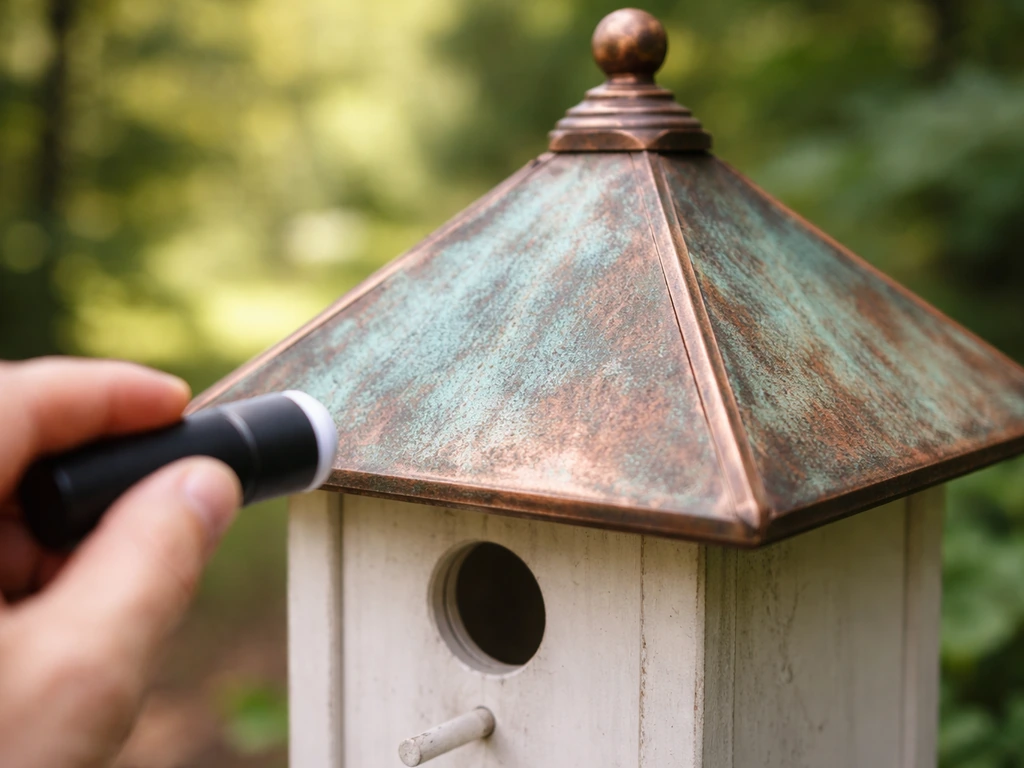
Real copper roofing requires almost no maintenance. As it weathers, it develops a patina that is both visually distinctive and chemically protective. Don't scrub the roof with wire brushes or abrasive cleaners trying to restore the bright finish. That removes the patina and exposes fresh copper that just has to weather all over again. If you want to clean debris off the roof (leaves, dirt, bird droppings), a soft cloth and plain water is all you need. The patina will continue to develop on its own, and that's exactly what you want.
Annual structural inspection
Each fall or early spring, before nesting season begins, do a quick physical inspection of the whole box. Check the mounting hardware for rust or looseness. Check the wood for cracks, rot, or splitting, especially around the entrance hole. Confirm the floor drain holes are clear and not packed with debris. Inspect the hinge and latch on the cleanout panel. Tighten any loose screws. If the entrance hole has been enlarged by squirrels or woodpeckers, add a metal reinforcement plate before the season starts. A box that passes this inspection every year can realistically last a decade or more.
Dealing with pests and unwanted tenants
House sparrows and European starlings are the two most persistent nest-box problems in North America. Neither is native, and both compete aggressively with the cavity-nesting species you're trying to help. The best passive deterrents are the correct entrance hole size (a 1.5-inch hole physically excludes starlings) and removing perches from the box. If house sparrows are building in a box intended for another species, you're legally and ethically within your rights to remove their nesting material repeatedly, since they are not protected under the Migratory Bird Treaty Act. For wasps building inside boxes in early spring before birds arrive, rub the interior ceiling with a bar of plain soap (not scented). Wasps can't attach their combs to soapy surfaces and will move on.
Raccoons are the trickiest predator to deter. They're smart, persistent, and strong enough to reach into a box through the entrance hole with one arm. Beyond the pole-and-baffle setup mentioned earlier, a deeper box (so the nest cup sits well below the reach of an arm) and a roof overhang that extends several inches past the entrance hole both help significantly. If raccoons have already learned your box location, adding a predator guard ring (a 3- to 4-inch wooden or metal extension around the entrance hole that deepens the tunnel to the cavity) is one of the most effective retrofits you can make.
FAQ
How can I tell if the roof is actually copper versus just copper-colored paint when shopping in person?
Look for signs of real metal behavior, such as uneven color shifts and faint surface texture that would come from sheet or cap forming. Paint and veneers usually look uniform under bright light and do not develop small natural patina variations at seams or edges over time. If the listing or box includes spec language like “copper sheet,” “solid copper,” or thickness measurements, that is a stronger indicator than “copper look.”
Will a pre-patinated copper top bird house keep aging in the same way as naturally weathered copper?
It should still darken and deepen over time, but the pattern and speed can differ because coatings may slow oxygen and moisture interaction at the surface. If the product is described as a “patina finish applied” rather than real copper sheet, expect slower or different patina development, and consider it a cosmetic finish rather than the same long-term corrosion behavior.
Do I need to seal or treat the interior wood on a copper top bird house?
For most cavity-nesting birds, avoid sealing the interior surfaces with varnish, polyurethane, or stain, since those can off-gas and create slippery surfaces. If you must do anything for durability, only treat the exterior or use products labeled safe for birdhouses, then ensure the box fully cures and airs out before adding it. The interior should stay untreated for best nest texture and safety.
How should I clean a copper top bird house between broods if birds are still using it?
Only remove nests after the brood has fully fledged, because many species reuse only under specific conditions. When cleaning is allowed, scrape out debris, then rinse and air dry completely, and do not apply disinfectant inside the cavity if you can avoid it. For quick debris removal mid-season, stick to gentle scraping and water, leaving deeper cleaning for after fledging.
What’s the best way to prevent water from pooling in the entrance area?
Use the correct mounting tilt (slightly downward from vertical) and confirm the entrance faces away from the prevailing afternoon weather. Also check that any cleanout panel and seams do not create a tiny internal ledge that can hold water. If your box has a very shallow overhang, consider adding a small rain shield so the roof edge consistently sheds water away from the opening.
Can I mount multiple copper top bird houses close together, and how do I avoid conflicts?
Yes, but spacing should match species behavior. Keep similar competitive species farther apart, and avoid pairing species that actively exclude one another. As a practical rule, if two boxes are meant for closely competing cavity nesters, separate them by at least the typical territory range and ensure each box has a distinct habitat line, like open field versus brushy cover.
What should I do if a house sparrow keeps taking a copper top bird house meant for another species?
Remove sparrow nest material repeatedly while the birds are still not at the egg or nestling stage if possible, since repeated removal is what breaks the takeover pattern. Double-check that the entrance hole diameter matches the target species, because sparrows often exploit overly large openings. Also remove any perches or nearby landing spots that make access easier for sparrows.
Are copper top bird houses safe for wasps, and how do I handle wasps without harming birds?
Wasps can start using boxes before many birds arrive, and the safe approach is to act early in the season. Rubbing plain soap on the interior ceiling can discourage wasp attachment, then leave the box undisturbed until birds begin nesting. If active bird nesting has started, avoid applying anything inside and instead focus on timing and careful monitoring.
What’s the safest way to retrofit a metal hole guard if squirrels enlarge the entrance?
Install the guard so it surrounds the entrance tightly and does not leave a gap where claws can get purchase. Use corrosion-resistant hardware, and inspect after the first storms to confirm alignment. If the original hole is significantly oversized, you may need to use a larger reinforcement plate or add a predator tunnel extension so the cavity depth is regained.
Do I need a predator baffle even with a copper top bird house?
Yes, if predators can reach the box, especially at ground level or on climbable surfaces. A copper roof does not deter raccoon access, because the threat is usually the ability to reach into the entrance. For the most reliable protection, use a properly positioned smooth-surfaced baffle on the mounting pole (and remove perches) rather than relying on the box design alone.
How often should I inspect and adjust a copper top bird house during the nesting season?
Do a minimal disturbance check, typically just to ensure the entrance remains unobstructed and the mounting is secure. Avoid frequent opening of the cleanout panel once nesting has started, because that increases abandonment risk. Save full maintenance, like reinforcement checks and deep cleaning, for early spring before nesting and after fall cleanup.