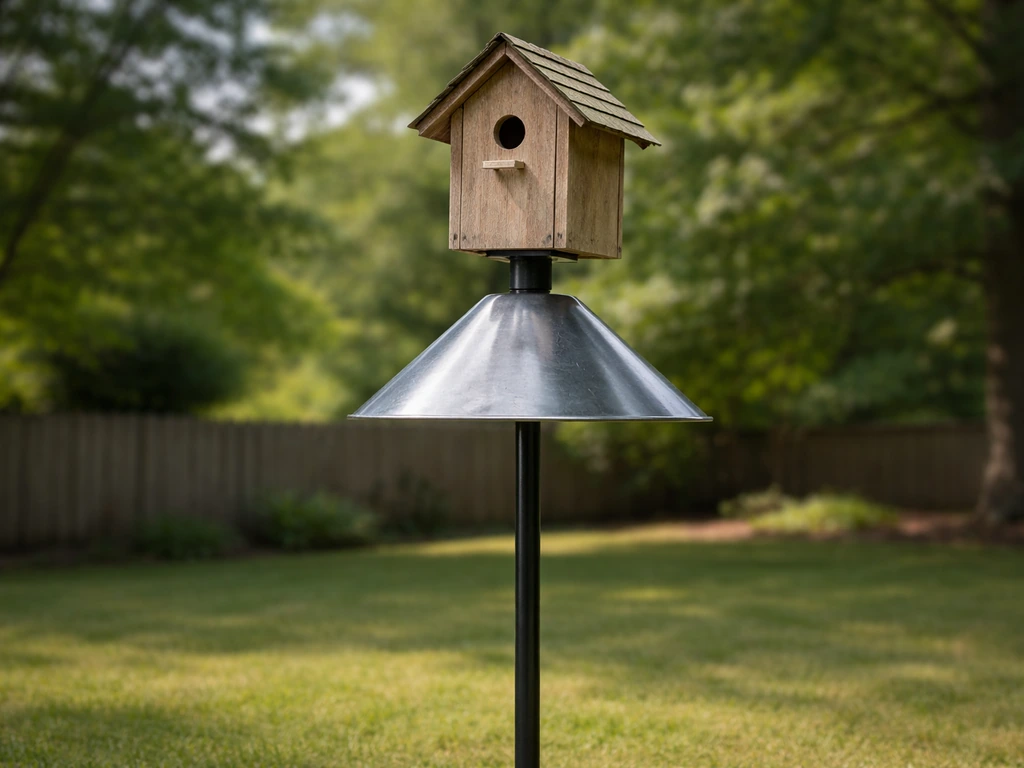
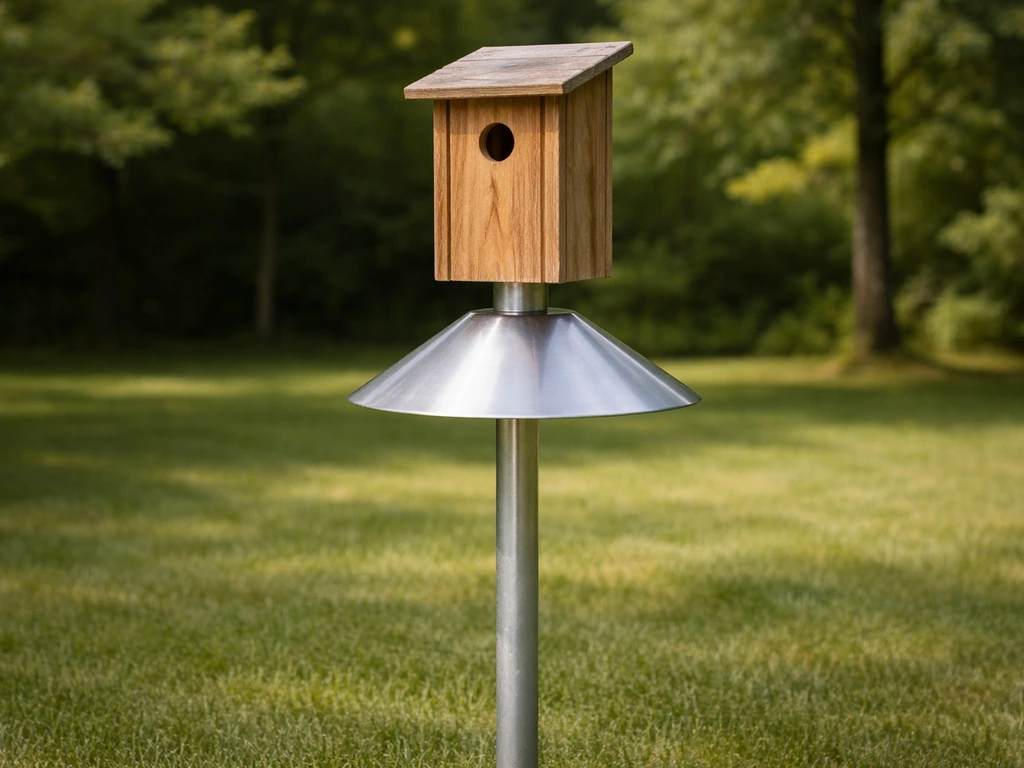
The single most effective thing you can do to protect a bird house from predators is mount it on a smooth metal pole with a stovepipe or cone baffle attached below the box. Do that one thing correctly and you will stop raccoons, cats, snakes, and squirrels from reaching the nest in the vast majority of cases. Everything else in this guide builds on that foundation, covering entrance-hole sizing, smart placement, sanitation, and what to do when a persistent predator finds a workaround.
How to Protect Bird Houses From Predators: Step-by-Step

Maya Thompson
30 May 2026
Know what you're up against
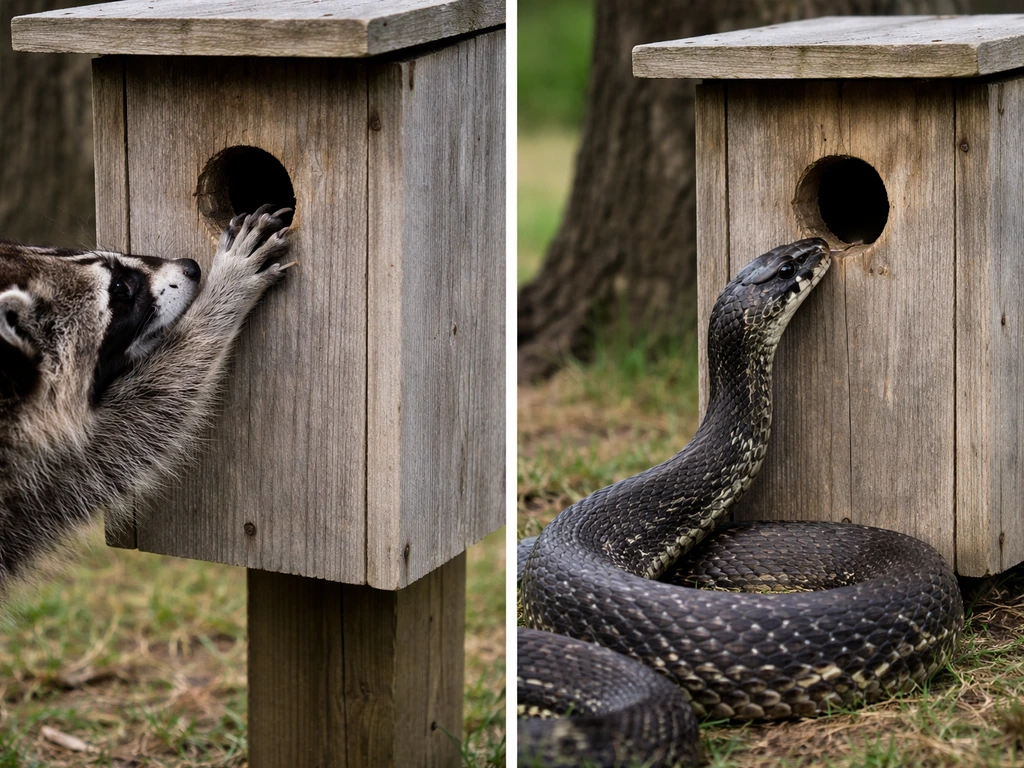
Before you start adding hardware, it helps to know exactly how each predator attacks a nest box, because the defense is different for each one.
| Predator | How they attack | Primary defense |
|---|---|---|
| Raccoon | Climbs the pole or tree, reaches an arm into the entrance hole to pull out eggs, nestlings, or the incubating adult | Stovepipe or cone baffle on the pole; extended entrance-hole guard |
| Snake | Climbs the pole or a nearby tree, enters the box through the entrance hole | Stovepipe baffle on the pole; remove any nearby climbing structures within jumping range |
| Cat (feral or domestic) | Climbs or jumps to the box, swipes through the entrance hole or waits for fledglings | Pole mounting plus baffle; correct entrance-hole diameter; no nearby launch points |
| Squirrel | Gnaws the entrance hole wider to gain access, or climbs to the box | Metal or hardwood entrance-hole guard; smooth pole with baffle |
| House sparrow / European starling | Evicts native birds and takes over the box | Correct species-specific entrance diameter; active monitoring and removal |
Raccoons are probably the most destructive predator on the list. They are strong, surprisingly dexterous, and patient. Snakes are the sneakiest threat because they can bypass a pole baffle entirely if there is a tree, fence, or shrub within a few feet of the box. Cats are serious but underestimated. And squirrels may not eat eggs, but they will chew an entrance hole from 1.5 inches to 2 inches or more, turning a species-specific box into an open invitation for starlings or house sparrows. Understanding each threat helps you make smart decisions rather than just piling on hardware.
Start with the box itself: design details that matter
A well-designed box is your first layer of defense before any guard goes on. Several specific design choices make a real difference.
Get the entrance hole right for your target species
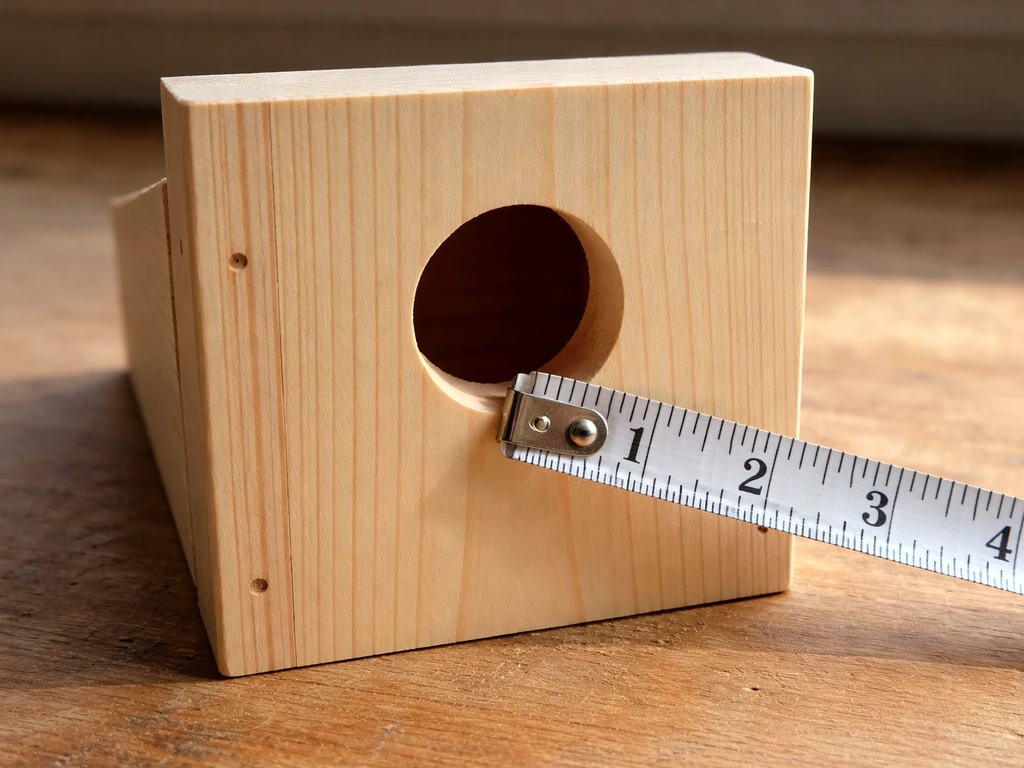
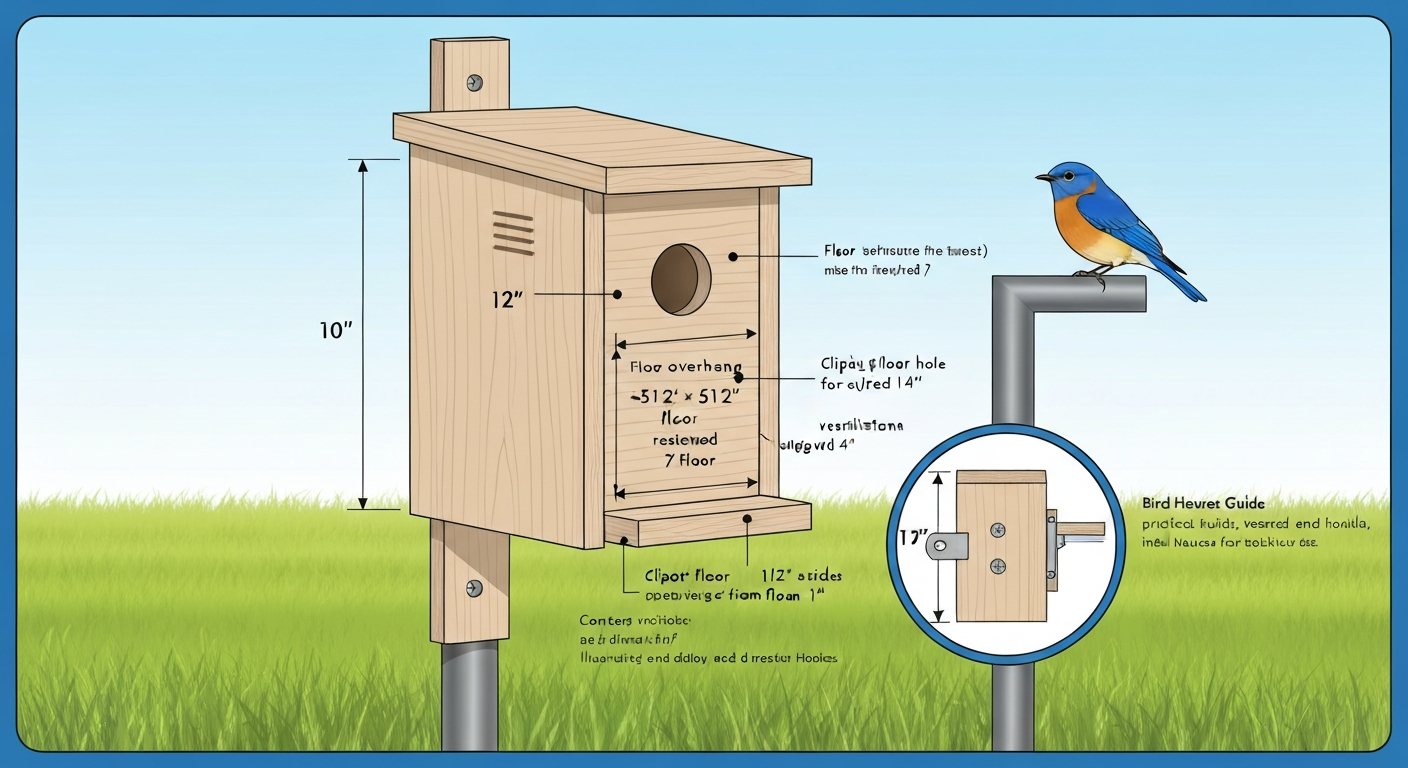
The entrance hole is the most important dimension on the entire box. For Eastern Bluebirds, the standard is exactly 1.5 inches in diameter. That size lets bluebirds enter comfortably while excluding starlings, which need at least 1.75 inches. For wrens and chickadees, drop to 1.125 inches (1-1/8"). These are not suggestions: a hole that is even a quarter inch too large dramatically increases the risk of a raccoon arm reaching the nest material, and it removes the species-specific barrier that keeps larger, invasive birds out. If you are unsure what size to use, match the hole to the bird you want. There is a good reason why entrance-hole guards, baffles, and hardware are all manufactured in those same specific sizes.
Skip the perch, close the gaps, choose the right material
Do not add a perch below the entrance hole. Native cavity-nesting birds do not need one, and it gives predators (and house sparrows) a convenient handhold. Keep the exterior surface smooth, especially around the entrance. Any gaps in the box walls, roof joints, or floor corners should be tight: gaps invite investigation by both predators and insects. Solid wood (at least 3/4-inch thick) resists gnawing better than thin plywood. Cedar and pine are the standard choices. Avoid painting or chemically treating the interior, and skip glossy exterior finishes that might trap heat or off-gas chemicals. A simple exterior coat of linseed oil or no treatment at all is fine.
Consider box depth and floor size
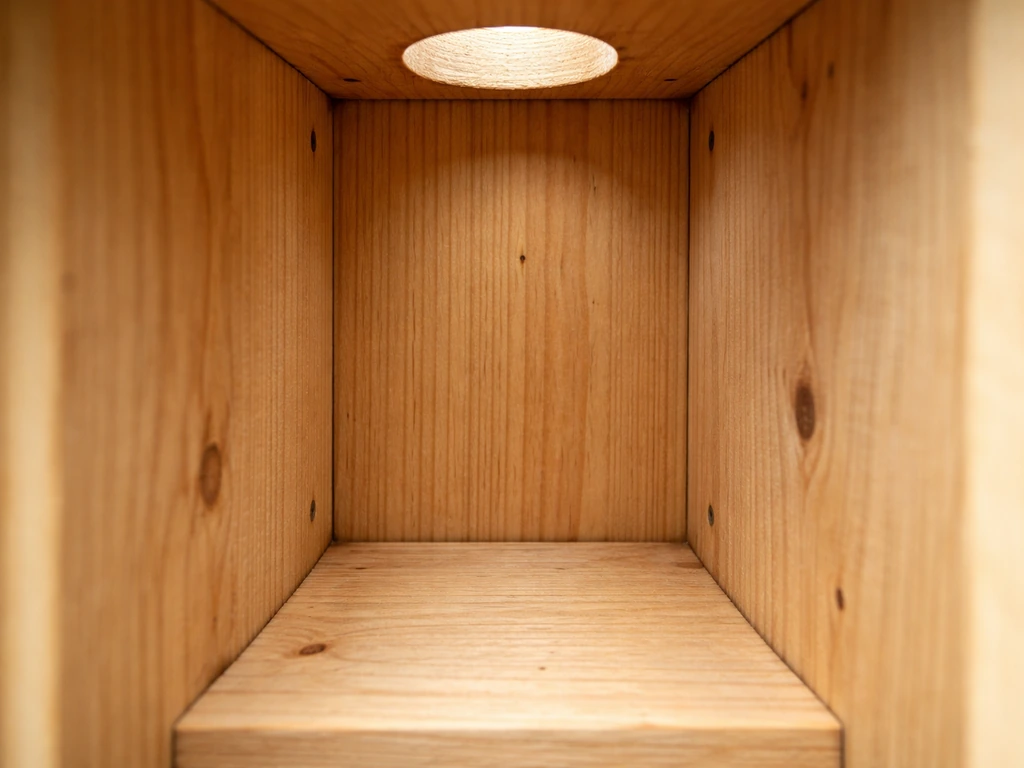
A deeper box makes it harder for a raccoon's arm to reach the nest. For bluebird boxes, the entrance hole should sit roughly 5 to 6 inches above the floor. That extra distance means a raccoon reaching in through a 1.5-inch hole has to stretch much farther to reach nesting material. It is not foolproof, but combined with an entrance-hole guard (see below), it adds meaningful protection.
Install it right: pole, height, and location
Even a beautifully designed box fails if it is installed wrong. Placement decisions affect how easy or hard every predator finds the approach.
Use a smooth metal pole, not a tree or fence post
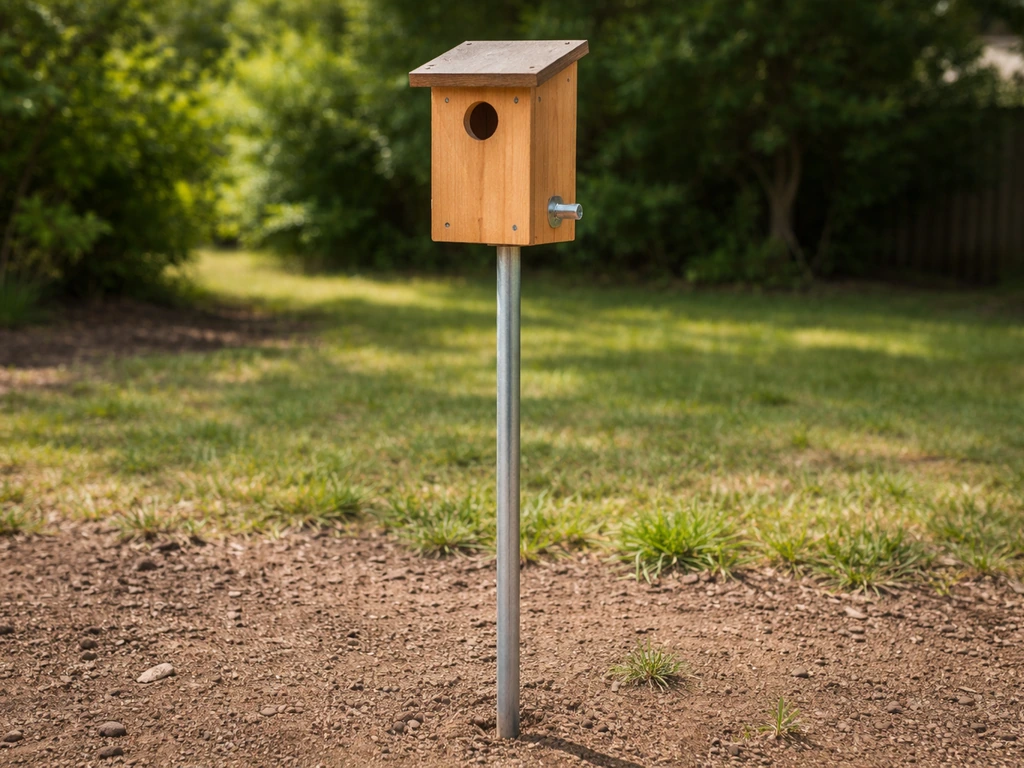
Mount your box on a freestanding smooth round metal pole, not on a tree, wooden fence post, or the side of a building. A half-inch electrical conduit or a purpose-built nest-box pole works perfectly. The smooth round surface gives climbing predators almost nothing to grip. Wooden posts, tree bark, and fence boards are essentially ladders for raccoons and snakes. If you cannot attach a proper predator guard because of your mounting surface, that location is not right for a bird house. Tennessee wildlife managers put it plainly: never place a box on a structure where you cannot also attach a predator guard.
Height and clearance
For most cavity-nesting songbirds, mount the box at 4 to 6 feet off the ground. That height is high enough to feel safe to the birds and low enough for you to monitor comfortably. More importantly, keep the box at least 10 feet away from any tree, shrub, fence, building wall, or other structure a snake or raccoon could use as a launch point. Snakes are the reason this clearance matters so much: they can and will bridge the gap from a nearby branch or shrub to a box that looks well-protected from below.
Open-area placement
Place nest boxes in the open, facing away from prevailing weather and with some morning sun on the entrance. An open field, meadow edge, or mowed lawn works well. Avoid placing boxes near dense shrubs, brush piles, or overgrown areas that give predators close cover. A fledgling launch perch is a good idea: Connecticut wildlife guidance recommends placing a suitable tree or perch 40 to 100 feet from the box so fledglings have somewhere to land, without that perch being close enough to serve as a predator highway.
Predator guards and baffles: the core hardware
Predator guards are where most of the real protection comes from. There are two types you need to know: pole baffles (which stop climbers) and entrance-hole guards (which stop reaching and gnawing). Use both together for the best results. NestWatch data shows that boxes with predator guards have nesting success rates about 6.7 percentage points higher than boxes without them. That is a meaningful difference.
Pole baffles: stovepipe and cone styles
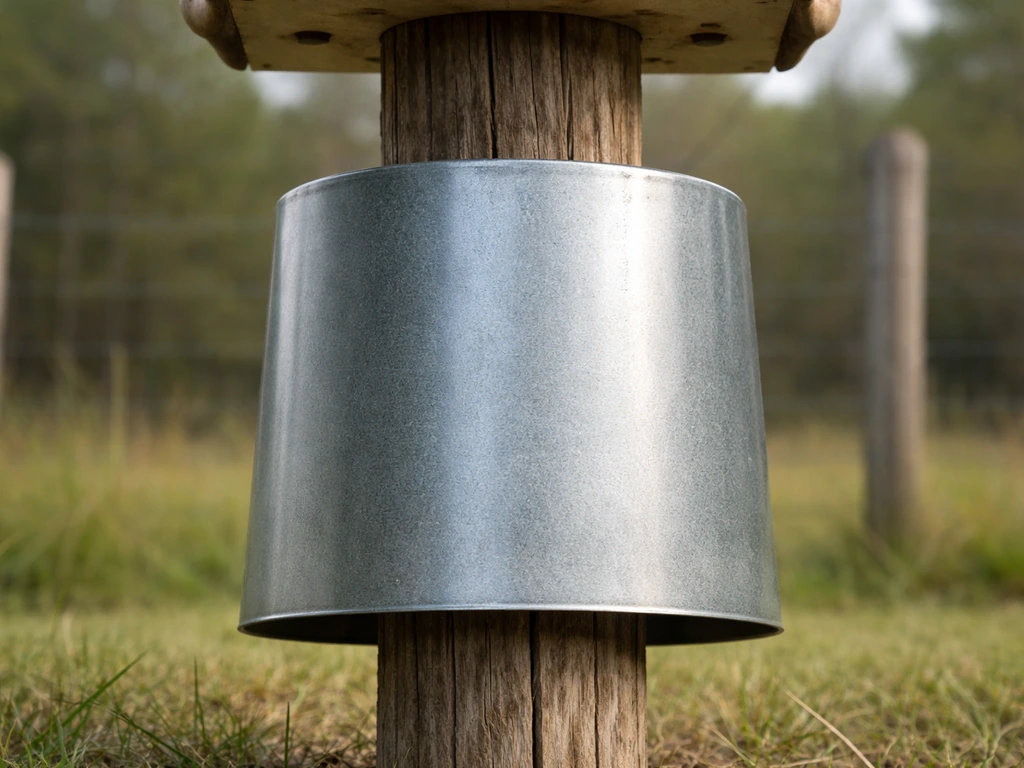
A stovepipe baffle is a cylinder of sheet metal (typically 8 inches in diameter and 24 to 36 inches long) that slides over the pole below the box. The key installation rule: put the baffle on the pole before you attach the nest box. The cylinder's slippery, rounded surface stops raccoons and snakes from getting past it. If a raccoon tries to climb, it hits the baffle, cannot get a grip, and falls off. A cone baffle works on the same principle but uses a downward-facing funnel shape. Both styles work well on a smooth metal pole. If raccoons in your yard are especially persistent, try a longer stovepipe (36 inches instead of 24) or add a PVC sleeve underneath.
Entrance-hole guards: block the reach and the gnaw
An entrance-hole guard is a thick ring of metal, hardwood, or PVC that fits around the entrance hole on the outside face of the box. It serves two purposes: it extends the depth of the tunnel a predator's arm would have to travel to reach the nest, and it prevents squirrels from gnawing the hole wider. Match the guard diameter precisely to your target species hole: 1.5 inches for bluebirds, 1.125 inches for wrens and chickadees. A guard sized for one species will not work correctly on a box for another. Commercial guards are sold in these exact sizes, and DIY versions can be cut from hardwood scraps or PVC pipe cap fittings. Screw or glue the guard flush against the outside box face so there is no gap between the guard and the wood.
A quick comparison of guard options
| Guard type | Best for stopping | Material | DIY-friendly? | Notes |
|---|---|---|---|---|
| Stovepipe pole baffle | Raccoons, snakes, cats, squirrels | Sheet metal | Yes (basic metal work) | Most effective all-around; install before the box goes on |
| Cone pole baffle | Raccoons, cats, squirrels | Metal or plastic | Moderately | Works best on a smooth round pole |
| Entrance-hole guard (wood/metal ring) | Raccoons (reaching), squirrels (gnawing) | Hardwood, metal, PVC | Yes | Must match hole size exactly; add to existing boxes easily |
| PVC or conduit sleeve on pole | Snakes, raccoons | PVC pipe | Yes | Good addition for extra snake protection; combine with stovepipe baffle |
Maintenance and sanitation: don't attract predators in the first place
Predators are opportunists. A box with old nesting material, fecal buildup, or food debris is a strong signal to a hunting raccoon or snake that there is something worth investigating. Staying on top of cleaning removes that signal.
Weekly monitoring during nesting season
Check your box about once a week during the active nesting season. Weekly monitoring lets you spot predator evidence early (damaged wood, disturbed nesting material, broken eggs), and it gives you a chance to remove old nests after each brood fledges before they attract new attention. California Bluebird Recovery Program guidance notes that if you check weekly, you usually have a timely opportunity to remove the old nest during monitoring. When you do check, be quick and calm, stay 10 to 15 feet back before opening the box, and keep visits short.
End-of-season cleaning
After the last brood of the season has fledged and there is absolutely no sign of active breeding, remove all nesting material and scrub the inside of the box with mild dish soap and water. If the box has heavy fecal soiling, use a solution of 1 part bleach to 10 parts water, rinse thoroughly, and let it air dry completely before closing it back up. NestWatch recommends waiting until you are certain no activity is happening before cleaning. If you are unsure, wait another day. Do not rush it: disturbing an active nest risks abandonment and may violate the Migratory Bird Treaty Act.
Reduce attractants around the box
- Do not place bird feeders, food scraps, or compost bins directly below or near your nest box. Seed and food waste draws rodents, which in turn draw snakes.
- Keep the grass mowed around the pole base. Tall grass and weeds give snakes cover to approach.
- Remove brush piles, wood stacks, or debris within 20 feet of the box. These are prime snake and rodent habitat.
- If you have a rodent problem on your property, address it separately. Rodent activity near a bird box is an invitation to snakes, and that snakepredator connection is real.
When a predator is already active: humane troubleshooting
If you are seeing repeated predation despite having a baffle in place, resist the urge to do something drastic. Work through these steps in order before escalating.
- Check the pole clearance first. Is there a shrub, branch, or fence within 10 feet of the box that a snake or raccoon could use to bypass the baffle entirely? Move the box or remove the nearby structure.
- Inspect the baffle itself. Is the stovepipe loose, tilted, or positioned too close to the box? A gap between the top of the baffle and the bottom of the box gives a raccoon a foothold. Tighten and reposition it.
- Try a longer stovepipe. If raccoons are still getting past a 24-inch baffle, move up to 36 inches. Longer cylinders are harder to reach around.
- Add an entrance-hole guard if you have not already. A raccoon that cannot climb past the pole baffle may still be reaching up from the ground at a lower-mounted box. An entrance-hole guard adds another barrier.
- Consider relocating the box. Sometimes a specific spot is simply too close to woodland edge, too near a regular raccoon travel route, or impossible to fully clear of nearby structures. Moving 50 to 100 feet to a more open location can make a significant difference.
- Do not use traps unless you are prepared to handle them legally and humanely. Live-trapping raccoons, cats, and squirrels raises complex questions about where to relocate them and whether relocation is even effective. The U.S. Fish and Wildlife Service has clear guidance about wildlife handling and in some situations federal law applies. Contact your state wildlife agency before trapping.
- Never use poison, glue traps, or any method that could harm non-target wildlife, including snakes. Many snake species are protected, and all of them are beneficial to a healthy yard. Focus on exclusion, not elimination.
If house sparrows or European starlings are taking over the box, the solution is monitoring and removal rather than physical guards. These are introduced species, not protected under the Migratory Bird Treaty Act, but the birds you are trying to help are. Matching hole size carefully to your target species is your best passive defense against invasive birds, and it connects directly to the broader question of which box attracts which bird in the first place. If you want the right fit, review what bird houses attract which birds so you can choose the correct entrance size and setup for your target species which box attracts which bird. For a quick match, focus on the entrance-hole size and overall box design for the specific bird you want to attract which box attracts which bird in the first place. There is also a lot to consider about what attracts birds to bird houses in the first place, like the design choices and placement that encourage them to settle.
Your next-steps checklist
Here is a quick checklist you can work through today. Knock these out in order and your box will be dramatically better protected by the end of the day.
- Confirm your box is on a smooth round metal pole (not a tree, wooden post, or building wall).
- Check that no tree, shrub, fence, or structure is within 10 feet of the box.
- Measure your entrance hole: 1.5" for bluebirds, 1.125" for wrens and chickadees. Plug or replace the box if the hole is too large.
- Install a stovepipe or cone baffle on the pole below the box if you do not have one already. Remember: baffle goes on before the box.
- Add an entrance-hole guard (wood, metal, or PVC) matched to your entrance-hole diameter.
- Remove any perch below the entrance hole if one is present.
- Clear brush, tall grass, and debris from the area within 20 feet of the pole base.
- Set a weekly calendar reminder to check the box during nesting season.
- Plan an end-of-season clean with mild soap/water or diluted bleach solution once all birds have fledged.
- If a predator is already active, start at step 1 of the troubleshooting section above before adding more hardware.
FAQ
Do I need both a pole baffle and an entrance-hole guard, or can I just use one?
Use both. A baffle stops climbers, but it does not prevent a squirrel from gnawing a larger entrance or reaching through the hole. The entrance-hole guard also adds effective tunnel depth, which matters for raccoons and snakes that get close enough.
What if my nest box is already mounted on a wooden post or a building wall?
You may need to relocate. The smooth metal pole is not just a preference, it is what makes the baffle work as intended. If you cannot attach a properly sized baffle below the box, the location is essentially bypassable for raccoons and snakes.
How high should the box be if I have pets or kids near the yard?
Typical mounting height is 4 to 6 feet for monitoring and bird safety. If you go higher for human safety, you still must keep the box at least 10 feet from climb-and-launch cover (trees, shrubs, fences, walls) and ensure the baffle is installed correctly for that mounting height.
Can predators still reach the nest if I have perfect entrance-hole size?
Yes, other routes exist. Snakes can bridge from nearby branches or shrubs, raccoons can reach from below if the baffle is missing or poorly installed, and squirrels can chew around imperfect seals. Entrance-hole sizing is critical, but it is only one layer.
How do I know the entrance-hole guard is sealed correctly with no gaps?
Dry-fit it first and run a finger along the seam. The guard should sit flush against the box face with no visible daylight. Even small gaps can let a predator probe between the guard and the wood, especially if the guard is slightly loose.
What should I do if raccoons are turning my baffle into a climbing challenge?
First confirm the pole is smooth and round where the baffle rides, and that the baffle is installed before the box. If they keep trying, use a longer stovepipe baffle (for example, 36 inches) or add a PVC sleeve underneath so there is less surface for them to gain traction.
How far is “far enough” from trees and shrubs, and does it apply to all predators?
Aim for at least 10 feet of clearance from any tree, shrub, fence, building wall, or other structure a raccoon or snake could use as a launch point. This is especially important for snakes, which can cross gaps that look safe from below.
Do I need to remove old nesting material even if I do not see obvious predator activity?
Only after the season is clearly over and there is no sign of active breeding. During nesting, weekly checks are for early warning and quick, calm correction, not full cleanup. Premature removal can cause abandonment, and it can also leave food and debris that draws predators back if you wait too long.
What is the safest way to clean a box without causing birds to abandon?
Make sure there is no activity before starting, then do the work quickly and calmly. If you are unsure whether birds are still using the box, wait another day. If you use a bleach solution on heavy fecal soiling, rinse thoroughly and let the box air dry completely.
Will painting or sealing the box help with predators, like keeping them from gripping the wood?
Not as a predator solution, and some finishes can be harmful for birds. Avoid treating or coating the interior, and do not rely on glossy or heavily sealing finishes to deter predators. Focus on smooth mounting, correct baffles, tight construction, and properly sized entrance holes instead.
Do entrance-hole guards work on DIY boxes, or only on commercial ones?
They work on both, as long as the guard matches the exact entrance-hole diameter for the target species and fits flush with no gaps. If your box hole size is off by even a fraction of an inch, squirrels can exploit the looseness and invasive birds may gain access.