Birdhouses do attract birds, but only when the right species encounters the right box in the right spot at the right time. Put up a generic box in a bad location with the wrong entrance hole, and it may sit empty for years. Match the hole size, interior dimensions, mounting height, orientation, and surrounding habitat to your target species, and you can have a bird scouting the box within days of installation. That's the whole game: you're not decorating your yard, you're mimicking a natural tree cavity well enough that a bird chooses your box over any other option it finds.
What Attracts Birds to Bird Houses: Placement and Fit Tips
Maya Thompson
4 May 2026

Do birdhouses actually attract birds (and when they won't)
Many cavity-nesting birds will use artificial nest structures when they're available, and in suburban and agricultural areas where old dead trees (snags) get removed, a well-made box can be the best cavity around. That said, simply hanging a box doesn't guarantee occupancy. Research from the US Forest Service is clear: where natural cavities are still abundant, adding nest boxes may not change occupancy much at all, because birds already have options. If your yard is surrounded by mature forest full of woodpecker holes and rotting snags, a bird has little reason to choose your box.
Two other major occupancy killers are introduced species, specifically European starlings and house sparrows. Both aggressively compete for cavities and will evict native birds, destroy eggs, and even kill nestlings. Starlings can squeeze into any entrance hole larger than 1.5 inches on most common nest-box species, and they're difficult to deter. House sparrows are even more tenacious. If your area has high populations of either species, expect competition, and factor it into your setup decisions.
Finally, timing matters more than most beginners realize. Birds scout nest sites before breeding season, sometimes weeks in advance. A box put up in late spring after scouting has already happened may sit unused until the following year. Install boxes in late winter or early fall so they're in place when birds start evaluating options.
The habitat cues birds actually use to pick a house
When a bird scouts a potential nest site, it's running a quick risk-benefit check. The cues it reads are food availability nearby, shelter and cover around the box, and signs of predator safety. Get all three right and you're in business.
Food within foraging range
Birds won't nest far from their food supply. Bluebirds need open, short-grass areas where they can spot insects on the ground. Chickadees and nuthatches need nearby trees and shrubs loaded with insects and seeds. House wrens want dense shrubby areas. Tree swallows pick boxes near water because they feed on flying insects over open water and fields. Placing a box in habitat your target species doesn't forage in is one of the most common reasons boxes go unused. Match the box location to where the species actually spends its feeding time.
Cover and shelter
Birds want nearby perches for singing and lookout posts, but they also want some degree of visual concealment from aerial predators. Open meadow species like bluebirds still need a few scattered trees or fence posts nearby. Woodland species like chickadees prefer boxes at forest edges where they can duck into dense cover quickly. Total exposure in the middle of a lawn with no surrounding structure is unappealing. Think about what the bird sees when it's sitting at the entrance hole, and make sure there's usable habitat within a short flight.
Safety signals
A bird assessing a nest site is also reading predator risk. Research has shown that illumination inside a cavity is an important, often overlooked cue in nest-site choice: too much light entering the hole signals a cavity that's too exposed or large. An overhanging roof that shades the entrance, the correct hole size that limits what can enter, and a mounting location away from predator highways all send the right signals. Evidence from kestrel studies also suggests that the presence of old nesting material inside a box acts as an informative cue, indicating prior use and safety. That's one reason some birds will reuse boxes that held successful nests.
Species-specific match: size, hole, placement, and timing
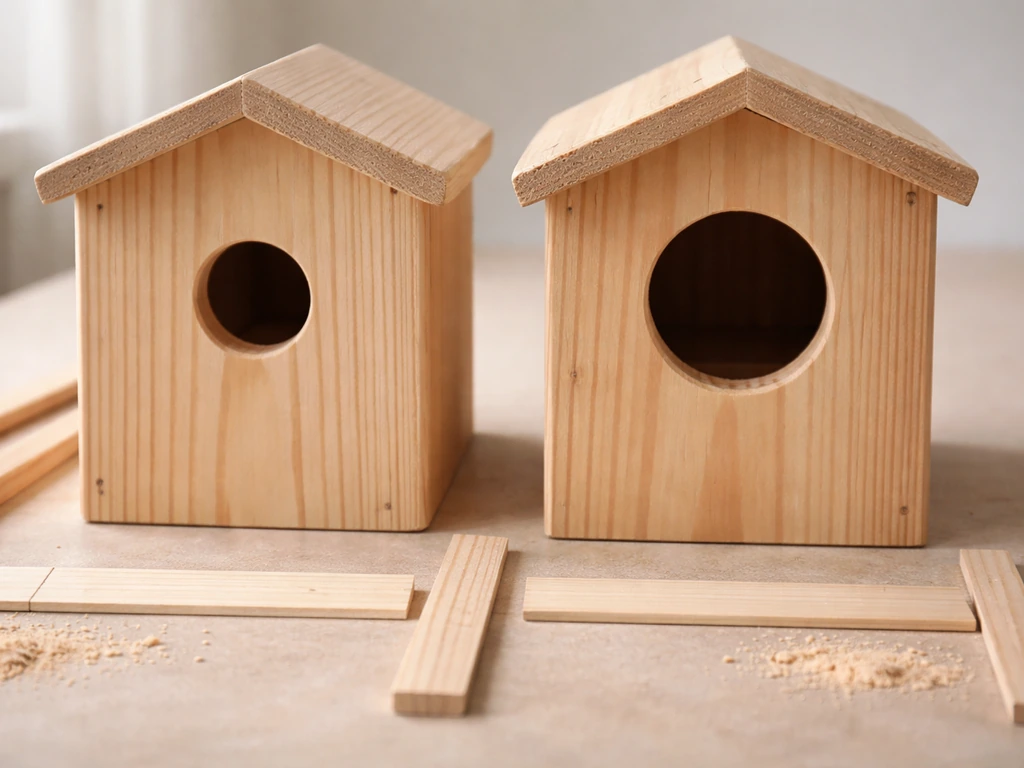
This is where most people go wrong. There is no universal birdhouse. Every species has specific requirements for floor size, interior depth, entrance hole diameter, mounting height, habitat type, and timing. Getting even one of these badly wrong can mean zero occupancy.
| Species | Floor Size (in) | Interior Depth (in) | Entrance Hole (in) | Mount Height (ft) | Habitat |
|---|---|---|---|---|---|
| Eastern Bluebird | 4x4 to 5x5 | 8–12 (5–6 from hole to floor) | 1.5 | 4–6 | Open fields, golf courses, roadsides |
| House Wren | 4x4 | 6–8 | 1.0–1.25 | 5–10 | Shrubby yards, woodland edges |
| Black-capped Chickadee | 4x4 | 8–10 | 1.125–1.25 | 5–15 | Forest edges, wooded suburbs |
| Tree Swallow | 5x5 | 6–8 | 1.5 | 4–8 | Open areas near water |
| Wood Duck | 10x18 interior | 10–24 depth | 3x4 oval | 5–20 over water | Wetlands, wooded ponds |
| American Kestrel | 8x8 | 12–15 | 3 | 10–30 | Open farmland, meadows |
For bluebirds specifically, the Michigan DNR and North American Bluebird Society are your best references. The entrance hole should be exactly 1. 5 inches in diameter. The floor should be about 4 to 5 inches square, and the distance from the bottom of the entrance hole to the floor should be 5 to 6 inches, giving the nestlings enough depth to stay hidden from predators reaching in.
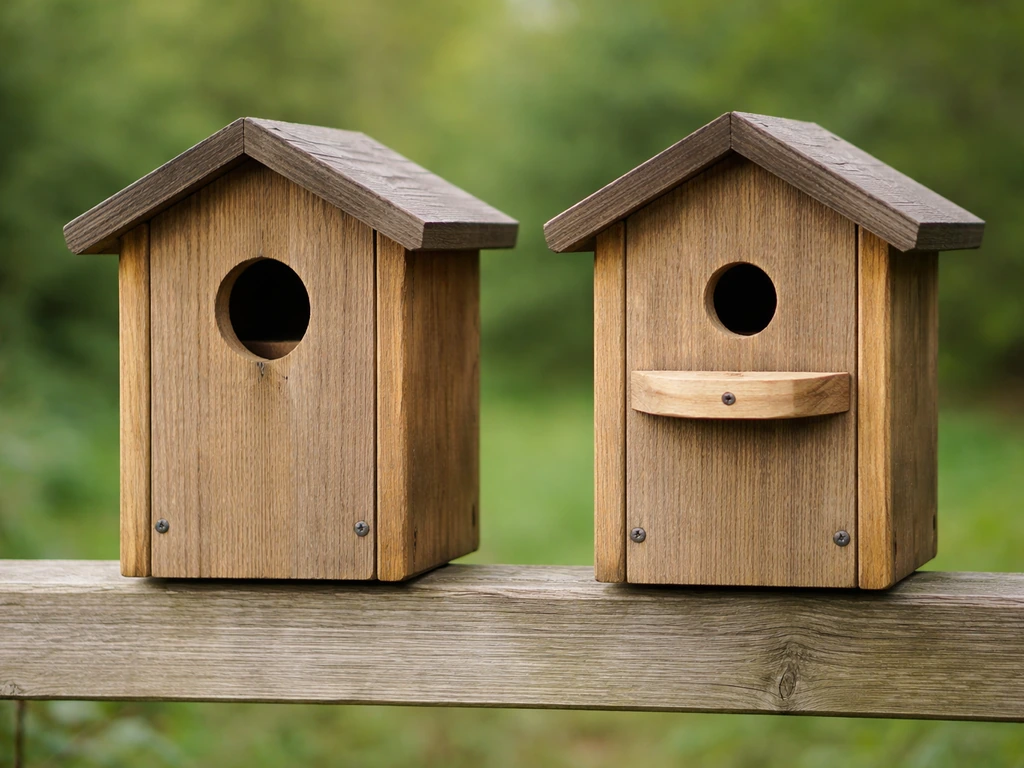
Do not add a perch below the entrance: it helps house sparrows and starlings, not bluebirds. House wrens use a smaller hole, around 1 to 1. 25 inches, and will readily accept boxes hung in dense shrubby areas at 5 to 10 feet up. Knowing your target species thoroughly before you build or buy is the single most important step.
Separate guidance on matching specific birdhouse designs to specific species goes deeper into these distinctions.
Timing: most songbirds begin scouting in late February through March in temperate zones. Boxes should be up and cleaned out from the previous season by late February at the latest. Wood ducks scout very early, sometimes in January in southern states. Kestrels begin in February to March. If you're installing a new box, aim for the previous fall so it weathers slightly and looks more natural by scouting season.
Making the birdhouse genuinely inviting without harming birds
Materials
Use untreated wood, ideally cedar, pine, or Douglas fir. These are naturally weather-resistant and breathable, and they regulate interior temperature better than metal or plastic. Avoid pressure-treated lumber entirely: the chemicals are harmful to birds. Never paint or stain the interior, and never paint or stain around the entrance hole. CT DEEP guidance is explicit on this. For the exterior, you can use a light, natural color like tan or gray if you want, but avoid dark colors, which absorb heat and can cook eggs and chicks on warm days. The exterior can weather naturally, which is fine.
Ventilation and drainage

These two features are non-negotiable. Drill at least four 3/8-inch drainage holes in the floor corners so water can't pool inside. Add ventilation gaps or drilled holes near the top of the side walls, just under the roof, to allow heat to escape. A slightly sloped, overhanging roof helps shed rain away from the entrance. The distance from the top of the entrance hole to the underside of the roof should be roughly 1.5 inches, which provides shade and weather protection without blocking airflow. A box that overheats or stays wet will be abandoned, or worse, will kill nestlings.
Interior surface and light
The interior of the box should be rough-sawn wood or have horizontal grooves cut into the wall below the entrance hole. This gives fledglings grip when they're climbing out. Research has confirmed that interior illumination affects nest-site choice in cavity-nesting birds, so keep the interior dark. The right entrance hole size, an overhanging roof, and proper orientation all help with this. A box facing away from direct afternoon sun stays cooler and darker inside, which is exactly what the bird is looking for.
What about scent and attractants
Skip the commercial 'bird attractant' sprays and scents. Controlled studies have found that adding feathers inside boxes did not prevent or delay nesting by bluebirds, tree swallows, or Carolina chickadees, meaning supposed attractants aimed at cavity nesters generally don't do what they claim. The most reliable attractant is simply getting every physical and location variable right. Don't add cedar chips, sawdust, or strongly scented materials to the interior either. Leave the box clean and empty: birds that use cavities build their own nests from scratch.
Installation and placement strategies for different yards
Height and orientation
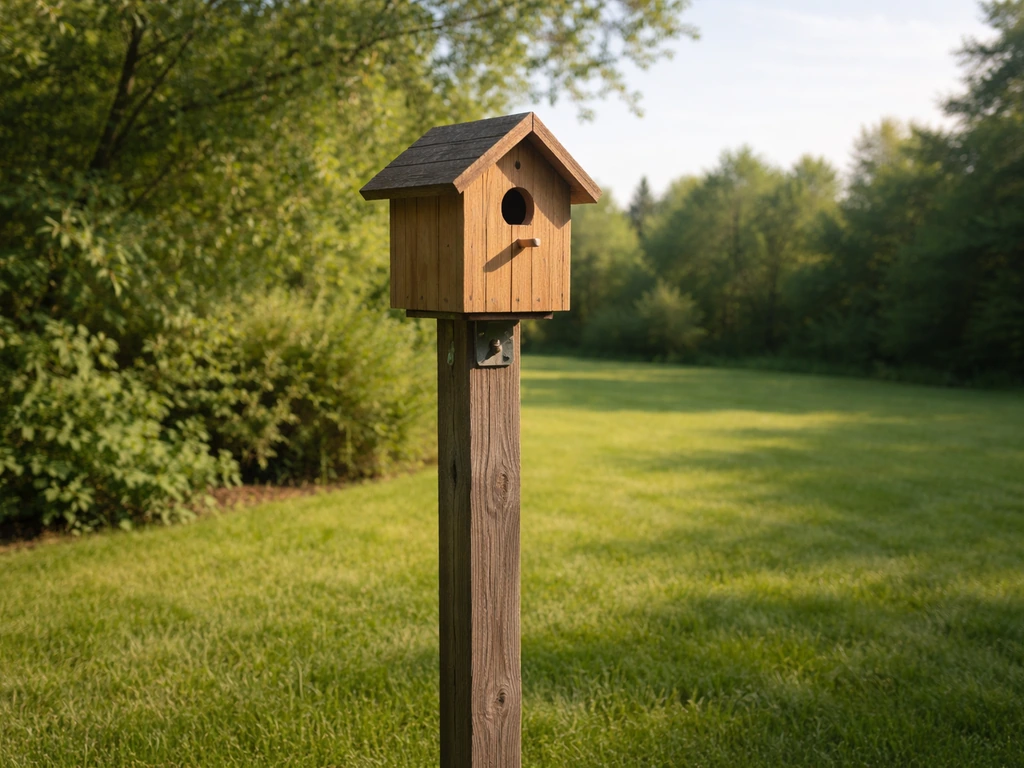
Height depends on species, but for most common songbirds (bluebirds, wrens, chickadees, tree swallows) 4 to 8 feet is the practical sweet spot. It puts the box above most ground-level disturbance while keeping it accessible for monitoring and cleaning. Wood ducks and kestrels need much higher placement, 10 to 30 feet. Orient the entrance hole facing east to southeast in most of North America: this gives the box morning sun (which the birds use for warmth at the start of the day) while avoiding the hot afternoon western sun. Avoid facing the entrance into prevailing winds, which can drive rain directly into the box.
Spacing between boxes
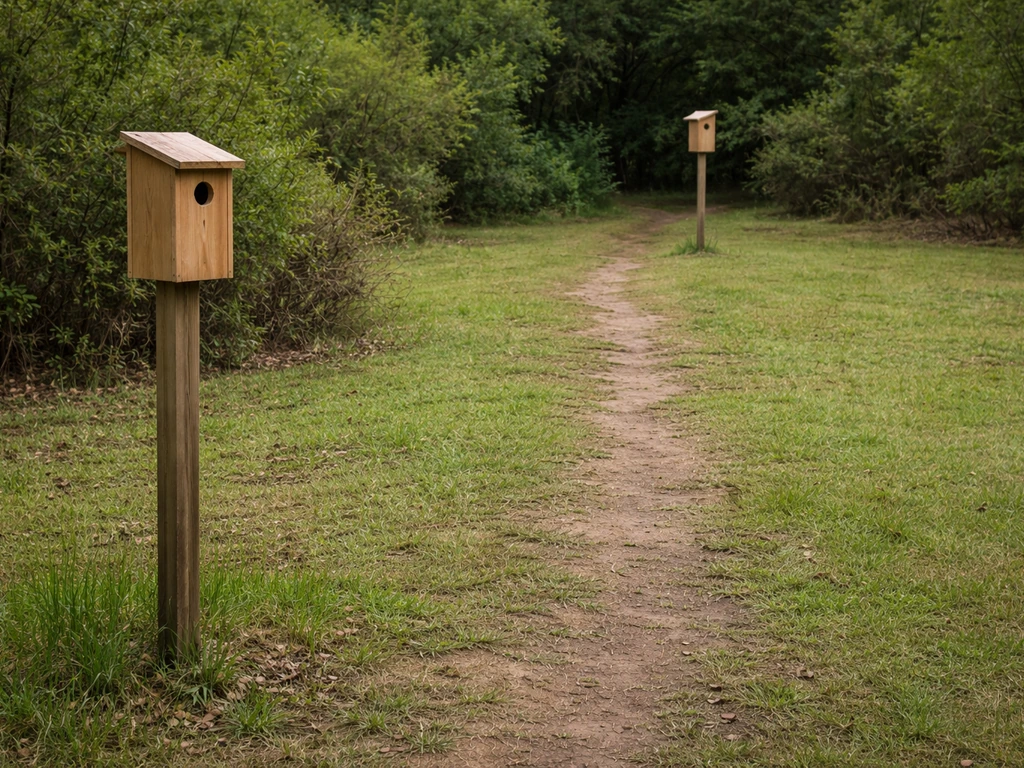
Most cavity nesters are territorial around nest sites and will not tolerate another pair of the same species nearby. Eastern bluebirds need at least 100 yards between boxes, and in good habitat you may need 300 yards or more. Mountain bluebird research recommends spacing based on habitat density. Tree swallows are more colonial and can tolerate boxes as close as 25 to 30 feet from each other, though this varies. House wrens have tiny territories and can use boxes as close as 100 feet apart in a dense shrubby yard. Putting two bluebird boxes too close together just means competition, stress, and one empty box.
Proximity to water and cover
Having water nearby, whether a shallow birdbath, a slow stream, or a pond, is a strong habitat plus. Birds need to drink and bathe, and parents need to carry water to cool eggs during heat waves. Within 100 to 200 feet is ideal but not mandatory for every species. For tree swallows, proximity to open water is almost a requirement. Keep boxes at least 30 to 50 feet from dense shrubs or fences that predators like cats, raccoons, and snakes use as travel corridors, unless you have a solid predator guard on the mounting post.
Mounting on posts vs. trees
Smooth metal poles are far better than trees for predator prevention. A box on a tree gives raccoons and snakes an easy approach route via the trunk and nearby branches. If you must mount on a tree, every adjacent branch that a predator could jump from needs to be addressed. A free-standing smooth pole with a baffle attached is the safest option and makes predator-proofing much more reliable. Tennessee TWRA guidance puts it plainly: never place a box where you can't attach a predator guard.
Maintenance after birds move in
Monitoring without disturbing
Check boxes once or twice a week during nesting season, ideally in the afternoon when temperatures are stable. Avoid early morning when adults are most active, and avoid checking during cold or wet weather. A quick peek inside takes only a few seconds. Most songbird parents will return within minutes of a brief check. Use NestWatch's published monitoring protocol as your guide, which includes ethical monitoring standards and how to record data without causing harm. Never open a box if you hear the loud distress calls of chicks that are close to fledging, as they may prematurely jump out.
Cleaning schedules
Clean the box as soon as you're confident the brood has fledged. This means confirming the nest is empty and cold, not just quiet for a day. Use a 1-part bleach to 10-parts water solution, scrub out old nest material, rinse well, and let the box dry completely before closing it back up. For species that raise multiple broods per season (bluebirds often raise two or three), cleaning between broods encourages re-use.
Some species like house wrens may clean out the old nest material themselves between clutches, but it's still worth checking. At minimum, do a thorough clean-out at the end of the breeding season, typically late August or September, before closing the box up for winter or leaving it open for winter roosting birds.
Predator deterrence as ongoing maintenance
A predator guard isn't something you install once and forget. Check that your stovepipe or cone baffle is still properly positioned and hasn't slipped or become climbable due to debris accumulation. NestWatch notes that raccoons and cats can raid boxes by reaching in from above, so a long enough baffle below the box is essential. Research from The Wildlife Society confirms that effectiveness depends heavily on guard design, not just its presence.
For snake protection in southern states especially, a separate snake-specific guard may be needed in addition to a raccoon baffle. If you are wondering do bird houses attract snakes, focus on keeping boxes guarded and away from cover that snakes can use to travel snake protection. Keeping the grass short under and around the pole also removes snake cover.
More detail on specific predator guard designs is covered in companion guides on protecting birdhouses from predators and on the best snake guards for birdhouses.
Why birds aren't using the house and what to change
If your box sits empty through a full nesting season, work through this checklist systematically before concluding the box is fine and the birds are just being picky.
- Wrong entrance hole size: The most common error. A hole that's too large lets in competitors and predators. Too small and your target species can't enter. Measure the actual drilled hole with calipers, not a ruler. An oval or rectangular opening cut slightly off can defeat the purpose entirely.
- Wrong interior dimensions: If the cavity is too shallow, nestlings are exposed and reachable by predators. Too deep and the adults may avoid it. Check the species-specific depth from hole to floor (5 to 6 inches for bluebirds as a baseline).
- Wrong location for the species: A bluebird box in dense woods won't attract bluebirds. A wren box in an open field won't attract wrens. Reassess whether your target species actually lives and forages in your yard's specific habitat.
- Installed too late in the season: If you put the box up after March in most temperate zones, birds may have already committed to natural cavities. Leave it up for next year and get it in place by February.
- No predator guard: If a snake or raccoon raided the box early in the season, birds will often abandon it entirely even after the predator is gone. Install a proper baffle and give it a full season.
- Too much sun exposure or dark exterior color: A box baking in western afternoon sun overheats. Reorient to face east or southeast, or relocate.
- Interior painted or stained: Strip any paint or stain from the interior if applied previously. The chemical smell alone can be enough to deter birds in the first season.
- Perch on the entrance: Remove it. It does not help target species and actively attracts sparrows.
- Invasive species takeover: House sparrows and starlings may have moved in first. If you find a house sparrow nest (loose, messy, often with feathers and trash mixed in), remove it. This is legal and recommended for native bird conservation. Starlings can be deterred somewhat with a 1.5-inch hole, which is too small for them.
- Competition from natural cavities: If your area has abundant snags and woodpecker holes, birds simply have better options. Consider whether your yard actually has a cavity shortage that a nest box would solve.
- High disturbance: A box near a frequently used door, a dog run, or heavy foot traffic may be rejected. Move it to a quieter zone with a buffer of at least 50 to 75 feet from regular human activity.
Most of the time, fixing one or two of these issues is all it takes. Start with entrance hole size and location relative to habitat, since those two factors account for the majority of empty boxes. Then move on to predator protection and timing. If you focus on predator protection, use a proper baffle, keep placement away from predator travel routes, and maintain the guard throughout the season.
A well-matched box in the right spot with a proper baffle is a genuinely competitive option for cavity-nesting birds, especially in suburban areas where natural cavities are scarce. A US Forest Service study tested cavity-nesting interspecific competition for nest sites and nest boxes, finding that adding nest boxes can alter cavity use and that other species may use the experimental boxes [a genuinely competitive option for cavity-nesting birds](https://research. fs. usda.
gov/treesearch/724). Get the fundamentals right, keep it clean, and the birds will find it.
FAQ
Do birdhouses attract birds immediately after I put them up?
Yes, but only when the box meets the species standards. If you want to attract birds sooner, install early enough for scouting (late winter through early fall depending on species) and ensure the entrance hole matches the target bird, because many cavity nesters will ignore a box with an entrance that is slightly too large or too small.
How can I tell if my birdhouse is being ignored because of design versus placement?
Common signs you have a mismatched box are: the box stays empty despite good habitat, or you repeatedly see aggressive cavity competitors near the entrance (like house sparrows or starlings). Recheck entrance size, interior depth, and mounting height first, since those three drive most refusals.
Will putting attractant spray or feathers inside make birds use the birdhouse?
In most cases, no special scent, feathers, or “attractant” material is needed. Birds choose based on cavity suitability and safety cues, and adding strongly scented items or loose fillers can actually make the box less desirable or harder to use.
Does facing direction really matter if my birdhouse is the right size?
Switching the box orientation matters mainly for temperature and light. If your entrance gets harsh afternoon sun, the interior can overheat or become too bright, which can lower use. If you cannot change the direction, adding more roof overhang and keeping the entrance shaded can help.
If birds are using other cavities nearby, should mine still get occupants?
Sometimes, but don’t assume it is the only cause. Birds that are nearby but not using your box may be avoiding predator-exposure or unsuitable microhabitat. Before changing everything, confirm entrance size, shade at the entrance, drainage, and that the box is not in line with predator travel routes near shrubs or fences.
Can I add a perch to help birds land comfortably at the entrance?
It can, especially for starlings and house sparrows. A direct access perch under the entrance is a known advantage for these competitors, so if you are targeting bluebirds in particular, avoid perches below the entrance hole.
Should I clean a birdhouse between broods, and when is it safe?
If the box is the correct style for cavity nesters, it can be reused, but you should avoid keeping old nests long after fledging. Once the brood has left and the nest is cold, clean it out and dry it thoroughly, then close it back up to prevent odor and moisture buildup.
How do I know my predator guard is actually working?
No, a simple “baffle on the post” might not protect against all predator types. Many failures happen when the guard shifts, is too short, or allows access from above. Check that the baffle is secure, positioned correctly below the box, and consider additional snake-specific protection if snakes are a known problem in your area.
My birdhouse has been empty all season. What should I check first?
Start by ruling out the most common “quiet” reasons: wrong entrance size, too much light entering the cavity, wet or poorly drained floors, and placement with no suitable nearby feeding habitat. If those are correct and the box stays empty through a full nesting season, then reassess competition (starlings, house sparrows) and species spacing needs.
Can I put multiple birdhouses close together to attract more birds?
It depends on the species and local density. Many cavity nesters are territorial and will not tolerate the same species nearby, so two boxes of the same type that are too close can cause one to sit empty even though birds are present in the area.
Do birds need water near a birdhouse, or is the box enough?
Yes, but only if there is suitable water access nearby for the birds’ needs. For many species, a birdbath within a short flight helps. For tree swallows, proximity to open water is especially important because they feed on flying insects over water.
What mounting height and entrance direction are best for attracting the right birds?
Generally yes, but with a caveat. For most songbirds, typical placements of about 4 to 8 feet are practical, but some species require much higher mounting (like wood ducks and kestrels). Also, ensure the entrance faces the right direction for shade and avoid strong prevailing winds that can blow rain into the box.
Should I move or change a birdhouse after birds start looking at it?
If you are targeting bluebirds, and a nest site is already being evaluated, changing the box mid-season is risky. Better approach is to leave the existing box alone once birds are scouting or nesting, and adjust timing and design for the next placement cycle if you need improvements.