Birdhouses don't strongly attract snakes on their own, but they can become part of a snake's territory when the surrounding conditions are right. What actually draws snakes in is a combination of prey, warmth, shelter, and easy access routes near the box. The birdhouse itself is rarely the root cause, but a poorly placed or poorly mounted box in a snake-friendly yard can absolutely become a target. The good news: a few targeted changes to your setup, mounting, and yard habits will protect your nesting birds without harming the snakes.
Do Bird Houses Attract Snakes? How to Keep Nesting Safe

Maya Thompson
19 Jun 2026
Do birdhouses actually attract snakes?
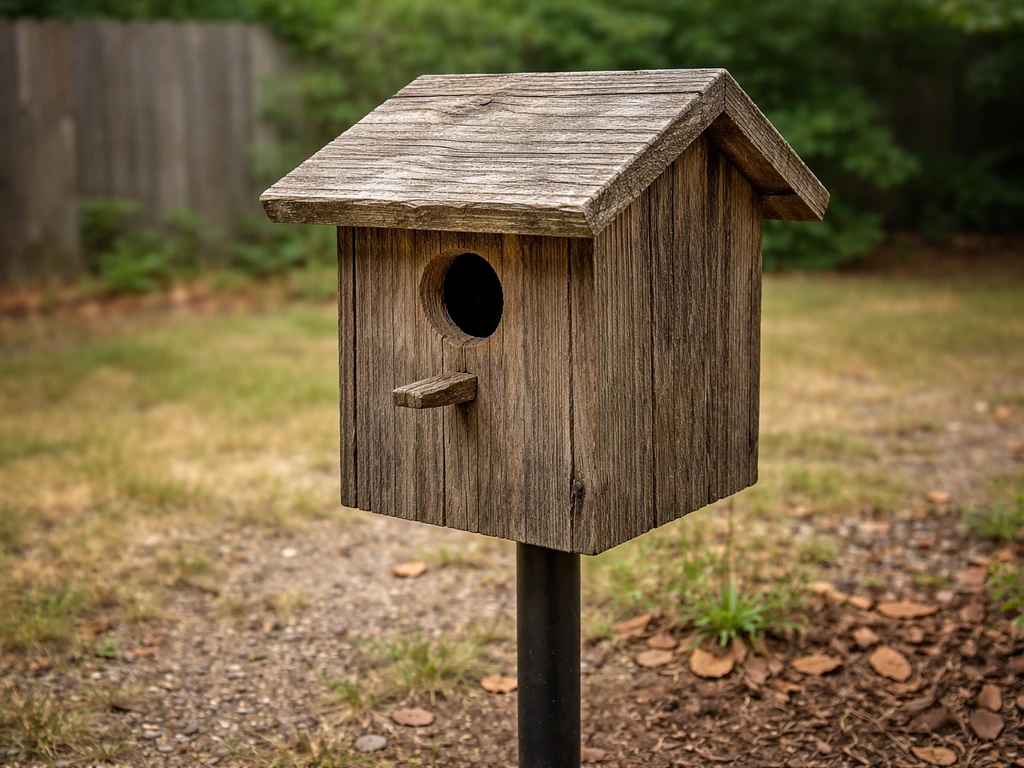
Technically, no. A birdhouse sitting on a pole in your yard is not emitting some signal that pulls snakes toward it. Snakes don't seek out nest boxes the way birds do. What they seek is prey, warmth, and cover, and a well-stocked nest box in a brushy, rodent-rich yard just happens to offer all three. The birds nesting inside are a food source. The box itself can hold residual warmth. The vegetation and clutter underneath provide travel cover. So the birdhouse becomes attractive incidentally, as part of a broader habitat package, rather than as the direct target.
That said, once a snake finds a successful hunting spot near a nest box, it will return. Cavity-nesting birds like bluebirds, wrens, and chickadees are real prey for rat snakes, corn snakes, and black racers across much of North America. Research published in the American Naturalist found that some cavity-nesting birds actually weave shed snake skins into their nests as a possible anti-predator signal, which tells you something about how real this predator pressure is in the wild. The snake-nest box relationship is genuine, even if the birdhouse itself isn't the magnet.
Why snakes may show up near your nest boxes
Understanding the actual draw helps you target the right fix. There are three main reasons a snake ends up near your birdhouse, and they often stack on top of each other.
Hunting prey at the box
A nest box full of eggs or nestlings is a reliable, easy meal. Rat snakes in particular are excellent climbers and will scale wooden fence posts, rough-barked trees, and even metal poles if there's no guard in place. They've learned that these structures lead to food. If your box has produced successful clutches, a snake in the area may have already found it once and catalogued the location.
Seeking warmth and shelter nearby
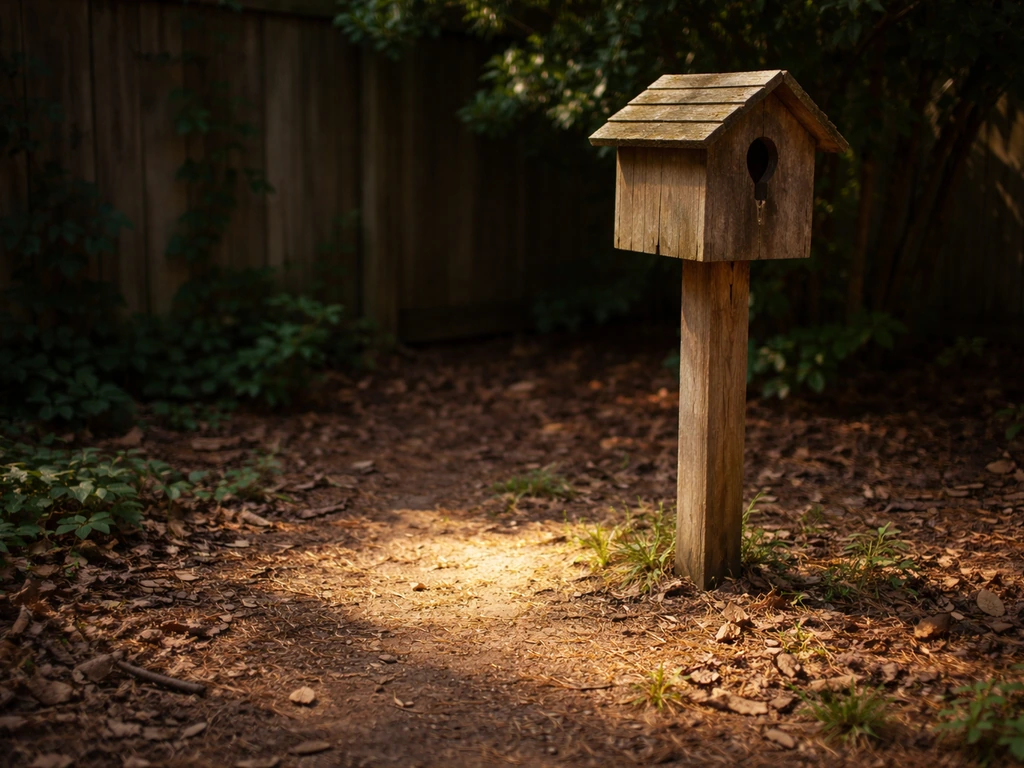
Snakes are ectotherms and spend a lot of energy finding warm spots. A south-facing birdhouse absorbs heat, and the ground beneath a box on a sunny post can be noticeably warmer. Dense vegetation planted right up to a mounting post, woodpile stacks nearby, or a brush pile within a few feet all provide the combination of warmth and cover snakes use for resting and digestion between hunting runs.
Rodent prey attracted by spilled seed
This one surprises people. If you run a bird feeder within 10 to 20 feet of your nest box, seed spillage under the feeder attracts mice and rats. Mice and rats attract snakes. The Washington Department of Fish and Wildlife specifically notes that reducing accessible food and seed spills is one of the most effective ways to lower rodent populations and, in turn, reduce snake presence around structures. The snake may never care about your birdhouse directly, it just follows the rodent trail that passes beneath it.
How to tell if a snake has been near your nest box
Catching a snake in the act is unlikely. More often you'll see the aftermath. Here's what to look for during your regular monitoring checks:
- Abandoned nest with eggs missing, but no broken eggshells: a mammal predator usually leaves shell fragments; a snake swallows whole
- Nestlings gone with no feathers or signs of struggle in the box
- Adult birds alarm-calling persistently near the box, diving at the post or ground, even when you're not close
- Shed snake skin near the base of the mounting post, in nearby vegetation, or occasionally inside the box itself
- A smeared, oily residue along the mounting pole or post, from a snake's body traveling up it
- Disturbed mulch, leaf litter, or loose soil in a trail pattern leading from dense cover toward the box base
If you find an empty nest mid-season with no obvious explanation, a snake visit is one of the most likely causes, especially if you're in the southeastern or central United States where rat snakes and corn snakes are abundant. Don't immediately assume failure. Note what you see, clean the box, and assess your setup before the next nesting attempt.
Make your birdhouse more snake-proof
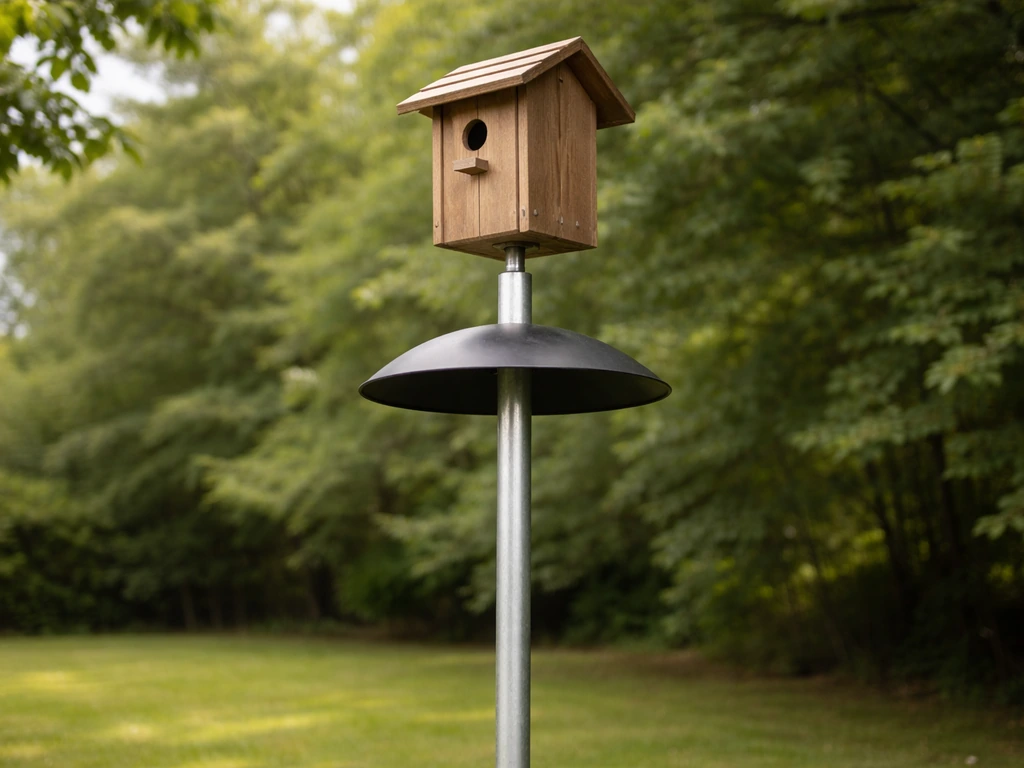
This is where you can make the biggest difference. No single measure is 100% foolproof, but stacking two or three of the following together makes your box much harder to reach.
Mount height and pole choice
Mount nest boxes on smooth metal conduit or EMT pipe rather than wooden posts or tree trunks whenever possible. Rough surfaces give snakes grip. A smooth 1/2-inch or 3/4-inch metal pipe is genuinely difficult for a snake to climb without a guard. Height matters too: most guidelines recommend mounting boxes 5 to 10 feet off the ground depending on the species. Higher isn't always safer if there's a tree branch overhanging the box, because a snake can use the branch as a bridge.
Baffles and snake guards
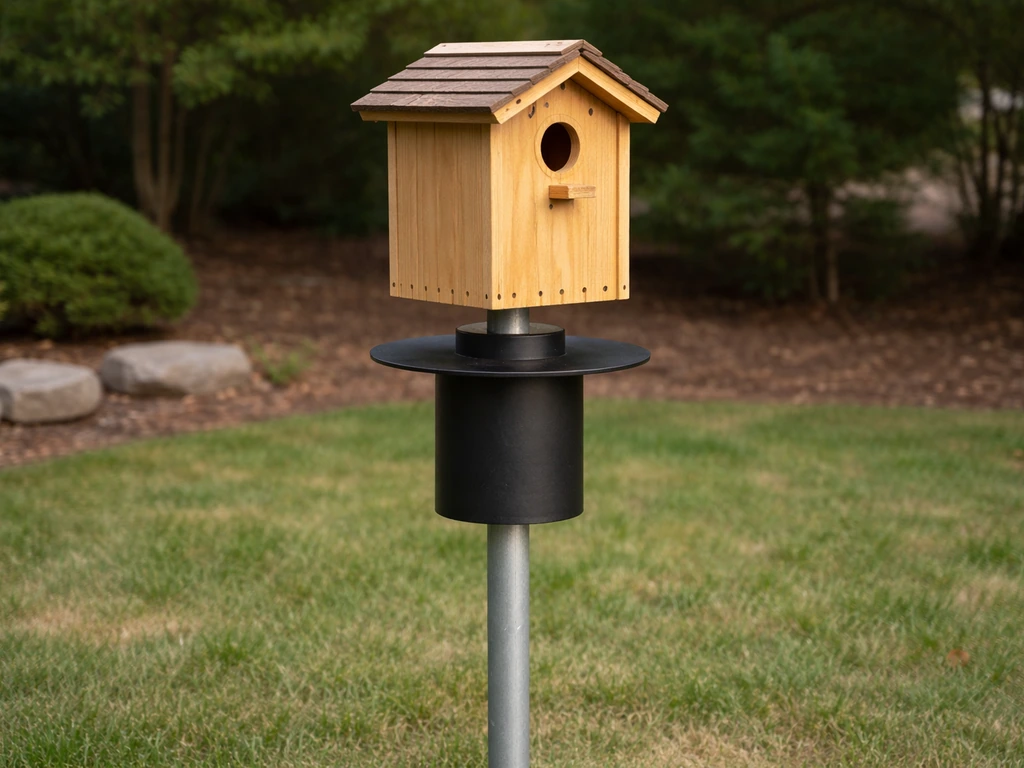
A stovepipe baffle or cone-style guard mounted on the pole below the box is the single most effective physical deterrent. A stovepipe baffle is a 6-to-8-inch diameter metal cylinder, about 18 to 24 inches long, placed loosely on the pole so it wobbles when touched, making it nearly impossible for a snake (or a raccoon) to get traction. Position it so the bottom of the baffle is at least 18 inches above the ground to prevent snakes from bypassing it with a direct jump from the ground. Cone guards work similarly. The Wildlife Society specifically recommends predator guards like these as part of nest-box protection from snakes.
Eliminate nearby access routes
NestWatch documented a case where a snake bypassed a properly installed tree-mounted box guard by climbing a nearby tree and dropping or reaching across to the box. This is a real vulnerability. If your box is on a tree, keep branches pruned so nothing overhangs within 3 to 4 feet of the box. If it's on a freestanding pole, make sure no fence, shrub, or structure is close enough to give a snake an alternate climbing route. Isolation is the goal.
Entrance hole size
Keeping your entrance hole sized correctly for your target species does double duty: it excludes larger predatory birds and also limits which snakes can enter. A 1.5-inch hole for bluebirds or a 1.125-inch hole for wrens won't stop a slim juvenile rat snake, but it does significantly reduce entry for larger individuals. Never enlarge holes beyond species-appropriate dimensions to "help" birds get in. Correct hole sizing is one of the foundations of good nest-box design, and the right dimensions vary by species. Choosing the right birdhouse depends on the species you want to attract, so match the entrance size, mounting height, and placement to your target bird what birdhouse for what bird.
Interior box features that make snakes less comfortable
A recessed floor (where the entrance hole is set high relative to the interior floor, creating a deep drop) makes it harder for a snake that does get inside to easily reach eggs or nestlings. A standard interior depth of 5 to 8 inches below the entrance hole is already helpful. Some birders add a small hardware cloth shelf just below the entrance to create an obstacle, though this needs careful installation to avoid trapping birds.
Placement and habitat changes that make a real difference
How and where you site your nest box in the yard has a major impact on snake access. These aren't just vague suggestions: each one addresses a specific way snakes find and reach boxes.
| Habitat factor | Why it matters | What to change |
|---|---|---|
| Dense low vegetation at the pole base | Provides travel cover and warmth for approaching snakes | Keep a 3-foot clear zone of short-mown grass or bare ground around the mounting pole |
| Brush piles, wood stacks, or debris within 15 feet | Shelters snakes between hunting runs | Relocate debris piles to the far perimeter of your property |
| Bird feeders within 10-20 feet of the box | Seed spills attract rodents, which attract snakes | Move feeders at least 20-30 feet away; switch to feeders with catch trays |
| Overhanging tree branches near the box | Give snakes an alternate climbing/jumping route | Prune branches to leave at least 3-4 feet of clearance around the box |
| Box mounted on a rough wooden post or tree trunk | Easy climbing surface for rat snakes | Switch to smooth metal conduit or add a stovepipe baffle |
| Ground-level cover (rocks, boards, mulch) under the box | Warm resting spots for snakes near the base | Remove flat cover objects and replace dense mulch with short gravel or bare ground near the pole |
One placement detail that often gets overlooked: try to position nest boxes in open habitat rather than at the edge of dense vegetation. Bluebirds, tree swallows, and other open-country nesters already prefer this, so siting boxes 50 to 100 feet from shrubby or wooded edges serves both the birds' preferences and reduces snake access routes at the same time. Choosing the right birdhouse style and placement helps attract the specific birds you want to see in your yard bluebirds, tree swallows, and other open-country nesters.
Cleaning and maintenance habits that don't invite snakes
Regular box maintenance is essential for the birds, and it turns out the same practices that keep nests healthy also reduce snake-friendly conditions. Here's how to approach it:
- Clean boxes out after each completed nesting cycle, not just at the end of the season. Old nesting material, feathers, and food debris build up quickly and can attract insects and rodents, both of which bring snakes closer.
- Use gloves when cleaning. This protects you from mites and bacteria, but it also means you're not leaving scent cues on the box that could attract curious wildlife.
- Inspect the mounting pole and guard during every cleaning. Look for scratch marks, oily residue, or shed skin that signals a snake has been testing the structure. If you find evidence, check whether your baffle is properly positioned and not touching the ground or any nearby surface.
- Don't leave old nesting material in a pile at the base of the box. Bag it and dispose of it. A pile of used nesting material at the foot of a pole is warm, sheltered, and smells like prey animals.
- Check for gaps and cracks in the box annually, ideally in late winter before nesting season. Gaps wider than necessary for ventilation can give a small snake an entry point. Seal non-functional gaps with exterior wood glue or a thin strip of wood, but preserve the designed ventilation slots.
- Time your deep clean for late fall after the last nesting attempt. A box cleaned and closed for winter has less residual scent and material to draw predators during the off-season.
Keep the area around the pole base tidy year-round. It takes about five minutes per visit to rake away leaf litter and check that nothing has accumulated against the post. That small habit removes a lot of the incidental shelter that makes snakes comfortable hanging around.
Humane deterrence and when to call for help
Most snakes near birdhouses are nonvenomous species like rat snakes, corn snakes, and black racers that are genuinely beneficial in the broader yard ecosystem. They control rodents, and removing them entirely from your property is both impractical and ecologically counterproductive. The goal is deterrence and exclusion at the nest box specifically, not eliminating all snakes from your yard. These predator-proofing steps include choosing safe mounting options, blocking climb paths, and using the right baffle and entrance-hole sizing to protect bird houses from predators deterrence and exclusion at the nest box specifically.
For humane deterrence, the physical modifications described above (baffles, open placement, cleared base zones) are far more effective and lasting than any repellent product. Cinnamon, sulfur, and commercial snake repellents have very limited evidence behind them for outdoor use. Your time and money are better spent on a stovepipe baffle and clearing the brush pile.
If you encounter a snake at the box and need to move it on, a long-handled broom used to gently guide it away from the area is usually sufficient. Don't pick up a snake unless you can positively identify it as nonvenomous and you're comfortable doing so. Even a nonvenomous rat snake can bite if handled, and a startled snake near an active nest is not the moment to practice your handling technique.
Call a licensed wildlife professional or your local animal control service when: you have a venomous species confirmed near your nest box (cottonmouth, copperhead, rattlesnake depending on your region), when a snake is inside the box with eggs or nestlings and you cannot safely access the box yourself, or when you have repeated visits from a large constrictor in areas where invasive species like Burmese pythons are a concern. A wildlife professional can relocate the snake humanely and advise on site-specific exclusion measures.
If snakes are a persistent problem despite good baffle installation and habitat changes, it's worth stepping back and auditing the whole picture: feeder placement, vegetation, and nearby cover are often the real culprits. Predator-proofing a birdhouse is one part of a broader strategy that includes thinking carefully about where and how you place your box and what the surrounding habitat looks like, which connects directly to the wider question of protecting nest boxes from all types of predators, not just snakes. Birdhouse design and placement can also make a yard more attractive to birds, not just less attractive to snakes what attracts birds to bird houses.
FAQ
Will a snake that visits one nest box keep returning even after the birds leave?
Not reliably. Snakes are drawn by prey, warmth, and cover, so a clean box near heavy brush can still be a target. If you already have a baffle, the next best move is to reduce the two strongest “access aids,” remove brush or woodpiles within a few feet of the pole, and stop any seed spill sources underneath nearby feeders.
Do I need to protect the birdhouse year-round, or only during nesting season?
Yes, the behavior can persist if the surrounding habitat still provides a warm resting spot and easy travel routes. When the nesting season ends, remove or relocate features that create warmth and cover (dense vegetation at the pole base, nearby brush piles, cluttered ground). Then check again before the next nesting attempt.
If birds successfully nest, does that mean there are no snake risks?
You should not assume that because you see a birdhouse occupied, snakes are safe away. If there are eggs or nestlings, predators may strike quickly, and aftermath is more common than sightings. Make quick mid-day checks, not just once every few days, and clean out any failed or abandoned nests promptly to remove lingering attractants.
Could a nearby bird feeder be the real reason snakes show up?
Feeder placement matters a lot. If seed falls under a feeder within 10 to 20 feet of the nest box, rodents can increase and pull snakes in indirectly. Consider moving feeders farther away, using feeders that minimize spillage, or elevating them with a design that blocks falling seed from reaching the ground near the pole base.
What should I check if I installed a baffle but snakes still find the box?
Sometimes. Even with good baffle installation, a snake may use an alternate access route such as a nearby fence, shrub, or tree branch that bridges the gap to the box. Do a “reach test” from ground level looking for anything that could let a snake climb and get traction near the entrance.
Does putting the birdhouse higher always make it safer for nesting birds?
Be careful with pole height. Higher can reduce access, but only if there is no overhanging branch or nearby structure that effectively creates a launch point. Prune branches so none overhang or reach within a few feet of the box, and keep the area around the post clear so there is no alternate climbing path.
Can enlarging the entrance hole help birds more easily enter, without increasing snake risk?
Use species-appropriate entrance dimensions, and do not enlarge holes “to help birds.” Larger holes can allow entry by a wider range of predators and also change which bird species can access the box. If you are unsure which species you want to attract, match the entrance size and placement to that target.
If I have a deeper/recessed floor, do I still need a stovepipe baffle?
Usually, but it depends on how “recessed” the setup is. A deeper interior drop makes it harder for a snake to reach eggs or nestlings once inside, yet it does not stop access by itself. Pair the recessed design with a baffle and correct entrance sizing for the best results.
What maintenance habits actually reduce snake-friendly conditions around the post?
Yes. Many people focus on the pole area and forget the direct “buffer zone” around it. A simple ongoing task, clearing leaf litter and keeping the ground around the base tidy, removes travel cover and reduces the warm, hidden resting spots snakes prefer.
Is using snake repellent around the birdhouse a reliable solution?
Because snakes are often beneficial and the goal is exclusion, first aim for targeted, humane deterrence at the nest box. Avoid repellent products outdoors unless you have evidence they work in your conditions, and instead prioritize physical barriers (baffles), habitat cleanup near the base, and feeder and cover management that reduces rodents.
What should I do if I find a snake at the birdhouse right now?
Use a long-handled tool to gently guide it away from the area when you can do so safely. Do not handle the snake, especially if you are near active nests or cannot confidently identify it. If the snake is venomous, if it’s inside the box with eggs or nestlings, or if you see repeated large constrictors in regions with invasive python threats, contact a licensed wildlife professional or animal control.
Are tree-mounted birdhouses riskier than pole-mounted ones?
It can, especially if the box design allows safe climb paths. For example, rough tree bark or nearby vegetation can give a snake traction and a bridge to the entrance. If you mount on a tree, prune overhanging branches and keep the area around the box isolated, or switch to a smooth metal conduit mounting with a guard.