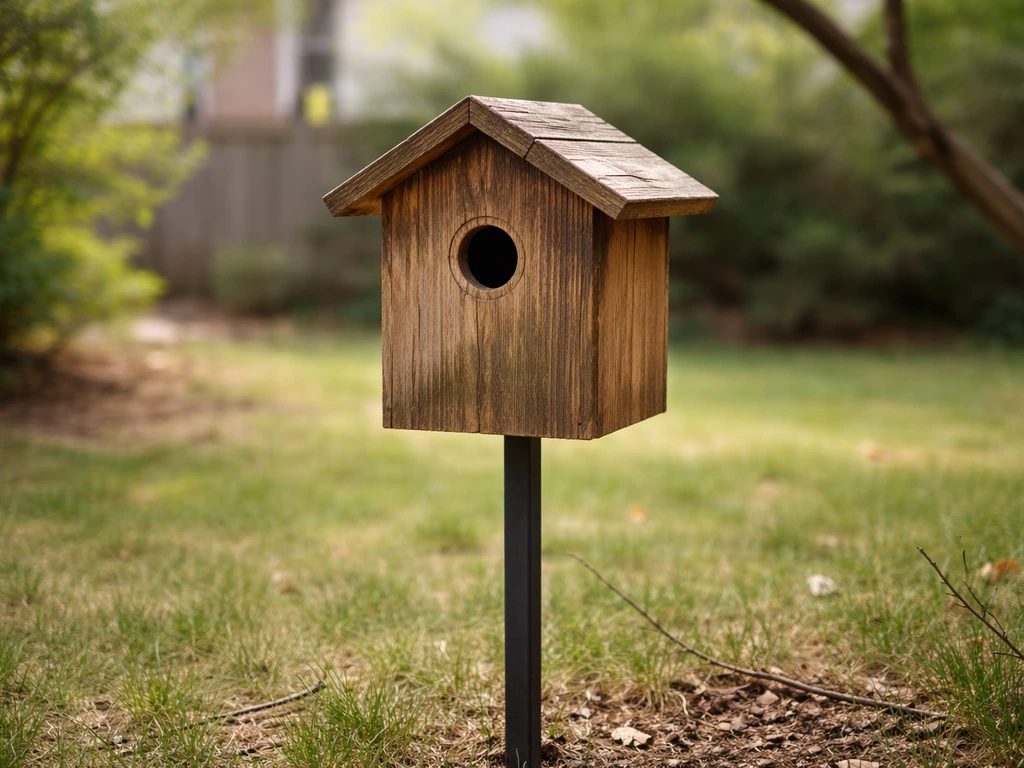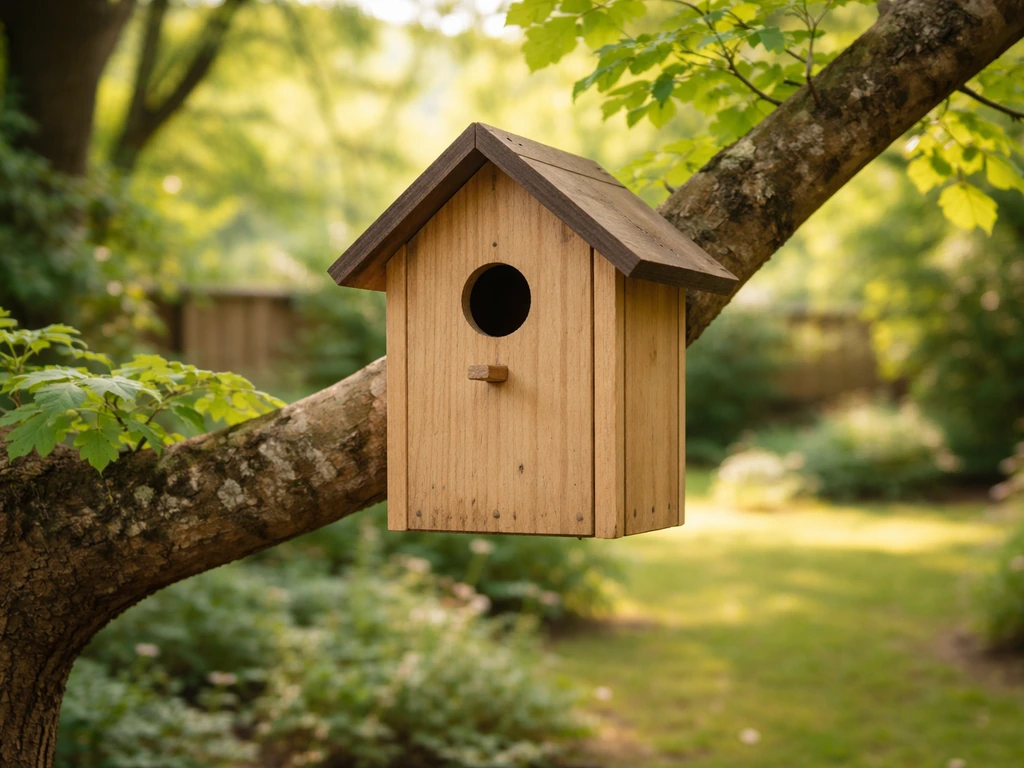
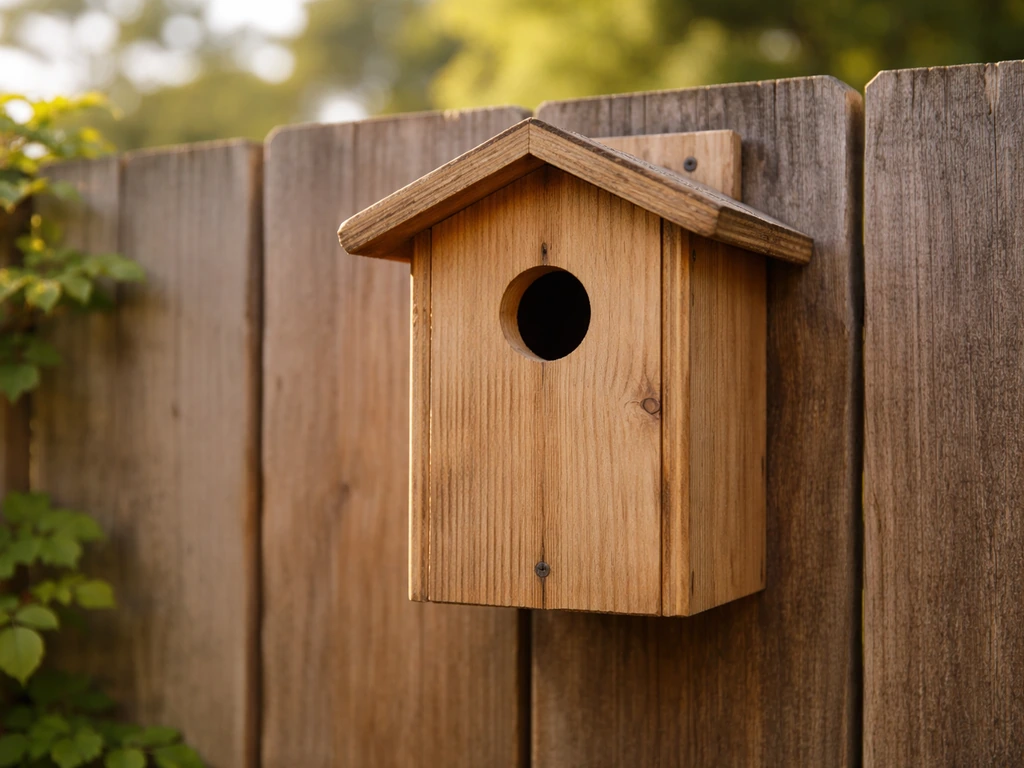
A bird house works by giving a cavity-nesting bird a safe, correctly sized space to lay eggs, incubate them, and raise chicks to fledging. The bird enters through a hole sized specifically to let the target species in while keeping larger competitors and predators out. Inside, the cavity traps warmth, blocks wind and rain, and gives the birds a platform to build a nest on. Whether a bird actually moves in depends almost entirely on four things getting right: the hole diameter, the interior dimensions, where you mount the box, and whether you clean it between seasons. Get those right and most common backyard species will find and use it within a season or two.
How Do Bird Houses Work? Setup, Nesting, and Care Guide
Maya Thompson
16 May 2026
What bird houses actually do
In nature, cavity-nesting birds depend on old trees with hollows carved out by woodpeckers or rot. Because crows are not cavity nesters, a typical enclosed bird house is usually not where they will move in do crows use bird houses. Those hollows are in short supply in most backyards and suburban woodlots, so a well-built bird house fills a real gap. It provides shelter from predators and weather, a stable surface for a nest, and a microclimate warm enough for successful incubation. For species like bluebirds, chickadees, tree swallows, house wrens, and American kestrels, a nest box is not a decorative addition but a genuine habitat resource they will compete for and defend.
One thing worth knowing upfront: not every bird uses a bird house. Species like robins, thrashers, and phoebes are open-cup nesters and will never enter an enclosed box. They sometimes use open-front nesting platforms instead, but that is a different design entirely. When you see advice about attracting robins with a bird house, it usually means a shelf-style platform, not an enclosed cavity box. The species that do use enclosed boxes are specifically adapted to nest in dark, sheltered holes, and those are the birds this article is about. The species that do use enclosed boxes are specifically adapted to nest in dark, sheltered holes, and those are the birds this article is about related option.
What happens inside the box: the nesting process step by step
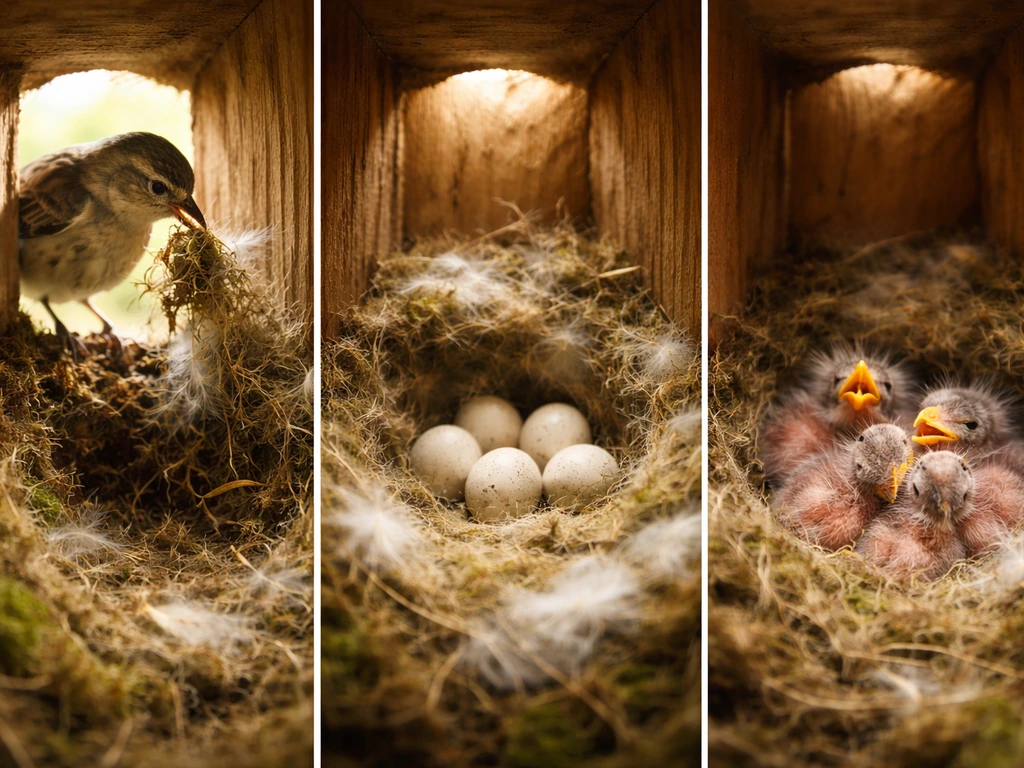
Once a bird selects a box, the process inside unfolds in a predictable sequence. The female (and sometimes the male) brings in nesting material, grass, moss, feathers, or fur depending on the species, and builds a cup nest on the floor of the cavity. Eggs are laid one per day until the clutch is complete, typically three to seven eggs depending on the species. Incubation begins in earnest once the last egg is laid, and the female broods the eggs by pressing her bare brood patch against them to transfer body heat.
After hatching, the chicks stay in the cavity for two to four weeks while both parents make constant feeding trips through the entrance hole. The enclosed space keeps the nestlings warm and hidden. During this time, the parents also remove fecal sacs to keep the nest clean, though waste still accumulates by the end. Once the chicks fledge, the nest is abandoned. Some species, especially bluebirds and wrens, will attempt two or three broods in a single season, so a clean box after the first fledging can attract a second nesting attempt quickly.
Ventilation and drainage: why they matter more than most people think
Overheating is a genuine killer of nestlings, especially in dark boxes sitting in afternoon sun. Texas Parks and Wildlife specifically flags this hazard and recommends ventilation holes drilled in the sides just under the roof overhang so hot air can escape without exposing chicks to rain. NestWatch recommends two ventilation openings per side near the top, around 5/8 inch in diameter, as a practical standard. Drainage is equally important: rain and condensation do get inside, and standing water chills eggs and promotes mold. The U.S. Fish & Wildlife Service notes that bird houses should include drainage in the bottom so any water that enters can escape Drainage is equally important. Drill at least four drainage holes about 3/8 to 1/2 inch in diameter in the floor, or clip the corners of the floor panel so water has somewhere to go. For a bluebird box specifically, four 1/4-inch holes drilled about an inch below the roofline on each side handle ventilation well. These are small details in the build but they directly affect whether a clutch survives a heat wave or a rainy week.
Choosing the right design for the species you want to attract
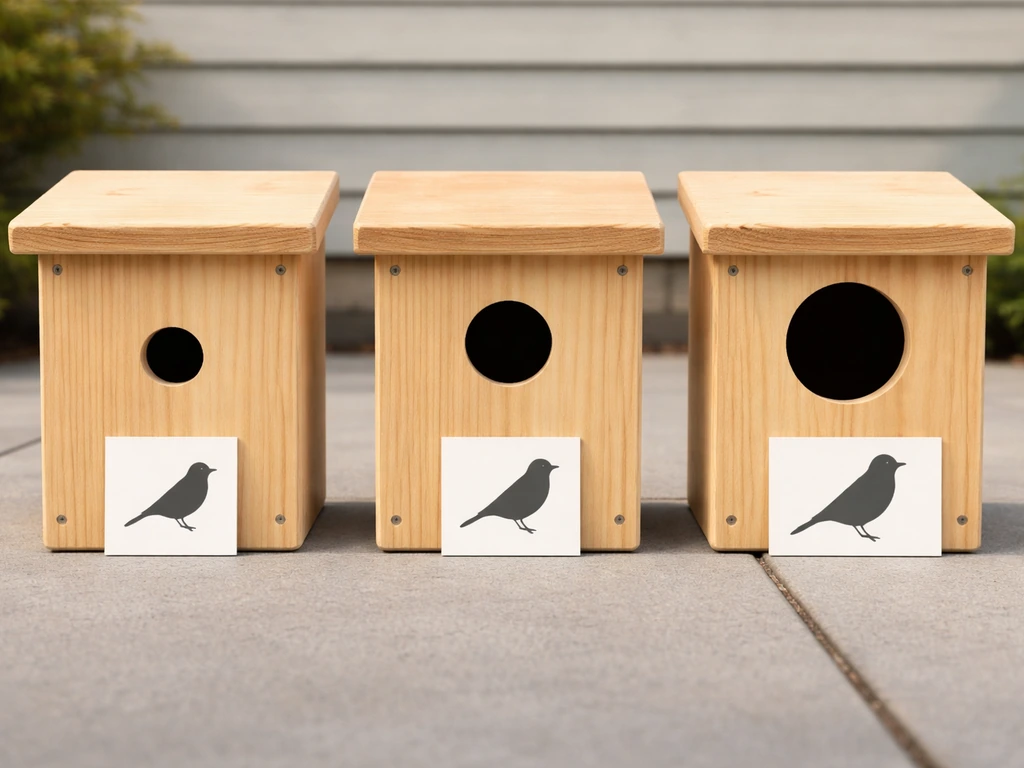
The single most important design variable is the entrance hole diameter. Too small and the target bird cannot get in. Too large and you invite larger, aggressive competitors like European starlings or house sparrows, or give predators easier access. Birds have evolved to use cavities that match their body size almost exactly, and they will bypass a box where the hole feels wrong. A black-capped chickadee, for example, needs a hole around 1 1/8 inches in diameter. In the Audubon-linked PDF, a chickadee box example lists a 1 1/8-inch hole diameter along with recommended interior dimensions for the species A black-capped chickadee, for example, needs a hole around 1 1/8 inches in diameter.. Bump that up to 1 1/2 inches and you have an eastern bluebird box. Go to 3 inches and you are building for an American kestrel. The interior floor size and cavity depth matter too because they determine how much room the bird has to build a nest and how far the nest sits below the entrance hole, which affects how safely chicks can develop before fledging.
| Species | Entrance Hole Diameter | Floor Size | Cavity Depth | Entrance Height Above Floor | Mounting Height |
|---|---|---|---|---|---|
| Black-capped Chickadee | 1 1/8 in | 4 x 4 in | 8–10 in | 6–8 in | 6–15 ft |
| House Wren | 1 1/8 in (can use up to 1.5 in) | 4 x 4 in | 6–8 in | 4–6 in | 5–10 ft |
| Eastern Bluebird | 1 1/2 in | 5 x 5 in | 8–12 in | 6–10 in | 4–10 ft |
| Tree Swallow | 1 1/2 in | 5 x 5 in | 6–8 in | 4–6 in | 5–10 ft |
| American Kestrel | 3 in | 8 x 8 in | 12–15 in | 9–12 in | 10–30 ft |
One detail from TPWD's nestbox dimension tables worth noting: the top of the entrance hole should sit roughly 8.75 inches above the floor for many mid-sized cavity nesters. That distance keeps the nest deep enough that a reaching predator cannot easily hook a claw to the nestlings. If you are building from scratch, measure from the floor up to the bottom edge of the hole when you lay out the cut, and confirm the hole center lands at or above that mark.
Design features that make a real difference
- Hinged or removable panel for cleaning: a front, side, or roof that opens makes the annual cleanout fast and lets you monitor nests without disturbing them much. This is worth building in from the start.
- Rough interior walls or small horizontal grooves below the entrance hole: these give fledglings something to grip when they are climbing up to leave the box for the first time.
- No perch on the outside: external perches help predators and nuisance species more than the target bird. Remove them or skip them entirely.
- Roof overhang of at least 2 inches over the entrance: this keeps rain from driving in and shades the hole from direct sun.
- Unpainted interior and natural or earth-toned exterior: bright paint heats up the box and can deter cautious birds. If you paint, use flat latex on exterior surfaces only and let it off-gas for several days before mounting.
Where to mount it: placement is half the battle
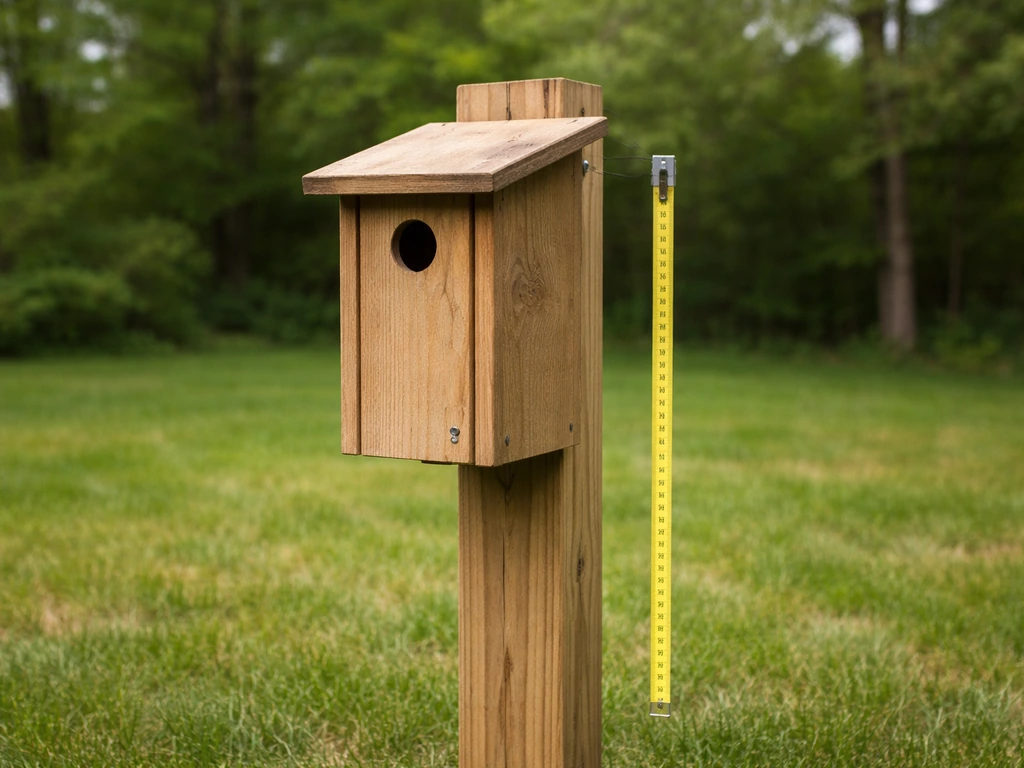
You can build a perfect box and have it ignored for years if you put it in the wrong spot. Each species has fairly specific habitat preferences, and the box needs to match those preferences for birds to consider it at all. Bluebirds want open meadow or lawn with low perches nearby for hunting insects; they avoid dense woods. Wrens are comfortable in shrubby backyards and woodland edges. Tree swallows need open areas near water. Kestrels need large open hunting grounds, which is why their boxes go so high and typically face southeast to catch morning light and avoid prevailing winds.
Height matters species by species. Bluebird boxes do well at five to seven feet above ground, which is low enough to monitor and clean easily but high enough to feel safe to the bird. Chickadee and wren boxes can go six to fifteen feet up. Kestrel boxes need to be ten to thirty feet off the ground, mounted on a pole or the side of a tall structure. Mounting too low in open areas exposes the box to cats and raccoons; mounting too high makes maintenance difficult and may not suit the species you are targeting.
Orientation and spacing
Face the entrance hole away from prevailing winds, which in most of North America means orienting it somewhere between north and east. For kestrel boxes, Tennessee Wildlife Resources Agency specifically recommends facing the entrance southeast. Avoid facing the hole due west into afternoon sun in warm climates, as that combination of direct solar radiation and summer heat can push interior temperatures to dangerous levels even with good ventilation. If you are putting up multiple boxes for competitive species like bluebirds and tree swallows, space them at least 100 yards apart. These two species will often tolerate each other when boxes are paired about 15 to 20 feet apart, but two bluebird boxes that close will draw territorial fighting.
Mounting options and predator proofing at the post
A smooth metal pole with a baffle below the box is the most effective predator deterrent available. Raccoons, snakes, and squirrels that can easily climb a wooden post or tree are stopped cold by a stovepipe or cone baffle mounted below the box. If you mount on a fence post or tree, add a metal wrap or commercial baffle. Keep branches and other structures that a predator could jump from trimmed back at least six feet from the box. These simple steps make a bigger difference to nesting success than almost any other single factor.
Installation basics and keeping the box working season after season
Put your box up in late winter or very early spring, before your target species arrives to scout for nest sites. In most of the southern and central US that means February or early March for bluebirds. In the north, late March to April works for most species. Boxes can go up even in fall since some birds roost in them over winter, which also gets them oriented to the box well before breeding season. If you are wondering whether birds use bird houses in the winter, these roosting behaviors are one of the main ways a box can still be useful outside the breeding season roost in them over winter. If you miss the window, put it up anyway. Birds scout throughout spring and a latecomer box can still attract a second-brood attempt.
The annual cleaning routine
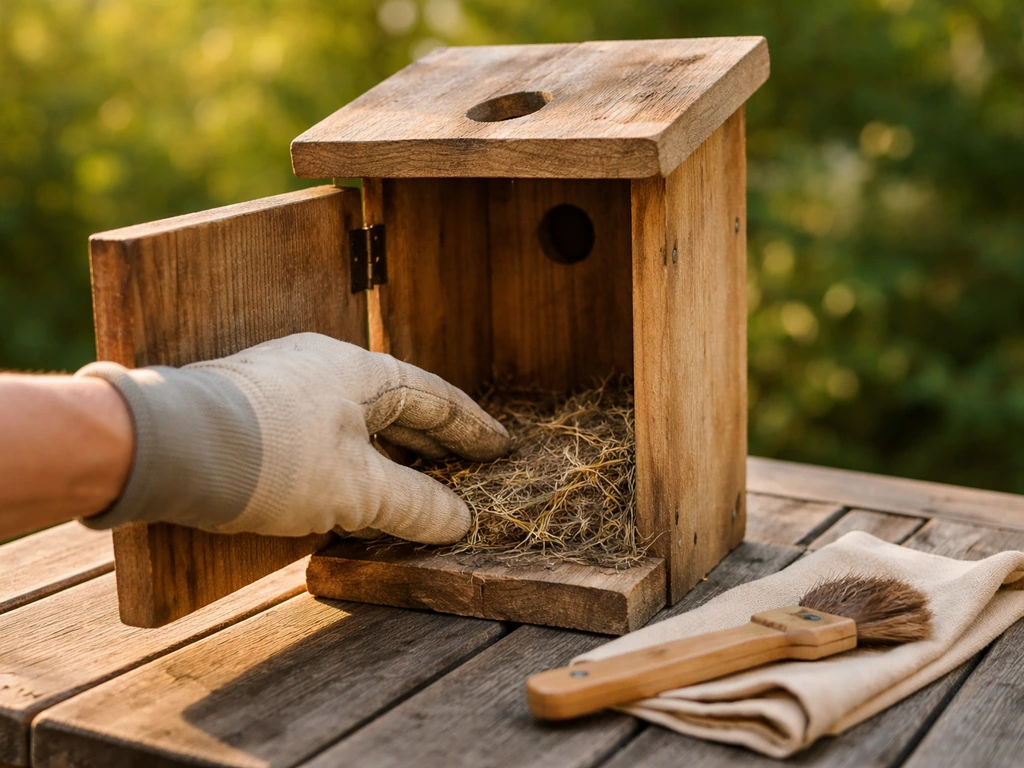
Clean the box at the end of the breeding season, which is typically late summer or early fall after the last brood has fledged. Waiting until there is no sign of active nesting is important: do not disturb a box with eggs or active nestlings. Once you confirm it is empty, open the access panel, remove all old nesting material, and scrub the interior. If the nest was heavily soiled with fecal matter, use a 1:10 bleach-to-water solution, scrub well, rinse thoroughly, and let the box dry completely in the sun before closing it back up. This step kills mites, blowfly larvae, and bacteria that would otherwise overwinter in the box and stress next year's nestlings.
If a brood fledges early in the season, it is worth cleaning the box promptly. Some birds will re-nest in a freshly cleaned box within a week or two, giving you a second brood to watch through the season. All About Birds and NestWatch both support cleaning between broods for this reason.
Quick maintenance checklist each season
- Late winter: inspect the box before birds arrive. Check for cracks, warped panels, or a loose roof. Tighten any hardware and reseal gaps with exterior wood glue or caulk if needed.
- Confirm the entrance hole is still the right diameter and has not been enlarged by woodpeckers. If it has been chewed out, add a metal hole guard of the correct size.
- Check that ventilation holes are clear and not plugged with debris or spider webs.
- Verify the baffle or pole guard is still in place and has not been pushed aside by a resourceful animal.
- After the last brood fledges: full cleanout with bleach solution if heavily soiled, plain water scrub if lightly soiled. Let dry completely.
- Fall: optional final check. Leave the box in place for winter roosting if you want to support year-round bird activity.
A well-built, properly placed, and annually maintained bird house will last ten to twenty years and host dozens of successful nesting attempts over that time. The birds do the remarkable part, but you give them the conditions to do it safely. That combination of right hole, right dimensions, right location, and clean interior is exactly how a bird house works in practice.
FAQ
How do bird houses work if multiple species are nearby, will one box attract the “wrong” bird?
Yes, if the entrance hole is oversized or the box type does not match the target species, competitive cavity users can move in. If your goal is bluebirds or wrens, use the correct entrance diameter and keep boxes spaced far enough apart to reduce territorial conflict between similar cavity nesters.
Do I need to worry about ventilation if my box is already in shade?
Shade helps, but it does not eliminate overheating risk, especially during heat waves when roofs and sides still absorb sun. Ventilation openings near the top and a way for hot air to escape are still important, and you should ensure the box is not pressed against a wall that traps warm air.
How do bird houses work when there is heavy rain, will water get trapped inside?
Rain and condensation can enter, so drainage is part of how the box functions. If you cannot drill holes, you can clip or loosen the floor panel so water has an exit path; a box with no drainage can chill eggs and promote mold even if the entrance hole is correctly sized.
What should I do if a nest starts building, but I want to adjust the entrance hole or reposition the box?
Do not modify or move an actively nesting box. Nestlings and eggs are sensitive to disturbance, and relocating mid-cycle can cause abandonment. If you need changes, wait until the box is confirmed empty and cleaned at season end, then correct the fit for the next attempt.
How do bird houses work differently for first-time nesting, will birds use them immediately or need scouting time?
Many birds scout before they commit, so new boxes might go unused for a season. Putting up boxes before arrival helps, but also expect variability by year based on local competition and weather, even when the design is correct.
What if I see a bird trying to enter but repeatedly gets stuck or gives up?
That usually points to a sizing or installation problem, most commonly entrance diameter being slightly off, misalignment so the hole edge feels obstructive, or interior dimensions that are too shallow for the nest cup style. Double-check measurements from the floor to the bottom of the hole and verify the hole is the correct diameter for your target species.
Do bird houses work the same in winter, should I leave a box up year-round?
Leaving boxes up can help birds that roost in cavities, and it also keeps the box in place for spring scouting. However, do clean at the appropriate time after the breeding season so pests and leftover waste do not carry into the next nesting period.
How do bird houses work with respect to cleaning, can I hose them out or use high-pressure water?
Avoid high-pressure rinsing that can force residue deeper into the wood crevices. After the nest is confirmed empty, scrape out old material, scrub the interior, rinse thoroughly if you use a bleach solution, and dry completely so moisture does not remain in corners.
What if I find mites or a lot of fecal buildup, how does that change maintenance?
Heavier soiling means you should treat it as a high-risk pest environment for the next brood. Use a properly diluted bleach-to-water scrub as described in the care routine, then rinse and dry thoroughly before closing the box.
How do bird houses work when parents raise multiple broods, do I clean between broods?
Often, yes, some species will re-nest quickly, so waiting too long can slow a second attempt. If you see early fledging and no active nesting, you can clean promptly to reduce mites and waste carried into the next cycle, but do not clean while eggs or nestlings are present.
How do I prevent predators and still let the box function normally?
Use a baffle approach and keep launch points trimmed back, since predators can use nearby branches as access routes. The box still needs correct mounting height and orientation, but predator control directly affects whether the cavity stays safe long enough for incubation and fledging.