Yes, some birds do use birdhouses in winter, but not for nesting. They use them for roosting and sheltering from cold, wind, and wet weather. Species like chickadees, nuthatches, wrens, bluebirds, and small woodpeckers are the most likely candidates. The Minnesota Breeding Bird Atlas notes that red-breasted blank" rel="noopener noreferrer">nuthatches are primary cavity excavators and can use existing cavities or nest boxes for sheltered roosting in cold weather. If you have a clean, well-placed box already up, there is a real chance a bird will spend a cold night in it between now and spring, so do not take it down.
Do Birds Use Bird Houses in Winter? Winter Guide
Maya Thompson
2 May 2026

Which birds actually use birdhouses in winter
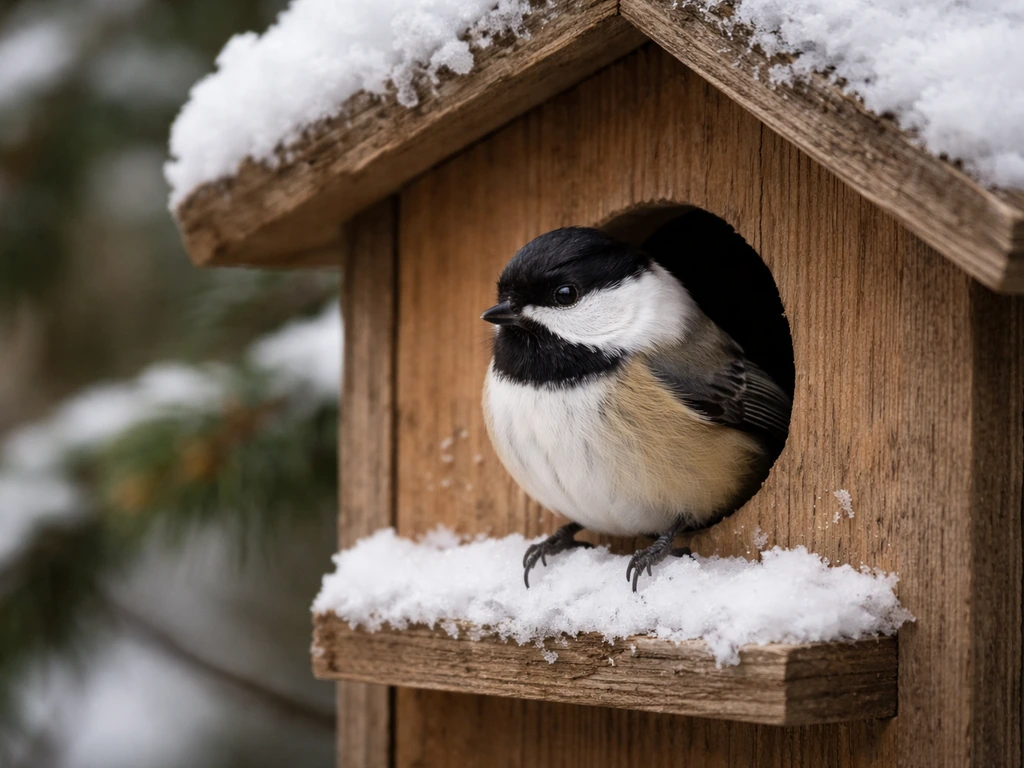
The birds most likely to use a box in winter are year-round residents that are cavity roosters by nature. Many of these cavity-roosting species will also take birdhouses to nest in when conditions are right winter are year-round residents. They do not migrate south, so they need somewhere warm to sleep when the temperature drops. Here are the most reliable winter box users across most of North America:
- Black-capped and Carolina chickadees: Probably the most common winter roosters in backyard boxes. Multiple birds will sometimes pile into one box together on the coldest nights.
- White-breasted and red-breasted nuthatches: Research from Minnesota farmstead shelterbelts documented red-breasted nuthatches roosting in nest boxes during winter, and white-breasted nuthatches regularly do the same.
- House wrens and Carolina wrens: Carolina wrens in particular will roost in boxes through freezing temperatures and are year-round residents across much of the eastern US.
- Eastern and Western bluebirds: Bluebirds are well-documented communal winter roosters in nest boxes, with groups huddling together on cold nights.
- Downy woodpeckers: They often excavate or claim cavities for solo roosting and will use appropriately sized boxes.
- Tree swallows: In mild-winter coastal areas, some individuals overwinter and may use boxes.
- Screech-owls: These small owls are cavity roosters and will use boxes year-round, including as daytime hideouts in winter.
Birds that do not use boxes in winter include most summer migrants (warblers, orioles, flycatchers) and ground-nesters. Robins, for example, are not cavity nesters and will not use a box in any season. If you want to help those species, food and water matter far more than housing.
Winter behavior: nesting, sheltering, and roosting are not the same thing
It helps to separate these three behaviors because they require slightly different things from a box.
Nesting is active breeding behavior: building a nest, laying eggs, and raising chicks. Almost no bird in the continental US is nesting in a box in December or January. Even early nesters like bluebirds and great horned owls do not begin until late January or February at the earliest, and that is in the warmest southern regions. So if someone asks whether birds use birdhouses in winter for nesting, the honest answer is almost never. That includes the specific question of whether do crows use bird houses for roosting or nesting birdhouses in winter.
Sheltering is short-term use during bad weather. A bird might duck into a box during a sudden storm, a cold snap, or a heavy snowfall, then leave when conditions improve. This is opportunistic and common among the species listed above.
Roosting is regular nightly use, where a bird returns to the same box each evening to sleep. This is the most valuable winter function a birdhouse can serve. A roosting bird in a well-insulated box can conserve significant body heat overnight compared to roosting exposed on a branch. For small birds like chickadees, which can lose a large percentage of their body weight to cold in a single night, that shelter genuinely matters for survival.
How to set up or convert a birdhouse for cold weather
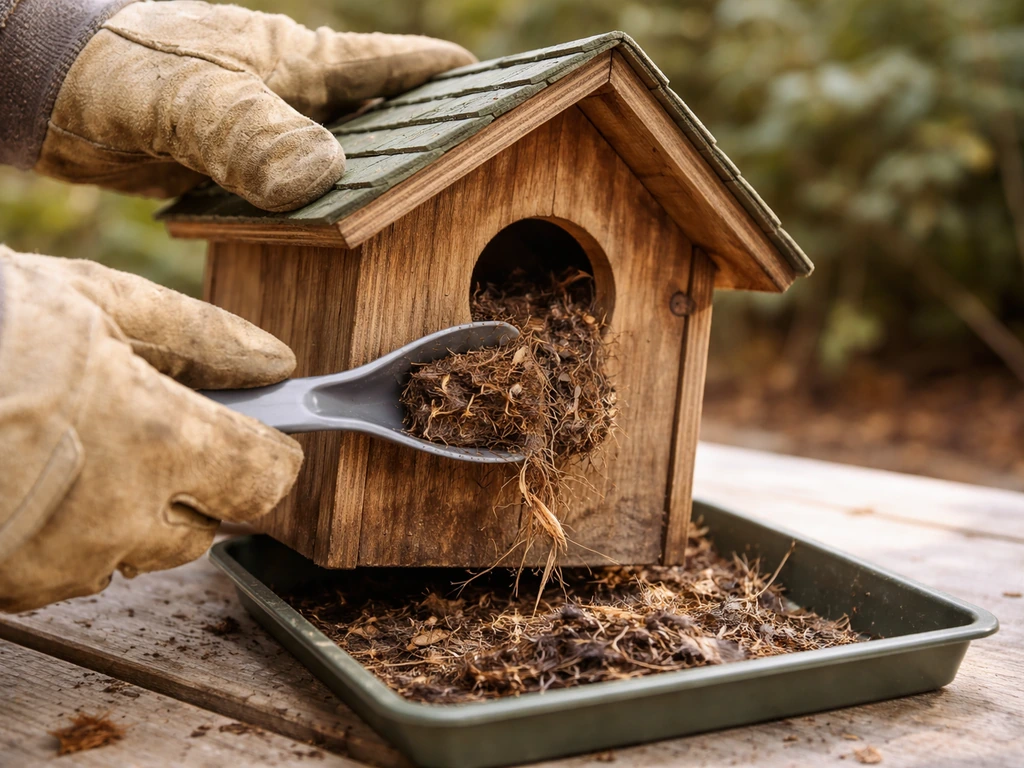
If your box has been up since spring, the first thing to do is clean it out before winter sets in or right now if you have not already. NestWatch recommends using multiple drainage holes in nest boxes, about four holes with diameters around 3/8 inch to 1/2 inch, and notes that a perch is unnecessary and can make it easier for predators to access the box. Old nesting material harbors mites, bacteria, and mold, all of which are harmful to roosting birds.
- Remove all old nesting material completely. Wear gloves. Scrape the floor and walls clean with a stiff brush or putty knife.
- Wash the interior with a diluted bleach solution (one part bleach to nine parts water), let it soak for a few minutes, then rinse thoroughly and allow it to dry completely before closing the box back up.
- Inspect for damage: check that the roof has no gaps letting in rain or snow, that the floor drainage holes are clear, and that the entry hole has not been enlarged by a predator or deterioration.
- Close or reduce ventilation slots temporarily if your box has large summer ventilation gaps. In summer, ventilation prevents overheating. In winter, a small amount of air exchange is still needed, but large gaps will let cold wind in and drive out the warm air the bird is generating.
- Do not add soft nesting material like cotton or synthetic fluff. A few dry wood shavings (not sawdust) on the floor is fine if you want to provide some insulation without blocking drainage. Avoid anything that can mat, hold moisture, or tangle around a bird.
- Leave the entry hole unobstructed. Do not add a perch (birds do not need them and perches help predators). Do not cover the entry hole with anything.
If you want to convert a standard nest box into a dedicated roost box, you can flip the entry hole location. A standard nest box has the entry near the top, which lets warm rising air escape. A roost box has the entry near the bottom, so warm air accumulates above the bird. This is a simple modification if you are building a new box, but if you have an existing box it is usually easier to leave it as is rather than cutting a new hole.
Placement and microclimate: where to put the box for winter
Where you mount the box in winter matters as much as what is inside it. The goal is maximum solar gain, minimum wind exposure, and a dry location.
| Factor | Summer Priority | Winter Priority |
|---|---|---|
| Entry hole direction | East or north to avoid overheating | Southeast or south to catch low winter sun |
| Wind exposure | Open site for air circulation | Protected site: use a fence, building wall, or dense shrubs as a windbreak |
| Height | Species-specific (bluebirds 4-6 ft, chickadees up to 15 ft) | Lower is often warmer; avoid exposed hilltops |
| Sun exposure | Partial shade acceptable | Full morning sun preferred; avoid deep shade |
| Moisture | Good drainage is enough | Drainage holes critical; avoid spots where snow drifts or water pools at base |
If you can adjust your mounting hardware, rotating the box so the entry hole faces southeast is one of the highest-impact single changes you can make. Low winter sun hits the box in the morning, warming it while the bird is still inside. By afternoon, the angle reduces direct exposure so the box does not overheat on a sunny winter day.
Mounting on a south-facing wall of a shed, garage, or house is also excellent. The wall itself acts as a thermal mass, stays warmer than open air, and provides a natural windbreak. Keep clearance of at least 5 feet from the ground to reduce cat and raccoon access, and make sure the box is not right under an eave where dripping snowmelt will hit it all day.
Temperature, ventilation, and moisture: keeping the box safe
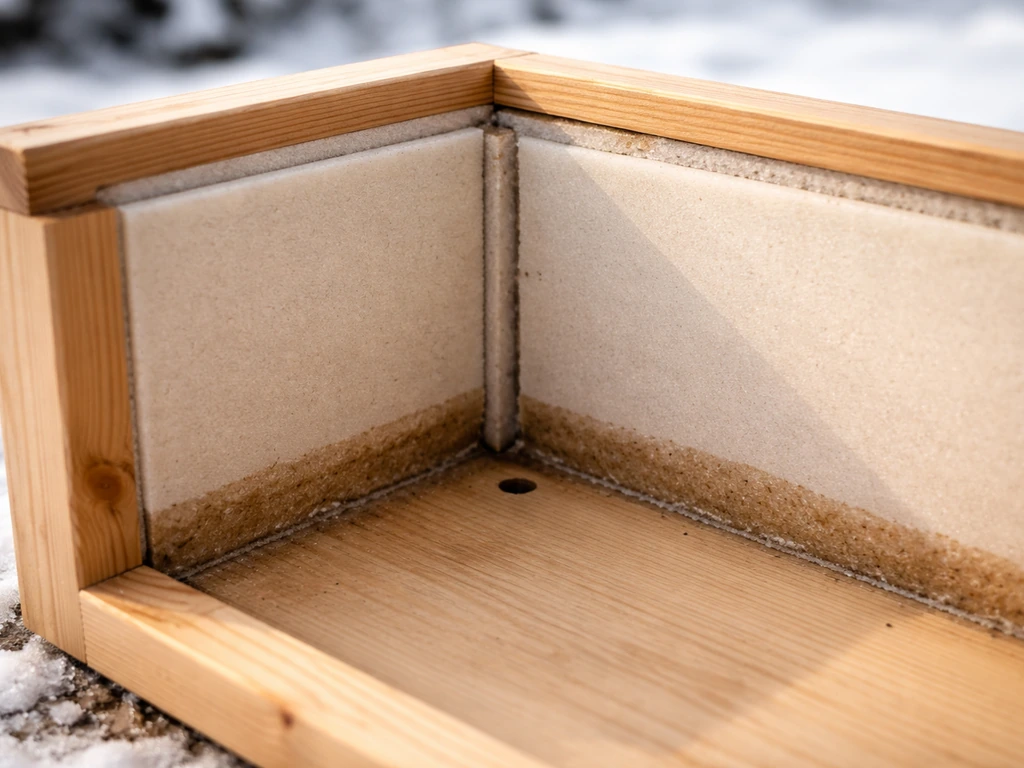
The temptation in winter is to over-insulate. People think sealing every gap and packing the box with material will help. It can actually hurt. Here is why: birds generate moisture when they breathe, and if a box has zero ventilation, that moisture condenses on the cold walls, the interior gets damp, and a wet bird in a cold box loses heat far faster than a dry bird in a slightly drafty one. The goal is reduced ventilation, not zero ventilation.
- Keep at least one small drainage hole (1/4 inch) in the floor corner. This lets any condensation or dripped moisture escape.
- If your box has large ventilation slots near the top (more than 1/4 inch wide and 2 inches long), consider temporarily covering them on the outside with a strip of weatherproof tape or a small piece of wood screwed over the gap, removable in spring.
- Avoid packing insulation material tightly against the walls. It holds moisture and can grow mold. A thin layer of dry shavings on the floor only.
- Check the roof seal every few weeks during winter. If the roof joint has a gap letting in rain or snow, seal it with a bead of exterior caulk.
- Never use heated elements or heat tape inside a birdhouse. Birds regulate roost temperature with their bodies. Adding artificial heat disrupts that and creates fire and electrocution risks.
Predators, insulation limits, and winter sanitation
Winter does not make predators disappear. Raccoons, opossums, feral cats, and rat snakes (in warmer winters) are all active and opportunistic. A roosting bird is a sitting target if the box is not protected.
The most effective predator deterrent is a metal predator guard (a cone baffle) mounted on the pole or post below the box. A simple stovepipe baffle works just as well and is easy to make from sheet metal. If your box is on a fence post or tree, add a wrap of smooth sheet metal around the post below the box, at least 18 inches wide, to block climbing.
Entry hole reinforcers are also worth adding before winter. A metal plate around the entry hole (sized to match the original hole diameter) prevents squirrels and raccoons from gnawing the hole larger to reach a bird inside. These are inexpensive metal rings you can buy or cut from sheet aluminum, and they add meaningful protection.
On sanitation: Connecticut DEEP and other wildlife agencies recommend annual inspection, cleaning, and any needed repairs to nest boxes. If you have not done your fall cleaning, do it now even if it is already mid-winter. Yes, you might disturb a bird temporarily, but a dirty, mite-infested box is more harmful than a brief disturbance. Check on a mild afternoon when the bird has likely left to forage, clean quickly, and replace the box before dark.
One more sanitation note: if the box has frozen droppings caked on the floor, resist the urge to chip them out with metal tools that can damage the wood. Pour a small amount of warm water to loosen the material, wipe clean, dry as thoroughly as possible with a cloth, and allow additional air-drying time before rehanging.
When birdhouses won't help, and what to do instead
If you live in a region without year-round cavity-roosting species, or if your yard simply does not attract the birds listed above, a birdhouse in winter is not going to do much. That is fine. Focus your energy on the two things that matter most for winter bird survival: food and open water.
Food sources (dense berry-producing shrubs, seed heads left standing in the garden, and supplemental feeders for appropriate species) are more universally useful than housing. Open water is often the scarcest winter resource. Birdbaths with a simple immersion heater or a recirculating dripper that keeps water from freezing completely attract far more species in winter than any birdhouse will.
Also consider native plantings that provide natural cavities over time: dead snags left standing (if safely located), dense evergreen shrubs for wind shelter, and thickets that give birds places to roost naturally. These benefit not only the species that use boxes but also the wider range of winter visitors that will never enter a birdhouse, including sparrows, thrushes, and finches.
Come late January or early February, start thinking about spring nesting. Clean boxes that were used for winter roosting get a fresh scrub-out in late winter before the first scouts arrive. Early nesters like bluebirds and tree swallows begin checking boxes well before the weather feels like spring, so having a clean, well-placed box ready before you think you need it is always the right call.
FAQ
If birds are using a birdhouse for roosting, can I move the birdhouse during winter?
Yes, but only in limited circumstances. If a box is already being used as a regular roost, bringing it inside for a few days in extreme weather can disrupt consistent nightly use and make birds reluctant to return. The better approach is to keep the box in place, ensure it is dry, add a predator guard, and check ventilation so the interior does not become damp.
How often should I inspect and clean a birdhouse once winter roosting starts?
Typically, you should not open a roosting box just to “check inside.” Instead, do one quick inspection before winter (or on a mild afternoon) and then avoid repeated disturbance. If you notice no birds for several weeks and the box is clearly unused, cleaning at that point is safer than frequent midwinter peeks.
Can I insulate the inside of a birdhouse to make winter roosting safer?
You can use the right kind of insulation, but avoid filling the whole box with bulky stuffing or foam. Many cavity-roosters do fine with a standard well-made box that stays dry. If you add insulation, keep it on the outer walls or between the box and an exterior cover, and do not block airflow at the designed ventilation openings (birds produce moisture when they breathe).
What should I do if the inside of the birdhouse gets damp in winter?
If the box is being used, you want to keep it dry and prevent internal condensation. This usually means using a rain-shedding placement (not directly under dripping eaves), avoiding fully air-sealed construction, and using a slightly drafty design rather than “no-vent” sealing. In practice, if you see wet interior walls or a musty smell after cold nights, reassess ventilation and placement first.
Will rotating or re-mounting a birdhouse in midwinter stop birds from using it?
Do it, but only with careful timing. The entry hole should face a direction that helps with morning solar gain (southeast is one of the most helpful), and the box should stay out of direct dripping snowmelt. If you must change hardware or rotate a mounted box, try on a mild day when birds are likely away foraging, and expect it may take a short while for nightly users to resume.
If my birdhouse is a standard nest box, is it still useful for roosting in winter?
A classic nest box without a roost-entry adjustment can still be used for sheltering and short-term duck-ins, but roosting is less effective if the design vents out warm air. For maximum nightly roost value, roost boxes generally work best with the entry positioned lower. If you already have an installed box, your article’s caution is right, it is often easier to keep the existing entry and focus on placement and predator protection.
Why do birds ignore my birdhouse even though I left it up all season?
Not usually. Birds that roost in cavity shelters often accept them when conditions are harsh, but they also need to access the box safely. If the box is too low, too exposed, or easy to climb, you may see little or no use. In most yards, adding a predator guard and keeping at least about 5 feet of clearance improves odds more than adding bird “attractants.”
My birdhouse floor has frozen droppings. What is the safest way to clean it?
Yes, droppings can freeze and become hard, but avoid chipping with metal tools that can scar and damage the wood. Instead, loosen with warm water, wipe, and let it dry thoroughly before rehanging. If you do not have time to fully dry it, delay rehanging until the interior is dry to reduce condensation risk.
If I see birds only during storms, does that mean my birdhouse will never be used in winter?
It can, especially for opportunistic sheltering birds during storms, but it is not a guarantee of nightly roost use. To increase the chance of roosting, prioritize a consistently safe, dry, well-placed box and focus on deterrents like a cone baffle below the entry area. Also remember some birds will forage widely even at night, so “no bird seen in the day” does not always mean “unused.”
How do I know whether a birdhouse will help birds in my specific region?
Many cavity-roosters are year-round residents, but your local species mix matters. If winter residents in your area are mostly non-cavity nesters or mostly ground-nesters, a birdhouse will provide little benefit. If you do not see any of the likely winter users after good placement and protection (and the box has been up since fall), shifting effort toward food and open water usually yields faster results.
Should I use feeders or a water source in addition to a winter birdhouse?
Offer it only if you want to help the birds most likely to use it. If you are targeting winter cavity-roosters, supply food and water that match their needs, and keep feeders away from the immediate area if it increases predator opportunities. A simple strategy is to ensure open water is safe and reliable, since open water often attracts more winter birds than housing alone.