Yes, birds genuinely use bird houses, but only the right birds in the right box. About 30 North American species are primary cavity nesters, meaning they depend on enclosed spaces to breed. Bluebirds, chickadees, wrens, blank" rel="noopener noreferrer">tree swallows, nuthatches, and several others will readily move into a well-built, well-placed nest box. Common birds that nest in bird houses include bluebirds, chickadees, wrens, tree swallows, and nuthatches. The catch is that every species has specific needs: a particular entrance hole diameter, interior floor size, mounting height, and habitat type. Get those right and occupancy is very realistic. Get them wrong and the box just sits there.
What Birds Use Bird Houses: How to Match, Attract, and Troubleshoot
Maya Thompson
1 May 2026
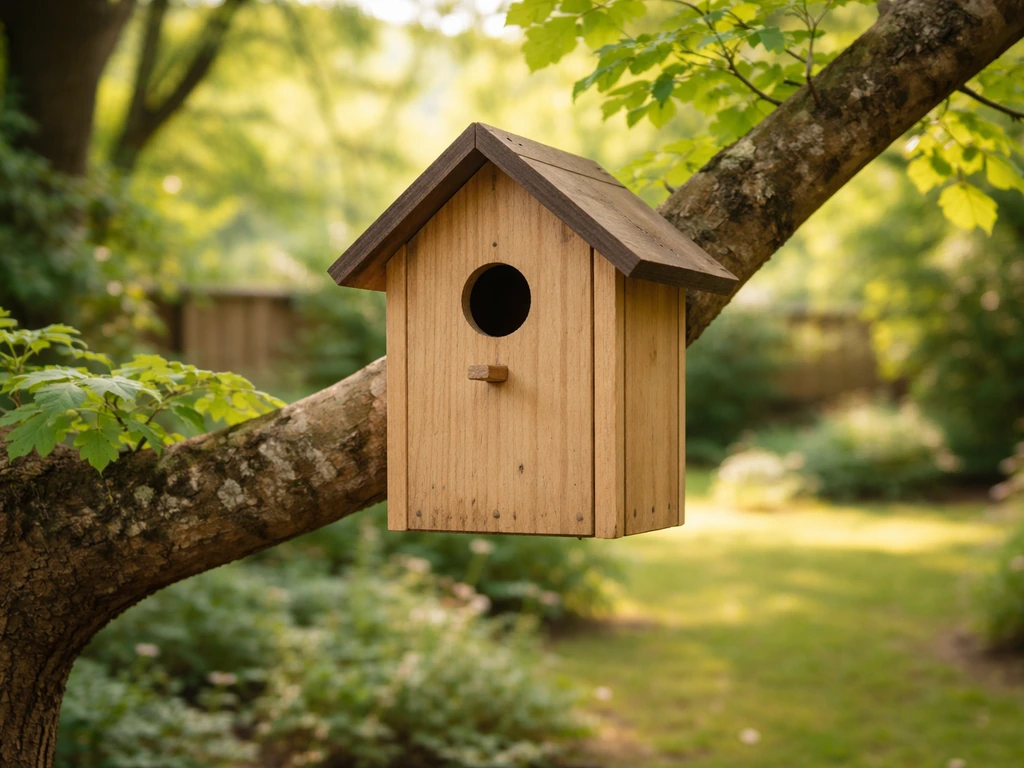
Do birds actually use bird houses?
The honest answer is: yes, but only cavity-nesting species, and only when the box functions as a convincing substitute for a natural tree cavity. If you want the practical, step-by-step basics of this process, see how bird houses work for a quick overview. Wild birds did not evolve with birdhouses, but many cavity nesters are opportunistic. They will inspect a box, evaluate the entrance diameter, the interior depth, the location, and the surrounding habitat, and then decide.
Research comparing nest boxes to natural tree cavities confirms that reproductive success is real and comparable in good boxes, but also that "inspection" is not the same as occupancy. A bird perching on your box or poking its head in is not using it. Use means eggs laid, incubation started, and chicks fledged.
Species that do NOT typically use enclosed nest boxes include robins, cardinals, mourning doves, and most songbirds that build open-cup nests in shrubs or trees. If you're wondering specifically about robins, they very rarely enter enclosed boxes and strongly prefer open-fronted shelves. Robins rarely use enclosed nest boxes, which is why open-fronted options or other species-focused setups work better for them do robins use bird houses. Crows are far too large for any standard nest box. Understanding this distinction saves a lot of frustration.
Which backyard birds will actually use a nest box
Here are the most common backyard species that regularly nest in boxes across North America, with the key specs that determine whether they accept your box.
| Species | Entrance Hole Diameter | Floor Size | Mounting Height | Habitat |
|---|---|---|---|---|
| Eastern Bluebird | 1.5" | 4" x 4" to 5.5" x 5.5" | 4–6 ft | Open lawn, fields, woodland edge |
| Mountain Bluebird | 1 9/16" | 5" x 5" | 4–6 ft | Open fields, orchards, rural open country |
| Tree Swallow | 1.5" | 5" x 5" | 4–8 ft | Open fields near water |
| Carolina/Black-capped Chickadee | 1.125" | 4" x 4" | 4–8 ft | Woodland edge, mixed shrubs |
| House Wren | 1.0"–1.25" | 4" x 4" | 5–10 ft | Gardens, woodland edges, brushy areas |
| Bewick's Wren | 1.25"–1.5" | 4" x 4" | 5–10 ft | Scrubby habitat, brush piles, gardens |
| White-breasted Nuthatch | 1.25"–1.375" | 4" x 4" | 5–20 ft | Mature deciduous or mixed woodland |
| Downy Woodpecker | 1.25" | 4" x 4" | 5–20 ft | Open woodland, edges, orchards |
| Northern Flicker | 2.5" | 7" x 7" | 6–20 ft | Open woodland, suburban yards with large trees |
| American Kestrel | 3" | 8" x 8" | 10–30 ft | Open farmland, fields, roadsides |
| Eastern Screech-Owl | 3" | 8" x 8" | 10–30 ft | Suburban woodland, parks, large trees |
| Wood Duck | 4" x 3" oval | 10" x 18" | 2–5 ft above water | Ponds, marshes, wooded wetlands |
| Carolina Wren | 1.5" | 4" x 4" | 4–10 ft | Dense shrubs, brush, backyards |
| Purple Martin | 2.125" | 6" x 6" per compartment | 10–20 ft (colony house) | Open areas near water, suburban |
A few notes on this list: wrens are the most forgiving and will use boxes in surprisingly cramped, imperfect locations. Bluebirds are the most rewarding but also the most exacting. Tree swallows will compete aggressively with bluebirds for the same box, which is why pairing boxes 15–25 feet apart (so one swallow pair and one bluebird pair can each claim a territory) is a well-known workaround. Wood ducks need a thick layer of wood shavings inside the box because they don't carry nesting material.
How to tell if your bird house is being used
Monitoring is the only way to know for certain. Behavioral signs are your first clue, but you need to know what normal looks like at each stage, because a box that appears quiet may actually be in active use.
Signs of active use
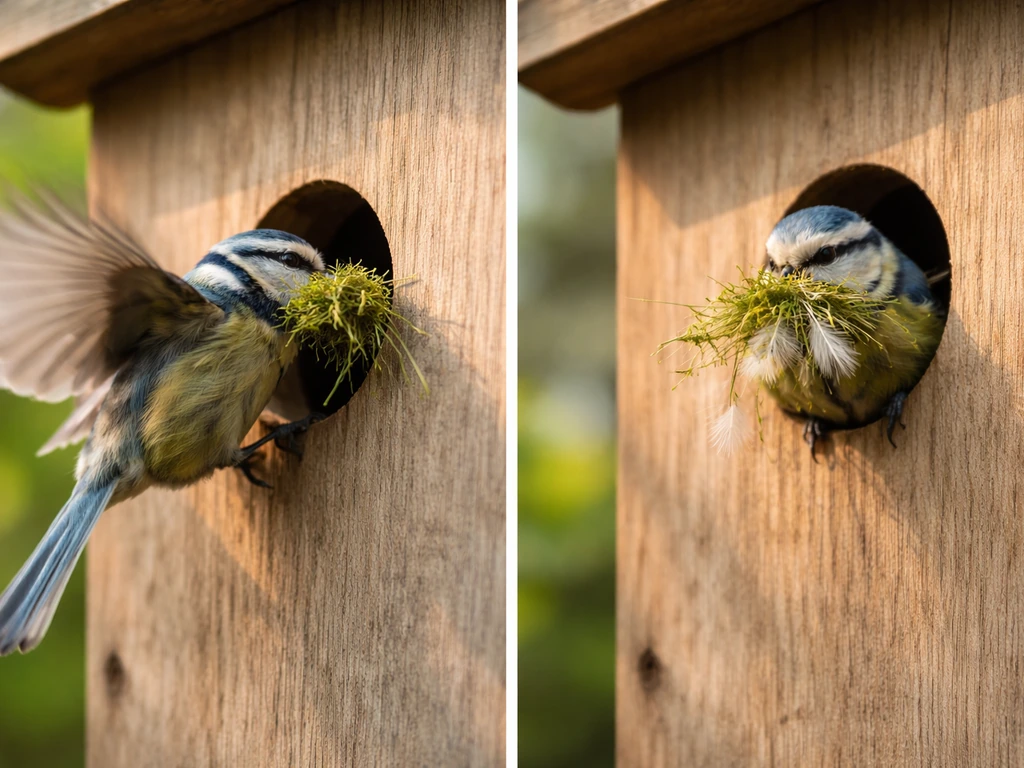
- A bird entering repeatedly carrying nesting material (grass, moss, feathers, bark strips) over one to two weeks
- A female perching at or inside the entrance frequently early in the morning during egg-laying (one egg per day, usually)
- Brief, infrequent female visits during incubation (sometimes only once per day), which is normal and not abandonment
- Increased male activity near the box: singing from a nearby perch, chasing off other birds
- Audible cheeping from inside the box once chicks hatch
- Fecal sacs being carried out by parents (a clear sign of active nestlings)
- Feather scales and droppings inside the box after fledging, indicating young were raised successfully
Cornell Lab's NestWatch program defines actual use as a confirmed nesting attempt with documented milestones: first egg date, hatch date, and fledge date. NestWatch notes that these milestones, including first egg, hatch, and fledge dates, are often estimated because monitors usually do not record them on the exact day first egg, hatch, and fledge dates are often estimated. That standard is worth keeping in mind.
If you open the box (carefully, quickly, only during the build-up phase, and never after the 13th day of incubation for most small species) and see a well-formed nest with eggs, that's occupancy. Monitor about once per week early in the season. If you see a female sitting tight inside, close the box quietly and come back in a week.
The specs that determine whether a bird moves in
This is where most birdhouse failures happen. Four variables control whether a box gets used: entrance hole diameter, interior depth, floor size, and ventilation and drainage. Get these wrong and even a perfectly placed box will sit empty.
Entrance hole diameter
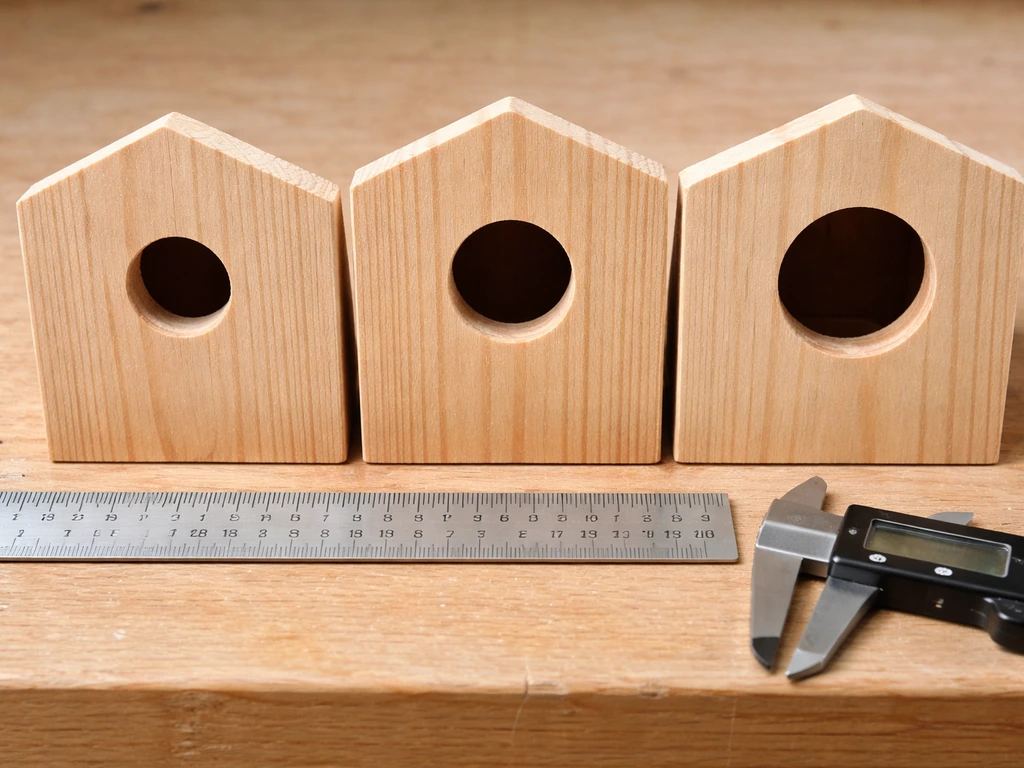
This is the single most critical measurement. A 1.5" hole excludes starlings (which need at least 1.75") but admits bluebirds and tree swallows. A 1.125" hole is sized specifically for chickadees. Go too large and you invite competitors and predators. Go too small and your target species can't enter. Drill the hole precisely; a router or hole saw is more accurate than a spade bit. Round the inside edge slightly with sandpaper so birds can grip it. Do not add a perch below the hole. Perches help predators and competitors more than the birds you want.
Interior depth and floor size
The depth from the bottom of the entrance hole to the floor should be roughly 4.5" to 6" for small cavity nesters like bluebirds and chickadees. Too shallow and the nest is dangerously close to the entrance, making eggs and nestlings easy targets. Too deep and the species may skip it or chicks may struggle to fledge. The North American Bluebird Society recommends a floor size of 4"x4" to 5.5"x5.5" for bluebirds. Scratch or roughen the interior below the entrance hole so fledglings can climb out.
Ventilation and drainage
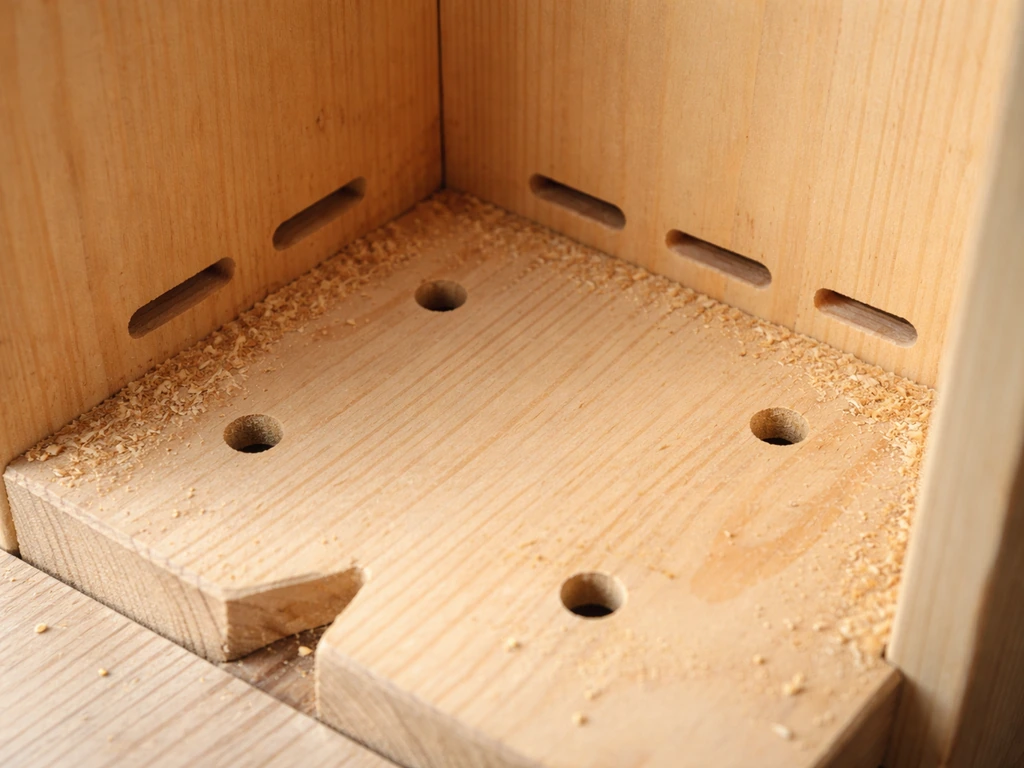
These are non-negotiable for occupancy and chick survival. Cut the floor corners by about 0.25" or drill four 0.25" to 0.5" drainage holes in the floor to let rainwater escape. Add ventilation gaps or holes near the top of the side walls (not the roof line) so heat doesn't build up inside. Interior box temperatures can reach lethal levels on hot days without ventilation. The roof should overhang the entrance hole by at least 2" to keep rain out.
Entrance orientation
Cornell's NestWatch monitoring program tracks entrance orientation as a real variable in nesting outcomes. For Eastern Bluebirds, Oklahoma State University Extension recommends facing the entrance east or north, toward an open area. This reduces the bird's heat exposure during incubation and positions the entrance toward the foraging area. In hotter southern climates, north- or east-facing entrances are particularly important. Avoid facing entrances into prevailing winds and driving rain.
Where and how to mount the box
Placement is almost as important as dimensions. A correctly built box in the wrong spot will go unused, and a slightly imperfect box in the ideal habitat may still attract a pair.
Height and spacing
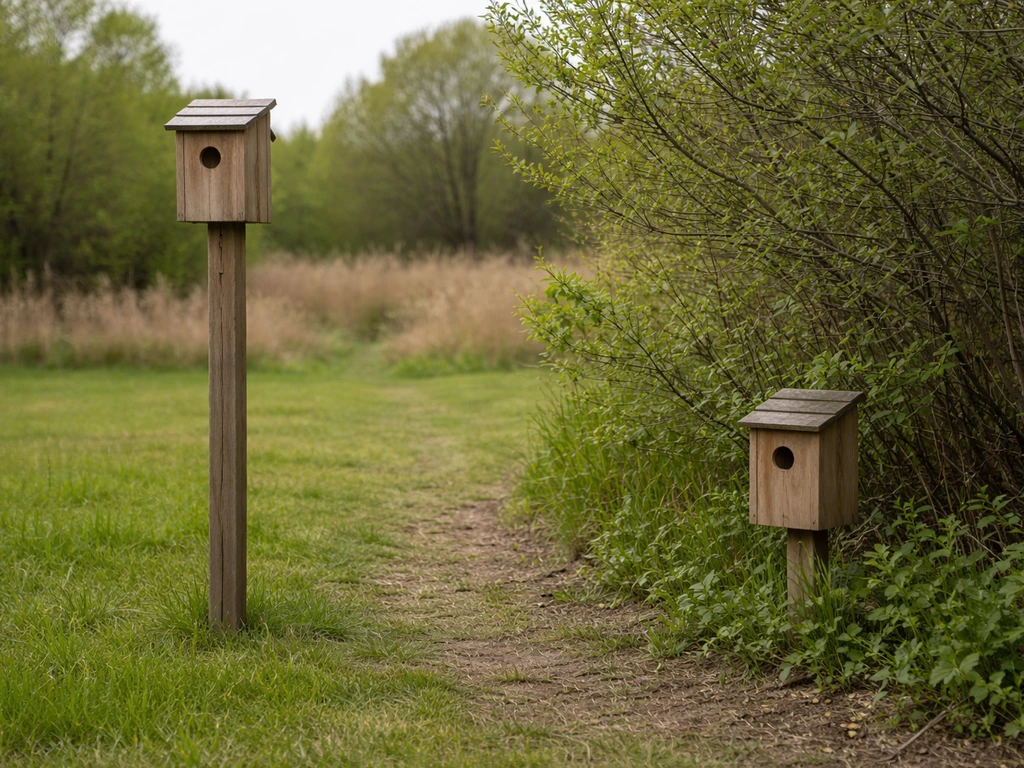
Most small species (bluebirds, chickadees, wrens, tree swallows) do well at 4 to 8 feet off the ground. This makes monitoring and cleaning practical without needing a ladder. Owls and kestrels need 10 to 30 feet. Wood ducks go 2 to 5 feet above the water surface. For bluebirds and tree swallows, space boxes at least 100 to 150 feet apart (NestWatch reports Mountain Bluebird minimum spacing at 300 feet) to reduce territorial conflict. If you want to host both swallows and bluebirds, try pairing boxes 15 to 25 feet apart and spacing each pair 300 feet from the next.
Habitat matching
Mount bluebird boxes on a post in an open grassy area with low or no shrubs within about 50 feet. Chickadee boxes work well at a woodland edge or in a shrubby backyard. House wrens are extremely adaptable and will use boxes near brushy cover in almost any suburban yard. White-breasted nuthatches and downy woodpeckers prefer boxes mounted on or near mature deciduous trees. American kestrels need open farmland or fields with no trees blocking the flight path. Matching habitat to species is the fastest way to improve occupancy.
Timing your installation
Put boxes up well before breeding season, ideally in fall or early winter. OSU Extension recommends installing Eastern Bluebird boxes in autumn before bluebirds start scouting territories. This gives resident birds time to discover and investigate the box during the off-season, which dramatically increases the chance of first-season occupancy. If you're setting up a box for the first time in spring, get it out as early as possible, January or February in the South, March in northern states.
Why your bird house might be sitting empty
If you've had a box up for a full season with no takers, one or more of these is almost certainly the reason.
- Wrong entrance hole size: either too large (admits competitors or predators) or too small for your target species. Measure with calipers, not by eye.
- Poor habitat match: a bluebird box in a wooded yard, or a chickadee box in an open field, will rarely be used. Check the habitat column in the species table above.
- Too close to human activity or too far from foraging areas: boxes directly on a wall next to a door or window often get skipped. A freestanding post in a yard is usually better.
- Competition from House Sparrows or European Starlings: sparrows can fit through holes as small as 1.25" and will evict native birds or destroy eggs. Starlings need holes larger than 1.5". A sparrow-resistant entrance (like a slot entrance for bluebirds) can help.
- Predator pressure: cats, raccoons, and snakes exploring or raiding the box will cause birds to abandon it quickly, sometimes after a single raid. If there's no baffle on the pole, birds learn the location is unsafe.
- Box installed too late in the season: most cavity nesters begin scouting months before they breed. A box put up in May often misses the window entirely.
- No cleaning between seasons: old nests harbor mites, lice, and blowfly larvae that birds can detect. A fouled box is less attractive than a natural cavity.
- Box design flaws: no drainage, no ventilation, a shiny or treated exterior, a perch below the entrance, or a smooth interior below the hole all reduce attractiveness or safety.
It's worth noting that birds also nest seasonally in boxes during winter for roosting warmth, not nesting, and a box that seemed ignored all summer may be visited by chickadees or nuthatches on cold nights. Some birds may use a nest box in winter for roosting warmth, so that seasonal use can look like “use” even when breeding is paused do birds use bird houses in the winter. That's a different kind of use, but a valid one. If you're curious about winter use specifically, that topic goes into more detail than we can cover here.
Keeping the box safe and ready for next season
Maintenance is not optional. It directly determines whether the box gets used again and whether the birds that do use it succeed. Here's what to do and when.
When to clean
Clean out old nests as soon as you're confident a brood has fledged and the pair is not preparing a second clutch. Many species have two or even three broods per season. Monitor weekly to catch the transition. Once you're sure nesting is complete for the season (late summer to early fall), do a thorough clean-out. Don't leave it until spring. Old nests left over winter allow mites and parasites to overwinter in the material and can infest the next brood. Gardeners World (UK context, but the biology is the same) recommends cleaning between September and December.
How to clean safely
- Wear gloves and a dust mask. Old nests can carry mites, parasites, and dried droppings.
- Remove all nesting material completely. Shake out debris and dispose of it away from the box.
- Scrub the interior with a stiff brush and a dilute bleach solution (one part bleach to nine parts water) or undiluted white vinegar.
- Rinse thoroughly and let the box air-dry completely with the door or side panel open before closing it up.
- Inspect the box for damage: check that drainage holes are clear, ventilation slots are open, and the entrance hole hasn't been enlarged by a woodpecker or predator.
Predator-proofing
A predator baffle on the mounting pole is the single most effective upgrade you can make. A stovepipe baffle or cone baffle positioned 4 to 5 feet off the ground blocks raccoons, snakes, and cats from climbing the pole. Cornell's NestWatch data from over 24,000 nest records found that boxes with multiple predator guards had measurably higher nesting success. Avoid mounting boxes on fences, wooden posts that raccoons can grip, or tree trunks. A smooth metal conduit pole with a baffle is the gold standard. Keep the area around the pole clear of branches or structures that give predators an alternative route to the box.
Managing invasive competitors
House Sparrows are the biggest competitive threat to bluebirds, chickadees, and other native cavity nesters. They are not protected under the Migratory Bird Treaty Act, so removing their nests and eggs from your boxes is legal and widely recommended by conservation organizations. Check boxes weekly during peak season. European Starlings are controlled by keeping entrance holes at 1.5" or smaller. If House Sparrows are a persistent problem in your area, a sparrow-resistant entrance (SRE) tube designed for bluebird boxes is worth considering.
If you're building or buying your first box and want to maximize your chances of success right away, start with a bluebird box or a chickadee box. Both species are widespread, well-studied, and respond predictably to correct dimensions and placement. Get the entrance hole right, mount it on a baffled pole in the right habitat, install it this fall, and clean it every season. That's the whole system.
FAQ
What birds use bird houses the most in spring versus winter?
In spring and early summer, cavity nesters like bluebirds, chickadees, wrens, and tree swallows are the main users for breeding. In winter, some birds may only roost inside for warmth, so you might see activity without eggs or a chick-rearing cycle. Treat winter “visits” as secondary unless you later confirm nesting milestones.
If I see a bird perched on the outside of my bird house, does that mean it is being used?
No. Perching, poking the entrance, or a brief inspection is not the same as nesting use. Actual use means you eventually see eggs, confirmed incubation behavior, and chicks that fledge. If you want to confirm, check only during the appropriate build-up window and avoid opening after late incubation begins.
How long should I leave a bird house out before assuming it will never be used?
Give it a full breeding season at minimum, because territory scouting can take time and placement matters. If there were no inspections at all, revisit the entrance size, ventilation, and habitat fit. If there were occasional inspections but no eggs, competitors, spacing, or predator risk may be the limiting factor.
Can multiple species share the same type of bird house, or do I need different boxes?
Different species can sometimes fit the same box dimensions, but competition is real. For example, tree swallows can aggressively claim boxes intended for bluebirds. If you want both, use species-specific entrance diameters and spacing that reduces overlap between territories, rather than assuming one box will be flexible.
What should I do if I find a nest already started but I did not see eggs?
First confirm whether the nest is active and occupied, then avoid repeated disturbances. If you open and find no eggs or the nest appears abandoned early, consider whether the entrance size, predator access, or placement is causing failure after initial interest. The next season, adjust the one variable most likely to limit occupancy, usually entrance diameter or predator protection.
Do I need to provide nesting material inside bird houses?
In most cases, no. Cavity nesters typically add material themselves or bring small lining pieces as needed. For species like wood ducks, the required approach differs: they generally need nesting material like wood shavings placed in the bottom to support successful nesting. Use the species-specific requirement rather than adding material universally.
Is it safe to paint or stain a bird house?
Yes, but choose colors and finishes carefully. Use non-toxic, weather-resistant exterior finishes and avoid dark colors that can drive interior temperatures too high in summer. Keep ventilation and drainage requirements the same, since a “pretty” coating that overheats the box can reduce chick survival.
How do I keep predators from getting inside besides using a baffle?
A baffle is the most effective upgrade for climbing predators, but also remove easy access routes. Avoid mounting on surfaces predators can climb or reach from, keep nearby vegetation clear around the pole, and do not add a perch. If cats or snakes are common locally, prioritize a metal conduit pole and keep the area around the mount unobstructed.
What if squirrels or larger birds are causing problems at my bird house?
Squirrels often target openings and can defeat some mounts if the pole is grippable. Use a smooth metal pole with a properly positioned baffle and ensure the entrance hole size matches the target species so bigger animals cannot enter. For large birds that exceed typical nest box size constraints, switching to a properly sized, species-appropriate housing type is usually the only fix.
Should I rotate the bird house or change the entrance direction mid-season?
Avoid moving or rotating once nesting is underway. Entrance orientation affects heat exposure and foraging usefulness, but changing it during incubation or chick-rearing can cause abandonment. If orientation is wrong, correct it before breeding begins, ideally before the birds start scouting the territory.
How do I handle cleaning if a box seems to be used but I never see eggs or chicks?
If you suspect activity but cannot confirm nesting, do a careful, quick check during the safe window in the build-up phase. Otherwise, wait until you can verify that the brood has fully fledged and there will not be a second clutch. If you clean too early or too often, you can interrupt an active nest.
Why would my bluebird or chickadee box be inspected but not occupied?
Common causes include entrance size slightly off, missing ventilation or drainage, and poor habitat match (cover and open area) even when the box looks “correct.” Also check for nearby competitors, especially House Sparrows for bluebirds and chickadees. If sparrows are present, keep to the smaller entrance management approach and consider sparrow-resistant tubes where appropriate.