For House Sparrows, the single best birdhouse is a simple small-hole-fronted wooden box with a 32 mm (1.26 in) entrance hole, an interior floor of roughly 4 x 4 inches, and an internal depth of about 6 inches from hole to floor. Mount it at 2 to 4 meters (6.5 to 13 feet) high on a wall or fence, with the hole facing north-east and sheltered from driving rain and direct afternoon sun. That one setup handles the most common backyard sparrow across the UK and much of North America, and everything below helps you dial it in for your specific yard and species.
Best Bird House for Sparrows: Specs, Setup, and Proofing Guide
Maya Thompson
24 Jun 2026
What makes a birdhouse actually good for sparrows
The word 'best' gets thrown around a lot, but for sparrows it comes down to four things: the right entrance hole size, correct internal dimensions, solid construction that stays dry and cool, and a placement that feels safe to the bird. If you are specifically hunting the best bird house for finches, the priorities shift, so match your design to finch needs rather than sparrow specs sparrows it comes down to four things.
A decorative box with a too-large hole, no drainage, and a south-facing opening is worse than nothing. Sparrows are cavity nesters, but they are opportunistic ones. They will happily use a gap in a wall, a roof tile, or a purpose-built box, and that tells you something: they want enclosed, sheltered, dark spaces with a small, defensible entrance. Build or buy to that requirement and you are most of the way there.
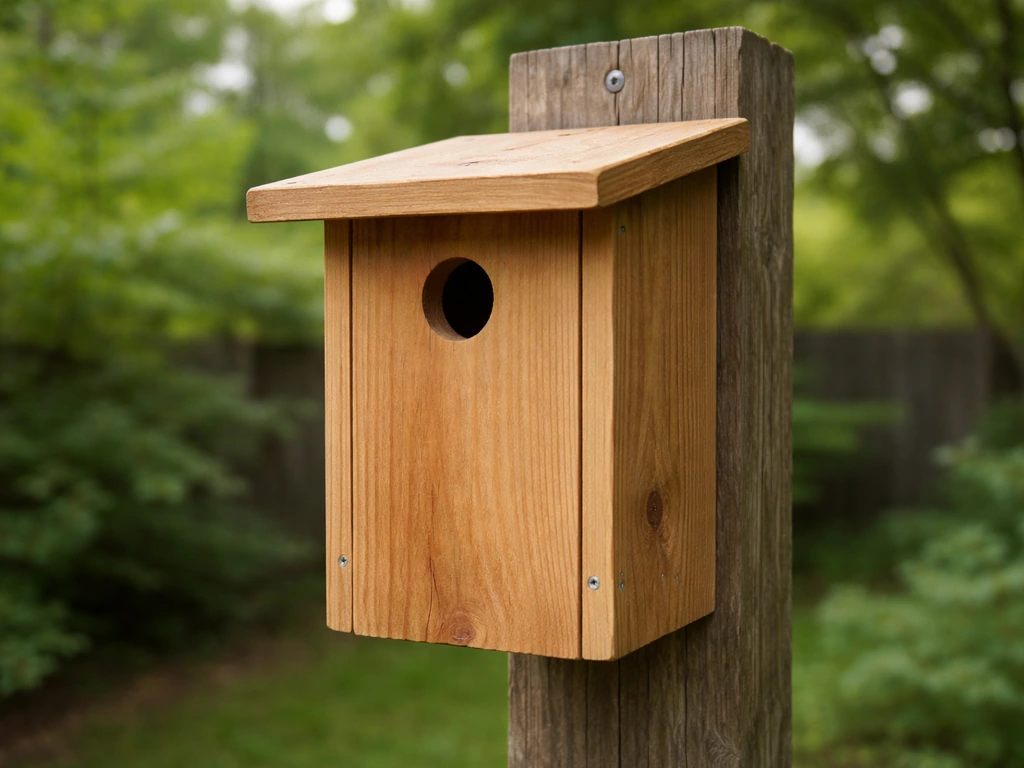
Beyond the basics, a good sparrow box needs drainage holes in the floor (3/8 to 1/2 inch diameter, at least four of them), ventilation slots or holes near the top of the side panels to prevent overheating, a roof that overhangs enough to shed rain, and a clean interior with no rough projections that can trap old nesting material. A hinged or removable panel for annual cleaning is not optional; it is essential. Boxes that cannot be cleaned properly breed mites and blow flies, which kill chicks even when everything else is right.
Which sparrow are you actually trying to attract?
This matters more than most guides admit. The House Sparrow (Passer domesticus) is the species most people picture, and it is the one with the clearest, most-researched box specifications. But North America has a much wider cast of native sparrows, and most of them do not use birdhouses at all. Song Sparrows, White-throated Sparrows, Chipping Sparrows, and most other New World sparrows are ground or shrub nesters. Putting up a hole-fronted box for them will not work; they need dense low cover, not a cavity.
The one native North American sparrow that does regularly use boxes is the Tree Sparrow (Spizelloides arborea) in some areas, and more reliably the American Tree Sparrow in specific habitats. The Eurasian Tree Sparrow (Passer montanus), which is established around St. Louis, Missouri, also uses boxes very similar to House Sparrow specs. If you are in the UK or Europe, you are almost certainly targeting House Sparrows or Eurasian Tree Sparrows. If you are in North America and want sparrow-like cavity nesters, you may actually want to consider wrens or chickadees alongside House Sparrows. It is worth knowing whether the sparrow you want is truly a cavity nester before you build anything.
A quick guide to which sparrows use boxes
| Species | Uses Boxes? | Notes |
|---|---|---|
| House Sparrow (Passer domesticus) | Yes, readily | Classic small-hole box, 32 mm entrance |
| Eurasian Tree Sparrow (Passer montanus) | Yes, readily | Same 32 mm spec as House Sparrow |
| American Tree Sparrow (Spizelloides arborea) | Occasionally | Prefers dense shrubs; boxes not well-documented |
| Song Sparrow, Chipping Sparrow, White-throated Sparrow | No | Ground/shrub nesters; boxes are not useful for these |
| House Finch (sometimes called sparrow) | Yes | Needs a 1.5 in / 38 mm hole; different species entirely |
Exact hole size and internal dimensions by species
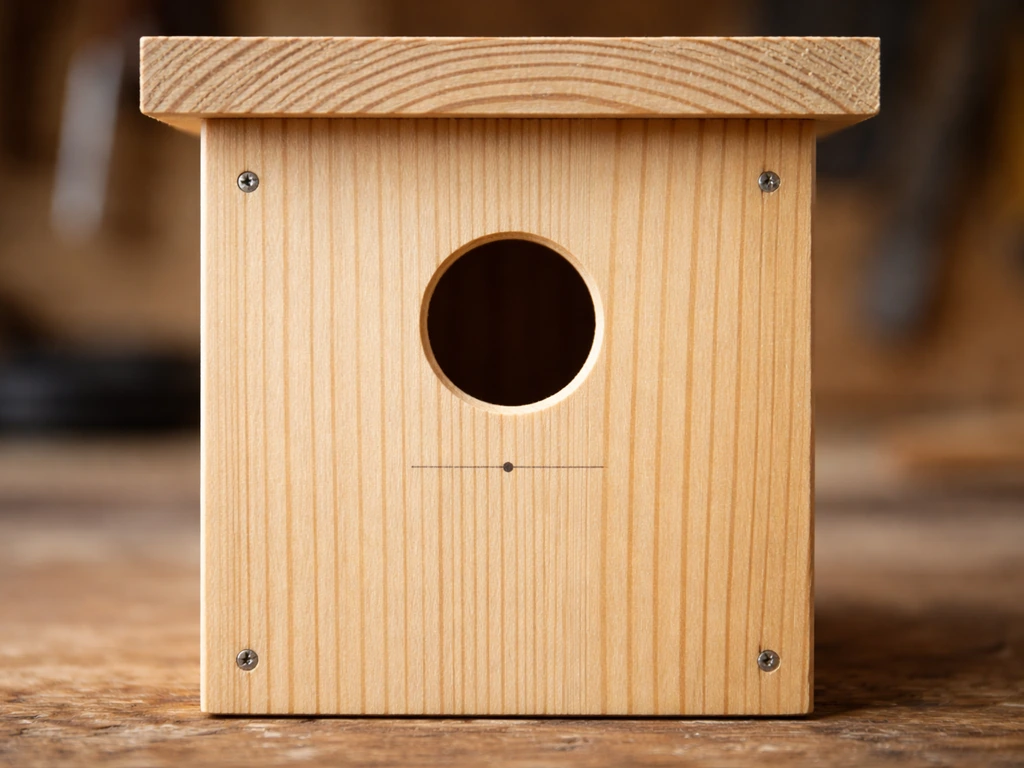
For House Sparrows and Eurasian Tree Sparrows, the BTO and RSPB both land on the same spec: a 32 mm (approximately 1.26 in) circular entrance hole. That size is large enough for a sparrow to enter easily but small enough to exclude Starlings, which have a habit of taking over boxes designed for smaller birds. Do not go larger thinking it is friendlier; a 45 mm hole invites Starlings, and they will evict sparrows without hesitation.
The hole should be positioned roughly two-thirds of the way up the front panel, not centered. This gives chicks more floor depth below the entrance, which reduces the risk of fledglings falling out too early and makes it harder for predators reaching in from outside to hook a chick. The center of the hole should be at least 125 mm (5 in) from the floor of the box.
| Spec | House Sparrow | Eurasian Tree Sparrow |
|---|---|---|
| Entrance hole diameter | 32 mm (1.26 in) | 32 mm (1.26 in) |
| Floor dimensions | 100 x 100 mm (4 x 4 in) | 100 x 100 mm (4 x 4 in) |
| Internal depth (hole to floor) | 150–175 mm (6–7 in) | 150 mm (6 in) |
| Hole height from floor (center) | 125–130 mm (5 in) | 125 mm (5 in) |
| Recommended mounting height | 2–4 m (6.5–13 ft) | 2–4 m (6.5–13 ft) |
One detail worth noting: House Sparrows are colonial by nature. They strongly prefer to nest in groups, and a single isolated box often gets ignored while a group of three or more boxes mounted close together gets colonized quickly. BTO's House Sparrow terrace concept takes this seriously: three or four boxes side by side on the same wall, each with its own 32 mm entrance, separated by about 200 mm (8 in) of wall between entrances. If you have space for a sparrow terrace or a triple box, use it.
Where to put it: height, direction, and habitat
Mount the box between 2 and 4 meters (about 6.5 to 13 feet) high. Lower than that and cats and other ground predators become a serious problem. Higher than that is fine structurally, but harder to monitor and clean. The BTO's own House Sparrow nest box plan specifically calls for the entrance hole to face north-east. That keeps the hole out of direct afternoon sun (which overheats the box) and away from the prevailing south-westerly rain in the UK. In North America, NJ Audubon's guidance echoes this: orient the hole away from prevailing wind and weather, which typically means north or east-facing in most of the continental US.
House Sparrows are not woodland birds. They thrive around human structures, gardens, farmyards, and hedgerows. Mounting a box on a house wall, a garden fence, a garage, or a shed is genuinely better than putting it on a freestanding post in the middle of an open lawn. Proximity to low, dense vegetation gives fledglings a landing option when they leave the box, which matters a lot in the first 24 to 48 hours after fledging. Keep the box at least 2 to 3 meters away from active bird feeders; too close and constant traffic from other birds unsettles incubating females.
- Height: 2 to 4 meters above ground on a wall, fence, or shed
- Facing: north-east in the UK; north or east in North America; away from prevailing rain and afternoon sun
- Nearby cover: within 2 to 3 meters of a hedge, dense shrub, or climbing plant for fledgling landings
- Distance from feeders: at least 2 to 3 meters to reduce disturbance during incubation
- Avoid: isolated open posts with no structure behind them, south-facing walls in full sun, areas with constant foot traffic directly underneath
Materials, ventilation, and keeping predators and competitors out
What to build or buy from
Untreated hardwood is the gold standard: oak, cedar, or FSC-certified hardwood at 15 to 20 mm (about 5/8 to 3/4 in) thickness. This gives the walls enough thermal mass to buffer temperature swings and enough durability to last ten or more years without chemical treatment. Rough-sawn wood on the interior front panel (below the entrance hole) helps chicks grip the wood when climbing to the hole. Avoid treated timber, painted interiors, and MDF, all of which can off-gas chemicals or absorb moisture and rot quickly. If you are buying rather than building, look for FSC-certified wood construction and skip anything made of thin plywood, composite board, or purely decorative finishes.
Drainage is non-negotiable. Drill at least four 3/8 to 1/2 inch holes in the floor before you mount the box, or make sure any ready-made box has them. Add ventilation holes or slots (about 1/4 inch diameter, two to four of them) near the tops of the side panels. Hot, humid air builds up fast in a sealed box in summer, and it can kill nestlings. A roof overhang of at least 50 mm (2 in) beyond the front face keeps rain from running directly into the entrance.
Predator-proofing
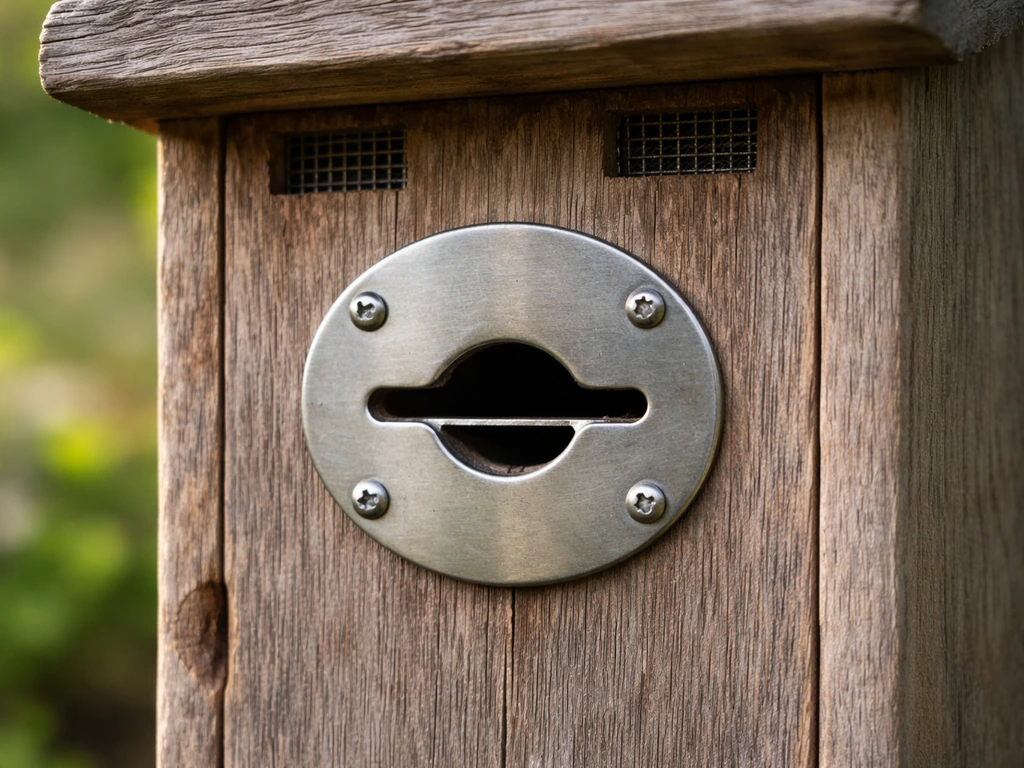
If you are wall-mounting, the wall itself provides a lot of protection because cats and squirrels cannot easily approach from behind or above. Add a metal entrance-hole plate (a 32 mm steel plate screwed over the entrance) to prevent squirrels and woodpeckers enlarging the hole. For freestanding post mounts, a smooth metal pole combined with a cone-shaped metal baffle positioned about 1. 5 meters up the pole is your best deterrent against climbing predators like cats, raccoons, and squirrels.
NestWatch specifically recommends this baffle-on-pole approach. A Noel guard (a short cylinder of hardware cloth attached to the entrance hole, projecting 3 to 4 inches outward) prevents cats and squirrels from reaching in and hooking chicks, and it is worth fitting on any box in a high-predator garden.
Competition from Starlings and aggressive House Sparrows
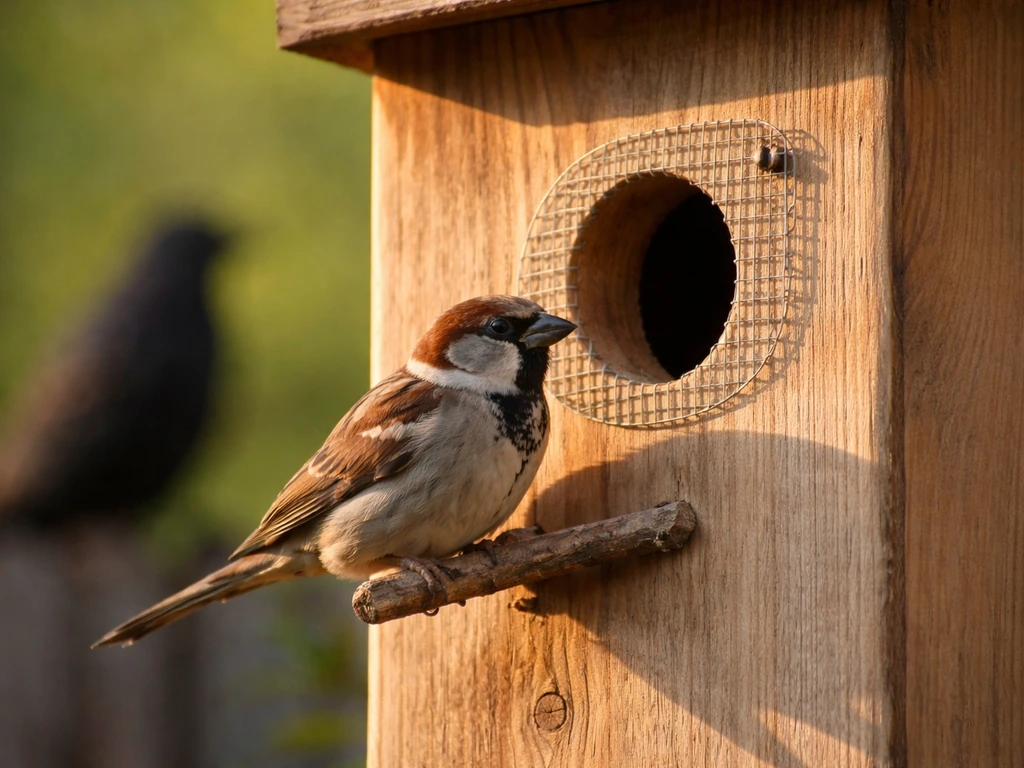
European Starlings are the main threat to sparrow boxes in North America. The strict 32 mm entrance hole is your first line of defense since Starlings cannot physically fit through it. If you are in the UK and trying to attract native sparrows, the irony is that House Sparrows themselves can become the competitor problem when you are trying to attract other small birds. Managing this comes down to selective monitoring: check the box weekly during breeding season, and if a species you did not intend to host has moved in, consult local wildlife regulations before taking any action, since rules on nest interference vary by location and species.
DIY vs ready-made: which one to choose today
Both work well if the specifications are right. The decision really comes down to your time, tools, and how much you want to customize. A DIY box costs roughly $5 to $15 in timber and hardware, takes about two to three hours, and lets you control every dimension precisely. The BTO provides a free downloadable House Sparrow nest box plan PDF (search 'BTO House Sparrow nest box plan') that gives you every cut and measurement you need with no guesswork. If you have a saw, a drill, and basic screws, building is genuinely the better option because you can add drainage, ventilation, a cleanout panel, and a metal hole plate from the start.
Ready-made boxes are fine if you pick carefully. Look for: 32 mm entrance hole (not 1. If you are specifically trying to attract finches, you may need different birdhouse details, including whether finches like bird houses in the first place 32 mm entrance hole (not 1. 5 in, which is for House Finches or other species).
5 in, which is for House Finches or other species), solid wood construction at least 15 mm thick, a hinged or removable panel for cleaning, drainage holes already drilled (or room to add them), and a clean unpainted interior. Avoid anything marketed as 'decorative' with a large open front, a perch below the hole (unnecessary and actually helps predators), or a sealed bottom with no drainage.
Adding a metal hole plate to any ready-made box is a 30-second upgrade that dramatically extends the life of the entrance hole.
| Factor | DIY Build | Ready-Made Box |
|---|---|---|
| Cost | $5–$15 in materials | $15–$40 typical |
| Time | 2–3 hours | Minutes to install |
| Spec control | Full control over all dimensions | Check carefully; many are wrong |
| Cleanout panel | Easy to add | Often included; verify before buying |
| Drainage holes | Add yourself: 3/8–1/2 in, x4 | Often missing; easy to drill in |
| Best for | Anyone with basic tools who wants it right | Beginners wanting quick setup |
Mounting, cleaning, and keeping the box working year to year
Mounting step by step
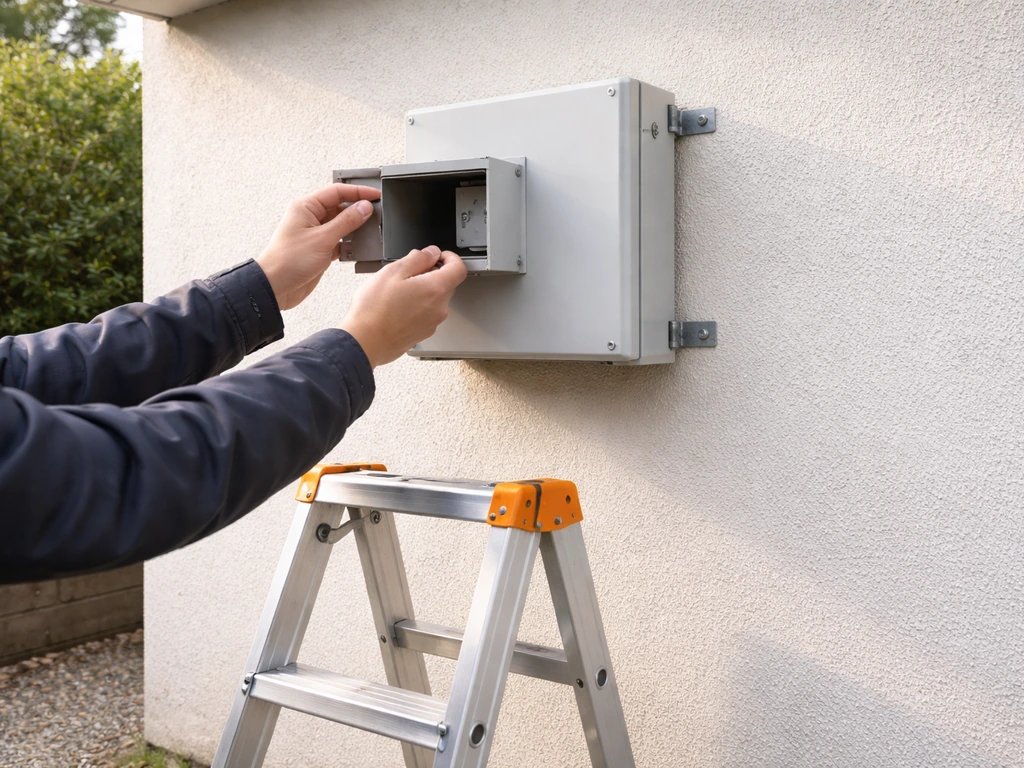
- Choose your mounting surface: a solid wall, fence post, or shed at 2 to 4 meters height is ideal.
- Check the facing direction with a compass: aim for north-east, or at minimum away from afternoon sun and prevailing rain.
- For wall or fence mounting, use two galvanized screws or a galvanized nail through the back panel into a wall plug. Make sure the box tilts very slightly forward (a degree or two) so any water that enters drains forward through the floor holes.
- For a freestanding post, use a smooth metal conduit pole at least 1.5 meters above a cone-shaped metal baffle. The baffle should be at least 60 cm (24 in) in diameter.
- Check that the box does not wobble. Any movement scares off birds during incubation.
- If fitting a Noel guard (hardware cloth tube), cut a 3–4 inch cylinder of 1/2 inch hardware cloth and staple it firmly around the entrance hole before mounting.
- Put the box up by early spring, ideally late February or March, so sparrows can investigate it before serious nest building begins in April.
Seasonal cleaning
Clean the box once a year after the breeding season has completely ended, which is typically September through October in the UK and much of the northern US, and no later than February before the next breeding season begins.
Open the cleanout panel, remove all old nesting material (wear gloves; old nests carry mites and blow fly pupae), and either scald the interior with boiling water or scrub it with a weak solution of hot water and unscented detergent, then rinse thoroughly and let it dry completely before closing it up. Do not use bleach or strong chemicals; residue harms the next occupants. Surrey Wildlife Trust recommends the boiling water method specifically because it kills parasites without chemical residue.
Never disturb an active nest with eggs or chicks; wait until fledglings have left and the adults have stopped returning before cleaning.
Check the box visually in mid-winter, even if you are not cleaning: look for splits in the wood, a loose roof, or any new gaps that could let in rain or give a predator a grip. A dab of outdoor wood glue on splits and a couple of extra screws in a loose roof takes five minutes and can save the next breeding season.
When things go wrong: troubleshooting common problems
No birds are using the box
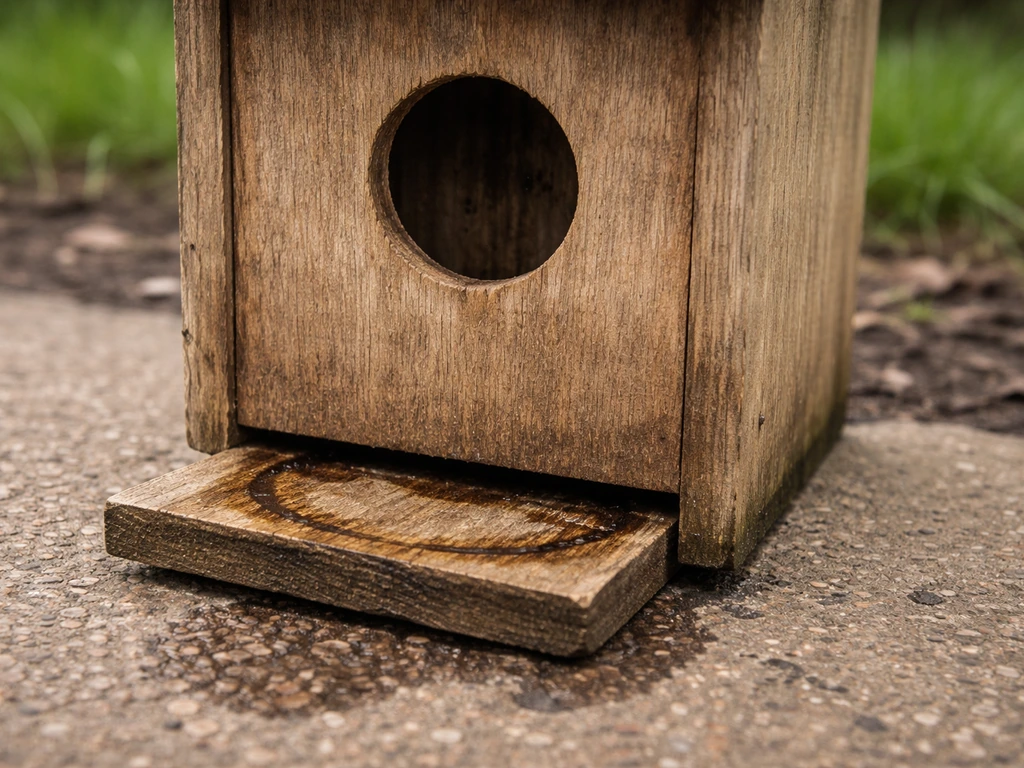
Give it at least one full breeding season before worrying. Sparrows are familiar with their territory and will often investigate a new box over winter before committing in spring. Check the basics: is the hole exactly 32 mm (an undersized or oversized hole is the most common manufacturing error in cheap ready-made boxes)?
Sparrows are far more likely to use a properly made, sheltered box than a random birdhouse shape, so it pays to get the entrance hole and placement right. Is the box facing north-east or away from weather? Is it close to a hedge or wall that sparrows already use? Is there heavy foot traffic or a cat regularly patrolling underneath?
Try adding a second or third box close to the first; House Sparrows' colonial preference means a cluster of boxes is far more attractive than a single isolated one.
Birds enter but do not nest
This usually means something feels wrong inside the box. Common causes: the interior is painted or varnished (the smell puts birds off), the floor has no drainage so it smells damp, the depth from hole to floor is too shallow (less than 5 in makes birds feel exposed), or old nesting material from a previous season was left in and has become a mite hotel. Clean the box, remove any interior finish, check drainage holes are clear, and wait. Sometimes it just takes time.
The wrong species moved in
In North America, House Sparrows taking over a box intended for bluebirds or other native species is a well-documented problem. The reverse applies here too: if you put up a sparrow box and a Blue Tit or Great Tit moves in instead (UK), that is actually a success worth keeping. If you are specifically trying to attract barn swallows, you will want a different setup than a sparrow box, including swallow-appropriate entrance and mounting considerations.
In the US, if a House Sparrow has taken a box intended for Tree Swallows or bluebirds, NestWatch suggests using a sparrow spooker (a length of monofilament with foil strips attached, placed near the box) as a humane deterrent. NestWatch also recommends using humane House Sparrow deterrents or excluders on the nest box when House Sparrows take over. Always check your local wildlife protection regulations before removing any active nest.
Aggression at the box
House Sparrows can be aggressive defenders of nest sites, especially males. If one bird is physically preventing others from accessing nearby boxes, add more boxes spread at least 2 meters apart. If the aggression is toward a completely different species at a different box type nearby, increase the distance between the two boxes to at least 10 meters. Switching to the correct entrance hole size (32 mm vs larger) can reduce the crossover of species and lower competition pressure overall.
Repeated nest failure or abandoned nests
If you find abandoned eggs or dead chicks repeatedly, first rule out predator access: look for scratch marks on the box or pole, feathers caught on the entrance, or a damaged entrance hole. Add a metal hole plate and a baffle if you have not already. If the box is on a sunny wall and failures happen in late June or July, overheating may be the problem. Relocate to a less exposed wall or add ventilation.
Parasites (blow fly larvae) are a silent cause of chick death; they are visible as small orange/red larvae in the nest material. If found, remove all nest material immediately after fledging, scald the box, and consider adding a loose layer of clean dry hay at the start of next season, which birds will build on top of and keeps them slightly away from the floor where larvae accumulate.
If you want to explore how sparrow preferences compare to those of finches, the setup considerations for finch birdhouses follow a similar logic but diverge significantly on entrance hole size and placement height, which is worth reading through separately if you have both species in your yard. If you want a quick visual guide, the finch birdhouse design typically has a smaller, finch-appropriate entrance and open front-style details depending on the species finch birdhouses. The core principle is the same across all small cavity nesters: get the hole size right, keep the box dry and cool, and make it easy to clean. Everything else is refinement.
FAQ
What should I do if my ready-made box has a 1.5 inch entrance hole, not 32 mm?
Do not assume it is “close enough.” A 1.5 inch opening (about 38 mm) can allow species you do not want, especially starlings and other larger birds. The fastest fix is adding a snug 32 mm metal entrance-hole plate, or return the box and choose a model explicitly built for a 32 mm circular hole.
Are sparrows okay with painted wood, or do I need an unpainted interior?
Unpainted hardwood inside is preferred because finishes can add odor and trap moisture. If your box is already painted inside, plan on removing paint or varnish from the interior surfaces (especially below the hole) and use only untreated wood or an approved, non-toxic finish that dries fully before occupancy.
How far should the sparrow box be from hedges or trees, and what if my yard is open?
Sparrows do better when there is low, dense cover nearby for fledglings to land in the first 24 to 48 hours. If your yard is open and you have no shrubs close by, place the box near the nearest hedge line, wall edge, or fence with vegetation within a short flight path, rather than in the middle of open lawn.
Do I need a perch under the entrance hole for sparrows?
No. A perch can increase predation because it makes it easier for predators to approach and for squirrels to manipulate the entry area. If a box includes a decorative perch, choose a design that either removes it or avoids it altogether.
How can I tell if the box depth or placement is wrong before eggs are laid?
If you see adults repeatedly inspecting but never committing, check for overheating (south or west facing exposure), lack of shelter (no roof overhang), or poor drainage that leaves damp smell. Also verify the entrance is at about two-thirds up (not centered) and that the center of the hole is roughly 125 mm or more above the floor.
Can I mount a sparrow box on a tree instead of a wall or fence?
It is usually better to mount on structures (house wall, fence, shed) because it is harder for predators to approach from behind or above. If you must use a post, add a smooth pole design plus a properly positioned baffle, and place the entrance so it is not directly exposed to prevailing rain.
How often should I clean the box, and what if fledglings leave later than expected?
Aim for once a year after nesting ends, typically after fledglings have fully left and adults stop returning (often September through October in the UK and parts of northern US). If nesting runs late, wait until the adults cease visitation, then clean. Do not clean with active birds present, and do not rush between broods.
Is boiling water inside the box safe, and can it warp the wood?
Boiling water is used to kill parasites without chemical residue, but it must be applied carefully and with the box dried thoroughly afterward. Focus on scalding/scrubbing old nesting material areas, avoid soaking the exterior, and let the box dry completely before re-closing so you do not trap moisture for the next occupants.
What if I see starlings trying to use the box but the entrance is 32 mm?
A correct 32 mm hole is the main barrier. If starlings are still attempting entry, inspect whether the hole has been enlarged (look for roughness, cracks, or a widened opening). Fit a 32 mm steel entrance plate, and check that the box is solidly constructed so it cannot be pecked or pried open.
My sparrow boxes are being ignored, even though I see sparrows nearby. What’s the most common fix?
Verify the two biggest “deal breakers” first: the entrance hole size and box cleanliness/drainage. Also consider colonial setup. If you currently have one isolated box, try adding two or three boxes close together on the same wall, separated by about 200 mm between entrances, and keep them in sheltered positions away from heavy feeder traffic.
What should I do if I find mites or blow fly larvae in the nesting material?
Remove all old nesting immediately after fledging, wear gloves, and scald or scrub the interior and rinse thoroughly. For next season, consider adding a thin layer of clean, dry hay on the floor so birds build slightly above it, which can reduce where larvae accumulate. Prevent repeat issues by ensuring drainage holes stay clear and the box dries well.
Next Articles
Do Finches Like Bird Houses? What Works and What Doesn’t
Yes, but most finches won’t nest in standard birdhouses. Learn what they prefer, species checks, and better shelter setu
Best Bird House for Finches: Specs, Placement, and Care
Choose the best finch nesting box with ideal dimensions, hole size, placement, predator-proofing, and easy care tips.
Blue Bird House Instructions: DIY Plans, Sizes & Mounting
DIY bluebird house: step-by-step build, exact cuts and hole sizes, mounting, predator guards, cleaning, and care.