The best bird house for finches has a floor of at least 5x5 inches (6x6 is even better), an interior depth of about 6 inches, a 1.5 to 2-inch entrance hole placed roughly 4.5 inches above the floor, four drainage holes in the bottom, and ventilation near the top. Build or buy it from untreated cedar or pine, mount it 8 to 12 feet high in a sheltered spot near shrubs or trees, and add a cone baffle below the box to stop climbing predators. That combination covers everything house finches and purple finches actually need to nest successfully in a backyard box.
Best Bird House for Finches: Specs, Placement, and Care
Maya Thompson
14 May 2026
Which finches actually use nest boxes?
This is worth clearing up first, because 'finches' covers a lot of ground. House finches are the species most likely to take up residence in a backyard nest box. They are already comfortable around homes, [love sunflower and nyjer feeders](https://en. wikipedia.
org/wiki/House_finch), and show up year-round in much of North America. Purple finches will also use a well-placed box, especially in wooded or edge-habitat yards. Their breeding season runs roughly April through August, with pairs on the Pacific Coast sometimes fitting in two broods. [American goldfinches, on the other hand, are late nesters: they rarely start building until late June or July and can have active nests into early September.
](https://www. nps. gov/miss/learn/nature/birdsgold. htm) Goldfinches almost always nest in open cups in shrubs rather than in enclosed boxes, so if goldfinches are your target, a box is not the right tool.
Focus your nest box efforts on house finches and purple finches, and you will have far more success. This also applies if your goal is the best bird house for barn swallow, since swallow nest-box placement and housing requirements differ from finches.
House finches are secondary cavity nesters, meaning they will accept a pre-made box rather than excavating their own hole. They are not as picky as bluebirds about dimensions, but they do have preferences, and getting the specs right makes the difference between a box that stays empty and one that gets claimed within a season.
The right dimensions and entrance hole size
For house finches, a floor of 5x5 inches is the minimum; 6x6 inches gives a nesting pair a little more room and is the measurement I prefer. The interior depth should be around 6 inches. The entrance hole should sit about 4.5 inches above the floor, which leaves enough space below it for a nest while keeping the opening high enough to discourage some predators from reaching in. Entrance hole diameter is one of the most important specs: 1.5 to 2 inches is the accepted range, with 2 inches being the most commonly cited target for house finches. Going larger than 2 inches invites starlings and larger sparrows to compete for or take over the box.
| Dimension | Minimum | Recommended |
|---|---|---|
| Floor size | 5" x 5" | 6" x 6" |
| Interior depth | 6" | 6" |
| Entrance hole diameter | 1.5" | 2" |
| Entrance hole height above floor | 4" | 4.5" |
| Mounting height | 8 ft | 8–12 ft |
| Roof overhang | 1" | 2" |
Do not add a perch below the entrance hole. Perches look friendly, but they give predators and nest competitors a foothold. House finches do not need them and will use the entrance hole just fine without one.
Ventilation and drainage: non-negotiable details
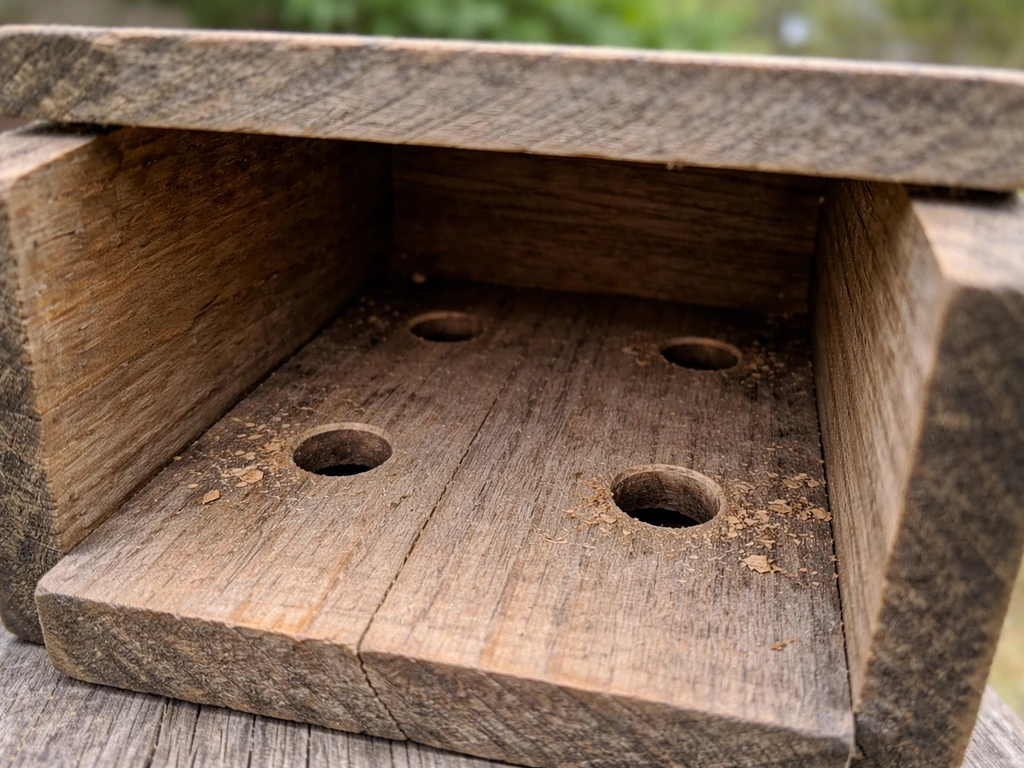
Drill at least four drainage holes in the floor, each 3/8 to 1/2 inch in diameter. Stagnant water in the bottom of a box kills nestlings fast. Near the top of each side wall, drill two or three small ventilation holes (about 1/4 inch) to allow heat to escape during summer. A well-overhanging roof (at least 2 inches past the front wall) keeps rain from driving into the entrance hole and soaking the nest. Without these three features, drainage holes, vent holes, and a roof overhang, even a perfectly dimensioned box becomes a trap.
Materials and build quality
Cedar is the gold standard for nest box lumber. It is naturally rot-resistant, holds up through multiple seasons without treatment, and stays cooler in summer than many alternatives. White pine and yellow pine work well too, especially if you are building your own. The key rule is to use untreated, unpainted wood on the interior surfaces.
There is no conclusive evidence that exterior paint or pressure-treatment residue harms birds, but the safe and well-supported practice is to leave all interior surfaces bare. If you want to paint the outside to extend the life of the wood, use a water-based exterior paint in a muted, natural tone (tan, gray, or bark-brown) and let it cure completely before mounting the box. Never paint the interior walls, floor, or the area immediately around the entrance hole.
Avoid boxes made from PVC, thin plywood, or lightweight synthetic materials. They warp, overheat, or crack within a season or two. A good nest box should feel solid: walls at least 3/4 inch thick, a secure roof that will not warp and gap, and hardware (screws or galvanized nails) that will not rust through. If you are buying rather than building, lift the box: if it feels light and flimsy, it probably is.
One practical feature to prioritize: a hinged or removable side or front panel. You will need to clean the box between broods, and a box you cannot open easily is a box that will not get maintained properly.
Where and how to mount the box
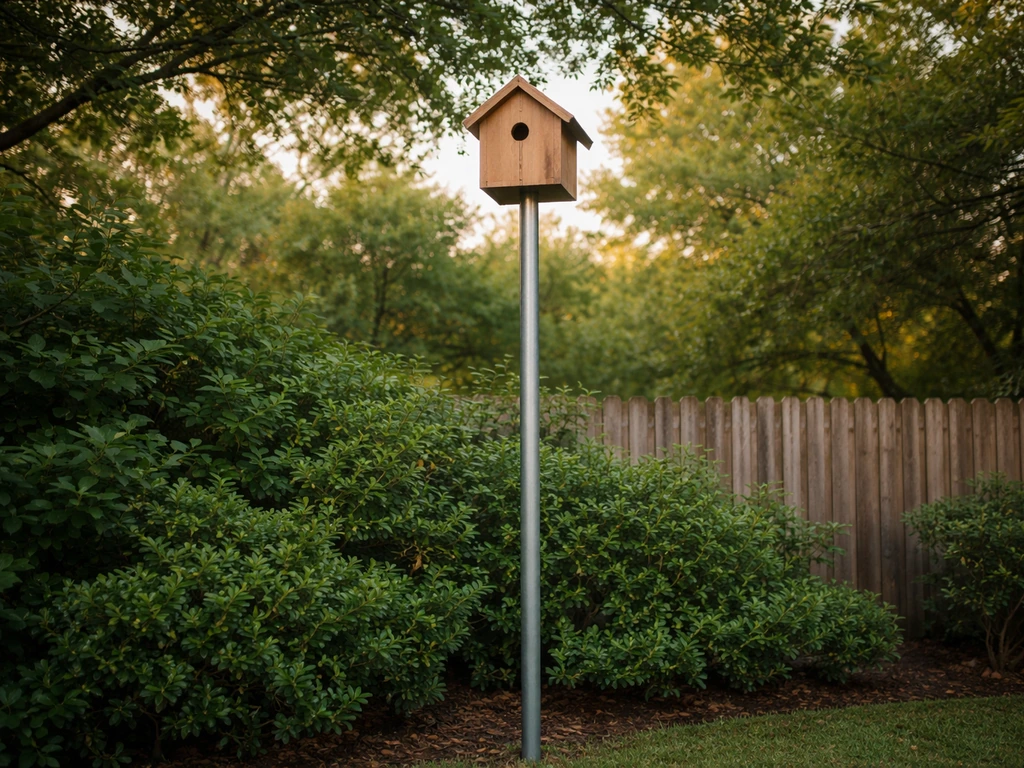
House finches are comfortable nesting close to human activity, which is part of what makes them such good backyard birds. Mount the box 8 to 12 feet high on a smooth metal pole or a wooden post. A smooth metal pole is better than a wooden post for predator-proofing reasons (more on that below). Face the entrance hole somewhere between east and southeast if possible. This catches the morning sun to warm the nest early in the day and avoids the harsh afternoon heat and prevailing winds that come from the west in most of North America.
Place the box near shrubs, a fence line, or the edge of a tree canopy, but not directly under a branch that gives squirrels a launch point. Finches like to have some cover nearby, and they will feel more secure if there is vegetation within 10 to 20 feet where they can perch and observe before entering. Avoid placing the box directly against a wall or tree trunk; a pole-mounted box in a semi-open spot is safer and easier to monitor.
Timing matters too. Put the box up by late February or early March if you are in a temperate region, well before house finches start scouting nest sites in spring. Purple finches begin their season from April onward, so early spring setup covers both species. If you miss the window, go ahead and install it anyway: birds will sometimes claim a box mid-season, and it will definitely be ready for the following year.
Habitat-specific tips
- Suburban yards: Mount on a freestanding pole in a semi-open area, 10 feet from the nearest fence or shrub. House finches thrive here.
- Edge habitat with mixed shrubs and trees: Purple finches prefer this setting. Mount the box slightly lower (8 feet) and closer to woody cover, but still on a smooth pole with a baffle.
- Open garden areas: Fine for house finches, but add shade from a nearby structure or plant if the box will face west, since summer heat is a real risk without natural cooling from canopy.
- Urban balconies or porches: House finches will nest in surprisingly tight spots. A wall-mounted box at 8 to 10 feet can work, but make sure there is no easy ledge above that cats or raccoons can use to reach the box.
Predator-proofing your finch box
A nest box without a predator guard is an invitation to disaster. Raccoons, cats, and squirrels are the main threats to nest boxes mounted on poles or posts. The most effective solution is a cone-shaped metal baffle mounted on the pole below the box, at least 4 feet off the ground and no more than 5 feet below the box itself. The cone should be at least 18 inches in diameter so a climbing animal cannot grip the edges and pull itself over. Smooth metal (not plastic, which can be chewed) is the right material. If you are mounting on a wooden post, wrap a section with smooth sheet metal below the baffle for extra protection.
Aerial predators like hawks and crows are harder to exclude entirely, but a deep enough box interior (the 6-inch depth in the specs above) makes it much harder for a bird predator to reach eggs or nestlings through the entrance hole. A roof overhang of 2 inches also reduces the angle at which a perched predator can look or reach into the entrance.
House sparrows are a serious nest competitor and pest for finch boxes. If you notice sparrows claiming the box, remove their nesting material promptly and repeatedly. Do sparrows like bird houses? If they keep trying to nest, remove their nesting material promptly and make the box less attractive with the correct entrance size. Sparrows are persistent, but consistent discouragement often works. Do not leave old sparrow nests in the box; they will return to them. Note that wrens and chickadees may also scout the box, but they typically use smaller entrance holes, so a properly sized 2-inch hole is less attractive to them than to the target finch species.
Quick predator-proofing checklist
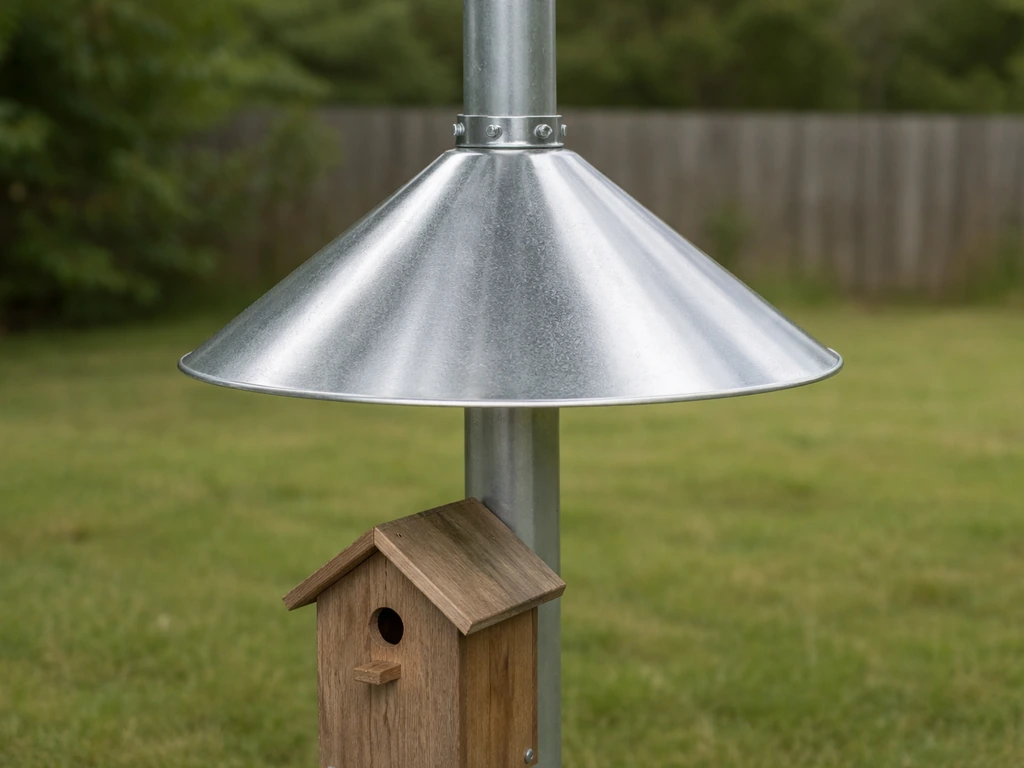
- Mount the box on a smooth metal pole, not a wooden post or tree.
- Install a metal cone baffle at least 4 feet above the ground on the pole.
- Keep branches, fences, and structures at least 10 feet away from the box so nothing can be used as a jumping-off point.
- Remove the perch peg if the box came with one.
- Check the box weekly during nesting season and remove any house sparrow nesting material immediately.
- If mounting on a wall or building (as finches sometimes prefer), attach a baffle or smooth metal guard directly below the box.
Cleaning and maintaining the box between broods
After each brood fledges, the old nest needs to come out. Finches will occasionally build a new nest on top of an old one, but a clean box reduces parasite load and gives the next brood a healthier start. Wait until you are sure all the young have left and the adults have stopped returning to the box (usually 2 to 3 days after the last fledgling departs). Then open the box, remove all old nesting material wearing gloves, and dispose of it away from the garden.
Once the material is out, scald the interior with boiling water to kill mites, lice, and blowfly larvae that live in old nests. Let the box dry completely in the sun before closing it up. If you want to use a disinfectant, a dilute bleach solution works, but rinse it thoroughly and air out the box for at least 24 hours before it is re-occupied. Never use any scented cleaning products, pine oil, or ammonia-based cleaners near the box.
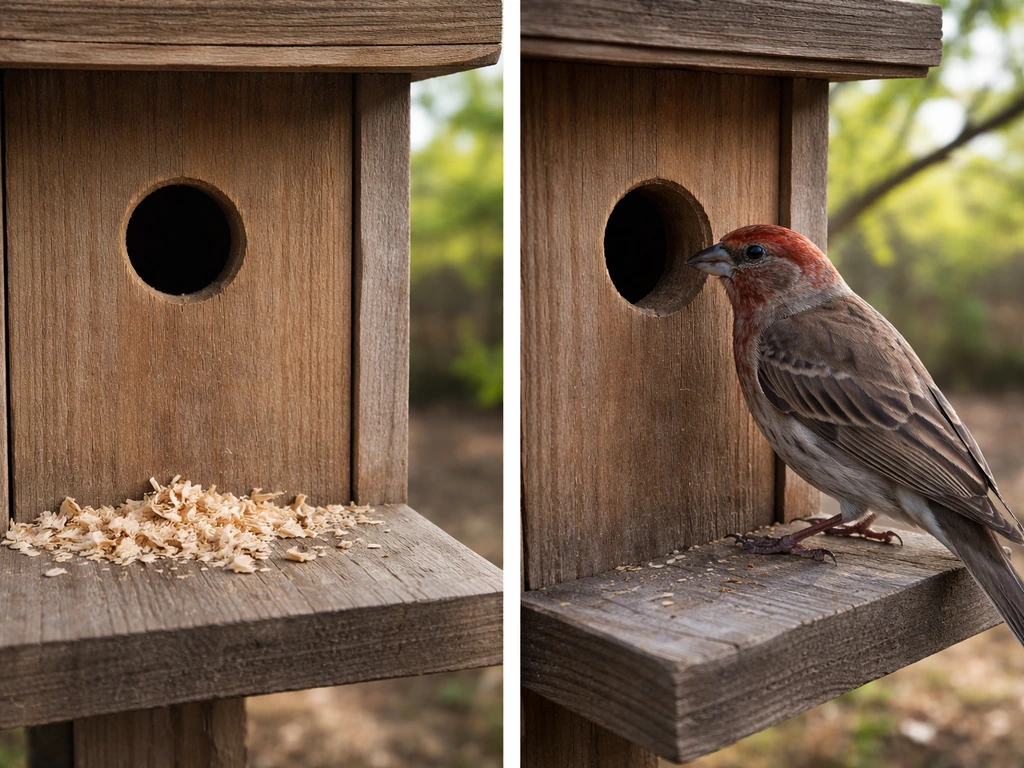
At the end of the nesting season (October or November in most of North America), do a full-season clean: remove old material, check for rot or damage to the wood, retighten any loose screws, and inspect the entrance hole to make sure it has not been enlarged by woodpeckers or weathering. A small amount of wood shavings (not sawdust, which can cause respiratory problems) can be added to a cleaned, dry box to give it a bit of insulation if you want to encourage winter roosting, which some finches will do in mild climates.
One thing to be very clear about: never clean or disturb an active nest. It is illegal under the Migratory Bird Treaty Act to disturb an active nest with eggs or young, and it is also just unnecessary stress on the birds. If you are not sure whether a brood has finished, wait a few more days and check again before opening the box.
What to buy vs. what to build
If you are buying a box, run it through this checklist before purchasing: floor at least 5x5 inches, 2-inch entrance hole, no perch peg, drainage holes in the bottom, ventilation near the top, untreated or lightly painted (exterior only) cedar or pine, and a side or front panel that opens for cleaning. Boxes that have a plastic construction, an entrance hole under 1.5 inches, or a flimsy roof are not worth the money regardless of how they are marketed.
Building your own box from 3/4-inch cedar is genuinely not difficult and takes about an afternoon with basic tools. You get full control over every dimension, you can use exactly the right wood, and a DIY box will typically outlast a cheap store-bought one by years. The specs in this guide give you everything you need to cut the pieces and assemble them correctly.
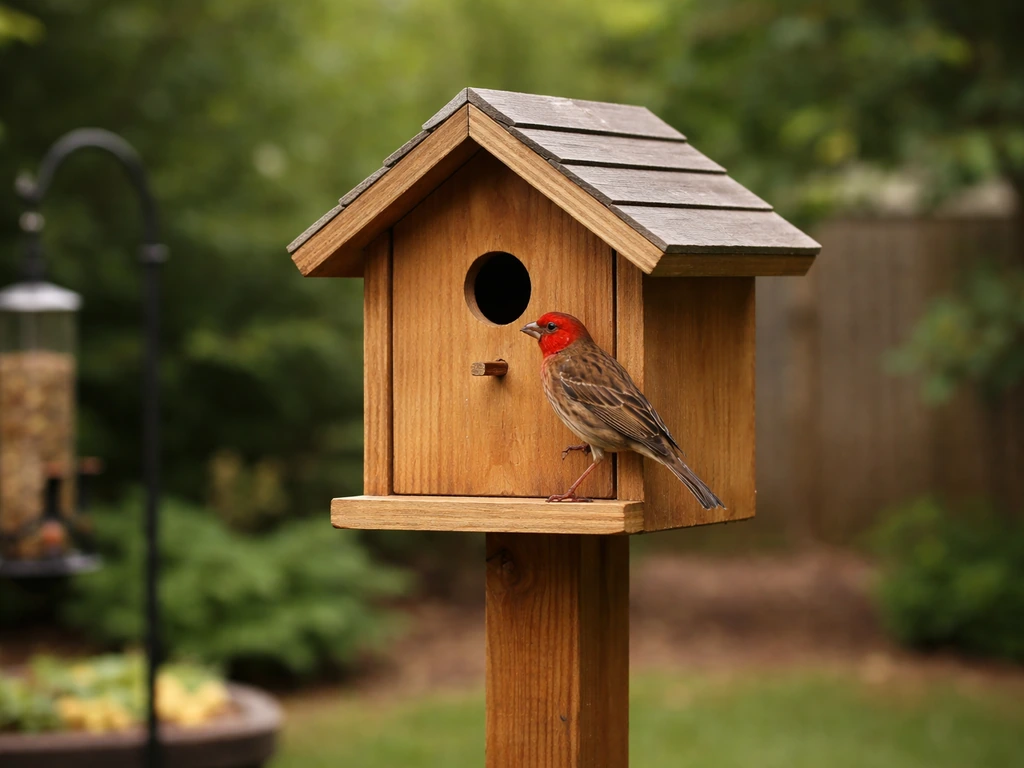
If you are curious about what these boxes actually look like finished and installed, the dimensions here align closely with standard house finch nest box plans used by Audubon chapters and extension programs across North America. If you are wondering what a finch bird house looks like when it is finished and installed, the examples in this guide should help you visualize it what does a finch bird house look like.
Whether you build or buy, the underlying logic is the same: match the dimensions to the bird, use safe materials, mount it correctly with a predator guard, and commit to cleaning it between broods. Do those four things and you have a genuinely good finch house, not just a decoration. A finch house can also be a great way to attract the finches you see at feeders, especially house finches and purple finches.
FAQ
How can I tell if the box is being used by house finches versus purple finches?
Look for timing and location preferences. House finches often show up sooner in spring and commonly nest closer to human activity, while purple finches are more frequent in wooded or edge habitat and may start a bit later. Both will use similar entrance holes, so the box specs alone cannot confirm species.
My box has a 2-inch hole, but I keep getting starlings or sparrows. What should I check first?
Re-check the exact entrance diameter and whether the hole has been enlarged by woodpeckers or weathering. Also confirm you have no nearby easy access routes like a perch, loose fencing, or a slanted surface under the entrance that predators and competitors can use to reach the opening.
Do finches need a perch or landing platform to enter easily?
No. Avoid adding a perch below the entrance, and instead rely on nearby natural cover (shrubs or a fence line 10 to 20 feet away) for safe observation. If birds are not entering, the issue is usually placement or predator access, not the lack of an artificial perch.
What’s the safest way to mount the box if I have squirrels or climbing cats?
Use a smooth metal pole if possible, and install the cone baffle correctly on the pole. Make sure the cone is at least 4 feet off the ground and positioned so it is no more than about 5 feet below the box, with enough diameter (at least 18 inches) to prevent a climber from gripping the edge.
Can I place the finch box directly against a tree trunk or wall to make it easier to monitor?
Generally no. Directly mounting to a wall or trunk creates a climbing route for predators and reduces the semi-open, pole-mounted safety finches prefer. A pole-mounted, semi-open position that avoids launch points under branches is usually more effective.
How long should I wait after the last fledglings leave before cleaning?
Wait until you see that adults have stopped returning and you are sure the brood is finished, typically 2 to 3 days after the last fledgling departs. If you open too early, you risk disturbing active nesting birds and you also lose the chance to manage parasites effectively.
Is scalding with boiling water always enough, or should I use bleach disinfectant?
Boiling water can reduce mites and larvae from old nests, and it is often sufficient if you clean between broods and let the box fully dry. If you use bleach, rinse thoroughly and air out for at least 24 hours before birds re-occupy, because lingering chemical odors can deter nesting.
Should I clean the box during nesting if I see droppings or debris?
No. Never disturb an active nest. If cleaning is needed for health reasons, do it only after the brood is finished, and do not open the box while eggs or nestlings are present.
Can I add insulation or bedding to help finches in winter?
Some finches roost in empty boxes, but do not add bedding before nesting starts. If you want to encourage roosting, add only a small amount of dry wood shavings to a cleaned, dry box after the nesting season, and avoid sawdust because it can irritate respiratory systems.
What if the entrance hole gets larger over time, should I repair it?
Yes, inspect it at the end of the season. If woodpeckers or weather enlarge the opening, the box becomes more attractive to competitors. Repair or replace the affected area so the entrance returns to the target size rather than leaving it oversized.
How do I handle a box that’s too hot in summer?
Choose rot-resistant, cooler materials like untreated cedar, and ensure there is good ventilation near the top plus a roof overhang of at least 2 inches past the front wall. Also consider orienting the entrance between east and southeast to favor morning sun and reduce afternoon heating.
Next Articles
Blue Bird House Instructions: DIY Plans, Sizes & Mounting
DIY bluebird house: step-by-step build, exact cuts and hole sizes, mounting, predator guards, cleaning, and care.
Wine Cork Bird House Instructions: DIY Steps and Bird-Safe Specs
Step-by-step wine cork mini birdhouse build with bird-safe dimensions, safe materials, mounting, cleaning, and weatherpr
Best Bluebird House Guide: Choose, Build, Install
Pick and install the best bluebird house with species-specific hole size, mounting, predator guards, and safe seasonal c