Yes, sparrows absolutely use bird houses, and house sparrows in particular are remarkably good at finding and taking over nest boxes fast. They are cavity nesters by nature, so an open birdhouse in a suburban yard looks like exactly the kind of spot they evolved to exploit. If you put up a box and walk away, there is a real chance house sparrows move in before the bird you actually wanted even notices the box exists. The good news is that a few targeted decisions about hole size, box dimensions, placement, and regular maintenance will dramatically shift the odds in favor of native cavity nesters like bluebirds, wrens, and tree swallows.
Do Sparrows Like Bird Houses? How to Encourage or Deter Them
Maya Thompson
6 Jul 2026
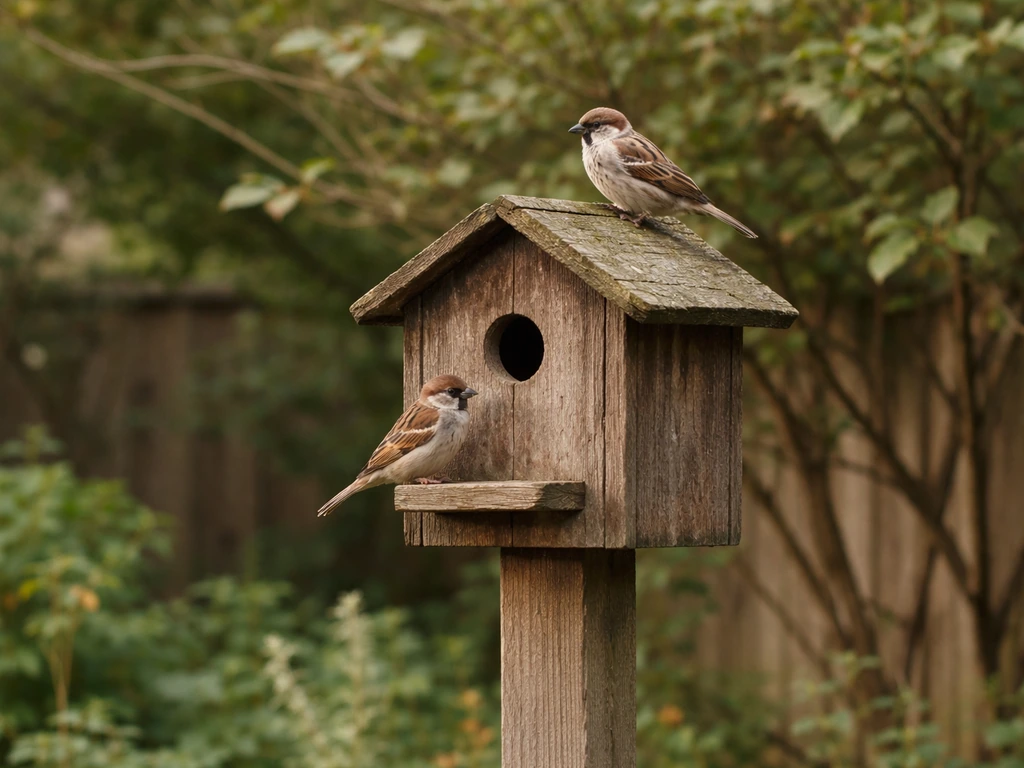
Do sparrows actually use bird houses?
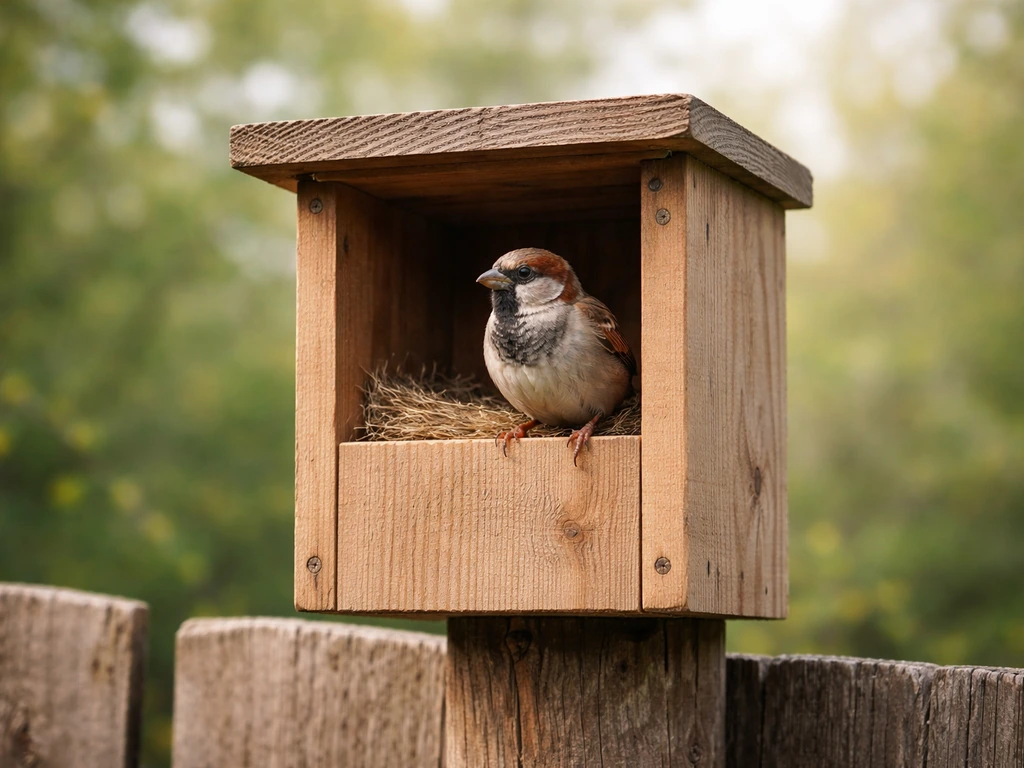
House sparrows are not picky. In the wild they squeeze into gaps in building eaves, cracks in masonry, and natural tree cavities. Artificial nest boxes are just a more convenient version of that. Cornell Lab of Ornithology describes them as strong competitors for nest boxes, and that reputation is well earned. Once a house sparrow scouts a box and decides it likes the location, it will carry nesting material in quickly, sometimes within days of the box going up. They also do not back down when native species try to claim the same site. House sparrows will evict eggs, destroy nests, and in some documented cases even kill adult birds inside a box. So yes, they like bird houses very much, and that is precisely why managing for them matters.
That said, not every sparrow you see near a nest box is a problem. Whether the bird you are dealing with is a house sparrow or a native sparrow species changes your entire approach, so it is worth getting that identification right before you do anything.
House sparrow vs. native sparrows: which one are we actually talking about?
The house sparrow (Passer domesticus) is an introduced species from Europe and Asia, brought to North America in the 1850s. It is not protected under the Migratory Bird Treaty Act, which matters when you get to the deterrence section. When most backyard birders search 'do sparrows like bird houses,' they are almost always worried about the house sparrow, and for good reason.
Native sparrows are a different story. Species like song sparrows, chipping sparrows, white-throated sparrows, and fox sparrows are ground and shrub nesters by preference. They do not typically seek out nest boxes the way house sparrows do, so if your box is sitting unused and a small brown bird is poking around nearby, it is far more likely to be a house sparrow than a native one. A quick ID check matters: male house sparrows have a gray crown, chestnut back, and a distinct black bib on the throat. Females are plain brown with a buffy eye stripe. Native sparrows tend to have more varied, streaked patterns and behave quite differently around boxes.
Signs that sparrows are nesting in your box
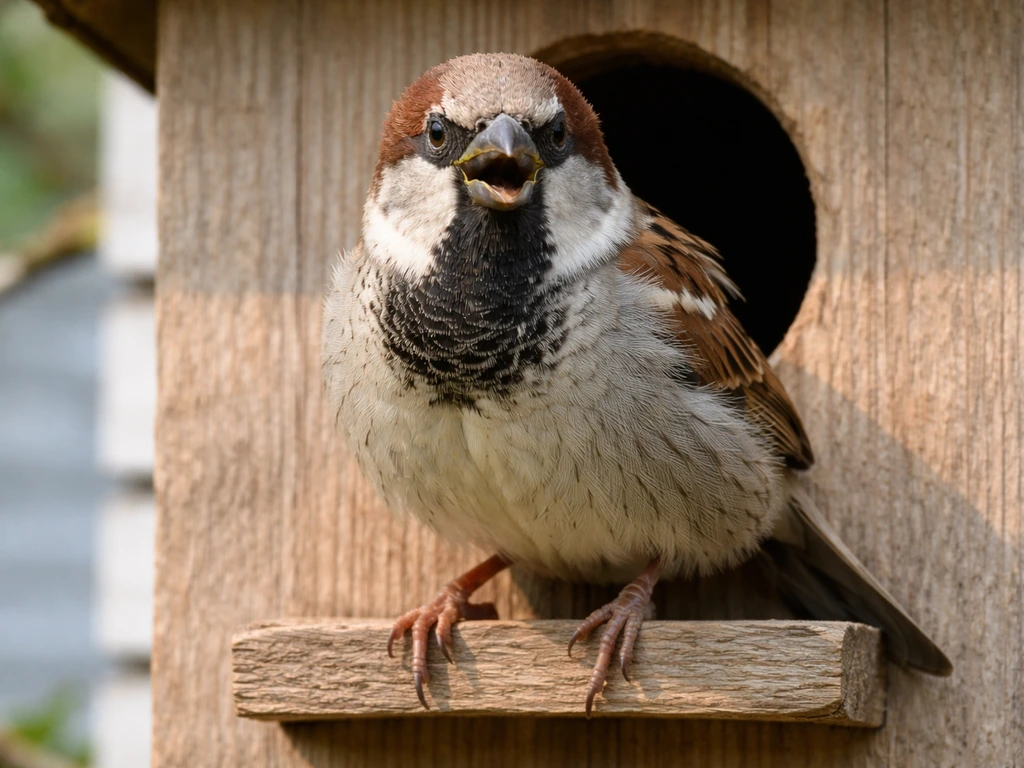
House sparrows give themselves away pretty quickly. The earliest sign is a male perching on or near the box repeatedly, chirping loudly. This is mate attraction behavior, and it often precedes nest building by only a day or two. Once nesting starts, the nest itself is distinctive: house sparrows pack cavities tightly with coarse grass, weeds, feathers, string, paper scraps, and whatever else is on hand. The nest is messy and fills more of the box interior than you would expect. Native species like bluebirds build neater, shallower cup nests of fine grass and pine needles.
- A male house sparrow perching on the roof or entrance hole repeatedly while chirping
- Loose grass and debris hanging out of the entrance hole
- A bulky, loosely packed nest filling much of the box interior, often including feathers, paper, and string
- Aggression toward other birds approaching the box
- Multiple visits to the box per hour during early morning hours in late winter through summer
One thing that trips up beginners: house sparrows start scouting boxes early, sometimes in February or March, well before most native cavity nesters are looking. If you see a bird at the box during a late-winter warm spell, it is almost certainly a house sparrow.
How birdhouse design affects who moves in
Entrance hole diameter is the single most powerful design variable you can control. House sparrows can enter a hole as small as 1 1/4 inches in diameter, so any box with an entrance of 1 1/2 inches or larger is essentially an open invitation. Sizing the hole down to match your target species is the most effective structural deterrent available.
| Target Species | Recommended Hole Diameter | House Sparrow Access Risk |
|---|---|---|
| Eastern Bluebird | 1 1/2 inches | Moderate (sparrow can enter; monitor closely) |
| Tree Swallow | 1 1/2 inches | Moderate (same caution applies) |
| Carolina / House Wren | 1 1/8 inches | Low (too small for house sparrow) |
| Chickadee (most species) | 1 1/8 to 1 1/4 inches | Low to moderate |
| Prothonotary Warbler | 1 1/8 inches | Low |
| House Sparrow (if attracting intentionally) | 1 1/2 inches or larger | High |
For bluebird boxes, the standard 1 1/2 inch entrance hole is the accepted size recommended by groups like the North American Bluebird Society, the Michigan Bluebird Society, the Texas Bluebird Society, and Purdue Extension. That size is species-appropriate for bluebirds and tree swallows, but it is large enough for a house sparrow to squeeze through. This is why placement, monitoring, and deterrents matter in addition to hole size.
Interior box dimensions matter too. House sparrows prefer a roomy cavity. A shallow box with a floor footprint of about 4 x 4 inches is appropriate for chickadees and wrens, and the tighter interior is less attractive to house sparrows than a larger cavity would be. Floor-to-ceiling interior height of around 8 inches is appropriate for bluebird boxes. Going significantly larger invites trouble. Proper ventilation slots near the top and drainage holes in the floor corners are important for all species but do not affect sparrow access.
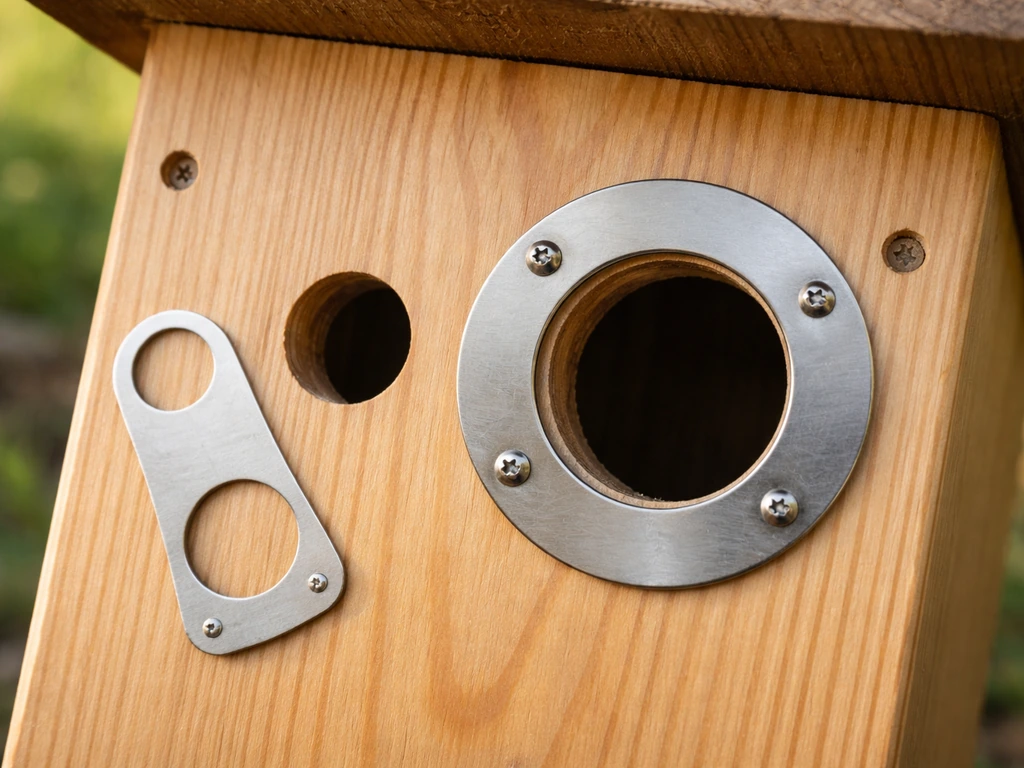
Hole reducers are worth knowing about. If you already have a box with a larger entrance, you can retrofit a wooden or metal hole reducer insert that brings the diameter down. For a wren or chickadee box, dropping the hole to 1 1/8 inches will exclude house sparrows entirely. For a bluebird box, an oval slot entrance (approximately 1 3/8 x 2 1/4 inches) is another option some bluebird enthusiasts prefer since it is technically more restrictive for sparrows while still admitting bluebirds.
Where and how to mount your box to reduce sparrow occupancy
Location is your second major lever. House sparrows are urban and suburban birds. They thrive around buildings, feeders, and human activity. If you mount a box on or near a building wall, a fence post next to a busy feeder, or in a weedy urban lot, you are putting it in prime house sparrow territory.
- Mount in open areas away from buildings: Bluebird and tree swallow boxes do best in open fields, meadows, or large lawns at least 50 to 100 feet from structures. This type of open habitat is less favorable to house sparrows, which prefer areas close to human buildings.
- Use a smooth metal pole, not a wooden post: Mount the box on a smooth-surfaced metal conduit or galvanized pipe. This also helps with predator deterrence. Connecticut DEEP and most bluebird organizations recommend a height of about 5 feet above the ground for bluebird boxes.
- Add a baffle below the box: A cone-shaped or stovepipe-style baffle on the pole makes it harder for predators like raccoons and cats to reach the box, and it also prevents house sparrows from nesting on the pole hardware itself.
- Space multiple boxes correctly: If you put up several boxes, space bluebird or swallow boxes at least 100 yards apart from each other, but only about 15 to 25 feet apart if pairing them for competing swallow pairs. Do not cluster boxes, as clustering increases competition and sparrow pressure.
- Avoid placing boxes near feeders with mixed seed: House sparrow populations explode around feeders that offer millet and cracked corn. Moving your nest box away from your main feeding station reduces sparrow scouting traffic at the box.
Humane deterrence and prevention: maintenance, cleaning, and timing
Because house sparrows are not protected by the Migratory Bird Treaty Act, you have more flexibility managing them than you would with a native species. That said, a practical, humane approach focuses on making the box less attractive and monitoring frequently, rather than anything that could harm birds. Here is what actually works.
Monitor at least once a week during nesting season
Weekly monitoring from February through August is the most important habit you can build. Open the box, check what is inside, and note what you find. A house sparrow nest that gets removed before eggs are laid is simply a setback for the sparrow with no harm done. Once you let it progress to eggs or chicks, the situation becomes more complicated emotionally and practically.
Remove and discard house sparrow nest material early
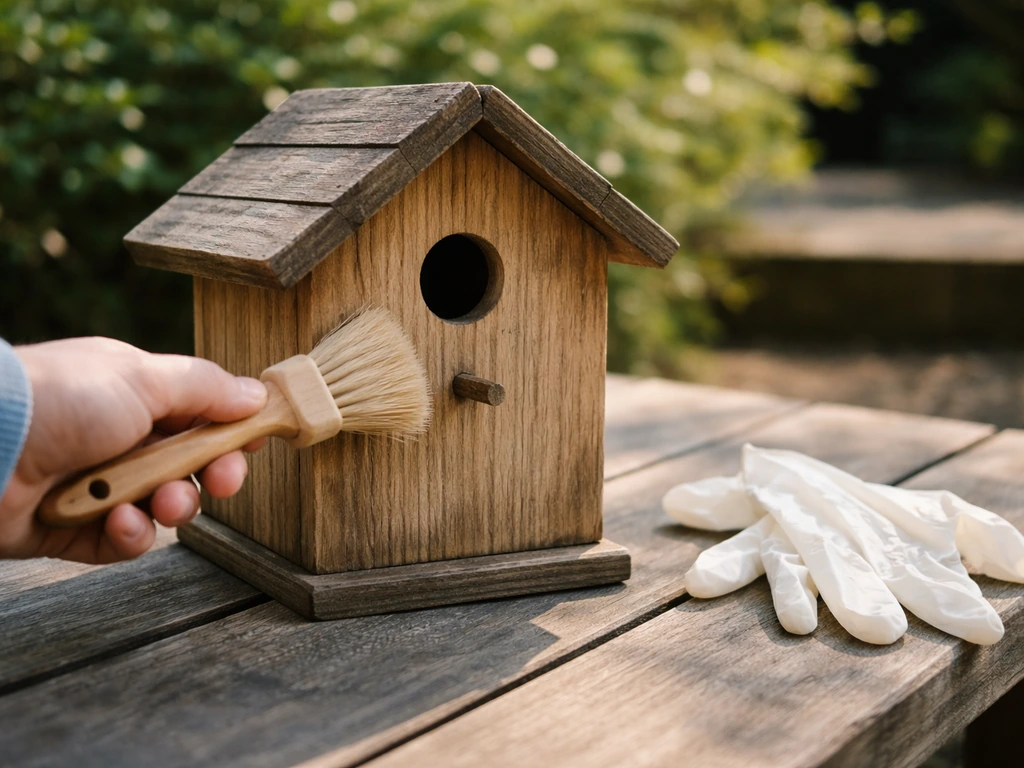
If you find a house sparrow nest with no eggs, remove it completely. House sparrows are persistent and will rebuild quickly, but repeated removal without eggs present is entirely humane and legal in the United States and Canada. Wear gloves, remove all nesting material, and dispose of it. Then clean the interior with a stiff brush. Some people find that removing the nest several times in a row eventually discourages a pair from a particular box, though determined house sparrows may just wait you out.
Clean out boxes between nesting attempts
After any completed nesting cycle (whether the resident was a sparrow, a bluebird, or any other species), clean the box out fully before the next brood begins. Scrape out all old nesting material, check for mites or parasites, and let the interior dry completely before closing it back up. This prevents house sparrows from reusing a pre-built nest, which they will happily do if you leave old material in the box. For boxes that had mice or rodents at any point, wear a mask and gloves as a basic precaution.
Use a sparrow spooker once a native pair is established
A sparrow spooker is a simple DIY device: a short vertical rod mounted above the entrance hole with reflective Mylar strips or streamers hanging from it. House sparrows are more skittish about these moving, reflective elements than bluebirds or tree swallows tend to be. The key is to install the spooker only after your target native species has laid its first egg, so the resident pair is already committed to the box. Installing it too early can deter the native birds you are trying to help.
Time your box placement strategically
In regions where house sparrows are dense, putting boxes up in late winter gives them time to claim a site before native cavity nesters arrive in spring. One counter-strategy is to keep boxes closed or store them until native migrants are already present in your area, then open or mount them when bluebirds or swallows are actively looking. This narrows the window house sparrows have to establish a claim.
Adjust your feeder offerings
House sparrow numbers in your yard are partly a function of what you are feeding. Millet, milo, and cracked corn in platform or hopper feeders are favorites. Switching to nyjer (thistle) seed or safflower in tube feeders does not attract house sparrows nearly as much, while still attracting finches, chickadees, and other native species. If you are wondering what a finch bird house looks like, start by checking the entrance size and interior design that suit finches rather than sparrows. Fewer sparrows at the feeder means fewer sparrows scouting nearby boxes.
What to do if sparrows are already in your box
The right action depends on how far along the nest is. Here is a practical breakdown by stage.
| Nest Stage | Legal Status (US/Canada) | Recommended Action |
|---|---|---|
| Nesting material only, no eggs | House sparrow: not protected; can remove | Remove all material, clean the box, monitor daily |
| Eggs present | House sparrow: not protected; can remove eggs legally | Remove eggs and nest material, clean box, consider closing temporarily |
| Active chicks (nestlings) | Humane concern applies even without legal protection | Allow chicks to fledge if possible, then clean out immediately; consider closing the box for the rest of the season |
| Native species nest (any stage) | Protected under MBTA; do not disturb | Leave completely alone; monitor from a distance only |
If you are genuinely uncertain whether the nest belongs to a house sparrow or a native species, do not touch it. Watch the adults coming and going for a few minutes to get a clear ID before taking any action.
One common beginner worry is 'will sparrows take over all my boxes?' The honest answer is: if you monitor frequently and act early, no. The challenge grows if you let things go unchecked for several weeks. A pair that successfully raises one brood in a box will return to the same box the next season, so ending the cycle sooner rather than later is the right move.
Building a box that works for native birds, not house sparrows
If your goal is to attract native cavity nesters, the design decisions all work together. Use a 1 1/8 inch entrance hole for wrens and chickadees, a 1 1/2 inch hole with an added sparrow spooker for bluebird and tree swallow boxes. Keep interior dimensions species-appropriate. Mount on a smooth metal pole at blank" rel="noopener noreferrer">about 5 feet height with a baffle, in an open area away from buildings and feeders. Connecticut DEEP recommends mounting bluebird nest boxes blank" rel="noopener noreferrer">about 5 feet above ground level (for example, on galvanized pipe or higher stakes). Monitor weekly. Clean out after every nesting cycle. Those steps, taken together, do more than any single product or trick. A good next step is choosing the best bird house for barn swallow so the right birds can nest comfortably.
For finches, the dynamic is a bit different since most finch species do not use enclosed nest boxes the same way cavity nesters do. If your interest is in attracting finches specifically, that is a separate topic worth exploring. The best bird house for finches depends on offering the right kind of access and materials for the specific finch species you have nearby attracting finches specifically. Similarly, if you have found a design you like and want to see how it compares to sparrow-specific or bluebird-specific box options, looking into species-appropriate dimensions in more detail will help you fine-tune your setup.
House sparrows are adaptable, persistent, and genuinely successful birds. Respecting that while still protecting native cavity nesters is the right balance. With the right box design, placement, and a weekly monitoring habit, you can absolutely have active native birds using your boxes every season.
FAQ
If I see sparrows near my nest box, does that automatically mean they will nest in it?
It depends on the species. House sparrows are cavity nesters that readily enter boxes, so an occupied sparrow box often means you are dealing with a house sparrow pair. If a box is being ignored and you only see sparrows on the fence or ground, the birds near it are likely not using the box.
Can house sparrows still get into a properly sized entrance hole?
Yes, a determined house sparrow can sometimes succeed even with a correctly sized hole if the box is weathered or has gaps. Check the entrance edges for splintering and any looseness around the hole reducer, and make sure the reducer insert fits snugly with no side gaps.
What should I do if I already have a nesting attempt happening in my box?
Rarely, but it can happen. Before you change anything, confirm the nest stage. If eggs or chicks are already present, focus on monitoring and cleaning after the cycle ends, because repeated disruption later in the season often leads to complicated outcomes and stronger persistence.
What is the fastest way to prevent house sparrows from claiming a box this season?
You can reduce the odds quickly by starting with structure and timing. Use the smaller entrance (1 1/8 inches for wrens/chickadees or an appropriately restrictive oval for bluebirds), mount away from buildings and feeders, and begin monitoring before late winter scouting peaks.
How soon should I clean the box after I remove nesting materials?
Cleaning after every completed cycle is best, but you need to do it at the right time. If you remove nesting material before eggs are laid, you can clean immediately. If there were eggs or chicks, wait until the adults have moved on, then scrape thoroughly, brush crevices, and let the box dry fully before closing it.
Will adding more bird houses help, or will it just give sparrows more options?
Yes. Scarcity of suitable sites can make house sparrows more persistent, so having multiple boxes is not automatically safer for natives. If you add boxes, stagger them so each target species box is placed away from building edges and feeder zones, and keep hole sizes species-appropriate from day one.
Do baffles and predator guards help with sparrows?
A baffle helps, mainly for predators, not for sparrow access. Still, sparrows benefit from being able to approach and land close to the entrance, so use a baffle plus placement that avoids weedy corners and feeder-adjacent spots.
Can I use a spooker right away to stop house sparrows?
If natives are actively using the box, avoid installing or moving deterrents that create change before commitment. For a spooker, install only after the target species has laid at least one egg, so you are not inadvertently discouraging the native pair before they settle.
Is it okay to temporarily block the entrance when I see birds?
Some people try to cover entrances temporarily, but it can backfire if a native pair is about to lay. Instead of covering randomly, match entrance size to the intended species and monitor weekly. If you must make changes mid-season, do them only when you can confirm the occupants are house sparrows at a removable stage.
Will changing my bird feeders actually reduce sparrows near my boxes?
For the specific sparrow problem, feeding changes can matter even without moving the box. Platform and hopper feeders with millet, milo, or cracked corn attract house sparrows, so switching those feeders to finch-friendly options (nyjer or safflower in tube feeders) and keeping platform feeding off can reduce scouting pressure nearby.
Next Articles
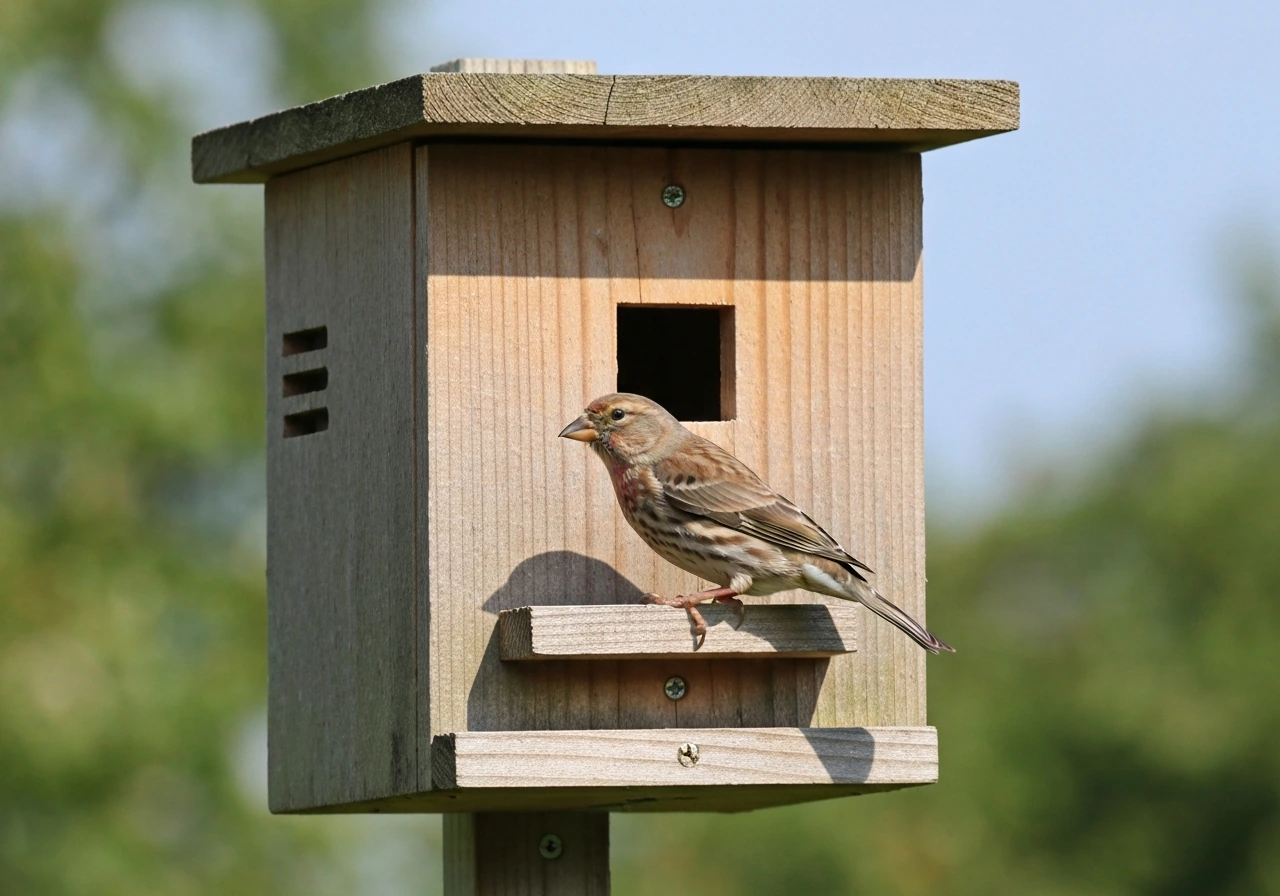
What Does a Finch Bird House Look Like and More
See what a House Finch looks like and how a finch nest box should look: size, hole, vents, drainage, and cleanable desig
Best Bird House for Sparrows: Specs, Setup, and Proofing Guide
Choose the best sparrow bird house: specs, sizing, placement, and predator-proofing with setup and troubleshooting steps
Do Finches Like Bird Houses? What Works and What Doesn’t
Yes, but most finches won’t nest in standard birdhouses. Learn what they prefer, species checks, and better shelter setu