A finch bird house (built specifically for House Finches) looks like a small, simple wooden box: roughly 6x6 inches on the floor, about 6 inches deep, with a 2-inch entrance hole drilled about 4 inches above the floor, and mounted somewhere between 8 and 12 feet off the ground near shelter like shrubs or building eaves. That's the short version. But if you searched this question, there's a decent chance you're also trying to figure out what the bird itself looks like, so you know whether you're even attracting the right species. This guide covers both.
What Does a Finch Bird House Look Like and More
Maya Thompson
2 Jul 2026
House Finch vs. finch bird house: let's clear up the confusion first
The phrase 'what does a finch bird house look like' tends to get typed by two different people: someone trying to identify the House Finch bird they spotted at their feeder, and someone actually trying to build or buy a nest box for finches. Both are totally valid questions, but they need different answers. This article handles both. First, I'll walk you through identifying the House Finch itself, because confirming your species matters before you put up any box. Then I'll get into exactly what a proper nest box for them looks like, how to measure one you already have, and how to set it up correctly.
What the House Finch actually looks like (male vs. female)
House Finches are sparrow-sized birds, compact and small. If you're used to seeing American Robins or Blue Jays in your yard, a House Finch will look noticeably smaller and more delicate by comparison. That size alone is a useful first filter: if the bird you're looking at is bigger than a sparrow, it's not a House Finch.
Male House Finch
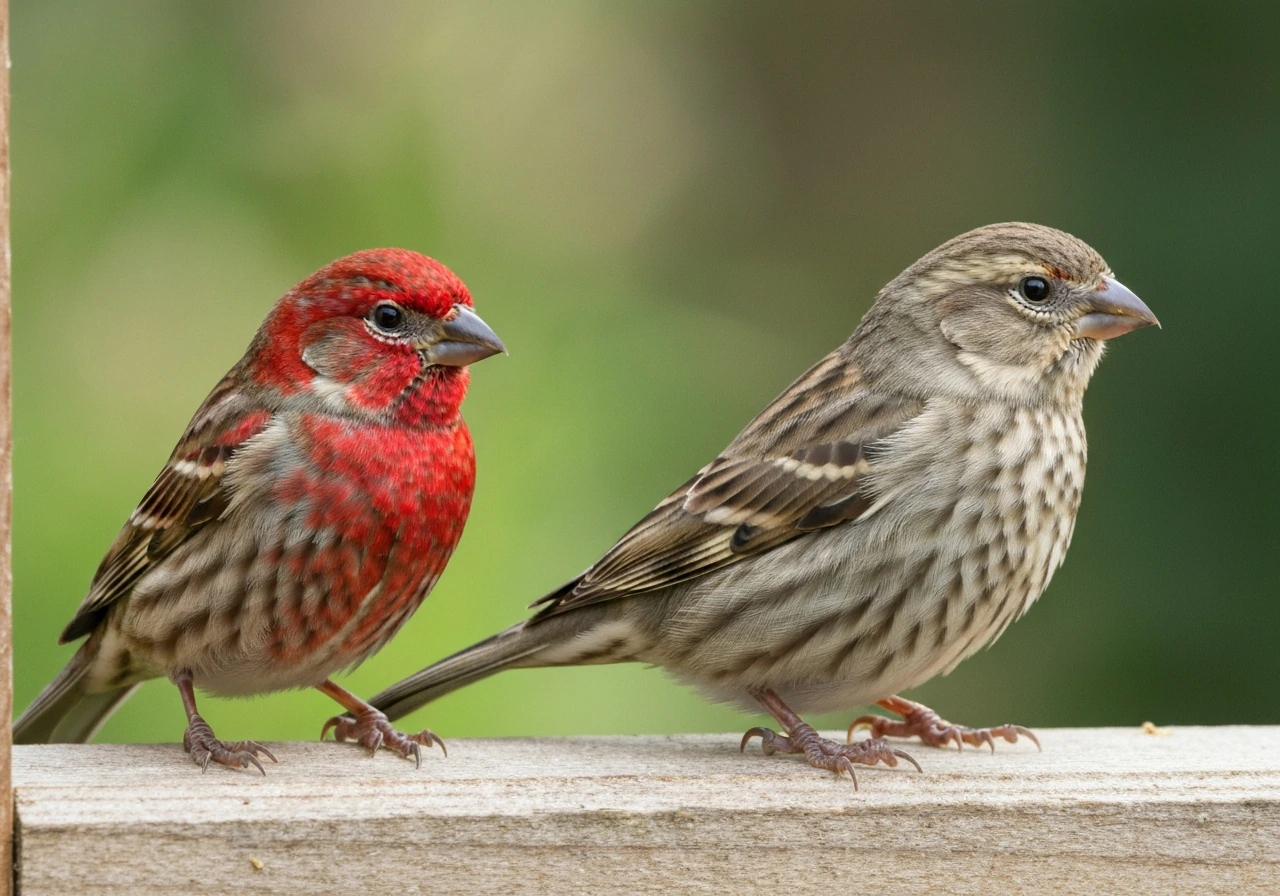
The male is the easier one to spot. He has a wash of red or rosy-pink color concentrated on his head (forehead and around the eye), his breast, and his rump. The exact shade varies between individuals and even between seasons, sometimes going more orange or yellow depending on what the bird ate during molt. His back and wings are brown and streaked, which gives him a slightly messy look compared to the bold red front. The streaking continues onto his belly and flanks too.
The most common mix-up is with the Purple Finch, which also has red on the male. The key difference: a male Purple Finch looks like he was dipped in raspberry wine, with a more saturated, evenly spread red and a distinctive pale eyebrow stripe. The House Finch has a less distinct eyebrow and the red is patchier, concentrated more toward the face and chest rather than spread uniformly across the head and back.
Female House Finch
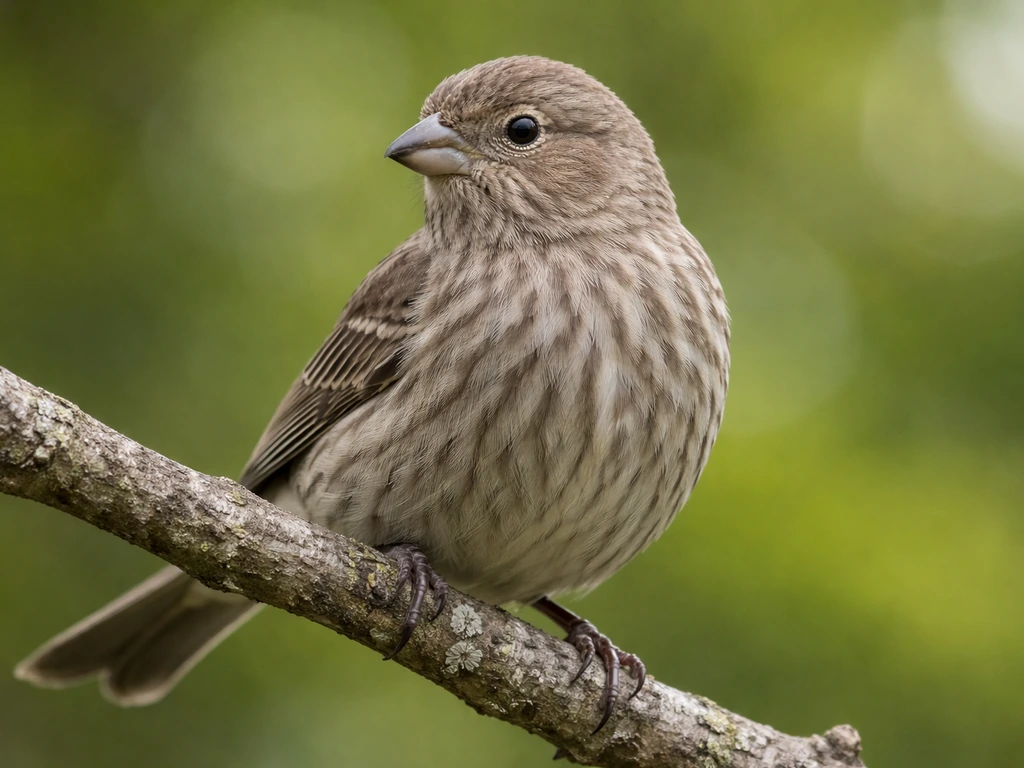
The female has no red at all. She's gray-brown above and pale below, with heavy streaking across her breast, belly, and flanks. She also shows faint pale wing bars. The streaking is really the key field mark here: it's bold and runs down the underparts in a way that helps separate her from other similar-looking sparrow-like birds. If you see a small, brown, heavily streaked bird near your yard with no obvious markings and no red, a female House Finch is a strong candidate.
What a finch nest box looks like (the actual structure)
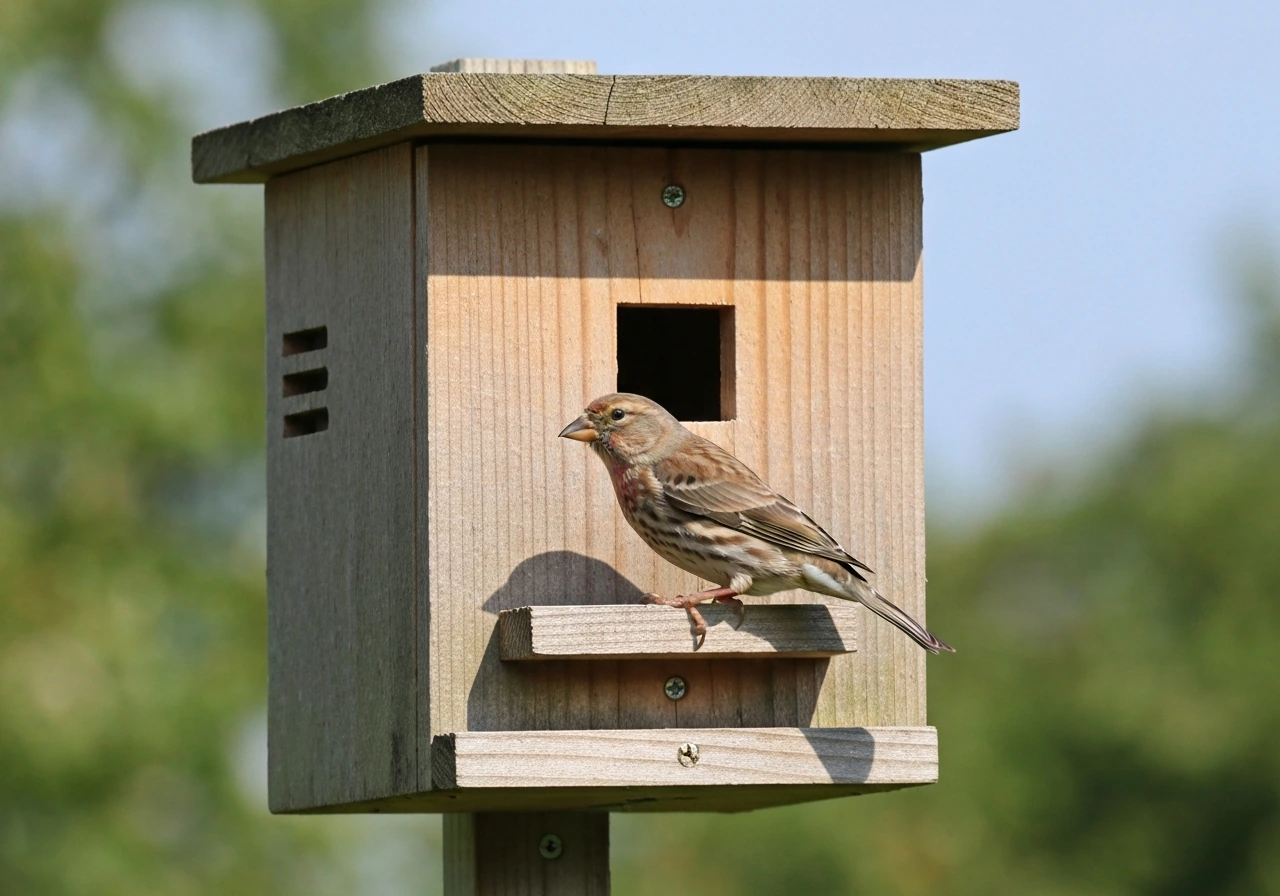
Here's where a lot of people get tripped up: the decorative 'bird houses' you see at garden centers with the little pointed roofs and a tiny hole drilled in front often look cute but don't actually match any real species' nesting requirements. If you are also comparing other species, you may want the best bird house for barn swallow, since their nest box needs differ from House Finches. A proper House Finch nest box isn't fancy. It's a plain wooden box with specific dimensions, a correctly sized hole, and a few functional features built in. Appearance-wise, think utilitarian, not decorative.
One important caveat: House Finches are not classic cavity nesters the way bluebirds or chickadees are. They typically prefer cup-style nests tucked into sheltered spots like dense shrubs, conifers, ivy-covered walls, or gaps in manmade structures. NestWatch has documented that they do occasionally use nest boxes, but it's genuinely less common than with species that evolved as hole-nesters. So a nest box for finches can work, but don't be surprised if they prefer the ivy on your fence over the box you installed. Because of that, finches may or may not use a bird house depending on whether the setup matches their preferences do finches like bird houses. Keep that expectation realistic.
What the box itself should look like
A proper House Finch nest box is a small, rectangular wooden enclosure. It should be made from untreated wood at least 3/4 inch thick (cedar or pine both work well) to resist heat buildup and moisture. The roof should have a slight overhang to keep rain out of the entrance. The front face is plain with a single circular entrance hole. There are no perches: perches are unnecessary for cavity-nesting birds and actually make it easier for predators and competitors to hang around the entrance.
The box needs drainage holes drilled in the floor corners (or the corners notched slightly) so water doesn't pool inside. Ventilation gaps or small holes near the top sides of the box are also important for preventing overheating in summer, which can be fatal to nestlings. One side of the box should open on a hinge or pivot for monitoring and cleaning. That's really all you need.
Entrance hole size and interior dimensions: the numbers that matter
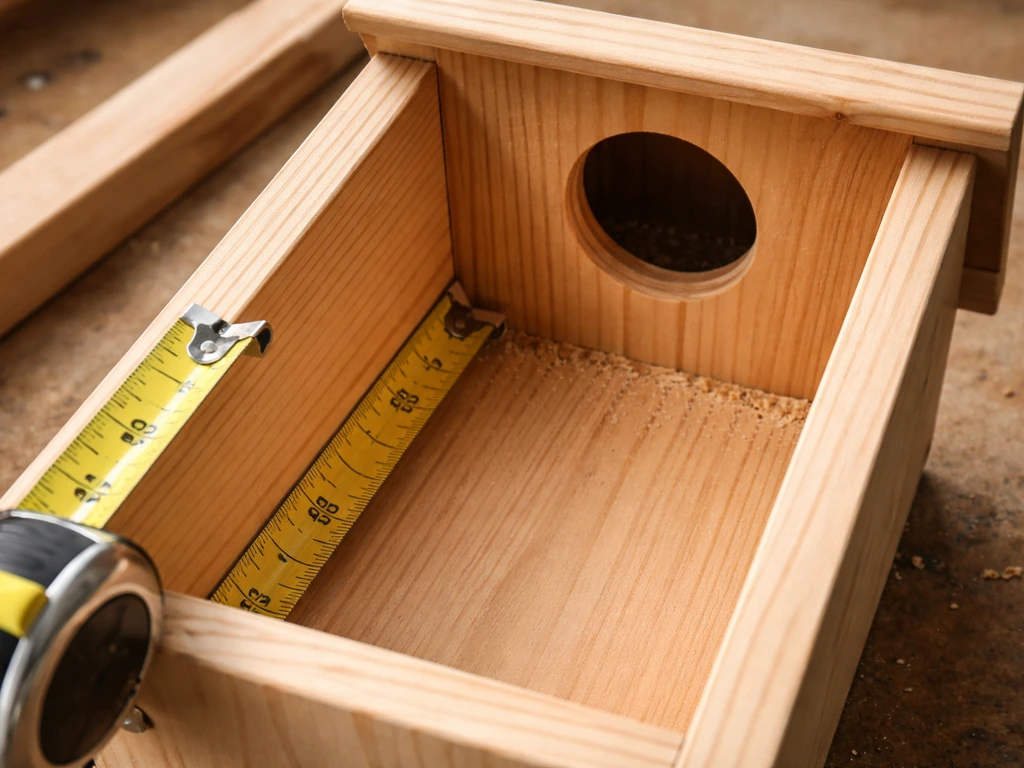
Getting the entrance hole right is the single most important design decision. Too big and you invite House Sparrows, European Starlings, or predators. Too small and finches can't get in. For House Finches, a 2-inch diameter hole is the standard recommendation. USDA Forest Service guidance for bluebird nest boxes also specifies an entrance opening size of 1½ inches in diameter, which helps prevent larger competitors from taking over the cavity blank" rel="noopener noreferrer">a 2-inch diameter hole is the standard recommendation. That lines up with published nest box dimension guides and is small enough to exclude starlings while still being comfortable for a sparrow-sized bird. While House Finches need a properly sized nest box, many people also find that sparrows tend to prefer their own housing types unless the opening excludes them sparrows prefer their own housing types.
| Dimension | Recommended Size |
|---|---|
| Floor size | 6 x 6 inches (4x4 to 5x5 inches also acceptable) |
| Interior depth | 6 inches (or up to 12 inches total box height) |
| Entrance hole diameter | 2 inches |
| Entrance height above floor | 4 inches |
| Mounting height above ground | 8 to 12 feet |
The entrance hole should be positioned so there's roughly 4 inches between the bottom of the hole and the floor of the box. This gives the birds enough depth to feel secure inside without making the box so deep that nestlings can't fledge easily. The rough interior walls also help young birds climb toward the exit when it's time to leave, so avoid sanding the inside of the box smooth.
How to check if a bird house you already own is a good fit
If you've got a bird house sitting in the garage or already mounted in your yard and you're wondering whether it'll work for finches, here's a quick way to check. Grab a ruler and measure these four things.
- Entrance hole diameter: ideally 2 inches. If it's 1.5 inches or less, it may be too small for a finch but good for smaller species like chickadees. If it's 2.5 inches or larger, you're likely to get House Sparrows or other competitors moving in instead.
- Floor dimensions: look for something close to 6x6 inches. A 4x4 floor is on the small side but can still work. Anything much smaller will feel cramped and is more likely sized for a wren.
- Distance from entrance hole to floor: this should be at least 4 inches. If the hole sits very close to the floor, predators can reach in more easily and the birds feel exposed.
- Does it open for cleaning? Look for a hinged side panel or a removable floor. If it's completely sealed with no access, it can't be cleaned and shouldn't be used long-term.
Also check for drainage and ventilation. Flip the box over and look at the floor: there should be small holes or notched corners for water to escape. Look near the top sides for small ventilation holes or gaps under the roof. If neither exists and the box is solid wood, it can still work but will be hotter and wetter inside than ideal. Drilling a couple of small holes yourself is an easy fix.
One thing worth noting: if you're comparing a finch nest box to one designed for House Sparrows, the dimensions are actually quite similar since both birds are roughly the same size. The best bird house for sparrows usually uses larger entrance sizes and different placement, so make sure your box is tailored for finches if you want sparrow-free nesting House Sparrows. The practical difference in attracting finches versus sparrows often comes down to placement and habitat as much as the box itself, which brings us to the next section.
Where to put it: placement, height, and habitat
House Finches naturally nest at around 12 to 15 feet above the ground on average, but published nest box guidance recommends mounting their boxes at 8 to 12 feet. That range is practical for backyard installation and monitoring while still feeling elevated and sheltered to the birds. A box mounted at 5 feet or below is too low and more vulnerable to ground predators and foot traffic.
Location matters more than you might think. House Finches are strongly associated with human-built structures and suburban environments. They nest under eaves, in ivy on walls, in dense ornamental shrubs, and in gaps around buildings. When you place a nest box for them, try to mimic that pattern: mount it against a wall or fence, under a roof overhang, or near dense vegetation. An exposed box in the middle of an open yard is less likely to be used. Shade matters too, especially in hot climates: facing the entrance hole away from direct afternoon sun (typically facing north or east) helps keep temperatures inside the box from spiking dangerously.
Avoid mounting near active bird feeders if you can. Feeder activity attracts House Sparrows aggressively, and they will compete hard for nest boxes. A bit of distance between your feeding station and your nest box reduces that competition pressure.
Keeping it clean and safe: maintenance, predator protection, and humane practices
Cleaning schedule
During the breeding season, leave the nest alone as long as there's activity. House Finches can raise multiple broods and may reuse the same box, so pulling out a nest between broods can disrupt an active breeding attempt. The right time to clean is after the season ends and you're confident the box is no longer in use. Remove the old nest, then scrub the interior with a 1-part bleach to 10-parts water solution, rinse it well, and let it dry fully before closing it back up. This kills parasites and bacteria that can carry over and harm the next season's birds.
Predator protection
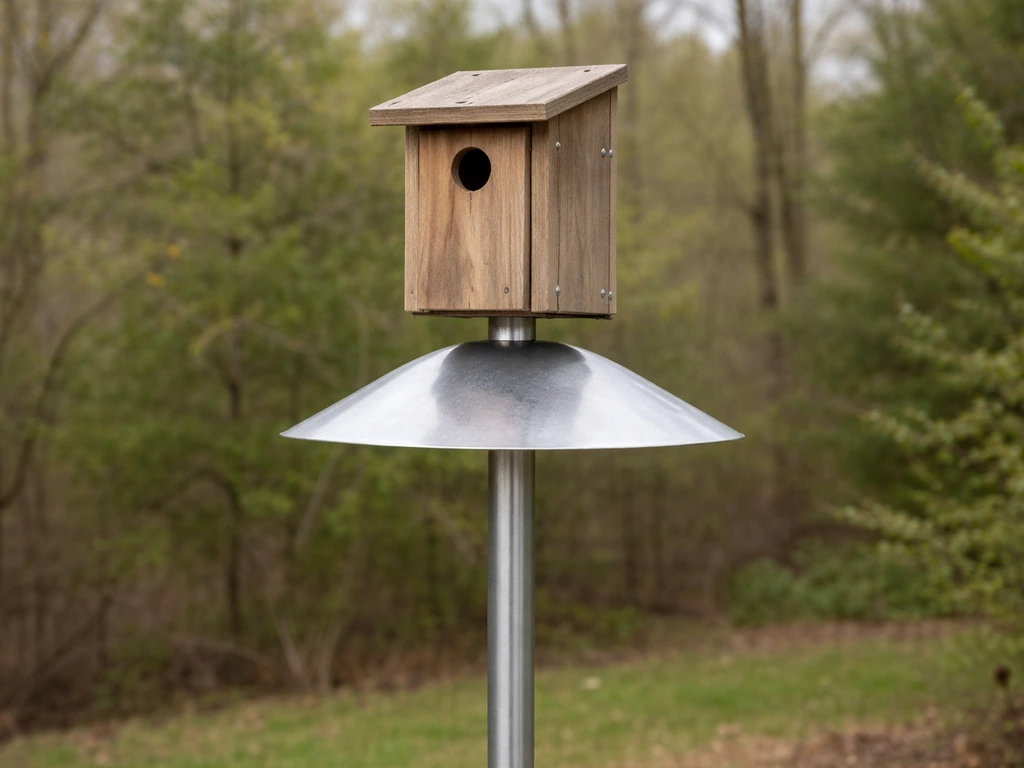
The two most effective things you can do: mount the box on a smooth metal pole with a baffle (a cone or cylinder that blocks climbing), and make sure the entrance hole is exactly the right size. A 2-inch hole keeps starlings out. A baffle on the pole keeps snakes, raccoons, and cats from reaching the box. Avoid mounting nest boxes directly on wooden fence posts or trees if you can, since both are easy climbing routes for predators.
Do not add a perch below the entrance hole. It looks natural but it gives predators and nest competitors a convenient handhold. House Finches and other cavity users don't need it and are better off without it.
Monitoring and humane best practices
Check the box every week or two during nesting season, ideally in the morning when adults are away foraging. Open the side panel quietly and close it gently. If you see a cup nest made of fine stems, plant fibers, rootlets, string, and lined with softer material, that's a classic House Finch nest. Young leave the nest about 12 to 15 days after hatching, so once you see nestlings, expect fledging within about two weeks. Avoid checking more than necessary once eggs are present, as repeated disturbance can cause abandonment.
If you're interested in going deeper on choosing between box designs or understanding whether finches in your yard are likely to use a box at all, the questions of whether finches actually like bird houses and which specific box designs perform best are worth exploring separately. For many backyard setups, choosing the best bird house for finches comes down to matching the entrance size and dimensions to House Finch needs, then placing it in sheltered, suburban-style habitat. The short version is that getting the placement and habitat right often matters more than the box design itself when it comes to finches specifically.
FAQ
If I already have a bird house, how can I tell quickly whether it looks finch-ready?
Look for the entrance hole size first. A House Finch opening is about 2 inches in diameter, and the box is a simple rectangular wooden enclosure with a slight roof overhang and no decorative front features. If the hole is much larger, has an obvious perch, or the box is clearly a front-facing “cute” house with a tiny decorative entry, it is usually not finch-appropriate.
Do finches always use nest boxes once one is installed?
No. House Finches typically do cup-style nests in sheltered spots, and they may use boxes far less reliably than classic cavity nesters. Even with the right box dimensions, they might choose ivy, dense shrubs, or gaps in buildings instead. Expect occasional use, not guaranteed occupancy.
Can I use a “perch-style” bird house for finches if it has the right entrance hole?
Avoid it. A perch under the entrance is the most common mistake because it creates a handhold for predators and other competitors and can make the box less attractive. If your box has a built-in perch or landing strip, remove it if possible, or choose a different box.
What happens if my entrance hole is slightly too big for finches?
Do not oversize the hole. A hole bigger than about 2 inches increases the odds of House Sparrows and other unwanted cavity users taking over. If you suspect your hole has been enlarged, you can sometimes reduce access with a properly cut internal panel, but the best fix is replacing the box with a finch-specific one.
Does the orientation of the box (sun exposure) change whether finches use it?
Yes, location and shelter design matter. Mount the box near dense cover or under eaves, and keep it facing away from harsh afternoon sun when possible. A well-sized box in an open yard or full sun may be ignored even if the bird otherwise nests nearby.
My box is wooden but has no drainage holes and no vents, will it still work for finches?
It can be a deal-breaker. A box without drainage and ventilation can trap heat and moisture, which is dangerous for nestlings. If your box has a solid floor and no side or top ventilation, drilling a couple of drainage holes and adding small vents near the upper sides can make it usable.
Why does the distance from the entrance hole to the floor matter in a finch box?
Aim for about 4 inches between the entrance hole bottom and the floor. If that “depth under the hole” is too shallow, the nestlings have less secure space, and if the box is too deep for the layout, fledging can be harder. Measuring that interior relationship is more useful than relying only on overall box dimensions.
How far should a finch nest box be from my bird feeder?
Avoid placing it right next to feeders. Heavy feeder traffic draws House Sparrows and increases competition for nest sites. A practical rule is to keep the nest box at some distance from the feeding area and allow quieter, sheltered access for the finches.
When is the right time to clean out a finch nest box, and how should I do it?
Keep cleanup conservative. Check only as often as needed, and do not remove anything while eggs or nestlings are present. After the season, remove the old nest, scrub the interior with a diluted bleach solution, rinse thoroughly, and let it dry completely before closing.
What should I look for inside the box to confirm it’s actually being used by House Finches?
If you see a cup nest lined with softer materials, made from fine stems and plant fibers, that is consistent with House Finch nesting. If the nest looks more like a bulk cavity mass, uses different materials heavily, or you never see nesting activity despite correct setup, it may be a sign the box is not matching what the birds are choosing nearby.
What mounting height is safest and most usable for homeowners?
About 8 to 12 feet is usually the practical target, and very low mounting (around 5 feet or less) increases risk from ground predators and foot traffic. Higher than the typical range can work, but you may have trouble monitoring and maintaining the box safely.
Next Articles
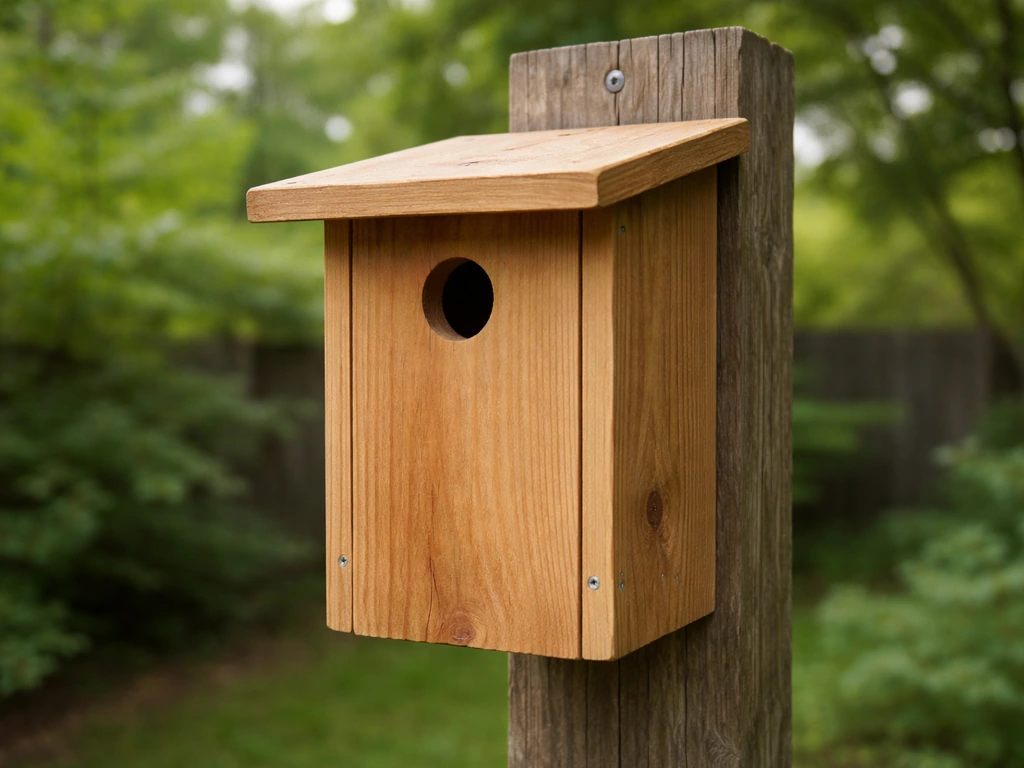
Best Bird House for Sparrows: Specs, Setup, and Proofing Guide
Choose the best sparrow bird house: specs, sizing, placement, and predator-proofing with setup and troubleshooting steps
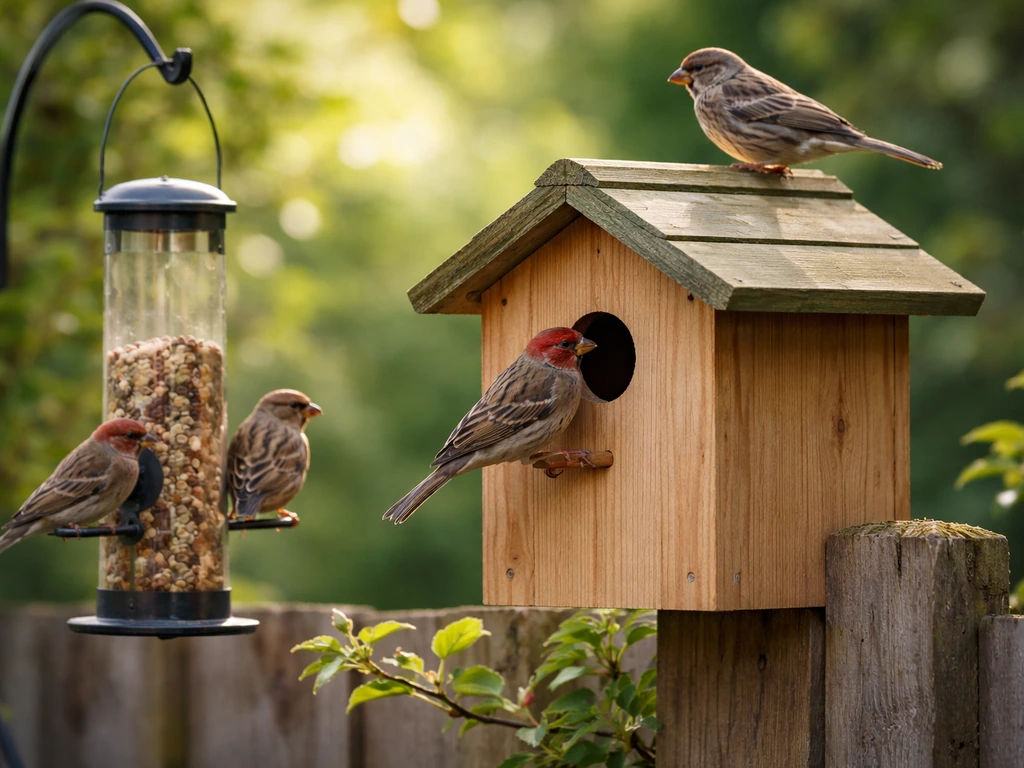
Do Finches Like Bird Houses? What Works and What Doesn’t
Yes, but most finches won’t nest in standard birdhouses. Learn what they prefer, species checks, and better shelter setu
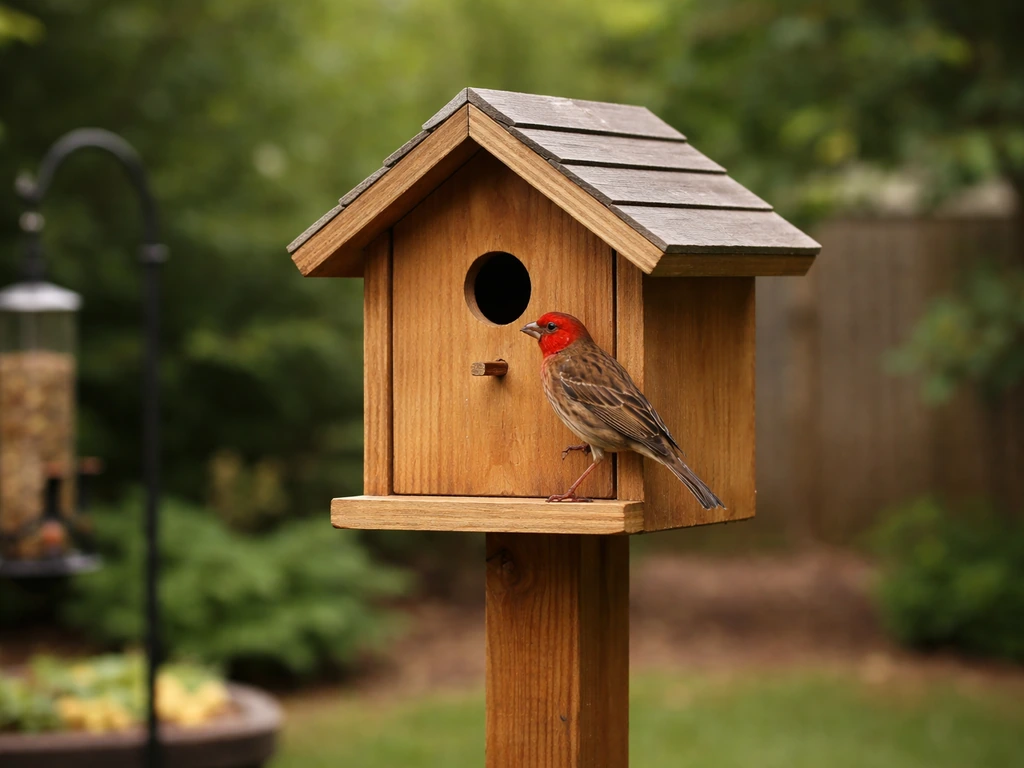
Best Bird House for Finches: Specs, Placement, and Care
Choose the best finch nesting box with ideal dimensions, hole size, placement, predator-proofing, and easy care tips.