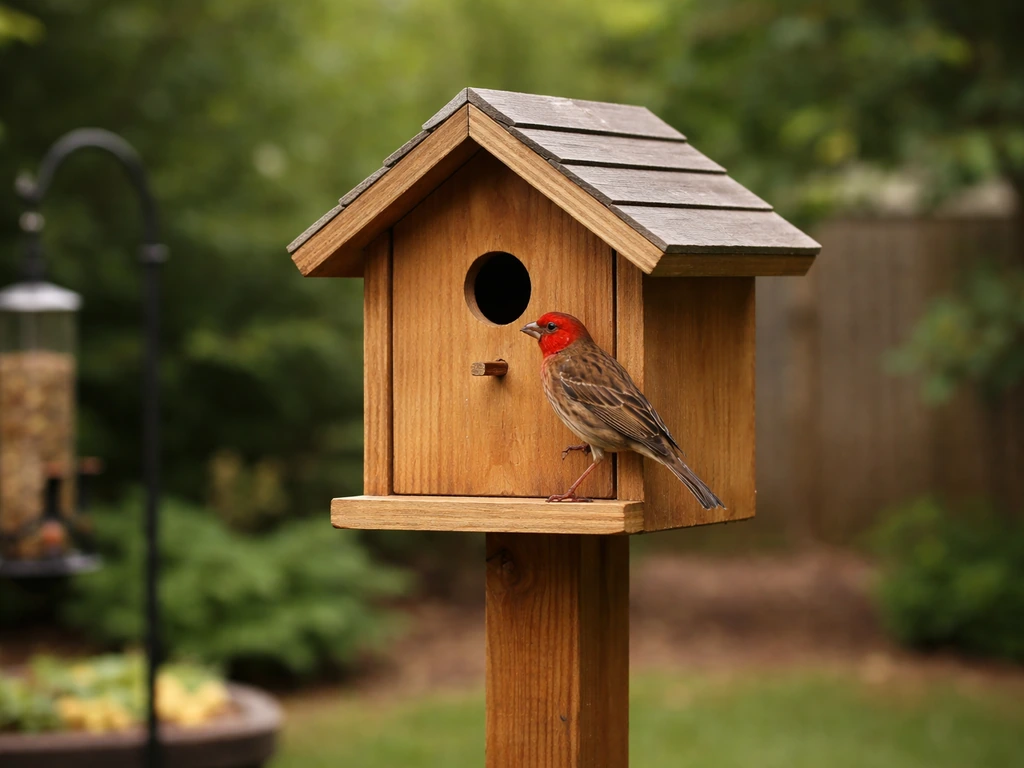
Most finches do not use traditional birdhouses, and setting one up expecting finches to move in will likely disappoint you. House Finches, American Goldfinches, and Purple Finches are all open-cup nesters: they build small, tidy nests in shrubs, trees, and sometimes on ledges or human structures, not inside an enclosed box with an entrance hole. That said, House Finches occasionally do use a covered nest box, so there is a narrow, conditions-specific exception worth knowing about. For most people, the practical answer is: skip the standard birdhouse and focus on the habitat, plants, and feeders that finches actually need.
Do Finches Like Bird Houses? What Works and What Doesn’t
Maya Thompson
7 Jun 2026
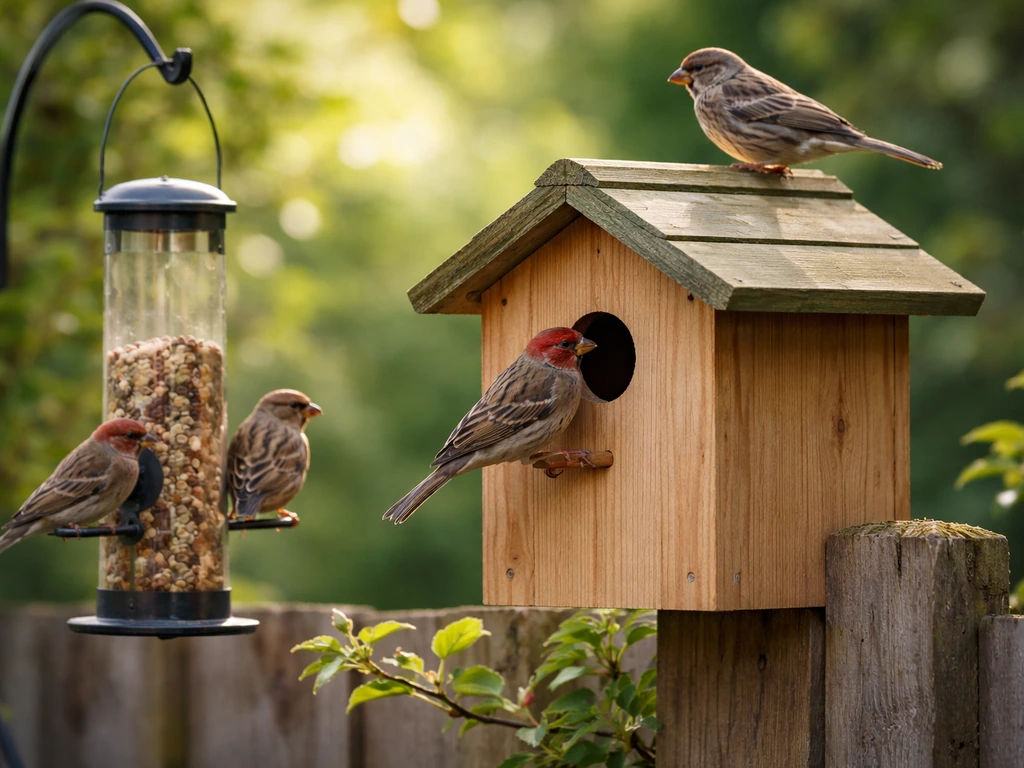
Why finches usually ignore traditional birdhouses
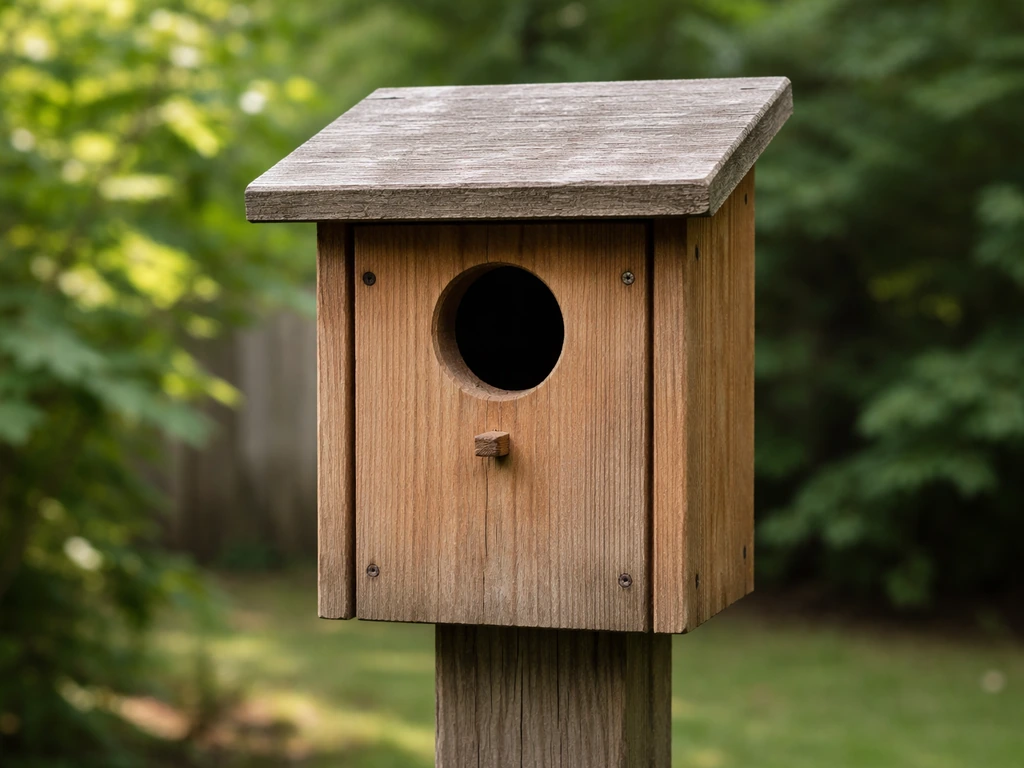
Standard birdhouses are designed to mimic tree cavities: enclosed, dark interiors with a round entrance hole. Birds that evolved as cavity nesters, like bluebirds, chickadees, and wrens, are drawn to that design because it matches where they naturally nest. Finches did not evolve that way. House Finches build open cups from fine stems, leaves, rootlets, string, and even wool or feathers, placed in the fork of a tree branch, in a dense shrub, or on a sheltered ledge. American Goldfinches weave tight cups in shrubs or saplings in open, weedy areas. Purple Finches nest near the tips of horizontal branches, usually in conifers, far from any trunk. None of those nesting styles calls for a closed box with a drilled hole.
Cornell's NestWatch program has logged only a handful of confirmed cases of House Finches nesting inside an enclosed nest box. The rare instances that do happen tend to occur when the box is mounted under an eave or in a spot that closely mimics a sheltered ledge, basically the same concealed, human-structure placement a House Finch might use anyway. So the box itself is not the draw; the sheltered location is. American Goldfinches and Purple Finches have essentially no documented history of using enclosed boxes at all.
What actually works to attract nesting finches
If your goal is to have finches nesting in or near your yard, your effort is better spent on three things: plants, food, and cover. American Goldfinches, in particular, align their breeding season with seed availability, often nesting in July and August when thistle and other seed plants are peaking. House Finches are remarkably adaptable and heavily associate with yards that have year-round feeder access. Get those basics right and you are giving finches genuine reasons to stay and breed nearby.
Plants that help
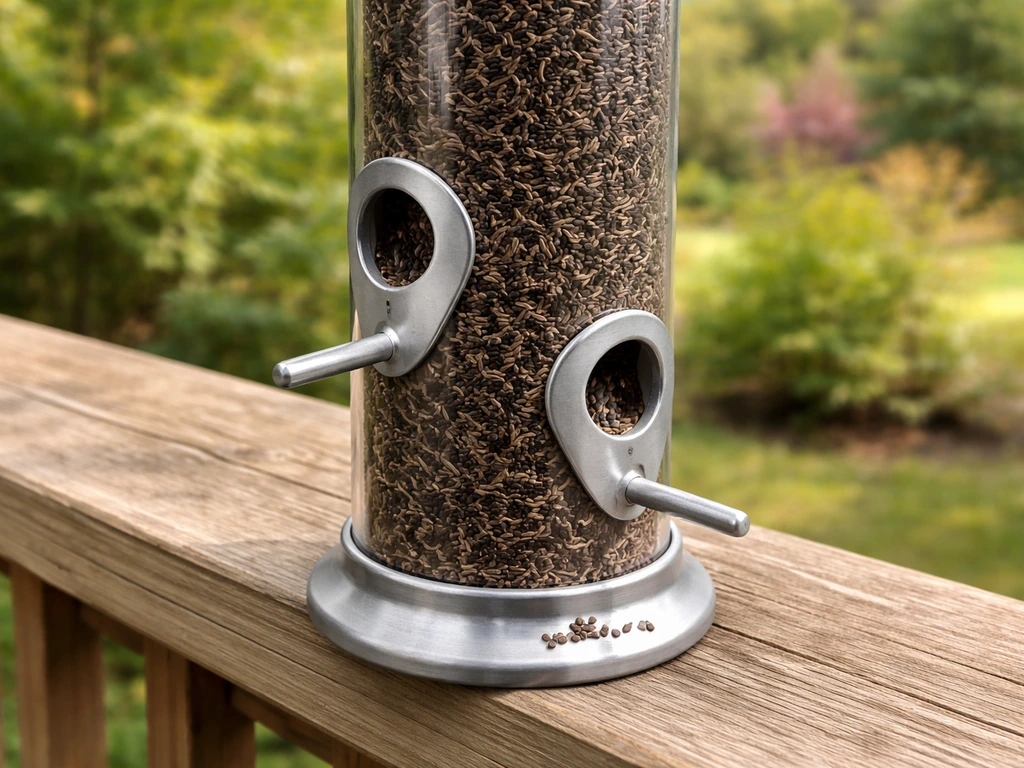
- Thistle (Cirsium or Carduus species) and coneflowers (Echinacea) for Goldfinch food and nesting timing cues
- Sunflowers: both a seed source and, once established, structural plants Goldfinches and House Finches revisit
- Asters and native grasses for late-season seed that supports breeding Goldfinches
- Dense deciduous shrubs like dogwood, viburnum, or serviceberry for open-cup nest concealment
- Conifers (spruce, fir, or arborvitae) if you want to encourage Purple Finches, who favor horizontal branch tips in evergreens
Feeders and food
Nyjer (thistle) seed in a tube feeder is the single most effective finch attractor you can deploy today. House Finches also readily take black-oil sunflower seed at platform or tube feeders. Keep feeders clean (more on that below), place them within about 10 to 15 feet of shrub cover so birds feel safe moving between the two, and maintain a consistent seed supply through breeding season. House Finches are so feeder-oriented that a reliable food source near good nesting cover can be the deciding factor in whether a pair sets up a nest in your yard versus a neighbor's.
If you still want to try a nest box for finches
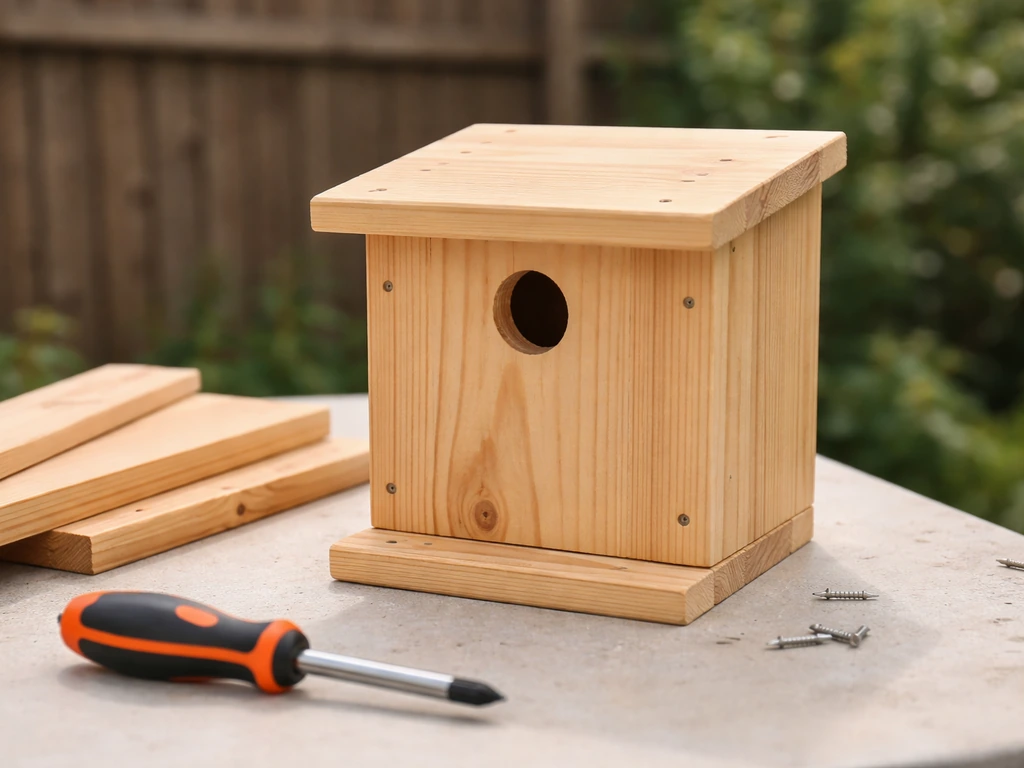
If you want to give it a shot despite the odds, House Finches are your only realistic candidate, and a few design details matter. For design details, choose the best bird house for finches only if you are willing to follow the modifications and location tips that match how House Finches nest. Do not use a standard bluebird or chickadee box without modifications. The box design most consistent with the rare documented cases is a small, simple songbird-style box with an entrance hole of about 1.5 inches in diameter, good ventilation holes near the top, and drainage holes in the floor. Keep the interior dimensions modest: roughly 4 inches by 4 inches floor space and 6 to 8 inches of interior depth. Avoid any perch below the hole; finches do not need it and it gives predators and competitors a foothold.
Cedar or untreated pine are the right materials: both hold up outdoors without paint or chemical treatment that could off-gas inside the box. Leave the interior unfinished and unpainted. The outside can be painted or stained a neutral, earth-tone color to reduce heat absorption if you are in a hot climate, but avoid dark colors in full sun.
One reasonable alternative to a fully enclosed box is an open-front nest shelf or nest basket mounted in a sheltered spot under an eave or porch overhang. This is actually closer to what House Finches seek out naturally and may yield better results than a drilled-hole box. Nest shelves are simple to build: a three-sided box, roughly 6 inches wide and 6 inches deep, with an open front and a roof overhang for rain protection.
How to install the box or nest shelf correctly
Location matters more than the box itself. Follow these steps to give any finch nest structure its best chance:
- Mount the box or shelf at 5 to 10 feet above ground. House Finches often nest at eye level to about 10 feet in human-associated settings, so there is no need to go high.
- Face the entrance or open front away from prevailing winds and afternoon sun. In most of the US, a north or east-facing orientation works well. Avoid west-facing if you are in a region with hot afternoon sun.
- Place the structure within 10 to 15 feet of shrub or tree cover, but not with branches touching the box, since touching branches create a highway for predators.
- Mount under an eave, porch, or roof overhang if possible. The rare documented House Finch box uses almost always involved this kind of sheltered, human-structure placement.
- Keep at least 25 to 30 feet of distance between multiple nest boxes to avoid territorial conflicts.
- Install by early spring (February to March in most of the US) to catch House Finches scouting sites before breeding begins. American Goldfinches breed later, often July to August, so you have a longer window for them, though they will not use enclosed boxes anyway.
Predators, safety, and keeping things clean
Predator protection
NestWatch research found that nest boxes with predator guards had success rates about 6.7% higher on average than unguarded boxes. Even if you are targeting House Finches rather than cavity nesters, that number matters. A smooth metal baffle mounted on the pole or post below the box stops most ground-based predators including raccoons, cats, and snakes. If you are mounting on a tree rather than a pole, use a cone-shaped baffle around the trunk, and be aware that snakes have been documented reaching boxes via nearby overhanging branches. Trim any branches that could serve as a bridge to within about 5 feet of the box.
House sparrows are a real complication if you put up any enclosed box. They aggressively compete for nest boxes and will evict or harm other nesting birds. If sparrows are common in your area and you see them investigating the box, monitor closely and remove sparrow nesting material promptly. This is one more reason an open-front nest shelf under an eave may be less attractive to sparrows than an enclosed box, slightly shifting the odds in a House Finch's favor.
Sanitation and cleaning
Clean any nest box or shelf after each brood fledges. Old nest material harbors mites, lice, blowfly larvae, and other parasites that can reduce the health of future broods. Remove the old nest entirely, scrub the interior with a stiff brush and a dilute bleach solution (one part bleach to nine parts water), rinse well, and let it dry completely before closing it back up. House Finches can produce two or even three broods in a single season, so you may need to clean the box two or three times between spring and late summer. A box that opens easily for inspection and cleaning is not a luxury; it is a design requirement.
Apply the same cleaning logic to your feeders. Dirty feeders spread disease, particularly House Finch eye disease (Mycoplasmal conjunctivitis), which can be devastating in local populations. Clean tube feeders every one to two weeks with the same dilute bleach rinse, dry thoroughly, and refill with fresh seed.
No finches showing up? Here is what to change today
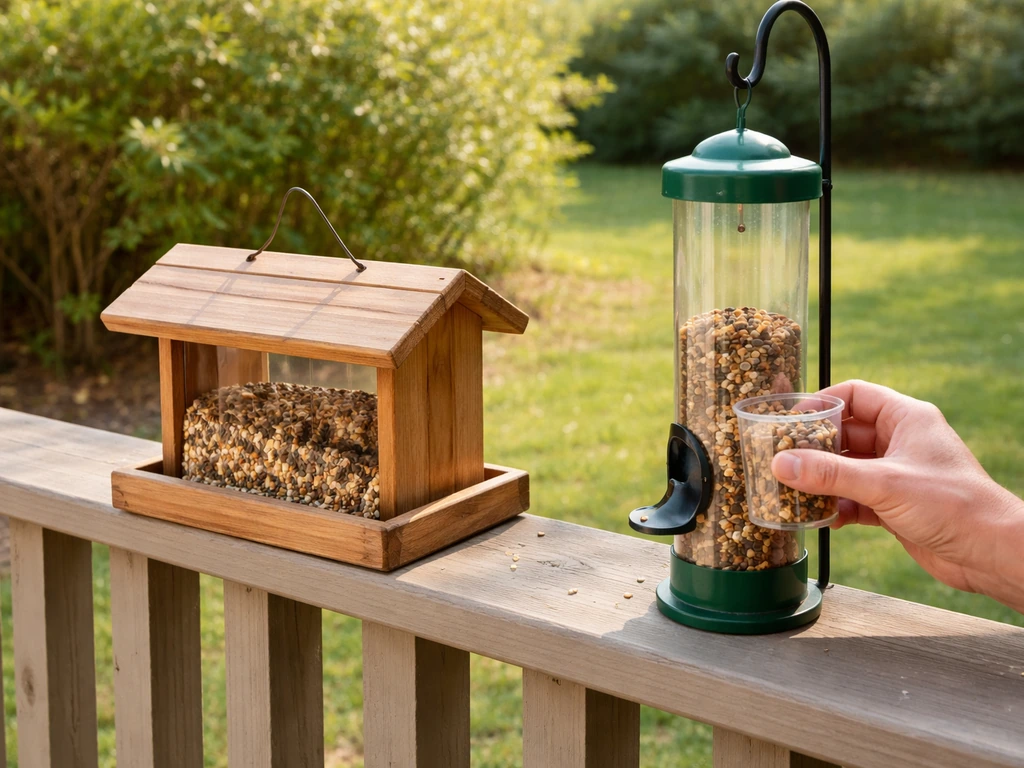
If you have had a box or feeder setup out and finches are not engaging with it, work through this checklist before giving up:
| Problem | Likely cause | Fix today |
|---|---|---|
| Box completely ignored | Wrong nesting style for finches; enclosed box is a poor match | Switch to an open-front nest shelf under an eave, or redirect effort to feeders and plants |
| No finches visiting at all | Food source is wrong or inconsistent | Add a nyjer seed tube feeder; top it up daily until birds find it |
| Finches visit feeder but don't stay | No shrub or tree cover nearby for safe retreat | Plant a dense shrub within 15 feet, or position feeder closer to existing cover |
| House sparrows taking over the box | Enclosed box in sparrow territory | Monitor and remove sparrow nests immediately; consider switching to open-front shelf |
| Finches started a nest but abandoned it | Disturbance, predator pressure, or parasites in old nest material | Install a predator baffle; clean the box and replace; reduce foot traffic near the site |
| Nothing happening in spring | Timing mismatch or no local finch population yet | Check eBird for recent local finch sightings; focus on feeders to build a population before expecting nesting |
The most common mistake people make is investing in a standard birdhouse when what finches actually need is a well-stocked feeder, a thistle plant or two, and a dense shrub nearby. Get those three things right first. If House Finches are already in your neighborhood visiting feeders, the nesting usually follows once the habitat feels safe and food is reliable. A nest box can be worth trying as an experiment, especially an open-front shelf under sheltered eaves, but think of it as a bonus rather than the main attraction. To pick the best bird house for a barn swallow, focus on the right type of open, exterior-facing nesting box and mounting location on a barn or under an overhang best bird house for barn swallow.
FAQ
Will finches ever use an enclosed birdhouse with a hole entrance? (Even if they are not cavity nesters.)
Sometimes, but it is uncommon and usually depends on the box being placed in a spot that closely mimics a natural finch ledge (sheltered under an eave, concealed angle, protected from direct sun and rain). If your enclosed box is fully exposed or mounted too high and open, finches are more likely to ignore it and nest in nearby shrubs or on horizontal branch tips.
What should I choose instead of a standard birdhouse if I want to maximize finch nesting chances?
If you want to try without spending on a full enclosed box, an open-front nest shelf or nest basket in a sheltered location is the safer bet. Finches generally respond better to exposed, ledge-like nesting opportunities than to a dark, cavity-style box.
If I set up a lot of thistle, do finches automatically nest near my feeders?
Yes, but the key is where you put it. Tube feeders and thistle plants help finches, and then nesting is more likely if there is dense cover within about 10 to 15 feet where birds can move safely. If the feeder is far from shrubs or the area feels exposed, finches may visit to eat but not stay to breed.
How does breeding season timing affect whether I’ll get finch nests?
Food timing matters. American Goldfinches often nest when seed is available, so if you only feed thistle seasonally or remove seed too early, you can miss the breeding window. Keep reliable seed access through the spring to late-summer period when breeding is most likely.
What should I do if house sparrows start investigating or using my nest box?
Watch for sparrows and remove their nesting materials quickly if they start using the box. House sparrows can take over quickly, so delayed response often means the finch pair will not get a second chance with that same box.
My finch box is up, but no finches are using it. When should I give up or change strategy?
Use it as an experiment, but do not keep it up indefinitely if it fails. If finches are not engaging by late spring or early summer, you can switch to improving habitat and feeders first, then re-try with a sheltered open-front shelf or a finch-appropriate enclosed setup later.
Will sun and heat affect whether finches use the box?
Absolutely. Finches can be deterred by heat buildup and by locations that get heavy direct sun or driving rain. Use neutral earth tones on the outside, provide ventilation and drainage if enclosed, and choose placement under eaves or other natural shelter where wind and rain impacts are reduced.
How clean do my finch feeders need to be to avoid problems?
Yes. If your feeder is dirty, disease risk rises and birds may reduce visits. Clean tube feeders every one to two weeks, dry fully, and refill with fresh seed so finches keep coming even during the busiest breeding months.
Does predator control matter for finch nesting if I’m using a nest shelf or finch box?
Placement around predators is often overlooked. Use a smooth metal baffle on a pole or a cone-shaped baffle on a trunk, and trim overhanging branches that could act as a bridge. Even small changes to access routes can improve safety for any nesting attempt.
What is the most common reason people think “finches won’t use bird houses” when it is really something else?
The most common reason is mismatched expectations and location. If you provide the right feeder and dense cover, finches may nest without using the box at all. If you provide the box but skip feeder and shrub cover, the box becomes a low-value option compared with natural ledge and shrub sites.
Next Article
Best Bird House for Finches: Specs, Placement, and Care
Choose the best finch nesting box with ideal dimensions, hole size, placement, predator-proofing, and easy care tips.