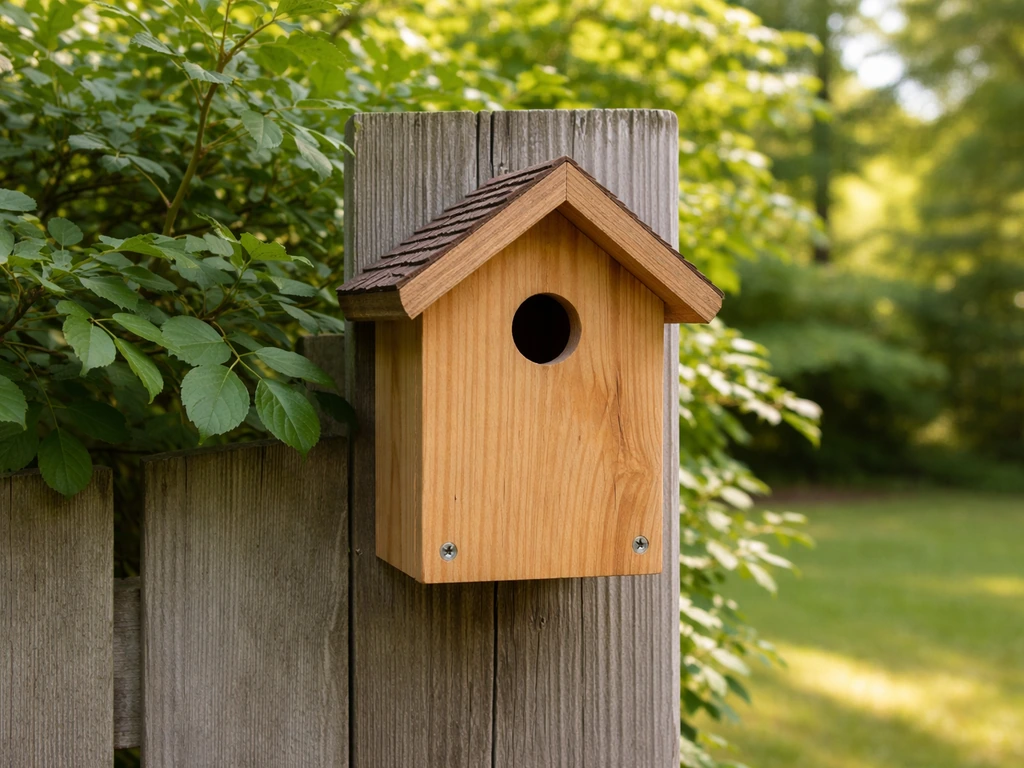
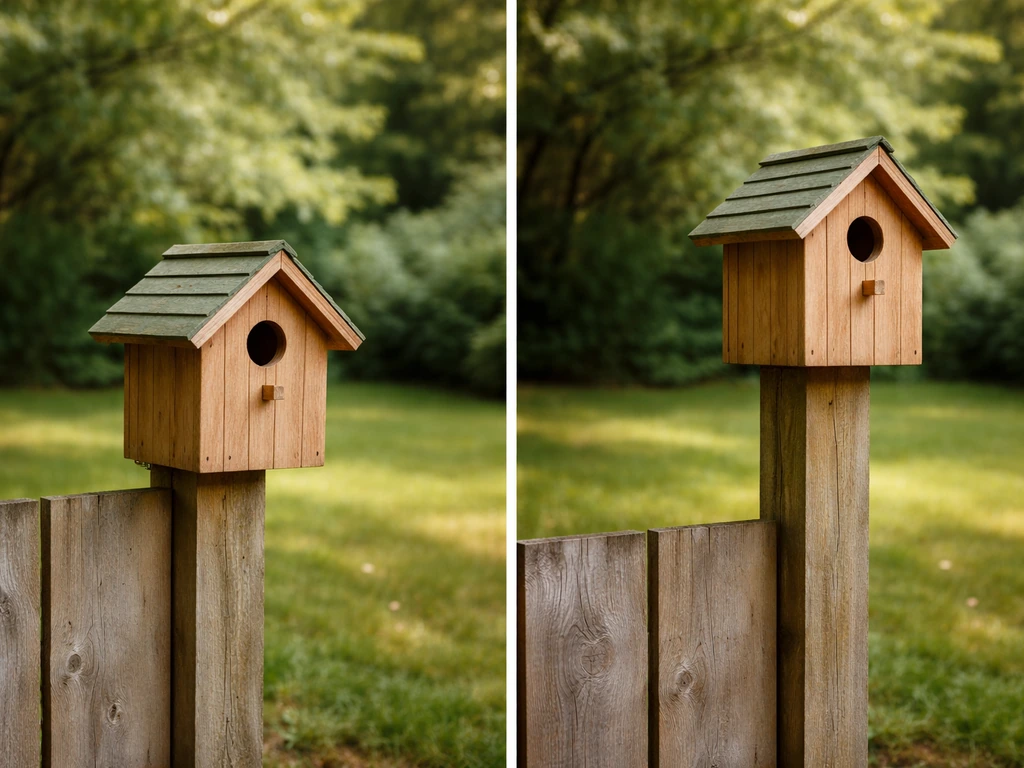
Mount your bird house on a smooth metal pole, 5 to 6 feet off the ground, facing east or away from the prevailing wind, at least 50 feet from dense shrubs or woodland edges, and add a baffle below the box. That single setup works for the most common backyard cavity nesters, bluebirds and chickadees included, and it gives you a fighting chance against cats, raccoons, and squirrels right from day one. From there, you fine-tune height, direction, spacing, and habitat based on the species you're trying to attract.
Where to Mount a Bird House: Placement Guide for Beginners

Maya Thompson
12 Jun 2026
Quick checklist for choosing a mounting spot
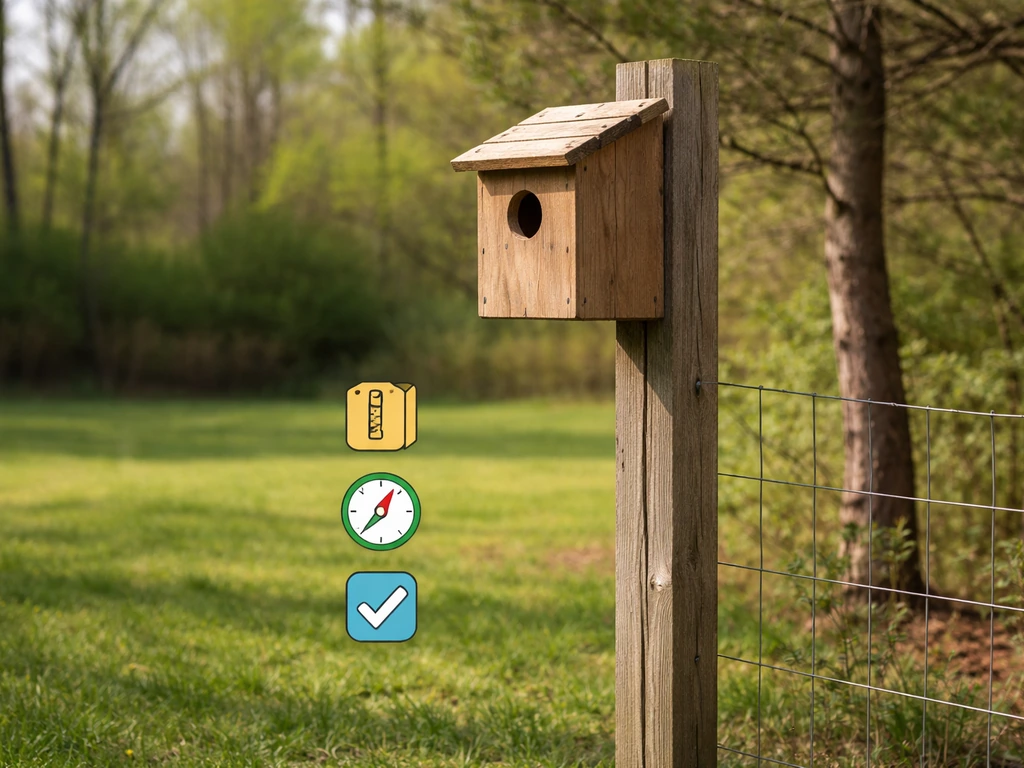
Before you drill the first screw, run through this list. Every item affects whether birds actually use the box or whether you end up with an empty house and a frustrated raccoon.
- Correct height for your target species (see the table below)
- Entrance hole facing east, or at minimum away from the direction of prevailing storm winds
- At least 50 feet of open ground visible from the entrance hole (for open-habitat species like bluebirds)
- Clear flight path to the entrance: no overhanging branches within 5 feet of the hole
- Mounted on a smooth pole or post with a predator baffle installed below the box
- Not adjacent to a bird feeder or high-traffic area (10+ feet minimum, farther is better)
- Easy enough to reach for monitoring and cleaning without a ladder if possible
- Morning sun hitting the entrance, afternoon shade protecting the box from peak heat
- Minimum 300 feet from the next nest box of the same species to reduce territorial conflict
Sun, shade, and wind: more important than most people realize
A nest box that overheats in July or gets hammered by cold spring rain is a nest box birds abandon. Placement relative to the sun and wind is one of the biggest factors in whether a nest actually succeeds.
East-facing entrances are the gold standard for bluebirds and work well for most other species too. The morning sun warms the cavity gently, which is exactly what newly hatched nestlings need. By the time afternoon heat peaks, the front of the box is in shade. If east isn't possible, north is the next best choice for avoiding heat buildup. West-facing boxes cook in the summer sun and see the least nesting success, so avoid that direction unless you have no other option and your climate is cool.
Wind is equally important. Prevailing storms in most of North America come from the west or northwest. Point the entrance away from that direction so rain doesn't pour straight into the cavity. Even a slight angle matters. If your yard is exposed and wind-battered from multiple directions, a short roof overhang of at least 2 to 3 inches gives extra protection. Chickadees and wrens are especially sensitive to cold drafts in early spring when they start nesting, so orienting their boxes away from prevailing wind is worth spending extra time to get right.
Partial shade from a nearby tree canopy can help in hot climates, but make sure branches don't provide a highway to the box for squirrels and raccoons. A clean sightline between the entrance and open space is more important than a little extra shade.
Height, orientation, and distance from feeders and foot traffic
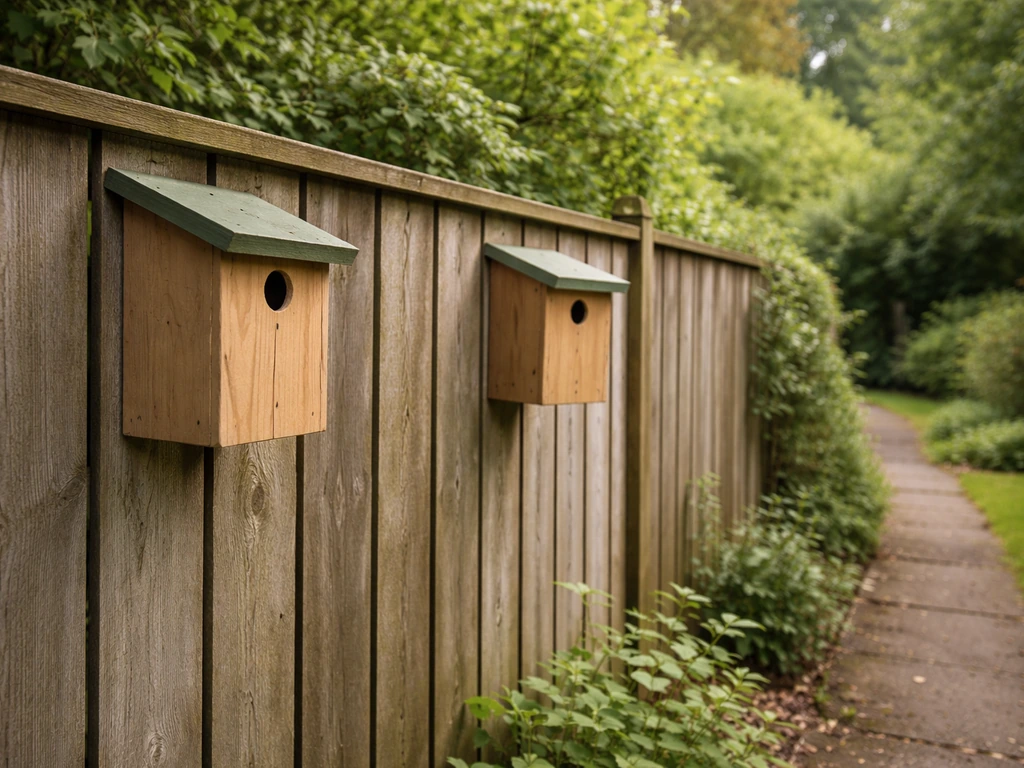
Height and orientation aren't just preferences: they're the difference between a box that gets used in year one and one that sits empty for three seasons. If you are still deciding, aim for a spot that keeps the entrance sheltered from wind and predators while matching the typical height and distance recommendations for bird houses where to put them. Here's what the research and field experience both back up.
| Species | Recommended Height | Entrance Facing | Habitat Notes |
|---|---|---|---|
| Eastern/Western/Mountain Bluebird | 4–6 ft | East (open field) | 50+ ft of open ground from entrance; 300 ft min between same-species boxes |
| Black-capped/Carolina Chickadee | 5–15 ft | Away from prevailing wind | Near woodland edge or shrubby areas; 1 1/8–1 1/4 in hole |
| House Wren | 5–10 ft | Any direction | Within 100 ft of woody vegetation or shrubs |
| Bewick's Wren | 6–10 ft | Any direction | Near brushy cover; 1 1/4 in hole |
| Purple Martin | 12–18 ft | Open sky, away from trees | Open area 30–60 ft from nearest tree; colony housing |
For most backyard setups, 5 to 6 feet is the sweet spot. It's low enough to monitor without a ladder, high enough to deter casual disturbance, and right in the range preferred by bluebirds and chickadees. Wrens are flexible and will use boxes mounted anywhere from 5 to 10 feet. Purple martins are the big outlier: their colony houses go up on poles 12 to 18 feet high with wide open sky around them, which is a completely different installation than a single nest box.
Distance from feeders matters more than most beginners expect. Feeders attract constant bird traffic and activity, which stresses nesting birds and can disrupt incubation. Keep nest boxes at least 10 feet from any feeder, and honestly, 20 to 30 feet is better. If you are still deciding where to put bird houses in your yard, start by keeping the box well away from feeders and high-traffic areas. The same logic applies to high-traffic areas of your yard: patios, garden paths, and play areas all create disturbance that discourages nesting. If your yard is small, position the box so the entrance faces away from the busiest zone and gives the birds a quiet approach.
Species-appropriate placement: habitat, spacing, and competition
The single most common mistake people make is mounting the right box in the wrong habitat. For finches, where you place the finch bird house matters most because habitat, spacing, and competition determine whether they even notice it mounting the right box in the wrong habitat. A bluebird box planted in a dense wooded yard will be taken over by house wrens or chickadees. A wren box nailed to a fence post in the middle of an open field will go unused. Matching the box to the habitat it sits in is non-negotiable.
Open-country nesters: bluebirds and tree swallows
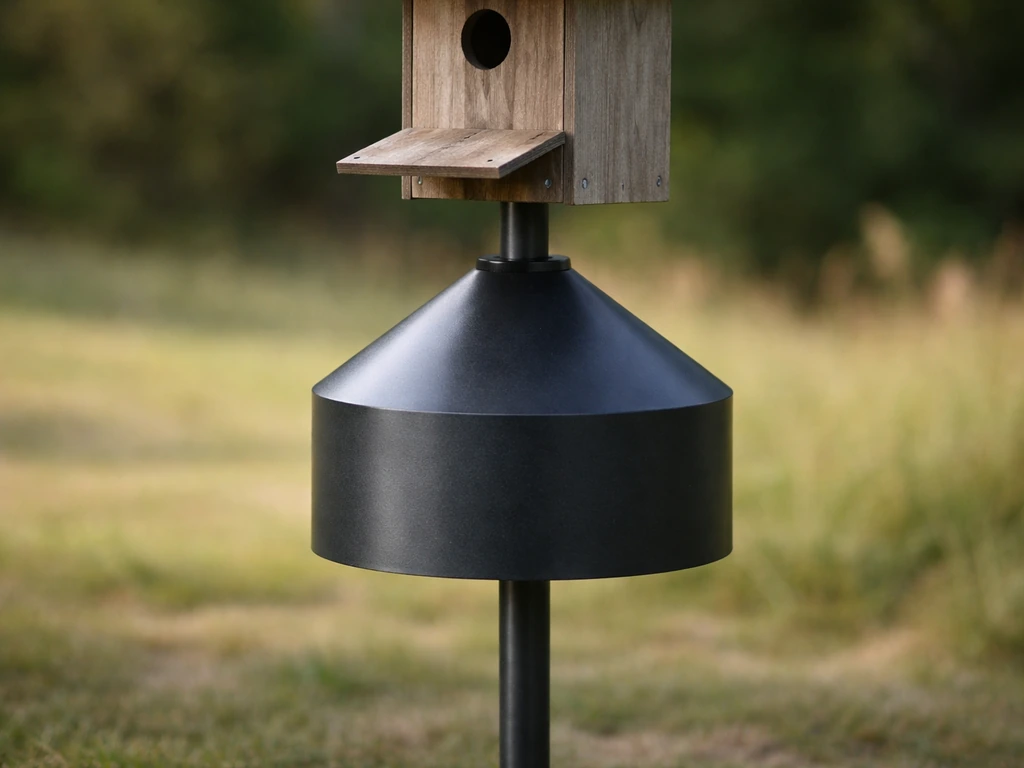
Bluebirds want open grassland, meadows, pastures, golf course edges, and similar habitats. The entrance hole should look out over at least 50 feet of clear, low-cut ground. No tall shrubs, brush piles, or woodland canopy directly in front of the box. The 1 1/2-inch entrance hole size is critical for bluebirds: larger holes let starlings in, and smaller ones exclude the bluebirds themselves. Spacing matters too. Place bluebird boxes at least 300 feet apart from each other because bluebirds are territorial and will fight off neighbors. If you want to attract both bluebirds and tree swallows, pair boxes about 15 to 25 feet apart and space those pairs 300 feet from the next pair.
Woodland-edge nesters: chickadees and wrens
Chickadees want to be near woodland edges, mature trees, or shrubby borders. Mount their boxes 5 to 15 feet high on a tree or post near woody vegetation. For a complete guide on where to hang a chickadee bird house, focus on woodland edges, safe height, and predator protection. The 1 1/8 to 1 1/4-inch entrance hole is species-specific: it keeps out house sparrows and starlings while welcoming chickadees. House wrens and Bewick's wrens are even more flexible. They nest in shrubby yards, orchard edges, and suburban gardens happily. Hang a wren box 5 to 10 feet up near a brushy area within about 100 feet of woody vegetation. If you're focused on wrens specifically, the placement rules are looser than for bluebirds, but avoiding wide-open exposed spots still helps.
Colony nesters: purple martins
Purple martins are a completely different project. They require colony housing on a tall pole (12 to 18 feet), positioned in an open area at least 30 to 60 feet from the nearest large tree, with open sky above for aerial foraging. If you're planning a martin house, that guide deserves its own deep dive into site selection and timing, because martins are highly site-specific and won't use just any open pole.
Competition and timing
Get your boxes up early. In most of the U.S., cavity nesters begin scouting sites in late winter and early spring, often February through March. Boxes mounted after nesting begins may sit empty that first season. If you have multiple species in mind, space boxes far enough apart that house sparrows and house wrens don't monopolize every available cavity. House sparrows are aggressive competitors that can overtake bluebird and chickadee boxes, so the entrance hole size is your first line of defense.
Mounting methods and stability: pole, post, fence, siding, and tree
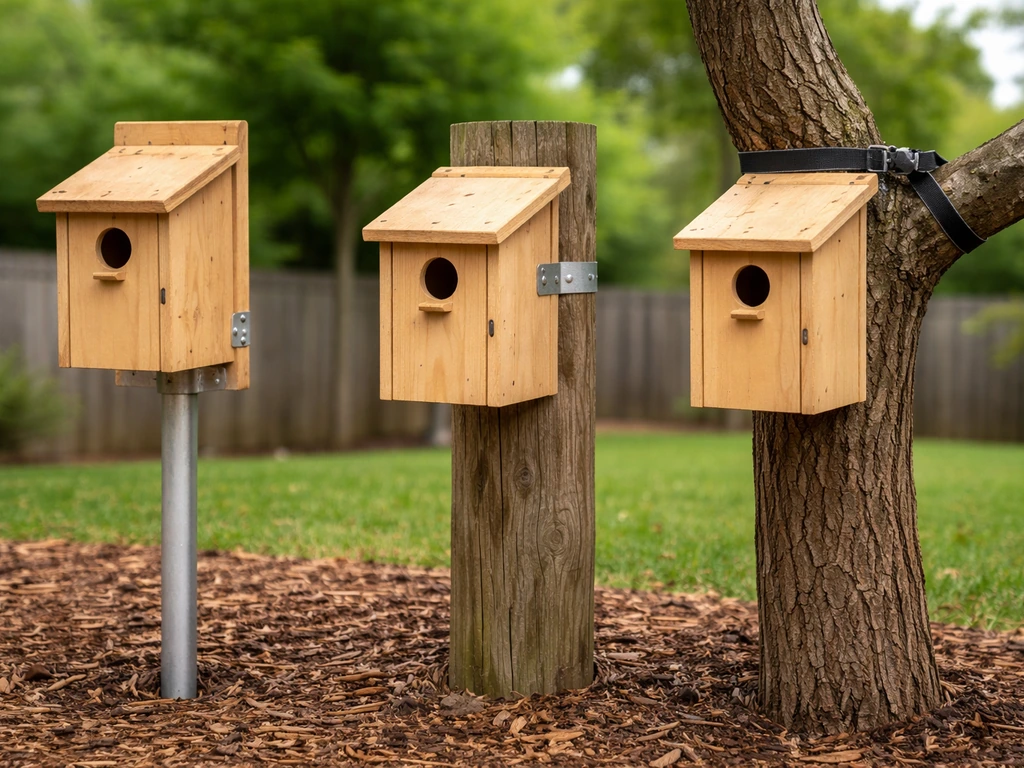
How you attach the box is as important as where you put it. A wobbly box loses birds. A box mounted on a tree without a baffle loses nestlings to predators. Here's how to think through each surface.
Metal poles: the best option for most yards
A smooth metal conduit or steel pole is the single best mounting choice for most cavity nesters. Raccoons and cats can't grip smooth metal the way they can grip rough wood or bark. Driving the pole 18 to 24 inches into the ground gives you a rock-solid, wobble-free mount. Use a mounting bracket or a flat board attached to the top of the pole to attach the box securely. Tighten all hardware after the first rain, since ground settling can create a slight lean. For purple martin poles specifically, the PMCA recommends a telescoping aluminum pole that can be lowered for inspection and maintenance, with annual car wax applied to keep it slippery.
Wooden posts: fine with the right precautions
A 4x4 wooden fence post or a dedicated wooden post works, but the rougher surface is climbable by predators. If you use a wooden post, a stovepipe-style baffle below the box is mandatory, not optional. Attach the box with two or more screws through a back mounting board so it doesn't swing or rotate. Check the post for rot at ground level each spring.
Fence mounting
Fences are convenient and many people use them, but they're the least predator-safe option. Cats and raccoons can walk straight across a fence rail right to the entrance hole. If you mount on a fence, install a cone baffle or wrap the post with sheet metal at least 12 to 18 inches below the box. This approach works for wrens, which tolerate lower-stress locations better, but it's a poor choice for bluebirds or chickadees in areas with high predator pressure.
Siding and building-mounted boxes
Boxes mounted on the side of a house, barn, or shed work for wrens especially well since wrens are bold and comfortable near buildings. Use rust-resistant screws and a backing board to prevent water from seeping behind the box and rotting the siding. The structural attachment needs to be solid enough that the box doesn't pull away from the wall over time from wind load. Avoid mounting boxes under eaves where wasps like to nest, and make sure the entrance height still hits the 5-to-10-foot target range. Siding mounts are harder to add a predator baffle to, so choose a location that's not easy for a cat to access from a fence or nearby surface.
Tree mounting
Mounting directly on a tree is the most naturalistic option but the highest-risk for predators. Trees give raccoons, squirrels, and snakes a direct climbing route to the box. NestBoxBuilder.com notes that mounting on trees or posts without proper predator guard protection can quickly turn nestboxes into a food source for raccoons, cats, and snakes Trees give raccoons, squirrels, and snakes a direct climbing route to the box.. If you mount on a tree, wrap sheet metal or install a cone baffle around the trunk at least 4 feet below the box. Never use nails driven directly into living trees for the long-term structural mount: use screws or straps that can be loosened as the tree grows. Chickadees and wrens tolerate tree-mounted boxes better than bluebirds do, since those open-country birds prefer isolated poles anyway.
Predator protection, maintenance access, and sanitation
A nest box without predator protection is essentially a trap for nesting birds. This is the part most beginners skip, and it's the part that leads to the most heartbreak. Getting the predator-proofing right from the start costs less than an hour of extra work.
Baffles: your most effective tool
A stovepipe-style baffle mounted on the pole below the box is the most effective predator deterrent available. It blocks raccoons, cats, opossums, and most snakes from reaching the box. Position the bottom of the baffle at least 4 feet off the ground so a raccoon can't reach over it from below. Cone baffles are a second option and work well on posts and trees. Be aware that some wire guard designs (like certain versions of the Noel guard) have limitations: they don't deter snakes, and flexible wire designs can be compressed by a determined raccoon. A rigid stovepipe-style baffle is more reliable.
Placement choices that reduce predator risk
Don't place boxes near structures, fences, or overhanging branches that give predators an alternate route to the box. Keep the area around the base of the pole clear of dense shrubs and brush that could conceal a cat. Idaho Fish and Game specifically flags this for feeders and baths, but the same logic applies directly to nest boxes: hidden cover near the base makes ambush easier for ground predators. A 6-foot clear radius around the base of the mounting pole is a reasonable minimum.
Monitoring access without over-disturbing
Choose a mounting height and location you can reach comfortably for nest checks. The ideal is a box mounted at 5 to 6 feet where you can open the side or top panel and peek inside without a ladder. NestWatch recommends monitoring once a week during active nesting, but doing that quickly and quietly matters as much as the location. Mount the box so the door opens away from the direction birds fly in, and plan your approach path so you're not walking through the bird's line of sight repeatedly.
Sanitation: setting the site up for easy cleaning
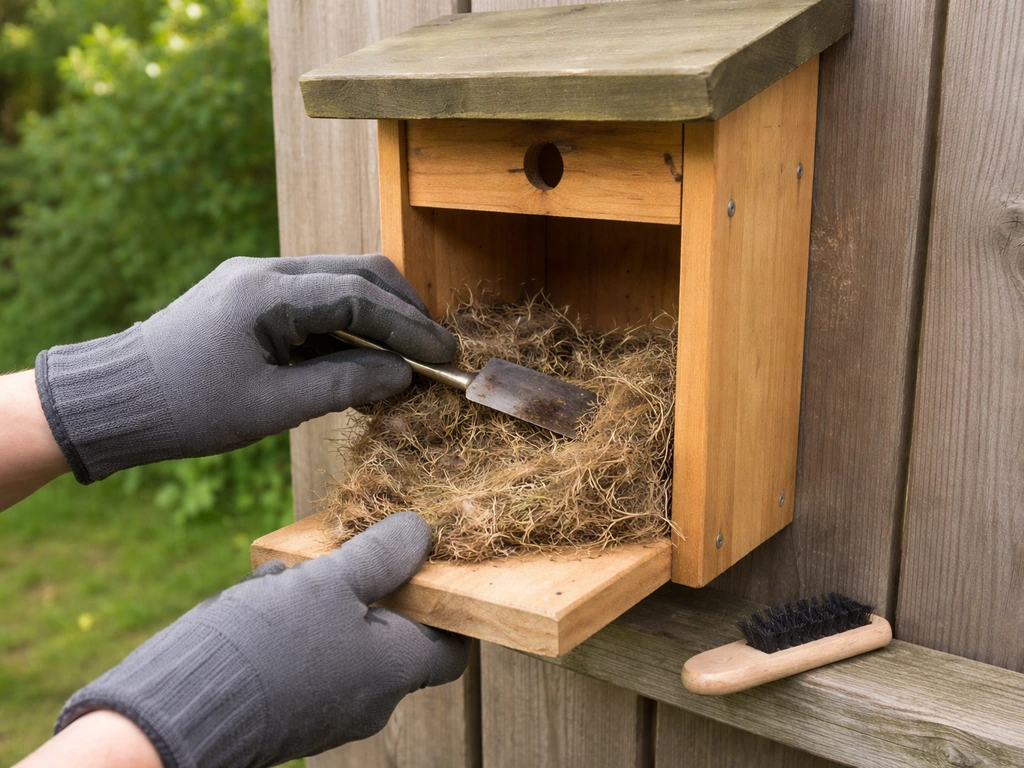
Once nestlings fledge, the nest box needs cleaning before the next clutch or the following season. Cornell NestWatch recommends removing all old nesting material and scrubbing the interior with a mild detergent and water solution. If the box is soiled with heavy fecal matter, a diluted bleach solution (1 part bleach to 10 parts water) is appropriate. Choosing a mounting location and height that makes this cleaning quick and easy is a real practical consideration. A box mounted at 12 feet on a fence in an awkward corner is a box that probably won't get cleaned properly. Place it at a height and position where you'll actually do the maintenance.
Finally, let the location stay consistent year to year. Birds that successfully fledge from a box often return to the same site the following spring. Moving a box even a few feet can disrupt that fidelity. Once you've confirmed a spot works, leave the pole in the ground and the box in place, and just clean and refresh it each season.
FAQ
What if I do not know which way my yard faces, where should I mount a bird house instead?
Start with wind first, then sun. Put the entrance so it faces away from the direction your yard gets the most driving rain and drafts, then choose the coolest orientation you can manage (east is best, north is next). If you cannot confidently judge wind or sun, place the box where it gets morning light but afternoon shade from open air, not from thick overhanging branches.
Can I mount a bird house lower than 5 feet for easier monitoring?
You can, but you trade predator safety and disturbance control. A good compromise is staying near 5 feet when possible, because many common cavity nesters use boxes that high and raccoons can reach higher if the gap is too small. If you must go lower, make predator-proofing more robust by using a rigid stovepipe-style baffle and keeping a clean, brush-free base radius around the pole.
How close can a nest box be to trees or shrubs and still be safe for birds?
It depends on the species and the predator route. For bluebirds, aim for at least 50 feet of clear, low-cut ground in front of the entrance and avoid brush or canopy that blocks visibility. For chickadees and wrens, near woody vegetation is helpful, but do not place the box where branches, vines, or shrub lines create a direct climb path to the entrance.
Should I mount the bird house right next to a bird feeder if birds already visit that area?
Avoid it. Feeders increase constant traffic and can cause adults to abandon the nest or spend less time on incubation and feeding. Keep the box at least 10 feet from any feeder, with 20 to 30 feet preferable, and if your yard is small, orient the entrance so it is backed away from the busiest feeder approach path.
What if the only mounting option is on a wooden fence or near a deck?
Fence mounting is the highest-risk setup because predators can reach the entrance from the rail level. If you have no alternative, use an effective baffle or sheet-metal wrap 12 to 18 inches below the box and keep the base clear of cover that could conceal a cat. Consider relocating to a post or a dedicated wall spot if you cannot fully control access from both sides.
Is a smaller entrance hole always better because it blocks bigger birds?
No. Entrance size needs to match the target species, and the wrong size can exclude the birds you want. If the hole is too large, competitors like starlings may enter; if too small, bluebirds and other cavity nesters may not be able to access. Use the species-specific entrance dimensions rather than guessing based on local bird size.
How do I adjust placement for a yard with wind from multiple directions?
Treat prevailing wind as the worst-case direction for rain and drafts, then add physical protection. Aim the entrance away from the most frequent storm wind direction, and if your yard is exposed, install at least a 2 to 3 inch roof overhang to reduce rain entry. Also plan your approach path so you are not repeatedly walking through the bird’s line of sight from the common wind-exposed side.
What mounting material is actually safest if I am trying to prevent cats and raccoons?
Smooth metal surfaces paired with a rigid predator barrier are the best combo. A smooth steel pole or metal conduit resists gripping, and a stovepipe-style baffle positioned with its bottom at least 4 feet off the ground blocks most predator attempts. Rough wood and bark are easier for climbers to grip, so they require more aggressive baffle solutions.
Can I skip the baffle if my yard is small and I cannot fit one?
Do not skip it, even in a small yard. A nest box without a baffle is a common failure point, because predators often reach from below or from adjacent surfaces. If space is the issue, choose a rigid stovepipe-style baffle that matches your mount height, and clear vegetation at least a few feet around the base so predators cannot stage under cover.
When is the right time to mount, and what if I put it up late?
Mount before cavity nesters begin scouting, typically late winter to early spring (often February to March in many areas). If you install after scouting has started, the box may sit empty even if the placement is perfect. Once it works in a season, leave it in place so birds can reliably return the next year.
How often should I check the box, and does checking frequency depend on the location?
During active nesting, check about once per week and do it quickly and quietly. If the box is in a high-disturbance area, shorter and less frequent visits help reduce interruptions and unintended predator cues. Also mount the box so you can open the panel away from the birds’ flight approach, so you are not repeatedly entering their direct line of sight.
Do I need to clean the bird house right after the nesting season?
Yes. Remove old nesting material and scrub the interior with mild detergent and water, then address heavy fecal buildup using a diluted bleach solution (1 part bleach to 10 parts water). Cleaning is easiest when the box is mounted at a reachable height, so avoid placing it where you will postpone maintenance.
Next Article
Where to Hang a Wren Bird House: Exact Placement Guide
Exact wren birdhouse placement: height, entry direction, shelter, predator-safe distance, and mounting tips for any yard