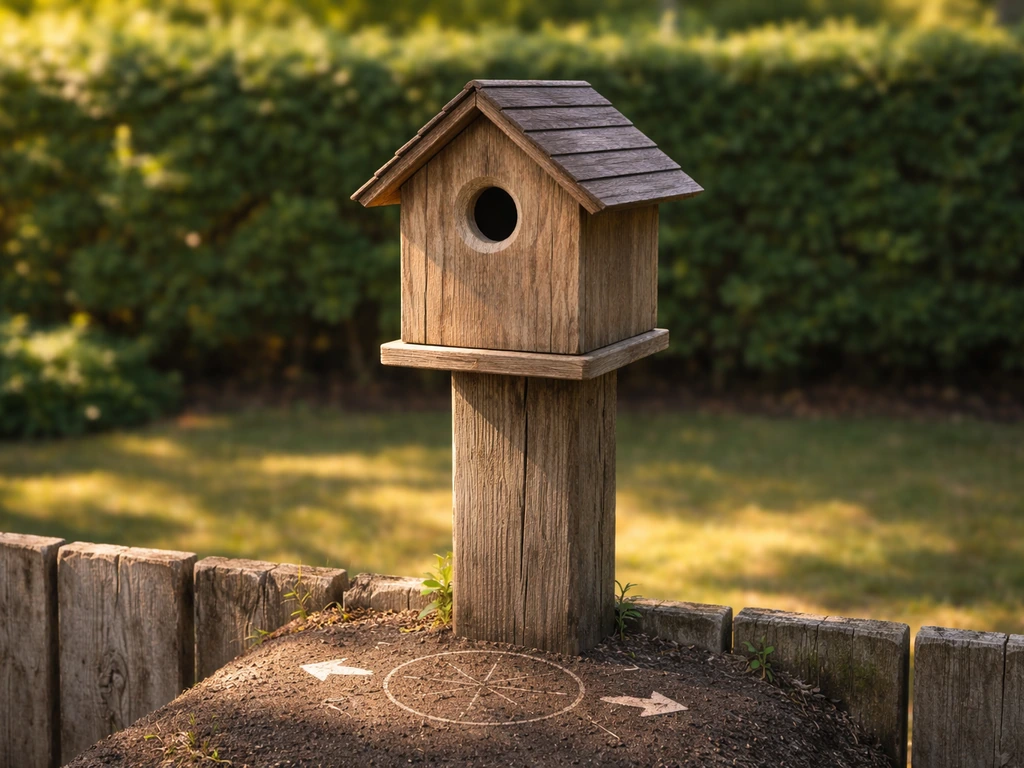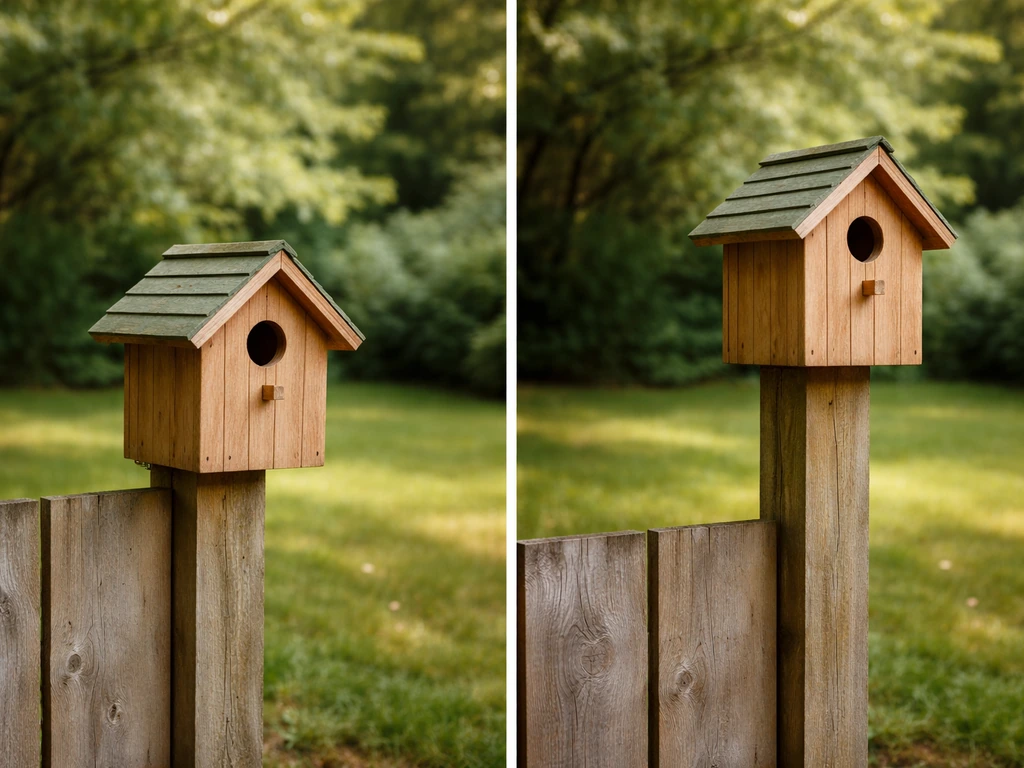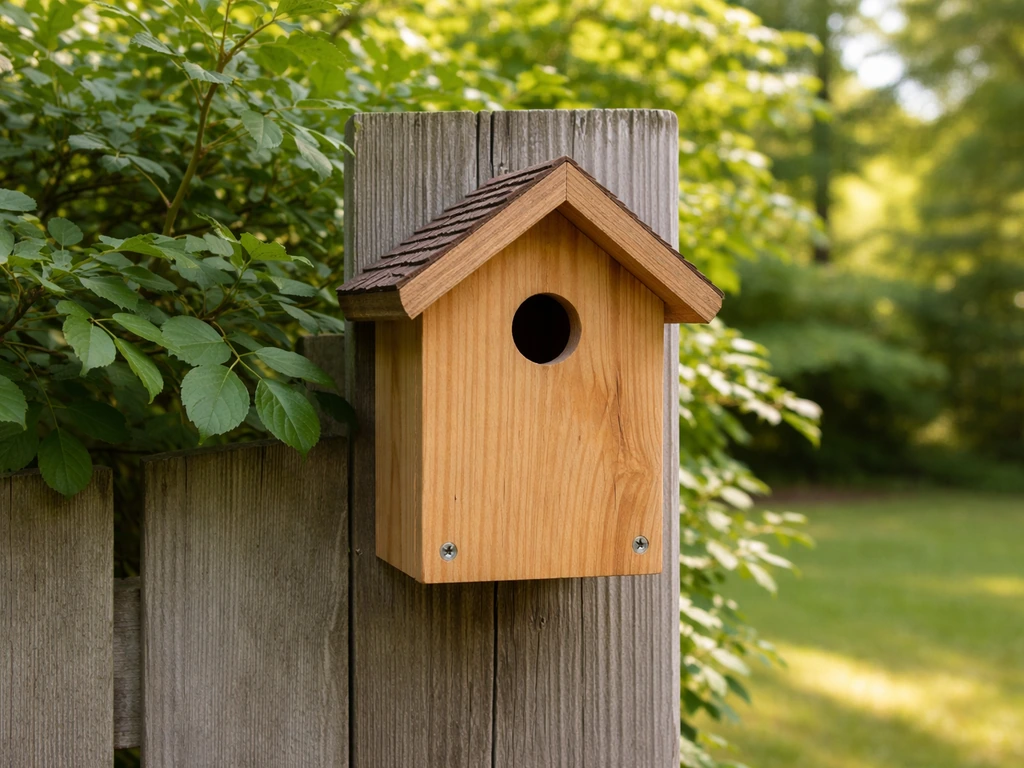
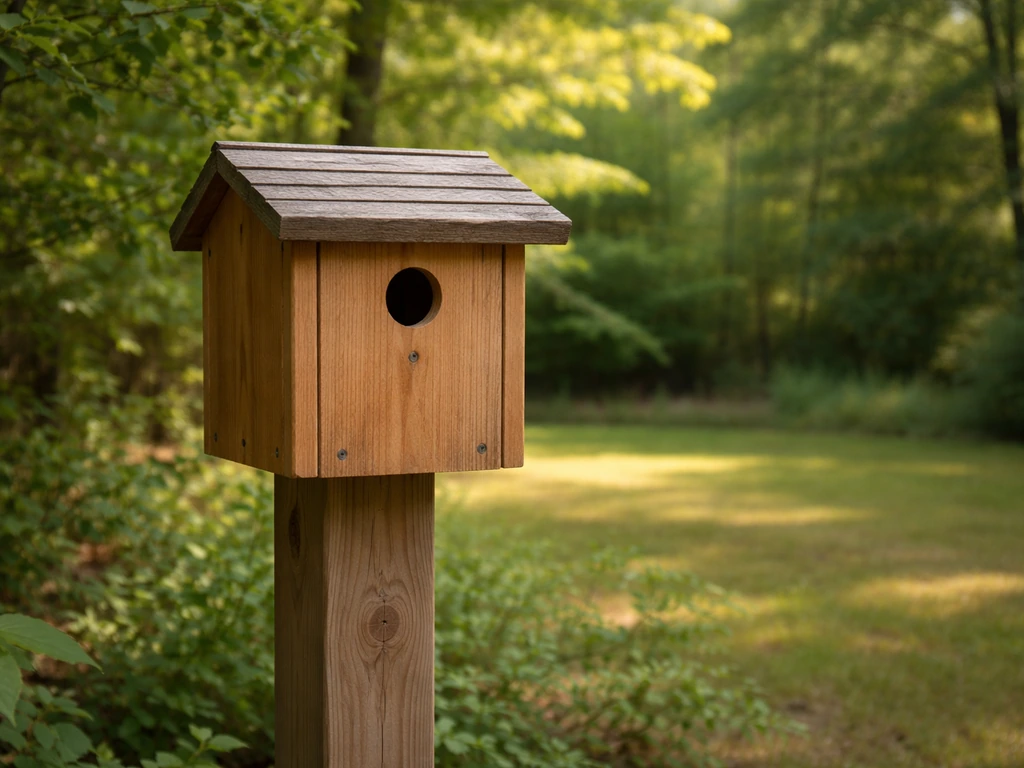
Hang a chickadee bird house between 5 and 15 feet off the ground, on a post or tree at the edge of a yard that borders mature trees or shrubs, with the entrance hole facing away from prevailing winds. Keep it at least 20 to 30 feet from other nest boxes and feeders, in a spot that gets about 40 to 60 percent sunlight rather than full shade or blazing afternoon sun. Add a predator baffle below the box, make sure the approach path to the hole is clear of branches, and you will have done almost everything right before a single chickadee shows up.
Where to Hang a Chickadee Bird House: Exact Placement
Maya Thompson
28 Jun 2026
Best height and placement for chickadee bird houses
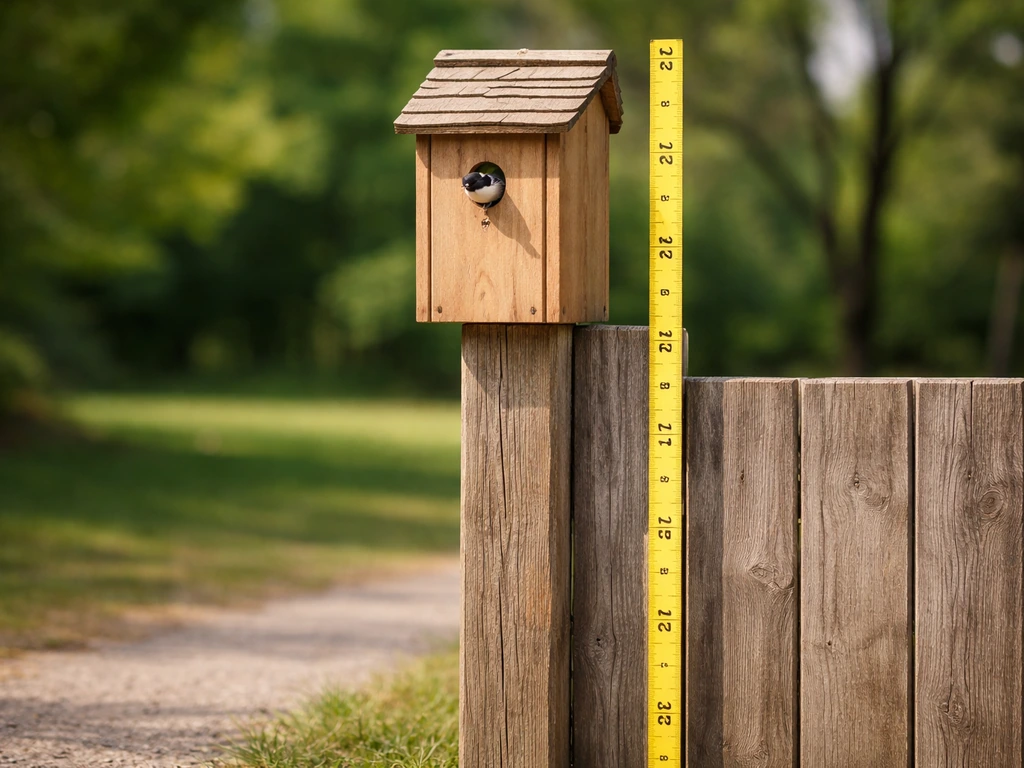
The sweet spot for mounting height is 5 to 15 feet above the ground. NestWatch puts the range at 5 to 15 feet, and the Southern Adirondack Audubon dims it slightly to 6 to 15 feet. In practice, somewhere between 6 and 10 feet is the easiest range to work with because you can check and clean the box without a tall ladder, and chickadees are perfectly comfortable at that height. Going lower than 5 feet makes predation much more likely. Going higher than 15 feet is not wrong, but it makes monitoring harder and offers no real benefit for the birds.
The entrance hole inside the box should sit about 6 to 8 inches above the floor of the box (USDA specs note 7 inches as a standard figure for Black-capped chickadee structures). This internal distance matters almost as much as mounting height because it makes the nest harder for a raccoon or squirrel to reach in and grab. The entrance hole diameter itself must be exactly 1 1/8 inches for Black-capped chickadees.
Birds Canada’s cavity-nesting guidelines for Ontario specify a Black-capped chickadee entrance hole diameter of 3 cm and an entrance height of 15 to 20 cm above the floor, along with other nest-box dimensions [Black-capped chickadees. ](https://www. birdscanada. org/wp-content/uploads/2021/03/Habitat-Management-Guidelines-for-Cavity-nesting-birds-in-Ontario-1.
pdf). That tight spec is not just tradition. A larger hole invites starlings, House Sparrows, and squirrels. A smaller hole blocks the chickadee entirely.
Do not round up.
For Carolina chickadees, which overlap with Black-capped chickadees across parts of the Mid-Atlantic and Southeast, some state wildlife programs recommend mounting at roughly 5 feet specifically, with the entrance facing east. The hole size stays the same at 1 1/8 inches, and most of the placement logic carries over directly.
Direction, orientation, and sun exposure
Compass direction matters less than most people think. Cornell Lab's All About Birds is pretty direct about this: the exact cardinal direction of the entrance hole probably does not have a big effect on whether chickadees nest. What matters far more is that the approach path to the hole is clear. If a branch, cluster of leaves, or overgrown shrub sits right in front of the entrance, chickadees are reluctant to commit to a box there. They want an unobstructed flight path in and out.
That said, a few practical orientation rules are worth following. Point the entrance away from the direction your prevailing winds blow from. If you want the best results, orient the entrance hole so the bird house faces the direction your local conditions favor bird house should face what direction. In most of North America this means avoiding a westward-facing entrance, since storms typically roll in from the west.
If you are in a particularly hot climate, avoid facing the hole south or southwest where it catches direct afternoon sun. NestWatch recommends that the area around a Black-capped chickadee box receive 40 to 60 percent sunlight, which translates to dappled or partial sun rather than deep shade or an exposed, sun-baked location. A box on the northeast or east side of a structure or tree gets morning sun and afternoon shade, which is close to ideal in most regions.
Distance from feeders and human activity
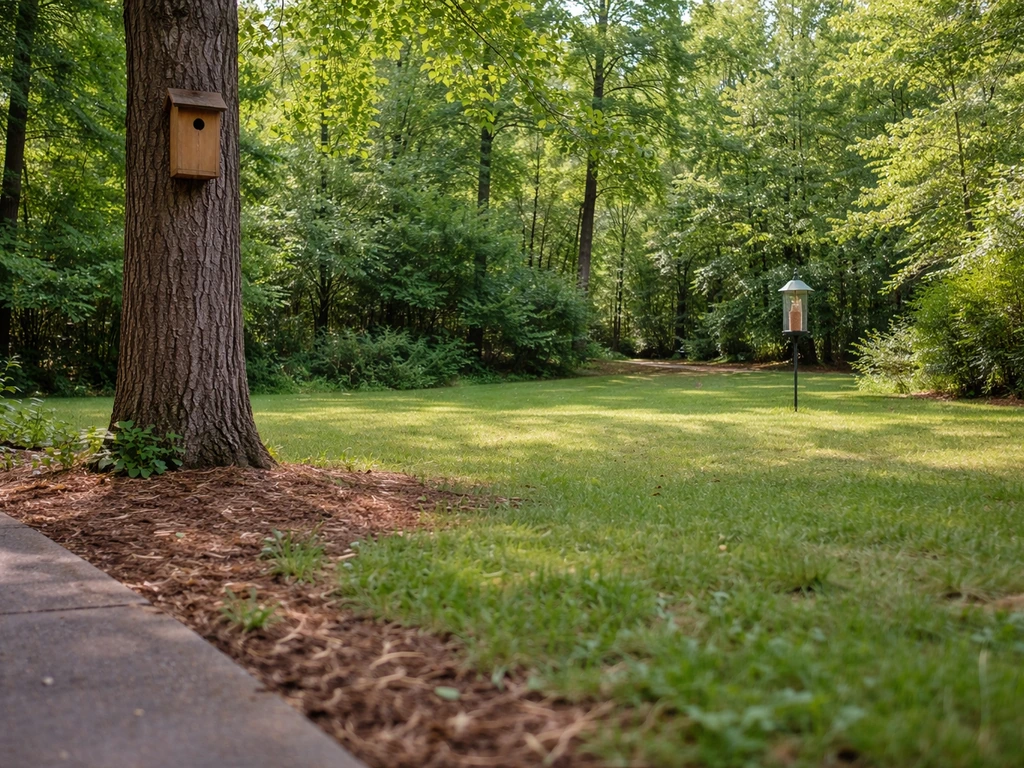
Chickadees are not especially skittish, but they still prefer a nest box that feels private. A general rule that works well in practice: keep at least 20 to 30 feet between your chickadee box and any other nest box or active feeder. That spacing reduces competition stress, limits the chance of territorial disputes at the entrance hole, and keeps the nesting area from feeling like a busy intersection.
Distance from human foot traffic is more flexible than many guides suggest. Chickadees regularly nest close to houses and moderate activity when they feel the box itself is secure. The bigger risk is not the presence of people but the presence of cats, dogs, and curious hands near the post during incubation.
Position the box so it is not right next to a path or patio where pets roam freely, and make sure children know not to knock or shake the post once eggs are laid. If you are curious about how this compares to placement for other species, the logic for wren houses and general nest box siting follows similar principles but with slightly different spacing preferences.
If you are also wondering where to hang a wren bird house, focus on similar siting basics like safe mounting height, good visibility, and keeping the entrance area clear wren houses.
Habitat rules: yard interior vs. woodland edge vs. open areas
Chickadees are woodland birds at heart. NestWatch lists their preferred box habitats as forests, woodlots, yards with mature hardwood trees, forest edges, and meadows with nearby tree cover. The most consistently productive placement in a typical suburban backyard is at or near the edge between the open lawn and a tree line, hedgerow, or mature shrub border.
If you are still unsure where to put bird houses in general, start by choosing a similar edge location with nearby cover and a clear flight path edge between the open lawn and a tree line. The box does not need to be inside a dense thicket, but it should have trees or large shrubs within about 50 feet so the birds have quick escape cover and nearby foraging spots.
Yard interiors with very little tree canopy nearby are the weakest option. If your yard is mostly open lawn with only a few young trees, consider mounting the box on a post closer to the property edge near a neighbor's mature trees or along a fence line that backs up to shrubs. A box sitting in the middle of an open lawn rarely succeeds for chickadees even if everything else is correct, because the surrounding vegetation drives which species will nest, not just the box design. If you are trying to decide where to mount a bird house in your yard, focus on a sheltered setting with an unobstructed flight path and the right height for the species mounting the box on a post.
Woodland edges and the margins of parks or natural areas are the most productive settings. If you have a yard that borders woods, mount the box on a freestanding post about 10 to 20 feet inside the yard from the tree line, facing back toward the open area. If you are wondering bird houses where to put them, aim for a quiet spot that keeps the entrance easy for the birds to access while staying protected from predators mount the box on a freestanding post. This gives the birds the security of nearby trees while keeping the entrance path clear. Avoid mounting directly on a tree in heavy canopy where squirrels have constant roof access.
Mounting methods that reduce predators and support easy maintenance
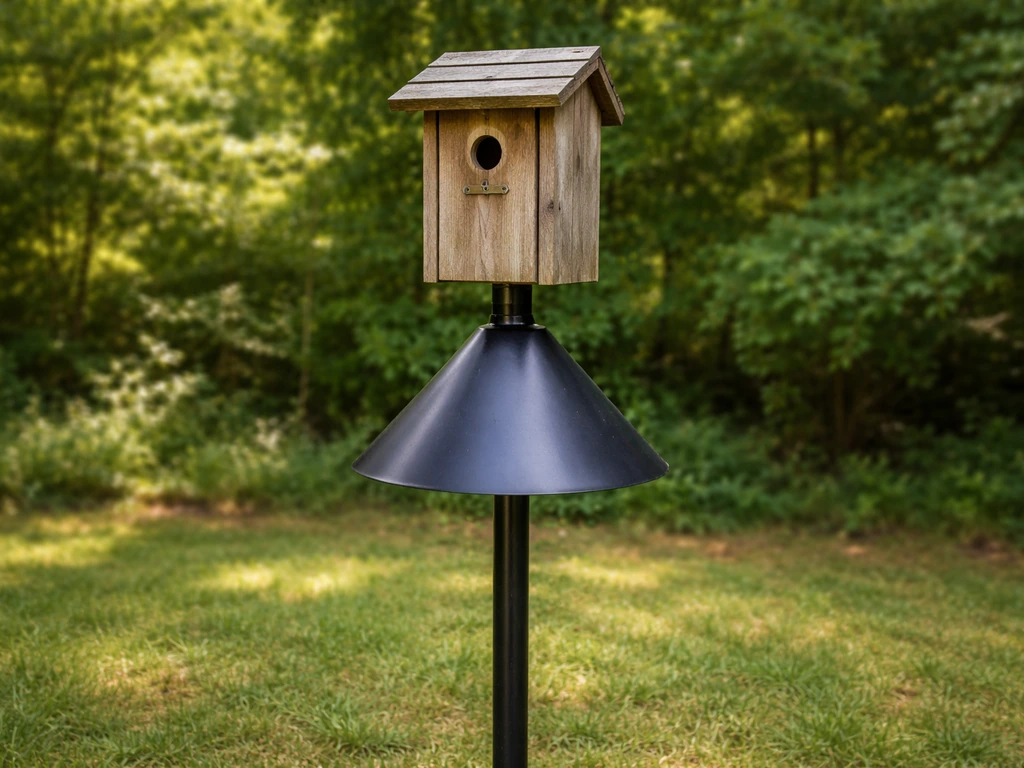
A metal pole or wooden post is the safest mounting option. When you mount on a freestanding post, you can add a stovepipe or cone baffle below the box, which is the single most effective predator deterrent you can add. NestWatch data backs this up clearly: nest boxes with predator guards had success rates 6.7 percentage points higher than boxes without them. That is a meaningful difference and the baffle costs very little to add.
If you do mount on a tree or a wooden fence post, squirrels are your main challenge. One practical approach from NestWatch: attach a sheet-metal plate with a hole that exactly matches the 1 1/8-inch entrance hole diameter, placed flush against the front of the box. The alignment makes it much harder for a squirrel to gnaw the opening wider or grip the edge to reach inside. Raccoons are a bigger concern at lower mounting heights, which is another reason to keep the box at 6 feet or above when possible.
For maintenance access, choose or build a box with a side or front panel that opens with a simple latch rather than screws. You will need to check the box during the season and clean it out afterward, and fussing with a screwdriver every time makes you less likely to do it. Mount the box so you can open it without a ladder if at all possible.
If you are also planning a purple martin setup, the next step is choosing where to place a purple martin bird house for good airflow and easy monitoring. The post should be secure enough that it does not wobble in high winds. A loose box rattling in a storm is a real nest failure risk, and NestWatch specifically flags wind security as an installation requirement.
How to mount step by step
- Choose a freestanding metal or wood post, or a sturdy tree trunk at the woodland edge, and confirm the mounting height will put the entrance hole between 6 and 10 feet off the ground.
- Slide a stovepipe baffle (at least 8 inches in diameter and 18 inches long) onto the post before setting it, or attach a cone-style predator guard at least 18 inches below the box.
- Attach the box to the post using galvanized screws or a lag bolt through the back panel, making sure it sits level or tilts very slightly forward so rain does not collect inside.
- Orient the entrance hole away from prevailing winds and check that the flight path in front of the hole is clear of branches for at least 3 to 4 feet.
- If mounting on a tree, attach the sheet-metal entry-hole guard plate flush to the front face of the box before hanging.
- Test the box for wobble by giving the post a firm push. If it moves more than an inch, add a second stake or re-tamp the base.
Seasonal timing, check frequency, and when to adjust placement
Install your chickadee box well before breeding season begins. In most of North America, chickadees start scouting cavities in late winter or very early spring, sometimes as early as February or March depending on your region. Having the box up and weathered by late February gives it the best chance of being noticed during that scouting window. If you are specifically planning a finch setup, the best placement is similar but can vary by species and local conditions where to put finch bird house. A brand-new box hung in May is not useless, but you have already missed peak interest.
Once eggs are laid, the most important rule is to leave the box alone. Egg-laying typically begins one to two days after nest completion, and you should not open the box after the eleventh day of hatching. Disturbing an active nest during incubation or when young chicks are present can cause adults to abandon the nest. Check from a distance using binoculars to watch for adult activity at the entrance. If you see the adults coming and going regularly, that is your sign that things are progressing.
After the young fledge, clean the box out promptly. Remove old nesting material, scrub the interior with a stiff brush (no soap or chemicals needed), and let it dry before closing it back up. NestWatch recommends doing this at the end of the breeding season. A clean box is more attractive for a second brood if chickadees attempt one, and it also reduces parasite loads going into the next year.
If you install the box before breeding season and see no activity by late April or early May, do not immediately move it. First check the simple things: is the entrance hole blocked or obscured by new leaf growth? Has a competing species like a House Wren moved in? Is the approach path clear? Small adjustments, like trimming a branch or shifting the box 10 feet along a fence line, are worth trying before relocating entirely. A box that gets ignored in year one is often adopted in year two once the local birds have mapped it into their territory. Patience is genuinely part of the placement strategy.
Quick placement reference
| Placement factor | Recommended spec | Notes |
|---|---|---|
| Mounting height | 6 to 10 feet (range: 5 to 15 ft) | 6 to 8 ft is easiest for monitoring without a ladder |
| Entrance hole diameter | 1 1/8 inches exactly | Do not go larger; attracts competing species |
| Entrance above floor | 6 to 8 inches inside box | Reduces predator reach-in from outside |
| Sun exposure | 40 to 60 percent sunlight | Dappled or partial sun; avoid full afternoon exposure |
| Entrance direction | Away from prevailing wind | East or northeast works well in most regions |
| Distance from other boxes or feeders | 20 to 30 feet minimum | Reduces competition and territorial stress |
| Preferred habitat | Woodland edge, mature trees or shrubs nearby | Open lawn centers are least productive |
| Predator guard | Stovepipe or cone baffle on post | Adds roughly 6 to 7 percent nesting success |
| Install by | Late February to early March | Before birds begin scouting cavities |
FAQ
Can I hang a chickadee bird house on a hanging cable or railing instead of a post or tree?
Chickadees do best with a rigid mount that does not sway, because wobbling and rattling can interrupt nesting behavior. If you only have a railing, use a secured bracket to prevent movement and keep the box stable enough that you can open the side panel without shifting the unit.
What if my yard has no clear edge between lawn and trees, where should I place it?
If there is no obvious woodland edge, aim for a similar “escape cover” setup: mount near the closest mature shrubs, hedgerow, or a line of larger trees that is within about 50 feet of the box. The goal is still an unobstructed approach to the entrance plus nearby cover for quick retreat.
Is it okay if the entrance faces directly into a birdbath or open window area?
Avoid positioning the entrance where people pets repeatedly cross right in front of the hole, because the “clear flight path” rule is really about an easy approach the birds trust. Instead, orient so the entry path is mostly open to the birds’ approach route, not to where humans routinely stand or pass.
How close can a chickadee box be to a feeder?
Don’t use the “distance is flexible” idea for feeders, because feeders attract competing species. Keep the same 20 to 30 feet spacing from active feeders, especially during nesting season when starlings and sparrows can become more persistent.
Do I need to paint or seal the outside of the chickadee box?
You can weatherproof the outside, but keep any finish on the exterior only, and let the box air out fully before hanging. Avoid strong odors near the entrance and do not alter the entrance hole size, since that is the critical dimension for chickadees.
What should I do if squirrels are attacking the box even with a baffle?
Check that the predator baffle is continuous and prevents access from the ground all the way up to the underside of the box. If the squirrels are still reaching, confirm that the box is mounted at the taller end of the recommended range and that nothing (including vines or branches) creates a “bridge” to the entrance area.
Can I reposition the chickadee box after I notice activity?
Make only small troubleshooting changes if you are adjusting before nesting begins, like trimming an overhanging branch or clearing the approach path. Once you see consistent adult traffic to the entrance indicating a developing nest, avoid moving the box because even short relocations can reset site selection.
How can I tell the difference between chickadee interest and a different species moving in?
Use the entrance timing and size cues, for example, chickadees typically make regular short visits and do not linger in a way that suggests larger cavity users. If you see a competitor repeatedly using the hole area, stop adjustments and treat it as occupied, since further “fixing” can lead to abandonment.
If eggs are already present, is it ever okay to check the box for safety?
No, once eggs or hatchlings are present, avoid opening the box. If you need to reduce risk, do it outside by improving the approach path and keeping people and pets away, then monitor from a distance with binoculars.
After chicks fledge, how soon should I clean the box?
Clean promptly, but wait until the family has fully moved out and you no longer see adults carrying food to the entrance. Remove old material, brush the interior, and let it dry fully before closing, so a second brood is less likely to reject the box.