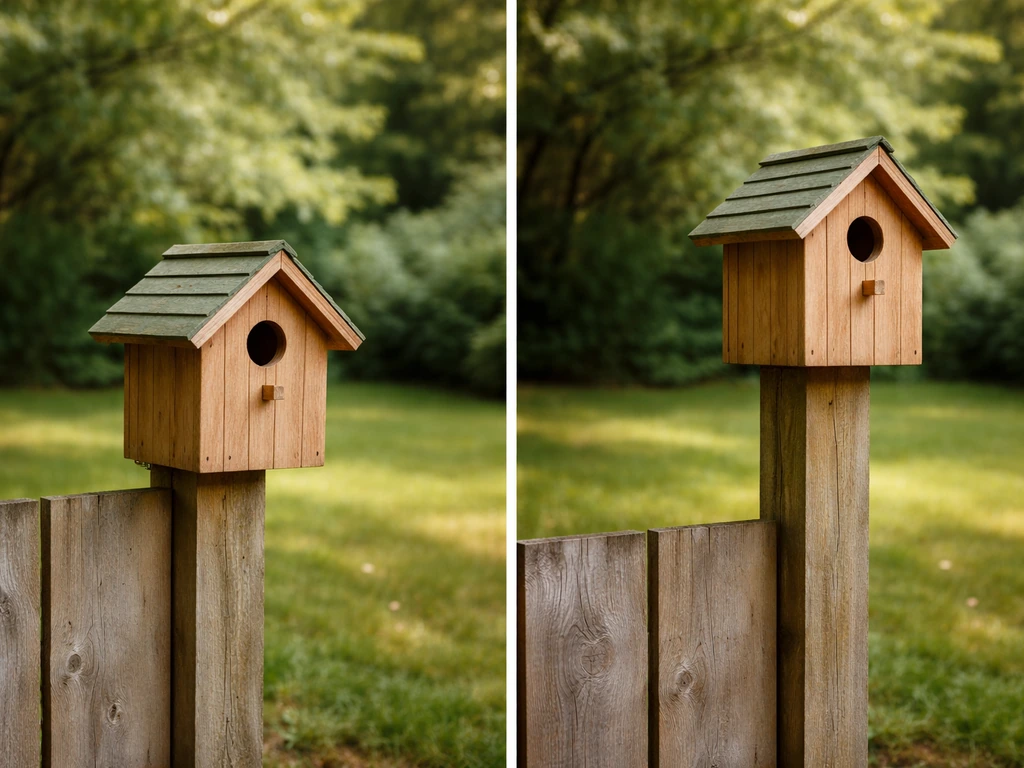
Face the entrance hole of your bird house toward the east or southeast. That single rule covers most backyards, most species, and most of North America. It keeps the morning sun warming the box early in the day, shields the interior from the cold northwest winds and heavy rain that roll in during spring nesting season, and gives birds a comfortable, dry cavity that they'll actually want to move into.
Which Way to Face Bird Houses: Best Direction Guide
Maya Thompson
26 Jun 2026
Why bird house orientation matters more than most people realize
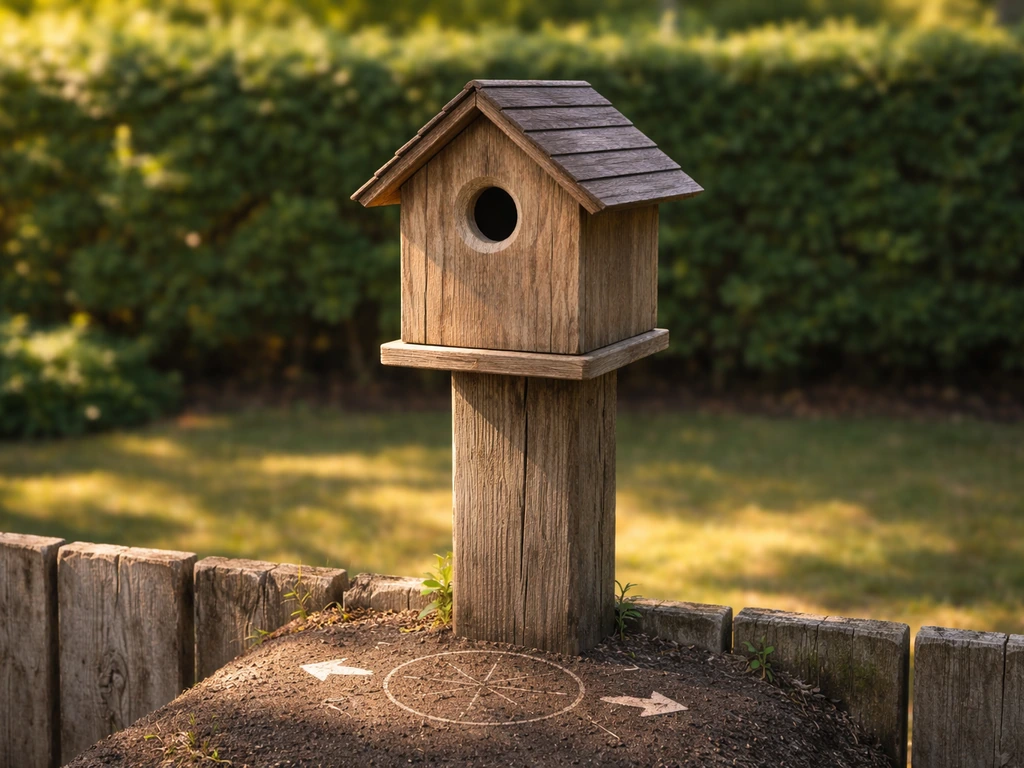
Most beginners treat a bird house like a decoration: put it somewhere it looks nice and hope for the best. But birds are genuinely picky about microclimates inside a box. A hole facing into a driving rainstorm means wet eggs and chilled nestlings. A box baking in afternoon western sun can hit lethal internal temperatures during a July heat wave. And a cavity constantly hit by cold northern winds in April makes early-season nesters like bluebirds and chickadees abandon the box before they even start building.
The direction the entrance hole faces controls three things at once: temperature inside the box, moisture getting in, and wind chill on the eggs and young. Get the orientation right and you solve all three problems with a single compass heading. If you are still deciding bird house placement, focus on the entrance direction and how the spot handles wind and rain Get the orientation right. Get it wrong and no amount of good location, correct hole size, or proper height will fully compensate.
The best directions to face a bird house, and the principles behind them
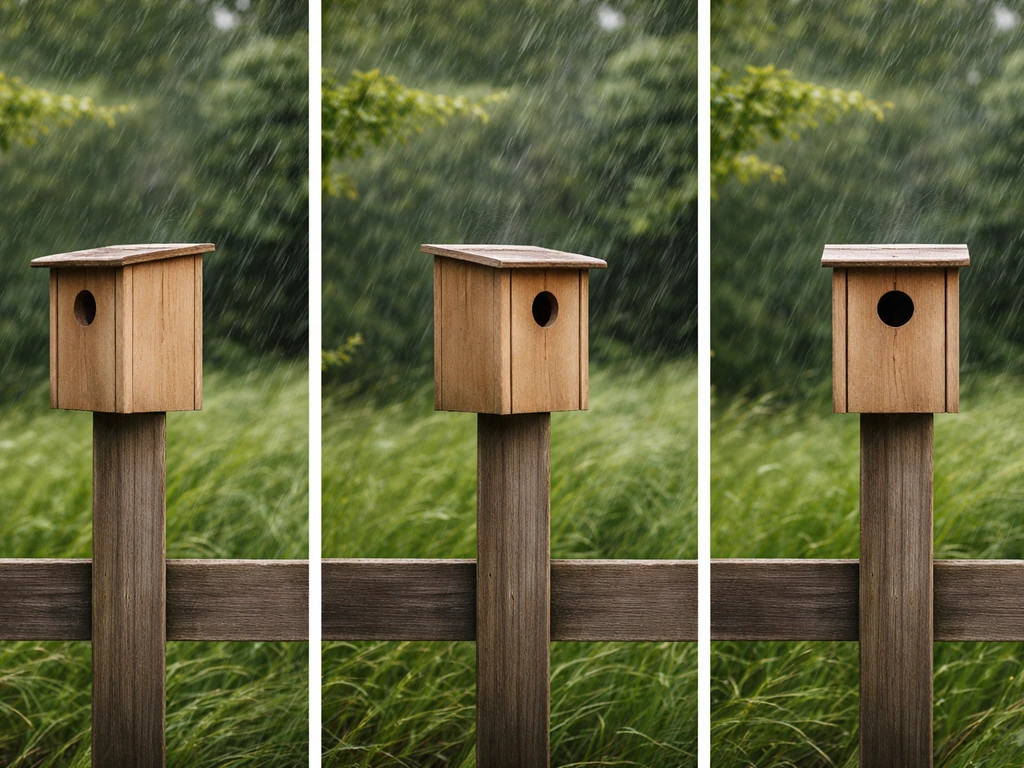
The most consistent guidance from wildlife agencies across the country points to the same core principle: face the entrance hole away from prevailing winds and rain. In most of the contiguous United States, prevailing winds and spring storm systems come from the west, northwest, and north. That makes east and southeast the safest general choices. New Jersey Audubon puts it plainly, recommending the hole face south-southeast as a rule of thumb. The Alaska Department of Fish and Game's birdhouse guide makes the same point for harsher northern conditions: always orient the entrance so it is protected from prevailing winds.
Here is how the main compass directions stack up in practice:
| Direction the hole faces | Sun exposure | Wind/rain exposure | General verdict |
|---|---|---|---|
| East | Warm morning sun, cool afternoon shade | Low in most regions | Best all-around choice |
| Southeast | Good morning light, shielded from northwest storms | Low to moderate | Excellent, especially in eastern U.S. |
| South | Full midday sun in winter, can overheat in summer | Moderate | Good in northern/cold climates |
| North | Little to no direct sun | High wind exposure in most regions | Avoid if possible |
| West | Hot afternoon sun, storm-facing in most of U.S. | High in most regions | Avoid |
| Northwest | Minimal sun, maximum storm exposure | Very high | Worst choice |
The Michigan Bluebird Society is direct about this: face the entrance away from west, north, and northwest because those are the primary directions spring and summer storms come from. Cornell Cooperative Extension's bluebird nest box guide echoes this exactly. Wild Birds Unlimited adds a practical refinement, noting that south- or east-facing boxes reduce exposure to both prevailing winds and rain at the same time.
Sun exposure is worth thinking about separately from wind. Morning sun from the east gently warms the box after a cold night, which helps incubating adults and young birds maintain body temperature without overheating. Afternoon western sun is the opposite problem: it heats the box during the hottest part of the day, and in summer that can push internal temperatures well above what eggs and nestlings can survive. If your only viable mounting spot faces west, add shade from a nearby branch or shrub, or look for a box design with extra ventilation.
How species and climate shift the ideal direction
The east/southeast default works for the majority of boxes in the majority of yards, but a few species and regional situations call for a small adjustment.
Eastern Bluebird
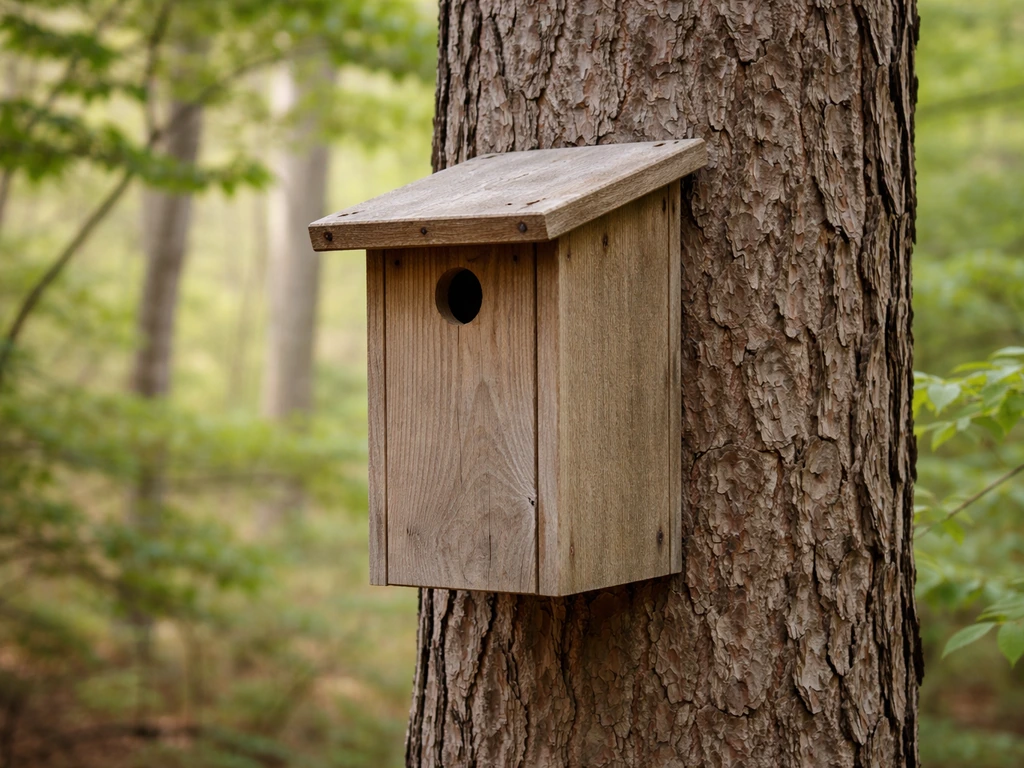
Bluebirds are the most studied cavity-nester in North America, and nearly every state bluebird society and extension service arrives at the same answer: face the box away from prevailing winds, toward the east or southeast, and ideally toward an open area with a low perch (a shrub or fence post) roughly 50 to 100 feet away. The New York State Bluebird Society specifically recommends facing the opening away from prevailing wind and toward a nearby tree or shrub that the fledglings can fly to on their first day out. Connecticut DEEP's bluebird nest box guidance for their region reinforces the southeast orientation given the northeast's northwest-prevailing spring storms.
Black-capped Chickadee
blank" rel="noopener noreferrer">NestWatch's species-specific placement data recommends facing the chickadee box away from the prevailing wind, at a height of 5 to 15 feet. Chickadees often nest in more sheltered, wooded spots than bluebirds, so the exact compass heading matters slightly less than it does on an open bluebird trail. That said, east still works well. For a quick, practical answer, see where to hang a chickadee bird house by focusing on wind protection, height, and a more sheltered mounting spot. If your chickadee box is under a tree canopy, pay more attention to making sure the hole isn't pointing directly into an open wind corridor than worrying about the exact degree on your compass.
House Wren
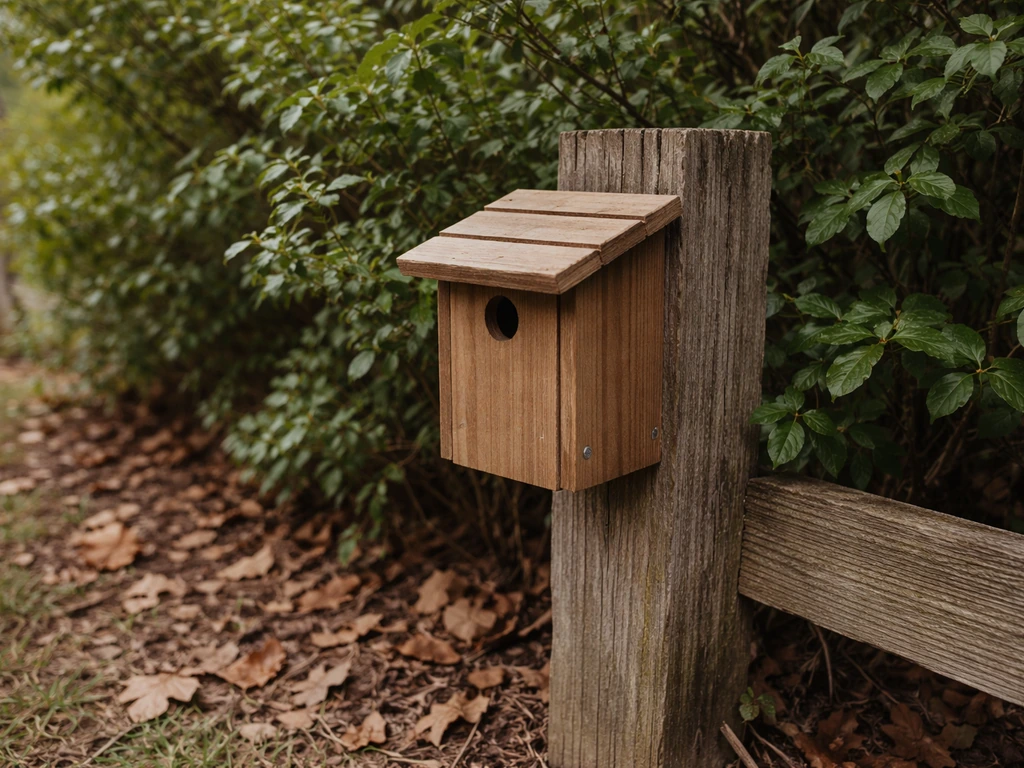
Wrens are adaptable and less fussy about strict orientation than bluebirds, but the same wind-and-rain avoidance rule still applies. NestWatch recommends placing wren boxes near woody vegetation, within about 100 feet of shrubs or brush. In a sheltered garden setting, a box facing east or southeast is still your safest bet. One thing to keep in mind: wrens can aggressively compete with other cavity nesters, so if you have boxes targeting chickadees or bluebirds nearby, space them well apart (at least 100 to 300 feet depending on species). The wren placement article on this site goes deeper on those spacing considerations.
Cold climates: northern states, Canada, and Alaska
In genuinely cold climates where spring nesting begins while night temperatures still drop below freezing, a south-facing box can be a better choice than east. South-facing boxes collect more passive solar heat through the day, keeping the interior warmer overnight. Alaska's Fish and Game birdhouse guide emphasizes wind protection above all else for northern conditions. If you're in zone 4 or colder, consider south or south-southeast rather than strict east, and prioritize a sheltered mounting location out of the wind.
Hot, sunny climates: the South and Southwest
In Texas, Arizona, the Gulf Coast, and similar regions, overheating is a bigger threat than cold. East-facing is even more important here than in the Midwest because it guarantees you get morning warmth without afternoon heat gain. In extremely hot areas, shade during the afternoon hours matters as much as compass direction. Mounting the box on the north or east side of a tree, fence post, or structure can add natural shade without changing the hole's facing direction.
Mounting height, angles, and entrance details that work alongside direction
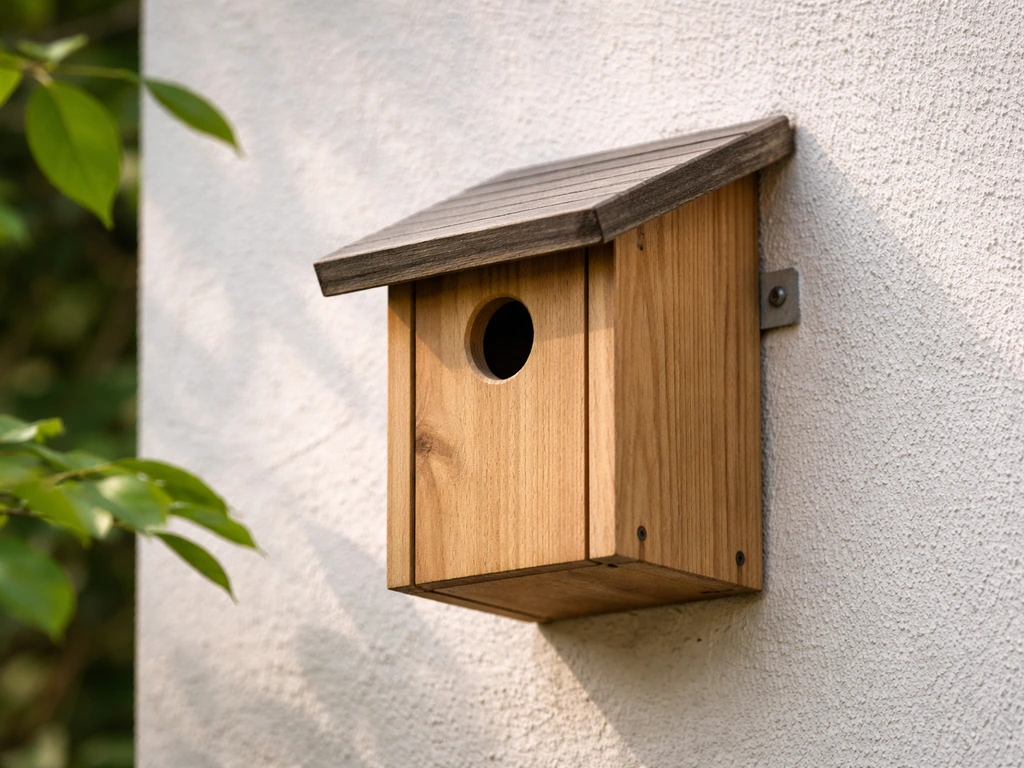
Direction is one piece of the placement puzzle, and it works best when you get the other physical details right at the same time. If you're wondering where to put bird houses beyond direction, focus on shelter, safe height, and the right surroundings for the species you want to attract. Thinking about these together when you install the box saves you from having to move it later.
- Height: Most songbirds use boxes mounted 5 to 10 feet off the ground. Bluebirds do well at 4 to 6 feet on a dedicated pole. Chickadees prefer 5 to 15 feet. Purple martins need 10 to 20 feet on an open pole far from trees. Going too low increases predator access; going too high makes monitoring and cleaning harder.
- Tilt: A very slight forward tilt of the box (5 degrees downward toward the entrance) helps rain drain out of the hole rather than running inside. Most pre-made boxes already account for this, but if you're mounting on a flat bracket, add a small tilt.
- Entrance hole size: This is species-specific and not something to improvise. A 1.5-inch hole suits chickadees and wrens; bluebirds need 1.5 inches (Eastern) to 1.5625 inches; tree swallows use 1.5 inches. Wrong hole sizes let competitors or predators in regardless of which direction the box faces.
- Distance from feeders and activity: Mount nest boxes at least 50 to 75 feet from busy feeding stations. Heavy traffic from other birds stresses nesting pairs and can lead to abandonment.
- Predator guards: A baffle on the mounting pole is more effective than any facing direction for keeping raccoons and snakes out. A metal hole protector plate prevents squirrels from enlarging the entrance. These are non-negotiable on any pole-mounted box.
The relationship between direction and mounting location also matters. A box on a south-facing wooden fence gets afternoon sun reflected off the fence surface into the back of the box even if the hole faces east. A box on a metal pole in an open field will heat up faster than the same box mounted on a shaded tree. Pay attention to what surrounds the box, not just the compass heading of the entrance.
Why birds might not move in, and how to fix it
You installed the box facing east, at the right height, with the correct hole size, and nothing happened. Here is how to diagnose it systematically rather than just guessing.
- Check the timing. Most cavity nesters scout boxes in late winter and early spring. Bluebirds in the Southeast start looking as early as February; in northern states, April is more typical. If you put the box up in June, you likely missed the season. Leave it up and try again next year, ideally having the box up by late February or early March.
- Reassess sun and shade. Go out at noon and again at 3 p.m. and check whether the box is in direct sun. If it is uncomfortably hot to touch the outside of the box in mid-afternoon, birds are feeling that too. Reposition it to a spot with afternoon shade, or rotate the box slightly so the entrance faces more northward of east.
- Look for wind exposure. On a windy day, stand at the box. If wind is blowing directly into the hole, that is your problem. Rotate the box so the hole faces away from that wind direction, even if it means pointing it slightly off your ideal compass heading.
- Eliminate the competition. House sparrows and European starlings actively take over cavities meant for native birds. If sparrows have nested in or near the box, remove that nest repeatedly (house sparrows are not protected under the Migratory Bird Treaty Act). Starlings cannot fit through a 1.5-inch hole, so correct hole size is your main defense there.
- Remove old nesting material. A box that still has last year's nest in it is less attractive to new nesters. Clean boxes out in late winter before nesting season begins.
- Consider habitat mismatch. Direction alone cannot fix a habitat problem. Bluebirds will not use a box in a dense forest, and woodpeckers will not nest in an open field with no trees. Make sure the species you are targeting actually lives in your yard type.
- Move it. If a box has sat unused for two full seasons after correcting the above, relocate it. Even a shift of 20 to 30 feet in a different direction or a slightly different height can make it suddenly attractive. Birds have preferences that are hard to fully predict from the outside.
Your checklist for orienting and installing a bird house today
Run through this before you drill the first mounting screw. Purple martins typically do best when their house is mounted and oriented to protect them from prevailing winds and rain, so use the guidance above as you choose the placement. It takes five minutes and covers everything covered in this article in one quick pass.
- Identify the prevailing wind direction in your area. In most of the U.S. it comes from the west or northwest. Face the entrance hole away from that direction.
- Set the entrance to face east or southeast as your default. Adjust to south if you are in a cold northern climate; stick with east if you are in a hot southern one.
- Confirm the mounting height for your target species: 4 to 6 feet for bluebirds on an open pole, 5 to 15 feet for chickadees, 6 to 10 feet for wrens.
- Check that the box tilts very slightly forward (about 5 degrees) so rain drains away from the entrance.
- Verify the entrance hole size matches your target species before mounting.
- Install a predator baffle on the mounting pole and a metal hole protector plate on the entrance if squirrels are present in your yard.
- Position the box at least 50 feet from active bird feeders and from heavy human foot traffic.
- Make sure the box has afternoon shade, either from natural vegetation or from its mounting position, especially in warm climates.
- Note the date. If no birds have investigated by mid-season, run through the troubleshooting steps above rather than waiting another full year.
- Clean the box out each late winter before the next nesting season begins.
If you are still working out exactly where in your yard to put the box, or thinking about a specific species like wrens, chickadees, or purple martins, the placement details for each of those are worth a closer look since height ranges, habitat needs, and spacing rules vary enough to matter. But on the fundamental question of which way to face the entrance hole: east or southeast, away from prevailing wind and afternoon sun, is the answer that will serve you well in almost every situation. If you are also wondering where to mount a bird house in the first place, use this direction first as your baseline which way to face the entrance hole.
FAQ
What if I do not know the prevailing wind direction in my yard, how can I still pick the right compass orientation?
If you do not know the prevailing wind for your area, use a practical proxy: choose the mounting spot where the entrance hole is not exposed to the weather side of your yard (often the side that gets the most driving rain). Also avoid locations where the box sits in a wind corridor between two openings (like gaps between fences or through a porch).
Can the entrance direction be correct but the box still become too hot? What should I check?
Yes. A box can still overheat even if you face it east, especially if the back or roof absorbs intense afternoon sun. Look at the entire mounting surface, if it is metal, painted wood, or a reflective fence, it can radiate heat into the cavity. Aim to mount on a surface that stays cooler, or add partial afternoon shade from nearby vegetation.
If birds do not move in right away, should I change the direction, or is it better to wait?
Wait until temperatures are stable enough for nesting (often mid spring for many regions), then confirm that the box stays dry and shaded during storms. For placement, the key is to get the orientation right the first time, because changing direction after birds start nesting can cause abandonment, even if you keep the height and hole size the same.
How do I adjust the facing direction in places with heavy rain or snowdrifts?
Use a “don’t-point-into-rain” rule: if prevailing rain hits the front of the box in storms, avoid that compass heading regardless of the species. In snowy or windy areas, also avoid openings facing directly into areas that funnel winter winds, like around corners of buildings or near downwind open lots.
Does the entrance facing direction matter if the area around the box is not ideal for perching and escape?
For bluebirds and chickadees, the entrance facing interacts with habitat access. Even with the right compass direction, if there is no nearby open landing area and perch (a shrub or fence post within the typical range), birds may delay or skip nesting. Confirm there is a clear escape and first-day flight path near the entrance side.
How accurate do I need my compass heading to be, and what if the box is slightly off?
Do not aim for exact degrees if the box is close to a sheltered feature. A box under tree canopy can still work well if the entrance is shielded from an open wind corridor, meaning the wind-driven rain and chill matter more than tiny compass differences. If you must choose between “perfect degrees” and “protected from wind,” pick protection.
If nesting fails, how can I tell whether the problem is direction versus height or predator risk?
Orientation affects moisture and wind chill, but height and predator safety do too. If you get predators or repeated nest failure, re-check mounting height, predator guards, and how exposed the box is along likely approach routes. Fixing direction alone will not address problems caused by placement on a vulnerable post or without a guard.
Can I use a south-facing box as a substitute for east-facing, and when does it backfire?
Yes, but use it carefully. If you are in a very cold zone, a more southerly facing can help keep the cavity warmer overnight, but you still must protect from prevailing winds and rain. In hot climates, shade strategies matter more than small compass changes, so prioritize a sheltered afternoon environment.
Should I consider reflections from fences, walls, or metal poles when choosing the box orientation?
Do not forget that surrounding reflections can change what the box “feels” even if the entrance is facing the right way. Back the compass decision with a quick observation: after a sunny day, feel the box exterior and check if there are heat sources like south-facing fences, sunny walls, or metal posts that warm the cavity from the back and sides.
If I have several bird houses close together, does entrance direction still guarantee success?
If you have multiple boxes for different cavity nesters, spacing and microclimate matter more than direction alone. Wrens can outcompete other species, and even if your entrance faces correctly, having boxes too close can suppress occupancy. Use species-appropriate spacing and place boxes so each target has its own sheltered, wind-safe micro-area.
Next Article
Where to Mount a Bird House: Placement Guide for Beginners
Pick the best spot, height, and orientation to mount a birdhouse, with species and surface-specific DIY steps.