The best place to hang a wren house is 5 to 10 feet off the ground (or 3 to 6 feet for Carolina Wrens), facing east or southeast, sheltered from afternoon sun and north winds, and within a few feet of shrubby vegetation or a woodland edge. That one sentence covers the core of it. The rest of this guide explains why each of those details matters and how to apply them to whatever kind of yard you actually have.
Where to Hang a Wren Bird House: Exact Placement Guide

Maya Thompson
22 Apr 2026
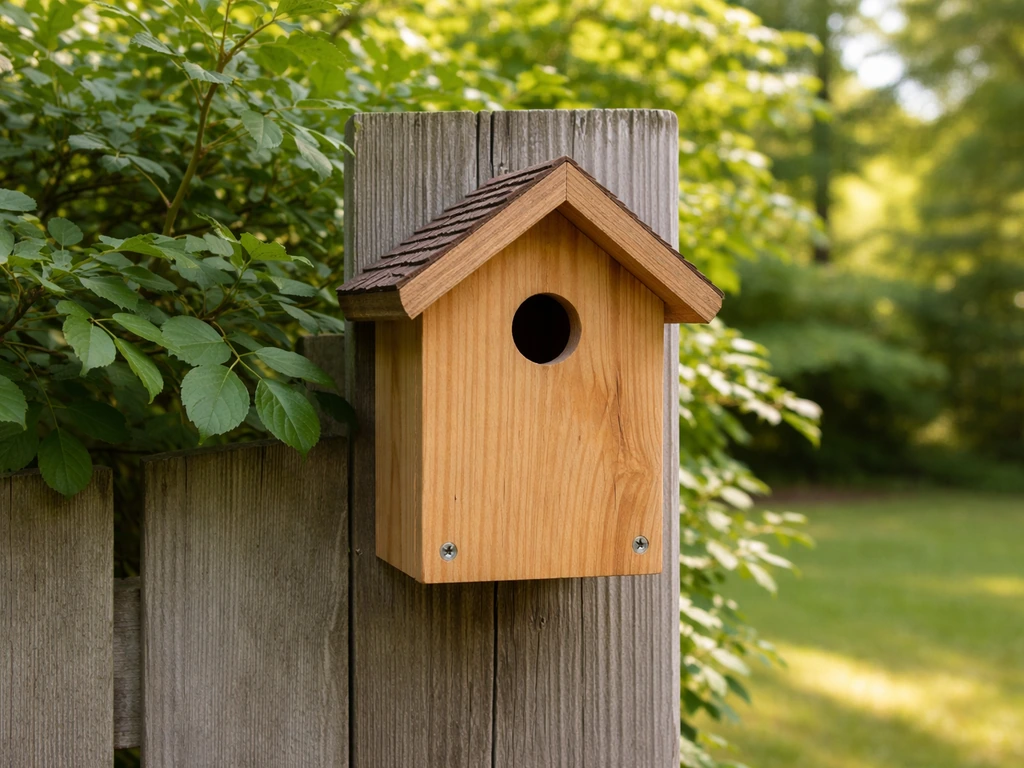
Quick checklist: confirming a good spot before you hang anything
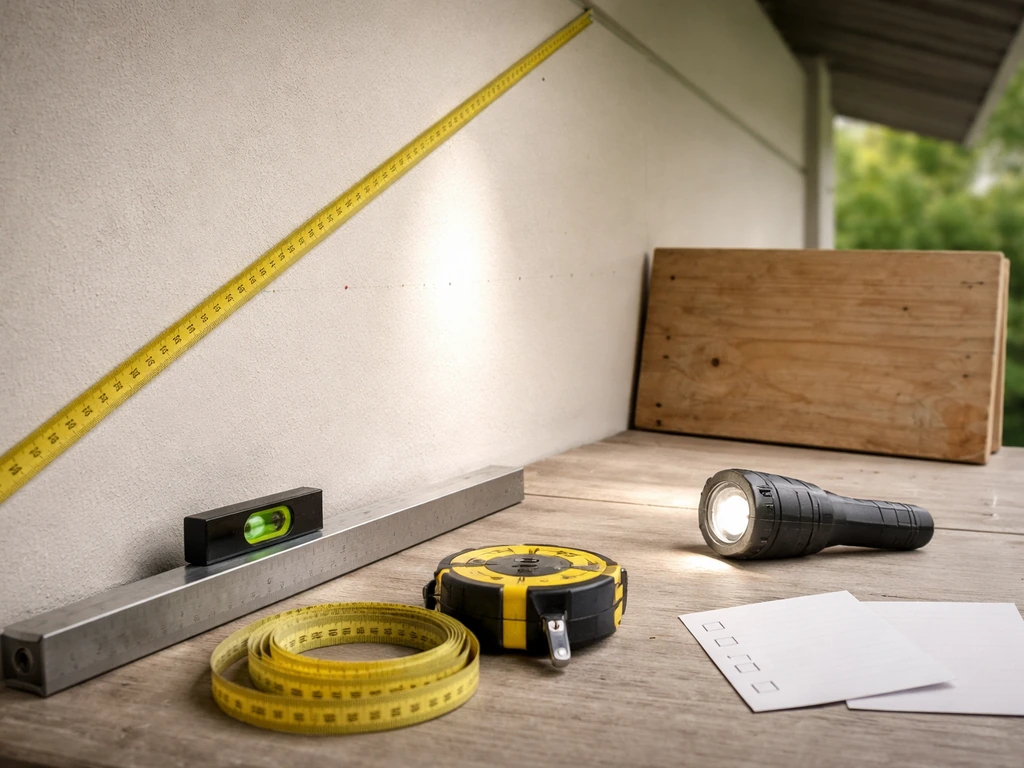
Run through this before you drill a single screw. If you can check off every point, you have a solid location. Once you know the right height, direction, and habitat, you can fine-tune bird houses where to put them for your specific yard. If two or three are a problem, the section below each one will help you work around it.
- Height is between 5 and 10 feet above the ground (3 to 6 feet is also acceptable for Carolina Wrens specifically)
- Entry hole faces east or southeast, not north and not into the prevailing afternoon wind
- The box is shaded from direct summer afternoon (west) sun for at least part of the day
- There is a shrub, hedge, or low tree within 10 to 15 feet for cover and foraging
- No bird feeders or busy feeding stations within about 30 feet of the box
- The mounting surface or pole makes it hard for cats, raccoons, and snakes to climb directly to the box
- You can reach the box from the ground with a step stool to clean it out at the end of the season
- If you are putting up more than one wren box of the same species, the two boxes are at least 330 feet apart
How high to hang a wren house (and why it actually matters)
Height is the first thing people get wrong, usually by going too low. For House Wrens, the target range from NestWatch is 5 to 10 feet above ground. The Tennessee Wildlife Resources Agency specifically calls out 5 feet as the sweet spot for their House Wren plan, which gives you a practical anchor when you are estimating by eye. Carolina Wrens are a bit more flexible: 3 to 6 feet works for them because they naturally nest closer to the ground in dense undergrowth anyway.
Why does height matter? Two reasons. First, predators. Cats and raccoons are your biggest threats at low heights. A box hung at 3 feet on a fence post is almost gift-wrapped for a climbing cat. Getting up to 5 feet and adding a predator guard (more on that below) removes a huge chunk of that risk. Second, wrens themselves. House Wrens prefer cavity heights that mimic natural tree hollows, which tend to sit well above dense leaf litter. Too low and wrens may investigate but not commit to nesting.
Bewick's Wrens, if you are in their range across the western and central U.S., are a bit more flexible and have been documented using cavities up to 30 feet off the ground in the wild. For a nest box, keeping them in the 5 to 10 foot range keeps things practical for monitoring and cleaning without sacrificing anything for the birds.
Which direction to face the entry hole (and how to shelter the box from weather)
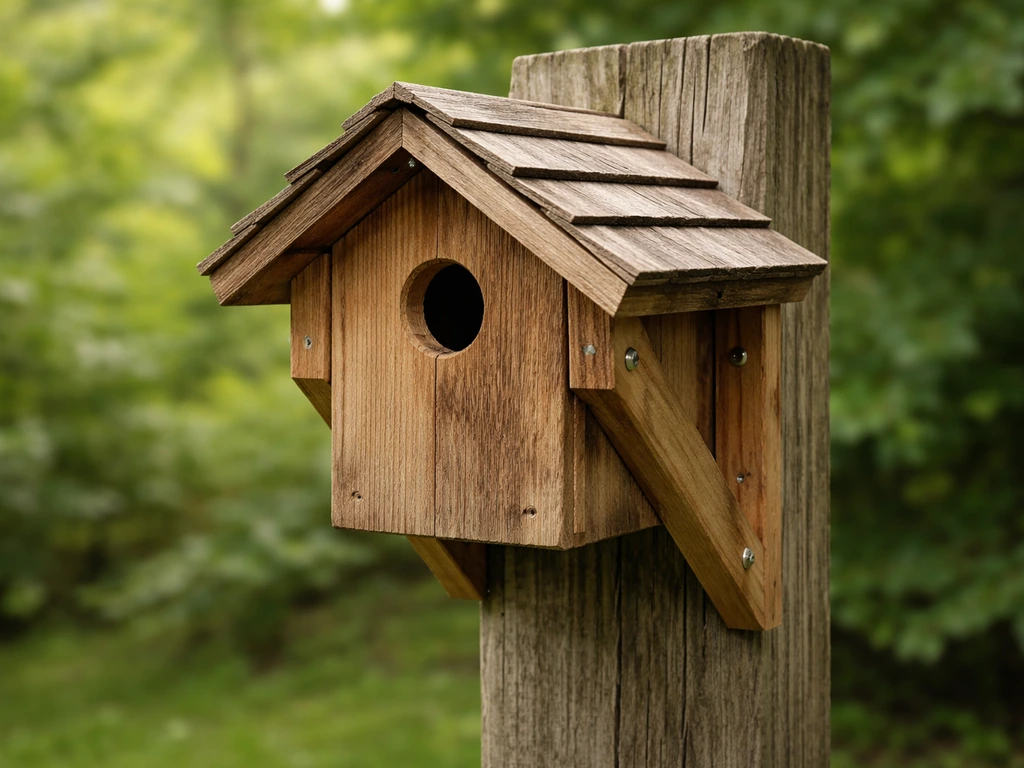
Face the entry hole east or southeast whenever your yard gives you that option. If you are also wondering which way to face bird houses, aim the entry hole so it gets morning sun and stays protected from harsh weather. The TWRA's wren box plan is explicit about this: east-facing placement keeps the morning sun warming the box entrance while the birds are most active, and it naturally turns the opening away from the cold north winds and the driving rain that tends to come from the west and northwest in most of North America. Audubon's guidance backs this up: avoid facing the box north, and prefer east or south so birds sitting in the entrance can catch early sunlight.
The wind rule is arguably more important than the compass heading. If your yard funnels wind from a specific direction, prioritize facing the hole away from that. A box facing northeast is better than one facing due east if northeast is the sheltered side of your fence or eave. The goal is simple: rain should not be able to drive straight into the entrance hole during a storm.
Direct summer afternoon sun is the other hazard to avoid. A box on the west side of a tree or fence that gets hammered by 3 to 6 p.m. sun in July can overheat the interior and stress or kill nestlings. If east-facing is not possible, south-facing with some overhead shade (from eaves or leaf canopy) is the next best option.
Distance from activity and picking the right habitat in your yard
Wrens are bolder than many cavity nesters and will nest surprisingly close to human activity, which is part of why they do so well in suburban backyards. That said, you still want to give them a quiet corner rather than the busiest part of your garden. Avoid hanging the box directly next to a bird feeder or feeding station. Constant foot traffic from other birds creates stress and can genuinely prevent wrens from committing to the box, even after they start investigating it.
The ideal habitat in your yard is an edge: the transition between a more open area and shrubby or lightly wooded cover. A box hung on the edge of a hedge row, near the back fence where shrubs meet open lawn, or on a post at the corner of a garden bed bordered by dense perennials is close to ideal. NestWatch lists Carolina Wrens as preferring thick underbrush, forest edges, woodland clearings, and suburban gardens, and House Wrens as using farmland, forest edges, shrub lands, and suburban backyards, typically near trees or tall shrubs. In practice, that means any part of your yard where there is a mix of open ground nearby (for foraging) and dense vegetation within 10 to 15 feet (for cover and escape routes).
One useful caution: avoid placing a House Wren box directly in or immediately adjacent to very dense brushy thickets (within about 50 feet). This sounds counterintuitive, but brushy areas that are too dense can favor nest disturbance and increase competition from other small birds. A shrubby edge is different from an impenetrable thicket, and the distinction matters for wren nesting success.
If you have a small yard without obvious woodland edge habitat, work with what you have. A wren house hung on the side of a garden shed, 5 to 6 feet up, with a rose bush or tall ornamental grass nearby, will absolutely attract wrens. The key ingredients are: some vertical structure nearby, a little shelter, and not too much foot traffic directly in front of the box.
Hanging vs mounting: posts, trees, fences, and eaves compared
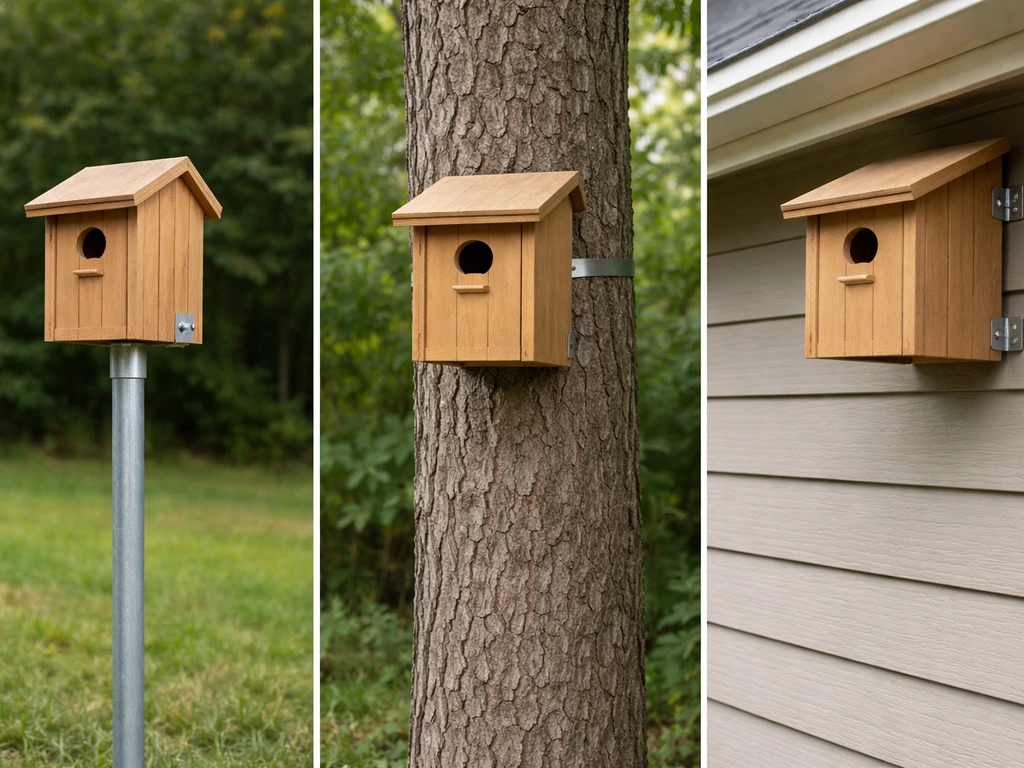
You have several practical options for how to physically attach the box, and each one has trade-offs for predator access, stability, and ease of cleaning. If you are choosing between mounting on a post, tree, fence, or eave, the best spot for where to mount a bird house is the one that matches your direction, height, and predator protection needs. For finch bird houses, the best placement is similar in spirit to wrens, but you will want to fine-tune the height, direction, and nearby cover for finch preferences where to mount a bird house.
| Mounting option | Pros | Cons | Best for |
|---|---|---|---|
| Freestanding metal pole | Easiest to add a baffle predator guard; fully adjustable height and direction; stable in wind | Requires installation in the ground; not ideal for renters or hard surfaces | Most yards; strongly recommended if you start fresh |
| Wooden fence post or rail | Convenient and already in most yards; easy to install at correct height | Cats and squirrels can reach it easily unless you add a baffle; limited directional flexibility | Yards where a pole is not practical; pair with a cone or wrap baffle |
| Tree trunk or branch | Natural look; wrens comfortable near trees | Climbing predators (snakes, squirrels, raccoons) have easy access; hard to add an effective baffle | Only if no better option; add a metal collar predator guard on the trunk below the box |
| Building wall or shed siding | Eaves provide natural rain shelter; easy to reach for cleaning | Fixed orientation; may face the wrong direction; heat transfer from walls in summer | Small yards or urban settings; check the entry direction before committing |
| Hanging from a hook or wire | Flexible placement; swinging motion can deter some predators | Less stable in wind; harder to add a baffle below the box; box can spin | Temporary setups or porches; secure the chain so the box does not spin freely |
If you are starting from scratch and want the best outcome, a smooth metal pipe or conduit pole is the single best mounting option. It lets you position the box at exactly the right height, face it the right direction, and add a cone or stovepipe baffle below the box. The placement flexibility alone makes it worth the extra step of setting a pole.
For those hanging from eaves or shed walls, check your orientation first. Eave mounting naturally shelters the box from rain, which is a genuine advantage, but the entry hole ends up facing whatever direction the eave happens to face. If that is north or west, you will want to reconsider the mounting spot or use a different surface.
Keeping the nest safe: predator barriers and smart placement
Placement alone is your first line of defense, but it is not enough on its own. NestWatch data shows that nest boxes fitted with predator guards have nesting success rates 6.7 percentage points higher than unguarded boxes. That is a meaningful difference, and it is one you can act on today. The main nest-box predators for wrens are raccoons, cats, snakes, and squirrels, and each one has a preferred approach path.
A cone baffle or stovepipe baffle mounted on the pole below the box is the most effective single addition you can make. It stops climbing mammals cold. For boxes on fences or walls where a pole baffle is not possible, a predator guard collar around the post and a hole restrictor plate (keeping the entry hole at the correct species dimension rather than letting it get chewed wider by squirrels) are your best tools.
Keep the box away from horizontal branches or fences that run alongside it at the same height. A raccoon that cannot climb a pole will simply walk along a branch that puts it at eye level with the entry hole. Even 3 feet of open space on all sides of the box removes the most common raccoon and squirrel access routes.
Avoid placing the box near a bird feeder not just for disturbance reasons, but because feeders attract squirrels and raccoons, which then notice the nest box while they are already in the area. Separation of at least 30 feet between your feeder station and your wren box reduces this overlap considerably.
One thing worth saying plainly: these are humane deterrence methods. The goal is not to harm predators but to make the nest box a poor target compared to easier food sources. Baffles, orientation, and height do this effectively without any intervention that could harm the local wildlife.
Placement that makes maintenance easy (and when to do it)
The best nest box placement is one you will actually follow through on cleaning. Wren boxes should be cleaned out once a year, blank" rel="noopener noreferrer">after the nesting season ends. The general guidance from both BTO and the Wildlife Trusts is to do this blank" rel="noopener noreferrer">between early September and late January, after all birds have left the box for the season and before any early-nesting species starts investigating in late winter. In the U.S., aim for fall or early winter when you are confident the box has been vacated.
When you are choosing your mounting location, test your reach before you commit. Stand at the spot with a step stool and physically mime opening the box and reaching inside. If you cannot do that comfortably, raise or lower the box slightly, or pick a mounting surface you can get alongside rather than have to reach around. A box you can clean easily will get cleaned every year. A box mounted awkwardly in a tight corner will get skipped, and old nest material harbors parasites and pathogens that hurt future occupants.
During the nesting season, minimize disturbance. If you want to monitor the nest, do it quickly and no more than once a week. Watching from a distance and approaching from the front so the birds see you coming is far less disruptive than repeatedly sneaking up from behind. The U.S. Fish and Wildlife Service's birdhouse guidance notes that access from the top of the box during monitoring is generally less disruptive than removing the side panel or front, so keep that in mind when you pick a box design too.
Timing your installation also matters. Get the box up by late February or early March if you want to attract House Wrens, which typically arrive from migration in April and May across most of the northern U.S. Carolina Wrens are year-round residents across much of their range, so the box can go up any time, but earlier is still better since they may start scouting cavities in late winter. Having the box in place before the birds arrive means they will find it during their natural territory-scouting phase rather than after they have already committed to a different site.
Placement is really about stacking the odds in the wrens' favor: the right height removes easy predator access, the right direction keeps the nest warm and dry, the right habitat gives the birds foraging cover, and the right mounting setup makes your annual maintenance routine straightforward. For purple martins, the right placement follows the same logic, but you should consider where martins feed and choose a location that supports their larger colony-style nesting needs wren house. Get those four things right and a wren will almost certainly find the box. The species are adaptable, persistent, and genuinely motivated to find good cavities; your job is just to make sure yours looks like the best one in the neighborhood. If you want chickadees instead of wrens, the same idea applies: choose a height, direction, and habitat that fit where chickadees naturally nest chickadees nest.
FAQ
Can I hang a wren bird house on the north side of my yard if it is shaded from afternoon sun?
Try to avoid north-facing entry holes, even if the box is shaded. North exposure increases the chance the entrance stays cold and wet during storms, which can reduce nesting commitment. If your only sheltered option is north, prioritize wind shielding and consider adding more eave or canopy cover.
What if my yard has no east or southeast spot, can I just face the box south-west?
If east or southeast is not available, south-facing with overhead shade is the next best choice. West-facing is the most likely to overheat the interior during hot months. If you must use a west exposure, increase shade with an overhang and ensure the box still stays dry from wind-driven rain.
How do I choose between facing away from wind versus facing east or southeast?
Use wind direction as the tie-breaker. If your best sheltered side is northeast or another intermediate direction, face the entrance away from the wind funnel so rain cannot drive straight into the opening. You can still aim for morning warmth where possible, but keeping the entrance dry during storms matters most.
Is it okay to place the box close to a fence or shed wall as long as it is not by a feeder?
Yes, as long as you keep clearances and predator access in mind. Avoid placing the box so a raccoon can reach the entrance along a branch or fence line at the same height. Leave at least a few feet of open space on sides where predators might travel, and do not mount it in a tight, hard-to-clean nook.
Do I need a predator guard if the box is higher than 5 feet?
A higher placement helps, but it does not replace guards. Nest boxes with predator protection consistently show higher nesting success than unguarded boxes. If you cannot add a baffle on a pole, use a predator guard collar on the post plus an entry-hole restrictor plate to reduce squirrel damage and climbing access.
How far from shrubs is “too far” for wren nesting?
Wren boxes work best near cover, roughly within 10 to 15 feet of shrubby growth or the woodland edge. If the nearest vegetation is much farther, wrens may investigate but be less likely to commit. In small yards, placing near tall ornamentals or a dense corner of the garden can substitute for a natural woodland edge.
What if my yard has a very dense thicket, can I place the box inside it?
Avoid placing a House Wren box in or immediately next to very dense impenetrable brush. A thick thicket that is too dense can increase disturbance and competition, and it can reduce the birds' ability to use the area efficiently. Prefer a shrubby edge where cover exists, but there is still a usable escape and foraging route.
How much space should be around the box to prevent raccoon and squirrel access?
Provide open space around the box, especially on any side that predators might use to approach at entrance height. The practical target is about 3 feet of clearance where possible. This reduces the chance a climbing mammal can reach the entry by moving along a nearby branch, rail, or wall line.
Can I install the box after wrens arrive if I miss the early season?
For House Wrens, it is best to have the box up by late February or early March in much of the northern U.S., since migration and scouting often ramp up in April and May. For Carolina Wrens, you can install any time because they are year-round, but earlier still helps them find the cavity during pre-nesting scouting.
How do I know the box entry hole size is correct for wrens?
Check the hole size matches your wren target species, do not rely on “similar” box sizes. If squirrels chew or enlarge the opening, that can make the entrance less secure for the intended species. Using an entry-hole restrictor plate helps keep the opening at the right dimensions.
What is the safest way to clean a wren box without causing problems for other birds?
Plan for one annual cleaning after nesting ends, generally between early September and late January in the U.S., when you are confident the box is vacated. If you want to open the box during late winter or early spring for any reason, do it only after you confirm no active nest activity, because early-nesting species may start investigating.
I can reach the box for cleaning, but only if I stand awkwardly, should I still mount it?
Choose a mounting height and location you can reach comfortably from the side or front without straining. Maintenance matters, awkward placements get skipped, and old nest material can harbor parasites. If you cannot clean it every year, move the mount now rather than later.
Next Articles
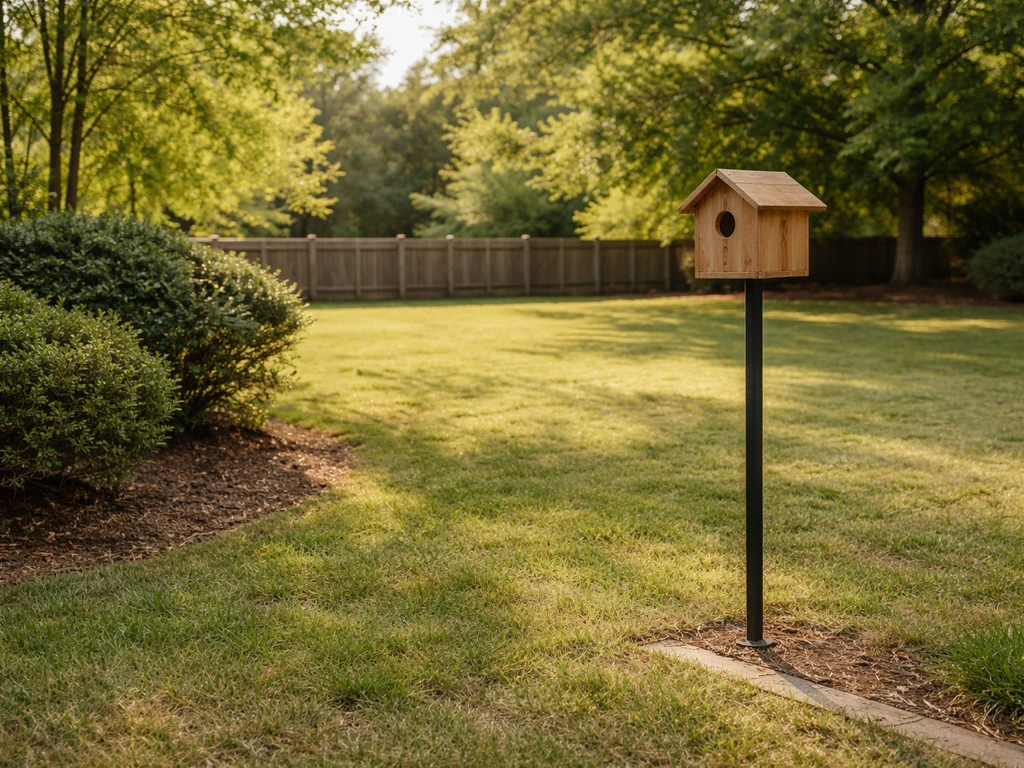
Where to Put Bird Houses: Best Placement Guide
Find the best placement for bird houses by height, direction, spacing, mounting, and predator-safe location in your yard
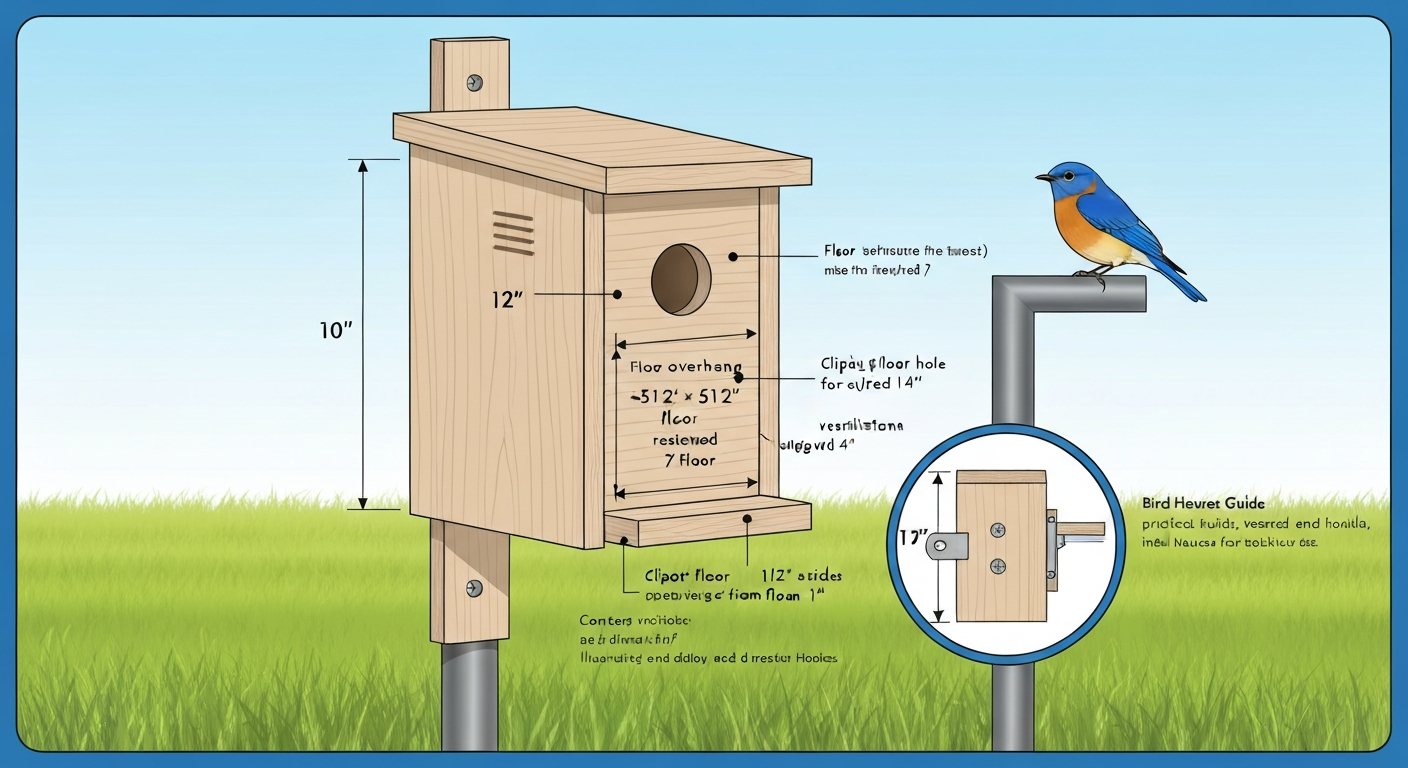
Blue Bird House Instructions: DIY Plans, Sizes & Mounting
DIY bluebird house: step-by-step build, exact cuts and hole sizes, mounting, predator guards, cleaning, and care.
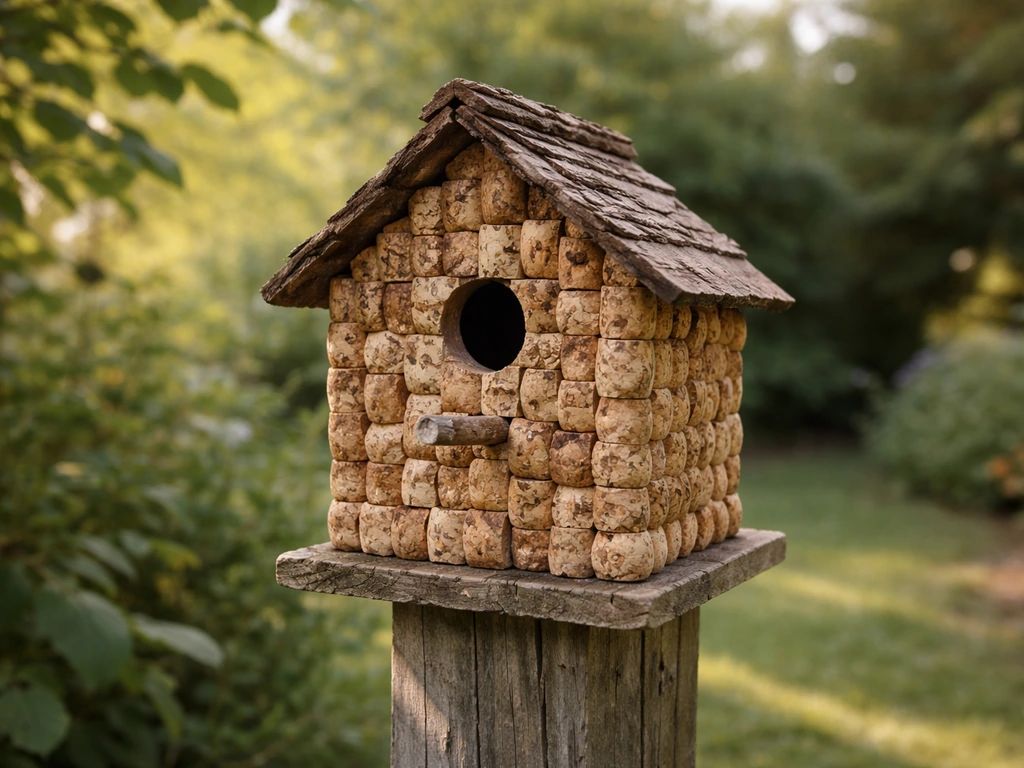
Wine Cork Bird House Instructions: DIY Steps and Bird-Safe Specs
Step-by-step wine cork mini birdhouse build with bird-safe dimensions, safe materials, mounting, cleaning, and weatherpr