If you want small birds nesting in your backyard, the single most important thing to get right is the entrance hole diameter. Everything else, mounting height, wood type, ventilation, falls into place once you match the hole size to the species you are trying to attract. Get that one measurement wrong by even an eighth of an inch and you either lock out your target birds or invite unwanted squatters. Here is exactly what to look for, what to buy, and how to set it up so birds actually use it.
Best Bird Houses for Small Birds: Quick Selection Guide
Maya Thompson
22 Mar 2026
What counts as a 'small-bird' bird house, and which species you're targeting
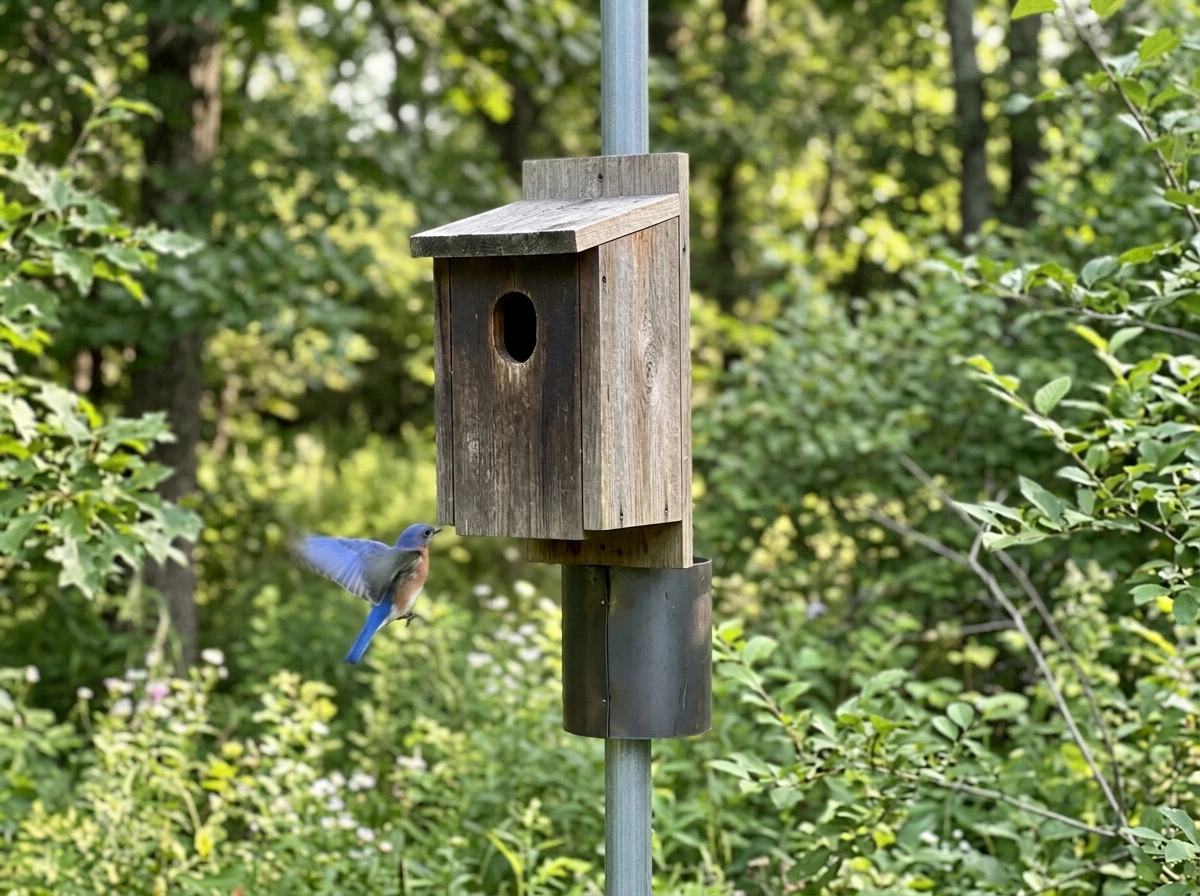
A small-bird nest box is generally any box designed for cavity-nesting species that fit through an entrance hole diameter of 1 1/4 inches to 1 1/2 inches in diameter. That range covers the most common and rewarding backyard species in North America: chickadees, tufted titmice, white-breasted nuthatches, tree swallows, house wrens, and eastern or western bluebirds. Larger woodpeckers, flickers, and wood ducks need much bigger openings and are a completely different category.
Knowing which species are actually in your area before you shop matters more than most beginners realize. Bluebirds, for example, are open-habitat birds; putting a bluebird box in a dense woodland will almost never work. Tree swallows need open fields near water. Chickadees and titmice are far more flexible and will nest in wooded suburban yards. If you are not sure what cavity nesters live near you, spend a few mornings watching your yard or check eBird for your zip code before buying anything.
How to choose the right size: entrance hole, box dimensions, and spacing
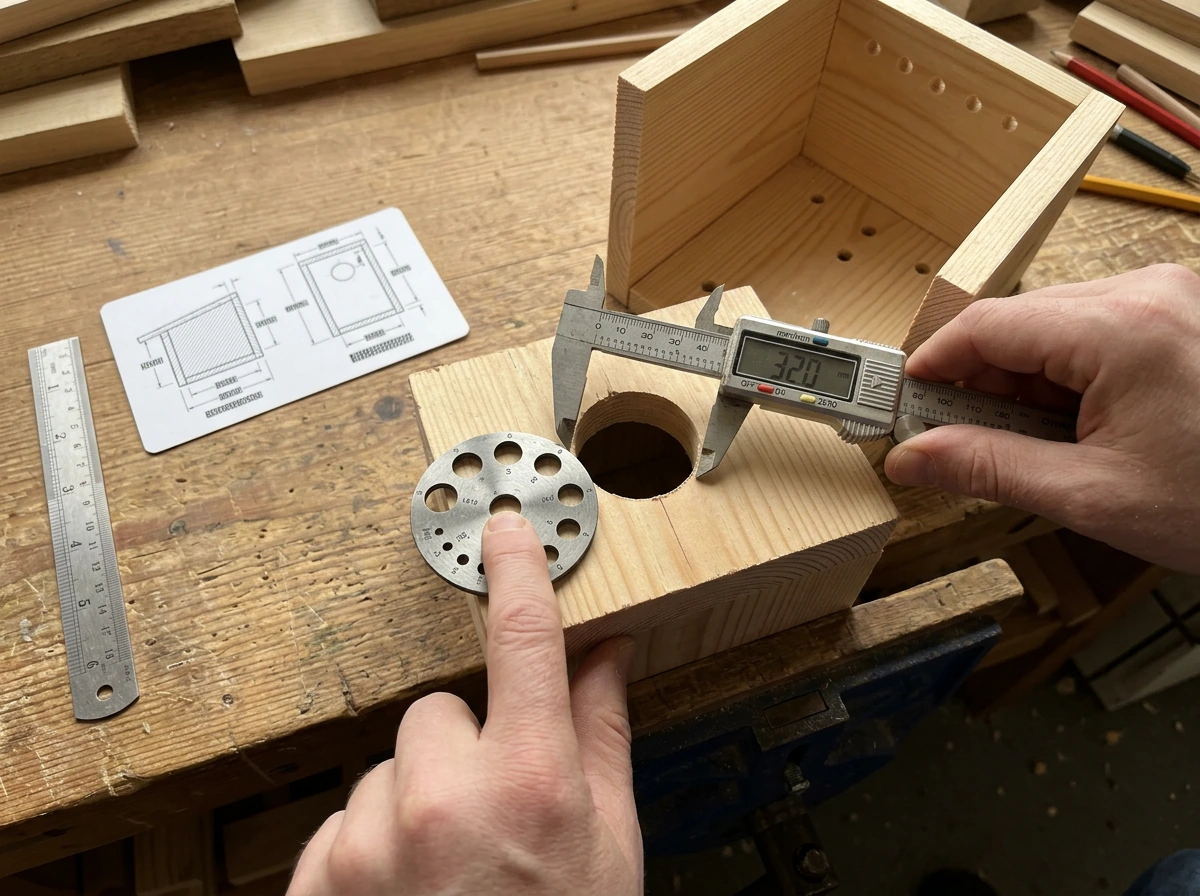
The entrance hole is the spec that everything else revolves around. The table below covers the most commonly targeted small species and their verified dimensions. Use this as your shopping checklist.
| Species | Entrance Hole Diameter | Recommended Box Height Above Ground | Notes |
|---|---|---|---|
| Black-capped / Carolina Chickadee | 1 1/8 in (29 mm) | 5–15 ft | Smallest opening; excludes most competitors |
| Tufted Titmouse | 1 1/4 in (32 mm) | 5–15 ft | Same hole size as nuthatch; flexible habitat |
| White-breasted Nuthatch | 1 1/4 in (32 mm) | 5–20 ft | Prefers mature woodland edges |
| Tree Swallow | 1 1/4 in (32 mm) | 5–10 ft | Open fields, near water; face entrance east |
| House Wren | 1 1/8 in (29 mm) | 5–10 ft | Very adaptable; avoid placing near feeder area |
| Eastern / Western Bluebird | 1 1/2 in (38 mm) | 4–6 ft | Open habitat essential; use a trail or post mount |
Interior floor dimensions matter too, though they are less critical than the hole. A floor of roughly 4 inches by 4 inches works for chickadees, titmice, nuthatches, and tree swallows. Bluebirds prefer a slightly roomier 5 by 5 inch floor. The depth from the bottom of the entrance hole to the floor should be at least 5 to 6 inches so nestlings are not immediately exposed to the outside; NABS guidance specifically calls this out as a predator-safety consideration.
Spacing boxes is easy to overlook. Most small cavity nesters are territorial about nest sites, so do not cluster multiple boxes of the same species type close together. A general rule for most species is at least 15 to 25 feet between boxes of the same type. One exception: tree swallows are more tolerant of close pairing, and some practitioners mount two boxes back-to-back on a single pole so different pairs can occupy adjacent territories.
Placement and installation: height, direction, mounting, and timing
Height and orientation
Height ranges for each species are in the table above, but the short version is: most small-bird boxes go between 5 and 15 feet off the ground. Lower placements (4 to 6 feet) work well for bluebirds because their open-habitat nesting sites rarely involve tall trees. Higher placements (10 to 20 feet) suit nuthatches, which prefer mature forest. When in doubt, 6 to 8 feet is a practical compromise that also makes monitoring and cleaning easy.
Entrance hole orientation should face away from prevailing winds and driving rain. In most of North America, that means orienting the entrance toward the east or southeast. NestWatch specifically lists this guidance for white-breasted nuthatches, and the Tennessee Wildlife Resources Agency recommends east-facing entrances for tree swallow boxes. East-facing also catches the morning sun, which helps warm the box early in the season without overheating it in the afternoon.
Mounting options
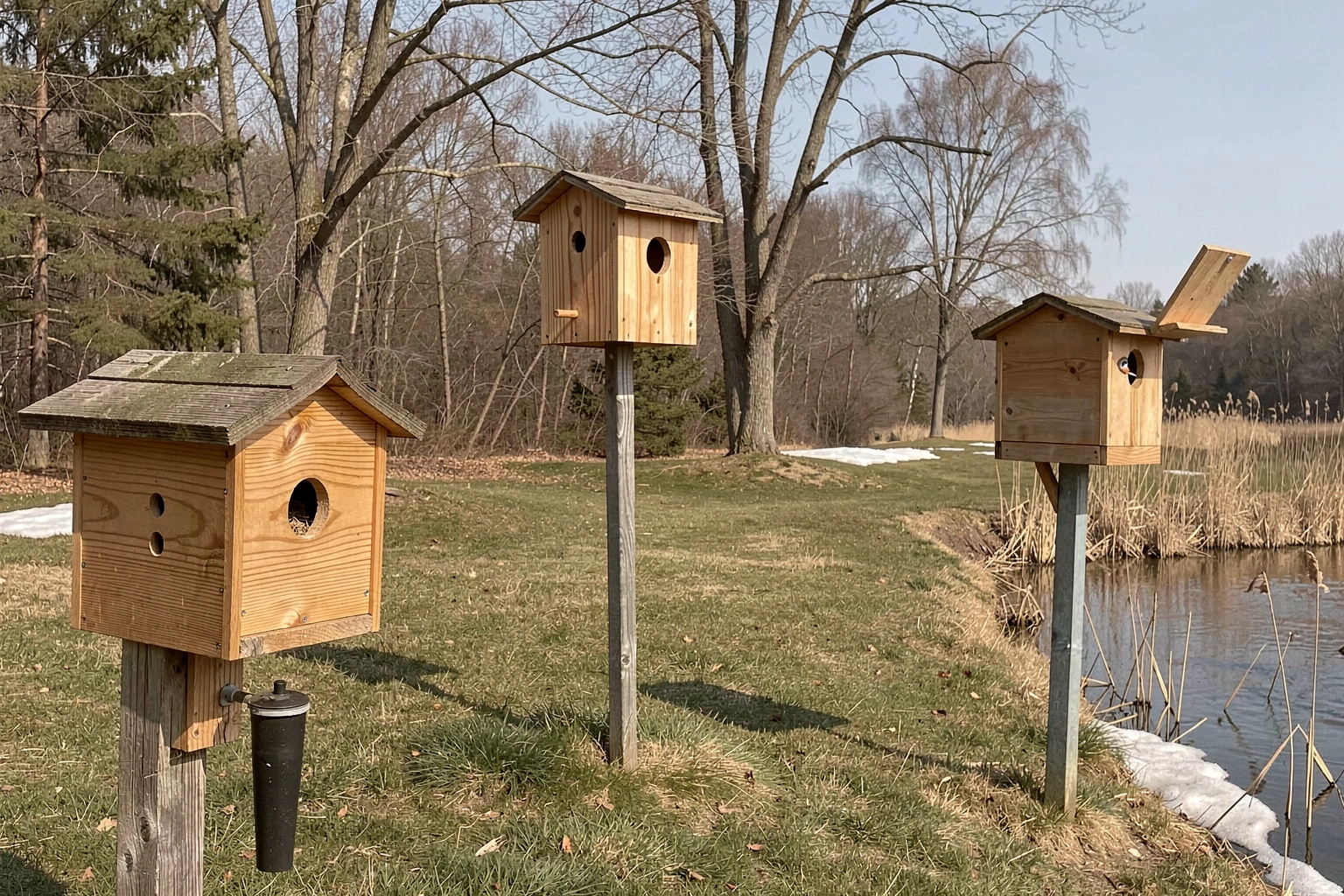
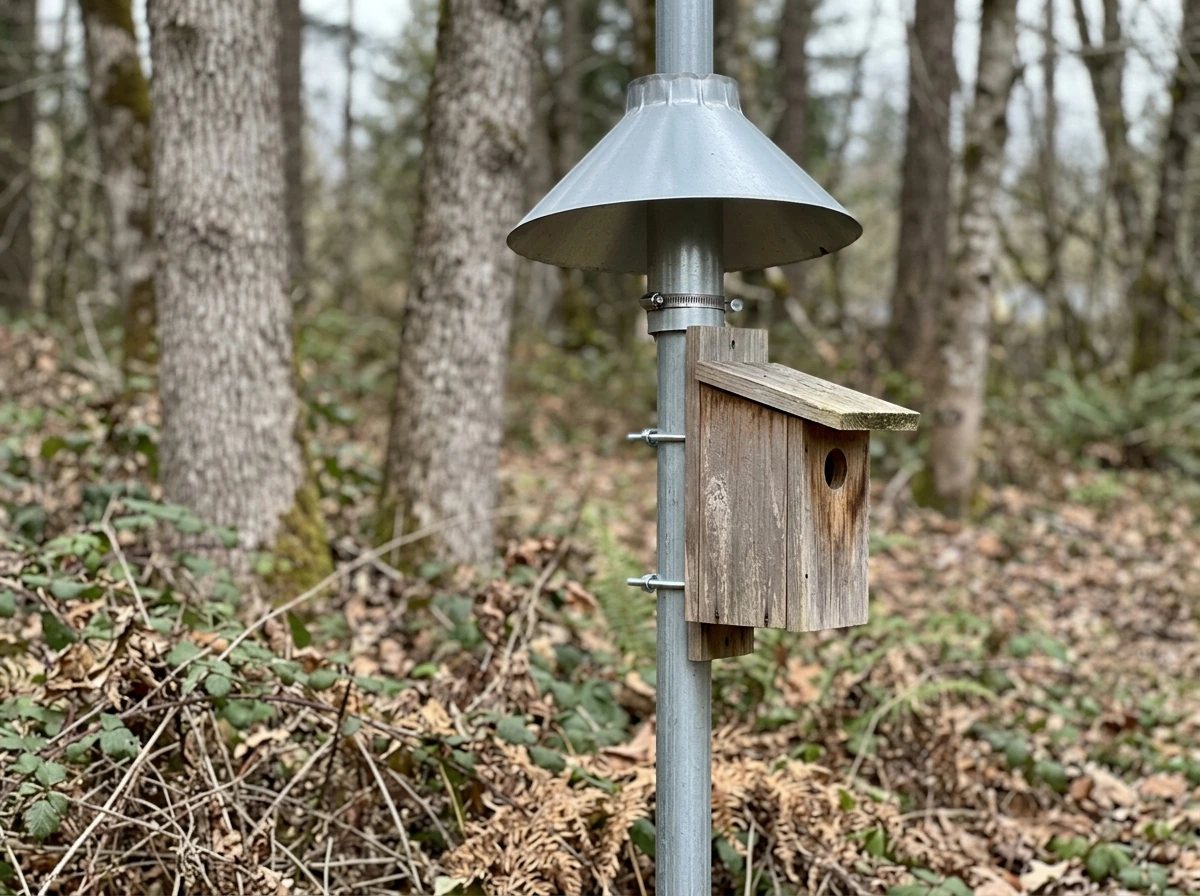
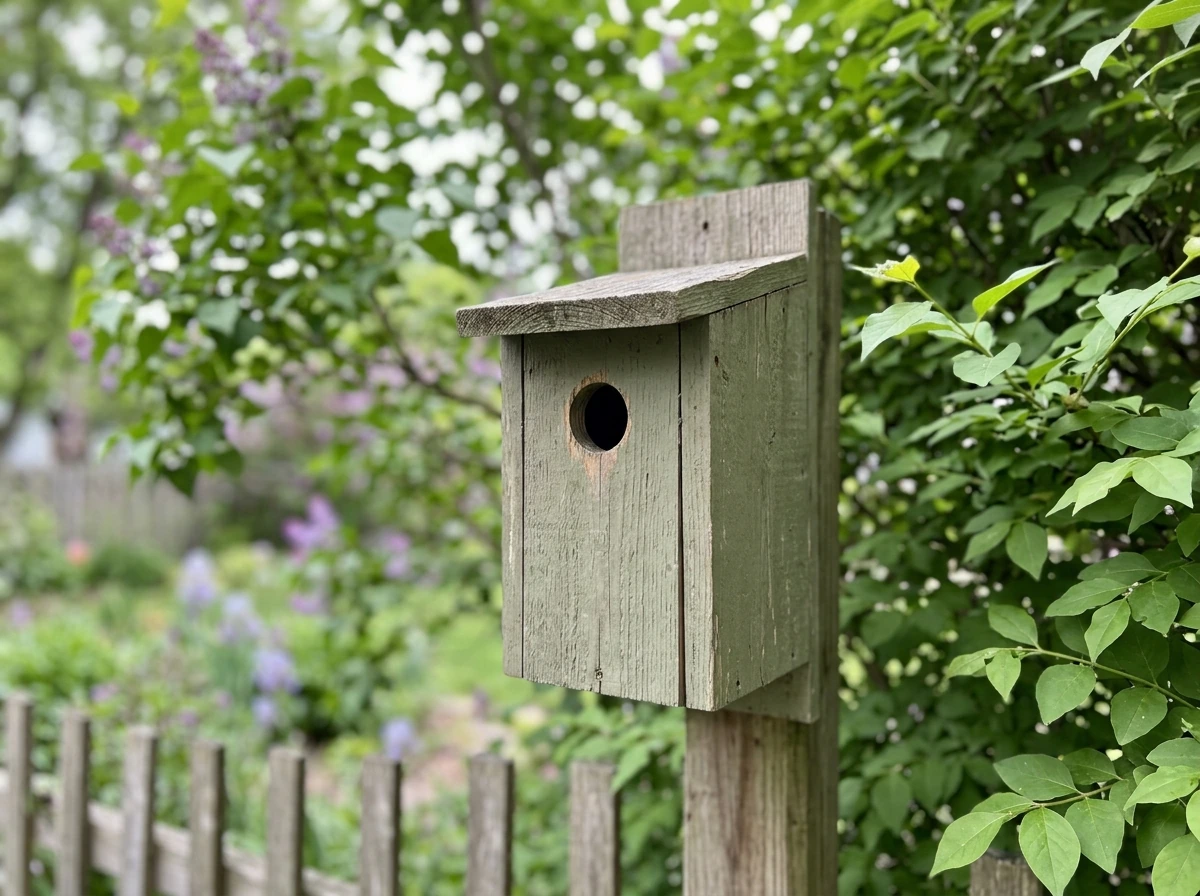
A smooth metal pole with a baffle is the gold standard for mounting. It keeps the box away from tree trunks (which are highways for predators) and allows you to attach a predator guard below the box. Fence posts and wooden posts can work but need a baffle or wrap to stop climbing predators. Avoid mounting directly on trees if you can help it; squirrels and raccoons travel tree bark effortlessly. If your only option is a tree, attach a cone-shaped or stovepipe baffle around the trunk below the box.
When to put the box up
Earlier is almost always better. Most small cavity nesters begin scouting for nest sites weeks before they actually begin building. In warmer regions, bluebirds and tree swallows start exploring as early as February. In northern states like Minnesota, late February to mid-March is the target window. If you are reading this in late March 2026, put the box up this week. You are right at the start of the prime window for most of North America, and a freshly installed, clean box is exactly what a scouting pair is looking for.
Materials and build quality: what to look for in any box you buy
Wood vs. other materials
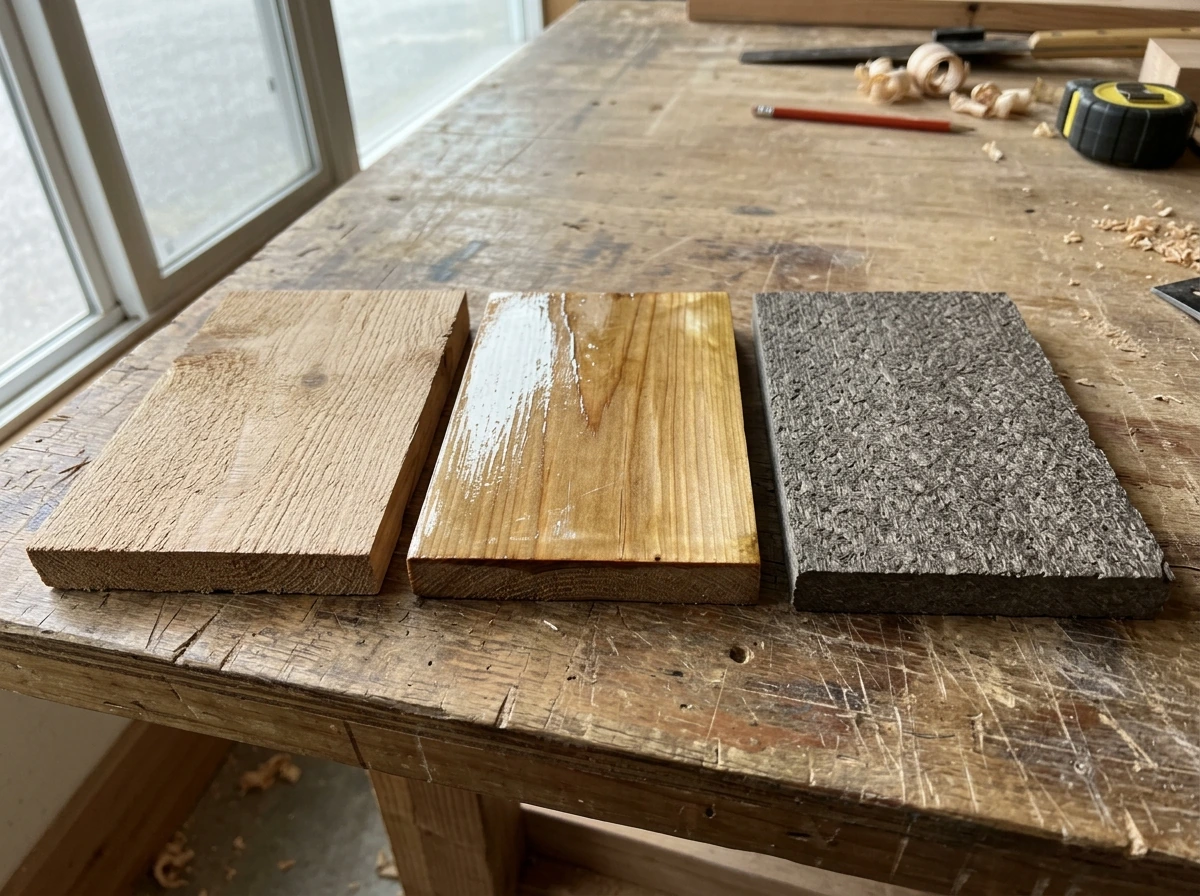
Untreated, unpainted wood is the consistent recommendation from every credible source, and for good reason: it breathes, insulates, and holds up through seasons when built well. Cedar, pine, and cypress are the most common choices. Cedar is the most weather-resistant without any treatment and is the material used in most quality commercial boxes. Avoid any box made of pressure-treated lumber; Missouri Extension guidance is explicit on this point, as the chemicals used in pressure treatment can be harmful inside an enclosed nesting space. Plywood is adequate for DIY builds but degrades faster than solid wood. Avoid plastic or ceramic boxes for long-term outdoor use; they do not insulate well and can become dangerously hot in summer sun.
| Material | Durability | Insulation | Safety | Recommended? |
|---|---|---|---|---|
| Untreated cedar | Excellent (10+ years) | Good | Safe | Yes, top choice |
| Untreated pine | Good (5–8 years) | Good | Safe | Yes, budget-friendly |
| Cypress | Excellent | Good | Safe | Yes, especially in humid climates |
| Pressure-treated lumber | Excellent | Good | Potentially harmful | No |
| Plywood | Fair (3–5 years) | Moderate | Safe if untreated | Acceptable for DIY only |
| Plastic / PVC | Good | Poor | Safe but hot | No |
| Ceramic / clay | Good | Poor | Safe but hot | No |
Ventilation and drainage
A well-built box needs both. NestWatch specifies at least four drainage holes in the floor, each 3/8 to 1/2 inch in diameter. Ventilation gaps or holes near the top of the side walls allow heat to escape on hot days; without them, interior temperatures can spike high enough to kill eggs and nestlings. Check that any box you buy has visible gaps at the top of the walls or drilled vent holes. The floor drainage and wall venting work together, drainage prevents sitting water, venting prevents overheating.
Interior surface and finishes
The inside of the box should never be painted, stained, or varnished. This is consistent across Missouri Extension, NABS, UNL Extension, and NestWatch guidance. The rough texture of natural wood is intentional: it gives nestlings a surface to grip when they are ready to climb out. If you buy a box and notice it has a smooth-cut or sanded interior below the entrance hole, roughen it with a wood file or utility knife before mounting. The exterior can be finished with a water-based, non-toxic paint or stain, but only after it has fully cured.
Predator protection
A predator guard is not optional if you want real nesting success. The two most effective approaches are a stovepipe baffle on the mounting pole (keeps climbing predators from reaching the box at all) and an extended entrance-hole guard, sometimes called a portal or hole extender, that makes it harder for raccoons to reach in and grab eggs or nestlings. A 2023 review paper on predator-proofing nestboxes discusses stovepipe-baffle and related design approaches and cites NestWatch data spanning 24,114 nest boxes stovepipe baffle. NABS explicitly notes that simple wooden blocks placed over the entry are not adequate protection against raccoons. The Tennessee Wildlife Resources Agency warns: if you cannot attach a predator guard to your mounting situation, reconsider the location entirely. Skip the perch below the entrance hole too; it does nothing to stop predators and actually gives house sparrows a convenient launching spot to harass nesting birds.
Maintenance and seasonal care
A nest box you never clean is a nest box that eventually stops being used. Old nesting material harbors parasites, mites, and bacteria that can harm the next clutch. The standard guidance from Cornell Lab's NestWatch and The Wildlife Trusts is to clean the box at the end of each breeding season, typically late summer to early fall after you are confident the last brood has fledged. Remove all old material and scrub the interior with a stiff brush. The Wildlife Trusts specifically recommends scalding the interior with boiling water to kill mites and parasites, then allowing the box to dry completely before rehanging.
During the nesting season, keep disturbance minimal. Checking on a box once a week is fine and actually encouraged by NestWatch's monitoring program, but keep visits short and calm. Avoid opening the box in the first few days after eggs hatch, as that is the most sensitive period. If you notice a nest has been abandoned and the eggs are cold, that clutch is likely not going to hatch. After a failed attempt, you can clean out the box to encourage a second nesting attempt.
In late fall or winter, do one more inspection. Look for cracks, loose hinges, and any spots where water might be getting in. Make repairs now so the box is ready to go in early spring. Some birders leave boxes up year-round so winter roosting birds can use them for shelter; this is fine and can benefit chickadees and nuthatches during cold snaps. Just do a fresh clean before the breeding season begins.
Common mistakes that keep birds away (and quick fixes)
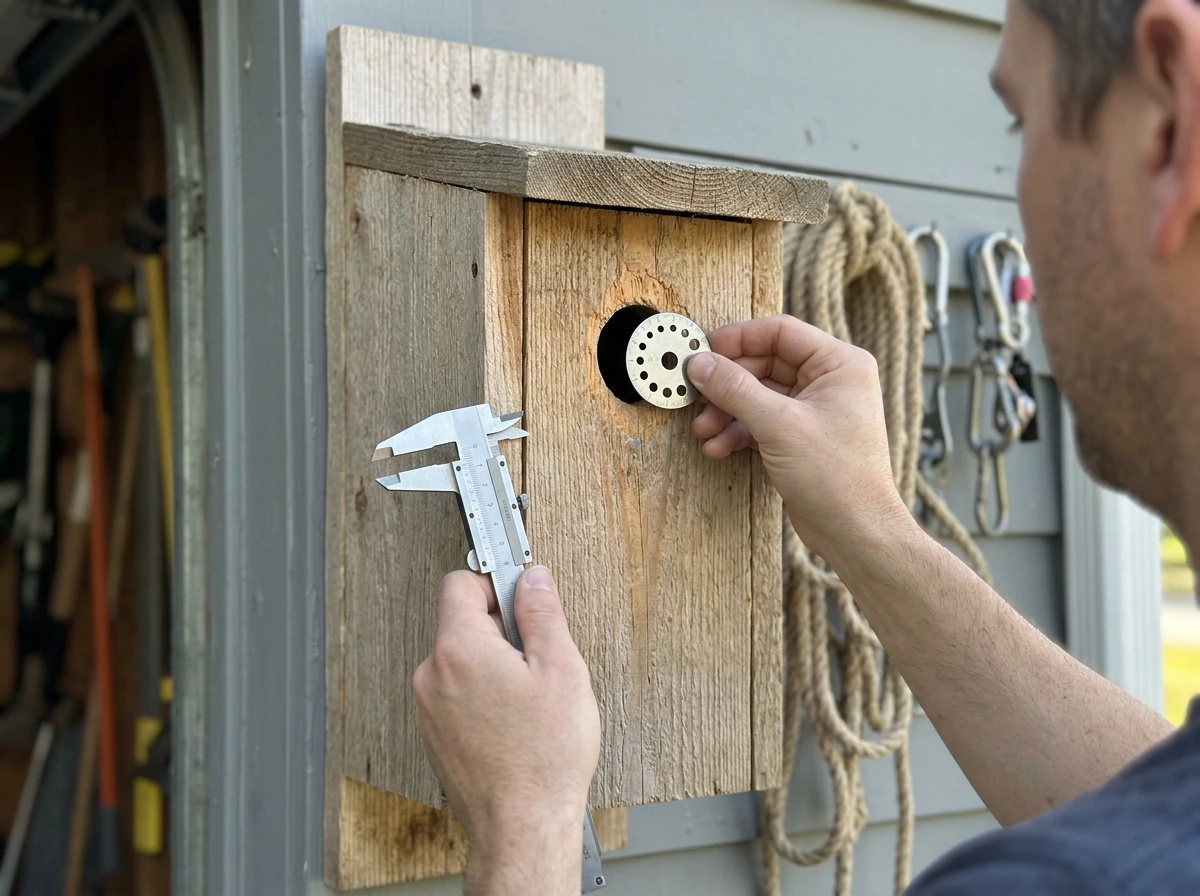
- Wrong entrance hole size: even 1/8 inch too large invites house sparrows or starlings. Fix: measure the hole with a drill bit or caliper before buying or hanging.
- Box placed in full sun all day: the interior overheats and eggs fail. Fix: face the entrance east and make sure the box has afternoon shade from a tree or structure.
- No predator guard: raccoons, snakes, and cats can empty a nest overnight. Fix: add a stovepipe baffle to the pole before the season starts.
- Box mounted directly on a tree trunk without a baffle: predators use the bark to climb right to the entrance. Fix: relocate to a smooth metal pole, or add a cone baffle around the trunk below the box.
- Painted or treated interior: fumes or smooth surfaces repel birds or harm nestlings. Fix: strip or replace the box; rough up the interior surface below the entrance hole.
- No drainage or ventilation: standing water or heat buildup kills eggs and nestlings. Fix: check for floor holes and top-wall vents; drill them yourself if missing.
- Box placed too close to bird feeders: feeder traffic stresses nesting birds and attracts house sparrows. Fix: move the box at least 50 to 100 feet from active feeding stations.
- Box hung too late in the season: birds have already claimed natural cavities. Fix: put boxes up in late winter, well before your local breeding season starts.
If birds simply are not moving in after a full season, do not give up immediately. Check that the habitat around the box matches the species you are targeting: open grass for bluebirds and swallows, wooded edges for titmice and nuthatches. Sometimes relocating a box by just 30 to 50 feet makes the difference.
How to pick the best box to buy today: a practical checklist and comparison
When you are standing in a store or scrolling through listings, run through these checks before you add anything to your cart. If you are trying to buy the best option for southern California specifically, the next step is to compare models that match your local species and heat conditions. If you want help choosing specific models, see our guide to the best bird houses for small cavity nesters. A box that fails even one of these is not worth buying.
- Entrance hole is the correct diameter for your target species (1 1/8 in for chickadees and wrens, 1 1/4 in for titmice, nuthatches, and tree swallows, 1 1/2 in for bluebirds). Measure it; do not trust the product description alone.
- Interior floor is at least 4 by 4 inches (5 by 5 for bluebirds).
- Depth from the bottom of the entrance hole to the floor is at least 5 inches.
- Drainage holes are present in the floor (at least four holes, 3/8 to 1/2 inch each).
- Ventilation is present near the top of the side walls (gaps or drilled holes).
- Interior is unpainted, unstained, and rough-textured below the entrance hole.
- The box opens easily for cleaning (a hinged side or front panel is better than a removable roof on a rainy day).
- Material is untreated solid wood, ideally cedar or cypress.
- No perch below the entrance hole.
- You have a plan for a predator guard on the mounting pole before you hang it.
Which type of box to buy based on your situation
| Your Situation | Best Box Type | Key Spec to Confirm |
|---|---|---|
| Open yard, grassland, or field | Bluebird-style box on a metal pole | 1 1/2 in hole, 5x5 in floor, baffled pole |
| Wooded suburban yard | Chickadee/titmouse cedar box, tree-mounted or pole-mounted | 1 1/4 in hole, 4x4 in floor, baffle on pole |
| Near pond, lake, or open water | Tree swallow box on a pole over or near water | 1 1/4 in hole, east-facing entrance |
| Small yard with dense shrubs | House wren box hung from a branch | 1 1/8 in hole, 5-10 ft height |
| Mixed habitat, want multiple species | Two or three boxes of different hole sizes, spaced 25+ ft apart | Match each box hole size to the target species |
Your next steps today
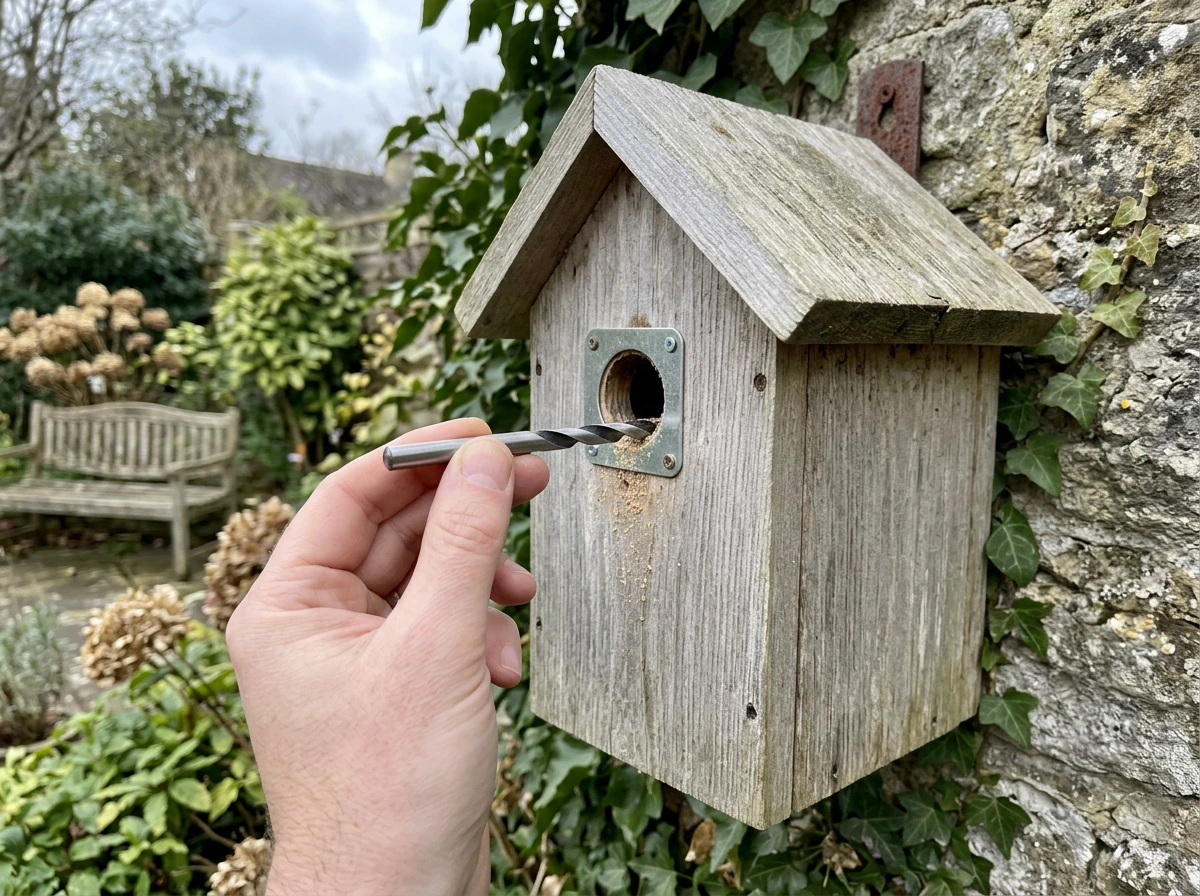
If you already have a box: check the entrance hole diameter right now with a drill bit. Confirm it has drainage and ventilation. Clean it out if you did not do so last fall. Add a predator guard if one is not already in place, and make sure the entrance faces east or away from your prevailing winds. That is your whole to-do list for this afternoon.
If you are buying a box today: decide which species you are targeting based on your habitat, match the entrance hole to that species using the table above, and confirm all ten checklist items before purchasing. Cedar boxes in the 1 1/4 inch hole size are the most versatile starting point for most North American backyards; they work for titmice, nuthatches, and tree swallows, and you can always add a bluebird-spec box later if your habitat supports it. Get the box up this week. You are right at the start of the 2026 nesting season.
FAQ
Can I use one bird house to attract different small bird species at the same time?
Usually not reliably. Most species require a very specific entrance hole size, and overlapping boxes placed too close can trigger territorial aggression. If you want multiple species, use separate boxes for each hole size and spread the same-type boxes at least 15 to 25 feet apart (tree swallows are the main exception).
What if the entrance hole size is slightly off, like 1 9/16 inches or 1 3/8 inches?
Even small differences can matter because some “nearby” birds will still fit. If a listing does not clearly state the measured hole diameter, do not assume it matches. The safest move is to confirm by measuring the actual hole with a drill bit (or calipers) when the box arrives, then return or avoid it if it is out of the target range.
Do I need an external wooden perch under the entrance hole?
For most small cavity nesters, a perch is not helpful and can make problems worse. Perches create an easy launching spot for house sparrows to harass nesting birds, and they do not stop predators. Skip the perch and rely on the correct predator guard setup instead.
How can I tell if the ventilation design is adequate before installing a box?
Look for vent openings near the top of the side walls or clearly drilled vent holes, not just a decorative gap. If the box looks sealed all the way around with no escape path for hot air, it can overheat during warm spells. Also verify the floor has drainage holes, because blocked drainage can lead to wet interiors even if the vents look fine.
Is it okay to paint or stain the inside for better durability?
No. The interior should stay unpainted and uncoated so nestlings can grip it and so the enclosure does not trap off-gassing or residue. If the box came pre-finished, roughen the interior surface below the entrance before mounting, and only finish the exterior with a non-toxic water-based product after full curing.
How far from the ground should I place a box if I cannot access a 6 to 8 foot mounting spot?
You can still succeed, but you should align placement with the species. Bluebirds often do better around 4 to 6 feet, while nuthatches are more at home higher (about 10 to 20 feet). If you are unsure and can only pick one height, 6 to 8 feet is a practical middle ground that is usually easy for you to monitor and clean.
What should I do if squirrels or raccoons are already frequent visitors in my yard?
Do not rely on simple blocks over the entrance. Use a proper predator guard for your mounting situation, either a stovepipe-style baffle on a pole or an extended hole guard that makes reaching inside difficult. If you cannot add a guard, the article’s guidance is to reconsider location, because predators will often defeat the box.
How often should I check the box during nesting season?
Plan for infrequent, calm visits. A weekly look is generally fine, but avoid opening the box during the first few days after eggs hatch since that is the highest-sensitivity period. If you must act due to a failed attempt, clean after the failure to give a chance for a second nesting attempt.
If birds do not use a box after one year, should I replace it?
Not immediately. First verify that the entrance hole matches what is in your area, then check whether the surrounding habitat fits the target species (open areas for bluebirds and swallows, wooded edges for titmice and nuthatches). If habitat is close but not quite right, relocating the box by about 30 to 50 feet can improve acceptance without changing the box.
Can I leave a bird house up all winter?
Yes, it can help with winter roosting for some cavity nesters, like chickadees and nuthatches. The key step is to do a fresh clean before the breeding season begins, removing old material so parasites and mites do not carry over into nesting.