The best bird house is the one that matches a specific bird species, with the right entry hole size, interior dimensions, and placement for your yard. That sounds simple, but most people skip the species-matching step entirely and end up with a decorative box that attracts nothing. This guide fixes that. Whether you want to buy something today or build one this weekend, here is exactly what to look for, what to avoid, and how to make a confident decision. Once you know the species, you can also compare what types of bird houses are there and choose the right style for your yard.
Best Bird Houses Guide: Buy or Build the Right Design
Maya Thompson
22 Mar 2026
What 'best bird house' actually means
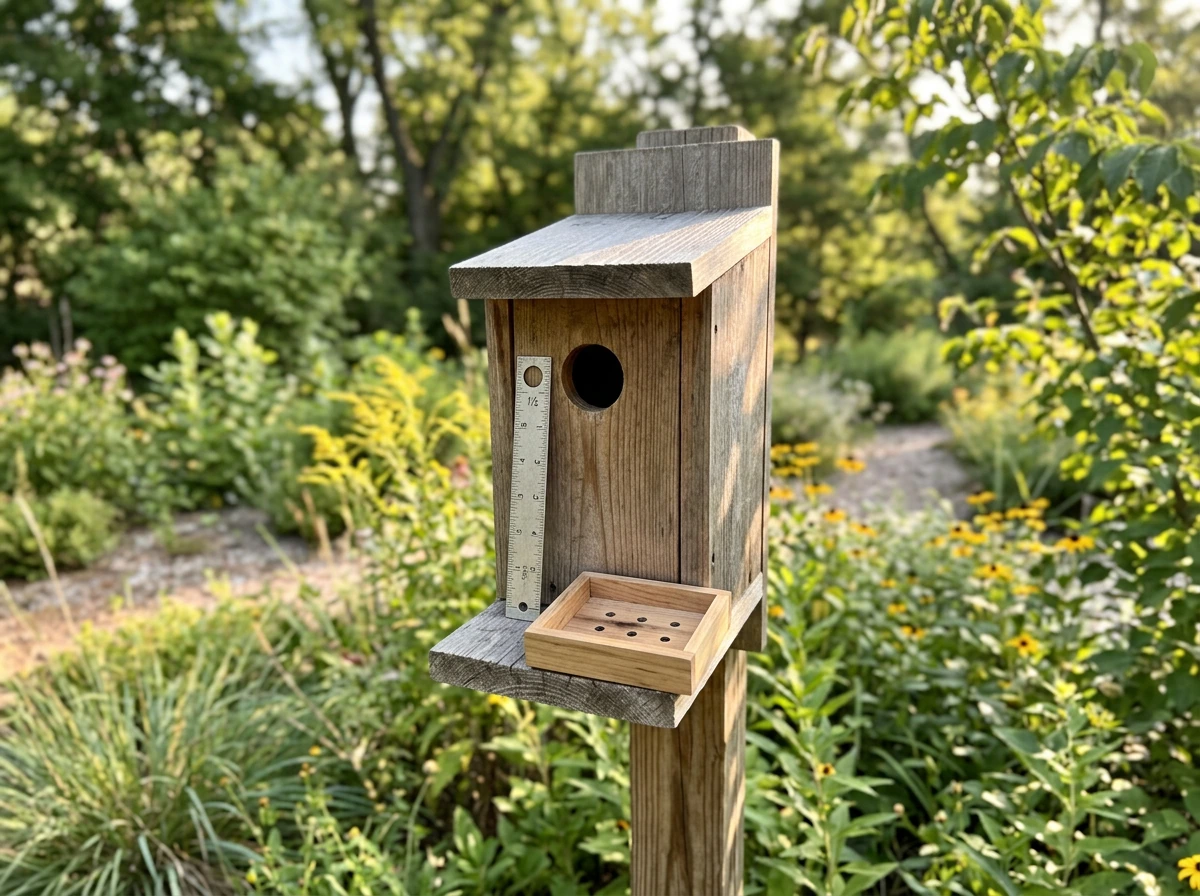
A great bird house is not the most decorative one, the most expensive one, or the one with the best reviews from people who do not monitor their boxes. The best bird house is one that a target species will actually nest in safely and successfully raise young. That means four things have to line up: the entry hole diameter is correct for the bird, the interior floor space and depth match the species, the box handles weather without becoming a damp or overheated trap, and the placement puts it where that bird already wants to be.
When you shop or plan a build, those are your selection criteria. Decorative features, paint color, and fancy rooflines are irrelevant to the bird. Precise hole diameter, interior roughness below the hole, ventilation gaps, floor drainage, and a predator guard are not optional extras. They are what separate a box that works from a box that just sits in the yard.
Choose the right bird first
Before you look at a single product or plan, decide which bird you are trying to attract. The surrounding vegetation and habitat in your yard will tell you who is realistic. Open grassy areas with scattered trees are bluebird territory. Wooded yards with mature trees attract chickadees, nuthatches, and woodpeckers. Proximity to water opens the door for tree swallows and wood ducks. Trying to attract a bird that does not already live near your property is a losing game. NestWatch is explicit about this: surrounding vegetation determines which species will use the box.
For a deeper look at which birds are realistic targets based on yard size and vegetation type, the article on the best bird houses for small birds covers species that nest in tighter spaces and more suburban settings.
| Species | Entry Hole Diameter | Box Height Above Ground | Habitat Preference |
|---|---|---|---|
| Eastern Bluebird | 1 1/2" round (or 2 1/4" x 1 3/8" oval) | 3–6 feet | Open fields, sparse trees, near water |
| Western Bluebird | 1 1/2" round | 4–6 feet | Open woodland edges, orchards |
| Mountain Bluebird | 1 9/16" round | 4–6 feet | High-elevation open terrain |
| Tree Swallow | 1 1/2" round | 4–6 feet | Near water, open areas |
| Black-capped Chickadee | 1 1/8" round | 4–8 feet | Wooded edges, shrubby areas |
| House Wren | 1 1/8" round | 4–10 feet | Gardens, shrubby backyards |
| Downy Woodpecker | 1 1/4" round | 5–15 feet | Mature trees, wooded yards |
For a deeper look at which birds are realistic targets based on yard size and vegetation type, the article on the best bird houses for small birds covers species that nest in tighter spaces and more suburban settings.
Design features that actually matter
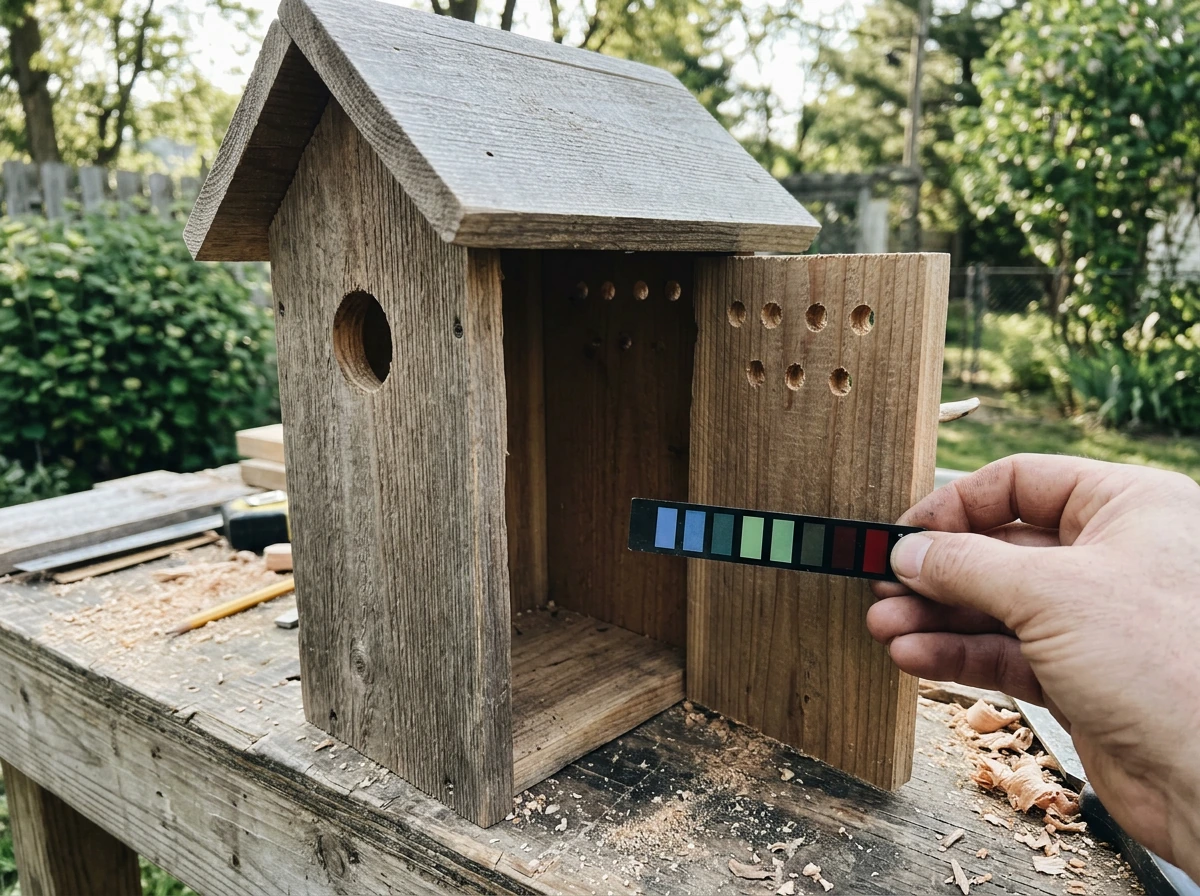
Once you know your target species, here is what to look for in any box, whether you are buying or building.
Entry hole size and position
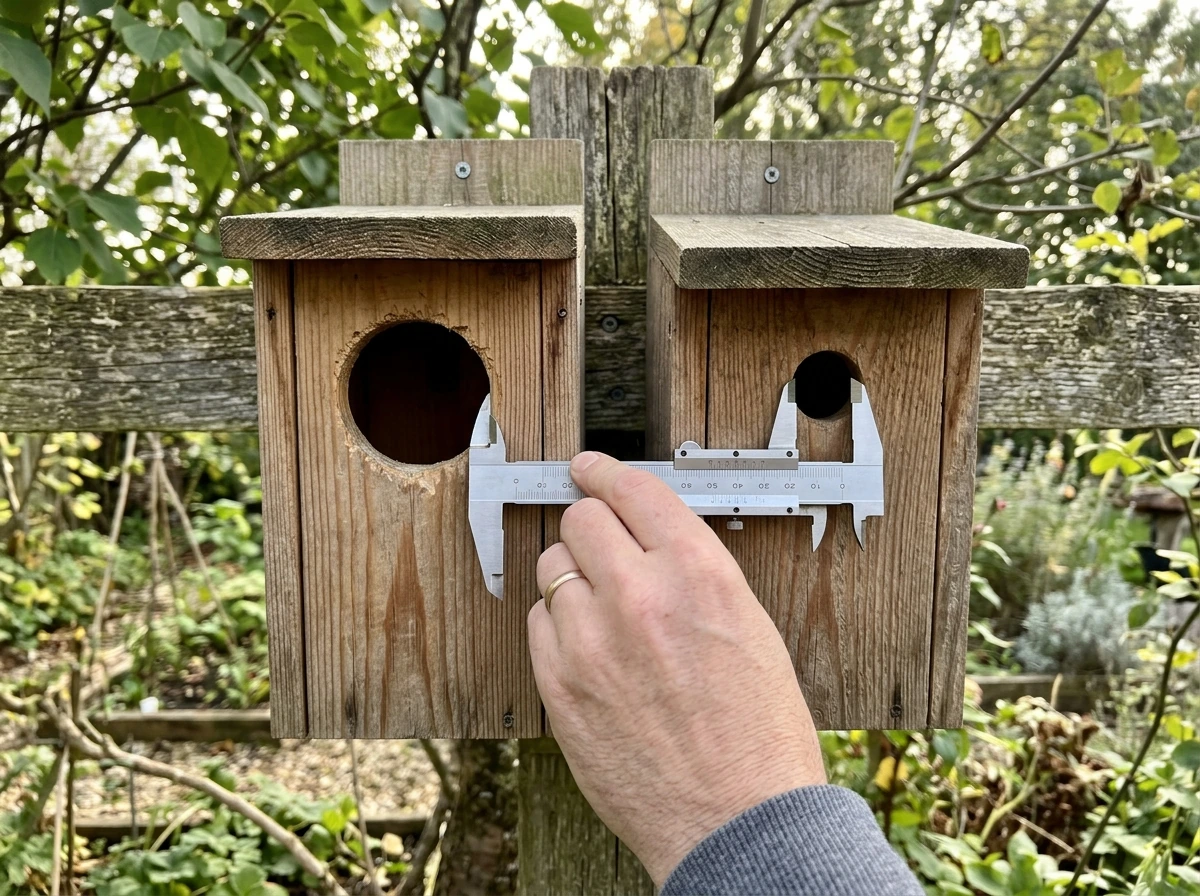
This is the single most important dimension. A hole that is too large lets in predators and nest competitors like European starlings. A hole that is too small keeps the target bird out. For eastern and western bluebirds and tree swallows, the correct diameter is exactly 1 1/2 inches. Mountain bluebirds need 1 9/16 inches. Chickadees and house wrens need 1 1/8 inches. On a bluebird box following the Audubon DIY plan, the center of the hole should be 2 inches from the top of the front panel and centered side to side. Do not guess. Measure.
Interior wall texture below the hole
Both NestWatch and the North American Bluebird Society call this out specifically: the interior wall directly below the entrance hole must be rough, not sanded smooth. This lets nestlings grip the surface and climb out when it is time to fledge. On a bought box, look for natural wood texture or intentional scoring on that surface. When building, never sand the inside face of the front panel.
Ventilation
A closed, sealed box overheats in warm weather and kills nestlings. Proper ventilation comes from a combination of sources. The Audubon bluebird box plan includes a 3/8-inch vent hole in the floor (centered) and a 1/2-inch gap at the top of the front panel. When evaluating any box, confirm it has at least a gap under the roof overhang or holes near the top of the side panels. In hot climates like Southern California, ventilation is even more critical, and Chirp Nature Center recommends adding a temporary double-roof shade structure over the box during peak summer heat.
Drainage
Water that gets into the box during rain needs to get out fast. NestWatch recommends at least four drainage holes in the floor, each between 3/8 and 1/2 inch in diameter. The South Carolina Bluebird Society recommends drilling these at the floor corners. The North American Bluebird Society offers an alternative: cutting the corners of the floor panel at 45 degrees, creating open triangular drainage gaps. Either method works. What does not work is a flat, sealed floor with no drainage.
Predator guard
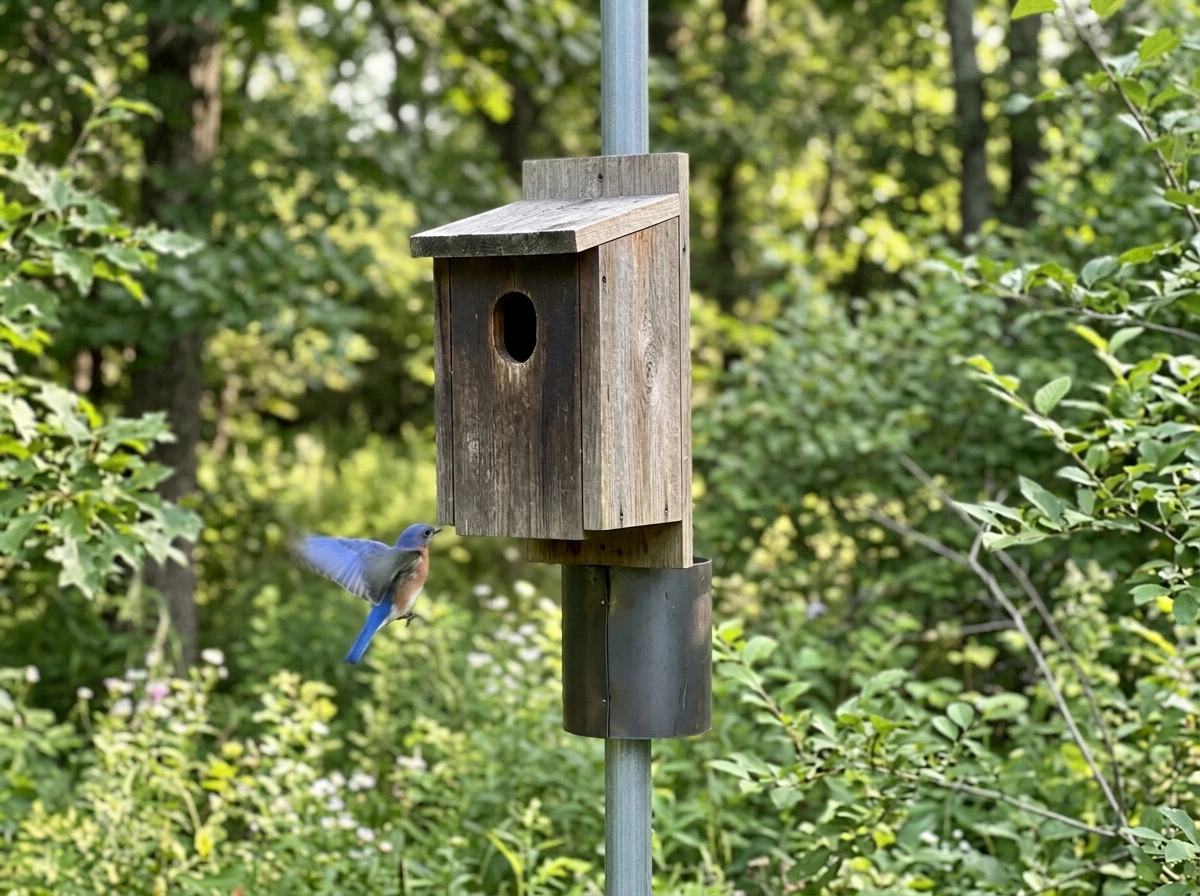
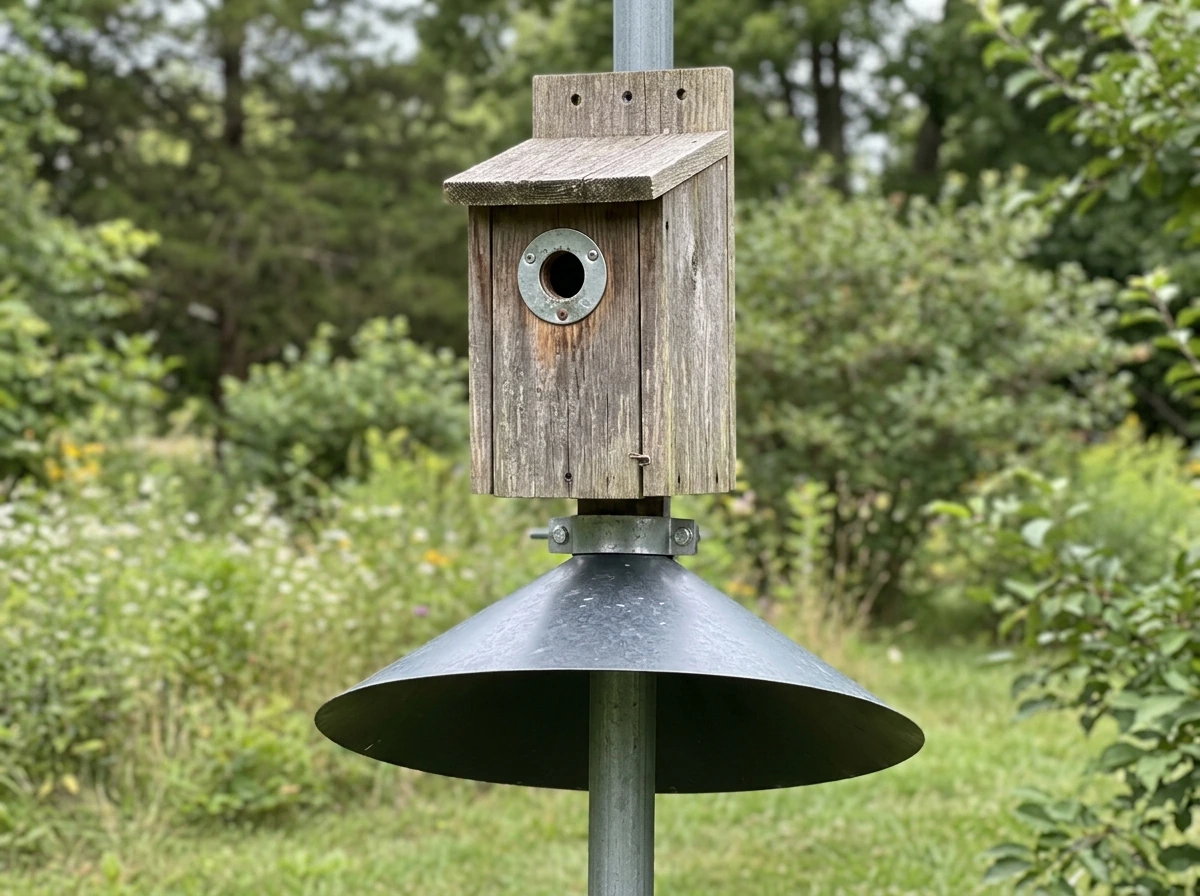
A predator guard serves two functions. A hole guard, which is a metal plate with the correct hole diameter attached over the entry hole, prevents raccoons and squirrels from gnawing the hole larger. OSU Extension specifically recommends this approach. A pole-mounted baffle prevents climbing predators like snakes, raccoons, and cats from reaching the box at all. NestWatch lists both as key features of a successful birdhouse. If a box you are considering does not include a predator guard or is not designed to accept one, that is a significant red flag.
Material and durability
Untreated cedar and pine are the most practical materials for bird houses. Cedar is naturally rot-resistant and handles freeze-thaw cycles well without warping badly. Pine is fine when protected by a good roof overhang, which should extend at least 2 inches past the front panel. Avoid painted interiors, pressure-treated wood (toxic to birds), and plastic boxes that seal heat in and crack after a few seasons outdoors. The roof needs to shed water without leaking. Metal roofs are fine as long as the box still has ventilation, since they can conduct heat.
How to pick quality bird houses for sale
Buying a bird house is faster than building one, and there are genuinely good products available. The problem is that most retail bird houses, especially mass-market ones, do not list the specifications you need to evaluate them. Here is how to cut through the noise.
Start by looking for the entry hole diameter in the product listing. If it is not listed, skip it. A reputable seller will always include this. The Audubon cedar bluebird nesting box sold through The Audubon Shop, for example, lists a 1.5-inch entry hole and includes a predator guard over the hole. That is the kind of transparency you want to see.
- Confirm the entry hole diameter matches your target species exactly (see the table above).
- Check that the listing mentions ventilation gaps or holes near the top of the side panels or under the roof.
- Look for drainage holes or cut corners on the floor.
- Confirm the box opens for cleaning, either a hinged side, a removable front, or a lift-off roof.
- Check whether a predator hole guard or baffle is included, or whether the mounting is compatible with standard pole baffles.
- Avoid boxes with a perch below the entry hole. Perches help predators and nest competitors, not the target species.
The bottom line on buying: a box made of cedar or pine with the correct hole size, documented ventilation and drainage, a cleanout door, and a predator guard is a quality bird house. If any of those are missing from the product description, assume they are missing from the box.
What to look for in bird house plans and materials
Building your own box is genuinely the better route if you want to dial in the specs for a specific species or adapt to your yard's constraints. The tools required are minimal: a circular saw or jigsaw, a drill with a hole saw or spade bit in the correct diameter, and basic fasteners. Here is what a good set of plans must include.
- Exact dimensions for the floor, front, back, sides, and roof panels, labeled clearly.
- The entry hole diameter and its precise position on the front panel (distance from top and sides).
- Ventilation specifications, whether that is a gap dimension at the top of the front, holes in the upper side panels, or both.
- Drainage specifications, either corner drain holes with diameter stated, or cut-corner dimensions.
- Interior wall treatment notes, specifically calling out that the inside face of the front panel should be left rough or scored.
- Recommended wood species and acceptable thicknesses (typically 3/4-inch nominal pine or cedar).
- A cleanout mechanism, whether hinged side or removable panel, with hardware specs.
- Mounting method and recommended mounting height range for the target species.
For bluebirds specifically, the Audubon DIY bluebird box plan and plans from the New York State Bluebird Society and North American Bluebird Society are all well-documented and species-verified. These are free, printable, and include all the measurements listed above. If a plan you find online is missing hole position, ventilation details, or drainage specs, find a better plan. The Cornell Lab of Ornithology's NestWatch educator resources also include verified box dimensions tied directly to species requirements.
When adapting plans to your yard, the most common constraint is available wood width. Most plans are designed around standard 1x6 or 1x8 lumber (which measures 3/4 inch thick and 5.5 or 7.25 inches wide, respectively). Do not substitute thinner boards. Thin walls lose heat in winter and gain it in summer, both stressing nestlings. If your yard requires a shorter box height for clearance reasons, adjust the back panel mount length, not the box body itself.
Placement, maintenance, and seasonal care
Where and how to mount the box
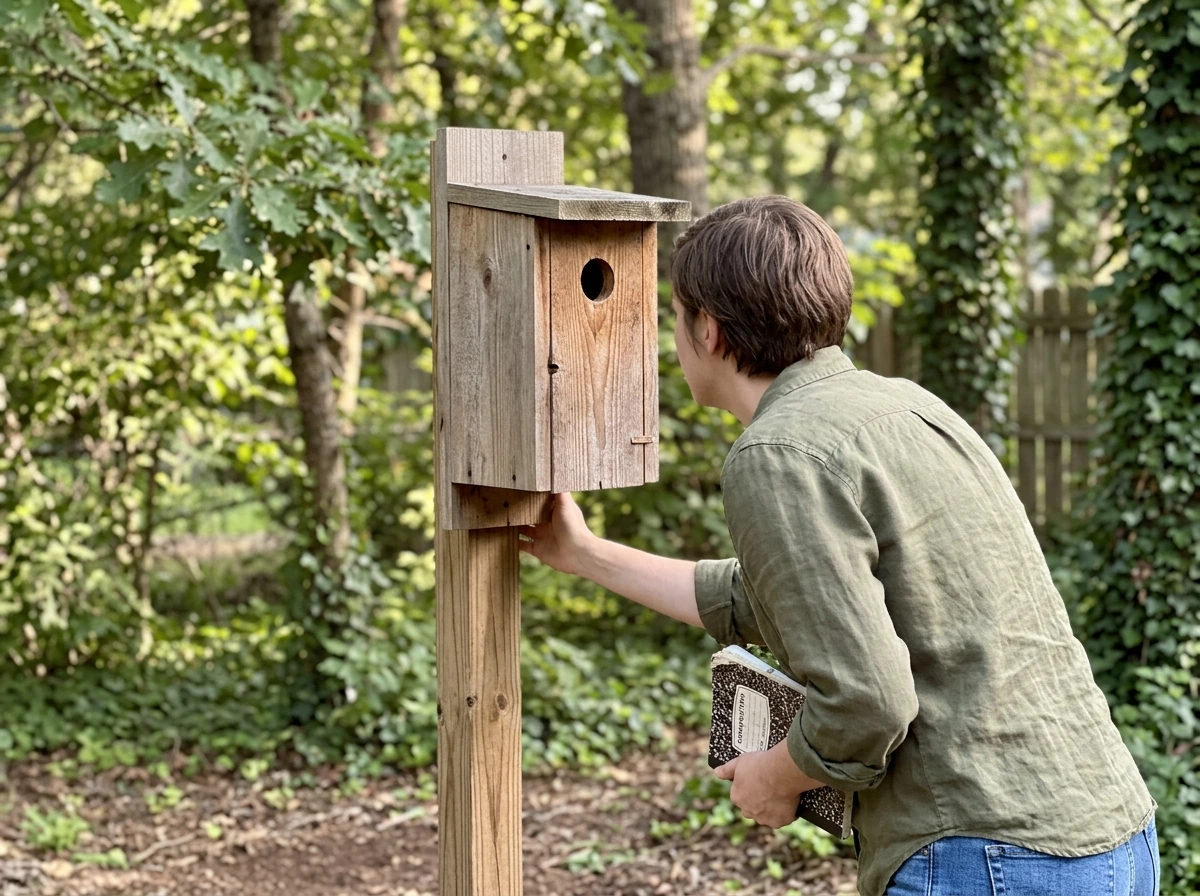
Placement is as important as design. blank" rel="noopener noreferrer">NestWatch placement tables give specific height ranges by species. Eastern bluebirds should be 3 to 6 feet above the ground. Western bluebirds and tree swallows do best at 4 to 6 feet. House wrens can go up to 10 feet. The Bluebird Program of Minnesota recommends 5 to 6 feet for cold-climate installations and suggests facing the entrance toward a tree rather than a road. NestWatch also recommends siting boxes within 100 feet of water when possible and ensuring no branches are within jumping distance of the entrance hole.
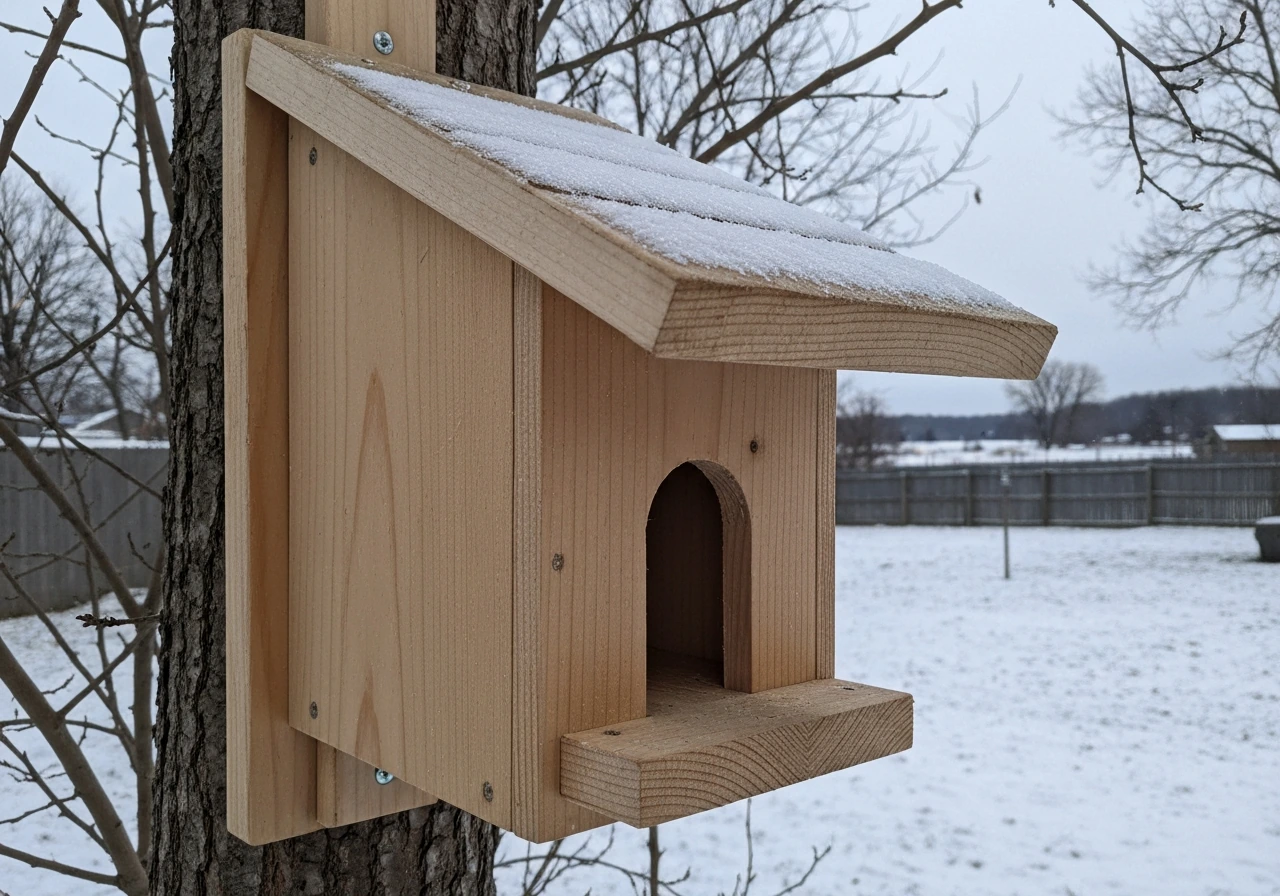
For the best placement strategy by habitat type, the article on the best places for bird houses goes into much more detail on open field versus wooded edge versus suburban yard siting. The article on the the best bird houses for winter also covers cold-season placement adjustments worth reading if you are in a northern state.
Predator-proofing the mount
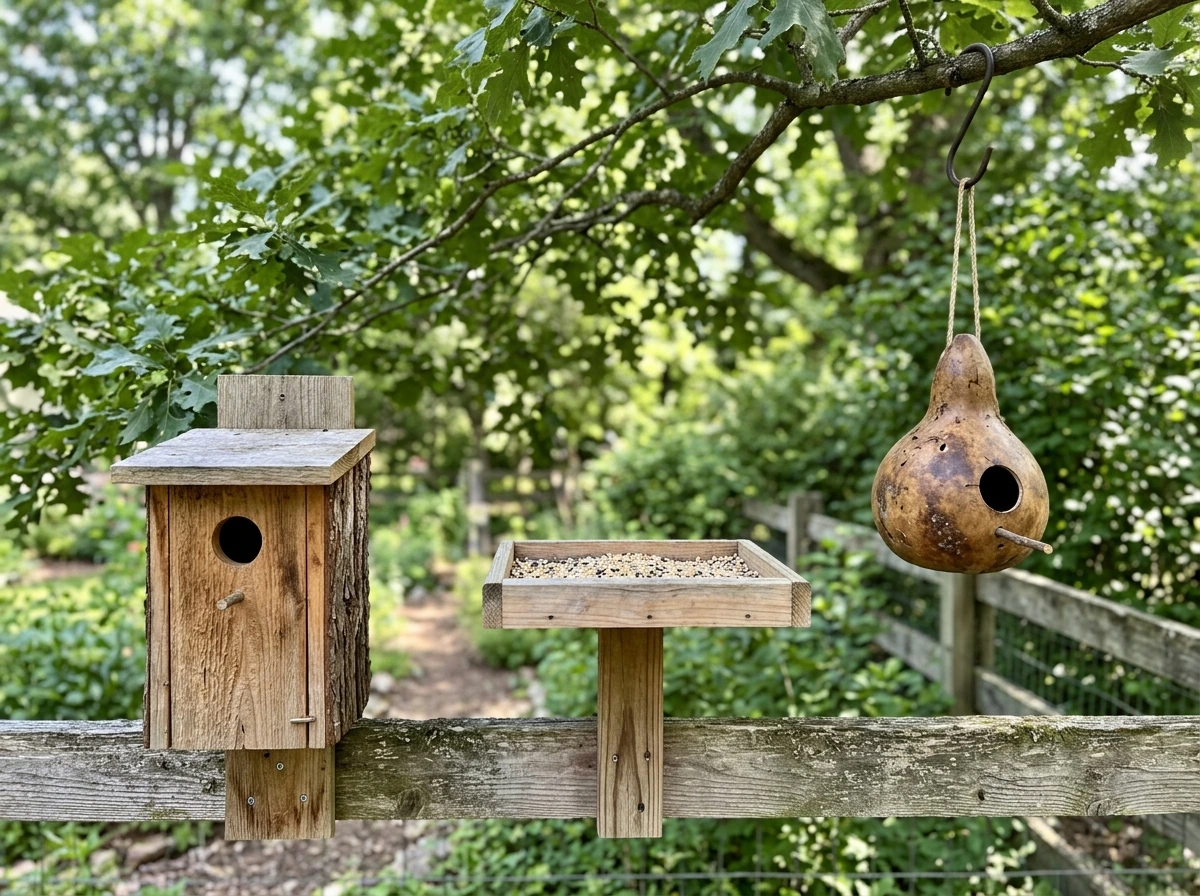
Mount the box on a smooth metal pole, not a wooden post or tree, and add a cone-style or cylinder baffle below the box. A smooth pole with a baffle is the single most effective predator deterrent available. Attaching a metal hole guard over the entry hole handles the gnawing problem. Both steps together give you a genuinely predator-resistant setup. Boxes mounted on fence rails, wooden posts, or trees without baffles lose nests at a much higher rate.
Cleaning schedule
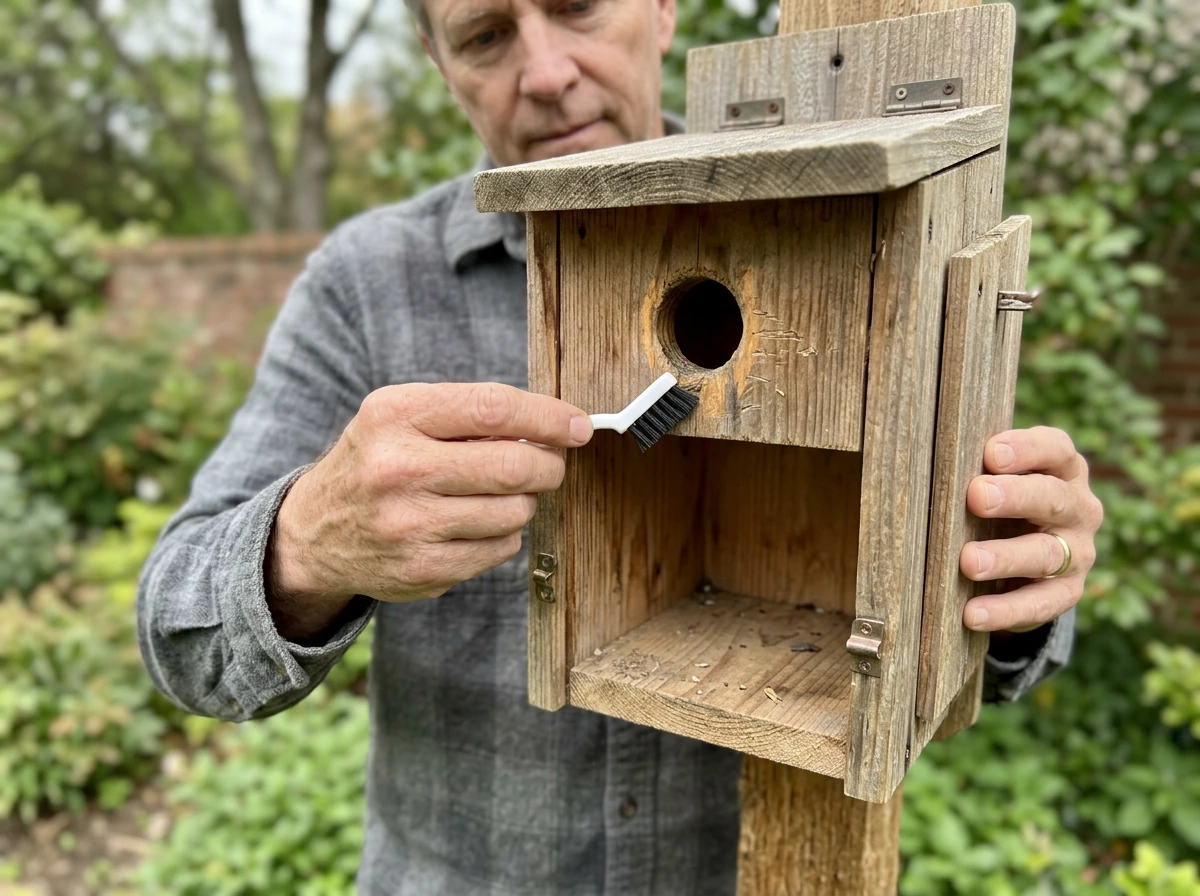
Old nest material harbors parasites, mold, and mice. Mountain Bluebird Trails Conservation Society is clear that leaving old nests in boxes carries real costs to the next breeding attempt. The practical routine is this: clean the box out completely at the end of each nesting season in fall, and do a second inspection and clean in late winter or very early spring before birds start prospecting, which is consistent with guidance from WDFW and general seasonal recommendations from nesting organizations. Between broods during the nesting season, monitor the box weekly and remove any blown debris or wasp starts.
Annual inspection checklist
- Remove all old nesting material completely.
- Check the entry hole for signs of gnawing or enlargement. Replace or add a metal hole guard if needed.
- Inspect the floor drainage holes and clear any debris blocking them.
- Check that the roof is secure and not leaking at the seams.
- Confirm the mounting pole and baffle are still stable and properly positioned.
- Re-treat any exposed wood surfaces with linseed oil or a water-based exterior finish on the outside only, never the interior.
- Verify the cleanout mechanism still opens and closes properly.
Buy or build: a direct recommendation
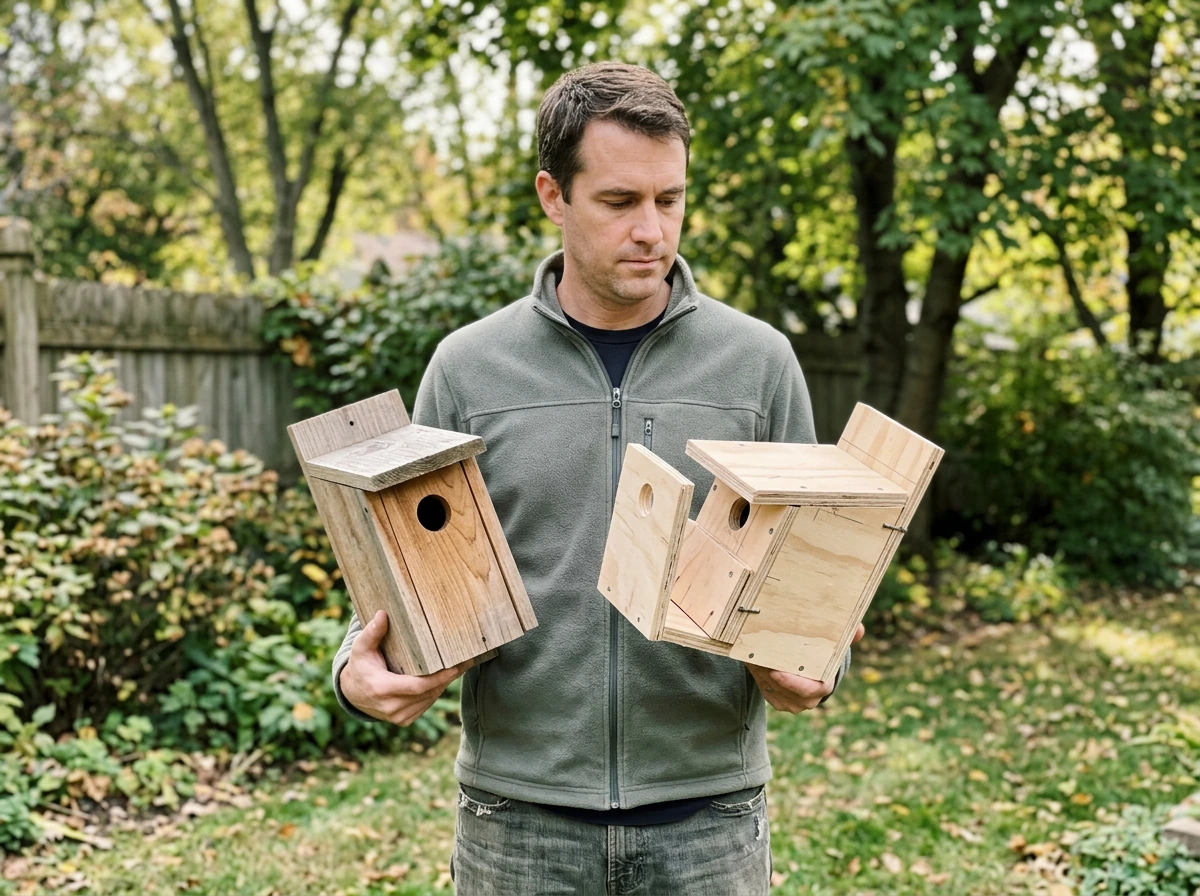
If you want something installed this week and you are targeting eastern or western bluebirds or tree swallows, buy a cedar bluebird box from a conservation-affiliated retailer like The Audubon Shop or a local Audubon chapter store. Confirm the 1.5-inch hole, predator guard, and cleanout door are present in the listing. Mount it on a smooth metal pole with a cone baffle at 4 to 6 feet, within 100 feet of water if possible, facing away from prevailing winds and road traffic.
If you want the best possible outcome and do not mind one afternoon of work, build from a verified plan. Use the Audubon bluebird box plan or an NABS-approved design. Cut from 3/4-inch cedar or pine. Drill the entry hole to exactly 1.5 inches (or 1 9/16 inches for mountain bluebirds), leave the inside front panel face unfinished, drill four 3/8-inch drainage holes in the floor corners, and leave a 1/2-inch ventilation gap at the top of the front panel. Add a metal hole guard over the entry. Mount on a metal pole with a baffle. That box will outperform most retail options and last a decade or more.
Either path works. What does not work is picking a box based on looks, skipping the hole-size check, mounting it on a wooden post without a baffle, and never cleaning it out. Get those four things right and you will be ahead of most backyard birders from day one.
FAQ
How can I tell if a bird house is actually the right size for my target bird?
If the product listing does not state the entry hole diameter, treat it as unverified for nesting. Many decorative boxes look right but use holes sized for a different species or allow easy access to competitors and predators, so skipping the hole spec is one of the fastest ways to end up with a box that stays empty.
Can I sand or stain the inside of a bird house to make it look nicer?
Yes, but only for the inside surface under the entrance hole. You want the wall directly below the hole to be rough so nestlings can climb out, so avoid sanding or refinishing that specific area even if you use sealants elsewhere (roof, exterior seams).
What should I do if my purchased bird house feels drafty or does not look fully sealed?
Never fill or block the ventilation areas to improve weatherproofing. In hot weather, sealed boxes can overheat quickly, so keep the planned vent gaps or holes, and if you add a roof or shade accessory, make sure it does not cover intake vents or trap airflow under the roof.
Is it okay to use a “small birds” bird house if I cannot identify my exact species?
Most birds use specific hole sizes and also benefit from correct box depth and floor area. If a plan only gives a general “small bird” recommendation, verify the exact measurements for your species, especially hole diameter and floor depth, before building or buying.
Will a metal roof overheat the nest in summer?
It can, depending on how it is built. A metal roof is fine as long as the design still includes ventilation and drainage and the interior is not sealed into a heat trap, but in direct sun you may still need additional shade or careful placement to reduce overheating risks.
How many drainage holes should a bird house have, and can I add extra?
Do not assume more holes are always better. Aim for the drainage strategy described in the plan (floor holes of the specified diameter and placement, or corner cuts), but keep the interior otherwise structured for the target species, and avoid large gaps that could create entry points for predators.
Is a cleanout door really necessary?
A cleanout door is not just convenience. Without it, you cannot reliably remove old nesting material and debris, which increases parasite, mold, and rodent risk and can lower the chance of successful reuse by the next pair.
Can I add a predator guard to any bird house after I buy it?
If you are missing the predator guard, you can sometimes retrofit depending on the front panel thickness and hole diameter, but you should only retrofit parts that match the exact entry size and mount securely over the opening. If you cannot add a proper hole guard and you cannot mount a baffle system, keep shopping.
Why is mounting on a tree or wooden post a problem even if the box has the right hole size?
No, and it is a common failure point. Mounting on wood, fence rails, or branches without a baffle increases access for climbing predators, especially snakes, raccoons, and cats. For best results, use a smooth metal pole and a cone or cylinder baffle.
When should I clean a bird house, and do I need to remove old nests?
Old nesting material should be removed between nesting attempts. A safe routine is a full cleanout at the end of the nesting season, then a second check and cleaning before birds start prospecting in late winter or very early spring, and brief debris removal during active periods without disturbing the birds.
What placement details matter most besides the height?
For bluebirds and similar cavity nesters, face the entrance away from the road when possible and aim it toward favorable habitat such as nearby trees, and avoid placing it where branches or shrubs can let predators reach the entrance. Also keep it within the recommended height range for your species and local climate.
What is the best way to adapt a bird house plan to my yard if I need a shorter or differently mounted box?
If you have clearance constraints, change the mounting hardware or back-panel position rather than reducing wall thickness. Using thinner lumber can create thermal stress (colder in winter, hotter in summer) that harms nestlings, so keep the 3/4-inch board thickness specified by verified plans.