The best place for a birdhouse is a spot that matches the target species' habitat, sits at the right height, [faces away from prevailing wind and harsh afternoon sun](https://s3. amazonaws. com/assets. cce.
Best Places for Bird Houses: Exact Location Guide
Maya Thompson
22 Mar 2026
cornell. edu/attachments/22806/Bluebird-Nesting-Box-Construction-2012. pdf), and is protected from cats, squirrels, and raccoons. If you are comparing options, also review the best bird houses for minnesota to match local species needs and weather.
If you are comparing options, also review the best bird houses for southern california for guidance on species that thrive in warmer coastal and inland areas. That sounds like a lot of variables, but once you know the rules, picking your spot takes about 10 minutes. This guide walks you through every decision, from which tree branch to skip to exactly how far apart two boxes need to be.
What makes a birdhouse location actually work
Before you grab a drill, it helps to think like the bird. Cavity-nesting birds are not looking for a decorative box. They want a safe, dry, temperature-stable chamber near reliable food and cover, with a clear flight path in and out. The U.S. Fish and Wildlife Service adds one more criterion that often gets overlooked: place the box somewhere you can conveniently monitor and maintain it. A box you cannot reach is a box you cannot clean, and an uncleaned box fills up with old nests, parasites, and predator attractants.
With that in mind, every good birdhouse location checks five core boxes before anything else.
- Correct habitat for the target species (open field, woodland edge, wetland margin, suburban yard)
- Mounting height matched to the species' natural nesting range
- Entrance hole facing away from prevailing wind and afternoon sun
- Clear of obstructions that give predators a climbing or leaping path to the entrance
- Close enough for you to see and access, but far enough from heavy foot traffic to avoid disturbing nesting birds
Height, direction, and sun and wind exposure
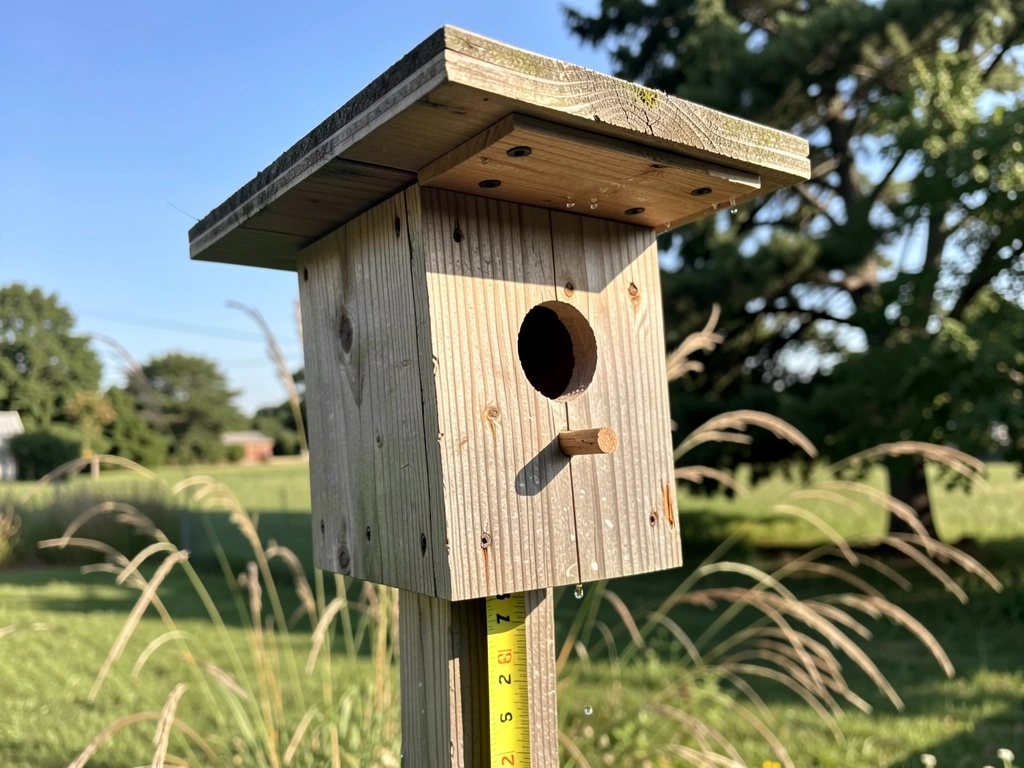
Height matters more than most people think, and it varies by species. Bluebirds do best at 4 to 5 feet above ground on an open post, which is low enough to monitor easily and right in the zone where bluebirds naturally prospect for nest sites. Chickadees prefer 4 to 8 feet up in or near a wooded edge. Wrens are happy at 5 to 10 feet on a fence post or bracket.
Screech-owls and wood ducks need 10 to 30 feet, ideally on a tree or tall post near water or mature woodland. Purple martins require a colony house on a pole 12 to 20 feet up in a wide-open area. The general rule: if you are not sure of the species, 5 to 8 feet covers the widest range of common backyard nesters and keeps the box easy to maintain.
Orientation is the detail most homeowners skip and then wonder why the box stays empty. Cornell Lab of Ornithology's NestWatch is clear on this: face the entrance hole away from prevailing winds. In most of the U. S.
, prevailing winds come from the west and southwest, so facing the hole east or northeast is the default recommendation. East or northeast also limits direct afternoon sun baking the inside of the box, which can overheat eggs and nestlings. K-State Extension specifically recommends north or east in hot climates for exactly that reason. If you live where cold northwest winds are your dominant storm direction, a southeast-facing hole gives you wind and rain protection at the same time.
Michigan State's bluebird trail uses a southwest-facing entrance on their specific trail because their local prevailing storms come from the northeast, which is a good reminder to observe your own yard for a season before committing.
Roof overhang and drainage holes inside the box matter here too. Sialis.org points out that the entrance needs to be protected from wind-driven precipitation, which means a good roof overhang of at least 2 to 3 inches is not just decorative. Even a perfectly oriented box can flood if the roof is flat and small. Make sure the floor has drainage holes drilled in each corner so any water that does get in can escape immediately.
Tree, post, pole, fence, or balcony: picking your mount
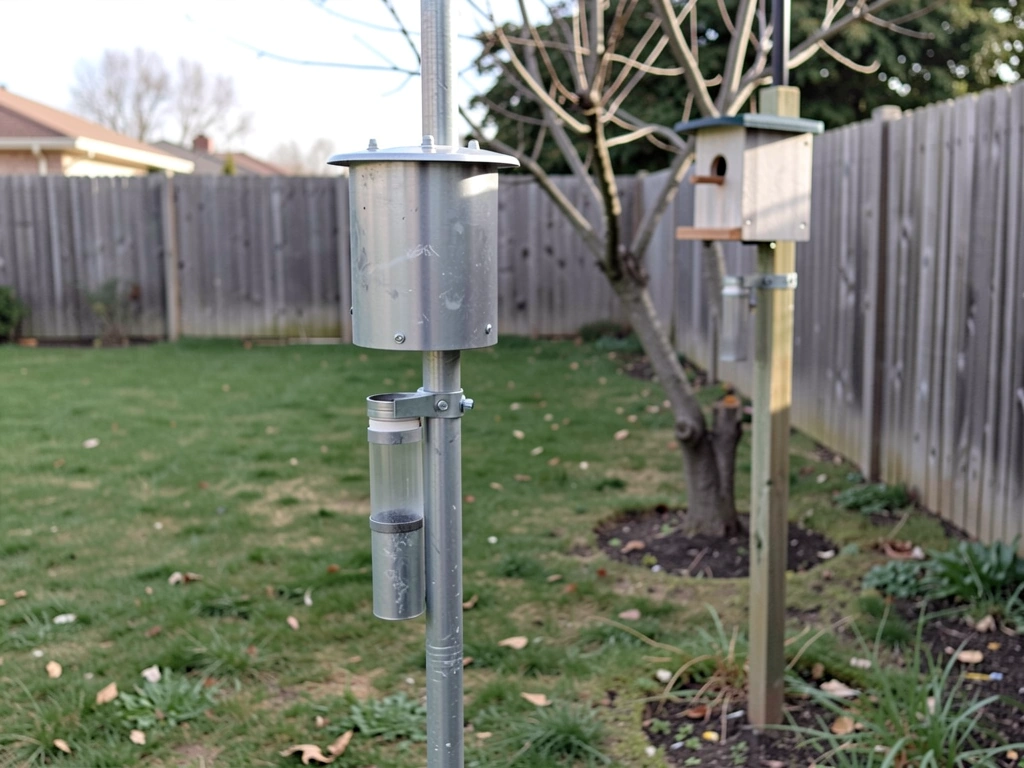
Every mounting option has a real use case and a real downside. Here is how they compare so you can pick what fits your yard.
| Mount type | Best for | Pros | Cons |
|---|---|---|---|
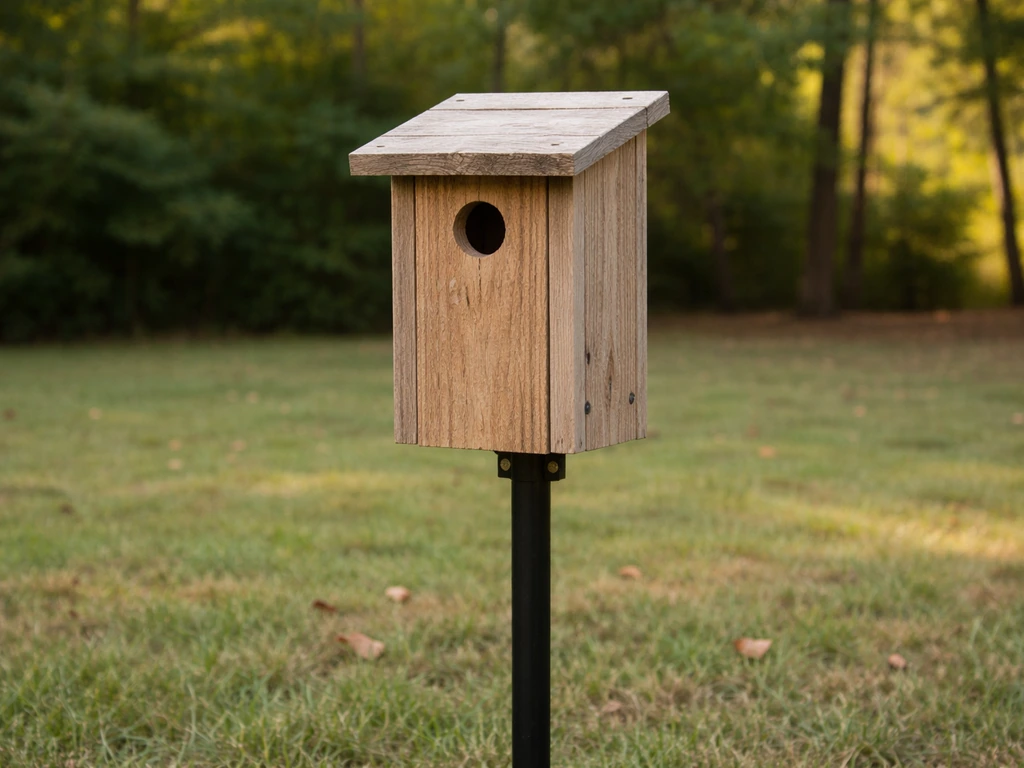
| Freestanding metal pole | Bluebirds, tree swallows, wrens, chickadees | Easiest to add a baffle/predator guard; no climbable branches nearby; movable | Requires open ground; needs a driver or post-hole setup |
| Wooden fence post | Wrens, chickadees, small flycatchers | Already in place; easy to access | Predators can walk right up the fence; harder to baffle effectively |
| Tree trunk or branch | Owls, nuthatches, woodpeckers, flickers | Natural look; species-appropriate for woodland nesters | Squirrels and raccoons use the tree as a highway; very hard to predator-proof |
| Wall bracket or building side | Wrens, robins (open-front), phoebes | Works on balconies and small yards; no ground needed | Limited height adjustment; predators can access from the structure itself |
| Balcony railing or overhang | Wrens, phoebes, robins (open-front shelf) | Only option in urban/apartment settings | High human traffic nearby; requires extra care with placement distance |
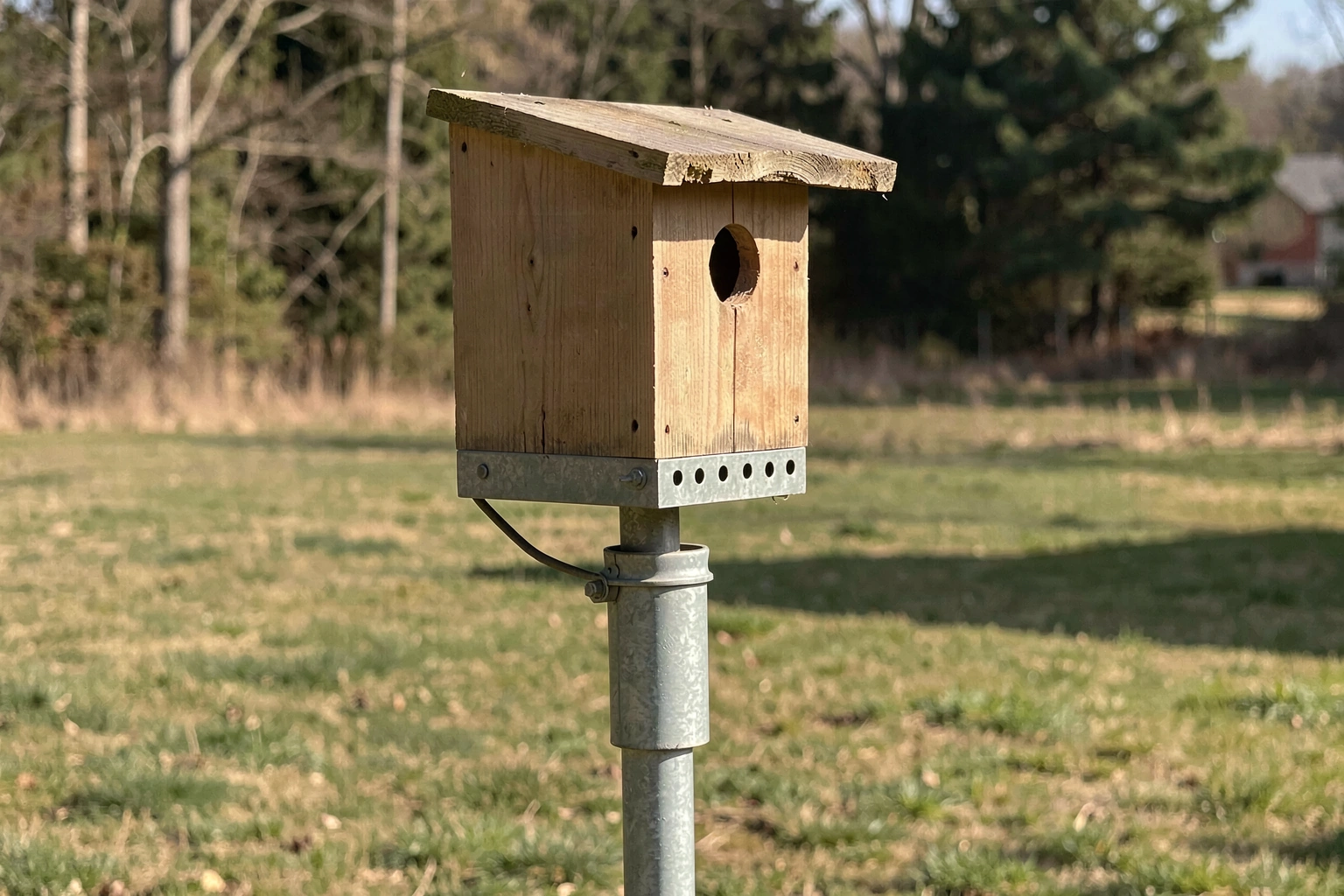
A freestanding metal pole with a quality stovepipe or PVC sleeve baffle is the gold standard for the broadest range of species. It gives you full control over height, direction, and predator protection in a way no tree or fence can match. If you are mounting on a tree because that is your only option, at minimum wrap a metal baffle collar around the trunk about 4 feet up and trim any branches within 8 to 10 feet of the box.
For balcony birders, a wren house on a bracket works surprisingly well if you keep it at least 8 to 10 feet from the main door or sitting area and make sure no cat can jump from a railing or ledge to reach the entrance. Wrens are bold and tolerant of humans, which makes them the most realistic urban nester for small spaces.
Distance rules you need to know before you pound anything in
Distance from feeders and water
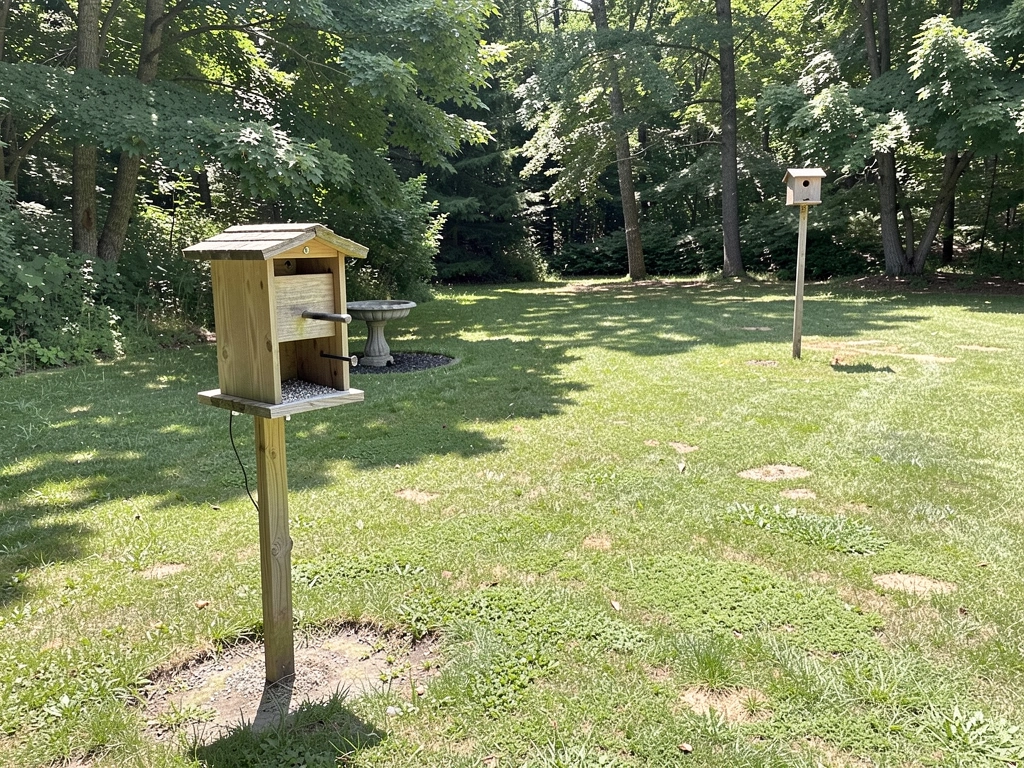
Keep nest boxes at least 50 to 75 feet from feeders. Feeders attract house sparrows and European starlings, which are aggressive nest competitors and will evict or kill native cavity nesters. NestWatch also notes that feeders and the activity around them can increase predator presence near boxes. Water sources like birdbaths are less of a problem than seed feeders, but 25 to 30 feet of separation is still a reasonable buffer. Birds using the nest box should not feel like they are flying through a crowded parking lot every time they come and go.
Distance from foot traffic and human activity
Most species tolerate routine human activity well once they have committed to a nest, but you want to avoid mounting right next to a door, a kids' play area, a driveway, or anywhere with unpredictable noise and movement during the early prospecting and egg-laying phases. A general buffer of 30 to 50 feet from high-traffic zones works for most backyard species. Bluebirds and tree swallows are relatively bold, but even they may abandon a box that gets bumped or disturbed during early nesting. Monitoring the box weekly by standing back and watching is fine. Walking up and knocking on it is not.
Spacing between boxes
This is the rule most beginners ignore completely, and it leads to empty boxes because the territory is overcrowded. Different species need very different amounts of space between nest sites.
| Species | Minimum spacing between boxes |
|---|---|
| Eastern/Western bluebird | 100 yards (300 feet) |
| Black-capped chickadee | 650 feet |
| Tree swallow | 100 yards minimum; can be paired 5–20 feet apart with bluebird boxes to reduce competition |
| Purple martin (colonies) | No other colony within 60+ feet of trees or buildings |
| Wren | 200+ feet between wren boxes |
The 100-yard bluebird spacing comes from both the North American Bluebird Society and Clemson HGIC, and it reflects real territorial behavior. Put two bluebird boxes 20 feet apart and you will likely get one empty box and one stressed pair. The exception is the paired-box strategy used when tree swallows compete with bluebirds: two boxes 5 to 20 feet apart can allow one species per box because swallows will not tolerate another swallow pair that close, but they will leave a bluebird box alone at that distance.
Placement by species: matching the box to the bird
If you are unsure which species to target, look at what birds are already visiting your yard and work backward from there. A yard with mature oaks and shrubs is chickadee and woodpecker territory. A flat suburban lawn with some open field nearby is bluebird country. A yard with a pond is your best shot at water-friendly species like wood ducks.
Trying to force a bluebird into a heavily wooded lot, or a chickadee into a featureless open field, usually fails. This placement-by-species section pairs well with the broader tips in best bird houses, especially if you want a quick way to narrow your options. If you want a quick starting point for local buying decisions, also check the best bird houses for minnesota for a Minnesota-ready match to common yard species.
| Species | Ideal habitat | Mount height | Entrance direction | Key placement note |
|---|---|---|---|---|
| Eastern bluebird | Open grassy areas, meadow edges, sparse trees | 4–5 ft on open post | East or northeast | 100 yards from next bluebird box; away from dense shrubs |
| Black-capped / Carolina chickadee | Woodland edge, shrubby areas | 4–8 ft on post or tree | Away from prevailing wind | 650 ft minimum from next chickadee box; likes nearby cover |
| House wren | Open woodland, shrubby backyards, gardens | 5–10 ft on post, bracket, or fence | Any, but avoid direct west | Wrens will fill every box in range; limit to 1–2 boxes per yard |
| Tree swallow | Open areas near water or fields | 4–6 ft on open post | East or southeast | Pair with bluebird box 5–20 ft away to reduce competition |
| Downy / Hairy woodpecker | Mature woodland or treed yards | 8–20 ft on tree or post | Away from prevailing wind | Needs dead wood or wood-chip fill inside box |
| Eastern screech-owl | Open woodland, suburban trees, parks | 10–30 ft on tree or post | East preferred | Needs large tree nearby; no feeders within 100 ft |
| Wood duck | Near water: ponds, streams, wetlands | 4–6 ft over water or 12–20 ft on land near water | Toward water | Needs wood shavings inside; install predator guard on post |
| Purple martin | Wide-open areas, near water | 12–20 ft on dedicated pole | Open to all sides | 60+ ft from any tree or building in all directions |
If you are unsure which species to target, look at what birds are already visiting your yard and work backward from there. A yard with mature oaks and shrubs is chickadee and woodpecker territory. A flat suburban lawn with some open field nearby is bluebird country. A yard with a pond is your best shot at tree swallows. Trying to force a bluebird into a heavily wooded lot, or a chickadee into a featureless open field, usually fails.
Common placement mistakes and how to stop predators from winning
Placement mistakes that keep boxes empty
- Mounting in dense shade or dense shrubs (most cavity nesters want a clear flight path and some sun)
- Hanging from a tree branch instead of a fixed mount (boxes that swing in wind are avoided by most species)
- Facing the hole west into afternoon sun and prevailing storms
- Placing two boxes of the same species too close together
- Mounting too high or too low for the target species
- Putting the box right next to a feeder or birdbath where house sparrows and starlings congregate
- Skipping drainage and ventilation holes in the box itself (this is a box design issue that placement cannot fix, but it is worth checking before you mount anything)
Predator-proofing your placement
Cat predation is one of the most common causes of nest failure at backyard birdhouses. Tennessee Wildlife Resources Agency is direct about this: you need to think carefully about where cats can perch, crouch, or climb relative to the box entrance. A box mounted on a fence in a yard where cats roam is a trap, not a nest box. The Tennessee Wildlife Resources Agency also specifies that the top of any baffle guard needs to be at least 4 feet off the ground to prevent a cat or raccoon from reaching above it.
A stovepipe or PVC sleeve baffle mounted on the pole below the box is the most effective predator guard available. Sialis.org recommends this approach specifically for keeping raccoons and cats off the mounting post. The baffle needs to be at least 8 inches in diameter and 24 inches long, positioned so the top is about 4 to 5 feet off the ground and the bottom hangs free so it spins or slides when grabbed. A squirrel can clear a jump of 8 to 10 feet from a nearby branch, so trim or choose a location where no branch comes within that range of the entrance hole.
NestWatch adds one more tip that is easy to overlook: do not create a predator buffet near your nest boxes. Pet food left outside, spilled birdseed on the ground, and unsecured compost all attract raccoons, opossums, and rats at night. Those same animals will investigate your nest box once they are in the yard. Keep the area under and around the box clean, and avoid placing it near any overnight food source.
Storm damage and structural risks
A box mounted on a thin dead branch or an old rotting post is a liability in any serious wind event. Use a steel post, electrical conduit, or a solid living tree. If you are bracketing to a fence, make sure the fence post is set in concrete and not just pushed into soft ground. Boxes should be screwed in, not nailed, so they can be removed for cleaning and repositioned if needed. In regions with severe spring storms, angle the roof slightly forward so runoff does not pour over the entrance hole.
Your placement checklist: steps to take today
Use this checklist before you mount anything. It takes about 10 to 15 minutes to walk your yard and check each item.
- Identify the target species based on your existing yard habitat (open lawn, woodland edge, near water, etc.) and look up the recommended box height, hole size, and entrance direction for that species.
- Walk your yard and mark two or three candidate spots that match the habitat. Use a tape measure or step-counter to confirm they are at least the minimum required distance from each other and from any existing feeders or birdbaths.
- At each candidate spot, face the direction the entrance would point and check: is that away from your prevailing wind direction? Is it avoiding direct west or southwest afternoon sun? If yes, the spot is a candidate.
- Check for predator access: are there branches, fences, or structures within 8 to 10 feet of where the box entrance would be? If yes, trim branches or pick a different spot.
- Decide on your mount type. If you have open ground, use a metal pole with a stovepipe baffle. If you must use a tree or fence, plan the baffle accordingly and verify you can get the top of the baffle to at least 4 feet off the ground.
- Confirm you can physically reach the box for weekly monitoring and end-of-season cleaning. If you need a stepladder, make sure there is room to set one up safely at that spot.
- Mount the box, set the entrance hole in your chosen direction, and install the predator guard before the first bird shows any interest (not after).
- Record the mounting height, direction, and date. Check back weekly during nesting season, standing at a distance to observe without disturbing the birds.
- At the end of each nesting season (late summer to early fall), remove old nesting material, scrub the box with a stiff brush, let it dry, and reinstall it before the next spring prospecting season begins.
If you are choosing a birdhouse to go with your new location, the style and hole size matter as much as where you put it. Getting both right is what separates a box that attracts the species you want from one that sits empty or gets taken over by house sparrows. Once your placement is dialed in, you are set up to actually enjoy watching birds use the space you created for them.
If you are aiming for winter shelter, the best bird houses for winter tend to include good weather protection and draft-safe entry points. If you are shopping too, you will also want to compare the best bird houses for small birds based on hole size and ventilation nest box.
FAQ
If I place a birdhouse in the “right” spot, how long should I wait before assuming it will stay empty?
Give it at least a full breeding cycle for the target species in your area, not just a few days. Many cavity nesters prospect repeatedly, and weather swings can delay nesting. If activity does not appear at the entrance hole after several weeks of appropriate-season conditions, reassess the entrance orientation and predator protection rather than moving it daily.
Can I mount a birdhouse on a tree without using a baffle?
You can, but it significantly lowers your odds if cats, raccoons, or squirrels are present. Trees often make it easier for climbers to reach the entrance region, especially if branches approach within 8 to 10 feet. If you skip a baffle, choose a location where there are no nearby climb routes, and plan for more frequent inspections and clearing.
What’s the safest way to choose a height if I’m not sure which birds will use the box?
Use the 5 to 8 foot range as a “broad coverage” compromise, then confirm by watching who is visiting your yard before and during early season. After you see consistent interest, you can fine-tune height only if moving the box will not disrupt the birds that have already committed.
Do I need to worry about drainage holes if the box has a sloped roof?
Yes. Roof runoff and entrance rain are different problems. Even with a good overhang and sloped roof, water can enter from wind-driven precipitation, so floor drainage holes in the corners (and a floor that is not sealed shut) are still important to prevent standing water and soggy nest material.
Should I clean the birdhouse right after the season ends or wait longer?
Clean it after the nesting season ends, before the next nesting attempt in your area. Remove old nests and debris thoroughly, and allow the box to dry before putting it back up. If you notice parasites, unusual odor, or heavy residue during inspections, do a deeper clean even if the season is not fully over.
How do I monitor without disturbing birds or causing them to abandon the nest?
Use quiet, distant observation whenever possible, stand back and watch entrance activity, and avoid touching the box once nesting begins. If you must check, do it quickly, at times when adults are away if you can tell, and avoid bumping the pole or platform.
What should I do if squirrels are chewing at the entrance or trying to take the box over?
First, verify you have the correct predator-guard setup on the mounting post and that no branch provides an easy approach within the jump range. Then secure the box opening and ensure the entrance is the correct size for your target species, since oversized or mismatched openings can invite takeover.
Is it a problem to place a nest box near a birdbath or pond?
Usually not, but proximity to water can increase the overall number of animals and predators in the area. For best results, keep enough distance so birds can approach without feeling funneled through constant traffic, and keep the area under the box free of spilled seed, pet food, or trash that could attract nocturnal predators.
How far from windows, patios, or walking paths should I place the box?
Use a buffer so birds do not experience frequent sudden movement near the entrance hole, especially during egg-laying and early nesting. A 30 to 50 foot separation from high-traffic zones is a good starting point, but also consider sightlines, glare, and how often someone stops to watch birds at close range.
What’s the best spacing if I want multiple boxes for different species?
Use species-specific spacing rather than a single one-size rule. If you are placing multiple boxes for the same territorial species, keep at least the recognized spacing to prevent stress or eviction, and if you are mixing species, account for competition between cavity nesters that may tolerate each other at certain distances but not others.
Can I place a birdhouse right next to a feeder if I keep the feeder away from the entrance?
It still often backfires because feeders increase house sparrows and European starlings and can also raise predator activity near the area. Keep nest boxes at least 50 to 75 feet from seed feeders, and if you must feed, consider moving the feeder during the nesting season or using a tighter placement away from the box approach routes.
What are common beginner mistakes when choosing the “best places for bird houses”?
The most frequent are mounting at the wrong height for the likely species, facing the entrance toward harsh winds or direct afternoon sun, skipping drainage holes, and placing boxes on mounts that predators can climb easily. Another common mistake is moving the box repeatedly during prospecting, which can disrupt site fidelity.
Next Articles
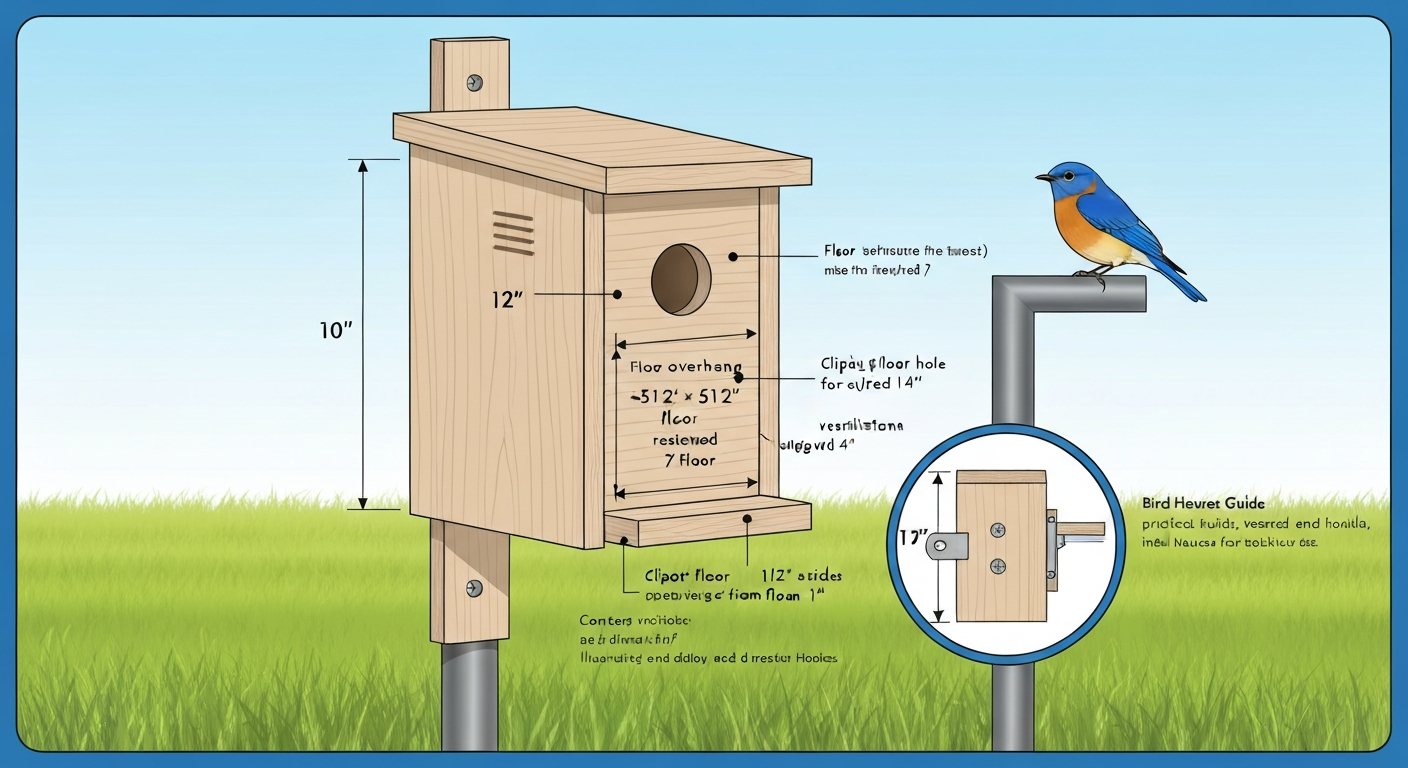
Blue Bird House Instructions: DIY Plans, Sizes & Mounting
DIY bluebird house: step-by-step build, exact cuts and hole sizes, mounting, predator guards, cleaning, and care.
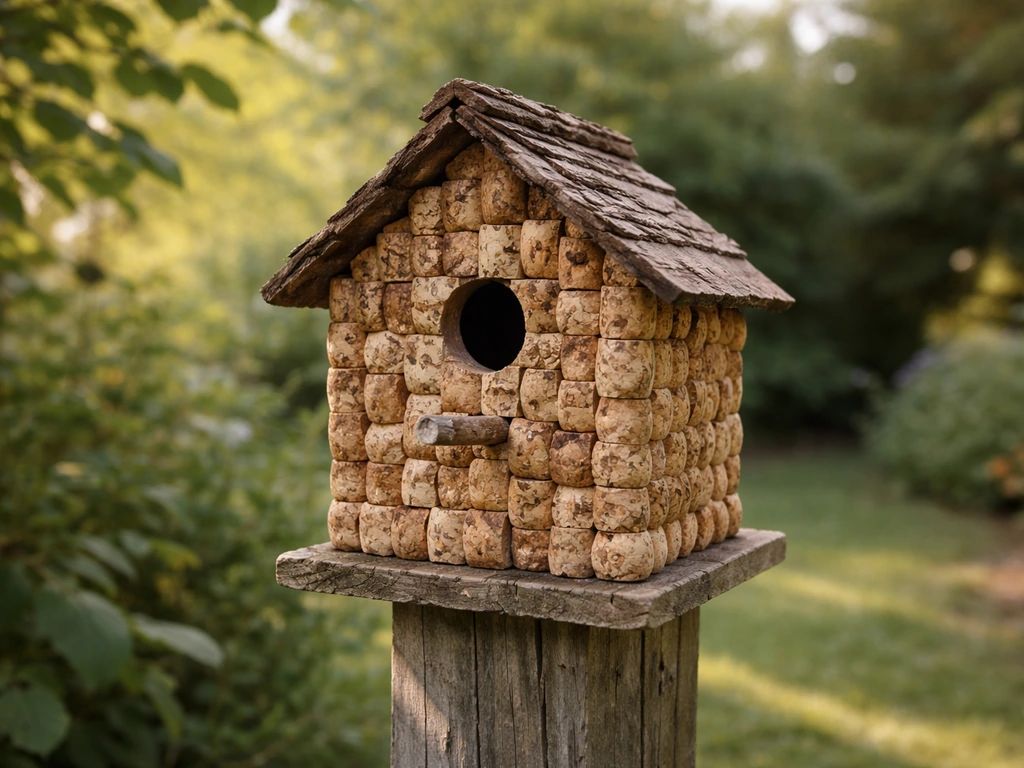
Wine Cork Bird House Instructions: DIY Steps and Bird-Safe Specs
Step-by-step wine cork mini birdhouse build with bird-safe dimensions, safe materials, mounting, cleaning, and weatherpr
Best Bluebird House Guide: Choose, Build, Install
Pick and install the best bluebird house with species-specific hole size, mounting, predator guards, and safe seasonal c