If you want birds to actually use a nest box in Minnesota, you need to match the box to the species, get the entrance hole size exactly right, and place it in the correct habitat. A generic birdhouse from a garden center shelf will often sit empty all season. This guide cuts through the guesswork and tells you exactly what to buy or build, what dimensions matter, and how to set it up so that chickadees, bluebirds, or wrens actually move in. For the best bird houses for Southern California, you’ll want to start by matching the box design and entrance size to the local cavity nesters you hope to attract.
Best Bird Houses for Minnesota: Sizes, Placement, and Care
Maya Thompson
22 Mar 2026
Which Minnesota Birds Will Actually Use a Nest Box
Not every bird nests in a box. Only cavity nesters, species that naturally nest in tree holes, will use one. Minnesota has a solid lineup of cavity nesters that readily take to well-built boxes, and knowing which ones you are targeting determines every other decision you make.
- Black-capped Chickadee: One of Minnesota's most beloved and common year-round residents. They need a small, snug box with a 1 1/8" entrance hole. They prefer wooded edges and backyards with mature trees.
- Eastern Bluebird: A popular target for trail operators and backyard birders alike. Bluebirds need open, grassy habitat and a slightly larger 1 9/16" entrance hole (more on why that specific size matters below).
- House Wren: Small, loud, and enthusiastic about nest boxes. They use the same 1 1/8" entrance as chickadees and will nest in a surprisingly wide range of locations.
- White-breasted Nuthatch: Another small cavity nester. A 1 1/4" entrance hole works, though some sources recommend as small as 1 1/8" for the smaller Red-breasted Nuthatch.
- Tree Swallow: Common near water and open fields across Minnesota. They use a 1 1/2" entrance and will compete with bluebirds for boxes in similar habitat.
- Wood Duck: If you have a wetland, pond, or slow river on your property, a Wood Duck box is one of the most rewarding projects you can do. These need a much larger oval entrance (approximately 3" x 4") and are mounted over or very near water.
- American Kestrel: Minnesota's smallest falcon and a declining species. Kestrels need a larger box with a 3" round entrance and open habitat with hunting perches nearby.
House Sparrows and European Starlings are invasive species that will aggressively take over nest boxes intended for native birds. They are not protected under the Migratory Bird Treaty Act, so you are legally allowed to remove their nests and eggs from boxes. Managing for them is a real part of responsible nest boxing in Minnesota, especially if you are targeting bluebirds.
The Specs That Actually Matter: Hole Size, Box Dimensions, and Materials
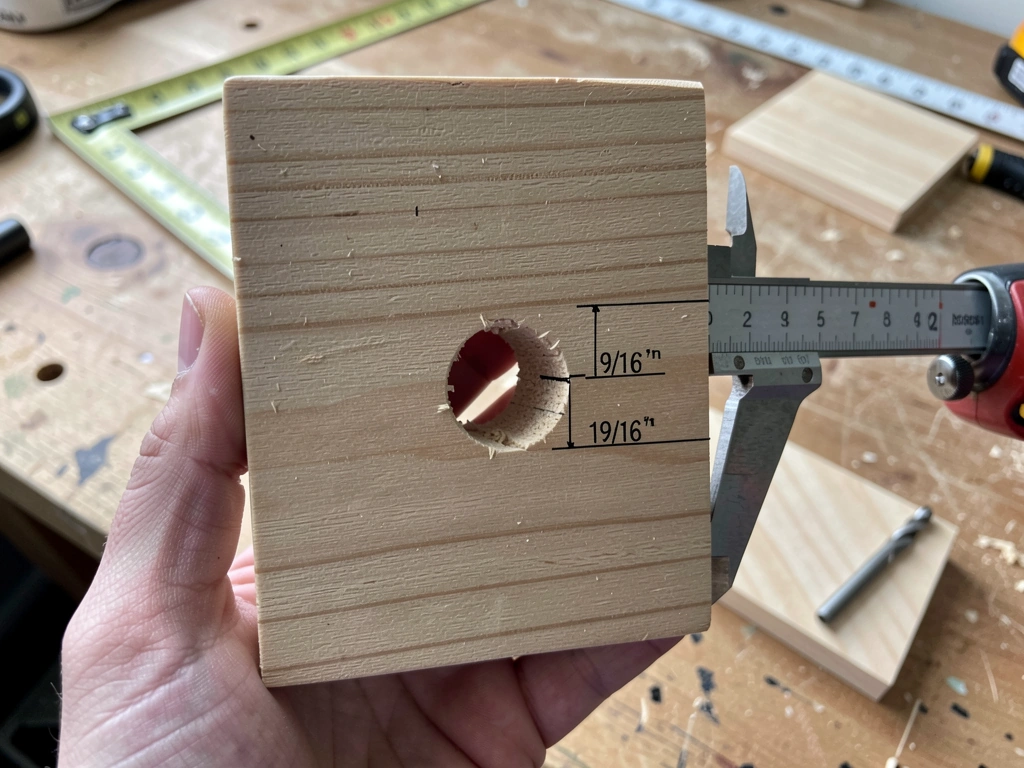
Entrance hole diameter is the single most important measurement on any nest box. Get it wrong by even 1/8" and you either lock out your target species or invite the wrong ones in. The interior dimensions matter for nesting success and chick survival. Here is the full breakdown for Minnesota's most common target species.
| Species | Entrance Hole Diameter | Floor Size | Box Depth | Hole-to-Floor Distance | Mounting Height |
|---|---|---|---|---|---|
| Black-capped Chickadee | 1 1/8" | 4" x 4" | 8–10" | 6–8" | 4–15 ft |
| House Wren | 1 1/8" | 4" x 4" | 6–8" | 4–6" | 4–10 ft |
| Eastern Bluebird | 1 9/16" (round) | 5" x 5" | 8–12" | 6–10" | 5–6 ft |
| Tree Swallow | 1 1/2" | 5" x 5" | 8–10" | 6–7" | 5–8 ft |
| White-breasted Nuthatch | 1 1/4" | 4" x 4" | 8–10" | 6–8" | 5–15 ft |
| Wood Duck | 3" x 4" oval | 10" x 18" | 24" | 20" | 4–6 ft over water |
| American Kestrel | 3" round | 8" x 8" | 14–16" | 10–12" | 10–30 ft |
Why the Bluebird Entrance Hole Size Is So Specific
You will see bluebird entrance holes listed as either 1 1/2" or 1 9/16" depending on the source. The Bluebird Program of Minnesota (BBPMN) recommends 1 9/16" specifically because it is large enough for bluebirds but slightly more restrictive for House Sparrows, which can squeeze through openings as small as 1 1/4". That extra 1/16" is a meaningful deterrent. If House Sparrows are a serious problem in your area, the BBPMN size is the better choice. NestWatch recommends 1 1/2" as the standard, and that works fine in lower-sparrow-pressure areas.
Materials Built for Minnesota Winters
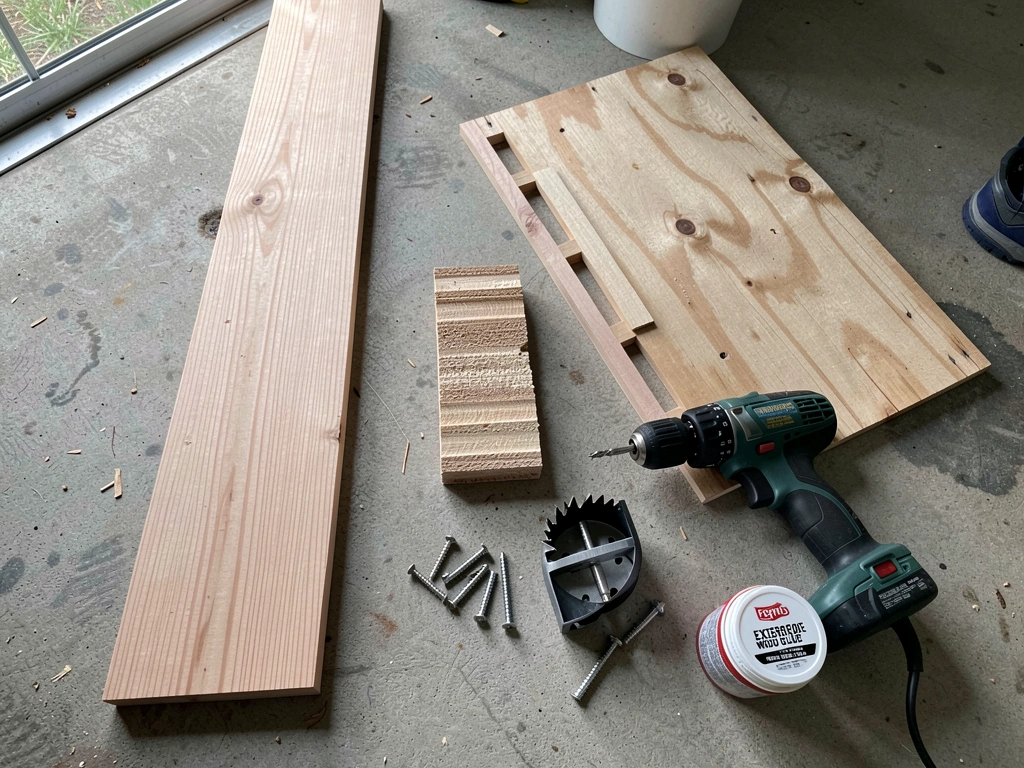
Minnesota winters are not kind to cheap birdhouses. Painted pine, thin plywood, and decorative plastic boxes will crack, warp, and fail within a season or two. The right materials make a real difference in longevity and in how well the box insulates eggs and nestlings during cold spring nights.
- Cedar: The gold standard for nest boxes. Naturally rot-resistant, holds up through freeze-thaw cycles, and insulates well. Untreated cedar is the top choice for DIY builds.
- Exterior-grade plywood (at least 3/4" thick): A practical alternative when solid lumber is hard to find. Use it for the floor and sides, and seal exterior joints well.
- Rough-sawn lumber: The interior should be rough or have horizontal grooves scratched into it so nestlings can grip the wood when climbing toward the entrance. Smooth interiors are a hazard.
- Avoid: Pressure-treated lumber (toxic chemicals near nesting birds), OSB (absorbs moisture rapidly and falls apart), metal boxes in direct sun (can overheat to lethal temperatures in July), and any wood treated with stain, paint, or preservative on the interior.
- Exterior paint or stain on the outside only: Light or earth-tone colors are best. Dark colors absorb heat, which can be a problem during warm spring days even in Minnesota.
Placement: Height, Direction, Timing, and Habitat
Where you put a nest box is nearly as important as what box you use. A perfectly built bluebird box in a shaded backyard next to a bird feeder will not attract bluebirds. Placement needs to match the habitat preferences of your target species.
Mounting Height by Species
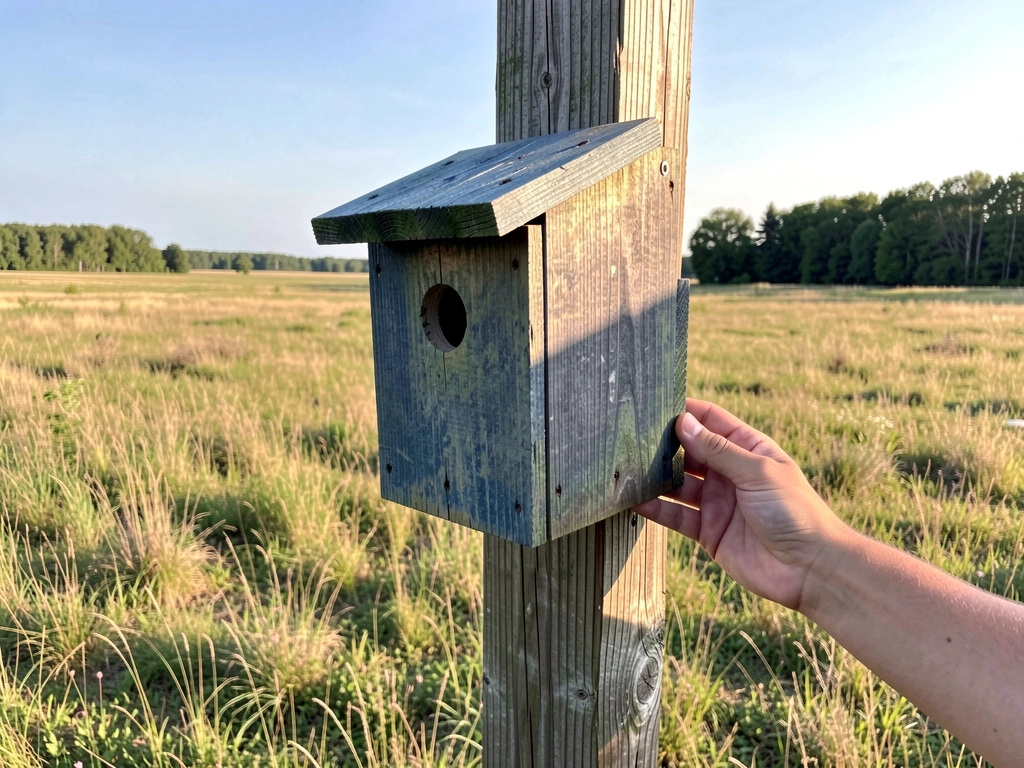
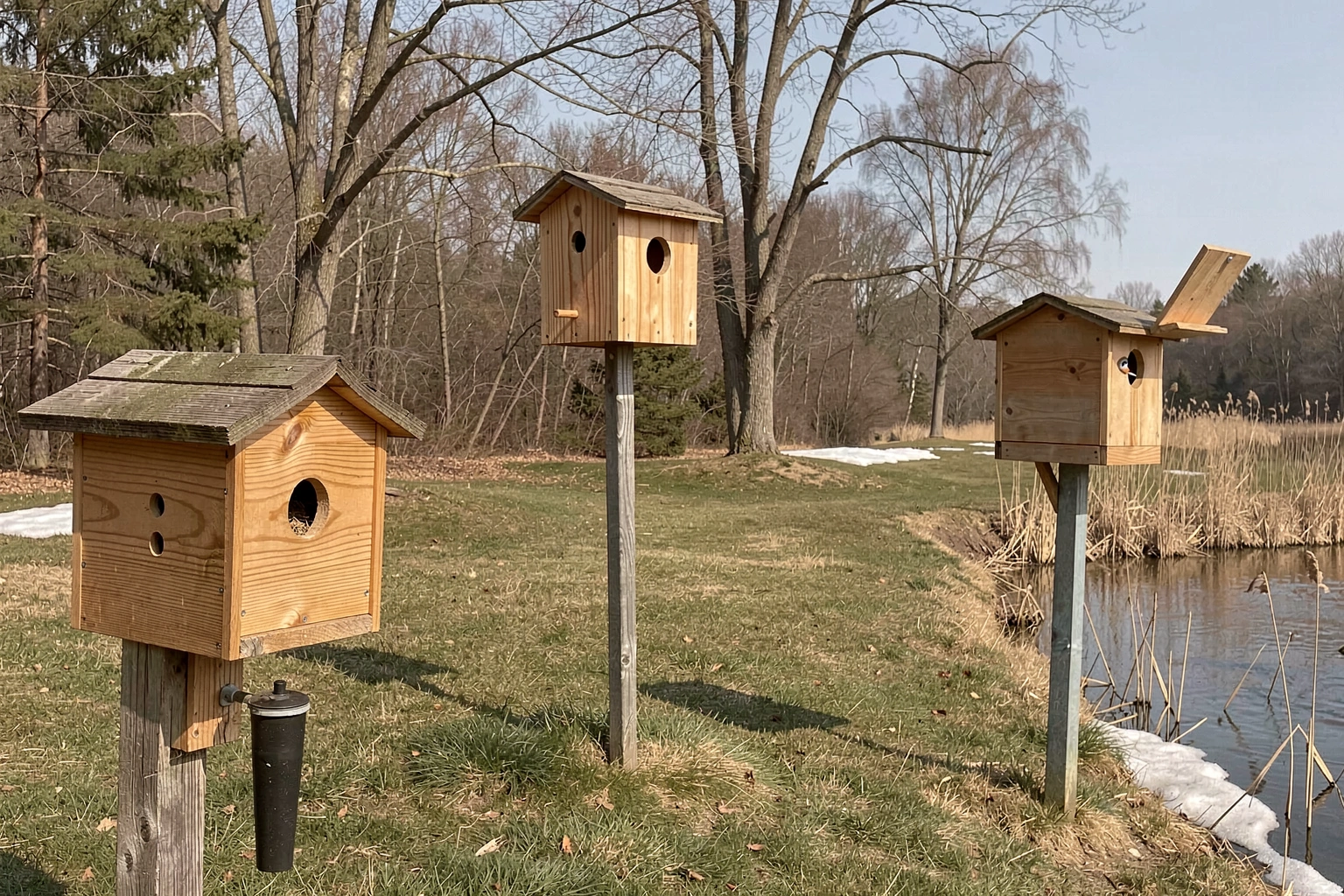
Bluebird boxes should be mounted so the entrance is 5 to 6 feet above the ground, which is the BBPMN's direct recommendation. NestWatch gives a slightly wider range of 3 to 6 feet. Either way, bluebird boxes go low, in open grassy areas, away from dense shrubs. Chickadees and wrens are more flexible, accepting boxes anywhere from 4 to 15 feet up in or near wooded edges. Wood Duck boxes go right at the water's edge or over shallow water, typically 4 to 6 feet above the waterline or ground. Kestrel boxes go high, 10 to 30 feet up on a tree or pole at the edge of open farmland or grassland.
Entrance Hole Direction
Face the entrance hole away from prevailing winds, which in Minnesota typically come from the northwest and west. Facing the entrance east or southeast is a good general rule. It keeps rain and cold air out of the box and lets morning sun warm the interior gently. The BBPMN also recommends facing boxes toward a tree rather than toward a road or open highway, giving fledglings a safe landing target on their first flight.
Timing: When to Put Boxes Up in Minnesota
Earlier is almost always better. Bluebirds can begin scouting nest sites in late February and March in Minnesota, even when there is still snow on the ground. If you want them to find your box, it should be up by late February or early March at the latest. Chickadees and wrens are active nest-seekers through April and May. Putting a box up in June is not hopeless, especially for wrens, but you will miss the early season action. For Wood Ducks, boxes should be in place by late March before females begin laying.
Spacing Multiple Boxes
Do not cluster boxes together if you are targeting bluebirds or Tree Swallows. These species are territorial and will fight over boxes placed too close together. Space bluebird boxes at least 100 yards apart. One useful strategy in areas where both species are present is to pair boxes about 5 to 10 feet apart: one bluebird pair and one Tree Swallow pair can coexist in a paired setup because they do not directly compete with each other.
Types of Bird Houses Worth Considering
For Minnesota cavity nesters, you are almost always shopping for a closed nest box with a specific entrance hole, not a decorative open-front box or a platform. Here is how the main types break down. The next step is figuring out what types of bird houses are there for cavity nesters versus open-front species.
Standard Closed Cavity Box
This is the right choice for chickadees, wrens, nuthatches, bluebirds, and Tree Swallows. It is a four-sided box with a roof, a floor with drainage holes, and a round entrance hole at the front. The entrance hole size is everything, as discussed above. A front-opening or side-opening door is essential for monitoring and cleaning. Avoid boxes with a perch below the entrance hole: perches give House Sparrows and Starlings a foothold to harass nesting birds and are not needed by native cavity nesters, who grip the hole edge directly.
Bluebird-Specific Box Designs
The most common designs are the NABS (North American Bluebird Society) box and the Peterson box. The Peterson box has a slanted, narrower shape and is considered by many bluebird advocates to be more sparrow-resistant because of its angled entry and interior geometry. Both work. The NABS-style box is easier to build from scratch. Either one built from cedar with a 1 9/16" entrance is a solid choice for Minnesota bluebird trails.
Wood Duck Box
This is a larger, deeper box, typically 24 inches deep with a 3" x 4" oval entrance. It is mounted on a pole over water or at the water's edge. Wood shavings (not sawdust) on the floor help the female and ducklings. These boxes need a predator baffle on the mounting pole, because raccoons will raid them otherwise.
Platform and Open-Front Boxes
Open-front boxes attract American Robins, Eastern Phoebes, and Barn Swallows. These are not cavity nesters, so they use a shelf or platform rather than an enclosed box. If you want to attract these species, a simple L-shaped shelf bracket mounted under an eave or on a barn wall is the right move. These are separate from the cavity nester boxes this guide focuses on. If you are also curious about options for other small species, a guide focused on small birds covers some of those nuances. If you want a quick shopping shortcut for different species and sizes, compare these tips with the best bird houses for small birds options first. If you are still comparing options, this overview of the best bird houses can help you narrow down a model that fits your goal species and local conditions.
Buying vs. Building: What to Look For and What to Avoid
Both buying and building can work, but they have different failure modes. Buying is faster and more consistent in terms of hole sizing, but commercial boxes range from genuinely good to completely useless. Building gives you full control over materials, dimensions, and features, but requires getting those dimensions right.
If You Are Buying
Look for these features when evaluating any commercial nest box:
- Cedar or thick exterior-grade wood construction (not thin pine or plastic)
- Correct entrance hole size for your target species (drill it out if needed, but only go larger, never smaller)
- Drainage holes in the floor (at least 4 small holes or routed corners)
- Ventilation gaps near the top of the sides or under the roof overhang
- A roof overhang of at least 2 inches over the entrance hole to shed rain
- A cleanout door: hinged side or front panel that opens easily
- No perch below the entrance hole
- No interior paint or chemical treatment
Avoid decorative boxes shaped like cabins, churches, or painted with colorful patterns. These are made to sell in garden centers, not to attract birds. The entrance hole is often wrong, the wood is thin, and they have no drainage or ventilation. Spending $30 to $50 on a well-made functional box from a reputable wildlife supply company or a local bluebird society is money much better spent than $15 on a decorative one.
If You Are Building
A basic bluebird or chickadee box requires only a single 1" x 6" cedar board (about 6 feet long), a few screws, and a drill with a hole saw. NestWatch publishes free nest box plans with exact dimensions for every common species, and the BBPMN has Minnesota-specific plans available. The most common DIY mistakes are:
- Entrance hole drilled with a spade bit that leaves a rough, splintered edge (use a hole saw and sand it smooth on the outside, leave it slightly rough on the inside for grip)
- Floor nailed flush with no drainage (cut corners at 45 degrees or drill 1/4" holes in each corner)
- No ventilation gaps (leave a 1/4" gap between the sides and the roof, or drill two 1/4" holes on each side near the top)
- Using pressure-treated lumber (toxic; never use inside a nest box)
- Making the box too large internally (nestlings lose body heat in oversized cavities during cold Minnesota nights)
- Skipping the cleanout door (you will need to access the interior every season)
Predator Protection, Ventilation, Drainage, and Cold-Climate Weatherproofing
Minnesota nest boxes face two main threats: predators and weather. Addressing both is not optional if you want nesting success.
Predator Guards
Raccoons are the number one nest box predator in Minnesota. A raccoon can reach into a standard 4" deep entrance hole and destroy eggs or nestlings without entering the box. The two best solutions are:
- Mount boxes on a smooth metal pole (not a wooden post) with a cone-style or stovepipe baffle below the box. A baffle mounted 4 to 5 feet above the ground stops raccoons, squirrels, and snakes from climbing up. This is the most effective predator deterrent available.
- Add a hole extender (also called an entrance hole guard or portal protector) to the front of the box. This is a 1" to 1.5" thick block of wood or metal plate with the same-diameter hole, mounted flush against the entrance. It prevents raccoons from reaching in from outside.
Cats are a serious predator threat in suburban yards. A smooth metal pole with a baffle is also the best defense against cats. Never mount a nest box on a fence where cats can access it easily. Avoid mounting directly on a tree trunk if raccoons are present in your area, because raccoons can reach the box from the bark above the mount point.
Ventilation and Drainage for Minnesota Conditions
Minnesota has cold springs and hot summers. A well-designed box handles both. Ventilation gaps (1/4" gaps under the roof or small holes drilled near the top of each side panel) prevent the interior from overheating during warm late-spring and summer days, which can be fatal to developing eggs. Drainage holes in the floor prevent water accumulation during rainy periods. Both features are non-negotiable. Make sure the roof has a 2" to 3" overhang over the entrance hole so that driving rain does not enter directly.
Weatherproofing for Freeze-Thaw Cycles
Minnesota's freeze-thaw cycles in March and April can stress box joints significantly. Seal all exterior joints with exterior wood glue before screwing them together. Use stainless steel or exterior-grade screws, not nails, because nails work loose as wood expands and contracts. A coat of exterior wood stain (light color) on all exterior surfaces except the inside of the box will add years to the box's life. Re-apply every two to three years. Do not caulk ventilation gaps.
Cleaning Schedule, Maintenance, and Troubleshooting
When and How to Clean Nest Boxes
Clean out the box after each brood has fledged. In Minnesota, bluebirds can raise two broods per summer, sometimes three in warm years, so you may need to clean mid-season as well. Remove all old nesting material, scrape any residue from the walls and floor, and allow the box to air out before the next brood starts. A 10% bleach solution (one part bleach to nine parts water) applied and rinsed out will kill parasites and bacteria. Let it dry completely before closing it up. Do a full end-of-season cleaning in September or October after the last brood has left, and leave the box up through winter. Chickadees and other small birds may use it for winter roosting, which helps them survive Minnesota's cold nights.
Monitoring During the Season
Check your boxes every 5 to 7 days during the nesting season. This lets you track nesting progress, spot problems early, and remove House Sparrow nests before they become established. If you find a House Sparrow nest (a messy pile of grass, feathers, and debris, often with a domed shape), you can legally remove it. Keep removing it and the sparrows will often give up and move on. Do not disturb a box during the incubation or brooding stages more than necessary, and avoid checking during hot midday hours.
Troubleshooting: Why Birds Are Not Using Your Box
If your box sits empty through a full spring season, work through this checklist:
- Wrong habitat: A bluebird box in a shaded backyard with no open grass nearby will not attract bluebirds. Relocate it to open habitat or switch species targets.
- Wrong entrance hole size: Measure it with a drill bit or hole gauge. Even 1/8" off can make a difference.
- Too close to feeders or human activity: Some species, especially bluebirds, want their box away from the busy yard zone. Move it at least 25 to 50 feet from feeders.
- Predator pressure: If a predator has raided the box, birds will abandon it and not return that season. Add a baffle and move the box if possible.
- House Sparrows occupying the box: Remove their nest repeatedly. Consider a sparrow-resistant box design.
- Box put up too late: Birds may have already committed to a natural cavity. Leave the box up, clean it in fall, and try again next February.
- Interior too smooth: Roughen the interior below the entrance hole with a chisel or saw kerf cuts so birds can grip when climbing in and out.
- Box facing the wrong direction: Reorient the entrance away from prevailing winds and toward open space or a landing tree.
- No monitoring: If a nest was started and then abandoned, it may have been raided or disturbed. Regular monitoring lets you catch problems before the whole season is lost.
What to Do If the Wrong Species Moves In
If a House Sparrow or European Starling claims your box, you can remove their nests legally and repeatedly. If a native species you did not plan for moves in, such as a Tree Swallow in a bluebird box, leave them alone. They are protected and they are using the box correctly. Native species competition (like Tree Swallows versus bluebirds) is managed through spacing and pairing boxes, not by disturbing active nests. If you are targeting bluebirds specifically and want to learn more about managing nest box trails and locations, resources from the BBPMN are the best Minnesota-specific starting point.
FAQ
My best bird house for Minnesota is up, but it stayed empty all spring. What should I troubleshoot first?
Start by confirming you have a cavity-nester type (closed box with a correctly sized entrance). If you do, then check the two most common reasons for no use: the entrance hole is off-spec (often the biggest issue with commercial boxes) or the box is in a poor habitat match (bluebirds need open grassy areas, chickadees and wrens need woodland or edge cover). If you suspect competitors, leave an active native nest alone, because disturbing it can reduce your odds for that season.
Can I move a nest box if a bird starts using it, or if I notice a problem like bad placement?
If a native bird is actively nesting, do not remove or relocate the box. Instead, focus on prevention: keep boxes spaced correctly, remove invasive House Sparrow nests only (as described in the article), and keep your routine checks short and infrequent during incubation and brooding. You can clean out only after the brood has fledged, or at season end.
Would it help to add an extra wood insert or “adapter” to make my entrance more sparrow-resistant?
Yes, but only in ways that do not change the entrance size or airflow. Avoid adding a reducer that shrinks the entrance below the recommended diameter, and do not block ventilation gaps. If you need to improve insulation, use proper exterior weatherproofing (sealed exterior joints, quality wood, correct roof overhang) rather than packing inside the entrance area.
How do I prevent condensation or damp nesting material in Minnesota weather?
If your box has drainage holes and a proper floor, the next seasonal issue is condensation, not just standing water. Make sure the roof overhang is large enough to block direct rain and that ventilation gaps are present near the top, then allow the box to air out between broods. If you find persistent wet nesting material, re-check placement (avoid low spots where cold air and rain collect).
Should I add a perch or landing strip to help birds enter the box?
Avoid perch-style designs entirely for cavity nesters, especially bluebirds and chickadees. If your box has a perch below the entrance, it can give House Sparrows and Starlings an easy foothold for harassment. Also, do not add a new landing board yourself, even if it seems helpful for the native species you want.
When is it safe to clean out a box in Minnesota if multiple broods are possible?
For cleaning, timing matters. Do a mid-season clean only when the brood has fully fledged, because clearing a box during incubation or brooding can cause nest abandonment. After removing material, let the box air dry completely before closing it up, and do end-of-season cleaning in September or October while leaving it in place for winter roosting.
What if a bird I did not plan for starts nesting, like a Tree Swallow in a bluebird box?
Most of the time, you should not “rescue” or relocate a nest to another box. Instead, manage the setup before the season, then only act on invasive species nests. For a native species (even if it is not your target), leaving it alone usually gives you the best chance of continued use and avoids legal and ethical problems.
How often should I check the boxes, and how do I avoid causing harm during incubation?
Watch the entrance and schedule your inspections around the nesting timeline. A good approach is checking every 5 to 7 days during the nesting season, but avoid hot midday hours and minimize time with the box open. If you see an invasive species starting to build, remove it repeatedly, because stopping early is far easier than trying to undo an established nest later.
How close can multiple nest boxes be placed without causing fights between species?
Yes, if you are targeting tree swallows or bluebirds, clustering can increase conflict and reduce occupancy. Bluebirds should be spaced at least 100 yards apart, and for a paired setup in shared areas, putting boxes about 5 to 10 feet apart can work when each box is intended for a different pair and the species are not competing for the same exact hole.
What are the safest mounting choices for cats and raccoons in Minnesota yards?
If cats are common in your yard, prefer a smooth metal pole with a baffle and avoid placing the box on mounts that allow cats to jump from a nearby surface. Do not mount where a cat can access the box from a fence. If raccoons are present, also avoid tree-trunk mounting without a plan to prevent reach-from-bark, and use predator baffles where the design calls for them.
Next Articles
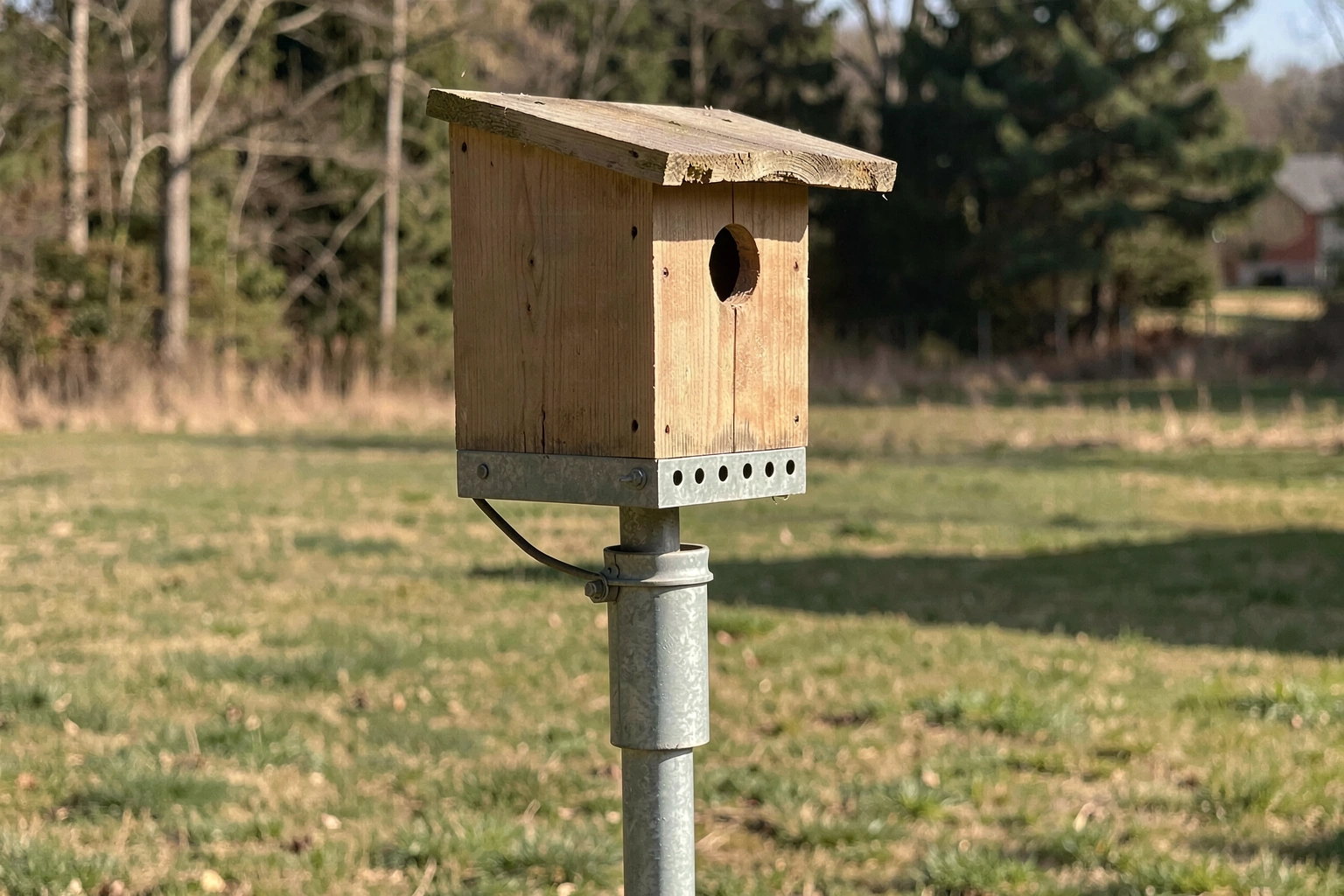
Best Places for Bird Houses: Exact Location Guide
Find the best places to mount a birdhouse: height, direction, yard spots, balcony or fence, plus placement mistakes to a
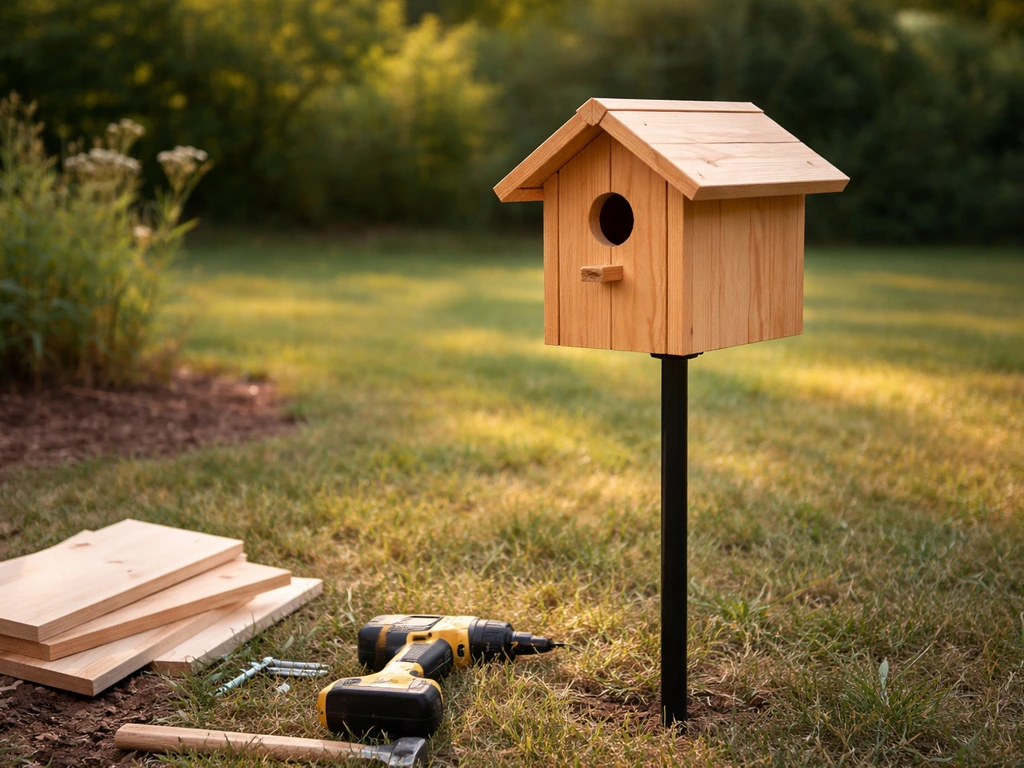
Bird House Instructions: Beginner Step by Step Guide
Beginner bird house instructions: choose design, cut and assemble, add entrance/vent/drain, install safely, maintain and
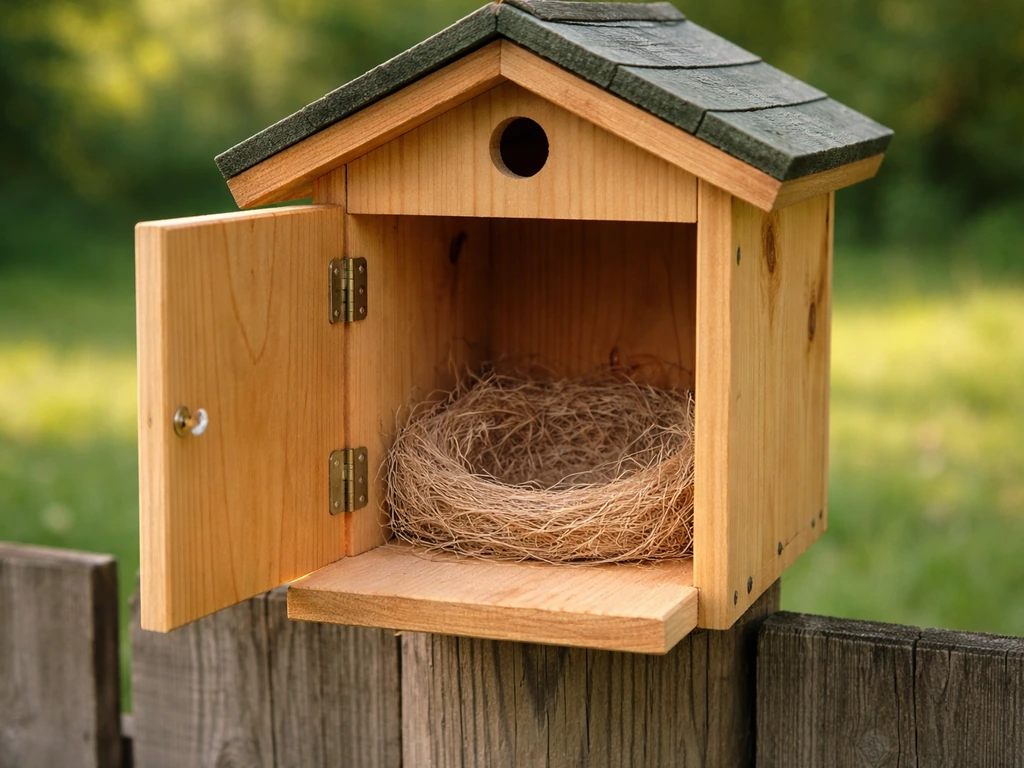
What to Put in a Bird House: Safe Nesting Setup Guide
What to put in a bird house: safe nest liner and floor setup, do and don’t lists, cleaning tips, maintenance for nesting