For most backyard cavity nesters, you don't need to put anything inside a bird house. Birds like bluebirds, chickadees, wrens, and tree swallows will build their own nests from scratch using whatever materials they find nearby. The real job is making sure the house is clean, correctly sized, and free of anything harmful. There are a few important exceptions, and a handful of materials you can offer nearby to help, but the inside of the box itself should stay empty and ready for the birds to do their thing.
What to Put in a Bird House: Safe Nesting Setup Guide
Maya Thompson
3 May 2026
What 'putting something in a bird house' actually means
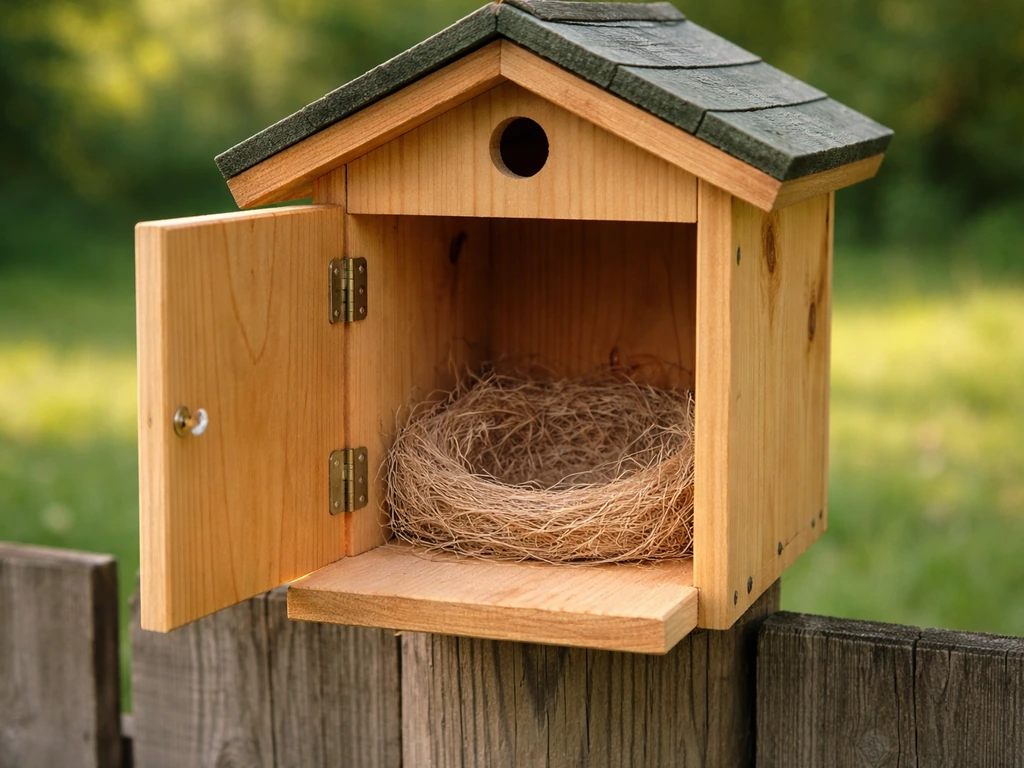
When people ask this question, they usually mean one of two things: either what nesting material to place inside the box, or how to prep the box before hanging it. These are genuinely different tasks. Nesting material is the stuff birds use to build their cup inside the cavity. Box prep is cleaning, mounting, and making sure the interior is safe. Both matter, but they have different answers. Most of the confusion comes from the assumption that you need to furnish the box like a little home. You don't. Cavity-nesting birds are wired to build their own nests, and many will ignore or actively remove material you place inside.
What each species actually wants inside
Different cavity nesters have very different nesting styles, and knowing your target species will save you a lot of guesswork. Here's a practical breakdown of what the most common backyard cavity nesters prefer.
| Species | Natural Nest Material | Add material inside box? | Notes |
|---|---|---|---|
| Eastern Bluebird | Dry grass, pine needles | No | Builds a neat cup; remove old nests promptly after fledging |
| Tree Swallow | Dry grass, white feathers | No | May accept feathers placed nearby outside the box |
| House Wren | Twigs, then grass cup inside | No | Male fills box with twigs first; don't interfere |
| Black-capped Chickadee | Moss, plant fibers, fur | No | Prefers to excavate or select a natural cavity feel |
| Carolina Wren | Leaves, twigs, bark strips | No | Very particular; leave interior bare |
| American Kestrel | Wood shavings (2–3 inches) | Yes | Kestrels don't build nests; loose wood shavings needed on floor |
| Wood Duck | Wood shavings (3–4 inches) | Yes | Shavings cushion eggs and help ducklings; critical for success |
| Eastern Screech-Owl | Wood shavings (2–3 inches) | Yes | Like kestrels, owls don't construct nests; shavings are necessary |
The short version: kestrels, wood ducks, and screech-owls need wood shavings added to the floor because they do not build nests themselves. For everyone else, leave the box empty and let the birds handle it. New Jersey Audubon puts it plainly: do not put nesting material in a nest box, except for those three species.
What to put inside (and exactly how to do it)
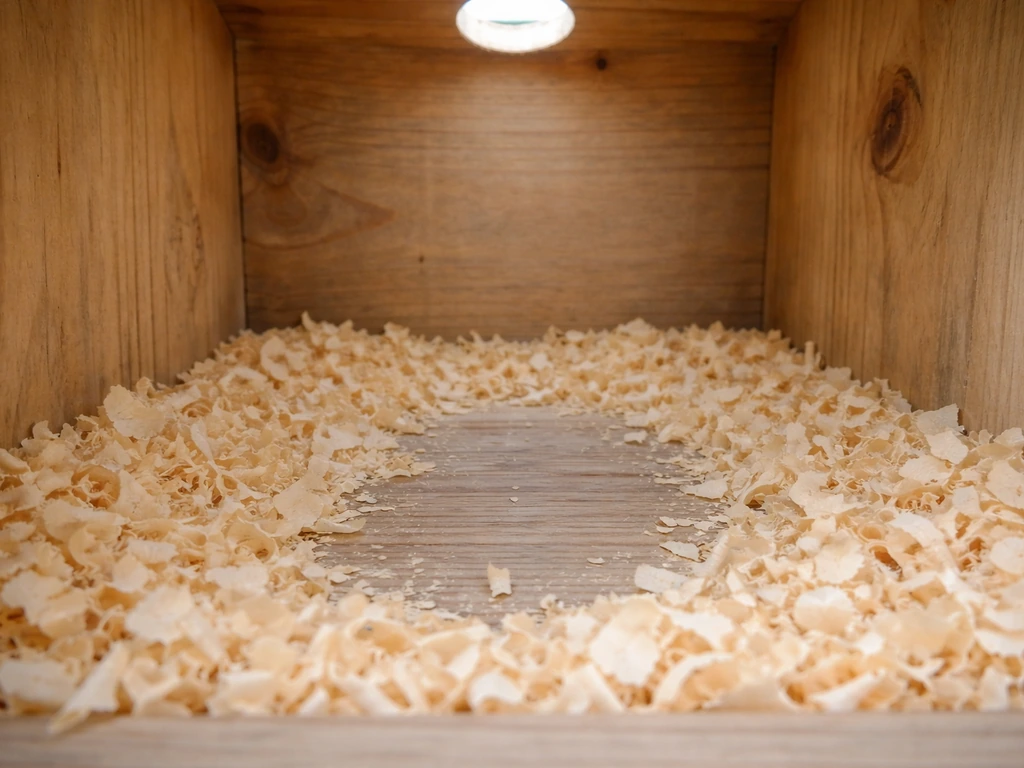
Wood shavings for kestrels, wood ducks, and screech-owls
Use plain, untreated pine or cedar wood shavings, the kind sold for small animal bedding at pet stores. Do not use sawdust. Sawdust packs too tightly, can irritate respiratory systems, and holds moisture in a way that promotes bacterial growth. Coarse shavings are ideal. Add about 2 to 3 inches deep for kestrels and screech-owls, and 3 to 4 inches for wood ducks. Spread them evenly across the full floor. Keep the shavings away from the entrance hole area so they don't block the opening or make it easier for predators to reach in. Replace the shavings between nesting attempts, and fully replace them at the start of each new season.
Offering nesting materials nearby (not inside)
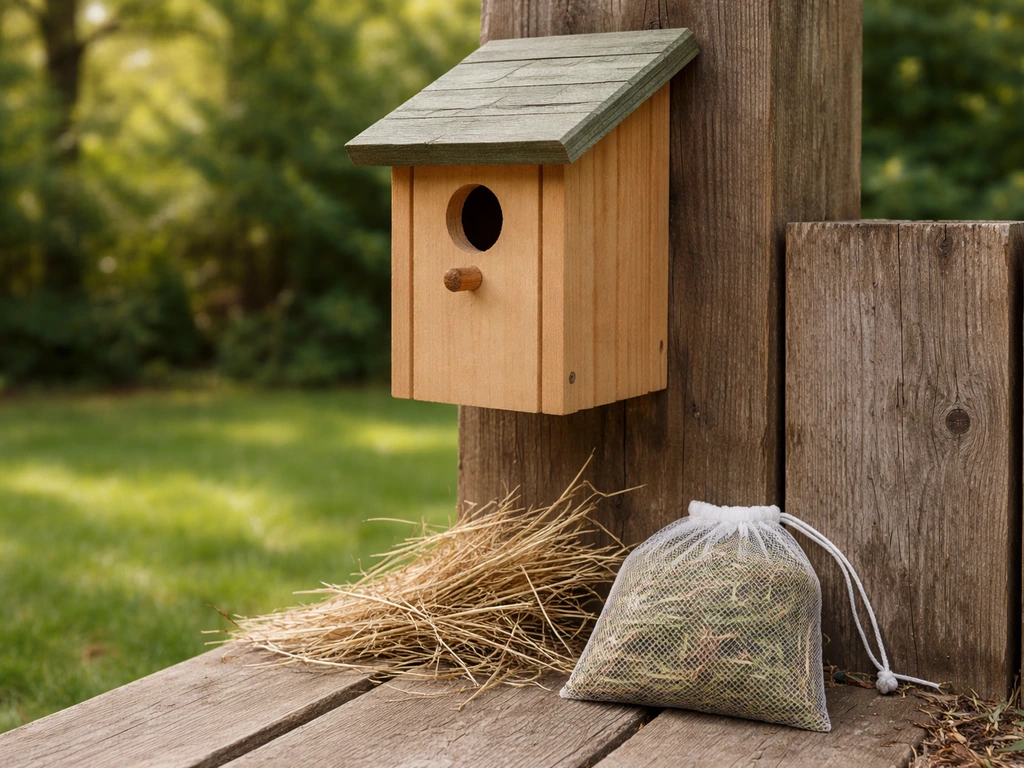
If you want to help bluebirds, swallows, or wrens, the better move is to make safe nesting materials available near the box rather than inside it. You can hang a small mesh bag or loose pile within 10 to 20 feet of the box with any of these options:
- Short pieces of dry grass or straw (cut to 4–6 inches max so birds can carry them)
- Natural plant fibers like cattail fluff or milkweed down
- Clean, untreated pet fur (cat or dog, no flea treatments)
- Small strips of natural bark
- White feathers (especially attractive to tree swallows)
The birds will take what they want. This approach respects their instincts and doesn't risk cluttering or contaminating the interior of the box.
What not to put inside a bird house
This is where most well-meaning people go wrong. A lot of common household materials seem harmless but can injure or kill birds. Here is what to keep out of the box entirely. Many common household materials seem harmless but the question of are ceramic bird houses safe is worth checking before you assume the interior is risk-free. Bird houses are generally safe when they are the right size and are cleaned and maintained so the interior stays free of harmful materials harm birds.
- Dryer lint: compacts when wet, holds moisture, and can cause hypothermia in nestlings
- Synthetic fibers, yarn, or string: birds can get tangled and die from entanglement around legs or necks
- Human or pet hair treated with flea or tick products: the chemicals are toxic to birds
- Dyed or bleached materials: artificial dyes and whitening agents are harmful
- Mothballs or any chemical repellents: acutely toxic to birds and other wildlife
- Loose sawdust: too fine, packs into airways, and promotes mold
- Cotton balls or batting: similar problems to dryer lint, plus potential entanglement
- Food scraps or seeds inside the box: attract predators like raccoons and snakes and promote bacteria
- Gravel or sand on the floor: can trap moisture and injure feet, especially for nestlings
- Old nesting material from a previous season: harbors mites, blowfly larvae, bacteria, and parasites
It's also worth knowing that added materials inside the box can actually discourage nesting. Added materials can discourage nesting, which is one reason people ask whether bird houses are bad Added materials inside the box. Some birds, particularly chickadees, will simply choose a different site if the cavity doesn't feel right to them.
How to prep the box before nesting season
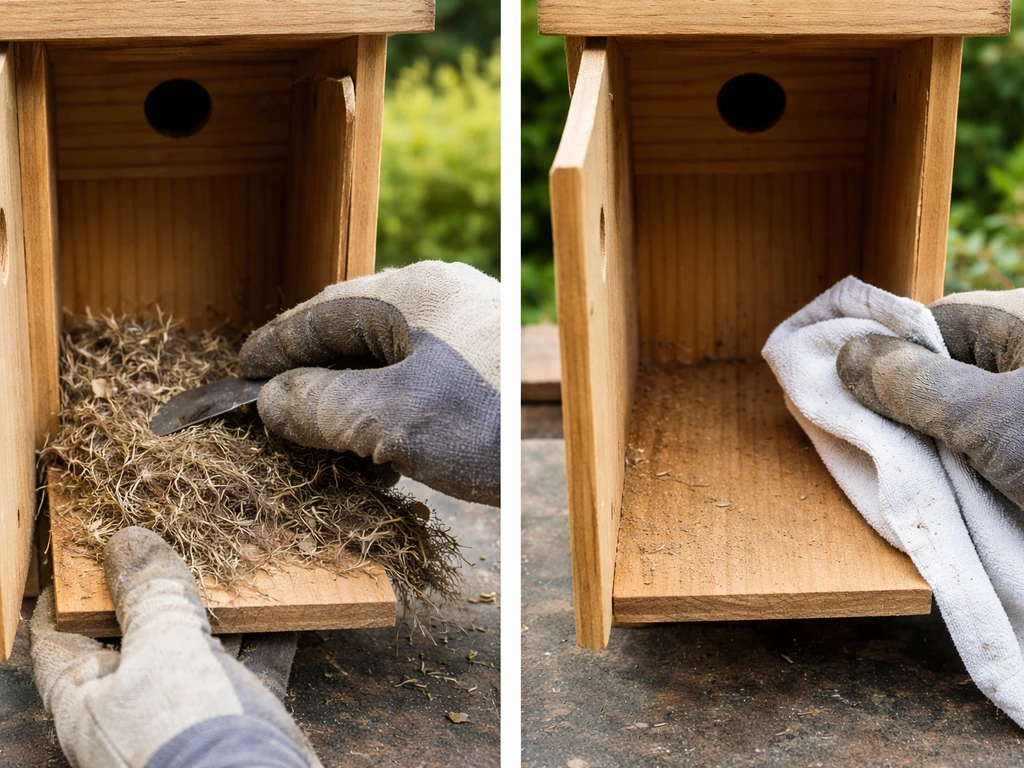
Getting the box ready before birds arrive is the single most useful thing you can do. Timing matters: for most of the continental US, cavity nesters start scouting nest sites in late February through March. Have your boxes cleaned, mounted, and ready by late February at the latest.
- Remove all old nesting material from last season. Even if the nest looks clean, it can harbor mites, blowfly pupae, and bacteria.
- Scrub the interior with a solution of 1 part bleach to 10 parts water. Use a stiff brush to work into corners and the floor.
- Rinse thoroughly with clean water and let the box air-dry completely before closing it up. Residual bleach odor will dissipate within a day or two.
- Check the box structure: look for cracks, warped wood, loose screws, and any gaps around the roof that let in rain. Repair before mounting.
- Inspect the entrance hole diameter. A worn or enlarged hole can let in house sparrows or starlings where they don't belong. Patch with a hole-size reducer if needed.
- Check ventilation and drainage holes are clear. These are critical for temperature regulation and preventing wet interiors.
- For kestrels, wood ducks, and screech-owls, add fresh wood shavings to the correct depth after cleaning and drying.
- Mount the box at the correct height for your target species before birds begin territory establishment.
If you're installing a brand-new box, you can skip the cleaning step but still run through the structural check. A new box may have residual wood smell or rough interior surfaces. Sand the inside walls lightly if they're very smooth, since some birds prefer a rougher surface to help them climb in and out.
Keeping up with the box during nesting season
Monitoring without disturbing
Checking the box regularly during the season lets you catch problems early. A quick look once a week is plenty for most situations. Before opening the box, give it a gentle tap or two. Wait a few seconds to give any adult inside a chance to leave on their own before you open the door. Keep checks brief, under 30 seconds if possible, and don't check during rain or extreme heat. If your bird house is baking in the sun, cool it off by relocating it to shade and improving airflow without disturbing nesting birds extreme heat. If you notice heavy heat or birds avoiding the box, you may also want to consider whether can bird houses get too hot based on your placement and ventilation. NestWatch recommends noting what you see (eggs, nestlings, adult on nest, empty) and closing up calmly. Never open a box when nestlings are close to fledging age, typically within the last 5 days, since premature fledging can be fatal.
Signs of healthy use vs. problems
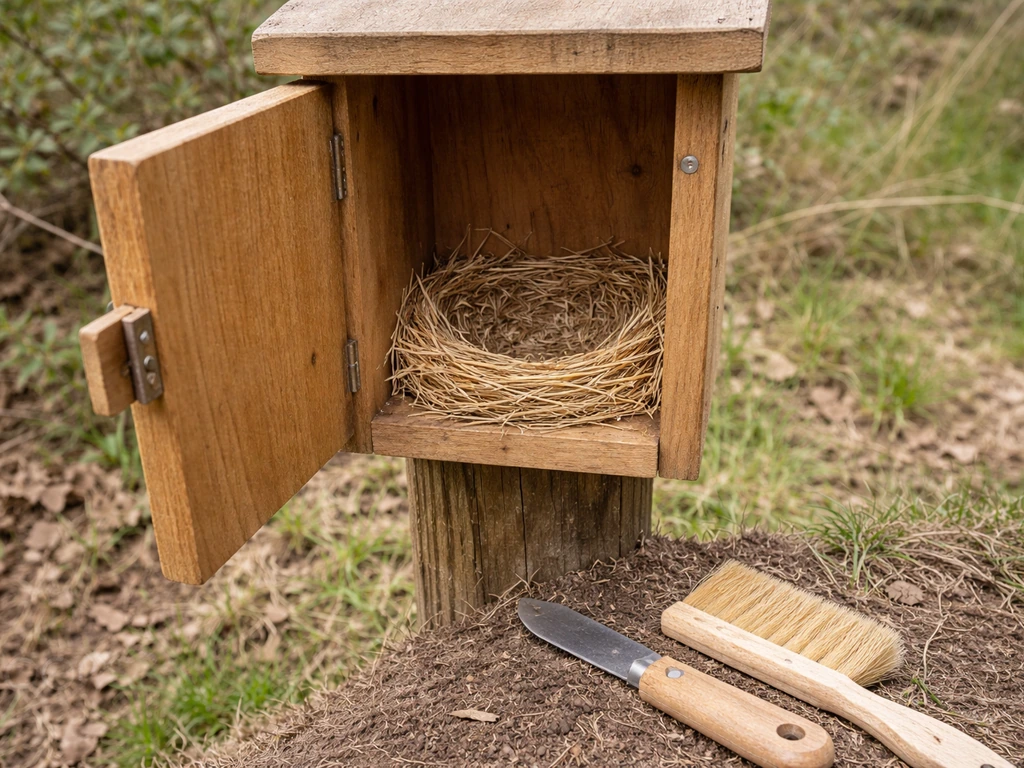
A healthy nest looks tidy with the nest cup centered and intact. Fecal sacs should be absent or minimal because parent birds remove them regularly. Warning signs include a strong ammonia smell, parasites visibly crawling on the nest lining, nestlings huddled at the entrance opening (a sign of overheating or parasite distress), or a nest that looks collapsed or abandoned with eggs remaining. If you see mites or blowfly larvae in the nest, know that in most cases these are present in small numbers and don't require intervention. NestWatch notes that nest monitor attempts to manage ectoparasites are rarely effective and can cause more harm than good by disturbing the nest during a sensitive period.
After fledging: clean between clutches
Many cavity nesters, including bluebirds, raise two or even three broods in a single season. As soon as you're confident the nestlings have fledged (the box is empty and the adults are no longer attending it), remove the old nest and do a quick clean. A scrub with the 1:10 bleach solution, a rinse, and time to dry is enough. This discourages parasites and gives the returning pair a clean start for their next clutch. Audubon specifically recommends this practice for bluebirders managing nest boxes.
Dealing with house sparrows and European starlings
House sparrows and European starlings are non-native, invasive species that actively compete with and harm native cavity nesters. House sparrows in particular will destroy eggs, kill nestlings, and even kill adult birds to take over a box. If you find house sparrow nests, which look loosely built with coarse grass, feathers, and litter, you are legally permitted to remove them. Many experienced nest box monitors remove house sparrow nests and eggs consistently throughout the season to protect native species. This is a humane, conservation-minded practice, not a cruel one. European starlings can usually be excluded by keeping entrance holes to 1.5 inches or smaller for small cavity nesters.
End of season closeout
Once the breeding season is fully over (late summer to early fall depending on your region), do a final clean with the bleach solution, rinse, and dry thoroughly. Then you have a choice: leave the box open for winter roosting by chickadees, nuthatches, or wrens, which genuinely use them on cold nights, or close the entrance hole to prevent it from becoming a rodent den over winter. Either way, the box should be clean before you make that call. NestWatch advises waiting until there is absolutely no sign of breeding activity before doing your final clean, so make sure no late broods are still in progress before you open the box.
If your box sits empty all season
An empty box is frustrating but rarely means the box is wrong. More often it's about placement, entrance hole size, or the presence of house sparrows scaring birds away. Check that the box faces away from prevailing winds and hot afternoon sun, that it's mounted at the right height for your target species, and that there's no perch attached to the front (perches help predators and house sparrows, not native cavity nesters). A box that sits unused this season is still worth keeping clean and ready. Birds scout locations over time, and a box that's been in place for a year or two often gets discovered when a newer box nearby wouldn't have. If you're unsure whether your box design is working for your target species, it may be worth revisiting the specifics of what makes a good bird house for that particular bird. In general, a good bird house is one that is correctly sized and safe, with an entrance suited to the birds you want to attract.
FAQ
Do I ever put nesting material, hay, or feathers inside the bird house to attract birds faster?
For most backyard cavity nesters, no. Bluebirds, wrens, chickadees, and swallows typically build their own cup, and added material inside can reduce nesting or cause birds to abandon the site. The exception is that kestrels, wood ducks, and screech-owls may need wood shavings on the floor, not loose “furnishing” throughout the cavity.
If birds ignore the box, should I add more nesting material inside to make it more inviting?
Usually that backfires. If the goal species is a cavity nester that builds its own nest, extra material can make the interior feel wrong or cluttered. Instead, double-check entrance hole size, mount height, and placement away from hot afternoon sun and prevailing winds, then keep the cavity clean and empty for them to do the work.
What should I use instead of putting material inside the box for bluebirds, swallows, and wrens?
Offer safe nesting supplies nearby, not in the cavity. Place a small mesh bag or a loose pile within about 10 to 20 feet so birds can collect what they want. This reduces the chance you trap unwanted debris inside or accidentally include something birds will reject.
Is it safe to put dry grass, cotton, or string in the bird house?
Avoid it. Household fibers and loose string can tangle, trap growing nestlings, or increase the risk of injury. If you are adding anything at all, follow the species-specific approach (wood shavings for the three listed species) and otherwise keep the box interior free of loose household materials.
Can I put sawdust or fine bedding inside to improve cleanliness?
Don’t use sawdust. It compacts too tightly, can irritate respiratory systems, and can hold moisture in a way that favors bacterial growth. If your target is one of the species that uses shavings on the floor, use plain, untreated pine or cedar shavings and replace them between nesting attempts or seasons.
Should I put shavings right up against the entrance hole?
No. Keep shavings away from the entrance area so you don’t block the opening or make it easier for predators to access the cavity. Spread evenly across the floor, but leave a clear area near the hole.
How often do I remove or replace any bedding or shavings?
If you are using floor shavings for the species that require them, replace them between nesting attempts, and fully replace at the start of each new season. During the breeding season, avoid frequent changes inside, since repeated disturbance can cause adults to desert the nest.
Can I leave old nesting material in the box if it looks clean?
It is usually better to remove it after the birds are done. Once nestlings have fledged and adults are no longer attending, remove the old nest, then clean and dry the box. This helps discourage parasites and gives returning birds a fresh start for the next clutch.
What if I find mites or blowfly larvae in the nest, should I clean the box immediately?
In many cases you should not treat or aggressively clean during active nesting. Small numbers of ectoparasites can be normal, and nest-monitor interventions are often ineffective and can worsen the situation by disturbing the nest at the wrong time. Wait until breeding activity ends, then clean thoroughly.
Is it okay to open and check the bird house often to see what birds are putting in?
Keep checks brief and infrequent, roughly once a week for most situations. Before opening, tap the door gently and wait a few seconds for any adult to leave. Avoid checking during rain or extreme heat, and never open when nestlings are within about five days of fledging.
If the box is empty late in the season, should I add material before winter to attract birds?
Don’t use “furnishing” to force nesting late in the year. Late-season use may be for roosting by species like chickadees, nuthatches, or wrens. Decide whether to keep it open or close the entrance after breeding ends, then ensure the box is fully clean and dry before that decision.