A bird house with a camera lets you watch eggs hatch, chicks grow, and fledglings take their first flight without ever stepping within disturbing distance of the nest. Done right, it's one of the most rewarding things you can add to a backyard setup. Done wrong, it's an expensive box that stresses your birds, streams grainy footage to an app you'll stop opening by week two, and possibly exposes your home network to security gaps. This guide cuts through all of that so you can pick the right unit, install it correctly, and actually get usable footage this nesting season.
Best Bird House with Camera: Specs, Setup, and Tips
Maya Thompson
17 Apr 2026
What a camera bird house actually is (and when it's worth having)
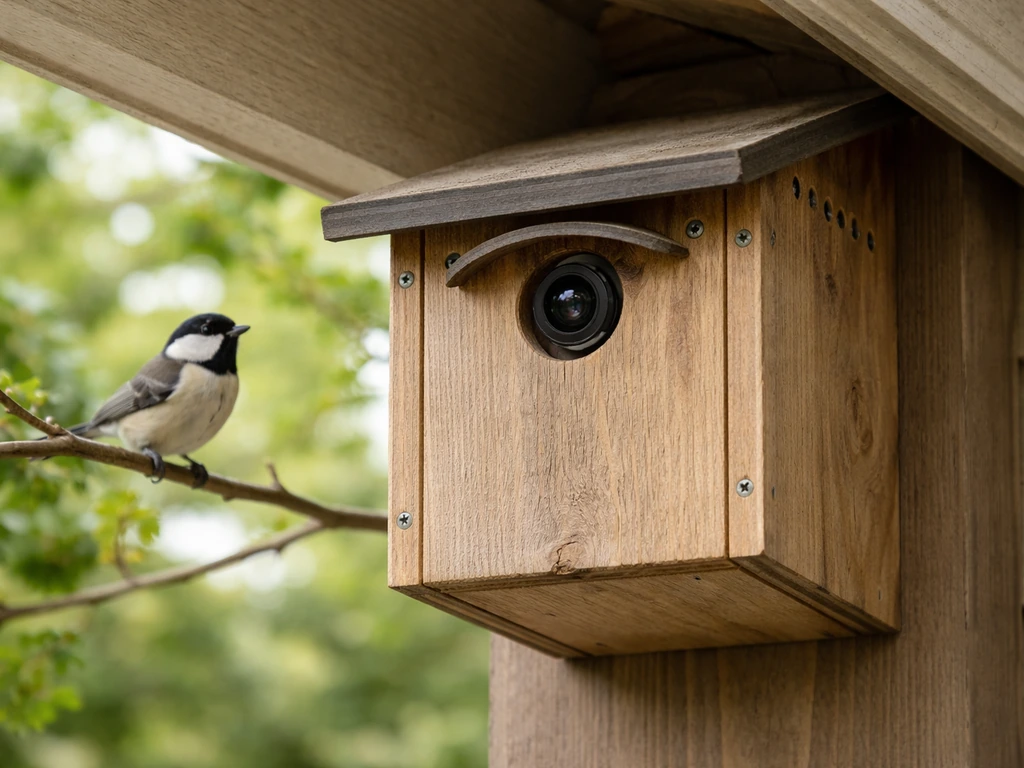
A camera bird house is a properly sized nesting box with a small wide-angle camera built into the interior ceiling or wall, connected to a Wi-Fi module that streams or records footage to a phone app, local SD card, or cloud storage. The better ones add night-vision LEDs, motion detection, and solar charging. The key difference from a standalone trail cam pointed at a box is that the camera is already inside before any bird moves in, so there's no need to approach the nest once nesting begins.
NestWatch's guidelines are direct on this point: once a nest is active, visits should be kept to a minute or two at most, and observations must never put birds at risk. A built-in camera solves that problem entirely. You get continuous or motion-triggered insight without repeated physical approaches. That said, a camera box is only worth buying if you're committed to the full picture: correct species dimensions, proper mounting, a solid power plan, and a real cleaning schedule. If you just want something to hang and forget, a quality bird house without a camera will serve your birds better than a poorly installed camera unit.
Camera boxes make the most sense if you actively want to monitor nesting progress, participate in citizen science programs like NestWatch, or share footage with kids or a community. They're also genuinely useful for spotting predator attempts at night without disturbing the box yourself.
Camera specs that actually matter for nesting birds
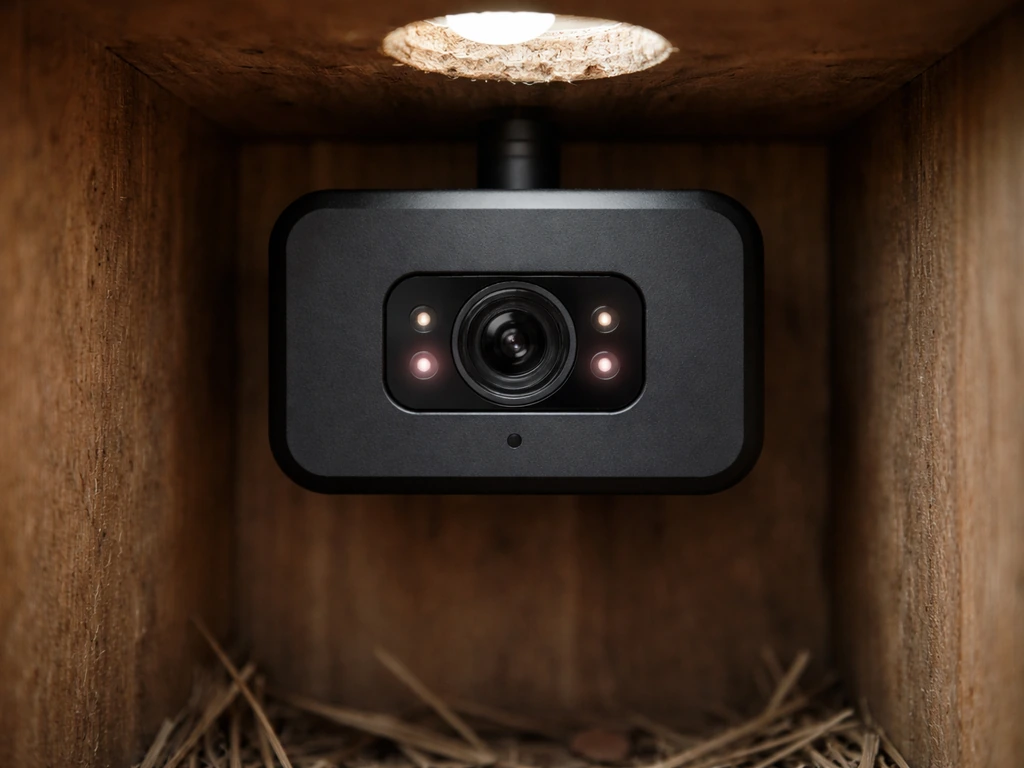
Not every spec on a product listing is worth your attention. Here's what actually affects the footage you'll get from inside a dark nesting box.
Resolution and frame rate
1080p is the practical minimum for seeing feather detail and counting eggs without squinting. Many units on the market hit this mark, including the Spy Gadgets SG model and the Smonet B300. 5MP stills (like PeekWild's smart bird box) are useful for capturing sharp freeze-frames of specific moments. Frame rate matters less inside a box than it would for garden bird feeders, but 15fps or higher keeps motion from looking choppy when a parent lands or a chick stretches. Anything labeled 720p or lower is a compromise you'll regret.
Night vision: IR LEDs and what color means
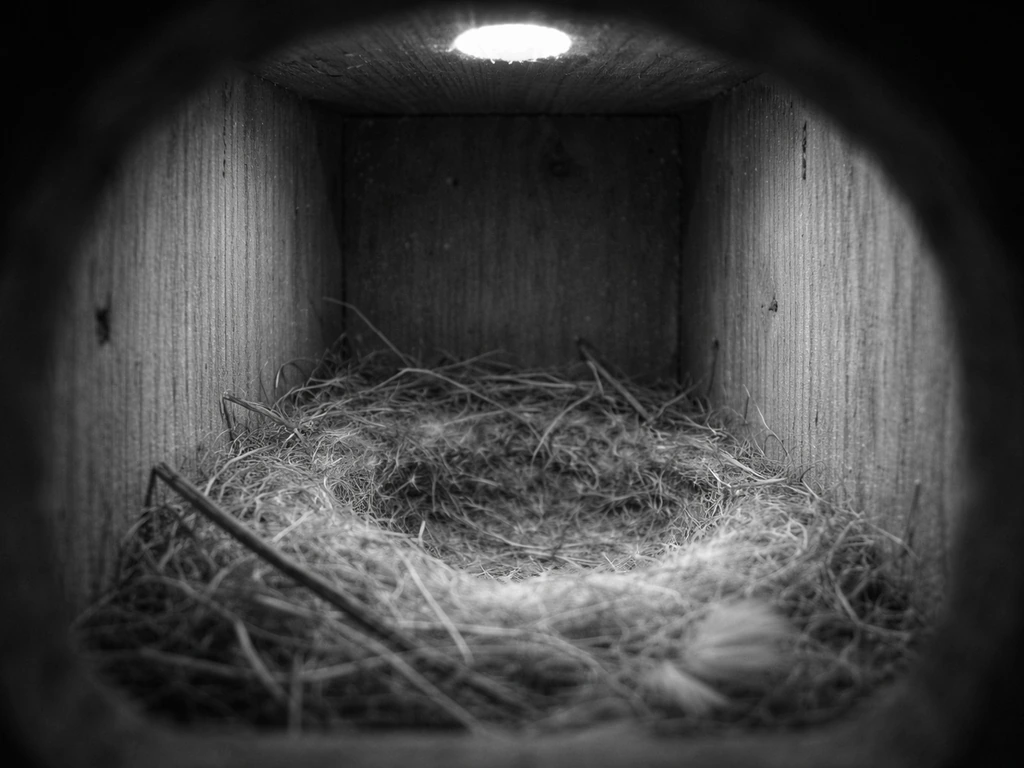
Most camera boxes use infrared LEDs for night vision. Standard IR gives black-and-white footage in total darkness, which is what Nestera's system delivers and what you'll get from the Smonet B300's default setting. The B300 can switch to a white-light mode for nighttime color, but white-light emitters inside a nest box at night can stress birds, so use that feature only when the box is empty. The more useful option, where available, is 940nm "invisible" IR LEDs, like those offered on certain Spy Gadgets configurations. These don't produce the faint red glow that 850nm LEDs emit, which means less potential disturbance to nesting birds. Birdfy's Nest Cedar goes further with full-color night vision, which uses image-processing rather than white light, making it a genuinely low-disturbance option. For most people, black-and-white night vision is perfectly adequate for monitoring incubating adults and hatchlings.
Field of view and lens placement
Inside a nest box, you need a wide-angle lens to see the entire floor area. A 112-degree field of view (the Spy Gadgets spec) covers a standard bluebird or wren box floor without dead zones. Anything narrower than about 100 degrees and you risk missing nest activity at the edges. Lens placement matters too: ceiling-mounted cameras angled slightly downward give the cleanest view of the nest cup. Wall-mounted cameras at mid-height sometimes clip the rim of the nest or leave the back wall in frame at the expense of the floor.
Motion detection vs. continuous recording
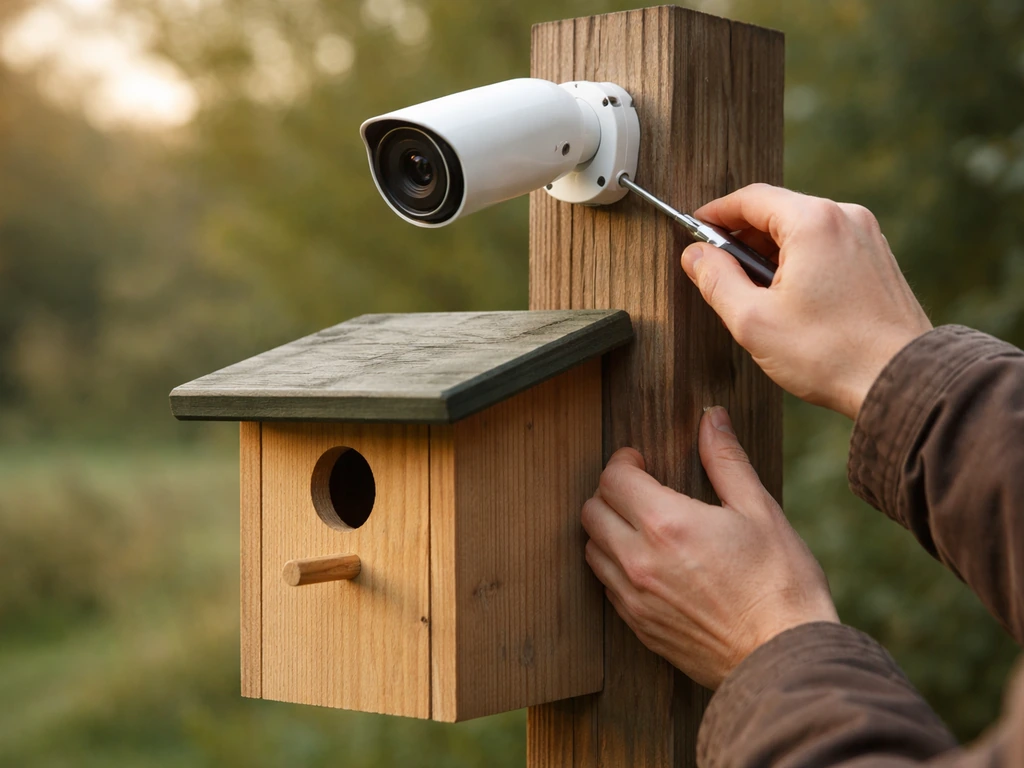
Continuous recording eats storage and battery. Motion-triggered recording, using either a PIR sensor or software-based detection, is almost always the better choice for nesting boxes where activity is frequent but not constant. PIR (passive infrared) sensors like those in the Spy Gadgets unit respond to heat and movement, which works well for warm-bodied birds. Software motion detection can trigger on shadows or insects near the entrance hole, creating false alerts. Look for systems that let you adjust sensitivity, or combine PIR hardware with software filtering. Birdfy's Story section concept uses motion-triggered clips that get compiled into watchable sequences, which is a practical approach for people who don't want to scrub through hours of footage.
Storage, power, and connectivity
SD card storage is the most private and reliable option. Nestera's system supports up to 128GB micro-SD, and the solar model ships with a built-in 32GB card and claims up to 80 hours of continuous footage on its internal battery. Reli Birddy supports both SD card and cloud storage, which gives you redundancy. For power, solar with an internal battery backup is the setup that makes the most sense for boxes mounted on poles or trees away from outdoor outlets. The Birddy product page notes the unit can operate for over a month in cloudy conditions, which is the kind of real-world number to look for rather than peak-sun ratings. For Wi-Fi, make sure the unit supports 802.11n at 2.4GHz minimum (the Spy Gadgets spec); 5GHz is rarely necessary and reduces range through walls and foliage.
| Feature | What to look for | What to avoid |
|---|---|---|
| Resolution | 1080p video or 5MP stills | 720p or lower |
| Night vision | 940nm IR LEDs or full-color processing | White-light LEDs inside the box at night |
| Field of view | 100-120 degrees | Under 90 degrees |
| Motion trigger | PIR sensor with adjustable sensitivity | Software-only detection with no sensitivity control |
| Storage | Micro-SD up to 128GB, or SD + cloud backup | Cloud-only with no local option |
| Power | Solar panel with internal battery backup | Battery-only with no charging, or wired-only |
| Wi-Fi | 2.4GHz 802.11n/b/g | 5GHz only (too short range outdoors) |
| Waterproofing | IPX4 or better on the camera module | No IP rating listed |
Bird-safe house requirements come first, always
The camera is secondary. The box has to be a safe, correctly dimensioned home for the species you're targeting before any technology matters. A camera doesn't compensate for a wrong entrance hole or a poorly ventilated interior.
Entrance hole size by species
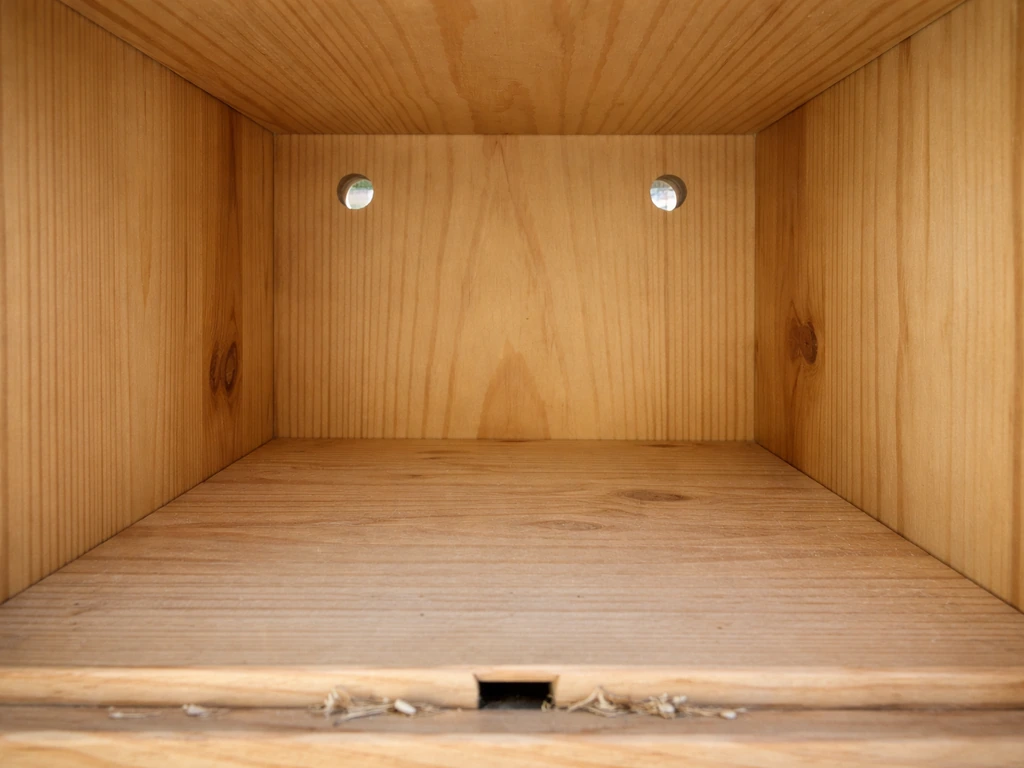
Entrance hole diameter is the single most species-critical dimension. Too large and predators and competing species get in; too small and your target bird can't enter. The NABS factsheet specifies hole-to-floor depth as a key interior measurement alongside hole diameter. For wrens, the correct hole is 1-1/8 inches (there are even portal cover accessories spec'd specifically to that size). For bluebirds, the standard is 1.5 inches, which is also the spec used on dedicated bluebird predator guards. In a Reddit thread about Eastern Bluebird nest boxes, a user discusses entrance-hole sizing for different species, including using 1-1/8" holes and noting that bluebirds have specific size expectations compared with other small cavity nesters. For chickadees, 1-1/8 inches works; for tree swallows, 1.5 inches. Some Birdfy users have reported bluebirds struggling to enter when a predator guard with a slightly too-small aperture is installed, so always verify that any guard accessory matches your species' hole size exactly.
Interior dimensions, ventilation, and drainage
Interior floor area and depth from the entrance hole to the floor determine whether a bird can successfully brood and whether chicks can climb out when fledging. A bluebird box needs a floor of roughly 4 by 4 inches and a depth of 5 to 6 inches below the hole. Wren boxes can be smaller, around 4 by 4 inches with 4 to 5 inches below the hole. Drill 3 to 4 small ventilation holes (1/4 inch) near the top of the side walls and drainage holes in the floor corners. The camera module should not block ventilation or reduce interior volume significantly; if it does, the box is undersized for its electronics.
For material and structural guidance beyond camera-equipped boxes, the same principles covered in resources about the best nest bird house apply directly here: untreated cedar, pine, or exterior-grade plywood are the standard choices. Never use pressure-treated lumber inside a box that birds will occupy, and avoid interior paint or stain. The camera housing and wiring should be flush-mounted so there are no sharp edges inside the box.
Weather resistance and materials
The box itself should be weather-tight with a sloped roof that overhangs the entrance hole by at least 2 inches. The camera module needs to be rated for the temperature and humidity range of your climate. If you're in a region with hard freezes, check that the camera's operating temperature range covers your winter lows, since you may want to use the box for winter roosting too, which the RSPB notes is a common secondary use of nest boxes. Cedar is a particularly good material choice because it insulates, resists rot, and doesn't off-gas compounds that affect birds.
Where to put it and how to mount it without spooking birds
Placement decisions affect nesting success more than almost any other variable after hole size. Get these right before you even unbox the camera unit.
Height and orientation
Bluebird boxes should be mounted 4 to 6 feet off the ground on a free-standing pole, facing away from prevailing winds, with a clear flight path in front of the entrance. Wren boxes can go 5 to 10 feet up on a tree, post, or fence. Chickadee and titmouse boxes do well at 5 to 15 feet in partially wooded areas. Face the entrance roughly east or northeast in most of North America to catch morning sun while avoiding afternoon heat. The Norfolk Wildlife Trust specifically advises ensuring an unobstructed flight path to the entrance and avoiding placement near busy bird feeders, which creates enough activity to discourage a pair from settling in to nest.
Mounting options and stability
For most setups, a smooth metal pole with a predator baffle is the best mounting solution. The Reli Birddy box offers wall mounting with screws, tree strapping, and pole or ground stake options, which covers most backyard scenarios. If you're using a pole, invest in a good bird house pole designed for nesting boxes: it will be the right height, stable enough to not sway in wind (which disturbs incubating birds), and compatible with baffles. The camera unit and solar panel add weight to the top of the box, so make sure the pole and mounting hardware can handle the combined load without tipping.
Install the camera before birds arrive
NestWatch is explicit: blank" rel="noopener noreferrer">install monitoring equipment before nesting begins. Once a pair starts building a nest, any approach to the box to install or adjust a camera is a disturbance that can cause abandonment. In most of North America, that means getting your camera box mounted and tested by late February or early March for early nesters like Eastern Bluebirds, or by April for cavity-nesting species that arrive later. Test the Wi-Fi connection, confirm the night-vision LEDs work, and run a full recording cycle before any bird shows interest. If the box is already occupied and you don't have a camera, wait until after fledging before adding one.
Getting the app, storage, and footage working reliably
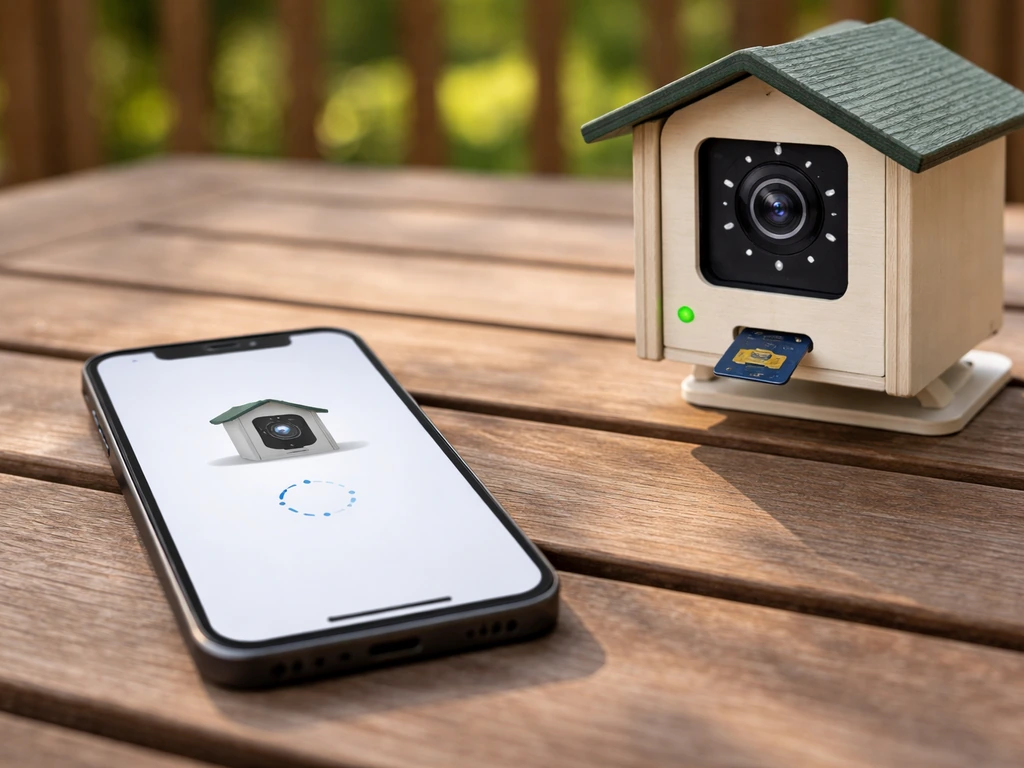
The most common frustration with camera bird boxes is not the camera itself but the connectivity and storage setup. Here's how to get it right the first time.
- Mount the box at its final location and power it on before pairing it with the app. This tells you immediately whether your Wi-Fi signal reaches the spot.
- Pair the device to your 2.4GHz network, not 5GHz. Most smart bird box cameras only support 2.4GHz, and trying to connect on 5GHz is a common setup failure.
- Insert the highest-capacity micro-SD card the unit supports (typically 128GB) before you mount it at height. Reformatting the card in-device (using the app) after installation ensures the file system is compatible.
- Set motion sensitivity to medium first. High sensitivity inside a box will trigger on airflow from the entrance hole; low sensitivity will miss the moment eggs hatch.
- Enable push notifications for the first week so you can observe when the birds are most active and adjust recording schedules or clip length accordingly.
- If the system supports scheduled recording windows (many do), set it to the bird's active hours: roughly dawn to dusk plus a 30-minute buffer, plus a nightly check window for predator activity.
- Test cloud storage by triggering a motion event manually and confirming the clip appears in the app within 60 seconds. If it doesn't, your upload bandwidth may be the bottleneck, not the camera.
- Label your device in the app with species and location (e.g., "Bluebird Box - South Fence") from day one, especially if you plan to add more units or share access with a partner.
For sharing access, Birdfy allows unlimited accounts to be added to a shared camera in its app, which is useful for families or citizen science teams where multiple people want to monitor the same box. If you prefer a fully local approach with no app dependency at all, the best smart bird house setups increasingly support RTSP streaming directly to a home NVR or local server, which keeps all footage on your own hardware.
Predator-proofing, cleaning, and keeping things humane
A camera doesn't replace predator protection. It just lets you watch a raccoon raid the nest in 1080p if you haven't done the physical work first.
Predator guards that actually work
The most effective predator control for pole-mounted boxes is a free-swinging stovepipe or torpedo baffle mounted on the pole below the box. The NABS (North American Bluebird Society) guidance is specific: the baffle must be free to rotate and wobble when a raccoon or cat attempts to climb it, which prevents them from getting a grip. A fixed cone baffle won't provide the same protection. For the entrance hole itself, a wooden or metal portal extender (also called an entrance hole guard) adds depth that makes it harder for a predator to reach in and hook a nestling. These guards must match your species' hole size exactly: 1-1/8 inches for wrens, 1.5 inches for bluebirds. Some camera boxes come without any entrance protection, so you may need to add a guard separately.
Cleaning schedule that doesn't wreck nesting success
Cleaning is non-negotiable for bird health, but timing is everything. The Wildlife Conservation Trust recommends cleaning boxes after each brood has fledged, which is the right approach. For species that produce multiple broods per season (bluebirds can have two to three), clean between each one: remove the old nest material, scrub the interior with a stiff brush and a diluted bleach solution (1 part bleach to 9 parts water), rinse thoroughly, and allow it to dry completely before the next pair investigates. The BTO recommends checking boxes about once a week early in the season to monitor progress, and continuing through the breeding season since a box may be used for repeat nesting attempts.
The critical rule: do not approach or open the box when chicks are close to fledging age. NestWatch and the Wildlife Conservation Trust both flag this: disturbing chicks near fledging can cause them to jump prematurely before they can fly, which is a death sentence for most of them. Your camera lets you monitor fledging readiness remotely, which is one of the biggest practical advantages of a camera box. When the camera shows fully feathered chicks that are wing-stretching and standing at the entrance hole, give the box a wide berth for the next 48 hours. The Audubon Society's ethics guidance also applies here: even remote monitoring can become disruptive if it leads you to physically approach the nest more often than necessary.
For end-of-season maintenance, the RSPB recommends a full seasonal cleanout in late summer or early fall, including checking that ventilation holes are clear, the roof seal is intact, and any wood has not split or warped in a way that creates gaps. Camera boxes need an extra step: check that the lens hasn't fogged internally from a season of humidity changes, and clean the lens surface gently with a microfiber cloth. If you made a homemade bird house from repurposed materials, the same sanitation rules apply, though you'll need to design your own camera integration from scratch.
Troubleshooting common problems and a privacy/security checklist
Fixing the most common footage problems
- Glare on the lens: usually caused by early-morning sun hitting the entrance hole at an angle that bounces off the interior. Re-orient the box 20 to 30 degrees or add a deeper entrance hole extender to shade the interior.
- False motion alerts: reduce PIR sensitivity, or set a detection exclusion zone in the app if the software supports it. Insects hovering near the lens are a common trigger in spring and summer.
- Black-and-white night footage when you expected color: this is normal for IR-LED systems. Color night vision requires either a white-light emitter (which can disturb birds) or a computational night-vision system. Check which type your unit uses.
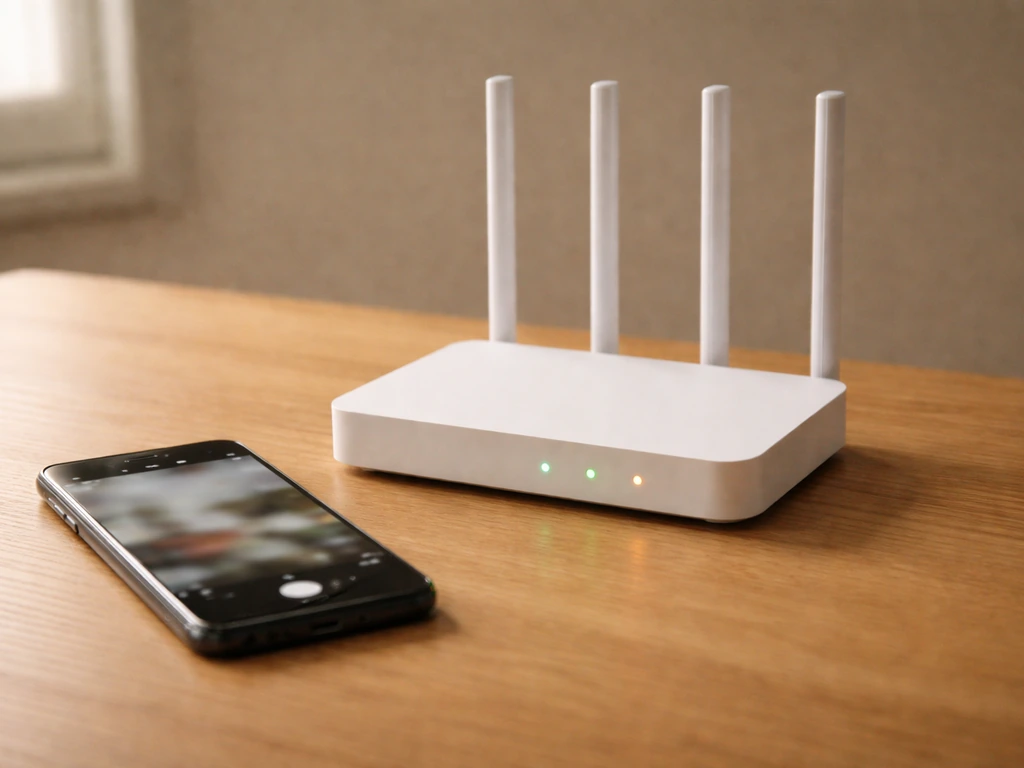
- Wi-Fi dropouts: the most common cause is a concrete or brick wall between the router and the box. Add a Wi-Fi range extender or move your router closer to a window facing the box. Units with an external antenna (rather than internal) have better range in these situations.
- App not receiving motion clips: check that cloud storage is enabled, the SD card is not full, and that the app has notification permissions on your phone. Some units stop uploading clips silently when the SD card fills up.
- Box not attracting birds despite correct placement: if the camera LED emits a visible red glow through the entrance hole at night, birds investigating in early morning may be deterred. Switch to a 940nm IR LED model if this is a recurring problem.
- Solar panel not maintaining charge: south-facing mounting is ideal in the Northern Hemisphere. Clean the panel surface each spring since pollen and dust can cut output by 20 to 30 percent.
Privacy and security: what you actually need to know
A Wi-Fi camera is an IoT device on your home network. The ACLU has documented the real risks of connected devices with poor security: no encryption, default passwords, and unpatched firmware are the main vectors for unauthorized access. Before you buy, look for these four things: end-to-end encryption for video streams, the ability to change the default password, automatic firmware update support, and a clear privacy policy explaining where video is stored and for how long.
Bird Buddy states that all data transfers within its app use end-to-end encryption. Birdfy's cloud storage retains footage for 30 days by default. Bird Buddy's privacy policy also specifically addresses the edge case where an IoT camera might inadvertently capture people, referencing encryption and cloud-processing protections. These are the kinds of disclosures worth looking for in any brand's documentation before purchase.
If you're uncomfortable with cloud storage entirely, choose a system that records exclusively to a local SD card with no required cloud account, like certain Nestera or Spy Gadgets configurations. These systems give up remote access and push notifications but keep all footage on your property. If you're thinking about something with more advanced smart features but want to understand the tradeoffs first, read up on window bird house setups as a lower-commitment alternative for close-up observation without the full IoT exposure.
| Security/Privacy Check | What to verify |
|---|---|
| Encryption | App streams and cloud storage use end-to-end or TLS encryption |
| Password | Default password can be changed during setup, not locked to a generic code |
| Firmware updates | App or device checks for and applies updates automatically |
| Cloud retention policy | Clips are deleted after a defined period (e.g., 30 days) with no indefinite storage |
| Local storage option | SD card recording works independently of cloud/app connectivity |
| Account sharing controls | You control who has access; accounts can be added or removed by the owner |
| Data location | Know whether footage is processed on a server in your country or abroad |
How to choose the right camera box for your situation
Run through this checklist before buying. It covers the variables that differ most between buyers and narrows the field quickly.
- Identify your target species first. This determines hole size, interior dimensions, and mounting height. Don't buy a box labeled for one species and try to adapt it for another.
- Check whether the box's entrance hole (and any included portal guard) matches the species-correct diameter: 1-1/8 inches for wrens, 1.5 inches for bluebirds and tree swallows, 1-1/8 to 1-1/4 inches for chickadees.
- Assess your power situation. If you have an outdoor outlet within 20 feet, a wired camera with optional battery backup is the most reliable choice. If the box will be 30 or more feet from any outlet, go solar with an internal battery rated for your local cloud conditions.
- Test your Wi-Fi signal at the planned mounting location with your phone before ordering. If you have fewer than two bars of signal, plan for a range extender or choose a system with local SD-only recording.
- Decide on your storage and privacy preference: cloud-only, SD-only, or hybrid. Only buy cloud-based systems from brands that publish a clear data retention policy and support encrypted streams.
- If you're in a high-predator area (raccoons, cats, or rat snakes are common in your yard), add a free-swinging pole baffle and an entrance hole extender regardless of what the box ships with.
- Plan your cleaning schedule before installation, not after. Know which brood you expect to be first and block calendar time for cleaning within 48 hours of confirmed fledging.
- Mount and test the camera at least two to four weeks before your target species is expected to arrive in your area. Use local eBird data to find average first-arrival dates.
If you're still exploring options and want to compare the full range of camera-equipped and non-camera designs side by side before committing, looking at the broader landscape of what makes a quality bird house is a useful reference frame. The fundamentals of good construction, safe materials, and correct dimensions apply whether or not there's a camera inside.
The bottom line: a camera bird house is worth every bit of the extra cost and setup effort if you match it to the right species, mount it correctly before birds arrive, and protect it properly against predators. The technology is mature enough now that even mid-range units give you crisp 1080p footage day and night. What separates a successful setup from a frustrating one is almost always the non-camera details: hole size, mounting stability, Wi-Fi reach, and a cleaning plan you'll actually follow.
FAQ
How can I tell if the motion detection in a bird house camera will work reliably, not just on paper?
Use the app to confirm the camera triggers before nesting starts, then validate playback on the exact device you will use during the breeding season. If you rely on motion clips, reduce sensitivity until false alerts from insects and shadows drop to an acceptable level, because unreadable alert floods often cause people to miss the moments they actually care about.
What should I do if my yard Wi‑Fi signal is weak where the bird house will be mounted?
If you have Wi-Fi dead zones, prefer a model that supports local recording to an SD card, or use a separate mesh node or Wi-Fi extender positioned to cover the pole location. Only depend on cloud access when you also have stable upload speed, otherwise you can end up with delayed or missing event clips.
How do I choose between continuous recording and motion-triggered recording so I do not run out of storage or battery?
If your camera can capture continuous video, storage needs can become unrealistic quickly, even with a big SD card. A practical approach is motion-triggered recording with adjustable sensitivity, then verify the clip length and retention behavior in-app. If you must record continuously for a short period, do it only around expected fledging windows.
Can I install or upgrade a camera bird house after nesting has already started?
Avoid setting up an occupied box, even if you are just swapping a camera. If the box already has eggs or chicks, installing or changing the hardware can prompt abandonment or premature fledging. The safest workflow is mounting and testing before the first birds investigate, and adding or upgrading the camera only after fledging.
Why do my night-vision clips look foggy or washed out, and what can I check before nesting begins?
Test night vision in the real mounting spot, not in your garage. Infrared modes can affect clarity depending on distance and fogging, and you should confirm that the camera lens stays free of condensation after a cool night. If you see fog or haze, clean and dry the lens before the next nesting attempt and confirm the camera’s operating temperature range matches your winters.
What predator protection should I add if my camera bird house did not include a baffle or entrance guard?
A camera does not guarantee predator prevention, you still need the right baffle and entrance protection for your target species and local predators. Make sure the baffle is correctly sized for the pole and that any entrance hole guard matches the hole diameter exactly, otherwise predators can gain purchase or birds can struggle to enter.
My target species seems hesitant to enter, what are the most common mechanical causes to inspect?
If you see birds having trouble entering, re-check that the entrance hole diameter and any guard accessory match your species specification, and that the camera module is not intruding into the interior in a way that reduces workable volume. Also confirm the entrance hole depth measurement, because too shallow or too obstructed a path can prevent normal entry behavior even when the hole size is correct.
How can I reduce privacy and cybersecurity risk with a Wi‑Fi bird house camera?
For privacy and security, do not reuse default passwords, and only keep cloud access enabled if you truly want remote viewing. If the system offers local-only recording, it eliminates the need for cloud accounts and reduces exposure, but you will lose push notifications and remote monitoring.
Do I need the app to watch footage, or can I reliably access videos if the internet is down?
Many camera bird houses stream to a phone in real time, which can be sensitive to time of day and bandwidth. To avoid frustration, confirm whether the app is required to view live footage, check for offline access to SD recordings, and test playback from SD during the same day you expect to monitor.
Can I turn a non-camera nest box into the best bird house with camera, and what design rules still apply?
Yes, but the camera should be paired with a compatible nesting box plan. If you repurpose a nest box, you still must ensure correct entrance hole diameter, correct floor dimensions, and ventilation and drainage holes, and then integrate the camera housing without blocking airflow or creating sharp edges.