A quality bird house is one that safely fits the species you want to attract, stays dry inside, resists rot and predators, and can be cleaned out between seasons without a fight. That's the whole standard. Everything else, whether it's a cute painted finish, a decorative perch, or a fancy mounting bracket, is secondary. If you get the entry hole size right, the interior dimensions right, the drainage and ventilation right, and you mount it somewhere a raccoon can't easily reach, you've got a quality birdhouse. You can even apply these same quality checks when repurposing materials, like building the best out of waste bird house from scrap wood or containers.
Quality Bird House Guide: Specs, Safety, and Placement
Maya Thompson
19 May 2026
What 'quality' actually means for bird houses
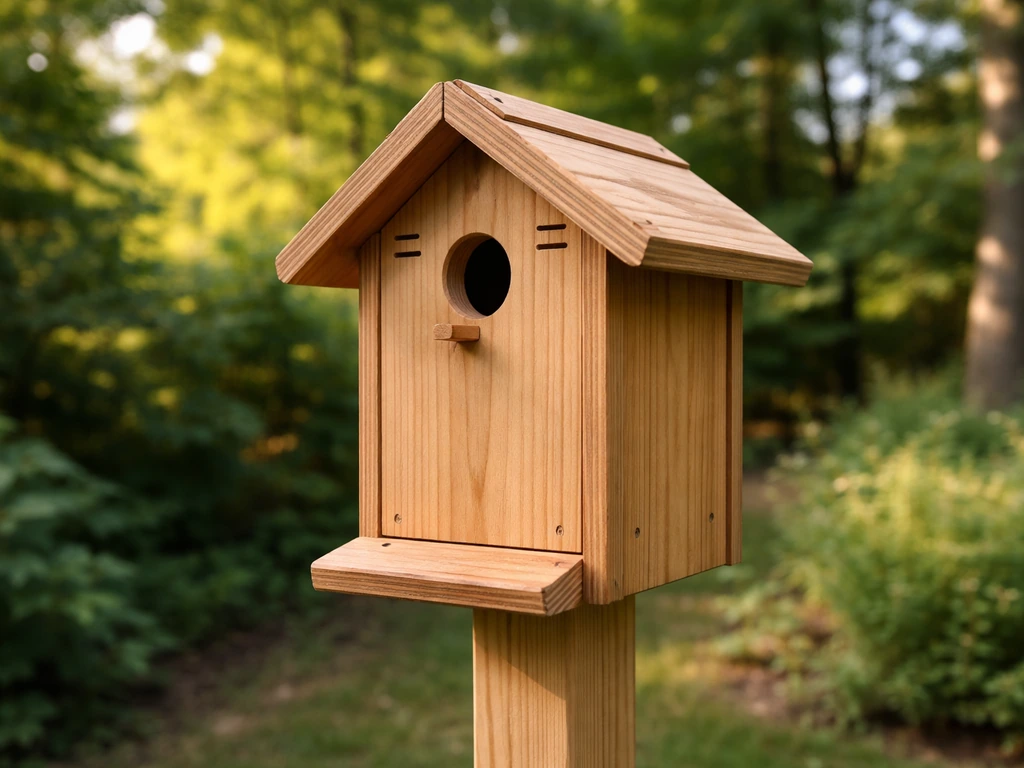
Most people assume quality means 'well-built and attractive.' That matters, but it's not the whole picture. For a bird house to genuinely perform, quality has to be measured in three ways: durability (does it hold up through seasons of rain, heat, and cold?), safety (does it protect eggs and chicks from predators and heat stress?), and species fitness (does it match the nesting needs of the bird you're trying to attract?). A decorative house from a garden center might check the durability box but completely fail on the other two.
The Cornell Lab's NestWatch program puts it plainly: good birdhouses need ventilation holes, drainage holes, a cleanable access panel, and a way to add a predator guard. Their research found that nest boxes with predator guards had success rates about 6.7% higher on average than those without. That's a meaningful difference in whether eggs and chicks survive to fledging. So when you're evaluating any birdhouse, whether you're buying it or building it, run it against that checklist before anything else.
- Species-correct entry hole size (this is the single most critical spec)
- Correct interior floor dimensions and cavity depth for the target species
- At least four drainage holes in the floor, roughly 3/8 to 1/2 inch in diameter
- Ventilation holes near the top of the side walls, about 1/4 inch diameter
- A hinged or removable panel for annual cleaning
- Roof overhang of at least 2 inches to keep rain out of the entry hole
- No exterior perch below the entry hole (perches help predators, not birds)
- Non-toxic, weather-resistant exterior finish or unfinished natural wood
One more thing worth calling out: interior finish matters less than people think, but rough-cut or grooved interior walls under the entry hole genuinely help fledglings climb out when they're ready to leave. NestWatch specifically recommends a 'fledgling ladder' for species like tree swallows, which can be as simple as horizontal saw kerfs cut into the wood below the hole.
Choosing the right birdhouse for the species you want
This is where most people go wrong. They pick a birdhouse based on looks, then wonder why no birds moved in. The entry hole size is, as Sialis.org puts it, 'probably the most critical' factor for attracting the correct cavity-nesting species. Get it right and you invite the bird you want. Get it wrong and you either attract the wrong species or no birds at all.
Here's a practical dimension table for the most common backyard cavity nesters. These specs are drawn from USFWS, NestWatch, and Sialis' consolidated nest box guides. If you're buying a ready-made house, use this table to confirm what you're looking at actually matches your target bird before you buy.
| Species | Floor Size (in) | Interior Depth (in) | Entry Hole Diameter (in) | Hole Height Above Floor (in) | Mounting Height (ft) |
|---|---|---|---|---|---|
| Eastern Bluebird | 5 x 5 | 9 | 1.5 | 5 | 4–6 |
| Western Bluebird | 5 x 5 | 9 | 1.5 | 5 | 4–6 |
| Mountain Bluebird | 5 x 5 | 9 | 1.9 (1 9/16) | 5 | 4–6 |
| House Wren | 4 x 4 | 6–8 | 1.0–1.25 | 4–6 | 5–10 |
| Black-capped Chickadee | 4 x 4 | 8–10 | 1.125 | 6–8 | 5–15 |
| Tree Swallow | 5 x 5 | 6–8 | 1.5 | 4–6 | 5–10 |
| Downy Woodpecker | 4 x 4 | 8–10 | 1.25 | 6–8 | 5–15 |
| Purple Martin (per compartment) | 6 x 6 min | 6 | 2.125 (SREH option) | 1–2 | 15–20 |
A couple of notes on the table: for mountain bluebirds or areas where eastern and western bluebird ranges overlap, Audubon specifies a 1 9/16-inch (about 1.56-inch) hole rather than the standard 1.5-inch. Purple martins are a special case entirely because they're colonial nesters and need multi-compartment housing. The PMCA (Purple Martin Conservation Association) recommends a starling-resistant elliptical hole (SREH) about 1 3/16 inches tall by 2.75–3 inches wide as an alternative to a round hole, which effectively excludes European starlings.
If you're not sure which species are realistic for your yard, spend a week watching which birds are already visiting and foraging nearby. Cavity nesters require appropriate habitat: bluebirds need open fields and meadow edges, tree swallows need open areas near water, wrens thrive in shrubby backyards. Don't set up a bluebird box in a densely wooded yard and expect results.
Materials, build quality, and what to look for in construction
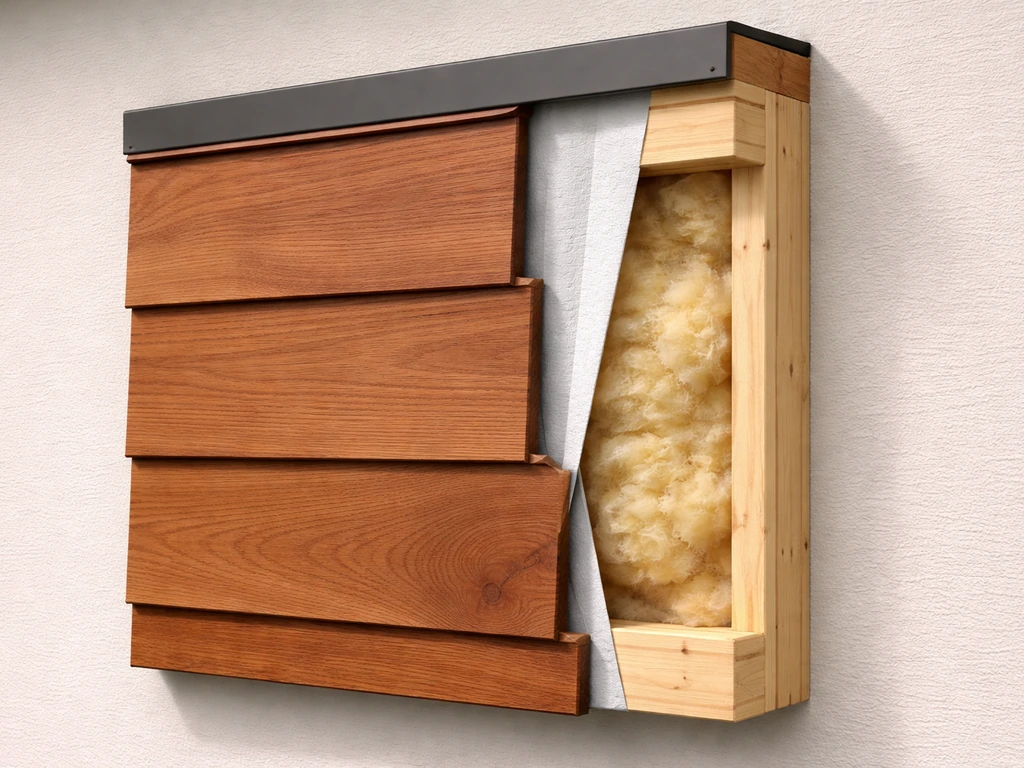
For wood species, unfinished cedar, redwood, and pine are the traditional picks because they resist rot naturally or take exterior finishes well. Cedar and redwood are the best of the three for longevity without any finish at all. Pine works fine if you treat the exterior, but avoid pressure-treated lumber for any surfaces inside the box because the preservative chemicals are toxic to birds. Exterior-grade plywood is acceptable for the walls and roof, but solid wood is preferred since it breathes better and provides some natural insulation.
Minimum recommended wall thickness is 3/4 inch. Thinner wood conducts heat and cold too readily. In hot climates especially, thin-walled boxes can become dangerously hot inside during summer afternoons. A 3/4-inch wall combined with proper ventilation and partial shade goes a long way toward keeping interior temperatures survivable for chicks.
If you're painting or staining the exterior, use only non-toxic exterior latex in a neutral or earth-tone color. White is fine and actually helps reflect heat in hot climates. Never paint or stain the interior, and never use oil-based products near the entry hole area. Leave the interior wood completely raw. Any rough-cut texture on the inside walls is a bonus because it helps fledglings grip when climbing toward the exit.
Construction details that matter: the roof should overhang the front of the box by at least 2 inches to shed rain away from the entry hole. The floor should be recessed up inside the side walls (called an inset floor) so it doesn't wick moisture from the ground up into the box. All joints should be glued and screwed, not just nailed, because nails alone loosen over time with wood expansion and contraction. If you're buying rather than building, check that the roof is properly sealed at the peak and that the entry hole edges are clean and smooth, since rough or splintered edges can injure birds.
Getting the dimensions exactly right: hole size, ventilation, drainage, and interior space
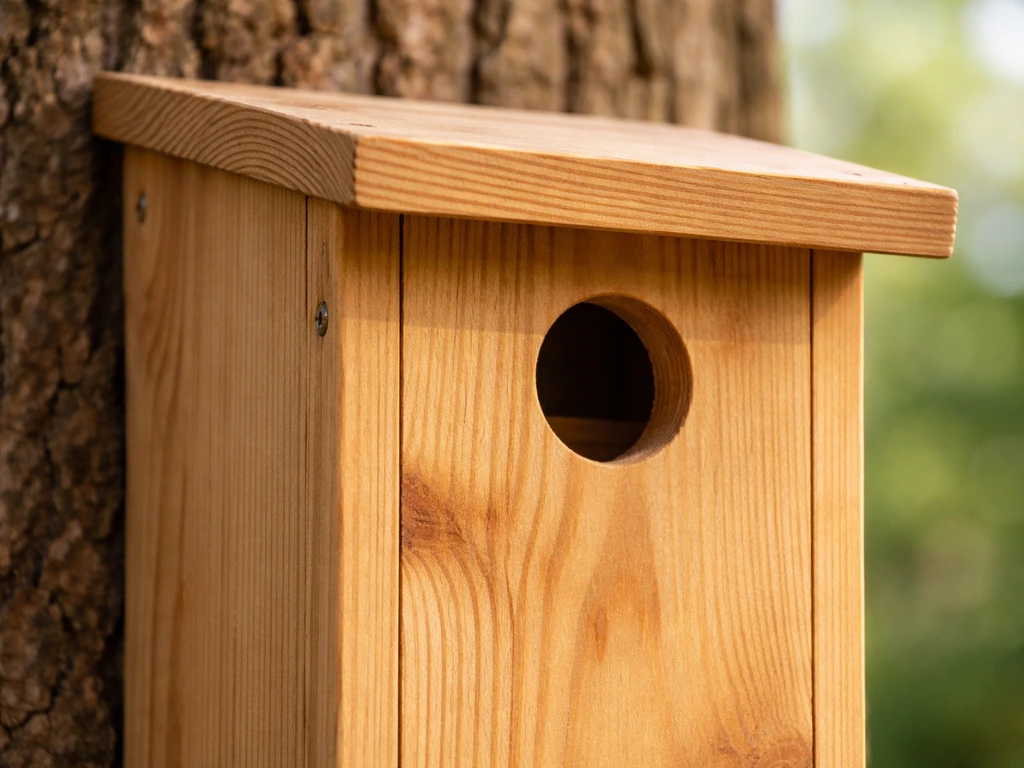
Entry hole size is non-negotiable. Even a 1/8-inch difference can matter. A 1.5-inch hole for bluebirds will exclude house sparrows, which have a slightly larger body. A 1-inch hole for house wrens will exclude nearly all larger species. Drill entry holes with a hole saw or a sharp spade bit, and sand the edges smooth. Position the center of the hole at the correct height above the floor per your target species (see the table above).
Ventilation holes go on the upper sides of the box, just under the roofline. The Avian Wildlife Center of Massachusetts recommends a few 1/4-inch holes on each side just under the roof to allow heat to escape during hot weather. Don't skip this. In midsummer, a sealed wooden box in afternoon sun can reach temperatures that kill nestlings even if the parents are still present and feeding.
Drainage holes go in the floor. NestWatch recommends at least four holes, each about 3/8 to 1/2 inch in diameter, placed toward the corners of the floor. The Alaska Department of Fish and Game's birdhouse guide specifies four 1/4-inch drainage holes as the minimum. Either size works. The point is that if rain blows in or condensation builds up, the water exits rather than pooling under the nest material where it breeds bacteria and parasites.
Interior floor space and depth work together. A box that's too shallow puts the nest material too close to the entry hole, making eggs and chicks easy targets for a reaching hand or predator paw. A box that's too deep can make it hard for fledglings to reach the exit. For bluebirds, the standard 5x5-inch floor and 9-inch interior depth is specifically designed so the bottom of the entry hole is 5 inches above the nest cup, keeping chicks out of easy reach. Stick to these species-specific specs.
Where and how to install your birdhouse
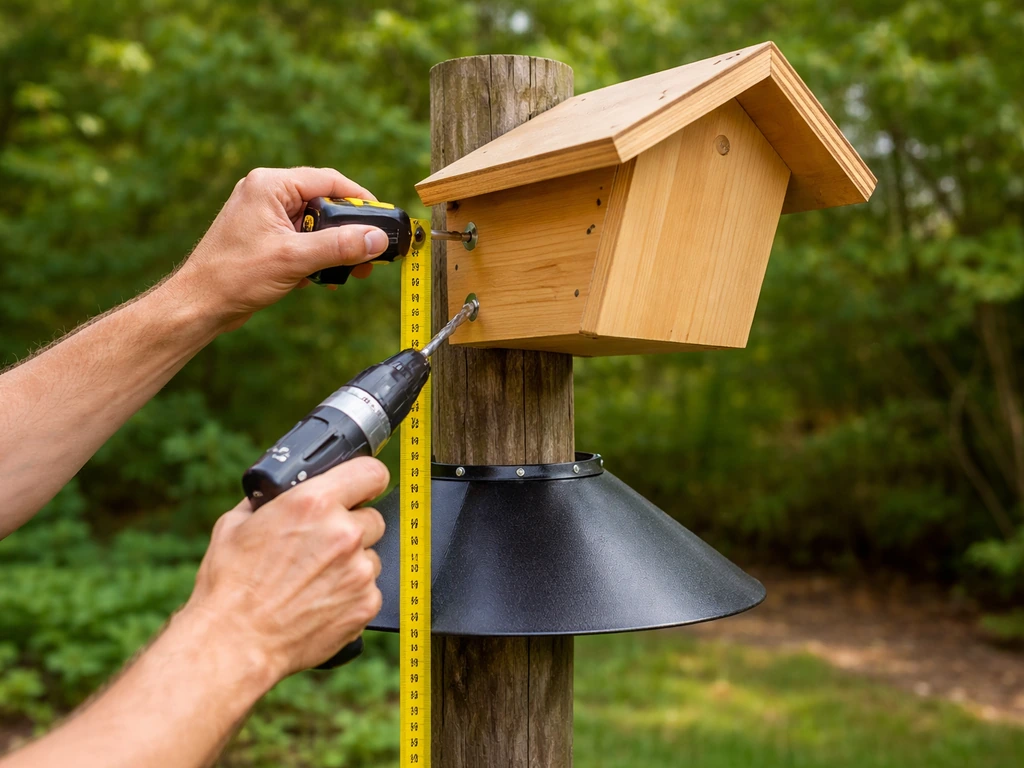
Placement is as important as construction. The same well-built box can succeed or fail entirely based on where it goes. Start with height: most small cavity nesters do well at 5 to 10 feet off the ground. Bluebirds are typically mounted at 4 to 6 feet, which keeps them within a comfortable monitoring range. Purple martins need 15 to 20 feet up on a telescoping pole.
The big debate is tree vs. post mounting. For most cavity nesters, a smooth metal pole is the far better choice. blank" rel="noopener noreferrer">Texas Parks and Wildlife specifically recommends mounting at least 5 feet above ground on a metal pole rather than on a post, tree, or t-post, because a metal pole is the easiest surface to add a baffle or guard to. Trees provide too many climbing routes for raccoons, squirrels, and snakes. Tennessee TWRA states it plainly: never place a box on a tree, fence post, or other structure where you cannot attach a predator guard.
Sun and shade exposure matters more than most people expect. The entry hole should generally face away from prevailing winds and afternoon sun. In most of the continental U.S., facing the entry hole between north and east is a solid default. This keeps the morning sun warming the box gently while avoiding the hot afternoon west sun. In consistently hot climates (Texas, Arizona, Florida), shade during the 1–4 pm window is worth seeking even if it means compromising the compass direction slightly.
Spacing between boxes matters if you want to attract multiple pairs. House wrens are territorial and will destroy eggs in competing boxes within their territory. NestWatch recommends placing boxes intended for other species at least 100 feet away from wren boxes. For bluebirds and tree swallows, which sometimes coexist, a common trick is 'pairing' boxes about 15 to 25 feet apart and spacing each pair 100 to 300 feet from the next pair.
Habitat-specific tips
- Open fields and meadow edges: ideal for bluebirds and tree swallows; mount on metal poles in open areas with low or no shrub cover immediately around the box
- Wooded backyards: better suited to chickadees, nuthatches, and wrens; attach boxes to the side of trees is possible here but still use a baffle
- Near water (ponds, streams): prime tree swallow and wood duck territory; keep boxes within 100–200 feet of the water edge
- Suburban yards with mixed shrubs: wrens and chickadees will use these readily; place boxes 5–8 feet high on a post with shrub cover nearby but not immediately around the box
- Large open lawns: avoid placing houses directly in the middle of unbroken lawn with no nearby perches; birds need somewhere to perch and scan before approaching the nest
Predator protection: guards, baffles, and what not to do
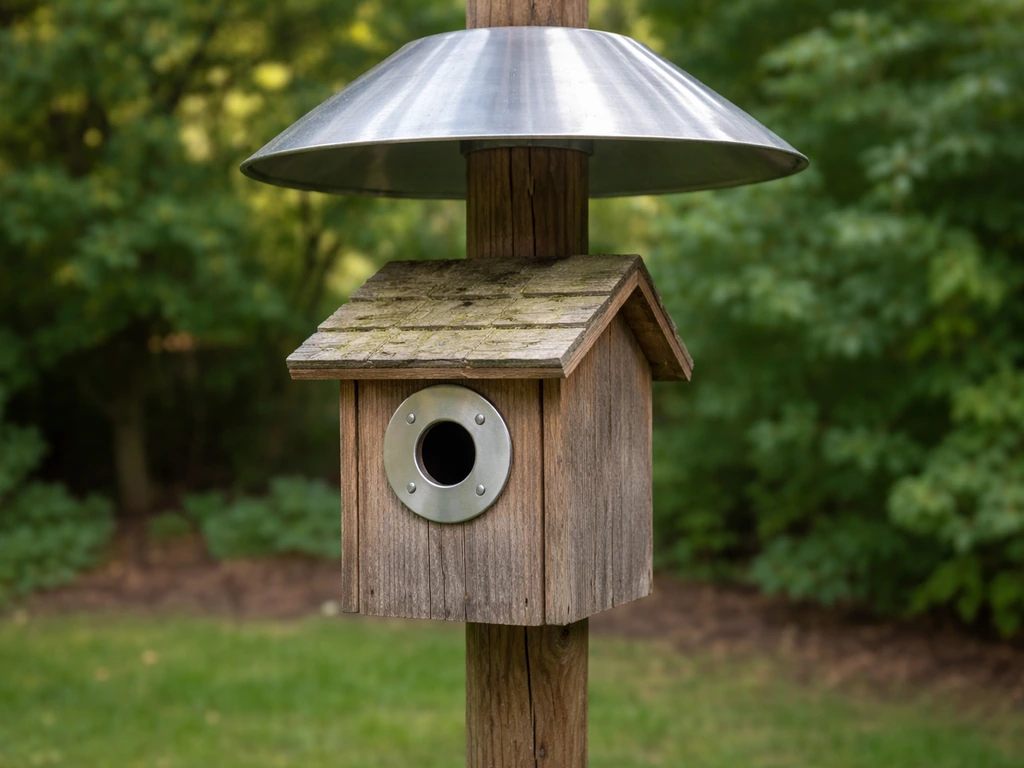
A predator guard is not optional on a quality birdhouse setup. It is part of the definition of quality. The 6.7% improvement in nest success documented in Cornell's NestWatch data is a real, measurable gain from adding a guard, and it's one of the easiest upgrades you can make.
There are two main types of guards to know. A pole baffle is a cone or cylinder mounted on the pole below the box, preventing raccoons, cats, and squirrels from climbing up. A stovepipe baffle (a section of 6-inch diameter metal pipe centered on the pole, 18–24 inches long) is one of the most effective and inexpensive options. The baffle should be positioned so its bottom is at least 2 feet off the ground and it's centered on the pole so it wobbles when a predator grabs it. A hole guard is a metal plate or wooden block around the entry hole that extends the hole length outward by at least 3/4 inch, making it very hard for a raccoon to reach in and hook a paw around to the nest. These are sometimes called 'portal protectors' or 'entrance hole extenders.'
The one thing to skip entirely is a perch peg below the entry hole. You'll see them on almost every decorative birdhouse sold at garden centers, and they are genuinely harmful. The birds you want, cavity nesters, don't need a perch to enter their own box. The birds you don't want, house sparrows, European starlings, and predatory visitors, use that perch to hang on and harass or evict resident birds. Remove any perch you find on a purchased birdhouse before you put it up.
Don't leave seed feeders or suet immediately next to a nest box. Michigan Audubon notes that attracting a dense crowd of birds and squirrels near the box with food essentially invites the predator traffic you're trying to discourage. Keep feeders at least 50 feet away from active nest boxes during the nesting season.
Cleaning, monitoring, and seasonal timing
A quality birdhouse gets cleaned. An uncleaned box builds up old nest material, parasites, flea larvae, blowfly pupae, and bacteria that can harm or kill the next season's chicks. This is where the cleanout access panel earns its place on the quality checklist.
The standard cleaning schedule used by most serious bluebird monitors and nest box programs is: remove old nesting material after each brood fledges during the active season, then do a thorough end-of-season cleaning and any needed repairs before the next spring. The Audubon Society's bluebird guidance and the NC Bluebird Association both follow this approach. Between-brood cleaning encourages the same pair to re-nest in the same box faster than if the old nest is left in place.
- After the last chick has fledged (or a nest attempt has failed and been abandoned), open the cleanout panel and remove all old nesting material completely
- Scrub the interior with a stiff brush and a mild solution of one part bleach to nine parts water, or just plain hot water if you prefer to avoid bleach entirely
- Rinse thoroughly and let the box air dry completely before closing it back up (damp interiors breed mold)
- Check the drainage and ventilation holes and clear any blockages with a small drill or pick
- Inspect all joints, the roof seal, and the entry hole edges for wear, splitting, or loosening; repair before the next nesting attempt
- At the true end of the season (fall, after all nesting activity has stopped), repeat the cleaning and close or open the box depending on whether you want it available for winter roosting
Monitoring during the nesting season is valuable but has firm limits. You can open the box to check on the nest once or twice a week early in the nesting cycle without causing harm. But once chicks are about 14 days old, stop opening the box. The California Bluebird Recovery Program specifically advises not monitoring after day 14, because older chicks can panic and fledge prematurely, which is usually fatal for birds that aren't ready to fly and forage yet.
Timing your initial setup is regional, but a good rule of thumb is to have boxes cleaned, repaired, and in place by late February or early March in most of the continental U.S. Bluebirds scout nest sites early. Tree swallows typically arrive later, in March or April. House wrens arrive last in many regions, often not until late April. If you're setting up for the first time this spring and it's already May, don't give up: many cavity nesters raise two or even three broods per season, so a late setup can still pay off, especially for second nesting attempts.
If you're looking beyond a basic wooden box, the same quality principles apply to purpose-built options like birdhouses with cameras for monitoring, smart birdhouses with sensor alerts, or window-mounted birdhouses for close-up observation. The hardware and features vary, but the core specs (correct hole size, drainage, ventilation, cleanable access, predator protection) still define whether those products are genuinely quality or just interesting gadgets. A good way to find the best window bird house is to apply the same quality checklist: correct entry hole, ventilation, drainage, and predator protection. Whatever format you choose, run every option through the same checklist you'd use for a simple cedar box, and you'll make a good decision. If you want the best smart bird house, prioritize those same core specs and then look for added monitoring or automation features that still let it ventilate and drain correctly.
FAQ
How can I tell if a “quality bird house” is for the birds I actually have locally, not just the species in the guide?
Match the entry hole and internal dimensions to your target, then confirm timing and habitat. If the birds in your area are only visiting for foraging (not inspecting cavities) after 2 to 4 weeks, the box is likely wrong for that yard setup, wrong height, or too exposed to predators rather than a “brand” issue.
Is it okay if my quality bird house has a slightly oversized entry hole, like 1/16 to 1/8 inch bigger than recommended?
It can be a real problem. Even small changes can let larger competitors in, or allow predators to reach more easily. If you oversize a round hole, the safest fix is not filling it, but replacing the panel or using an approved entrance-hole reducer sized for the target species.
What’s the best way to clean a bird house without killing beneficial monitoring habits or damaging the box?
Use the cleanout access panel and remove old nesting material fully, then scrape off residue. Avoid soaking the whole interior, and let the box dry completely before closing it. If you see active parasite debris (powdery spots, clusters), do a more thorough scrape plus end-of-season repairs, then do not reintroduce the box to that same brood cycle.
Can I use a camera or smart birdhouse features and still keep the nest safe?
Yes, but only if the device does not block ventilation or drainage paths and does not add heat near the entry. Before relying on it, test that the access panel can be opened for cleaning without disturbing the nest, and confirm the predator guard still fits correctly around the mounting and pole.
My box gets condensation inside during rainy weather. Is that automatically a sign of a bad design?
Not always, but it is a warning sign. Check that drainage holes are clear (no plugged sawdust) and that ventilation openings are placed near the roofline. If condensation persists even in weeks with no rain, consider improving airflow by trimming any interior obstructions near the vent holes and ensuring the floor is not directly contacting pooled ground moisture.
How do I prevent predators if I cannot use a smooth metal pole?
Prioritize a mount where you can install and maintain a predator guard. If you must mount on an existing post or structure, you still need a guard that blocks climbing access, and you should choose a placement where there are no nearby climbing routes (nearby shrubs, fences, branches). If you cannot attach a guard securely, the setup usually is not “quality” for predator safety.
Is “no perch” really necessary, and what should I do if my birdhouse has one built in?
For most cavity nesters, a perch under the entry is a liability because it gives house sparrows, starlings, and predators an easier hold point. Remove the perch entirely if possible. If removal compromises structural integrity, replace the unit rather than leaving it, since even a small perch can increase harassment and eviction attempts.
Should I put the bird house near my yard feeders to make it easier for birds to find it?
Usually no. Food sources close to the box increase crowding and the number of predators and opportunists. Keep seed and suet at least 50 feet away during the nesting season, and if you are feeding during the fall, stop or move feeders well before spring setup.
How do I know whether my bluebird or swallow box is the right depth if I cannot measure the interior exactly?
Use the recommended floor and depth measurements for that species, but also look for practical behavior cues. If fledglings struggle to reach the exit, or if eggs seem too exposed to disturbances at the entry side, the box is likely too shallow or poorly positioned relative to the entry. In that case, adjust by using species-specific boxes rather than guessing with a general-purpose design.
What should I do if I installed a quality bird house in late spring, and birds did not use it?
Late setup can still work because many cavity nesters attempt multiple broods, but you may need to reset expectations. Leave it up, monitor from a distance, and plan a better early-season installation for next year. If you moved it during nesting, be aware that disturbance can stop inspections and reduce the chance of acceptance.
How far apart should boxes be if I want multiple species, not just multiple pairs of the same species?
Use a two-layer spacing approach: separate boxes according to territorial pressure for the most aggressive species you expect, then also avoid crowding that brings predators close. As a rule, keep wren-target boxes well away from other boxes, while for species that can coexist, pair spacing and larger gaps between neighboring pairs help reduce competition and repeated predation attempts.