The best nest bird house for your backyard is one built or sized precisely for the species you want to attract, made from untreated wood, mounted at the right height on a predator-baffled pole, and cleaned out at least once a year. Get those four things right and you will have birds nesting reliably. After the first bluebird egg is laid, Sialis recommends installing a sparrow spooker as a practical ongoing protection approach against House Sparrows for eggs, nestlings, and adults blank" rel="noopener noreferrer">installing a sparrow spooker after the first bluebird egg is laid. Get even one wrong and you will spend the season watching a perfectly good box sit empty or, worse, lose a clutch to a raccoon.
Best Nest Bird House: How to Choose, Install, and Maintain
Maya Thompson
27 Apr 2026
What "best" really means for a nest bird house
"Best" has nothing to do with how the box looks hanging on a fence post. It means fit, safety, and the right features for the bird using it. A box that works brilliantly for an Eastern Bluebird will be ignored by a House Wren and colonized by House Sparrows if you get the hole size wrong by a quarter inch. The three things that make a nest box genuinely great are: species-appropriate dimensions (entrance hole diameter, interior floor area, and depth from hole to floor), physical safety from weather and predators, and features that keep the interior healthy: ventilation near the roof, drainage at the floor, and a door you can open for monitoring and cleaning.
No perch below the entrance hole. Perches are one of the most common design mistakes you will see on decorative boxes sold at garden centers. Native cavity nesters do not need them, and they give predators and competitor species a convenient grip. Skip them entirely. The same goes for paint on the interior and any pressure-treated or chemically treated wood, both of which can harm developing chicks.
If you are choosing among multiple boxes for a yard setup with several target species, think of "best" as plural: the best collection of nest boxes is one where each box is tuned to one species, spaced and sited correctly, and managed as a small trail rather than a random scatter of decorative houses. That framing helps beginners avoid the trap of buying one all-purpose box and expecting everything from Chickadees to Screech-Owls to use it.
Match the bird house to the bird: hole size, dimensions, and location
Entrance hole diameter is the single most important measurement. It determines which species can enter and, just as importantly, which competitors and predators cannot. The table below covers the most common backyard cavity nesters. Use it as your starting spec sheet before you buy or cut a single board.
| Species | Entrance Hole Diameter | Floor Size (approx.) | Depth (hole bottom to floor) | Mount Height |
|---|---|---|---|---|
| Eastern Bluebird | 1 1/2 in | 5 x 5 in | 5–6 in | 4–6 ft |
| Western Bluebird | 1 1/2 in | 5 x 5 in | 5–6 in | 4–6 ft |
| Mountain Bluebird | 1 9/16 in | 5 x 5 in | 5–6 in | 4–6 ft |
| Black-capped / Carolina Chickadee | 1 1/8 in | 4 x 4 in | 6–8 in | 4–15 ft |
| House Wren | 1 1/8 in | 4 x 4 in | 4–6 in | 5–10 ft |
| Tree Swallow | 1 1/2 in | 5 x 5 in | 5–6 in | 5–8 ft |
| Downy Woodpecker | 1 1/4 in | 4 x 4 in | 8–10 in | 6–20 ft |
| Eastern Screech-Owl | 3 in | 8 x 8 in | 12–15 in | 10–30 ft |
| American Kestrel | 3 in | 8–9 x 8–9 in | 9–12 in | 12–30 ft |
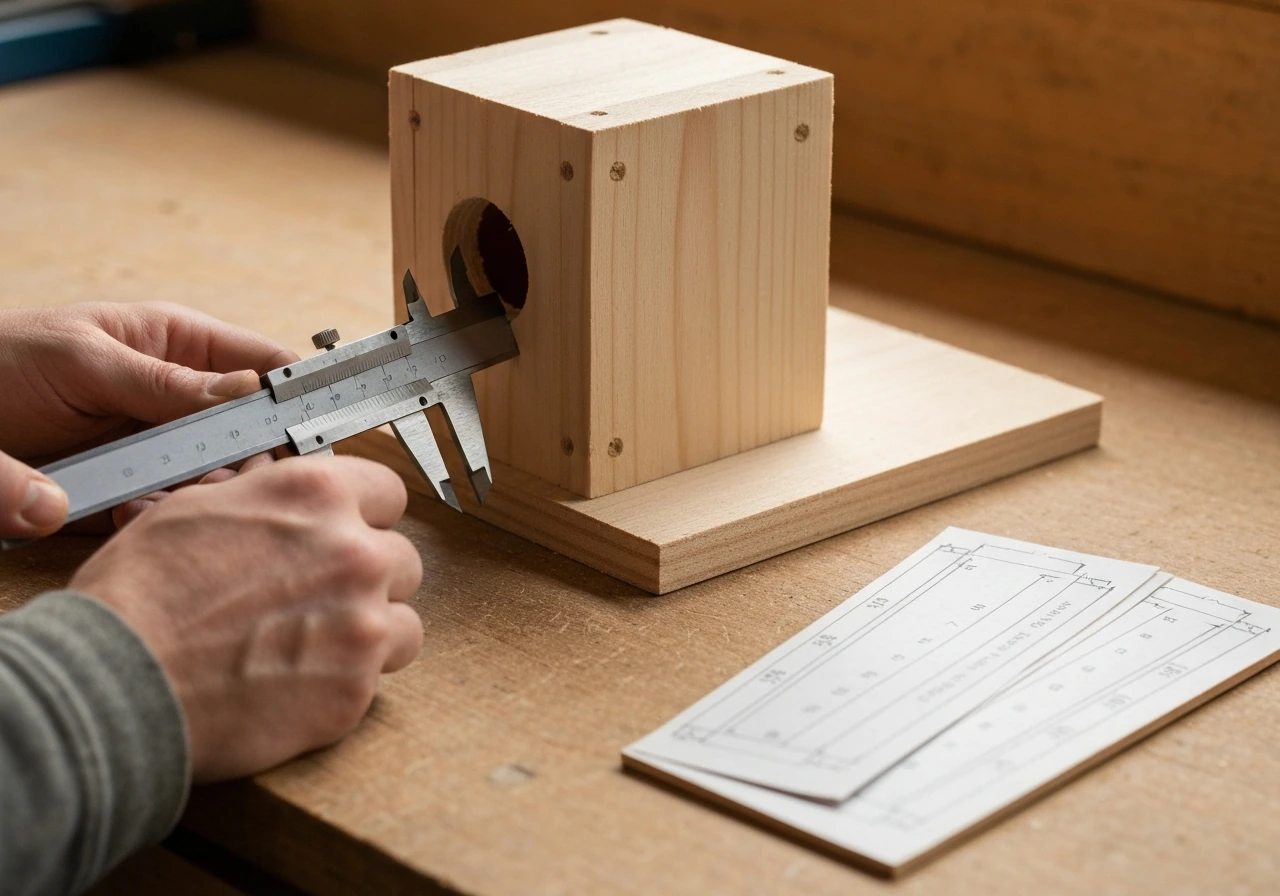
Notice the bluebird nuance: Eastern and Western Bluebirds both use a 1 1/2 in hole, while Mountain Bluebirds need 1 9/16 in. That extra 1/16 inch is deliberate. It excludes European Starlings from smaller boxes while still letting the slightly larger Mountain Bluebird enter comfortably. Get calipers or a drill-bit gauge and measure before you drill, not after.
The depth from the bottom of the entrance hole to the floor matters because it determines how hard it is for a predator reaching through the hole to grab eggs or chicks. The North American Bluebird Society recommends 4.5 to 6 inches for bluebirds. Deeper boxes are not always better for small species because chicks need to be able to climb out when they fledge, but for owls and kestrels a deeper cavity is realistic and expected.
Location in the yard matters as much as dimensions. Bluebirds want open country, short grass, and clear sight lines, ideally facing a field edge. Chickadees and Wrens prefer woodland edges with nearby shrubs. Tree Swallows want to be near water and open sky. If your yard is heavily wooded, bluebirds are a poor target and Chickadees are your best bet. Matching the box to the habitat you actually have, not the habitat you wish you had, is how you fill boxes every spring.
Materials and construction: wood wins, but details matter
Untreated wood is the gold standard. Cedar and redwood are the top picks because they resist rot and temperature swings without any chemical treatment. Pine works fine if you use 3/4 in thick boards, which insulate better and last longer than thinner stock. Cypress is another excellent option in humid, southern regions. Avoid plywood for the walls, it delaminate over time when exposed to rain and freeze-thaw cycles.
A published comparison of wooden versus plastic nest boxes found differences in parasite, bacterial, and fungal loads in favor of wooden boxes, partly because wood breathes and regulates interior humidity better. If you are considering a plastic or PVC box, look for one with generous ventilation, since the microclimate in a sealed plastic box can become dangerously hot and damp. For most backyard setups, a well-built cedar box is the safer, lower-maintenance choice.
Ventilation and drainage: the two non-negotiables
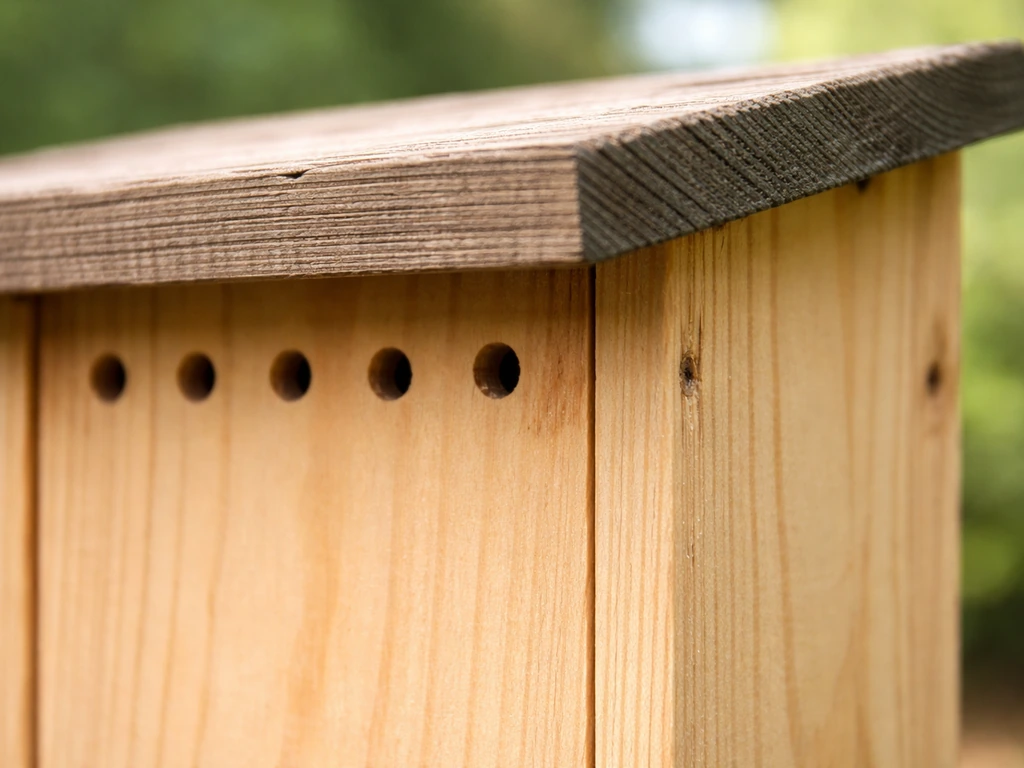
Drill several 1/4 in ventilation holes near the top of each side panel or just under the roof overhang. These let hot air escape on summer afternoons when box temperatures can spike high enough to kill chicks in a poorly ventilated box. For drainage, either drill four 1/4 in holes in each corner of the floor or cut small corner notches before assembly. Both approaches work; the goal is to let any water that gets in drain immediately rather than pool and rot the nest material.
The roof should overhang the front by at least 2 inches to create a drip line that keeps rain from running into the entrance hole. A slight forward slope (front wall a little shorter than the back wall) sheds water off the back. These are small details that take five minutes to build in and save the nest from flooding during a heavy rain.
Wood vs. alternatives: a quick comparison
| Material | Durability | Thermal Performance | Parasite/Pathogen Risk | DIY Friendly | Verdict |
|---|---|---|---|---|---|
| Untreated cedar / redwood | 10–20+ years | Excellent | Low | Yes | Best overall |
| Untreated pine (3/4 in) | 5–10 years | Good | Low | Yes | Great budget pick |
| Cypress | 15–20+ years | Excellent | Low | Yes | Best in humid climates |
| Recycled plastic / PVC | 20+ years | Poor (needs vents) | Moderate | Limited | Only with heavy ventilation |
| Metal | Variable | Very poor (overheats) | Low | No | Avoid for nesting boxes |
| Painted exterior plywood | 3–5 years | Moderate | Moderate | Yes | Not recommended |
Placement and mounting: height, orientation, spacing, and habitat tips
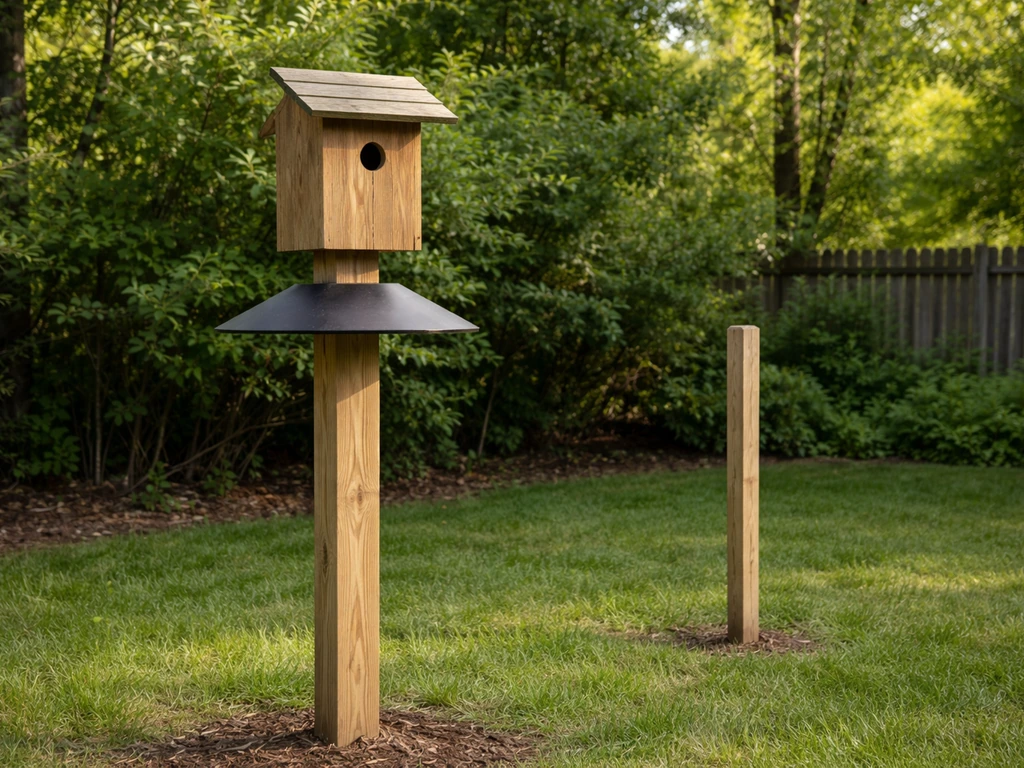
General guidance puts most small cavity nesters comfortably in the 4 to 15 foot range, but species-specific targets matter more than that broad window. Bluebird boxes work best at 4 to 6 feet on a free-standing post in open habitat. That height makes monitoring easy, and when you pair it with a baffle (more on that below), it is very effective against ground predators. Chickadees and Wrens are more flexible and will use boxes from about 5 feet up through the lower tree canopy. Screech-Owls and Kestrels need their boxes up at 10 to 30 feet.
Entrance hole orientation: face the hole away from the prevailing weather (typically north or east in most of the U.S.) to avoid driving rain entering the box. Avoid south-facing in hot climates where afternoon sun will overheat the interior. East-facing is a good default for most of the country because it catches gentle morning sun without the brutal afternoon heat.
Spacing between boxes is often overlooked. For bluebirds, place boxes at least 250 to 300 feet apart, or out of sight from each other, to reduce territorial conflict. Tree Swallows are colony nesters and can tolerate boxes as close as 10 to 15 feet from each other. A useful tactic for bluebird trails is the "pairing" method: mount two boxes about 5 to 10 feet apart so a Tree Swallow and a Bluebird can each use one box without competing, with enough distance to the next pair to discourage territorial fights.
Habitat-specific mounting tips
- Open fields and meadows: use a free-standing metal conduit or wooden post with a pole baffle; avoid mounting on existing fence posts where predators already travel
- Woodland edges: attach to a tree or wooden post at 6 to 10 feet, angled very slightly forward (5 degrees) so chicks can grip the interior wall to climb out; keep the face clear of overhanging branches
- Near water (Tree Swallows): mount on posts set directly in or right at the edge of a pond or marsh; water is a natural moat and swallows prefer it
- Suburban backyards with mixed trees and lawn: a post-mounted box at 5 to 6 feet near a lawn edge works for both bluebirds and swallows; add a second smaller-hole box (1 1/8 in) at the woodland edge for Chickadees
- Urban yards: House Wrens are your most reliable urban cavity nester; hang a small wren box (1 1/8 in hole) from a bracket on a fence or low tree limb at 5 to 10 feet, in a partly shaded spot
Predator-proofing and keeping the nest safe
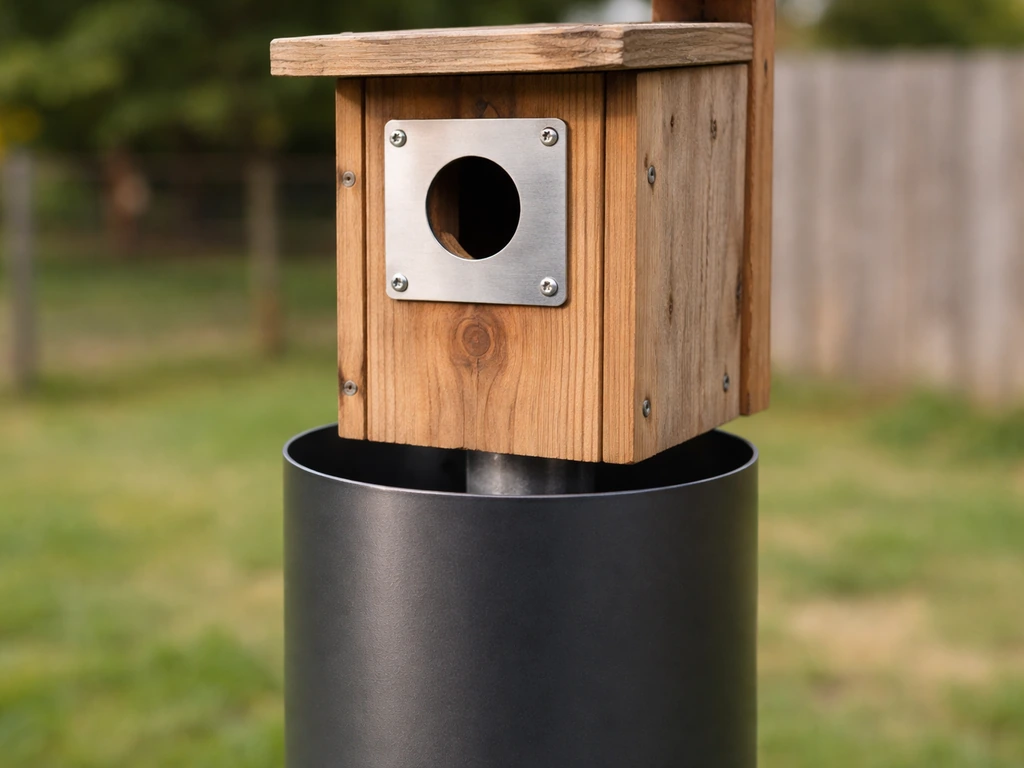
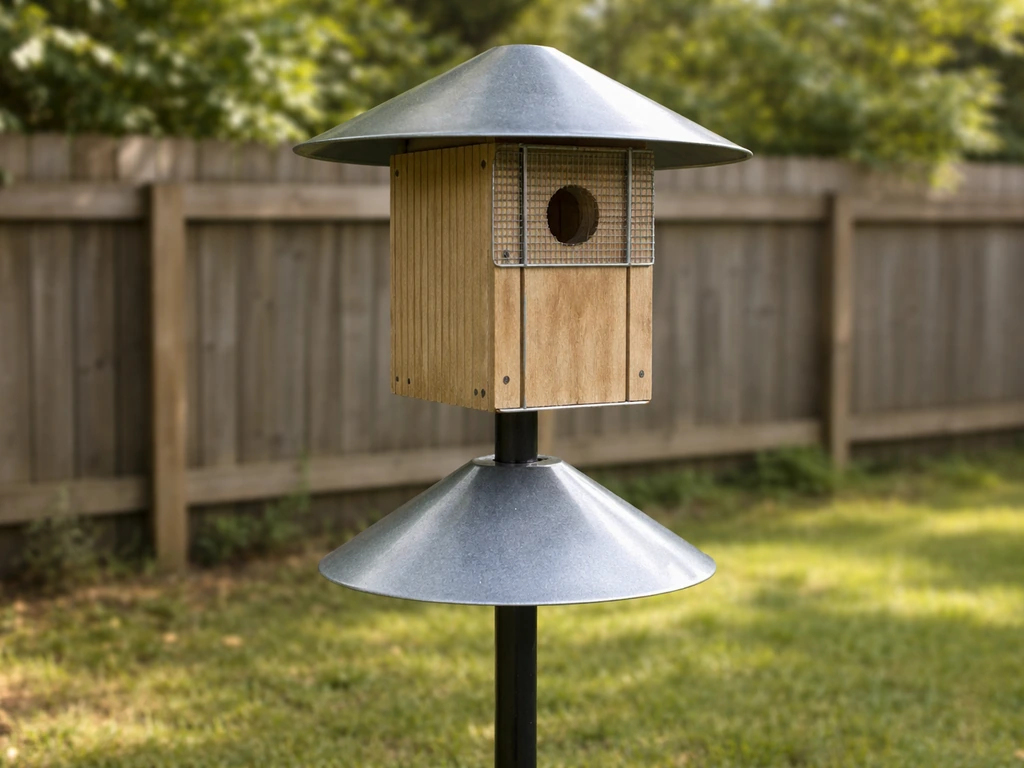
A nest box without a predator guard is effectively an invitation to raccoons, snakes, and cats. The two most effective options are a stovepipe baffle (a metal cylinder around the mounting pole that prevents climbing) and a hole protector (a metal plate around the entrance hole that prevents enlargement by Woodpeckers and gnawing by squirrels). Sialis.org’s sparrow spooker instructions describe placing a sparrow spooker over the roof of a nest box to deter House Sparrows hole protector (a metal plate around the entrance hole). Use both.
Stovepipe or PVC pole baffle
A stovepipe baffle is a 8 to 10 inch diameter metal cylinder, around 24 inches long, centered on the mounting pole. It works by being too wide for a raccoon to grip around and too slippery to climb. Mount it so the top of the baffle sits between 4 and 4.5 feet off the ground. From there, the nest box sits another 6 inches or so above the baffle top, putting the box floor at roughly 5 feet. PVC pipe baffles work on the same principle and are easy to build from schedule-40 pipe. The key is that the pole must be free-standing and away from fences, trees, or any surface a predator can jump from.
Entrance hole hardware
A 1/16 in thick metal hole protector plate, available at most wild bird supply stores, prevents squirrels from gnawing the entrance hole larger and gives raccoon fingers less purchase. For boxes near wooded areas with active snake populations, research comparing guard designs confirms that pole baffles (both stovepipe and cone styles) significantly reduce snake predation compared to unguarded boxes.
Other humane deterrence tactics
- Keep the mounting pole greased with automotive grease or petroleum jelly on a smooth section just below the baffle to discourage climbing; reapply after rain
- Do not mount boxes on existing wooden fence posts, trees, or structures that predators already use as travel corridors
- Remove old nests promptly after the season ends so they do not attract mice or insects that in turn attract snakes
- If House Sparrows are colonizing bluebird boxes, use a Sparrow Spooker (a simple pole-and-ribbon deterrent installed after the first bluebird egg is laid) and do not leave boxes open during the off-season in areas with dense House Sparrow populations
- Avoid using no-kill traps or anything that harms native birds; House Wrens sometimes puncture eggs in nearby boxes but are protected under the Migratory Bird Treaty Act and should be deterred by spacing and habitat choice rather than trapping
Maintenance and sanitation: keep the box working year after year
Clean out old nests after each brood fledges, or at minimum once at the end of the nesting season in late summer or early fall. Old nest material harbors mites, blowfly larvae, and bacteria that can harm the next clutch. Simply remove the nest, scrape out any debris, and inspect the interior walls and floor for damage.
For routine cleaning, a stiff brush and hot water is enough. When a box has had a failed nest with fecal contamination or evidence of disease, disinfect with a 1 part bleach to 10 parts water solution (a 10% bleach solution), scrub with a wire brush, rinse thoroughly with clean water, and let the box dry completely in the sun before closing it up. Cornell Lab's NestWatch program recommends this same approach and specifically cautions against cleaning during active nesting, so check for eggs or chicks before you open any box.
A simple annual maintenance schedule
- Late winter (February to early March): inspect and re-mount boxes before the first scouts arrive; check that baffles are still secure and hardware has not rusted
- During nesting season (April through July): monitor boxes weekly or every two weeks; record species, egg count, and chick development; do not clean or disturb active nests
- After each brood fledges: remove the old nest, inspect for damage, and allow the box to air out for a few days before the next pair may begin a second clutch
- Late summer to early fall (August to September): final clean-out with hot water and a brush; disinfect with 10% bleach solution if needed; rinse and dry fully
- Fall/winter prep: check for rot, splits, or loose screws; re-drill any clogged drainage or ventilation holes; apply a coat of linseed oil to exterior wood surfaces if the wood looks dry or gray; close the box or leave it open depending on whether you want winter roosting birds to use it
One often-missed maintenance step is checking the entrance hole diameter annually. Squirrels and Woodpeckers can enlarge a 1 1/2 in hole to 1 3/4 in or more over a season or two, which then allows Starlings to enter bluebird boxes. A metal hole protector plate solves this permanently, but if you skipped it, use a hole-size gauge each spring to confirm the opening has not grown.
Building vs. buying: which makes more sense for you right now
If you have basic woodworking tools and a few hours, building your own cedar bluebird box is the most cost-effective option and lets you dial in every dimension precisely. Plans are widely available and a single box costs around 10 to 15 dollars in materials. The main advantage beyond cost is that you control the wood species, the hole size, and the ventilation layout from scratch.
Buying a pre-built box makes sense if you need multiple boxes quickly, lack tools, or want a specific design like a camera-equipped model or a weatherproof smart house (both of which are harder to DIY from scratch). Weatherproof smart bird house models can be a convenient upgrade, especially when you want easy monitoring without sacrificing the right entrance size and ventilation.
If you are shopping for the best window bird house, focus on species-specific hole size, ventilation, and predator protection so it works once the birds move in weatherproof smart bird house. When buying, look for: a front or side panel that opens for cleaning, no perch, ventilation slots near the roof, drain holes in the floor, and a stated entrance hole diameter that matches your target species. Avoid any box where the hole size is not specified on the packaging.
"Suitable for many species" is a red flag, not a selling point.
However you acquire your boxes, the mounting hardware and pole system matter as much as the box itself. A quality bird house on a flimsy, unguarded post is still a vulnerable nest. Budget for a proper metal conduit pole and a stovepipe or PVC baffle from the start, and you will not have to rebuild the whole setup after your first predation event.
Quick-start checklist for right now
- Identify the cavity-nesting species most likely in your area and habitat (use the table above)
- Confirm or cut the correct entrance hole diameter for that species before anything else
- Choose untreated cedar or pine; build or buy a box with ventilation holes near the roof and drain holes or corner cuts in the floor
- Select a free-standing post location away from trees, fences, and shrubs; plan for a stovepipe or PVC baffle from the start
- Mount the box at the species-appropriate height with the entrance facing east or away from prevailing weather
- Install the pole baffle so the top sits at 4 to 4.5 feet, with the box floor at roughly 5 feet for open-field species
- Add a metal hole protector plate over the entrance
- Monitor weekly during nesting season; do not open during active nesting
- Clean out after each brood; disinfect with 10% bleach solution when needed; dry fully before closing
FAQ
After a brood leaves, do I really need to clean the box right away, or can I wait until fall?
Most birds will reuse a box only if the nest area stays dry and the entrance stays correctly sized. After each brood fledges, remove the old nest and lightly brush the interior, then recheck ventilation holes and drainage. If the box got heavily soiled or you see damage on the floor, switch to the bleach disinfect schedule and let it dry fully before closing.
What should I do if I discover eggs or chicks inside when I planned to clean?
If you see occupants, pause. Wait until you confirm there are no eggs or chicks present, and in general do not open the box during active nesting. A safer approach is to visually inspect from the opening before you touch the latch, then clean later in late summer or early fall.
Is a plastic or PVC nest box ever better than wood?
Yes, but the ventilation and microclimate matter. In hot weather, a sealed or poorly ventilated plastic box can overheat, even if the hole size is correct. If you choose plastic, prioritize generous venting near the roof, solid drainage, and shade, and treat it like you would wood by checking for dampness and airflow after heat waves.
How can I be sure a pre-built box has the correct entrance hole size?
Enter via the entrance hole measurement. Use calipers or a drill-bit gauge to confirm the opening is within the target range before installing. For bluebirds, the difference between 1 1/2 in and 1 9/16 in can determine whether unwanted species can enter.
My box has a perch under the entrance. Should I leave it?
It can be a mistake, especially for cavity nesters like bluebirds and wrens. Many decorative boxes include perches because they look “bird-friendly,” but perches give predators and competitor species an easier grip. If your box has a perch, consider removing it or choose a design without one.
Which direction should I point the entrance hole, and does it matter if my yard is mostly shaded?
You do not need to guess. If a box is in the open and meant for bluebirds, too much shade can reduce use, while too much sun can overheat. Face the entrance away from driving rain, and in hot climates avoid south-facing openings. East-facing is often the most forgiving compromise for many regions.
How far apart should multiple nest boxes be if I want to attract more than one species?
Spacing prevents conflict. Bluebirds are territorial, so placing boxes too close can trigger fights and failed nests. As a practical rule, mount bluebird boxes at least 250 to 300 feet apart or keep them out of each other’s sight, while tree swallows are more tolerant of closer spacing.
How often should I measure the entrance hole, and what if it seems to have grown?
Yes, and it is not just a comfort issue. If the hole is larger than intended, predators and competitors can enter, and bluebirds are especially vulnerable to starling takeover after squirrels or woodpeckers enlarge openings. Check the entrance annually, and use a hole protector plate if you have recurring trouble.
Do small roof details, like overhang length and roof slope, really affect nest success?
Roof overhang is a key “quiet” safeguard. If rain can run into the entrance, chicks can chill or nests can get flooded and fail. Aim for an overhang of at least about 2 inches at the front, and use a slight forward slope so water sheds away from the entrance.
Can I use one “all-purpose” nest box for multiple species in the same season?
Not usually. If a box is built for a smaller cavity nester, a larger bird may not be able to fit or may not use the box at all, and competition can increase. The best strategy is to buy or build species-specific boxes and treat your yard as a small trail for each species you target.
My box has sat empty for two seasons. What are the top troubleshooting steps?
If you keep finding the same type of failure, first rule out entrance size drift and predator access. Then verify the site matches the species habitat, including height, open sky versus woodland edge, and orientation away from prevailing rain. Finally, confirm the box is getting adequate drainage and ventilation so the nest material stays dry.