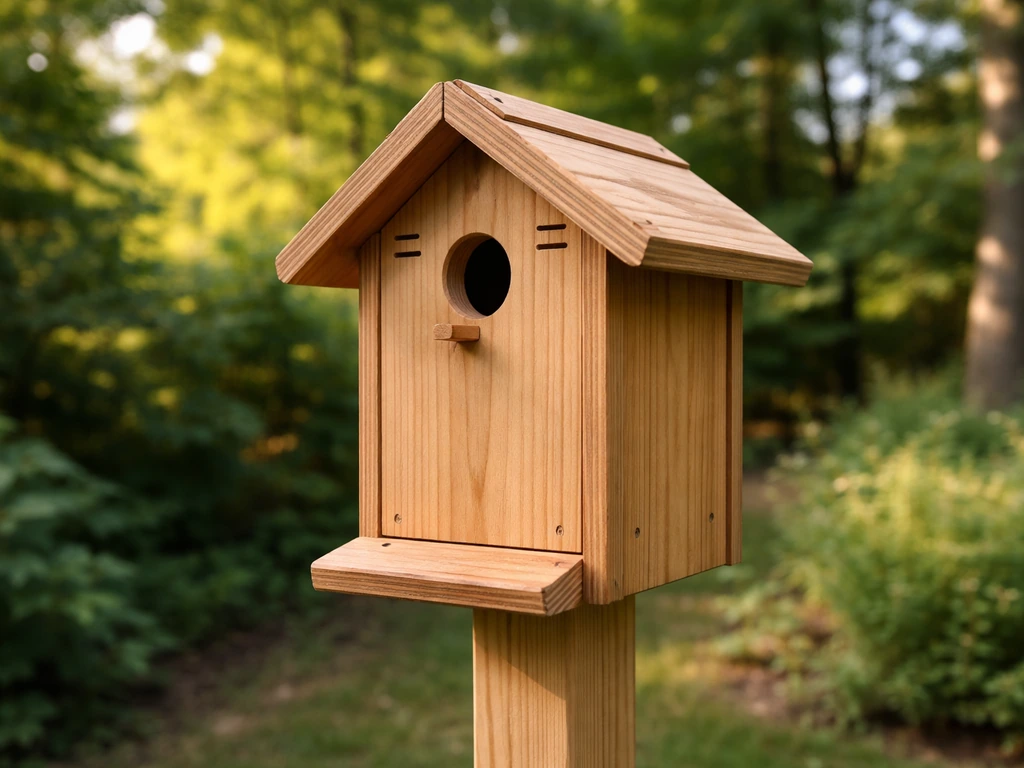
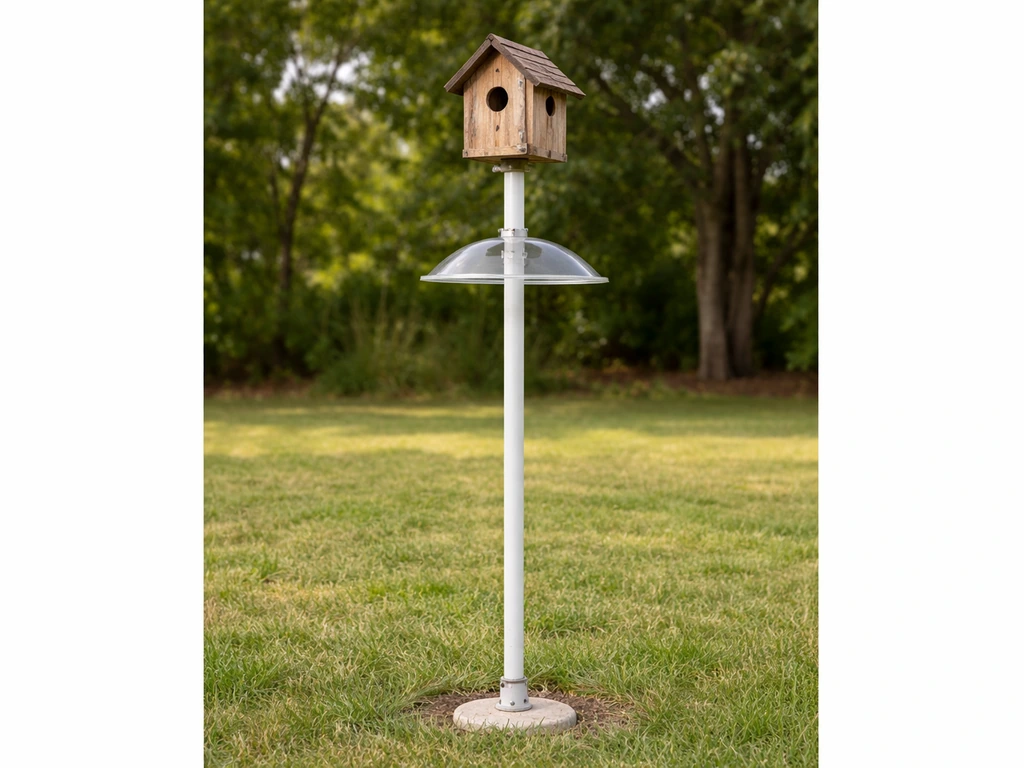
The best bird house pole for most backyard situations is a smooth metal pipe or dedicated steel mounting pole, 8 feet long, driven or set into the ground so the house sits 5 to 6 feet up (or 8 to 10 feet for kestrels), combined with a cone or stovepipe baffle mounted 4 to 5 feet below the box. If you want the best out of waste bird house results, focus on building a sturdy pole setup plus the right predator guard so the birds can nest safely best baffle. That single setup blocks raccoons, snakes, and cats better than any fence, tree, or shepherd's hook can, and it works for bluebirds, tree swallows, wrens, and most other cavity nesters you're likely to target. If you are also comparing the actual house itself, pairing this pole-and-baffle setup with the best nest bird house options can further improve your odds with cavity nesters like bluebirds and wrens.
Best Bird House Pole: How to Choose and Mount It Safely
What you're really choosing: pole type and mount style
When people search for a birdhouse pole, they usually have one of three real problems: they need something to stick in the ground, they want to know how to attach the house to whatever they already have, or they're trying to figure out how to keep predators off. The pole type determines which of those problems you can actually solve.
There are four common setups. A straight mounting pole (usually galvanized steel or powder-coated steel, sold as a dedicated bird-pole kit) is the gold standard for predator resistance and clean installation. A shepherd's hook is convenient and cheap but has a curved top that can actually make baffle installation awkward, and the thin wire gauge wobbles in wind. A fence or wall mount is fine for decorative houses but gives predators easy climbing routes. A ground sleeve with a removable pole (sometimes called a telescoping pole) is the most installer-friendly option because you can pull the whole thing out of the ground for cleaning or winter storage.
| Pole Type | Best For | Predator Resistance | Baffle Compatible | Stability |
|---|---|---|---|---|
| Straight steel mounting pole | Bluebirds, swallows, wrens | High (with baffle) | Yes, easily | Very good if anchored properly |
| Shepherd's hook | Decorative/wren houses, low predator areas | Low | Awkward | Moderate, can wobble |
| Telescoping/sleeve pole | Easy seasonal removal, DIY setups | High (with baffle) | Yes | Very good with sleeve-and-concrete base |
| Fence or wall mount | Decorative only, patios | Very low | Not practical | Good but predator access is easy |
For hardware compatibility, check your pole's inner diameter before buying a mounting kit. Dedicated bluebird pole kits (like the commonly available 54-inch versions at hardware stores) use a mounting flange at the top that you screw directly into the birdhouse floor. Universal pole mounts designed for smart birdhouses and camera-equipped houses are typically sized for poles around 0.97 inches (2.5 cm) inner diameter, so the exact pipe size matters when mixing and matching hardware.
Pick the right height and placement for the target birds
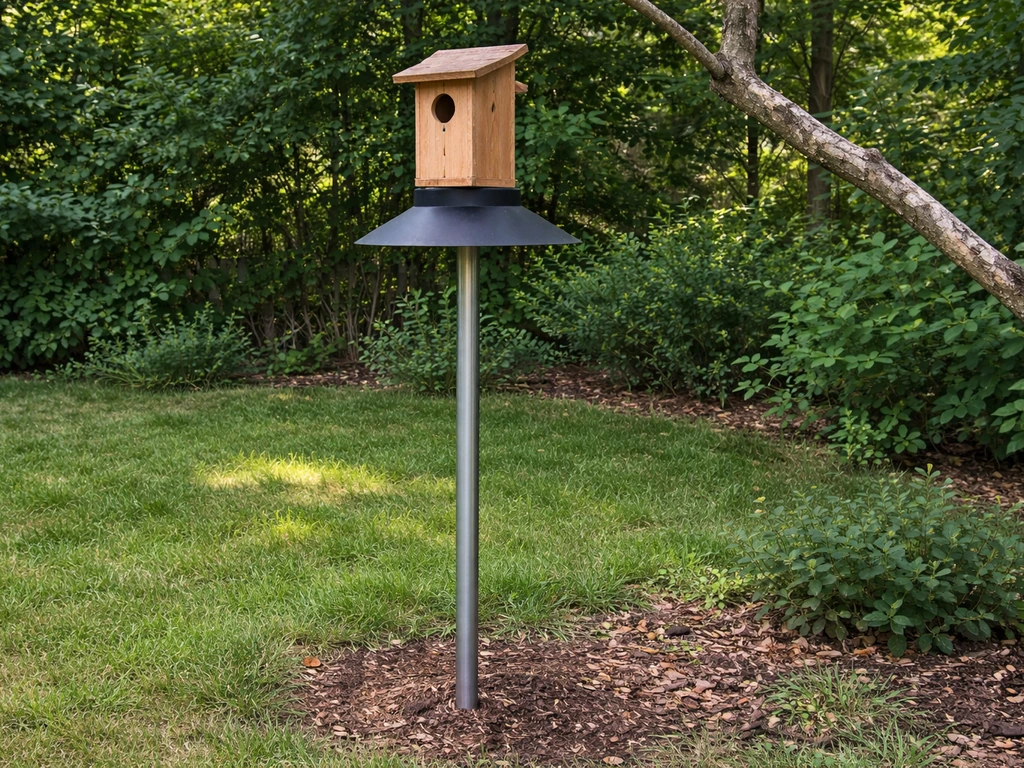
Height isn't one-size-fits-all, and getting it wrong means empty boxes. Here's a practical breakdown by species.
| Species | Recommended Box Height | Pole Notes |
|---|---|---|
| Eastern/Western Bluebird | 5–6 feet above ground | Smooth metal pole, baffle required |
| Tree Swallow | 5–6 feet above ground | Same pole setup as bluebirds; 1 3/8" entrance hole |
| House Wren | 5–10 feet above ground | More flexible; keep entry hole under 1 1/8" to exclude sparrows |
| American Kestrel | 8–20 feet above ground (20 ft on a pole preferred) | Smooth metal pole critical; face box southeast |
| Barn Owl | 12–20 feet | Pole mount or structure; predator guard still important |
For bluebirds, 5 to 6 feet is the practical sweet spot backed by multiple recovery programs. The birds themselves will nest anywhere from 2 to 50 feet high, but lower placement makes monitoring and cleaning much easier, and a good baffle at 4 to 5 feet handles the predator risk that comes with lower mounting. Kestrels are the exception: if you're going pole-only, aim for at least 20 feet to reduce predator accessibility. If that isn't practical in your yard, mount the box on a building or utility pole and focus on a good predator guard.
Placement within the yard matters as much as height. Bluebirds and tree swallows prefer open areas with a clear flight path, ideally with a perch (a fence post, low branch, or snag) 40 to 100 feet away for fledglings on their first flights. Avoid placing the pole directly under a tree or near a roof overhang; that eliminates the baffle's value because a raccoon can drop down from above. Keep boxes at least 100 feet apart if you're running multiple houses for the same species, or sparrows and aggressive birds will interfere with nesting.
Pole materials and durability: weather, rust, and stability
The pole is in the ground year-round, so material choice really does matter for longevity. The two practical options are hot-dip galvanized steel and powder-coated steel. Galvanized steel is the more durable choice underground: the zinc coating provides cathodic (sacrificial) protection, meaning even if the coating is scratched or nicked, the zinc preferentially corrodes and protects the base metal underneath. Hot-dip galvanized fasteners and poles routinely last 20 or more years in outdoor soil environments. Powder-coated steel performs well above ground and resists chipping and UV better than paint, but the coating can be compromised in the buried section over time, so pairing it with a galvanized ground sleeve is smart.
Avoid plain steel EMT conduit for permanent installs; it rusts through in a few seasons when buried. Aluminum is rust-proof but too flexible at the diameters used for most birdhouse poles, especially if you're running a heavy owl or kestrel box. PVC pipe is cheap but degrades in UV and doesn't give baffles a solid connection point. For diameter, poles of 1.
25 to 2 inches work well for most applications: they're stiff enough to resist wind flex, and most commercially available baffles and mounting flanges are designed around that range. Poles of about 1¼ to 2 inches in diameter and about 8 feet long work best for bluebird nest box installations of this type [Poles of 1. 25 to 2 inches work well for most applications](https://watermanbirdclub. org/wp-content/uploads/2017/12/Bluebird-Nest-Box-Installation-revised-3-photo.
pdf).
Installation that won't tip or sag: anchoring and leveling
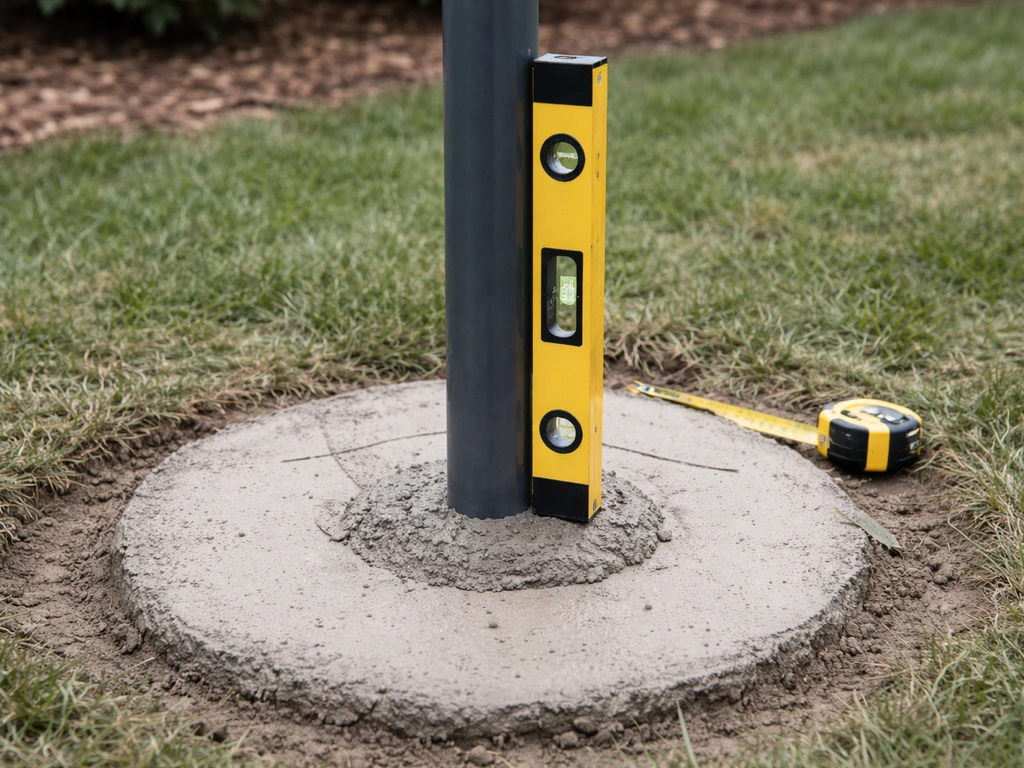
A wobbly pole discourages nesting because vibration disturbs incubating birds and can eventually loosen the baffle. Here's how to do it right the first time.
- Choose your location first. Walk the yard at different times of day to check shade, nearby tree canopy, and any fence or roof that could give predators a launch point to bypass your baffle.
- Dig or auger a hole 12 inches in diameter and at least 24 to 28 inches deep (roughly 10% of above-ground pole height as a minimum, with 24 inches as the floor regardless of pole height). In loose or sandy soil, go 30 inches.
- Add about 4 inches of gravel at the bottom for drainage before setting the pole or sleeve. This prevents frost heave and keeps the buried section from sitting in standing water.
- Set the pole or ground sleeve in the hole, check level with a bubble level on two sides (front-to-back and side-to-side), and brace it in position before pouring concrete.
- Pour a standard ready-mix concrete around the pole or sleeve, slightly crown the surface above grade so water sheds away, and let it cure 24 to 48 hours before attaching the house.
- If you're using a telescoping sleeve design, insert the inner pole after the sleeve is fully cured. The sleeve stays buried and the pole lifts out for seasonal maintenance.
In areas with hard clay or rocky soil, a ground auger (available at equipment rental shops) makes this much faster than a post-hole digger. In very windy locations or on soft ground, consider guying the pole with two or three guy wires attached a few feet below the house mount; the tension keeps lateral flex under control without requiring a deeper or wider footing.
Predator-proof mounting: baffles, guards, and perch distance
This is the part most people skip, and it's the reason their boxes sit empty or produce failed nests. A smooth metal pole alone is not enough. Raccoons and cats can shimmy up surprising distances, and snakes are exceptional climbers on any textured surface. A properly installed baffle is what actually stops them.
The two baffle types that work are cone baffles and stovepipe baffles. A cone baffle (typically 18 to 24 inches in diameter) wraps around the pole and tilts outward and downward; when a predator tries to climb past it, they can't get a grip on the underside. A stovepipe baffle is a smooth metal cylinder (usually 8 inches in diameter, 24 to 36 inches long) centered on the pole; the predator tries to climb into the cylinder and can't get traction to push upward. Both work well when installed correctly. The stovepipe style is slightly better at stopping snakes because even their lateral grip is defeated by the smooth interior.
Placement of the baffle is critical. Mount it 4 to 5 feet below the box, with the bottom edge of the baffle at least 4 feet above the ground. This prevents a raccoon or cat from simply reaching up from the ground and grabbing the edge.
After installing the baffle, confirm that no branch, fence rail, roof edge, or other structure is within about 10 feet horizontally of the box; a cat can leap up to 6 feet and will absolutely use a nearby surface to get above your baffle. If you're using the entrance-hole extender (a wooden block glued over the entry hole to extend the tunnel depth), that adds a second layer against cats and raccoons that try to reach in from the front.
- Check that the baffle spins or tilts freely; a locked-in-place baffle is less effective against persistent climbers.
- Inspect the baffle connection point at the beginning of each season; vibration and freeze-thaw cycles can loosen the mounting hardware.
- If snakes are a major problem in your area, consider a stovepipe baffle over a cone and avoid grass or mulch piled against the base of the pole that snakes can use as a ramp.
- Never add a perch peg below the entrance hole; it gives predators a grip point and isn't needed by cavity-nesting species.
DIY options and compatibility with common birdhouse brackets
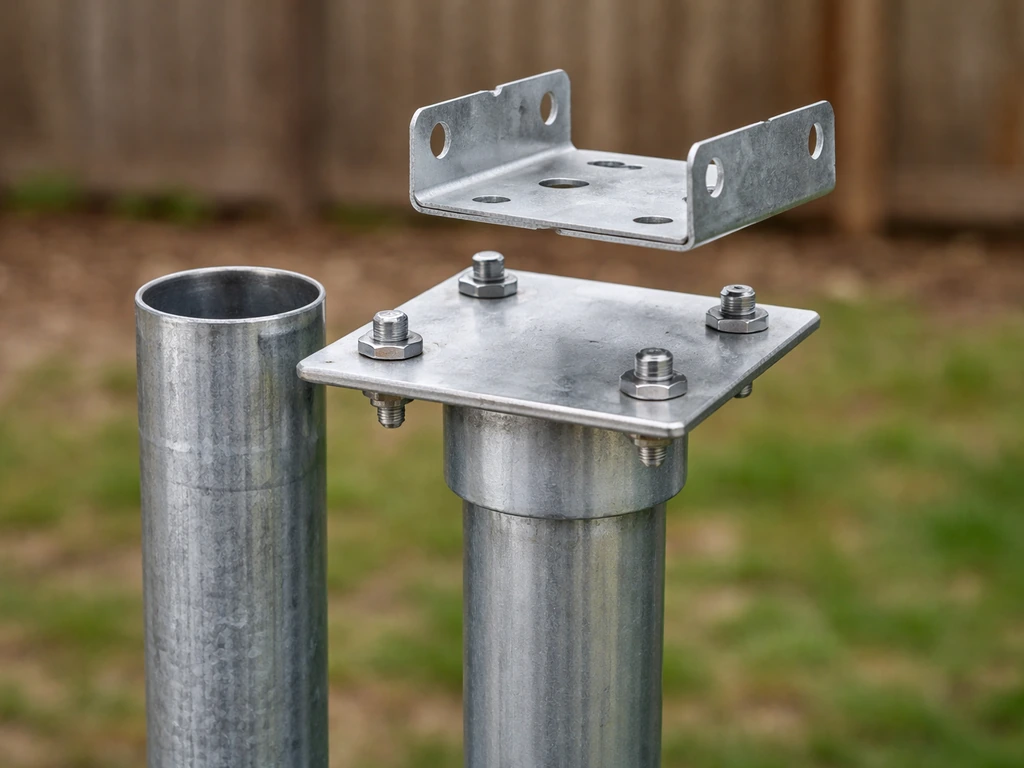
If you're building your own pole setup or adapting hardware, the most reliable DIY approach uses a standard 1.25-inch galvanized steel fence post or EMT conduit for the above-ground section, paired with a 2-inch steel pipe as the buried ground sleeve. Slide the inner post into the outer sleeve and secure it with a set screw or bolt through both layers. This gives you a removable pole for winter storage and easy nest checks.
For attaching the house to the pole, a metal mounting flange screwed to the floor of the birdhouse is the cleanest method. Most commercially available bluebird-style houses have a pre-drilled mounting hole in the floor for exactly this. If your house doesn't have one, you can add a 3/8-inch hole centered in the floor and use a threaded rod or pipe nipple to connect to the pole top. Make sure the house is level in all directions after mounting; a tilted box drains poorly and can cause eggs or hatchlings to roll toward the wall.
For birdhouses that use a side-mount bracket (common with decorative cedar houses and some nest-box styles), a 1.5-inch galvanized pipe with a saddle clamp bracket at the top works well. Just keep in mind that side-mounting raises the house's center of gravity and makes wind flex more noticeable, so a deeper footing is worth the extra effort.
If you're also setting up camera-equipped or smart birdhouses, check the pole diameter requirement for their mounting hardware before buying your pole. If you're aiming for the best bird house with camera, make sure the mounting hardware is compatible with your pole so the setup stays secure and predator-resistant. These accessories often spec a tight inner-diameter range around 0.97 inches, which is narrower than a standard 1.25-inch pipe. Running two poles side by side (one for the nest box, one for a camera mount) is sometimes the cleaner solution than trying to adapt a single pole to incompatible hardware.
Maintenance and seasonal tips to keep birds safe and nesting successful
A good birdhouse pole setup needs about 30 minutes of attention per year to stay reliable. Choosing the right quality bird house pole setup also makes cleaning and maintenance easier year after year. Here's what that looks like spread across the seasons.
In late fall, after the nesting season is fully over, clean out the box completely. Remove all nesting material (wear gloves; old nest material can harbor mites and bacteria), scrub the interior with a stiff brush, and let it dry fully before closing it back up. Audubon recommends making any needed repairs at this same time, while the wood is dry and you're already in the box. Inspect the mounting hardware, tighten any screws, and check the concrete footing for cracking from freeze-thaw.
In early spring, before nesting begins (timing varies by region, but late February to early March in the southern US, and late March to April farther north), inspect the baffle for damage and confirm it still moves freely or seats correctly. Check that the entrance hole hasn't been enlarged by woodpeckers; if it has, add a hole-extender block to restore the correct diameter. Confirm the pole is still plumb after winter frost cycles; heaving is common in clay soils, and a few minutes with a level and a mallet to tamp the base back down can save a nesting attempt.
During the nesting season, do weekly or bi-weekly nest checks if you're monitoring a bluebird or swallow trail. A quick lift of the hinged roof or side panel (design your box for easy access) takes under a minute, causes minimal disturbance, and lets you catch problems like blown baffles, wasp nests starting in a corner, or predator damage early enough to act. After each successful fledging, clean the box out promptly so a second clutch can begin.
Rust and surface damage on the pole should be addressed before the season, not after. Light surface rust on a galvanized pole can be wire-brushed and treated with a cold galvanizing compound or a rust-converting primer. Powder-coated poles that have a chipped section in the buried zone are best treated with galvanizing spray on the exposed steel before re-burial. If the pole is significantly corroded at the ground line (a common failure point), replace it rather than patch it: a pole that fails during nesting season is genuinely disruptive to the birds and hard to fix without pulling the whole setup.
Quick-reference: choosing the right pole setup for your situation
Use this framework to narrow down your decision based on your specific constraints.
| Your Situation | Recommended Setup |
|---|---|
| Bluebirds or tree swallows, open yard, raccoons present | 1.5" galvanized steel pole, 8 ft long, set 24–28" deep in concrete, stovepipe or cone baffle at 4–5 ft, house at 5–6 ft |
| Kestrels, open area with elevated predator risk | Smooth metal pole or post, house at 20 ft minimum, predator guard essential |
| Wrens on a patio or garden, low predator pressure | Shepherd's hook or decorative pole acceptable; still add a cone baffle if cats are present |
| Multiple houses on one trail | Individual poles spaced 100+ ft apart; don't gang boxes on one pole |
| Seasonal removal needed (rentals, HOAs, cold winters) | Telescoping sleeve-and-pole setup with concrete-set outer sleeve; inner pole pulls out in minutes |
| DIY build on a budget | 1.25" galvanized fence post above ground, 2" pipe ground sleeve, mounting flange screwed to box floor |
The honest answer is that the "best" pole is the one you'll actually install correctly and maintain consistently. A cheap galvanized pipe set properly in concrete with a good baffle outperforms an expensive decorative pole driven loosely into soft soil with no predator guard. Get the basics right first, then refine from there.
FAQ
Do I need to use concrete to anchor the best bird house pole, or is driving it into the ground enough?
Concrete is optional if your soil is firm and you use a stable installation method. For soft soil, frost, or windy yards, concrete (or at least a properly sized footing) helps prevent wobble and heaving. If you avoid concrete, make sure the pole is still plumb and the base can be tamped solid, then re-check alignment after the first freeze-thaw cycle.
What’s the safest way to confirm the baffle is actually working after installation?
Do a “no-access” test from both sides of the pole and from likely predator approach points. Specifically, look for any nearby branch, rail, or surface that could let a cat reach above the baffle, then verify the bottom edge of the baffle sits high enough (at least 4 feet above ground). If you have pets outdoors, also check that they cannot climb to the same height using nearby objects.
Can I mount a birdhouse on a pole without a baffle if the pole is smooth metal?
No. Smooth poles still allow raccoons and cats to shimmy, and snakes can climb on many surfaces. A baffle is the purpose-built predator barrier, and it must be placed at the correct height below the box to block climbing from below.
My birdhouse has no mounting hole, how do I attach it securely to a pole without cracking the floor?
Drill a single centered hole that matches your fastener method (for example, a threaded rod or pipe nipple approach). Use a snug fit, avoid over-torquing screws into soft wood, and re-check the box remains level in all directions after tightening, since tilt can affect drainage and egg stability.
How do I choose between a cone baffle and a stovepipe baffle for my setup?
Choose cone if you want a broad wrap-around barrier on a standard pole install, since it tilts outward and downward. Choose stovepipe if snakes are a particular concern, because the smooth interior reduces lateral traction. In either case, prioritize correct placement (4 to 5 feet below the box) and ensure nothing is within roughly 10 feet horizontally that could serve as a stepping surface.
What inner diameter should I look for when matching smart birdhouse mounts or camera mounts to a best bird house pole?
Check the accessory spec for the pole’s required inner diameter, not just the pole’s nominal outside size. Many camera or smart mounts are built for tighter pole sizes (commonly around 0.97 inches inner diameter). If your pole is 1.25 inches outside but the mount expects a specific internal diameter range, you may need a different pole or a dedicated adapter.
Is it okay to run two separate poles side by side, one for a birdhouse and one for a camera?
Often yes, and it can be cleaner than adapting incompatible hardware. Keep the birdhouse pole as the predator-resistant anchor, and mount the camera pole in a way that does not create extra climb paths or allow a predator to use the camera pole as a stepping surface near the baffle.
How high should I mount a birdhouse pole if I want easier cleaning but still protect against predators?
For many cavity nesters, a common balance is 5 to 6 feet for the house height, with the baffle positioned 4 to 5 feet below. If you’re targeting kestrels, the guidance shifts higher (often around 20 feet for pole-only setups). If you need low height for access, compensate by ensuring the baffle height and approach clearance are correct.
What can cause a mounted pole to wobble even if it’s the right material?
Wobble usually comes from an under-sized footing, loose soil, poor leveling at install, or winter heaving in clay. In windy areas, guy wires attached a few feet below the mount can reduce lateral flex. After winter, check plumb, tamp the base if needed, and inspect baffle alignment.
Can I use PVC or aluminum as the best bird house pole material?
PVC is typically a short-term choice because UV and outdoor weathering degrade it, and it usually does not provide a robust connection for baffles. Aluminum is rust-proof but can be too flexible at common diameters, especially with heavier boxes or side mounts. If you want long-term reliability, hot-dip galvanized steel (for buried sections) is usually the most dependable route.
What maintenance should I do on the pole and baffle during the year if I don’t want frequent visits?
Plan for at least three checkpoints: late fall cleanout (and repairs), early spring inspection of baffle fit and pole plumbness, and short mid-season checks if you’re actively monitoring. Address any chips, rust at the ground line, or loose baffle hardware before nesting, since fixing during nesting can be disruptive.
How often should I check nests, and how do I minimize disturbance?
If you’re monitoring, weekly or bi-weekly checks are common for active seasons. Keep access fast (hinged roofs or designed side panels help), avoid prolonged exposure, and return the lid or panel promptly. After fledging, clean out promptly if you want to support a second attempt.
What if my box was mounted and birds nested, but predators still reached it, what should I troubleshoot first?
Start with baffle placement and nearby approach surfaces. Verify the bottom edge of the baffle is high enough and that nothing within about 10 feet horizontally gives a predator a way to get above the baffle. Then inspect for any gaps between the baffle and pole, and confirm the entrance extender (if used) is fitted correctly to block access from the front.
Is a shepherd’s hook ever a good option for the best bird house pole?
It can work as a convenience option, but it’s less reliable long-term for predator guarding because the curved top can complicate baffle installation, and the thin gauge can wobble in wind. If you use one, make sure the baffle still installs correctly and that the pole stays solid after storms and winter freeze-thaw.
Quality Bird House Guide: Specs, Safety, and Placement
Choose a quality bird house using safe materials, correct hole size, ventilation, drainage, and placement for healthy ne