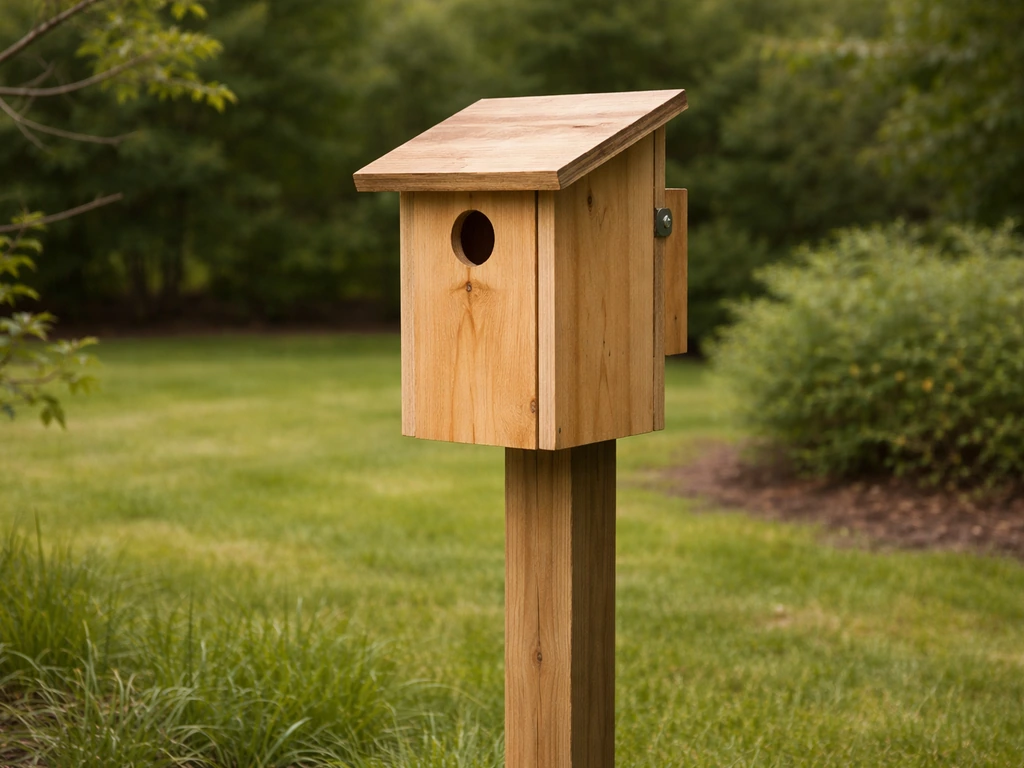
Mount your bird house on a free-standing metal pole or PVC pipe, 5 to 10 feet off the ground depending on the species, with the entrance hole facing roughly east or southeast, away from prevailing afternoon sun and storm winds. Add a baffle to the pole, keep the box at least 50 feet from busy feeders and foot traffic, and you have the fundamentals covered. Everything else, spacing, timing, cleaning, and troubleshooting, is just dialing that core setup in for your yard and the birds you want to attract.
How to Put Up Bird Houses: Placement and Mounting Guide
Maya Thompson
5 Jul 2026
Choosing the right location in your yard
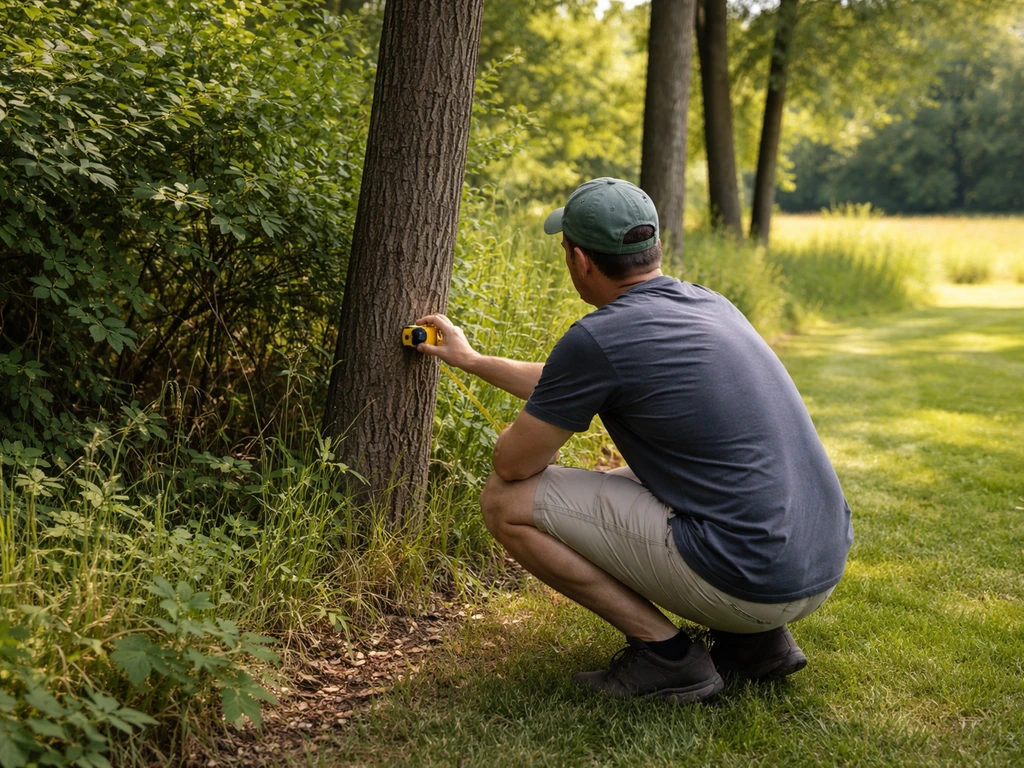
Before you drive a single stake into the ground, walk your yard and think about what the birds actually need. Cavity-nesting birds like bluebirds, wrens, chickadees, and tree swallows want open or semi-open habitat with nearby perching spots and low ground cover they can forage in. A bird house stuck on a fence post between a busy patio and a dog run is going to sit empty.
Distance from human disturbance matters more than most beginners expect. Keep boxes away from high-traffic zones: paths you walk every day, driveways, play areas, and anywhere the family dog patrols. Fifty feet of buffer is a reasonable starting point. Noise and repeated visual disturbance during incubation cause nest abandonment even when the box itself is perfect.
Wind and rain exposure are also part of the location decision, not just the orientation decision. A box on the fully exposed south side of a fence with no overhead cover will bake in July heat. A box tucked right under a dense canopy may stay too damp. Aim for dappled or partial shade, ideally with a shrub, lone tree, or structure to the north or west that breaks the worst of the weather without blocking the entrance completely.
Keep bird houses well away from bird feeders. Feeders attract house sparrows and European starlings, both of which will aggressively take over nest boxes and kill native bird eggs and nestlings. A distance of at least 50 to 75 feet between your feeder station and any nest box gives cavity nesters a fighting chance.
Mounting height and entrance orientation
Height is species-dependent, but most backyard nest boxes fall in the 4-to-10-foot range. Bluebirds do well at 4 to 7 feet on an open post in a field or lawn edge. NestWatch’s Eastern Bluebird nest-box instructions also recommend placing bluebird boxes about 4 to 7 feet high with appropriate entrance orientation Bluebirds do well at 4 to 7 feet.
Wrens and chickadees are more flexible and will accept boxes at 5 to 10 feet in shrubby or wooded edges. Purple martins require colony houses up on poles at 10 to 20 feet in open areas well away from trees. When in doubt, 5 to 6 feet is a practical default for most small cavity nesters; it puts the box within easy reach for monitoring and cleaning without being so low that ground predators become an issue.
Entrance orientation affects temperature, moisture, and weather protection inside the box. The most widely recommended direction is east or southeast. An east-facing entrance catches gentle morning sun that warms the box early and dries out overnight condensation, then avoids the brutal afternoon heat of a west-facing box. It also faces away from the west and northwest, which is where most spring and summer storms track in a large portion of North America. Michigan Bluebirds specifically advises pointing entrances away from the west and northwest for exactly this reason.
A slight downward tilt of the box, around 5 degrees forward, helps shed rain from the entrance hole and keeps the interior drier. This is not a rigid requirement; a level box with good roof overhang and ventilation holes will also work. But if you are installing in a wet climate or a location with no overhead shelter, that small forward tilt is worth doing.
| Species | Recommended Height | Entrance Hole Diameter | Preferred Orientation |
|---|---|---|---|
| Eastern Bluebird | 4–6 ft | 1.5 in | East or southeast |
| Mountain Bluebird | 4–7 ft | 1.5625 in (1 9/16 in) | East or southeast |
| House Wren | 5–10 ft | 1.25 in | East or southeast |
| Black-capped Chickadee | 5–15 ft | 1.125 in (1 1/8 in) | East or southeast |
| Tree Swallow | 4–8 ft | 1.5 in | East or southeast |
| Purple Martin | 10–20 ft (colony house) | 2.125 in (2 1/8 in) | Open area, south-facing preferred |
Spacing and habitat for different backyard birds
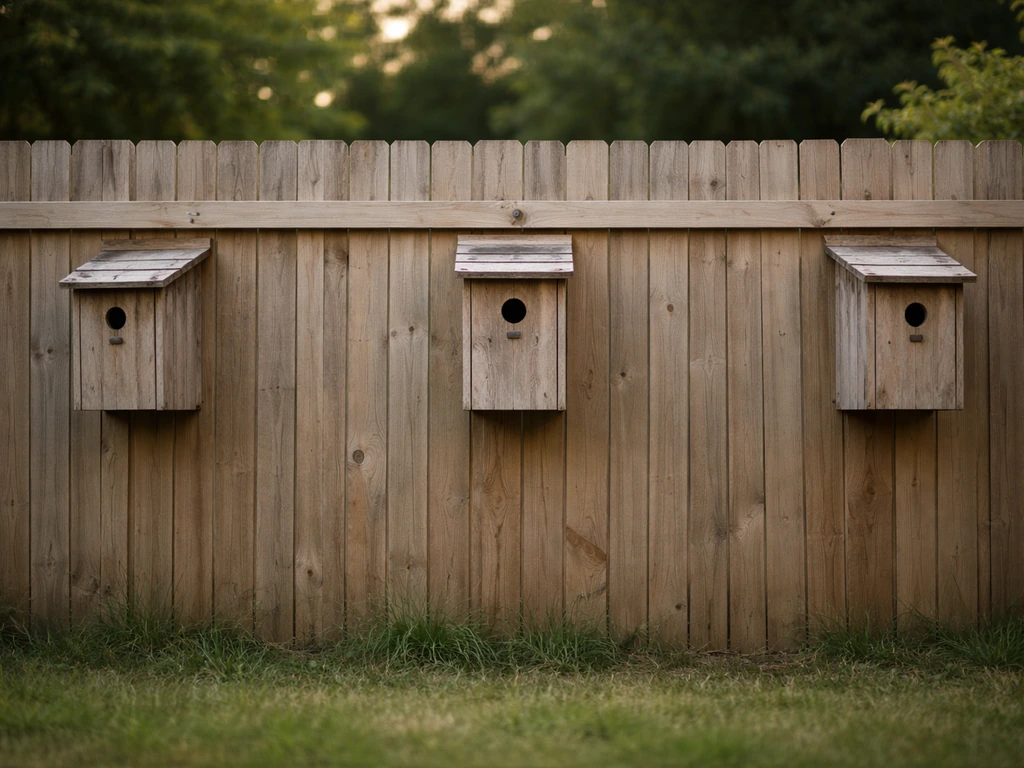
Not all cavity nesters are colonial, and crowding boxes together is one of the most common beginner mistakes. Bluebirds are territorial nesters. Audubon recommends spacing bluebird boxes at least 300 feet apart, or placing them out of the line of sight from the nearest bluebird box entirely. Put two bluebird boxes closer than that and you will either get no occupancy in one of them, or constant interference fighting that stresses both pairs.
There is a practical exception called the paired-box technique: placing two boxes about 5 to 15 feet apart. A bluebird will typically claim one box and a tree swallow will claim the other, because they are not in direct competition. This is a well-regarded strategy for small yards where you can not achieve 300-foot separation between multiple bluebird boxes.
Wrens are the outlier. House wrens and Carolina wrens will tolerate much closer spacing to other species because their territorial behavior is centered on eliminating competing wren boxes, not all cavity nesters. Still, keep wren boxes a reasonable distance from your bluebird and tree swallow boxes. Wrens have a habit of filling nearby unused cavities with sticks to prevent other birds from using them.
Purple martins are fully colonial and need open-sky housing: a multi-unit martin house or a cluster of gourds on a single pole, positioned in open ground at least 40 feet (ideally 60 feet) from trees or buildings in every direction. The Purple Martin Conservation Association specifically warns against running wires between the martin pole and any nearby tree or structure, because those wires become predator highways.
Habitat type shapes which species will even bother to look at your box. Open lawn and meadow edges attract bluebirds and tree swallows. Dense shrubs and wood edges suit chickadees, titmice, and wrens. Proximity to water, even a small pond or rain garden, significantly improves occupancy for tree swallows and prothonotary warblers. Match the habitat to the species and you will not be fighting nature.
Predator protection and safety checks
This section makes the biggest difference to actual nesting success. Cornell Lab's NestWatch data shows that nest boxes with predator guards had success rates about 6.7 percentage points higher than boxes without them. That is a significant margin, and it is entirely within your control.
The single most effective thing you can do is mount your box on a smooth metal pole or PVC pipe rather than directly on a tree or wooden post. Raccoons, snakes, and squirrels can climb wood and bark easily. A smooth metal pipe is much harder to scale, especially when you add a baffle. NestWatch specifically recommends free-standing metal poles or PVC over trees for exactly this reason: it makes the predator-guarding job far simpler.
Add a baffle to the pole below the box. Cone-type baffles and stovepipe baffles are both well-supported by NestWatch data as effective guard types. A stovepipe baffle is a simple cylinder (about 8 inches in diameter and 24 inches long) mounted around the pole so predators can not grip past it. Cone baffles work similarly. Mount the baffle so its bottom edge is at least 4 feet off the ground, because raccoons can reach and grab from a jump. Plan for the baffle during installation rather than adding it as an afterthought; it is much easier to slide a stovepipe baffle onto a pole before the box goes on top.
The entrance hole itself is your second line of defense. An entrance hole that is the correct size for your target species keeps out starlings and larger predators. A 1.5-inch hole works for bluebirds and tree swallows but is too small for starlings. If you have a box with an entrance that is slightly too large, add a hole restrictor plate (a wooden or metal plate with the correct hole size drilled into it) on the face of the box. Entrance hole extenders, small tubes that increase the depth of the hole passage, are also listed by NestWatch as a guard type associated with improved nesting success because they make it harder for a predator's arm to reach inside.
Avoid any wires, ropes, or branches within arm's reach of the box. A wire running from a tree to your martin pole, a nearby vine growing up the post, or a branch overhanging the roof all give climbing predators a route that bypasses your baffle entirely. Clear anything that connects to the pole or box from the outside world.
When you do nest checks (which you should do roughly weekly once a nest is established), do them in the morning. Michigan Bluebirds recommends morning checks specifically so that any human scent on the box has time to dissipate before raccoons and other predators are most active in the evening. Open the box, take a quick look, close it gently, and move on. Lingering too long or visiting repeatedly in a single day causes more disturbance than it prevents.
When to put the box up, and how to keep it working season after season
Timing matters more than most people realize. In most of the continental United States, the target window for getting boxes up is late winter to very early spring, roughly late January through March, before scouts are out looking for nest sites. In warmer southern states, bluebirds may start scouting in late January. In northern states and Canada, early March is usually fine. The rule of thumb is: have the box installed before your target species returns or becomes active locally. Check your regional arrival dates using eBird or a local Audubon chapter if you are unsure.
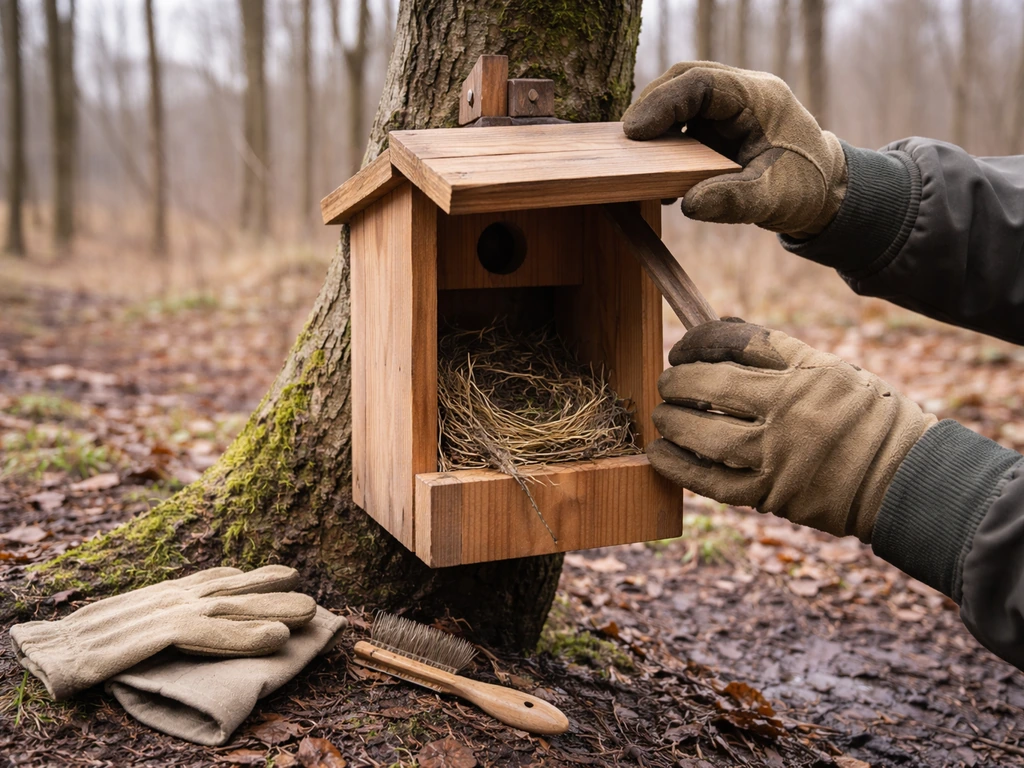
Many species raise more than one brood per season. Between broods is a good time for a quick clean-out. Remove the old nest material, check for mites, blow out any debris, and let the box air for a day before the next nesting attempt. Do not remove an active nest with eggs or nestlings; that is protected under the Migratory Bird Treaty Act for native species.
If you find unhatched eggs or deceased young after a brood has concluded, remove and dispose of them away from the nest box area. NestWatch recommends this specifically because decomposing material attracts insects that can infest the next nest.
At the end of the nesting season, usually September or October in most regions, do a full clean-out and inspection. Remove all nest material, scrub the interior with a stiff brush (no soap or chemicals needed; hot water works), let the box dry completely, and then check the hardware. Tighten any loose screws, reseal any cracks, replace a warped roof if needed, and confirm the baffle is still firmly mounted. Audubon recommends this end-of-season clean and repair as the standard close-out routine. Some birders leave the cleaned box open or lightly plugged through winter so it can be used as a roost box by small birds sheltering from cold. That is optional but a nice conservation bonus.
Common placement mistakes and how to fix them
Low or zero occupancy is the most common frustration, and the cause is almost always one of a handful of fixable placement problems. Here is how to diagnose and correct them. Once the location is settled, you can follow the same practical steps to install bird house hardware and set the box securely.
| Problem | Likely Cause | Fix |
|---|---|---|
| Box goes unused for a full season | Wrong habitat, too close to traffic, or wrong species for the area | Relocate to open or semi-open edge habitat; add 50-ft buffer from activity zones |
| Nest started, then abandoned | Predator disturbance, overheating, or flooding | Add or upgrade baffle; tilt box slightly forward; check for standing water in box floor |
| House sparrows take over | Box too close to buildings or feeders | Move box 75+ ft from feeders and structures; use 1.25-in hole for wrens if sparrows dominate |
| Starlings take over | Entrance hole is too large | Add a hole restrictor plate sized to target species |
| Two boxes compete with each other (bluebirds) | Boxes too close together (under 300 ft apart) | Relocate one box beyond 300 ft, or use paired-box method with a tree swallow box 15 ft away |
| Nest fails repeatedly despite no predator sign | Direct afternoon sun overheating nestlings | Reorient entrance to face east or southeast; add shade with a nearby shrub or post extension |
| Box is used but success rate is low | No predator guard on pole | Install a stovepipe or cone baffle on the mounting pole below the box |
One more thing worth flagging: if you mounted your box directly on a tree trunk, that is a common setup that unfortunately invites predator problems. Squirrels, raccoons, and snakes navigate tree bark effortlessly. If your box is on a tree and you are seeing repeated nest failures, the most effective fix is to relocate it to a free-standing pole with a baffle rather than trying to add a guard to the tree itself.
It is more work upfront, but the improvement in success rate is well worth it. The related topics of how to hang and how to mount a bird house go deeper into the specific hardware and techniques for different pole and hanging setups if you need more detail on the mechanical side.
Getting a bird house up is not complicated once you understand the logic behind the placement decisions. Height, orientation, habitat, spacing, and predator-proofing all reinforce each other. Get those fundamentals right, keep up with seasonal monitoring and cleaning, and you will almost certainly have nesting birds by your second season if not your first.
FAQ
Can I put a bird house on a tree instead of a pole if I add a baffle?
You can try, but tree mounting is still a common failure point because predators can use bark, branches, and natural footholds to bypass the guard. If you are seeing repeated nest losses or low occupancy, the most reliable fix is relocating to a smooth metal or PVC pole with a baffle, rather than spending time trying to predator-proof the tree itself.
How do I choose the right entrance direction if east or southeast is not available?
Use the best available shelter from prevailing wind and storms, aiming to avoid west and northwest exposure when possible. If you cannot face east/southeast, prioritize shade and weather protection (partial shade, overhead cover that does not block the entrance) because overly baked or overly wet conditions can reduce occupancy even when the entrance faces “okay.”
What if my yard only has room for one or two boxes, not the recommended spacing?
For species like bluebirds, use the paired-box technique (two boxes closer, but not competing) by placing them far enough apart to reduce direct interference while keeping them within your ability to monitor. Also consider matching species to habitat instead of stacking multiple similar boxes in one small zone.
Do I need to remove old nests every week or only after the birds finish?
Only do a full clean-out between nesting attempts or at the end of the season. During an active nesting period, keep checks quick and visual, no rummaging. If you find a completed nest with unhatched eggs or deceased young after the brood ends, remove it promptly and dispose of it away from the box area to reduce insect attraction.
How can I tell if low occupancy is a predator problem or a placement problem?
Predator pressure often shows up as sudden nest failure, damaged eggs, missing nesting material, or disturbances late in the day. Placement problems show up as long stretches with no bird interest, especially when the box sits in high-traffic areas, lacks nearby perching/foraging habitat, or is too close to feeders that attract competitors like house sparrows.
Is it safe to monitor in the afternoon or should I only check in the morning?
Morning checks are strongly preferred because it reduces the chance that lingering human scent coincides with peak predator activity later in the day. If you must check at another time, keep visits brief and avoid repeated returns within the same day, since frequent disturbance can matter even when predators are not directly observed.
What should I do if my entrance hole size does not match the species I want?
Match the hole to the target cavity-nester. If the hole is slightly too large, add a hole restrictor plate to reduce access by larger competitors. Avoid switching by “hoping” birds will adapt, because starlings can exploit even modestly oversized entrances.
Do I need a ventilation gap or specific drainage on the box?
You should use boxes designed for nesting, not modified DIY interiors, because proper ventilation and moisture management help reduce condensation and rot. If your box lacks ventilation holes or seems to collect water at the bottom, fix the design before the season rather than relying on location changes.
What materials are best for predator guards and baffles?
Prioritize guards that are designed for nesting boxes: a properly sized cone or stovepipe baffle on a smooth pole works better than improvised barriers. Plan the baffle during installation so it can be mounted without awkward retrofitting that can leave gaps predators may use.
Should I leave the bird house up over winter after I clean it out?
Many people do, and it can become a roost shelter for small birds, which is a bonus. If you leave it up, keep it secure and verify the baffle is still firmly mounted, since winter weather can shift hardware and create vulnerabilities.