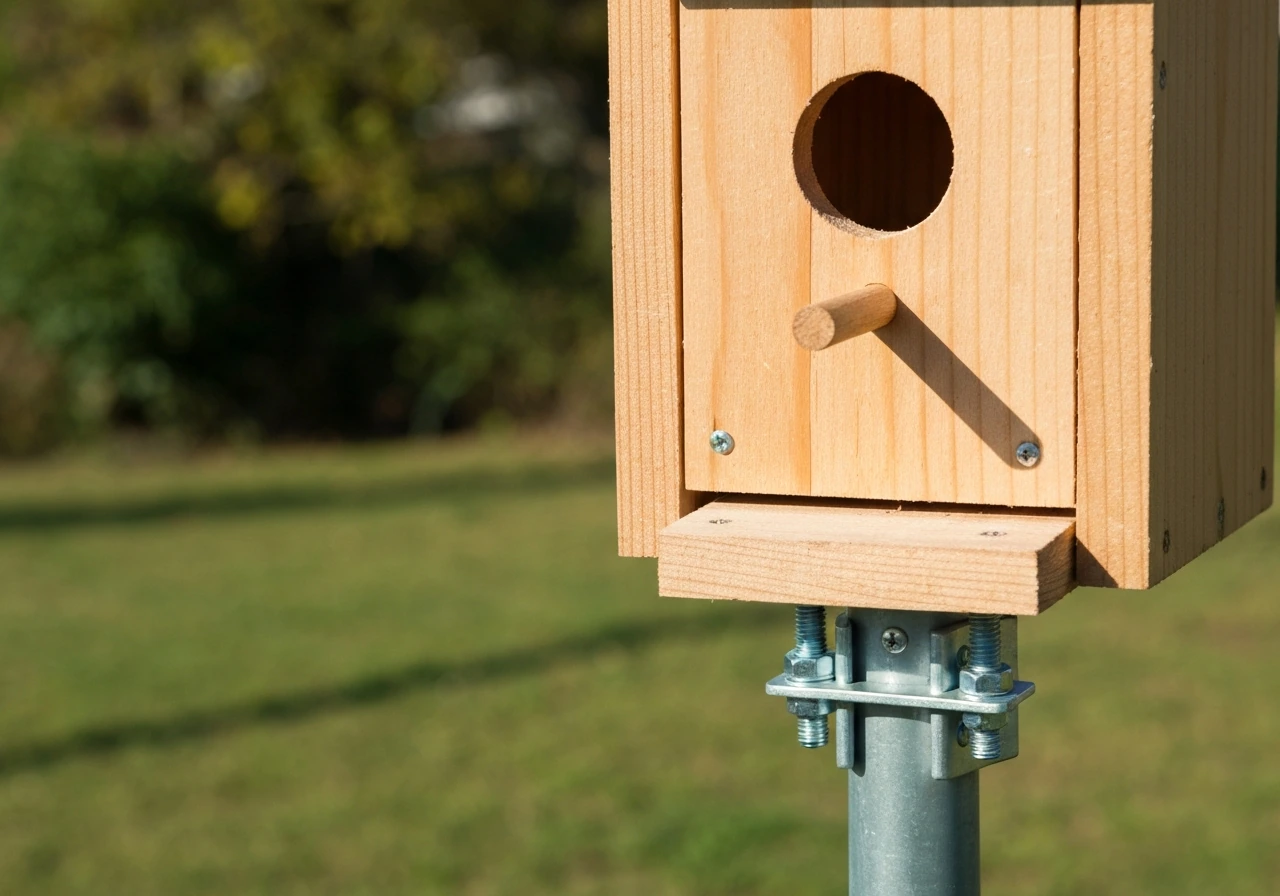
Installing a bird house correctly comes down to four things: picking a spot that matches the species you want to attract, mounting the box at the right height with hardware that won't loosen in a windstorm, adding a predator baffle before anything else gets in, and having the whole setup ready well before nesting season begins. Get those four things right and you'll have a box that birds actually use.
How to Install a Bird House: Placement and Mounting Steps
Maya Thompson
14 Jun 2026
Pick the right location in your yard
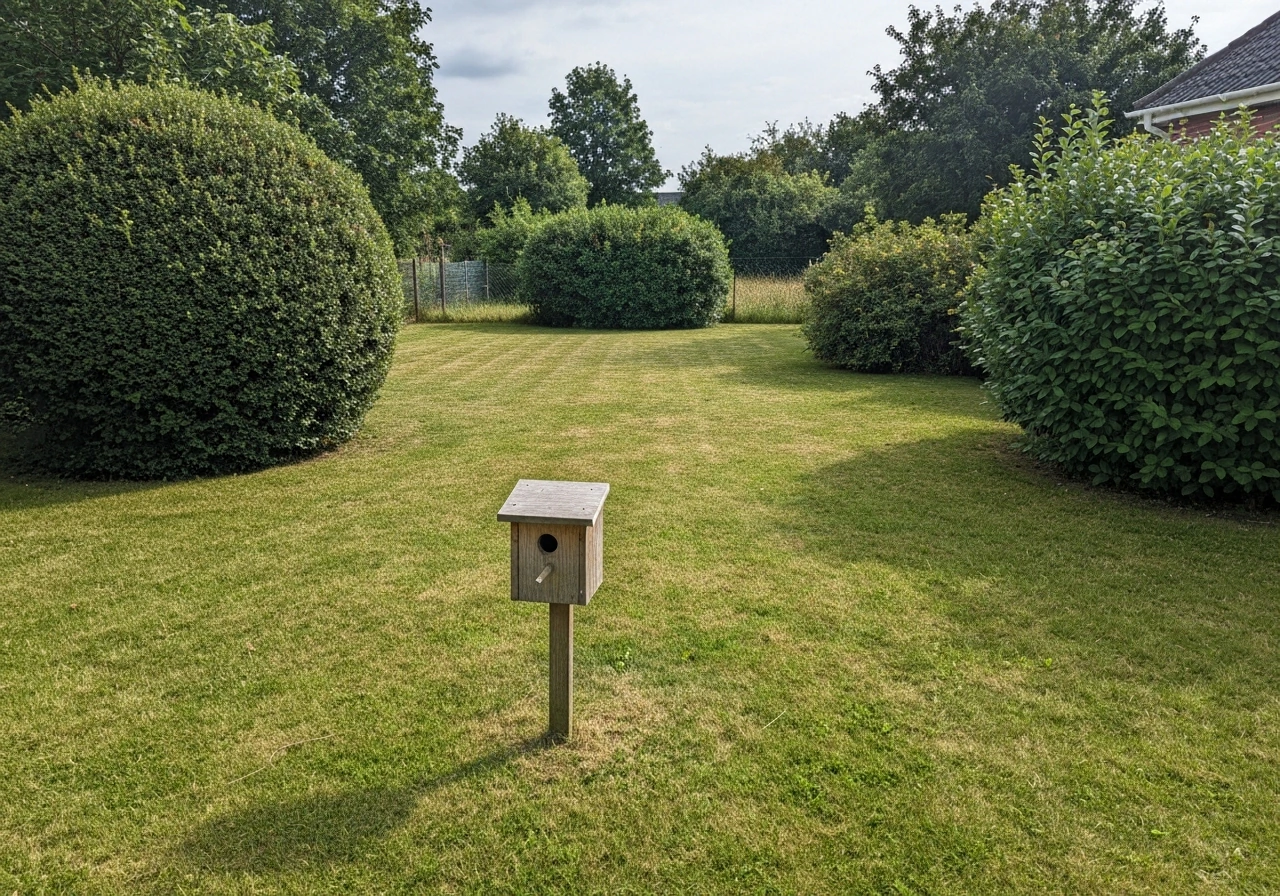
The single biggest mistake beginners make is picking a spot that's convenient for them rather than appropriate for the bird. The vegetation around a nest box tells a bird whether this is a safe, suitable territory. According to NestWatch, the surrounding habitat is one of the strongest predictors of whether a box gets used at all. So before you drill a single hole in a fence post, look at what's actually around the spot you're considering.
Bluebirds want open, mowed areas with minimal shrub cover, ideally at least 120 feet from a wooded edge. Tree swallows are similar but tolerate a little more edge habitat. Chickadees and house wrens want woody vegetation nearby, and wrens are flexible enough that any direction works as long as there's shrubby cover within about 100 feet. Matching the box location to the bird's habitat preference isn't optional if you want occupancy.
Beyond habitat type, a few practical rules apply to every installation. Keep the box away from high-traffic areas like patio doors, walkways, and children's play spaces. Avoid placing it directly next to a bird feeder, since feeder activity draws sparrows and starlings that aggressively compete with native cavity nesters. Aim for a spot that gets morning sun and afternoon shade if possible, which keeps the interior from overheating. Face the entrance hole away from the direction of your prevailing winds to keep rain from blowing directly into the box.
Choose mounting height and orientation
Height and entrance-hole direction both affect whether a bird feels safe enough to nest. The good news is that the acceptable ranges are forgiving, so you don't need to hit an exact number. What matters is staying within the species-appropriate zone and making sure the box is level or very slightly tilted forward (a few degrees) so rain drains away from the entrance.
| Species | Recommended Height | Entrance Hole Direction | Habitat Notes |
|---|---|---|---|
| Eastern Bluebird | 4–6 ft | East, toward open area | Open fields, 120+ ft from wooded edge |
| House Wren | 5–10 ft | Any direction | Within ~100 ft of woody vegetation/shrubs |
| Black-capped Chickadee | 5–15 ft | Away from prevailing wind | Wooded edges, yards with trees |
| Tree Swallow | 5–6 ft | South or east | Open areas near water if possible |
| Carolina Wren | 5–10 ft | Any direction | Dense shrubs, brushy yards |
For most common backyard species, mounting between 5 and 6 feet off the ground is a practical sweet spot. It's low enough to monitor and clean without a ladder, high enough to deter casual disturbance. Texas Parks and Wildlife recommends at least 5 feet on a metal pole for bluebirds and wrens specifically. If you're mounting higher for chickadees or woodpeckers, a stepladder and a second person make the job much safer.
Prep the mounting surface and gather tools and hardware
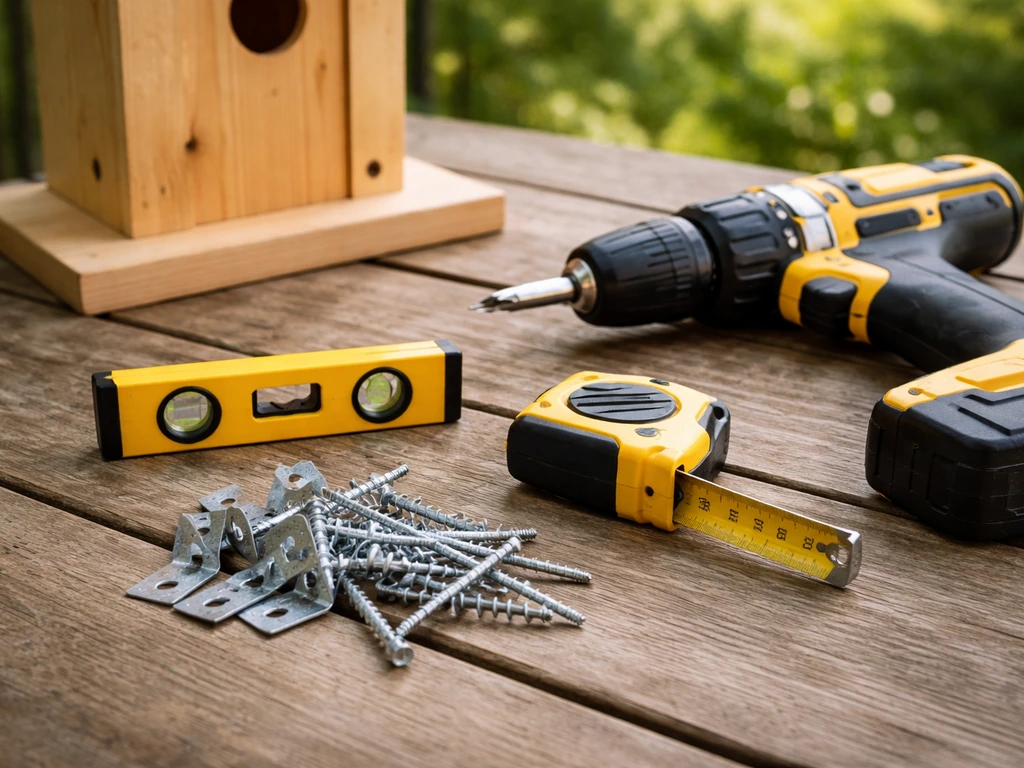
Good hardware is what separates a box that's still level after three years from one you find on the ground after the first thunderstorm. NestWatch specifically calls out that boxes need to be secured well enough to handle high winds and severe weather. That means using corrosion-resistant fasteners and mounting to a stable surface, not a flimsy stake or old fence board that's already rotting.
What you'll need
- Galvanized or stainless steel screws (1.5–3 inch, depending on mounting method)
- A smooth metal pole (EMT conduit, 1/2 inch to 3/4 inch diameter, works well for most setups) or a 4x4 cedar/treated wood post
- Post driver or post-hole digger if setting a ground post
- Lag screws or carriage bolts with washers for attaching the box to a post
- A level (a small torpedo level is enough)
- Drill with appropriate bits
- Predator baffle (cone or stovepipe style, chosen before the box goes up)
- Optional: hose clamps if the box mounts with a bracket to a conduit pole
Before you go outside, check the box itself. A good birdhouse should have at least four drainage holes in the floor, each 3/8 to 1/2 inch in diameter. Make sure ventilation gaps or holes exist near the top of the side walls. If your box is missing these, drill them before mounting. Also confirm you can open the box easily for monitoring and cleaning later, either via a hinged side panel or a removable roof. If access is difficult now, it'll be nearly impossible once the box is mounted.
Mounting methods that keep the house secure
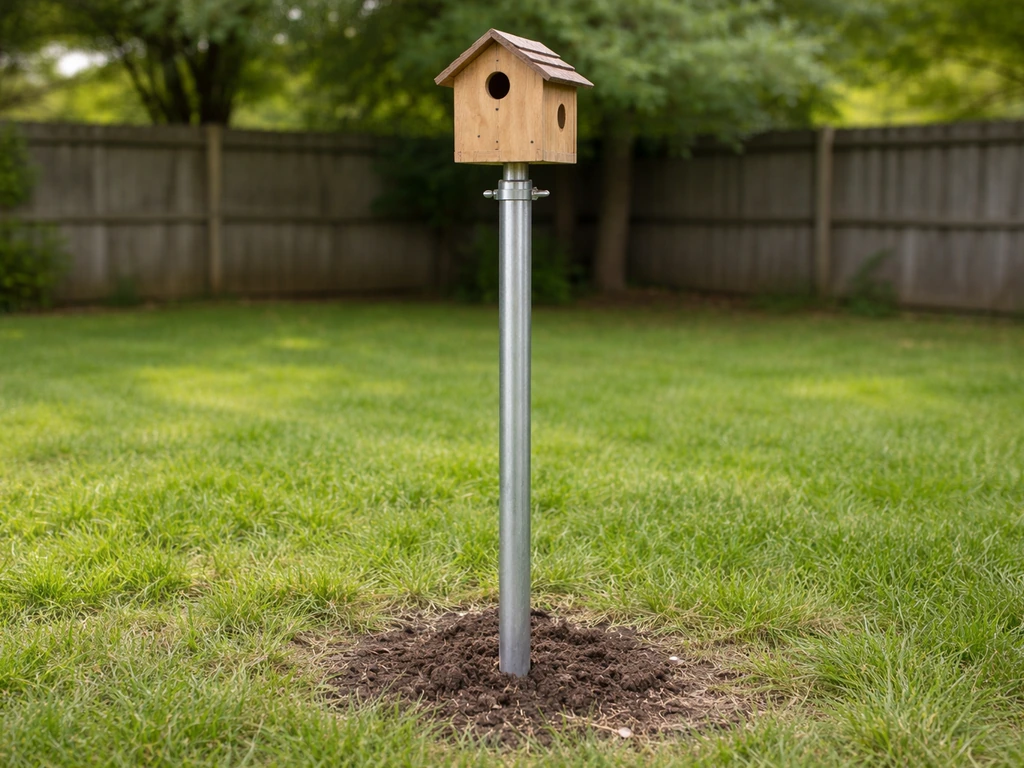
A metal conduit pole is the best all-around mounting option for most yards. It's smooth (which alone deters some climbing predators), easy to drive into the ground, lightweight, and cheap. Drive the pole 12 to 18 inches into the ground for stability, or use a ground anchor designed for EMT conduit. Attach the box to the pole using a mounting bracket and hose clamps, or through a pre-drilled mounting hole in the back of the box.
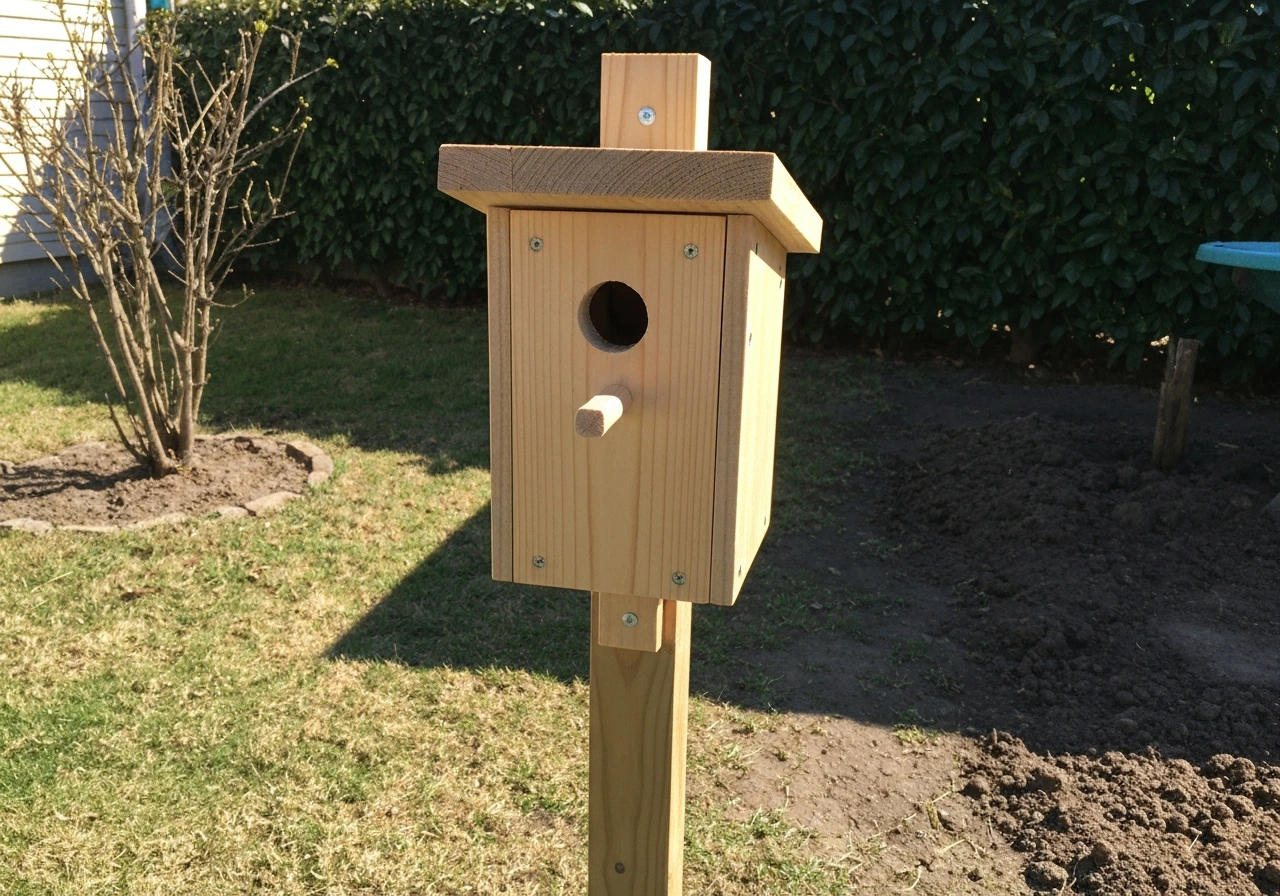
Wooden posts, either 4x4 pressure-treated or a natural cedar post, work well too and look more natural in a garden setting. Set them at least 18 to 24 inches into the ground (deeper if your soil is sandy). Use two lag screws or carriage bolts with washers to attach the box through its back panel. Don't rely on a single nail or screw at the top; it'll pivot and the box will tilt over time.
Tree mounting is a common approach but comes with real trade-offs. It's harder to add a baffle, squirrels and raccoons have a natural highway directly to the box, and screw damage to the tree can introduce disease. If you do mount to a tree, drive a single lag screw through the back panel (not multiple screws that could girdle the tree as it grows), and accept that predator protection will be harder. Hanging a box from a branch using wire or rope is generally not stable enough for nesting birds, since the box swings in the wind. For more detailed guidance on tree-specific techniques, the topic of how to hang a bird house on a tree goes deeper into those trade-offs. For additional tree-mounting tips, see our guide on how to hang a bird house safely.
However you mount the box, finish by holding a level against the bottom or back and confirming it's plumb or very slightly forward-tilted. Give it a firm push from the side and top once it's up. If it wobbles, fix it before birds investigate. A box that shifts or sways will be abandoned.
Predator-proofing and safe access for cleaning
This step is easy to skip and genuinely shouldn't be. NestWatch data shows that nests in boxes with predator guards had success rates 6.7% higher on average than those without. That's not a marginal gain; over several nesting seasons, it's the difference between a box that produces fledglings and one that repeatedly gets raided.
Choosing and installing a baffle
Cone baffles and stovepipe baffles mounted on the pole below the box are the most effective options for stopping climbing predators like raccoons, cats, and rat snakes. Install the baffle onto the pole before you mount the box. Maryland DNR guidance specifically emphasizes this: slide the baffle onto the pole first, position it so it sits at least 4 feet off the ground and hangs freely, then mount the box above it. A cone baffle should be at least 18 inches in diameter so a raccoon can't reach around it.
An entrance hole extender (a block of wood 1 to 1.5 inches thick added around the entrance hole) makes it harder for a raccoon or jay to reach in and pull out eggs or nestlings. Combined with a pole baffle, this double-layer approach gives you the best protection. NestWatch's data confirms that entrance extenders, cone baffles, and stovepipe baffles are among the most effective guard types. Note that no guard stops every predator: guards marketed as deterring snakes (like some wire Noel guards) have limited effectiveness, and the Tennessee Wildlife Resources Agency notes limitations of various guard types for snakes specifically.
Keep the area around the pole clear of tall grass, shrubs, and overhanging branches. Nearby vegetation gives predators a launch point to bypass even a well-placed baffle. Also avoid placing bird feeders within 30 feet of a nest box since feeder activity attracts the exact predators you're trying to keep away.
Building in easy access for cleaning
Design your monitoring access into the installation from the start. The box should open with one hand using a simple latch, not screws you have to back out every time. Once the nesting season ends and birds have fledged, remove old nesting material completely. If fecal matter is present on the interior walls, wash the box with a 1 part bleach to 10 parts water solution, rinse it thoroughly, and let it dry fully in the sun before closing it back up. Never put insecticides, diatomaceous earth, or any chemical treatment inside the box, even when it's empty. Residues can harm early nestlings in the following season.
Season and timing: when to install and what to check afterward
Earlier is almost always better. NestWatch advises installing boxes well before breeding season begins, and that means late winter for most species. Bluebirds, for example, often start investigating nest sites in late February or early March in many parts of the country, and the Maryland and North Carolina Bluebird Societies both recommend having boxes in place by the end of February. If you're reading this in spring and haven't put your box up yet, put it up today anyway. A late installation can still catch second broods.
| Species | Typical Nesting Season | Ideal Box Install Deadline |
|---|---|---|
| Eastern Bluebird | March–August | February |
| Tree Swallow | May–July | Late March |
| Black-capped Chickadee | April–July | Late March |
| House Wren | May–August | April |
After installation, do a quick stability check before walking away. Push the box firmly in each direction, look for any wobble in the pole or post, and confirm the entrance hole is oriented correctly relative to your prevailing wind. Come back a week later and check again. Posts settle, especially in softer soils after rain, and a box that was plumb on install day can shift before any bird investigates it.
Once the season is underway, monitor the box every week or two if possible. Keep your visits brief and calm. If you see activity in the box, note what species is using it and avoid opening it during incubation or early brooding. If the box sits empty all season, don't move it immediately; try relocating it in the fall or the following winter to a slightly different spot. Even a shift of 20 to 30 feet can make a difference if habitat conditions are better in that direction.
The biggest thing to take away: installation is more than hammering a box to a post. A correctly chosen location, the right mounting hardware, a baffle in place before the first bird looks at the box, and a clean interior going into spring are what separate a productive nest box from a decorative one. Once you have the box location, height, hardware, and predator protection sorted, you can put it up with confidence put up a birdhouse. Knowing how to mount bird house hardware correctly is the key step that helps keep the box secure and usable for nesting birds installation is more than hammering a box to a post. Get those basics right and you'll have birds in residence far sooner than you'd expect.
FAQ
If I do not know the prevailing wind direction, how should I orient the entrance hole?
It helps to mount the box so the entrance faces the prevailing wind, not the most common rainy wind. If you are unsure, observe where blowing rain typically comes from during storms and orient the hole to that pattern. Then do the “stability check” after a heavy rain, since pole and post movement can subtly change plumb alignment.
How can I tell if my bird house is secure enough before birds arrive?
Use a quick post-install check: press the pole or post from two directions at the base and watch for any flex or twisting. If you see movement, add more embedment (for EMT conduit poles, go deeper within the recommended range) or use a ground anchor rated for the pole size, then reattach the bracket with corrosion-resistant hardware.
Can I move a bird house after I install it, and when is it safe?
Yes, but only in specific seasons and with a plan. If the box is empty and no birds are incubating, you can relocate it in fall or winter for best results. Avoid moving it mid-season because a switch can abandon an active nest, and do not relocate a box that has signs of active use (adults carrying food, fresh droppings at the entrance).
Is it okay to add a predator baffle after the birds have started using the box?
Do it before nesting season. A good approach is late winter setup, then only adjust baffles or hardware if there is no nesting activity. If you must modify anything during spring, schedule it for times when you are confident there are no eggs or nestlings inside, since opening the box at that stage can increase abandonment risk.
What should I do if the box wobbles after installation?
If you see wobbles, do not “wait and see.” Re-tighten or re-seat the mounting (bracket to pole, bolts through the back panel) and confirm the box is plumb or slightly forward-tilted. A shifting box often gets abandoned because it feels unstable during entry and feeding.
If I mounted it at the wrong height, can I fix it later?
Most species can tolerate small height differences within a reasonable range, but too low increases disturbance and predation. If you mounted far from the recommended range, adjust before birds start investigating, ideally before late winter into early spring. If it’s already mid-spring, minimize disturbance and consider relocating only after the breeding season ends.
How do I know my drainage and ventilation are correct once the box is mounted?
Avoid very small drainage holes that can clog with debris, and confirm you have the minimum number of openings. After drilling, rinse off sawdust and make sure the floor holes are open and centered so water can actually escape. Also verify ventilation openings near the top so the interior dries well after rain.
Do mothballs, sprays, or powders help keep predators away from bird houses?
Typically, no. Many “deterrent” products are not reliable for every predator, and some can leave residues or odors. The safer route is to focus on well-installed predator baffles, keep tall grass and overhanging branches trimmed back, and avoid placing the box next to high-traffic areas or feeders that attract aggressive competitors.
What is the best way to clean a bird house between seasons?
Clean the box after nesting ends, not during active use. For winter storage, remove old nest material completely, wash with a diluted bleach solution only when the box is empty, rinse thoroughly, and let it dry fully in sun. Do not treat the interior with insecticides or dusts, even if the box looks empty.
What should I do if I have a bird feeder close to the nest box?
If feeders are attracting starlings or sparrows, move the feeder farther away rather than shortening the nesting-guard plan. A practical rule is to keep feeders well away from the nest box area, since feeder activity can increase predator presence and competition pressure. Then re-check your baffle and keep vegetation trimmed within the reach of bypassing predators.
Can I mount a bird house on a tree instead of a pole?
Yes, but be cautious about the trade-offs. Trees can be acceptable in some yards, but they make baffles harder to install and bypass risk higher. If you choose tree mounting, use a technique that avoids multiple screws that can harm the tree, accept that predator protection may be less complete, and do not rely on hanging methods that allow swinging.
If no birds use the box, what steps should I take first?
If the box stays empty for a season, do not immediately move it every time you see no activity. First verify habitat match, ensure morning sun and afternoon shade, and confirm the baffle and entrance orientation. Then relocate in fall or winter to a slightly different position (even 20 to 30 feet can matter) where habitat conditions are improved.
How often should I re-check the box orientation and stability?
Even a well-mounted box can be compromised by post settlement or loosened hardware after heavy weather. Recheck a week later, then again after the first major storms. A short, calm stability check is faster than waiting until you notice the box has shifted or birds stop visiting.
Next Article
How to Mount a Bird House on a Pole Step by Step
Learn how to mount a bird house on a pole with stable hardware, right height and direction, predator-proofing, and upkee