Hanging a bird house correctly comes down to four things: picking the right spot, mounting it at the right height, securing it so it won't wobble or fall, and protecting it from predators. Get those four things right and birds will move in. Skip one and you'll likely end up with an empty box. This guide walks you through every step, whether you're attaching a box to a fence post, sinking a dedicated pole, or hanging one from a branch or eave.
How to Hang a Bird House: Best Mounting Tips for Any Yard
Maya Thompson
11 Apr 2026

Picking the right spot and height
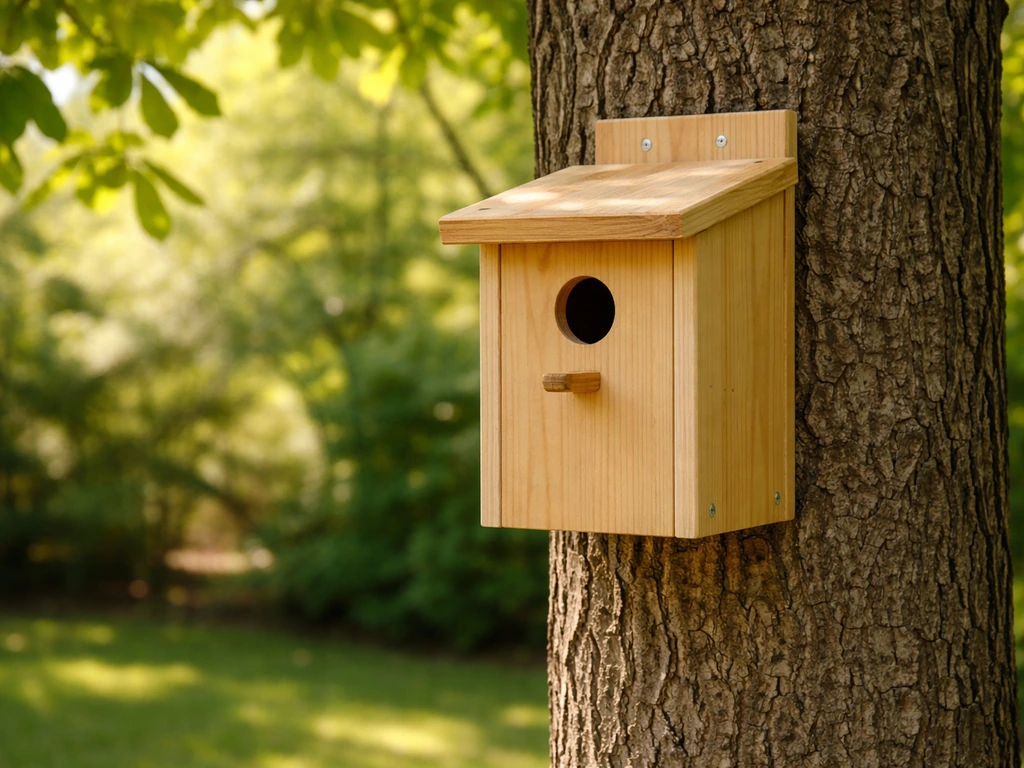
Location is the first decision and probably the most important one. Birds are choosy about habitat, and a box mounted in the wrong microhabitat simply won't get used. Before you grab a drill, think about which species live in or visit your yard and what kind of cover surrounds the spot you have in mind.
A good rule of thumb from NestWatch is to aim for 40 to 60 percent sunlight at the box location for most common backyard nesters like chickadees. Full shade keeps the interior too cool early in the season, and full sun can overheat nestlings in summer. A spot that gets morning sun and afternoon shade is close to ideal in most regions.
Height depends entirely on the target species. Here are the ranges you'll need most often for common backyard birds:
| Species | Mounting Height | Entrance Hole Size | Preferred Habitat |
|---|---|---|---|
| Black-capped Chickadee | 5–15 ft | 1 1/8" round | Forest edges, woodlots |
| Carolina Wren | 3–6 ft | 1 1/2" round or 2 1/2" x 5" slot | Thick underbrush, suburban gardens |
| Eastern/Western Bluebird | 4–6 ft | 1 1/2" round | Open fields, meadows, fence lines |
| Tree Swallow | 4–8 ft | 1 1/2" round | Open areas near water |
| House Wren | 4–10 ft | 1" round | Shrubby backyards, woodland edges |
Don't mount a bluebird box at ten feet just because it feels more secure up there. Bluebirds and wrens don't need to be mounted very high, and keeping them at the lower end of their range (4 to 6 feet for bluebirds) actually makes monitoring and cleaning far easier. Higher is not always better.
Fence, post, or hanging: which mount works best
There are three realistic options for most backyards: attaching the box to a fence or existing post, mounting it on a freestanding pole you install yourself, or hanging it from a tree branch or structure overhang. Each has real trade-offs.
Fence or existing post
This is the easiest install, but it comes with a significant caveat: a fence connected to any other structure (a wall, a shed, a tree) gives climbing predators a highway straight to the box. Nestboxbuilder.com warns that mounting a nestbox on a tree trunk or on a post without a baffle can increase predation risk, and it recommends a safer mounting approach that includes appropriate predator protection blank" rel="noopener noreferrer">significant caveat. The Tennessee Wildlife Resources Agency puts it plainly: blank" rel="noopener noreferrer">never place a box on a tree, fence post, or any structure where you cannot attach a predator guard. If your fence is freestanding and you can wrap a baffle around the post below the box, a fence mount works fine. If not, skip it.
Freestanding pole or metal post
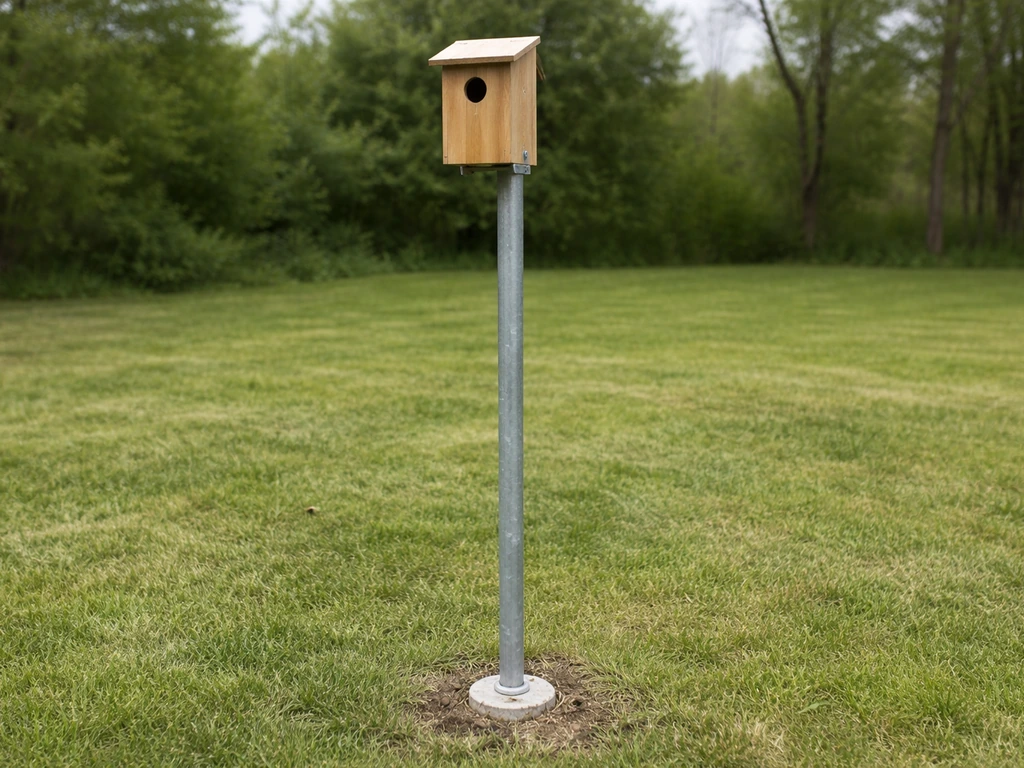
A dedicated metal or wooden pole is the gold standard for most open-yard species like bluebirds and tree swallows. It lets you place the box exactly where you want it, away from any connected structures, and it's the easiest mount to fit with a predator baffle. Use a 1/2-inch EMT conduit or a purpose-made bluebird pole. Sink it at least 18 to 24 inches into the ground (or use a ground anchor) so it doesn't rock. Mounting a bird house on a pole is also the most flexible option since you can reposition the box if birds don't respond in the first season.
Hanging from a branch or eave
Hanging boxes from a tree branch or porch eave works well for wrens and chickadees, which are comfortable nesting in wooded or semi-wooded spots. The downside is swing: a box that rocks in the wind is stressful for nesting birds and can spill eggs. Use a short, rigid hanger rather than a long rope. Limit any movement to an inch or two, and keep the chain or wire as short as practical. If you go this route, read up on the specifics of how to hang a bird house on a tree safely without damaging the bark or creating a predator-access point.
| Mount Type | Best For | Predator Risk | Ease of Install | Recommendation |
|---|---|---|---|---|
| Freestanding pole | Bluebirds, Tree Swallows | Low (with baffle) | Moderate | Best overall |
| Fence/existing post | Wrens, Chickadees | High unless baffled | Easy | Only if baffle is possible |
| Tree branch/eave | Wrens, Chickadees | Moderate | Easy | Good for wooded yards |
Hardware and how to mount it securely
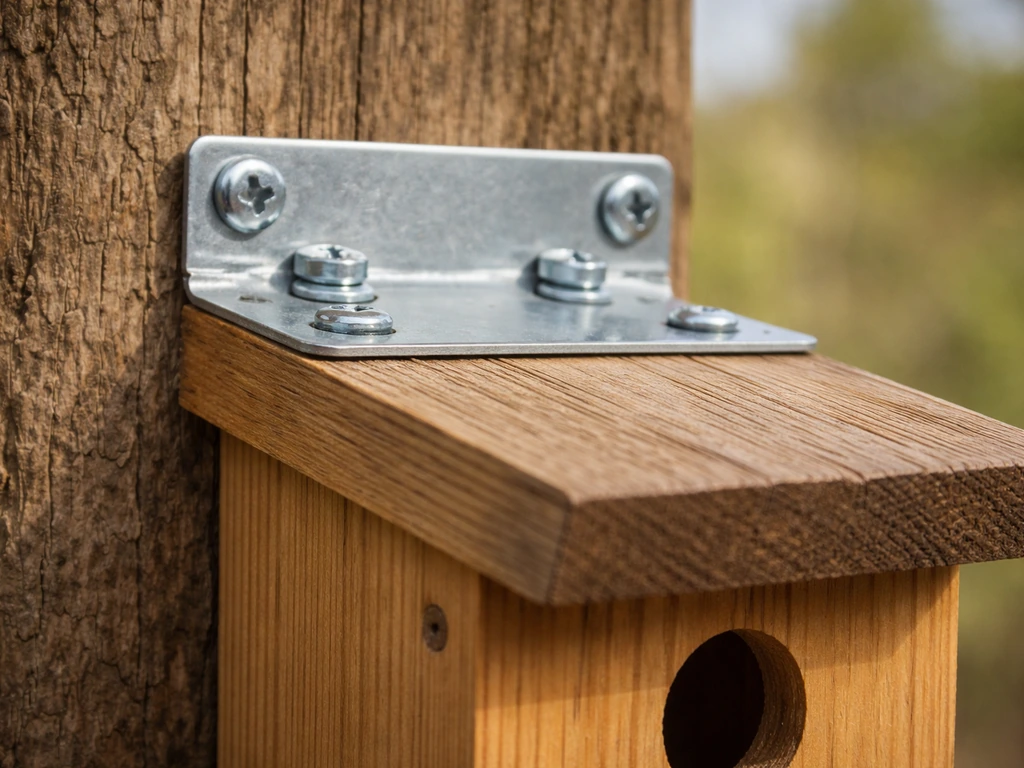
The right hardware makes the difference between a box that's still level three years from now and one that slowly tilts and eventually falls. Here's what you need for each scenario.
What to use
- Galvanized or stainless steel screws (not nails): 1 5/8" deck screws for attaching a mounting plate to the box, 3" screws for attaching the plate to a wooden post
- A sturdy mounting plate or cleat: a 3/4" plywood cleat cut to match the box's back works well and spreads the load
- For pole mounting: a hose clamp or purpose-made box bracket that wraps around the conduit
- For hanging: a stainless steel screw eye rated for outdoor use, plus galvanized chain or aircraft cable; avoid thin wire that can rust and snap
- A level (even a small torpedo level): takes 30 seconds and prevents the box from looking like it's leaning into a storm forever
Avoid nailing directly through the floor or sides of the box into a post. It works short-term but splits wood over time and makes cleaning nearly impossible. A removable cleat or bracket lets you take the box down for seasonal cleaning without destroying the mount.
When attaching to a tree, use a single lag screw rather than wrapping wire around the trunk. Wire cuts into bark and can girdle and kill the tree. One screw causes minimal damage and holds the box firmly. For more detail on tree-safe fastening, the full walkthrough in how to install a bird house covers fastener types and load ratings in depth.
Step-by-step mounting process
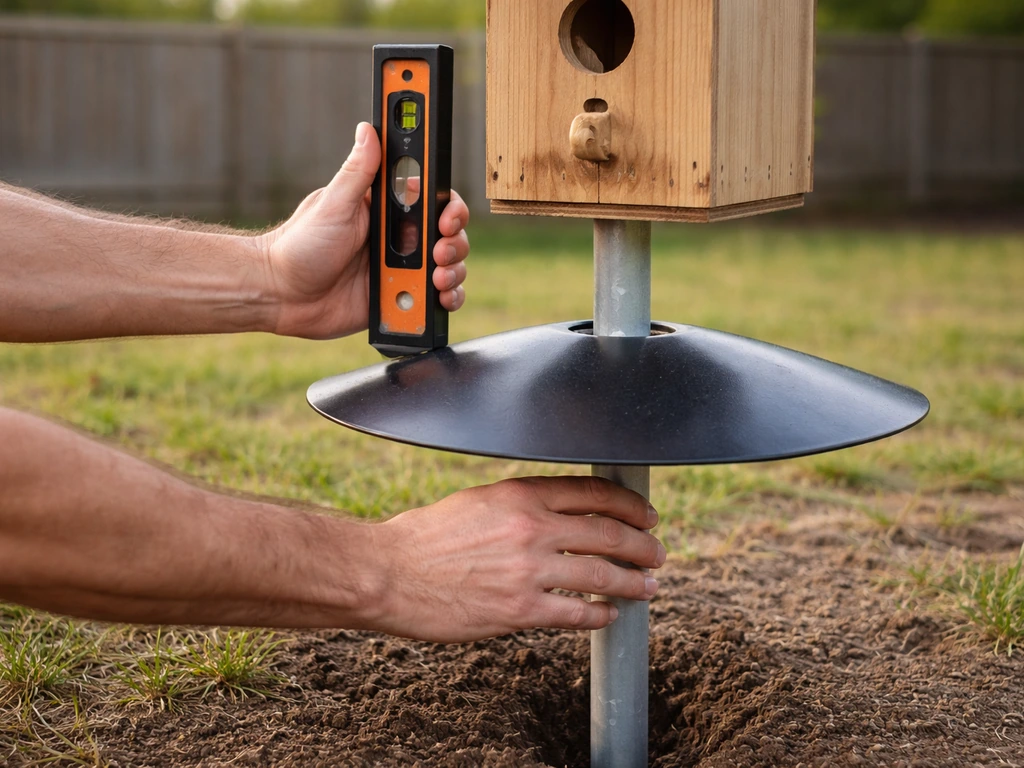
- Set the pole or post first. If using conduit, drive it at least 18 inches into the ground and check it's plumb with a level before attaching anything.
- Install the predator baffle on the pole before you put the box up. It's much harder to slide a baffle on after the box is already mounted.
- Attach your mounting bracket or cleat to the back of the box using two galvanized screws. Make sure it's centered so the box hangs straight.
- Hold the box at the target height and mark the attachment point on the pole or post. Have a helper hold it while you drill.
- Fasten the bracket to the pole. Check level side-to-side and front-to-back. A very slight forward tilt (about 5 degrees) helps rain drain away from the entrance.
- Tug the box firmly in all directions. It should feel completely solid. If it rocks even slightly, add a second fastener point.
Entrance direction, spacing, and keeping predators out
Which way should the entrance face
Face the entrance hole away from your prevailing wind. In most of the US that means avoiding a westerly or northwesterly facing, since cold spring storms typically come from those directions. Southeast or east-facing entrances are the most common recommendation and work well for most species. For bluebirds specifically, NestWatch notes that the entrance should face toward more open habitat rather than toward a wall, fence, or dense shrubs.
How far apart should boxes be
Most cavity-nesting birds are territorial about their nest site and will drive off others of the same species that get too close. For bluebirds and similar species, space boxes at least 100 yards apart if you want two active boxes. If you're deliberately pairing boxes (a common strategy where a bluebird and a tree swallow each take one of two boxes mounted close together), a spacing of 10 to 25 feet between paired boxes can work, but only because the two species don't directly compete. Don't place boxes near high-traffic areas like a busy path, a driveway, or right next to a bird feeder. The constant human and foot traffic stresses nesting birds.
Predator guards: not optional
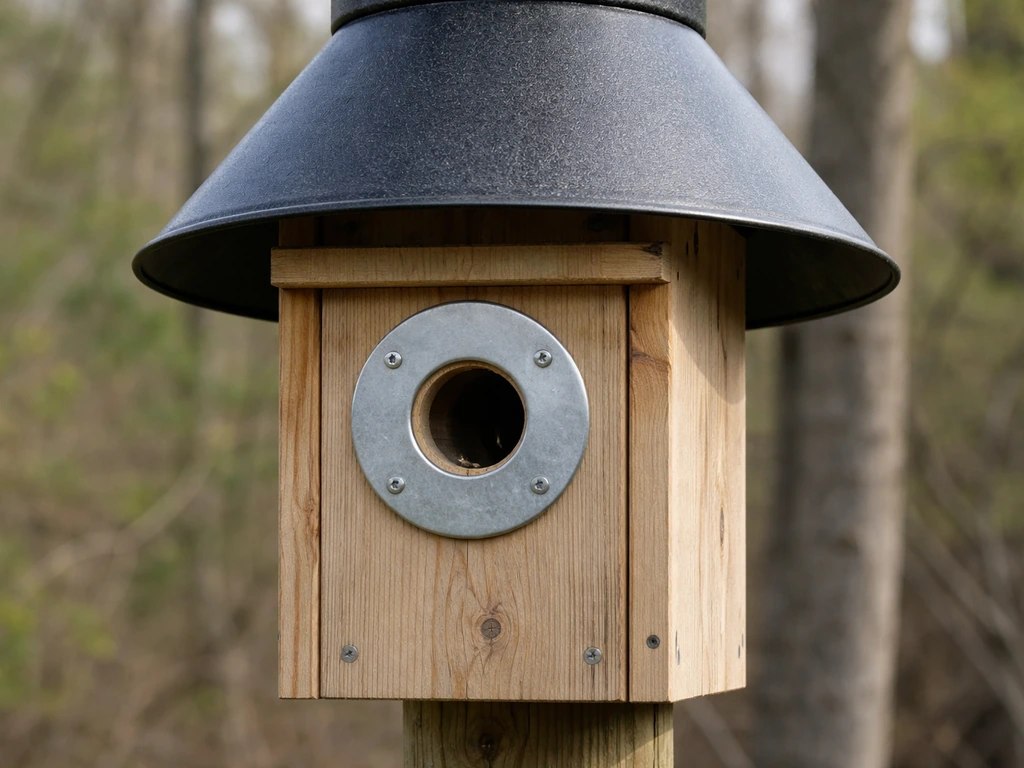
A predator guard (baffle) is one of the single most impactful things you can do to improve nesting success. For pole-mounted boxes, a stovepipe or cone-style baffle slipped onto the pole below the box blocks raccoons, cats, and most climbing snakes. Mount it so the top of the baffle is at least 4 feet off the ground and there's nothing nearby for a predator to jump from. Oklahoma Department of Wildlife Conservation recommends keeping boxes at least 6 feet from any trees and out from under overhanging branches specifically to cut off that jumping route.
For the entrance itself, a hole restrictor plate (also called a portal protector) made from 3/4-inch hardwood or metal prevents raccoons from enlarging the hole with their claws. Some designs also use a tube insert that extends the entrance depth to 3 or 4 inches, making it harder for a predator to reach inside. One honest caveat: tube-style entrance inserts reduce access for some predators but are generally not effective against snakes. A stovepipe baffle on the pole is your best snake deterrent.
If you need a detailed visual breakdown of baffle options and how to assemble them, the resources from the Texas Bluebird Society include diagrammed components that make the hardware easy to understand before you buy anything.
Matching the setup to the species
The entrance hole size is the most powerful tool you have for controlling which species uses a box. A 1 1/8-inch hole admits chickadees and excludes almost everything larger. A 1 1/2-inch hole opens it up to bluebirds and tree swallows. A 2-inch hole invites starlings, which are aggressive competitors you generally don't want. Always drill the hole to the species you're targeting, not slightly larger "just in case."
Habitat matters as much as the hole size. Chickadees nest at forest edges and woodlot margins, so a box on the edge of a yard that borders trees suits them well. Wrens thrive in thick underbrush and suburban gardens, which is why a low-mounted box (3 to 6 feet) tucked near a shrub border works better for them than an open-field pole. Bluebirds need open habitat with short grass for foraging, so a box in the middle of a lawn or along a fence line bordering a field is ideal. Putting a bluebird box in a wooded corner almost never works.
If you're setting up boxes for multiple species or trying a new species for the first time, the full guidance in how to put up bird houses covers species-by-species habitat matching in more detail and is worth reading before you finalize your placement.
When to hang it and what to do after
Timing: get the box up early
Birds start scouting nest sites well before they begin building. In the southeast, resident birds like chickadees and Carolina wrens can start nesting as early as mid-March. In the northeast, that timeline shifts about a month later, meaning boxes should be up by early to mid-March at the latest if you're in the north. A practical rule: have all boxes installed before the end of February. If you're reading this after mid-March, hang the box anyway. Late-season boxes still get used, especially by wrens and house sparrows scouting for second broods.
Setup checklist before you walk away
- Box is level side-to-side and has a slight forward tilt (5 degrees max) to shed rain
- Entrance hole faces away from prevailing wind, toward open habitat if applicable
- Predator baffle is installed on the pole, at least 4 feet above ground
- Box is at least 6 feet from any tree trunk or overhanging branch
- No wire or string is touching the bark of a nearby tree
- Mounting hardware feels completely firm with no rocking
- Ventilation holes at the top and drainage holes at the floor are unblocked
- The door or roof panel opens easily for monitoring access
Monitoring during the season
Once birds move in, check the box once or twice a week during the nesting season (roughly March through August), ideally in the afternoon when adults are more likely to be away foraging. Always tap the box gently before opening it to give any bird inside a chance to exit calmly. Keep checks brief, maybe 20 to 30 seconds, and close the door quietly. The one time to skip the check entirely: when you can see nestlings are large and almost ready to fledge. Opening the box at that stage risks a premature and dangerous early exit.
After the season: cleaning and structural check
Once nesting is complete for the year (typically by late summer), take the box down or open it and remove all old nesting material. Old nests harbor mites, blow fly larvae, and bacteria that reduce success in the following year. Scrub the interior with a stiff brush, rinse with a dilute bleach solution (one part bleach to nine parts water), and let it dry completely before closing it up. Then do a structural check: look for cracks in the wood, loose screws, and any damage to the entrance hole. Do this same structural check again in February or March before the next nesting season, when you can confirm the box is still upright, the mount is firm, and the baffle is undamaged from winter weather.
If any part of the mount or hardware feels compromised after winter, fix it before birds start scouting. A box that falls while eggs or nestlings are inside is a genuinely bad outcome. Preventive checks in late winter take ten minutes and are absolutely worth the habit.
FAQ
Can I hang a bird house on a balcony or deck railing?
Yes, but only if you can still meet the key requirements, especially a predator guard and the right microhabitat. A balcony can work for species that accept semi-urban placements, but you must ensure the box is not reachable from nearby rails, planters, or branches (since predators can jump from them). Also aim the entrance away from your prevailing cold winds and confirm the box will get the recommended 40 to 60 percent sunlight, not full sun all day.
What if I cannot add a predator baffle to my chosen mounting spot?
If you do not already have a predator guard that fits your exact mount, do not rely on “high up” to protect the box. Predators often scale posts, trees, and walls, then jump from the nearest surface. For pole mounts, use a cone or stovepipe baffle and keep the top of the baffle at least about 4 feet off the ground. For any fence or connected structure, only proceed if you can block climbing access with a proper baffle below the box.
How do I decide which direction to face the entrance hole?
It is usually best to keep the entrance hole facing generally east or southeast so the box is warmed by morning sun and avoids cold, storm-driven winds. If your yard orientation forces you otherwise, prioritize wind protection and then sunlight. For bluebirds specifically, also consider that the entrance should look toward more open habitat rather than toward a wall, fence, or dense shrubs.
How can I tell if my hanger is too loose or will cause too much swing?
Do not use climbing-oriented ties like long straps or ropes that let the box swing. Use a short, rigid hanger or a direct bracket designed for outdoor loads. A helpful check is to grasp the box firmly and try to rock it, movement should be minimal, about an inch or two. If it sways more in your hands or with a light tap, redo the hardware before birds arrive.
What is the correct spacing between multiple bird houses in the same yard?
For most backyards, spacing depends on whether the birds are competing for the same species and whether your target birds are territorial. As a starting point, space boxes of the same species at least 100 yards apart for bluebirds and similar territorial cavity nesters, then adjust for paired species where one box targets each species. If you plan multiple boxes close together, confirm the hole sizes and species targeting so you do not accidentally attract an aggressive competitor.
How often should I inspect the mount and hardware?
Check fasteners and mount stability seasonally, but especially before breeding starts. After winter, inspect for loosened screws, cracks, and any damage to baffles, since freeze-thaw can shift hardware even if the box looks fine. Also retighten anything exposed to heavy wind, and replace corroded hardware on outdoor metal mounts.
Is it okay to drill the entrance hole a little larger so more birds can use it?
Avoid drilling the entrance hole “slightly larger.” If you oversize the opening, you can invite unwanted competitors that use bigger openings, and the box may become harder to protect from raccoons. Choose the entrance size for your target species and stick to that exact diameter when you drill.
My bird house was empty last year, what should I adjust first?
If the box is empty after the first season, the most common fix is not moving it randomly, it is tightening the match between the box and species requirements. Recheck three things: entrance direction and wind exposure, sunlight level (roughly 40 to 60 percent for most common backyard nesters), and how close the box is to food sources or high-traffic areas. Then move within the same habitat type, for example, keep bluebirds in open lawn or field-edge conditions rather than placing them into a wooded corner.
Can I clean the bird house during the season, or should I wait?
Yes, and you should treat cleaning as preventive maintenance. Remove old nesting material, scrub the interior, rinse with a dilute bleach solution, and let everything dry completely before closing it. Then do a structural inspection for cracks and loose mounts, and confirm the predator guard was not damaged. Cleaning too late or too early in the season can matter, so plan around after nesting has finished and before birds start scouting again.
What should I do if the bird house keeps getting soaked or water pools inside?
If the box gets wet regularly, it can be harder for birds to use due to temperature swings and damp nesting material. Make sure the box is level, use a mount that does not trap water near the roof seams, and confirm the roof overhang sheds rain away from the entrance. If you see water pooling inside after a storm, re-mounting with proper leveling and drainage orientation is usually the fix, not changing the entrance hole.
Does the bird house need to be perfectly level, or can it lean slightly?
In most cases, you should secure it so it is level or only very slightly tilted, birds rely on stable footing and a consistent interior orientation. If it is leaning, especially toward the entrance, it can stress nestlings and make it easier for debris to accumulate. Re-adjust the bracket or pole so the box sits straight, then recheck after windy weather.
What should I do if birds are visiting but never start nesting?
If you see birds repeatedly investigating but not nesting, consider that the box may be in the right yard but the wrong micro-site. Look for a nearby “jump route” to the box, nearby dense shrubs, or a path or feeder that creates constant human activity. Also verify the predator guard height and clearance from any overhanging branches, since predators can keep birds from committing to the nest even when the box looks correct.
How do I troubleshoot when I am getting the wrong species at the entrance?
If you are unsure whether you targeted the right species, confirm the entrance hole diameter, since it is the most direct control you have over who moves in. If you get frequent visits from larger, aggressive birds, it usually indicates the entrance is too large or the box placement supports competitors. The practical next step is to match the hole size to your intended species and keep the box in the appropriate habitat zone rather than changing location first.
What is the safest way to check the box if I suspect a problem like predators or a failed nest?
It is generally better to keep a “quiet check” routine and avoid frequent openings. When checking, keep sessions brief, tap gently before you open, close quietly, and avoid checks when nestlings look ready to fledge. If you need to act urgently, such as removing something dangerous, do it quickly and then return the box to its original position without lingering.
Next Articles
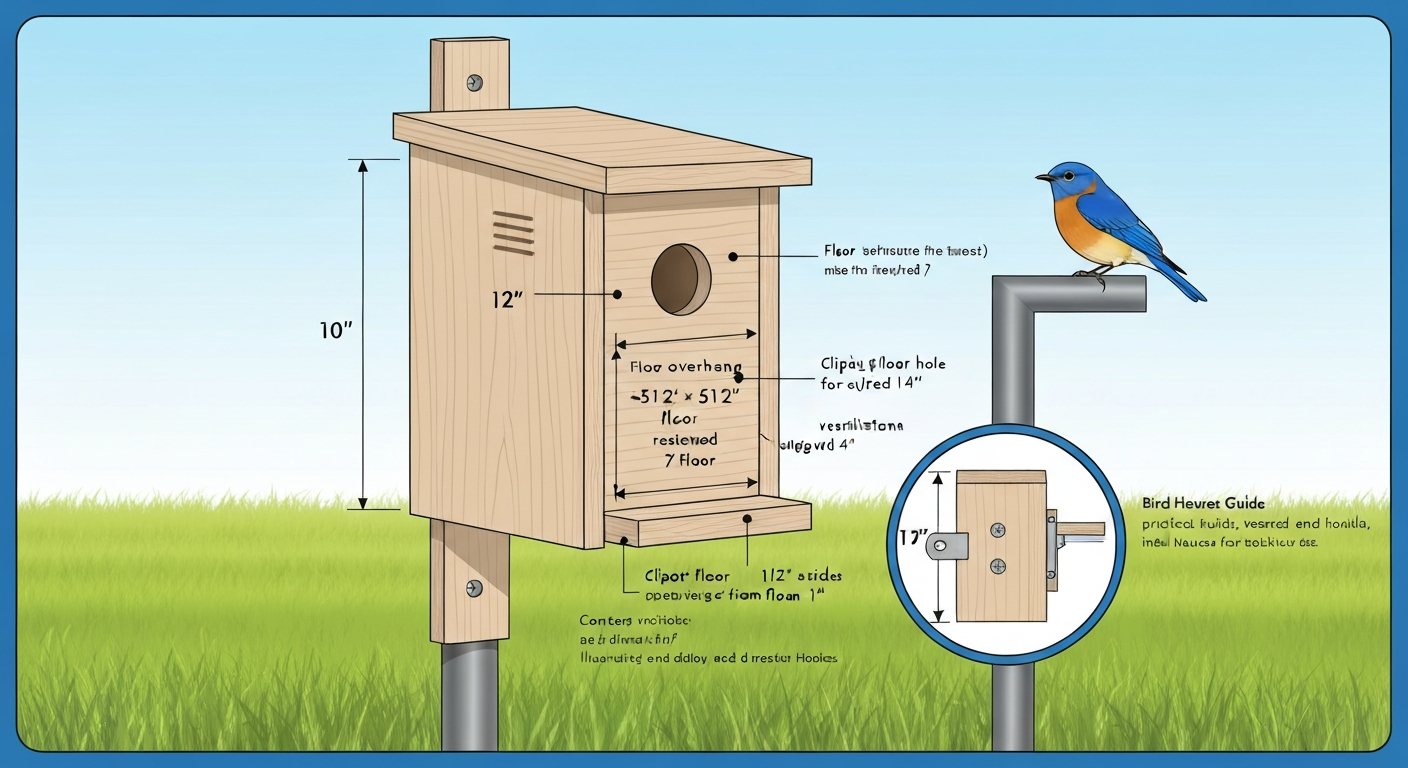
Blue Bird House Instructions: DIY Plans, Sizes & Mounting
DIY bluebird house: step-by-step build, exact cuts and hole sizes, mounting, predator guards, cleaning, and care.
Wine Cork Bird House Instructions: DIY Steps and Bird-Safe Specs
Step-by-step wine cork mini birdhouse build with bird-safe dimensions, safe materials, mounting, cleaning, and weatherpr
Best Bluebird House Guide: Choose, Build, Install
Pick and install the best bluebird house with species-specific hole size, mounting, predator guards, and safe seasonal c