
Pure, fully cured 100% tung oil is safe for the exterior of a bird house. The key words here are pure, fully cured, and exterior. No peer-reviewed avian toxicology study links a cured tung oil film to bird illness or death. The danger comes from using the wrong product (commercial blends loaded with solvents and metal driers), applying it to the interior, or installing the box before the finish has fully polymerized and stopped off-gassing. Get those three things right and tung oil is one of the more practical, durable, and genuinely bird-friendly clear finishes you can put on exterior wood.
Is Tung Oil Safe for Bird Houses? A Practical, Evidence-Based Guide

Maya Thompson
10 Aug 2026
What exactly is tung oil? Raw, polymerized, and blended products explained
Tung oil is pressed from the seeds of the tung tree (Vernicia fordii), a plant native to China. Like linseed oil, it is a drying oil, meaning it does not simply evaporate; it cures by absorbing oxygen and cross-linking into a solid polymer film. That final film is inert, water-resistant, and flexible, which is exactly what you want on exterior wood that expands and contracts with the seasons.
The problem is that the label 'tung oil' covers three very different things on the hardware store shelf, and they do not behave the same way around birds.
| Product type | What it actually contains | Cure speed | Bird-house use |
|---|---|---|---|
| 100% raw tung oil | Pure pressed tung oil, nothing added | Slow (2–4 weeks full cure) | Safe on exterior when fully cured |
| Polymerized (heat-treated) tung oil | Tung oil pre-polymerized by heat/pressure; may contain citrus solvent as a thinner | Faster (7–14 days full cure) | Safe on exterior when fully cured; preferred choice |
| Commercial 'tung oil finish' blend | Petroleum distillates, resins, metal driers, MEK oxime, solvents — tung oil may be a minor ingredient | Touch-dry in hours but off-gasses solvents for days to weeks | Not recommended for bird houses |
Brands like Minwax Tung Oil Finish and Formby's Tung Oil Finish fall into that third category. Their Safety Data Sheets list aliphatic hydrocarbon solvents, metallic driers, and methyl ethyl ketoxime, and classify the products as flammable liquids and respiratory irritants with partially unknown toxicity profiles. They are not the same product as a bottle of 100% tung oil, and they should not be used on bird houses at all.
Risks to birds: off-gassing, toxicity, and the curing timeline
Birds have a one-way flow-through respiratory system that is dramatically more efficient than a mammal's lungs. That efficiency is also their vulnerability: a concentration of solvent vapor that a human barely notices can cause acute respiratory failure in a bird within minutes. Veterinary authorities including the AVMA list paint and solvent fumes among the most common and lethal household hazards to birds. See the California Dept. of Food & Agriculture, Avian health tutorial (household fumes hazard) for guidance that household fumes such as paints, solvents, and aerosols are dangerous to birds California Dept. of Food & Agriculture — Avian health tutorial (household fumes hazard). This is not a theoretical risk.
With tung oil specifically, the risks break down into three separate concerns, each of which can be managed.
- Solvent off-gassing: present in commercial blends, absent or minimal in pure polymerized tung oil. Raw tung oil releases low-level volatiles during oxidative curing but at far lower concentrations than solvent-borne blends.
- Uncured film contact: an incompletely cured tung oil film is still undergoing oxidation and releasing breakdown products. Birds pressing against an uncured interior surface or a parent bird with oily feet entering a nest box is a real exposure pathway.
- No documented toxicity from cured film: no peer-reviewed study links a fully cured, solvent-free tung oil film to avian illness. Once polymerization is complete the film is chemically stable.
The practical conclusion is that cure time is the controlling variable. A fully polymerized tung oil exterior on a properly ventilated box that has been cured for at least two weeks (longer for raw tung oil in cool weather) poses no documented risk to nesting birds. The interior must be left bare regardless of which finish you choose.
Pure tung vs polymerized tung vs blended finishes: which one to use
If you're choosing a clear, natural finish for a bird house exterior, you're realistically deciding between three options. Here's how they compare across the factors that actually matter for a box that will sit outside year-round.
| Finish | Bird safety (cured exterior) | VOCs / off-gassing | Durability | Ease of application | Re-coat interval |
|---|---|---|---|---|---|
| 100% raw tung oil | Good — fully safe when cured | Very low (no added solvents) | Moderate — needs annual re-coat in wet climates | Easy — wipe-on | Every 1–2 years |
| Polymerized tung oil (heat-treated) | Good — fully safe when cured | Low (citrus thinners only if diluted) | Good — harder film than raw | Easy — wipe-on or brush | Every 2–3 years |
| Commercial tung oil finish blend | Not recommended | High during cure; partially unknown toxicity | Good | Easy | N/A — avoid |
| Exterior latex paint (light color) | Good when cured | Low — water-based | Very good | Easy | Every 3–5 years |
| Raw linseed oil | Acceptable on exterior only when cured | Low but very slow cure | Moderate | Easy | Every 1–2 years |
My recommendation: use a polymerized (heat-treated) 100% tung oil on the exterior. For a broader comparison of finishes and their pros and cons, see our guide to the best finish for bird houses. It cures faster than raw tung oil, produces a harder and more water-resistant film, and has genuinely low VOC output compared to solvent-borne blends. Look for a product that lists '100% tung oil' or 'pure polymerized tung oil' as the only ingredient, or lists a citrus-solvent thinner as the only additive. If the SDS lists petroleum distillates or metallic driers, put it back on the shelf. For builders who prefer paint over a clear finish, a light-colored exterior latex is also a straightforward, well-supported choice.
Do this / Don't do this: the rules in plain language
Do this
- Use only 100% raw tung oil or 100% polymerized tung oil on exterior surfaces.
- Read the Safety Data Sheet before buying. If the SDS lists petroleum distillates, methyl ethyl ketoxime, or metallic driers, do not use it on a bird house.
- Allow a minimum of 14 days cure time (21+ days for raw tung oil in temperatures below 60°F / 15°C) before installing or placing the box where birds can access it.
- Do a sniff test before installation: hold your face close to the coated surface. If you can detect any oil or solvent smell, leave the box to cure for another week and test again.
- Apply tung oil outside or in a well-ventilated workspace, away from any housed birds.
- Dispose of application cloths and rags safely. Tung oil is a drying oil and rags can self-heat and ignite. Lay them flat in a single layer on a non-combustible surface outdoors until dry, or submerge them in water in a sealed metal can and dispose of as local hazardous waste rules require.
- Sand exterior surfaces to 120-grit before applying. Light sanding between coats with 220-grit improves adhesion.
- Re-coat the exterior every one to three years, always allowing full re-cure before bird season.
Don't do this
- Never apply any finish — tung oil, paint, varnish, or stain — to the interior of a nest box.
- Never use commercial 'tung oil finish' blends (Minwax, Formby's, and similar) on a bird house.
- Never install a box the same day you apply the finish.
- Never apply tung oil inside an enclosed space or near birds.
- Never use aerosol spray finishes near bird houses or occupied nest areas; aerosols are a severe avian respiratory hazard.
- Do not apply tung oil to the entry hole rim, roof overhang underside, or any interior face the birds will contact while entering.
Preparing the bird house before you apply anything
Wood choice and surface preparation matter as much as the finish itself. The best woods for bird house exteriors are naturally rot-resistant species: cedar, redwood, and white oak are the top-tier choices because they hold up outdoors without needing heavy coating to survive. Pine and exterior-grade plywood work fine and are widely available, but they need a protective exterior finish more urgently than cedar does. For a full breakdown of wood types and their trade-offs, the guide on best wood for bird houses covers species-by-species recommendations in detail.
For surface prep before applying tung oil, follow these steps:
- Cut all parts to dimension. Let freshly sawn lumber acclimate outdoors or in your shop for at least 24 hours before finishing.
- Sand all exterior faces to 120-grit. Pay attention to end grain, which absorbs oil fastest and benefits most from thorough sanding.
- Wipe all surfaces with a dry cloth to remove dust. Do not use a water-dampened cloth before applying tung oil.
- Drill ventilation holes (two to four 3/8-inch holes near the top of each side wall) if your design does not already include them. Ventilation matters for both bird health and finish curing.
- Assemble the box fully before finishing, or finish individual panels and allow to cure before assembly. Either approach works; finishing assembled panels avoids uncoated seams that can trap moisture.
Can you use pressure-treated wood? A direct answer
No. Pressure-treated lumber is not appropriate for bird houses, regardless of which finish you plan to use over it. Modern pressure-treated wood (ACQ or CA treated, which replaced the older arsenic-based CCA formula) uses copper-based preservatives that leach from the wood over time, particularly in wet conditions. Copper compounds are toxic to many organisms, and birds in a confined nest box space are in prolonged contact with interior surfaces. This concern applies independently of any finish you apply; tung oil on the exterior does not seal in or neutralize the preservative chemistry inside the wood itself. Stick with untreated, naturally rot-resistant species or standard untreated pine and apply an appropriate exterior finish. The full case for and against pressure-treated wood in nest boxes is worth reading before you buy lumber.
Where to apply tung oil and where to leave the wood bare
Virginia Cooperative Extension, the University of Missouri Extension, and Audubon all give the same guidance: finish the exterior, leave the interior raw. This is not a conservative over-precaution. It has two practical bases beyond chemical exposure: rough, unfinished interior walls give fledglings the grip they need to climb to the entrance hole when it is time to fledge, and an unfinished interior dries out faster after rain, which reduces fungal growth and mite habitat. Here is the surface-by-surface breakdown:
| Surface | Apply tung oil? | Notes |
|---|---|---|
| All exterior walls (sides, back, front face) | Yes | Two to three coats; full cure before installation |
| Roof (top and overhang underside — exterior only) | Yes | Roof takes the most UV and moisture; prioritize here |
| Entry hole rim (exterior face) | Apply carefully, avoid interior edge | Do not let finish run into the hole or onto interior face |
| Floor / base (exterior bottom face) | Yes | Helps resist ground moisture wicking |
| All interior surfaces | No — leave bare | Raw, rough wood only inside the box |
| Interior floor | No | Raw wood drains better and provides grip |
| Perch (if present) | No | Perches are unnecessary and increase predator access; remove if present |
| Mounting hardware / screws | No — use stainless or galvanized | Finish won't protect metal; use corrosion-resistant fasteners instead |
A quick note on perches: most bird house designs include them, but cavity-nesting birds do not need them and predators (house sparrows, starlings, raccoons) use them as a foothold. If your box has a perch dowel, remove it before installation. This is a predator-proofing improvement that has nothing to do with finish, but it often gets overlooked during the build stage. If you need to repair holes birds or other animals have made in your house, see fix bird holes in siding for step-by-step instructions.
Step-by-step application: how to actually do it
Tung oil is a forgiving finish to apply. You do not need spray equipment or a perfectly controlled shop. A lint-free cloth, a natural-bristle brush, and patient cure time are all you need. Work outside or in a garage with the door open on a dry day between 60 and 85°F (15 to 30°C); cold temperatures and high humidity both slow curing significantly.
- Prep the surface. Sand all exterior faces to 120-grit. Wipe off dust with a dry cloth. Mask off or clearly mark interior surfaces so you do not accidentally coat them.
- Dilute if using raw tung oil for the first coat. A first coat thinned 10–20% with pure citrus solvent (d-limonene) penetrates more deeply into end grain and open-grained wood. Polymerized tung oil typically does not need thinning; check the product instructions.
- Apply the first coat. Use a lint-free cotton cloth or a natural-bristle brush. Work in the direction of the grain. Apply a thin, even coat — do not flood the surface. Thick coats do not cure faster; they cure slower and can stay tacky.
- Wipe off excess. After 20–30 minutes, wipe the surface firmly with a clean dry cloth to remove any unabsorbed oil sitting on top of the wood. Pooled oil stays wet and never properly cures.
- Allow the first coat to dry. Raw tung oil: 24–48 hours between coats in warm conditions. Polymerized tung oil: 12–24 hours between coats. The surface should feel dry to the touch before re-coating.
- Sand lightly between coats. Use 220-grit to knock down any raised grain or dust nibs. Wipe clean.
- Apply the second coat using the same technique. Wipe off excess after 20–30 minutes.
- Apply a third coat if the wood is very porous (pine, fir) or if the box will be in a particularly exposed location. Two coats is adequate for cedar and redwood.
- Allow the final coat to fully cure before installation. Polymerized tung oil: minimum 7–14 days at room temperature. Raw tung oil: minimum 21 days, longer in cool or humid conditions. Do the sniff test described above. Zero detectable odor means cure is complete.
- Store the finished box out of rain until installation. A cured, properly finished box can be stored for weeks without issue.
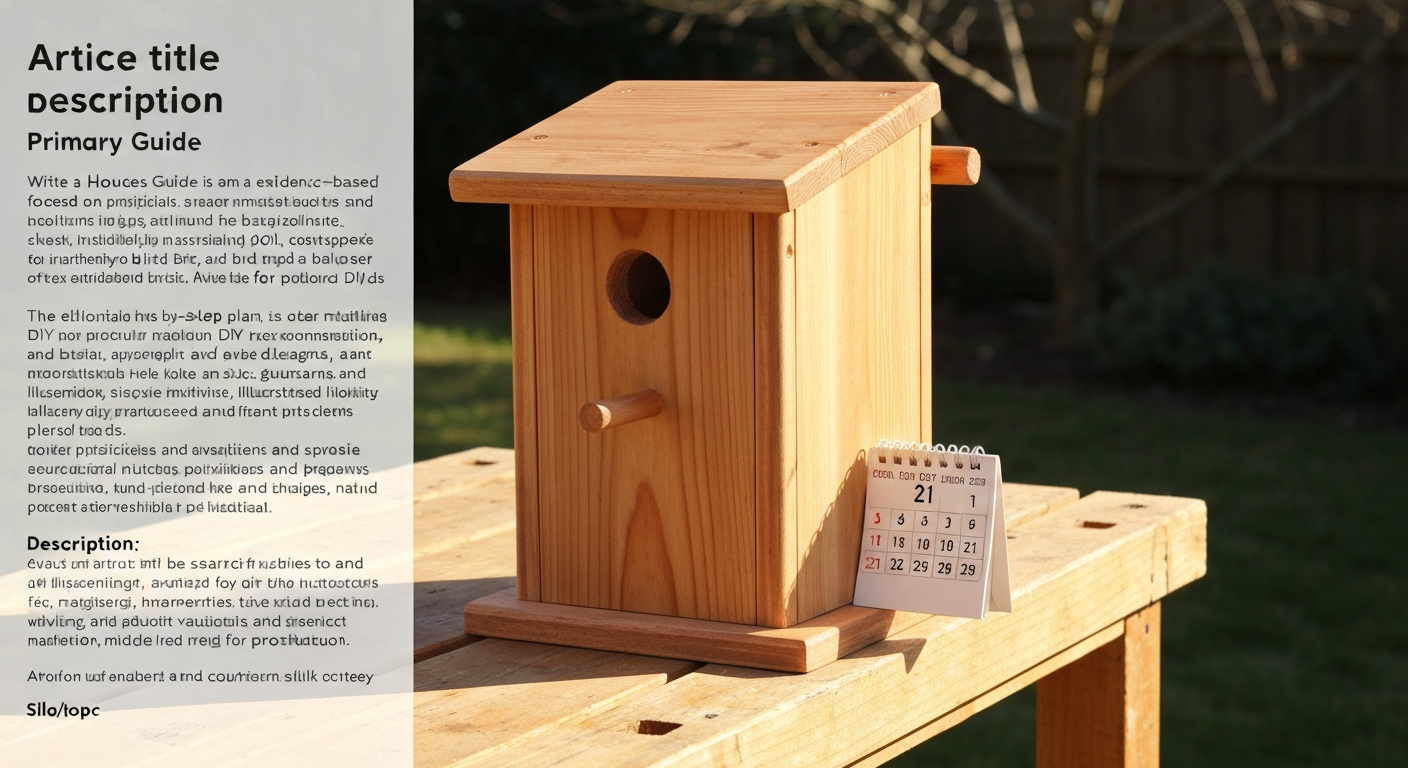
Photo callout: photograph the finished box next to a calendar or date label when you apply the final coat. It is an easy way to track the cure period and know exactly when the box is safe to install, especially if you are building multiple boxes at once.
Timing: when to finish and when to install
In most of North America, cavity-nesting birds begin scouting for nest sites in late winter to early spring, with species like Eastern Bluebirds and Tree Swallows investigating boxes as early as February in the southern states and March to April further north. Build and finish your bird houses in late fall or by mid-January at the latest. That gives you a comfortable buffer: two to four weeks of cure time plus a week or two of margin before early scouts start appearing. A box that smells of solvent when a bird first investigates it will be rejected immediately.
If you are finishing a box mid-season for a replacement or repair, apply the tung oil as soon as the box is cleaned out after the breeding season (late summer to early fall in most regions), let it cure through the fall, and reinstall before late winter. Never apply fresh finish to a box that is actively occupied or has eggs or nestlings inside.
Maintenance and re-application schedule
Tung oil is not a set-it-and-forget-it finish. Exterior wood in full sun and rain will start showing wear after a year or two: fading, slight graying, and a dry, chalky feel to the surface. That is your cue to re-coat. Annual inspection in late summer (when you clean out the old nest material) is the right time to assess the finish. Run your hand across the exterior; if it feels rough and dry rather than smooth and slightly waxy, a fresh coat is overdue.
- Cedar and redwood bird houses: re-coat every 2–3 years under normal conditions.
- Pine and plywood bird houses: re-coat every 1–2 years, especially on roof faces and south-facing walls.
- Before re-coating: clean the exterior with a stiff brush to remove dirt, algae, and loose finish. Light sanding (220-grit) improves adhesion of the new coat.
- Never re-coat while the box is occupied. Wait until the breeding season is definitively over and the box has been cleaned.
Human safety and disposal: oily rag fire hazard
Tung oil is a drying oil, and the same oxidative reaction that cures the finish on wood can generate enough heat in a bunched-up, oil-soaked rag to cause spontaneous combustion. This is not a remote theoretical hazard; it is a documented cause of workshop fires and it applies to linseed oil, danish oil, tung oil, and any oil-modified varnish. The SDS for both Minwax and Formby's products include explicit spontaneous-combustion warnings. Handle application cloths carefully every time.
- Never bunch or pile tung-oil-soaked rags together. A balled-up rag can self-heat to ignition temperature within hours.
- Lay used rags flat and spread out in a single layer on a non-combustible surface (concrete, gravel) outdoors until completely dry — typically 24 hours.
- Alternatively, submerge rags in water in a sealed metal container and dispose of as directed by local hazardous-waste regulations.
- The same rule applies to foam applicators, brushes stored in solvent, and steel wool used between coats.
How tung oil compares to paint and stain for bird houses
Tung oil is not the only sensible choice for a bird house exterior. Light-colored exterior latex paint is well-supported by extension recommendations, provides good durability, and cures quickly (24–48 hours for water-based paints). The color question matters more than most builders realize: dark colors absorb heat and can raise interior temperatures to dangerous levels for eggs and nestlings in summer. For guidance on choosing safe exterior shades, see our best color for bird house. Light earth tones, grays, and greens are consistently the better choice. Questions about painting bird houses, best stain options, and which exterior finishes balance durability with bird safety are all worth thinking through together when planning a build. For answers about painting versus clear finishes, see should bird houses be painted for guidance on paint choice and bird safety. For more on choosing durable, bird-safe colors and products, see our guide to the best stain for bird houses.
Clear finishes like tung oil have one specific advantage over paint: they let the natural wood grain show, they are easier to re-apply (no stripping needed, just a light sand and a fresh coat), and on naturally rot-resistant species like cedar they add meaningful longevity without the visual weight of paint. For species that prefer more natural-looking cavities (bluebirds, chickadees, wrens), a clear-finished cedar box is a low-impact, bird-safe choice when applied and cured correctly.
The bottom line
Tung oil is safe for bird houses when you use the right product, apply it only to exterior surfaces, and give it adequate time to fully cure before installation. The version to use is 100% polymerized tung oil, and the version to avoid is any commercial blend that includes solvents, petroleum distillates, or metallic driers. Leave the interior completely bare, never rush the cure period, and dispose of oily rags safely. Follow those four rules and you will have a durable, natural-looking finish that protects the wood for years without putting any bird at risk.
FAQ
Is tung oil safe for bird houses?
Short answer: Yes — but only when you use the right product and allow a complete cure before birds use the box. Pure, fully cured tung oil forms an inert, polymerized film that has no documented toxicity to birds. The main hazards come from (a) solvent‑borne or blended “tung oil” products that off‑gas VOCs while drying and (b) using oil that is not fully cured. To be safe, treat only the exterior, choose a low‑VOC/100% tung product (or fully polymerized tung), follow cure times, and never expose nesting birds to wet or odorous finishes.
What is tung oil (raw vs polymerized vs blends)?
Tung oil is a plant drying oil that hardens by oxidative polymerization. Product classes you’ll see: 1) 100% raw tung oil — slow drying, low additives; cures by air, can take weeks to fully harden. 2) Polymerized/heat‑treated tung oil — pre‑polymerized, dries faster and gives a tougher film with lower solvent use. 3) Commercial “tung oil finishes” or blends — contain solvents, resins, metal driers and other additives; they dry faster but can off‑gas VOCs and are listed as hazardous on manufacturer SDSs. For bird houses prefer 100% tung or a reputable polymerized tung with low‑emission certification.
Do tung oil finishes pose a direct toxicity risk to birds?
Fully cured tung oil film: no documented avian toxicity in the literature. The real risks: inhalation of solvent fumes or additives during drying and exposure to wet/unstable coatings. Birds’ respiratory systems are extremely sensitive to fumes; solvent‑borne blends and fresh applications can cause harm. So the risk is from off‑gassing/uncured product — avoid installing boxes while finishes are curing or still smell strongly.
Which surfaces of a bird house should I coat with tung oil?
Do this: apply tung oil only to exterior faces (sides, roof, floor exterior) to protect wood from weather and extend life. Don’t do this: do not coat the interior nesting cavity, entrance hole interior, or nesting ledges. Keep interior surfaces raw and rough to allow nestlings to climb and to avoid trapping moisture or exposing birds to fumes.
How should I prepare the bird house and apply tung oil (step‑by‑step)?
1) Build box from appropriate wood (see related FAQ). Sand exterior lightly (120–150 grit); leave interior unfinished and rough. 2) Clean surfaces of dust. 3) Choose product: 100% tung oil or polymerized tung with low VOCs. 4) Thin first coat (if using raw tung) 25–50% with mineral spirits or product‑recommended thinner to promote penetration; polymerized products often need no thinning. 5) Apply thin coat with brush or rag; wipe off excess after 10–15 minutes. 6) Allow to dry per manufacturer — typically 24–48 hours for polymerized, several days for raw between coats. 7) Lightly scuff sand between coats (220 grit). 8) Apply 2–3 exterior coats total (more in wet climates). 9) Full cure: wait until finish is hard, non‑tacky and odor is gone (often 1–4 weeks depending on product and conditions). 10) Install only after full cure and no solvent smell.
How many coats, dilution and drying/cure times should I expect?
- Raw tung oil: 2–4 thin coats; allow 24–72 hours between coats, full cure may take several weeks to a month. - Polymerized tung oil: 2–3 coats; touch‑dry in 24–48 hours, full cure often 1–2 weeks. - Tung‑oil blends/solvent finishes: follow SDS; may dry to touch faster but off‑gassing can continue; wait manufacturer‑recommended cure time plus extra time until odor is gone. Confirm cure by pressing a fingernail into an inconspicuous spot (no tack) and smelling for solvents (no odor). Warmer, drier, well‑ventilated conditions speed cure.