The best color for a bird house exterior is a natural, light earth tone: think light gray, tan, soft brown, muted sage green, or plain white. Those colors keep the box cooler in summer heat, blend into typical backyard surroundings, and use the same palette that wildlife agencies and bluebird organizations consistently recommend.
Best Color for Bird House: Attract Birds Safely
Maya Thompson
19 Apr 2026
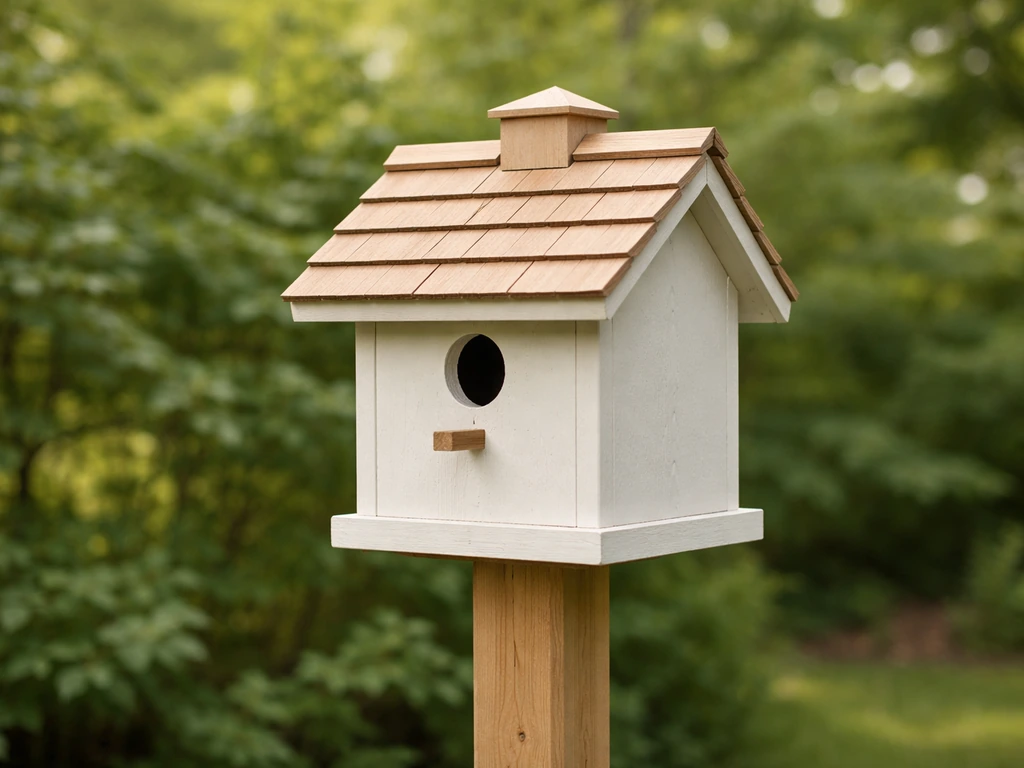
You do not need to paint a bird house at all, but painting the outside with the right color and the right product genuinely helps the wood last longer and can protect nesting birds from dangerous heat buildup. If you are wondering should bird houses be painted, the short answer is that you usually do not have to, but the right exterior color and product can help manage heat and protect the wood.
What you must never do is paint or stain the inside of the box or the entrance hole. If you still see drafts where birds are getting in, you can also use siding repairs like fixing bird holes in siding to block unwanted entry points fix bird holes in siding.
That rule is non-negotiable regardless of what color or finish you choose outside.
How birds actually use color when picking a nesting site
Cavity-nesting birds like bluebirds, chickadees, wrens, and swallows are not walking up to your box and judging the paint job the way you might pick a front door color. Research on cavity-nesting species consistently shows that placement, cavity dimensions, entrance hole size, and the light environment inside the box are far stronger drivers of nest-site selection than exterior color. Birds do have excellent color vision and can distinguish chromatic (color) and achromatic (luminance and contrast) information, but those cues matter most in open viewing conditions. A box mounted in the right spot with the right hole size will almost always beat a perfectly painted box in the wrong location.
That said, exterior color is not irrelevant. Two things make it genuinely matter: thermal safety and visual contrast. In climates where summer temperatures regularly push past 95°F, a dark exterior can turn a nest box into an oven. White-painted or light-colored exteriors have been shown to keep box interiors measurably cooler, with some sources documenting up to roughly 8°F lower internal temperatures compared to unpainted wood. That difference can be the margin between healthy nestlings and heat stress. On the visibility side, a brightly colored or contrasting exterior can make it slightly easier for returning parent birds to locate their box, though this is a secondary benefit compared to heat management.
The best colors to use (and the ones to skip)
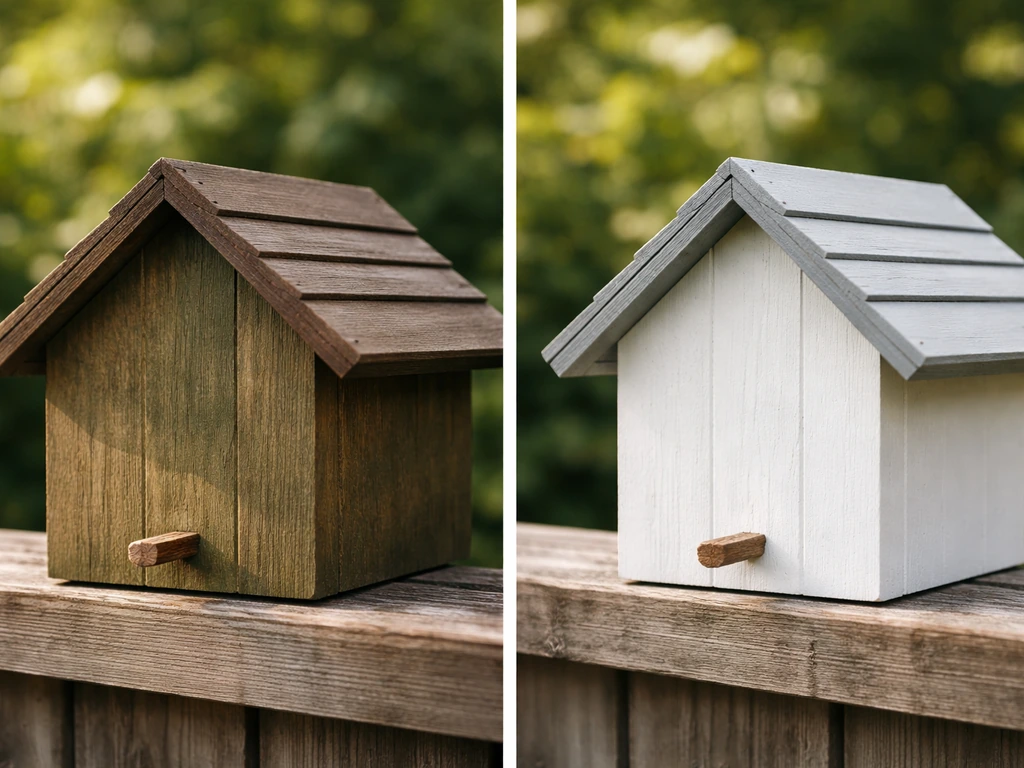
For most backyard situations, you have two practical color strategies: go natural or go white. Natural earth tones blend the box into its surroundings and work well for most species in most habitats. White is the top choice for Purple Martins specifically, and it doubles as a strong heat-reflecting option in hot climates. Here is how those options break down:
| Color | Best For | Heat Performance | Habitat Fit |
|---|---|---|---|
| Light gray | Most cavity nesters, wooded and open habitats | Good | Blends with bark, fences, weathered wood |
| Tan or light brown | Most cavity nesters, open fields and meadows | Good | Blends with dried grasses and wood posts |
| Soft sage or muted green | Most cavity nesters, wooded edges and gardens | Good | Blends with foliage backgrounds |
| White | Purple Martins; any species in hot climates | Excellent | Visible in open areas; may stand out in wooded settings |
| Dark brown, black, or charcoal | Not recommended | Poor (absorbs heat) | Avoid in sunny locations especially |
| Bright red, blue, or yellow | Not recommended | Varies | May deter wary birds; draws unwanted attention |
The North American Bluebird Society (NABS) specifically recommends light colors such as earth tones (light green, gray, brown) or white so the box reflects sunlight rather than absorbing it. Connecticut DEEP's bluebird guidance is direct: avoid dark colors. Utah State University Extension's bluebird box guide recommends light gray, brown, or green to help the box blend into its surroundings. These are not arbitrary aesthetic preferences. They all point to the same practical concern: a hot box is a dangerous box.
Color do's and don'ts: safety, heat, and harmful finishes
What to do
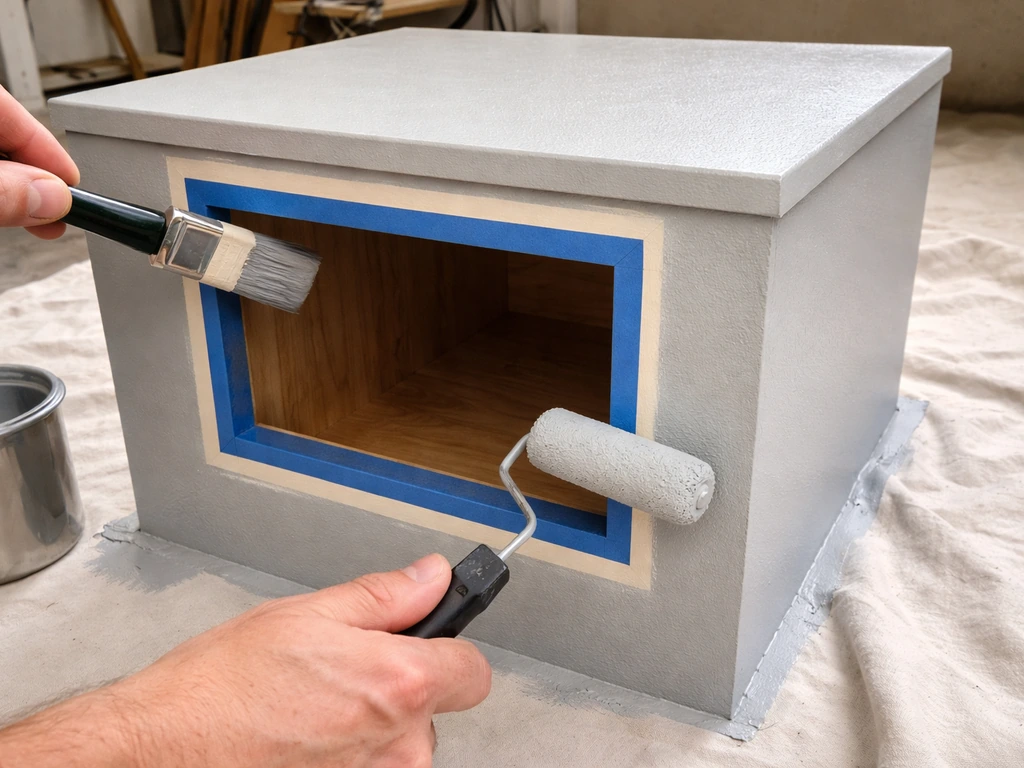
- Paint only the exterior surfaces (sides, roof, and front face around the hole but not inside the hole itself).
- Choose light, muted colors: white, light gray, tan, soft brown, or muted green.
- Use only nontoxic, water-based exterior latex paint. NABS also approves raw linseed oil and Thompson's Water Seal as exterior finish options.
- In hot climates (where summer highs regularly exceed 95°F), paint white or the lightest color available and consider adding a ventilated heat shield above the roof.
- Let the finish cure fully before mounting the box (more on timing below).
- Repaint or refinish when you see peeling, cracking, or significant fading, not on a fixed schedule.
What not to do
- Never paint, stain, or seal the interior of the box. The inside should remain raw, unfinished wood.
- Never paint or stain the entrance hole, including the inner edge of the hole.
- Do not use dark colors on boxes mounted in full sun. Dark exteriors absorb heat and can raise internal temperatures to dangerous levels for eggs and nestlings.
- Do not use oil-based paints, varnishes, polyurethane, or products that off-gas solvents. These can linger inside a mounted box even if only applied outside.
- Do not use pressure-treated wood and then paint over it as a workaround for interior safety. The preservative compounds in treated wood remain a separate hazard.
- Do not install a freshly painted box before the finish has cured. 'Dry to the touch' is not the same as cured.
The interior rule deserves a moment of emphasis because it surprises some people. Paint on the inside walls and entrance can trap fumes inside the enclosed cavity, which birds and developing chicks breathe continuously. It also makes the interior surface slippery, which can trap fledglings trying to climb out. [Leave the inside raw.
](https://www. fs. usda. gov/media/238431) If you want to add longevity to the interior, proper construction with thick wood (ideally 3/4 inch or more) and adequate ventilation gaps is the right approach, not a finish coat.
If you are wondering about materials, you can use properly treated pressure-treated wood for the exterior, but avoid any coatings on the inside and follow the product label for bird-safety curing time thick wood (ideally 3/4 inch or more).
Matching color to your bird species and yard habitat
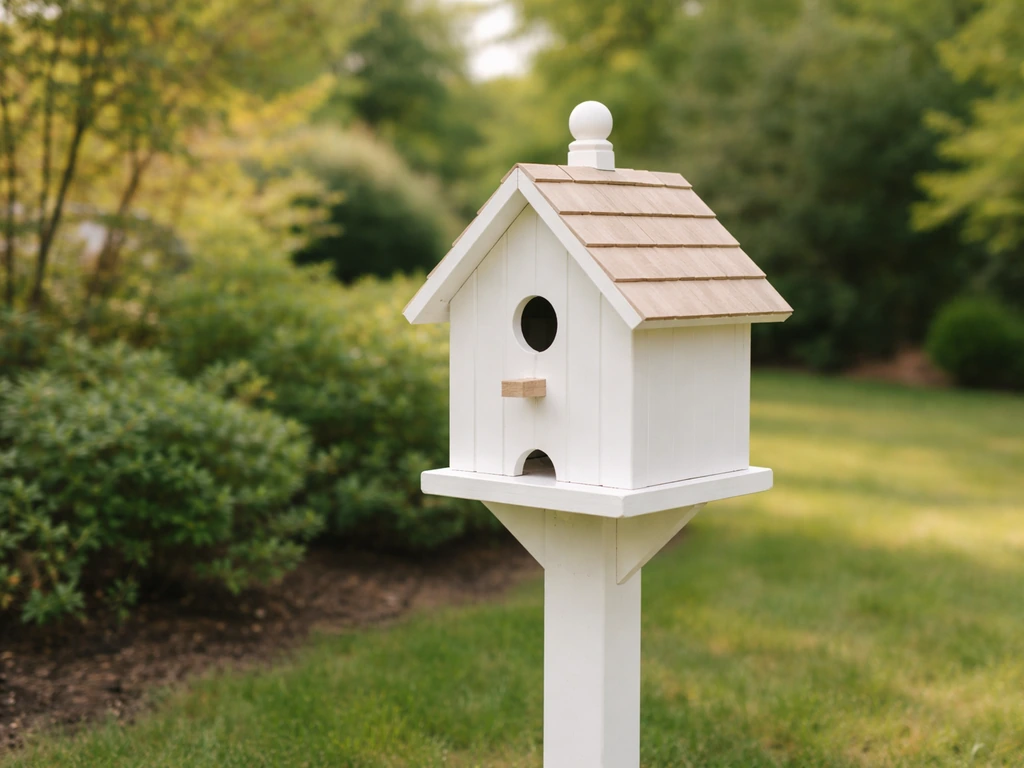
The species you are trying to attract and the visual background of your yard should both nudge your color choice. The general rule is: match the box color to the dominant visual background where it will be mounted. A box on a fence post in an open meadow can be tan, light gray, or white and will look appropriately inconspicuous. A box mounted on a tree in a wooded backyard benefits from a gray or muted green that echoes bark and leaf tones. White stands out more in wooded settings and may feel more exposed to cautious birds like Carolina wrens or chickadees, though it is not a dealbreaker if placement is otherwise correct.
For Purple Martins, white is the specific recommendation from NestWatch at the Cornell Lab of Ornithology. Purple Martin colonies are set up in open areas on tall poles, so the heat-reflective benefit of white is especially valuable, and the open siting means there is no dense foliage background to blend into. For bluebirds, multiple sources including NABS, Connecticut DEEP, and the California Bluebird Recovery Program (CBRP) all land on the same advice: avoid dark colors and choose light earth tones or white. For chickadees, nuthatches, and small wrens that nest in wooded or shrubby edges, a natural gray or brown that recedes into the background is the most appropriate choice.
| Species | Recommended Color | Notes |
|---|---|---|
| Eastern/Western/Mountain Bluebird | Light gray, light brown, or white | Avoid dark colors; never paint inside |
| Purple Martin | White | Heat reflection critical; open-area mounting |
| Chickadee (Black-capped, Carolina) | Light gray or muted brown | Wooded settings; blend with bark tones |
| House Wren / Carolina Wren | Muted brown, tan, or gray | Shrubby edges; inconspicuous works best |
| Tree Swallow | Light gray, tan, or white | Open areas; white acceptable for hot climates |
| Downy Woodpecker / Flicker | Natural gray or brown | Wooded areas; blend with tree bark |
Keep in mind that habitat background also shifts with season. A box that looks well-camouflaged against leafy green surroundings in July can stand out starkly on a bare winter fence. Since most cavity nesters scout sites in late winter or early spring before foliage fills in, a gray or brown tone tends to look natural in both seasons better than a green that only blends in summer. If you are trying to attract multiple species with several boxes, a mix of light gray and tan gives you good coverage across open and edge habitats without overthinking it.
How to prep and paint your bird house the right way
Whether you are finishing a new build or repainting an older box, the process is the same. The key priorities are keeping paint off the interior, choosing a bird-safe product, and allowing enough cure time before birds move in. Here is the full sequence:
- Gather your materials: water-based exterior latex paint in your chosen light color (or raw linseed oil, or Thompson's Water Seal as alternatives), a small brush for detail work around the entrance hole, a wider brush or foam roller for flat surfaces, painter's tape, and fine-grit sandpaper (120 or 150 grit).
- Tape off the entrance hole completely before you start. Use painter's tape inside and around the perimeter of the hole to ensure no paint migrates to the hole edge or interior.
- Lightly sand the exterior surfaces to improve paint adhesion, especially if the wood is smooth-cut lumber. Rough-sawn cedar or pine often does not need sanding, but smooth surfaces benefit from a quick pass.
- Clean off all dust and debris with a dry brush or tack cloth. If you are repainting an older box, scrape away any peeling finish first and clean the surface thoroughly. Check for any rot or structural damage and repair it before repainting.
- Apply one thin coat of exterior latex paint to all outside surfaces: sides, front (outside only), back, and roof. Work carefully around the entrance hole, keeping paint on the outer face only. Do not paint the bottom, especially if it has drainage holes.
- Let the first coat dry fully per the manufacturer's directions (typically 2 to 4 hours for water-based latex), then apply a second coat if needed for even coverage.
- Allow the paint to cure, not just dry. Water-based latex paint may feel dry in a few hours but can take 2 weeks or more to fully off-gas and harden. Do not install or mount the box until at least 2 weeks after the final coat, and longer in cool or humid conditions is even safer.
- Remove the painter's tape from the entrance hole and inspect the interior. If any paint snuck inside, sand it away with folded sandpaper before installation.
- Before mounting, orient the box with the entrance hole away from prevailing afternoon sun and wind. In hot climates, consider adding a ventilated double-roof heat shield using a piece of white or light-colored material mounted with spacers above the main roof to create an air gap.
When to repaint and what to watch for
Repainting is not an annual task. Inspect the box at the end of each nesting season when you clean it out, which is the natural opportunity to look for peeling, cracking, or fading finish. A box with intact, sound paint does not need a new coat. When you do see the finish breaking down, clean out the old nesting material, let the wood dry completely, scrape off any loose paint, and follow the prep steps above. The ideal window for repainting is late summer or early fall after the last brood of the season has fledged. That gives the finish a full off-gassing period through fall and winter before birds start scouting in late winter or early spring.
One additional note on finish choice: if you are also thinking about stains or specialty coatings, those decisions overlap with the broader question of what finish to use on a bird house and which wood species hold up best outdoors. Cedar and redwood are naturally rot-resistant and can go completely unfinished for years, which removes the painting question entirely. If you have a pine or plywood box, a light exterior latex coat gives you meaningful weather protection without introducing any of the risks that come with oil-based or solvent-containing products. If you are considering tung oil, treat it as an oil-based finish and confirm it is fully cured and bird-safe before using it on a bird house exterior is tung oil safe for bird houses.
Bottom line: paint the outside light, skip the inside entirely, use water-based latex or an approved natural finish, wait two weeks after painting before installing, and let placement do the heavy lifting for attracting birds. For many homeowners, the best stain for bird houses is a water-based, bird-safe option that is fully cured and kept off the interior water-based latex. Color is a supporting character here, not the lead.
FAQ
Can I stain the outside of a bird house instead of painting it?
Yes, but treat “paint” and “finish” separately. Use a bird-safe, water-based exterior product only on the outside surfaces. Avoid any coating that can leave fumes or residue on the interior walls and the entrance. If you want bare-wood natural durability, cedar or redwood can often be left unfinished on the exterior, which eliminates the coating safety variable.
Is it okay to add dark decorative accents to the bird house exterior?
Don’t apply a dark patch or accent on the exterior. Even a small dark area can raise local temperatures around the cavity. If you want visual contrast to help you find the box, keep it outside the likely warmest zones, and choose a light base color (white or light gray) for the main faces.
How often should I repaint or refinish a bird house?
If the box is already painted and is still sound, you generally should not repaint it every year. Clean out old nesting material at the end of the season, then inspect for peeling, cracking, or chalking. Recoat only when the exterior finish has started to fail, and repaint in late summer or early fall for the longest off-gassing window before spring scouting.
What if I can’t find the exact shade recommended, how do I choose a “light enough” color?
Light gray and tan generally provide the best “all-around” lightening effect, even though different brands can vary in pigment intensity. The practical rule is to avoid anything that looks visually dark on the exterior in daylight, since heat absorption correlates more with darkness than with the word “brown” or “green.” If you are unsure, pick a noticeably light shade rather than a medium tone.
What should I do if I notice a bird house color problem during an active nesting season?
If birds are already using the box, the safest move is to wait until after the nesting season to repaint. If you must act urgently, you still need full curing and no interior exposure, which is hard to guarantee with active occupants. For immediate corrections, focus on placement and entry-proofing rather than re-coating.
Can I seal leaks or drafts using paint, caulk, or stain inside the bird house?
Never put paint or stain on the entrance hole edges, the interior floor, or the interior walls. If drafts are occurring, address them by sealing only outside-related gaps (for example, repairing siding or caulking exterior seams where appropriate), not by modifying the interior cavity surfaces. After any exterior repair, re-check that the entrance hole size and shape remain correct for the target species.
Is a clear exterior coat (like varnish) a good alternative to colored paint?
Not ideal. A clear coat can be fine on the exterior only if it is specifically bird-safe, fully cured, and water-based or otherwise non-fuming after cure. However, many “outdoor clear” products are not intended for animal exposure on rough, porous wood, and they often complicate future maintenance. If you want a transparent approach, confirm it is designed to be bird-safe and keep it strictly on the outside.
How much does sun direction and mounting location matter compared with the bird house color?
Match color to background, but also keep the entrance area from getting sun-baked in afternoon heat. In open fields, light colors help more because there is less natural shade. In wooded yards, you can use muted gray or brown, but placement (roof overhang, orientation, and distance from direct afternoon sun) can matter as much as color for preventing heat stress.
I want to attract different species, should I use one color for all boxes?
If you’re targeting multiple species, you can use a mix, but keep both boxes light-colored. A good simple combo is one light gray and one tan so you cover open and edge habitats without using dark exteriors. Still, placement should be species-specific, because hole size and cavity orientation often determine which birds actually move in.
How long should I wait after painting before putting the bird house outside?
After painting, wait long enough that the finish is fully cured, then only install once there is no strong odor and the exterior is dry to the touch without tackiness. The article’s guidance mentions waiting before installing, and in practice the “safe” window can vary by product and humidity. If you cannot confirm cure, delay installation or switch to an exterior product known for faster, low-odor curing.
Does thick wood or pressure-treated wood change what exterior color or finish I should use?
Yes for exterior durability, but the interior stays raw. Thick wood and proper ventilation gaps help manage moisture and reduce lingering surface chemicals inside the cavity. For exterior treatment, follow the product label for outdoor use, and confirm any pressure-treated wood is appropriate for your setup and that it is allowed to cure fully before painting.