
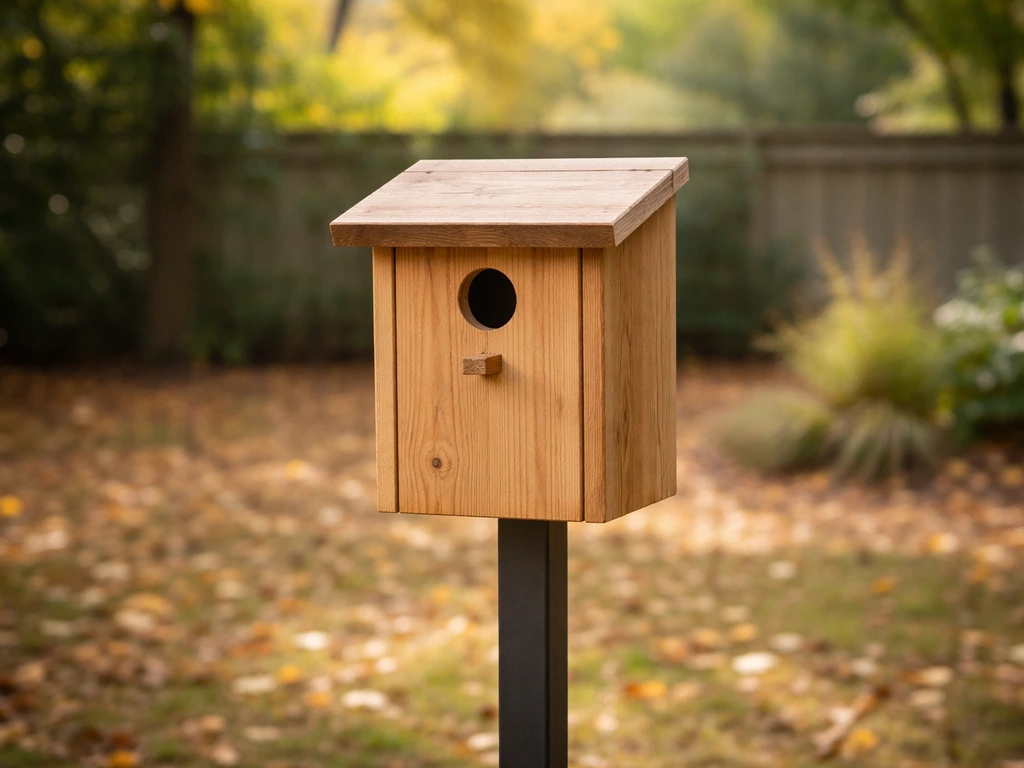
You can safely take down or clean out a bird house once the last brood has fully fledged and you've confirmed no adult birds are returning to roost or start a new nest. When in doubt, follow the guidance in this article on when to clean out bird houses for your region and species. For most common backyard species in North America, that window falls somewhere between late July and early October, depending on where you live and which birds used the box. The tricky part is knowing for certain the nesting cycle is finished, because a box that looks empty can become active again within a week.
When to Take Down Bird Houses: Safe Timing and Cleanup

Maya Thompson
20 Jun 2026
Best Timing by Species and Location

Nesting seasons vary more than most people expect, so 'late summer' is too vague to act on. Here's what the data actually looks like for the most common nest-box species.
| Species | Nestling Period | Broods Per Season | Earliest Safe Removal Window |
|---|---|---|---|
| Eastern Bluebird | 17–21 days after hatching | 2–3 | Mid-August to early October (varies by latitude) |
| Tree Swallow | 18–22 days after hatching | 1–2 | Late July to early September |
| American Kestrel | 28–31 days after hatching | 1 | Late July to mid-August |
| House Wren | 15–17 days after hatching | 2 | Late August to early September |
| Chickadees / Nuthatches | 16–21 days after hatching | 1 | Late June to late July |
Eastern bluebirds are the species that catches most people off guard. They can raise two or even three broods in a season, and the female may start building a new nest in the same box as soon as a week after the first brood fledges. If you're in the Southeast or mid-Atlantic, bluebird nesting can run from March all the way into August. In the northern states and Canada, it compresses to roughly April through July. So 'the babies left, I'm good to clean' is almost never true with bluebirds mid-season.
Tree swallows add another wrinkle: fledglings often return to the nest box for roosting for several weeks after their first flight. That means the box isn't actually done just because the chicks flew out. Kestrels have the longest nestling period of common box-nesting raptors at 28 to 31 days, and parents keep feeding fledglings for roughly 12 days after they leave, so factor in extra observation time before you assume they're done with the territory.
As a general rule for most of the continental U.S.: wait until September or October to do your final takedown or end-of-season clean. In the Deep South, push that to late October. In the northern tier and Canada, mid-August can be reasonable for single-brood species. The Connecticut DEEP recommends an early fall inspection for cleaning and repairs, with a follow-up check in late winter before the new season.
How to Tell If Nesting Is Actually Finished
This is the step most people skip, and it causes the most problems. Here are the specific signs to look for before you touch the box.
- No adult birds entering or exiting the box over several consecutive observation periods (morning and evening are most reliable)
- No food being carried to the box, which indicates no active chicks inside
- No alarm calls or dive-bombing behavior when you approach, which adults use to defend an active nest
- The approximate number of days since hatching has passed the species' fledging window (17–21 days for bluebirds, 18–22 for swallows, 28–31 for kestrels)
- If you gently open the box, the nest looks undisturbed, cold, and the fecal sacs are dried rather than fresh
One caution worth repeating from NestWatch: adult birds naturally reduce their visit frequency during incubation, so low traffic alone doesn't mean the nest is abandoned. If you genuinely haven't seen any adult activity and suspect abandonment, wait a full four weeks from the last confirmed sighting before treating the box as vacant. If you are wondering, “is it too late to clean out bird houses,” the key is whether your local birds are still actively nesting in that box. That waiting period protects you from accidentally disturbing a late-stage nest or a box where incubation is just quiet.
Avoid opening the box during the last week or so before expected fledging. For bluebirds, the Virginia DCR advises against opening the box after day 12 of hatching. For bluebirds, the Virginia Bluebird Society notes that young are ready to fledge after about 17 to 21 days, and it stresses careful timing so you do not open the box too soon the Virginia DCR advises against opening the box after day 12 of hatching. Disturbance too close to fledging can cause chicks to jump out prematurely, before they're ready to fly, which dramatically reduces their survival odds.
What to Do If the Box Is Still Active
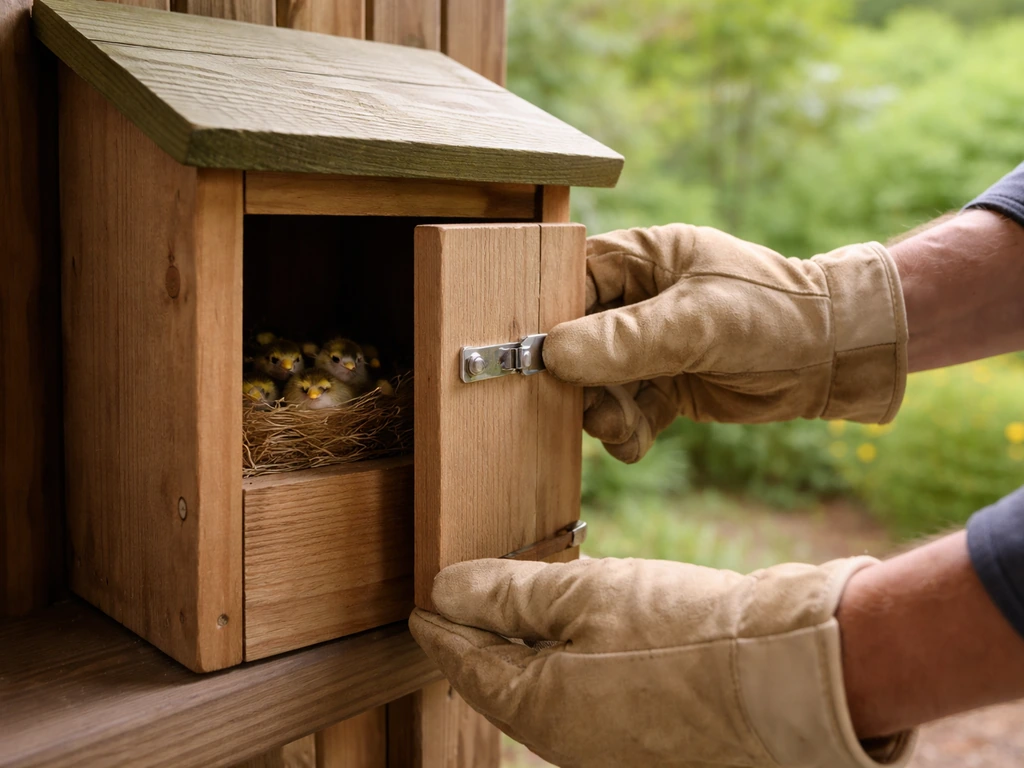
If you open a box and find eggs, small chicks, or active adult visits: close it gently, step back, and wait. Do not attempt to remove the nest or relocate it. Your only job at that point is to observe from a distance and track when the fledging window passes.
Note the date you first saw active chicks or a full clutch, then count forward using the species' fledging timeline. Mark it on your calendar. After that date, give it a few extra days of observation before opening the box again. If the box has been quiet for 3 to 5 days following that window and you see no adult activity, it's reasonable to do a quick check.
If you're mid-season and want to clean between broods (which is actually a good idea for bluebirds and other multi-brood species), you have a narrow gap to work with. The female may start a second nest within about a week of the first brood fledging. Check daily during that window, and clean as soon as you're confident the fledglings are gone and before the female starts bringing new material. A quick interior wipe-down at that point helps reduce parasite load for the next brood.
End-of-Season Cleanup: When and How
Once you're confident the season is over, do a proper clean rather than just a quick peek. NestWatch recommends removing nesting material at the end of the breeding season and scrubbing the interior with mild detergent and water, and if there is fecal matter, cleaning with 1 part bleach to 10 parts water after confirming there is absolutely no sign of breeding activity NestWatch FAQ. If you keep waiting until you’re sure the season is truly finished, you avoid the common mistake of emptying bird houses too early quick peek. Here's the process I follow, which matches NestWatch and other conservation-based protocols.
- Wear gloves before you touch anything inside the box. Old nesting material can harbor mites, blowfly larvae, and dried fecal matter.
- Remove all old nesting material completely and dispose of it away from the box area. Don't leave it on the ground directly under the box.
- Scrub the interior walls, floor, and roof with a stiff brush and a solution of mild dish soap and warm water.
- If you see fecal buildup or evidence of parasites (small moving specks, clumped debris), step up to a solution of 1 part bleach to 10 parts water. Scrub thoroughly, then rinse well.
- The Natural History Museum notes you can also use boiling water to kill mites, which is a chemical-free option that works well if you can safely manage the water on a ladder.
- Do not use general-purpose household cleaners, insecticides, or strongly scented products inside the box. These can leave residues that are toxic to the next occupants.
- Leave the box open or with the door propped for at least a full day to dry completely before rehanging or storing. A damp interior encourages mold and new parasite infestations.
- Inspect the box structure while it's open: check for cracks, loose screws, a clogged drainage hole in the floor, and the condition of the entrance hole. Make repairs now rather than in February when you're rushing.
If you found lice or mites during the season, the weak bleach solution is your best tool, combined with leaving the box open in direct sunlight for a day after cleaning. Sunlight is genuinely effective at killing surface parasites. Some people dust the interior lightly with diatomaceous earth after drying as a preventive measure, though this is optional.
Leave It Up or Take It Down? The Honest Tradeoff
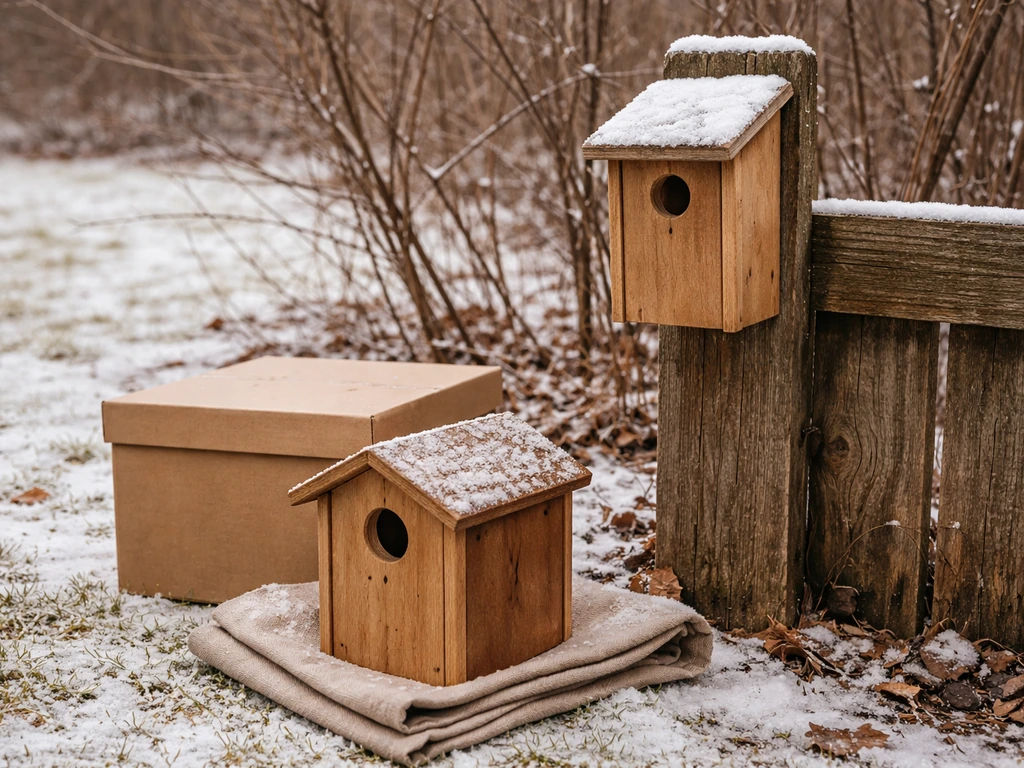
This is a real decision with reasonable arguments on both sides, and it connects closely to how you think about winter use and species reuse of nest boxes.
Leaving a cleaned box up through winter has genuine benefits. Bluebirds, chickadees, and nuthatches will use nest boxes as winter roost sites, which can improve cold-weather survival rates. If you're in a region where these species overwinter, a mounted box gives them a thermal refuge on frigid nights. The question of whether to take down bird houses in the winter really comes down to your local species, the box's exposure, and whether predator pressure is high at your location.
Taking the box down for winter makes more sense if: the box is in rough shape and needs significant repair work you'd rather do in a workshop, you're in an area with high starling or house sparrow pressure (leaving the box up keeps it available to invasive species year-round), or the mounting hardware is exposed to freeze-thaw cycles that damage it seasonally. If you store the box, keep it in a dry, unheated space like a garage or shed, not somewhere that gets damp.
For multi-brood species like bluebirds, leaving the box up between broods (cleaned, not removed) is clearly better than taking it down and rehanging it. Bluebirds often return to the same box for a second or third clutch, and disrupting the mounting location mid-season can cause them to abandon that territory. So 'take down between broods' is not a strategy I'd recommend for bluebirds specifically.
Predator, Pest, and Safety Considerations During Takedown
The act of removing or cleaning a box is actually a good moment to reset your predator defenses, so don't rush through it.
- Check the pole or baffle system while you have the box down. Raccoons, snakes, and cats exploit any gap in your baffle setup. This is the time to fix a loose cone baffle or replace a worn PVC sleeve.
- Inspect the entrance hole diameter carefully. Over time, woodpeckers can enlarge holes, which opens the box to larger predators or invasive species. Patch with a hardwood plug or replace the front panel if needed.
- Old nest material is attractive to mice over winter. A thorough clean removes their starter material and discourages nest establishment inside the box during your off-season.
- If you're working on a tall pole or tree mount, use a stable ladder with a spotter. Reach-and-grab work at height is how people get hurt. Bring the tools you need in a belt or bucket rather than making multiple climbs.
- After reinstalling a cleaned box, check that the door latch is secure. A loose door creates predator access and also lets the box flood in rain.
One thing worth doing if you've had persistent house sparrow or European starling problems: store the box until late March or early April, then rehang it. House sparrows begin nesting earlier than most native cavity nesters, and a box that's been down all winter is simply not available to them during that early window. When you rehang for the native species you actually want, you're already a step ahead.
The Legal Side: What You Can and Can't Do
This is the part most people don't realize applies to them: the Migratory Bird Treaty Act (MBTA) is a federal law that protects the vast majority of native bird species in the U.S., including their active nests and eggs. Removing, destroying, or relocating an active nest with eggs or chicks inside can constitute a federal violation, even on your own private property and even inside a nest box you built yourself.
The USFWS has issued guidance clarifying that the MBTA applies to destruction and relocation of migratory bird nest contents. Practically speaking, this means: if you open a box and find an active nest, you must leave it alone until the nesting cycle is complete. There is no DIY exception for 'it's inconvenient' or 'I didn't know.' The waiting-period guidance from NestWatch (four weeks after last confirmed activity for suspected abandonment) is a conservative approach that keeps you clearly on the right side of this law.
There are two practical exceptions worth knowing. First, house sparrows and European starlings are not protected by the MBTA because they are non-native, invasive species. You can legally remove their nests and eggs from your boxes at any time. In fact, doing so is actively encouraged by conservation organizations to protect native cavity nesters. Second, if a nest truly fails (all eggs cold, all chicks deceased, confirmed abandoned for four-plus weeks with zero adult activity), it is generally considered legal to remove the nest, though waiting and documenting the timeline is still the safest approach.
If you're ever unsure about a specific situation, your state wildlife agency or a local Audubon chapter can give you region-specific guidance. The MBTA is federal, but state laws can add additional protections, and some states have their own rules around nest boxes and nesting season disturbance.
Your Practical Action Plan for Right Now
If you're reading this in June 2026, you're likely right in the middle of nesting season for most of North America. Here's what to do today versus what to plan for later.
- Spend 15 minutes observing your box from a comfortable distance this morning and again this evening. Track adult entries, exits, and food deliveries. Note what you see.
- If you know roughly when eggs were laid or chicks hatched, count forward using the species' fledging window to estimate when the box should be empty.
- If the box looks quiet, resist the urge to open it immediately. Wait for the full fledging window to pass, then observe for 3 to 5 more days before opening.
- If you confirm fledging is complete and you're in a multi-brood species situation (bluebirds especially), clean the box promptly so it's ready for a second clutch.
- For end-of-season cleanup, block out time in September or October depending on your region, and gather supplies now: gloves, a stiff brush, mild soap, a bleach-and-water solution, and a bucket.
- Decide now whether you'll leave the box up or store it for winter, and check your baffle and mounting hardware at the same time as your final cleanup.
The through-line across all of this is observation first, action second. The birds will tell you when they're done if you watch closely enough. Give them the time they need, do a thorough clean when the moment is right, and your box will be ready to host another successful brood next spring.
FAQ
What should I do if I open the bird house and notice activity or eggs inside?
If you find an active adult visiting the box, or you discover eggs or nestlings inside, treat it as active. Close it gently, do not remove any part of the nest, and only resume opening after the species' fledging window plus a few extra observation days. If you suspect abandonment, rely on a full four weeks from the last confirmed adult sighting before acting, since low traffic can happen during incubation.
How long after fledging should I wait before I can clean without risking late nests?
To avoid disturbing late-stage birds, the safest approach is to wait until after the expected fledging window and then confirm quiet for several days (for most situations, 3 to 5 days) with no adult activity from your observation spot. If you cannot observe consistently, delay the check and do the cleanup in your region’s recommended late-season window instead of making an early call.
Can I clean a bird house between broods, and how do I time it correctly?
For most multi-brood species, cleaning between broods works only during a narrow gap. Check daily during the period starting about a week after the first brood fledges, and clean only after you have high confidence the next fledglings are gone and before the female begins adding new nesting material.
What’s the best way to disinfect a bird house if I saw lice or mites during the season?
When insect parasites are a problem, do not rely only on a quick wipe. Use a weak bleach solution and then leave the box open in direct sun for about a day after cleaning to help kill surface parasites, and let all parts fully dry before putting anything back.
Should I take down bird houses for winter, or leave them up for roosting birds?
If the box is being reused for winter roosting by species like bluebirds, chickadees, or nuthatches, taking it down can reduce winter shelter. Consider leaving it mounted if your exposure and predator pressure are reasonable, and only take it down for winter if repairs would be extensive or invasive pressure is high.
Where should I store a bird house if I take it down for the season?
If you store the box, choose a dry, unheated space (for example a garage or shed). Damp storage increases mold risk, and a box that is musty or moldy can deter birds when you rehang it.
How can I reduce house sparrow or starling takeover if it keeps happening?
Instead of rehanging immediately after cleaning, you can improve outcomes in persistent house sparrow or starling locations by storing the box until late March or early April, then rehang. This removes the box during the birds’ early nesting window.
What’s the biggest mistake people make when deciding when to take down a bird house?
If you cannot positively confirm the box is inactive, the safest decision is to postpone. Even if the box looks empty, certain species can start a new brood or show roosting behavior later, so use the calendar window for your region and verify quiet before opening again.
Is it ever legal to remove a failed nest from a nest box?
If you learn the nest is truly failing, you still need to document the timeline carefully before removal. If you are unsure whether it is actually finished (for example, eggs may be cold but you are not certain), wait longer rather than removing contents during an active or possibly active cycle.