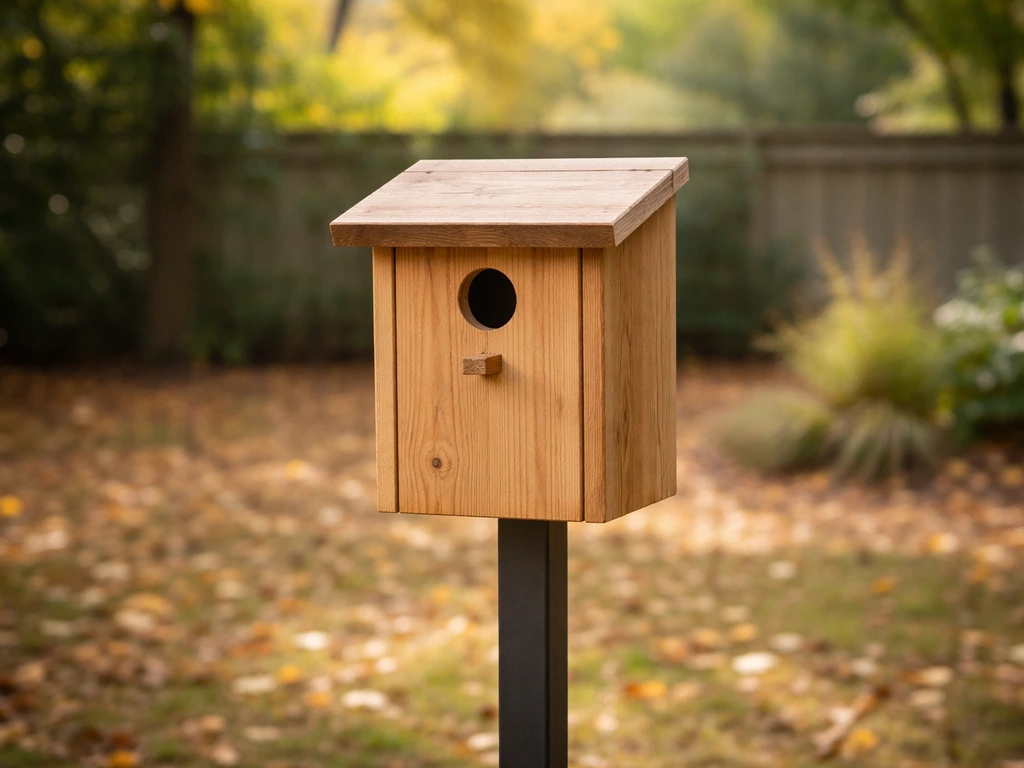
For most backyard birders in temperate climates, you do not need to take down bird houses in winter. The better move is to clean them out after the last brood fledges, do a quick check for damage, and leave them up. Small cavity-nesting birds like Eastern bluebirds, chickadees, and downy woodpeckers actively use nest boxes as roost sites on cold nights, blank" rel="noopener noreferrer">sometimes communally. Taking them down removes that shelter right when birds need it most. That said, there are real scenarios where taking a house down for winter is the right call, and there are specific prep steps that make leaving one up safe and worthwhile.
Should You Take Down Bird Houses in Winter? A Guide

Maya Thompson
1 Jul 2026
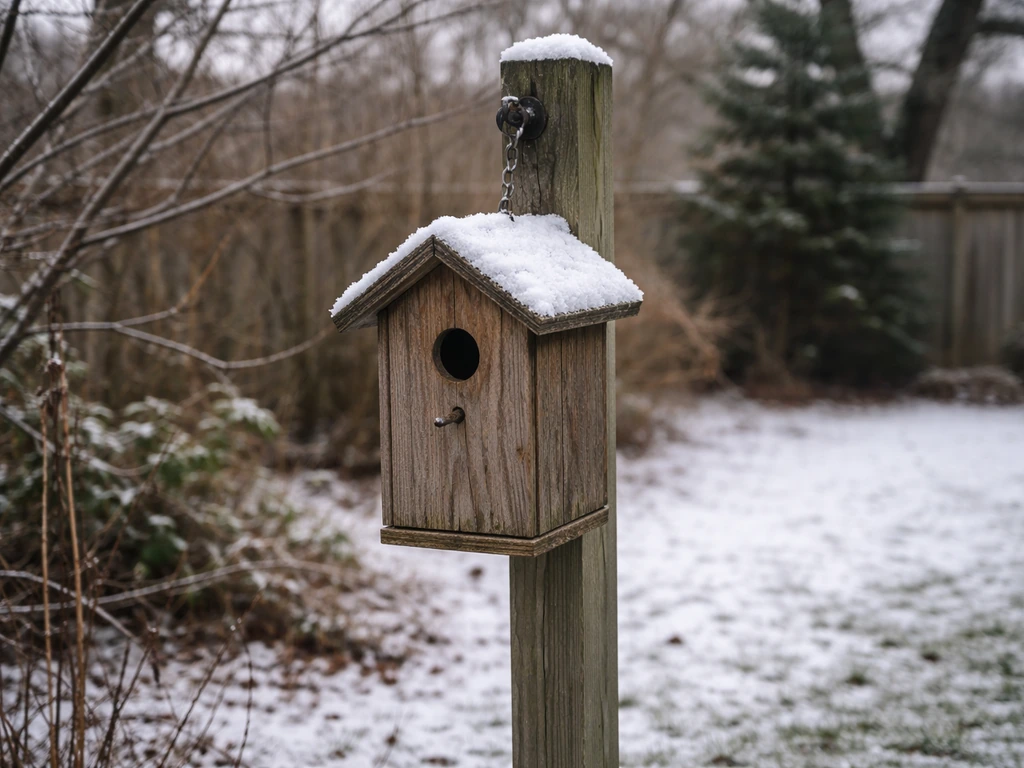
Leave it up or take it down: the core decision
The default recommendation from groups like Mass Audubon and the Michigan Bluebird Society is to leave nest boxes up through winter. A properly constructed and cleaned house gives cavity-nesting birds a thermally stable place to roost when temperatures drop. A cluster of bluebirds or a single chickadee tucked into a box on a January night can retain meaningful body heat compared to roosting exposed on a branch.
Taking a house down in winter makes sense in a narrower set of cases: the house is damaged and poses a structural risk, it was never cleaned after the last nesting season and is packed with old nesting material and parasites, it is in a location where severe weather or persistent flooding makes it unsafe, or you simply live somewhere with such mild winters that birds will not use it and you want to store it to extend its lifespan. Outside those situations, leaving it up and prepping it properly is the more bird-friendly choice.
How your region changes the answer
Where you live shapes both whether birds will use the box and what winter hazards you are dealing with. In northern states like Michigan, Maine, and Minnesota, cavity-roosting behavior is common and well-documented because temperatures regularly fall below freezing for weeks. Leaving a clean, stable box up there is genuinely useful to birds. In the mid-Atlantic and Southeast, bluebirds and wrens often stay year-round and will use boxes on cold nights even if winters are mild overall. In Alaska and other subarctic regions, the Alaska Department of Fish and Game recommends placing birdhouses in fall or winter when possible, specifically so birds can locate good shelter before the coldest stretch. In mild coastal climates in the Pacific Northwest or the Gulf South, hard freezes are rare, birds are less dependent on box roosting, and the bigger winter concern is moisture and mold inside the box rather than thermal protection.
Timing your fall cleanout also depends on region. Timing your fall cleanout also depends on region is it too late to clean out bird houses. Yorkshire Wildlife Trust recommends cleaning from late September through February, once nesting has definitively ended. In most of the continental U.S., the last broods of cavity nesters like bluebirds and tree swallows have fledged by late August or September. Cleaning in October gives you the ideal window: nesting is done, winter roosting has not fully begun, and you have time to check for repairs before hard weather arrives.
Which birds actually use houses in winter
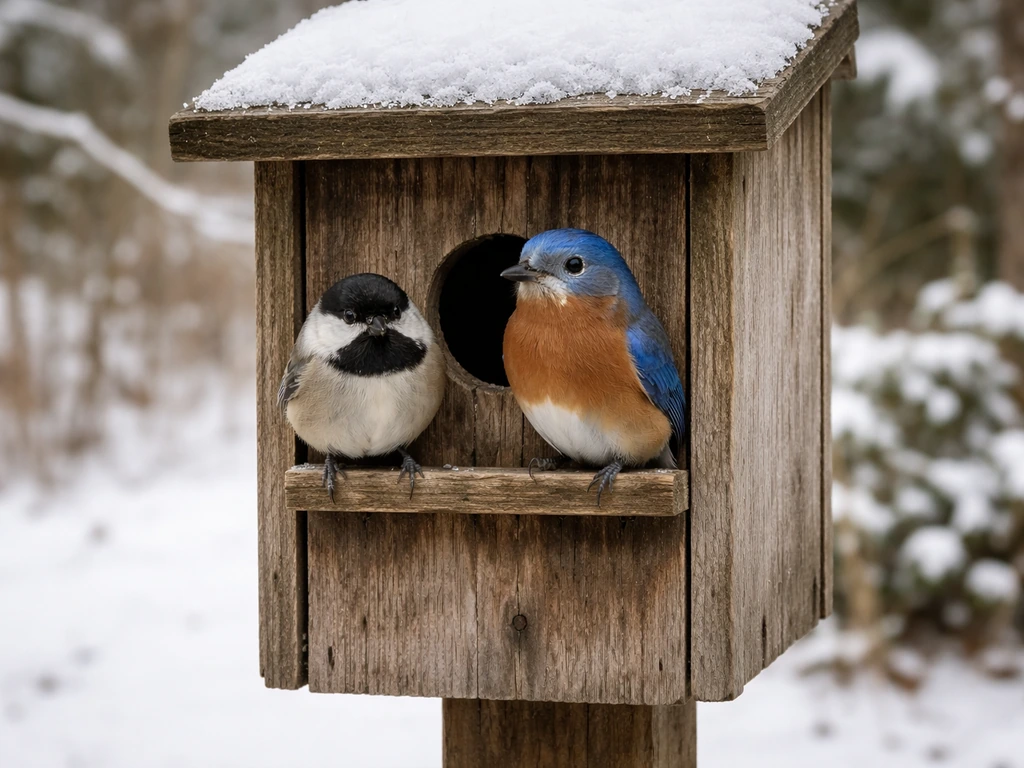
Not every species that nests in a box will use it for winter roosting, so it helps to know what you are likely hosting. Eastern bluebirds are the most well-documented winter box roosters, sometimes packing several birds into a single box on cold nights. Chickadees, nuthatches, and downy woodpeckers also roost in cavities and will use nest boxes when natural cavities are scarce. Carolina wrens in the Southeast occasionally roost in boxes too. Tree swallows, house wrens, and most flycatchers are migratory and will be gone from your yard entirely by October in most regions, so their boxes sit vacant all winter with no roosting benefit.
This matters practically. If you have a bluebird box in the Southeast or mid-Atlantic, leaving it up and clean through winter is a genuine service to local birds. If you have a house wren box in Minnesota, the birds are in Central America by November and the only thing using that box in January is cold air and possibly mice. You can still leave it up if it is in good shape, but do not feel guilty taking it down for cleaning and storage if the structure needs work.
Real winter hazards inside a nest box
Parasites and bacteria
Old nesting material left in a box over winter is a genuine problem. Mite populations are associated with nest material and can become established in a box, persisting between seasons. The Natural History Museum notes that mite buildup is especially likely in climates that do not freeze hard enough to kill them off. Research published via PMC confirms that previously occupied boxes carry different bacterial loads than unoccupied ones, which supports the case for cleaning rather than just leaving old nests in place. Removing the old nest and scrubbing the interior breaks that cycle before spring birds move in.
Water intrusion and ice
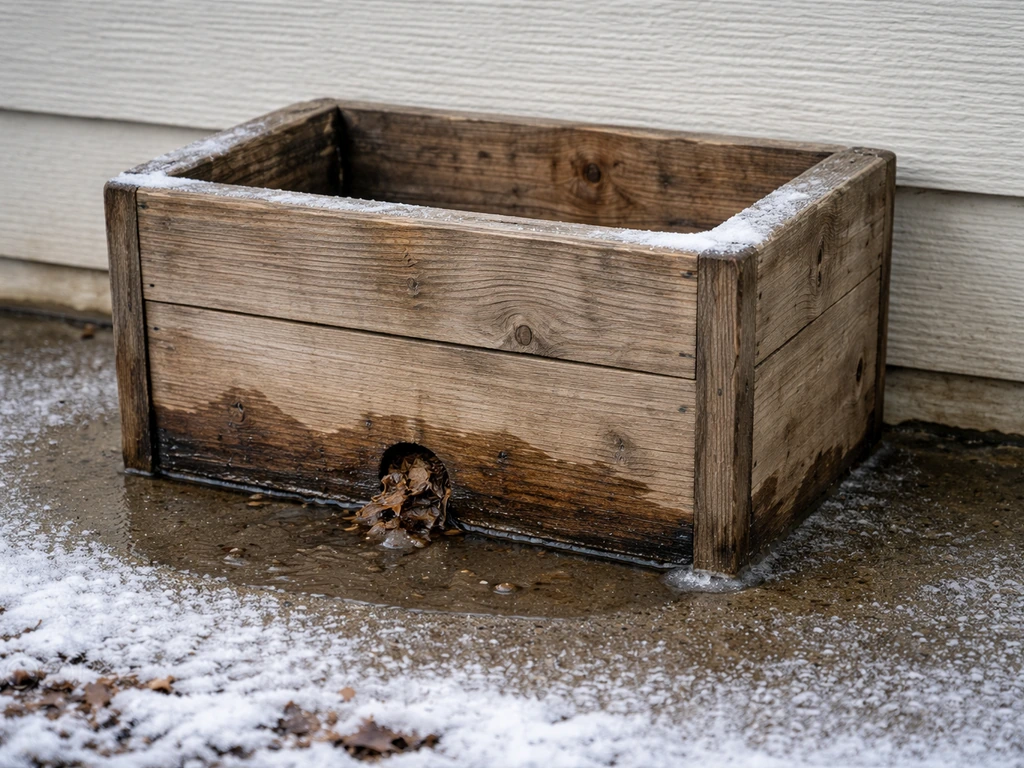
A box with a clogged drainage hole will collect water. In freezing climates that water turns to ice, which can crack wood, warp floors, and create a genuinely hostile interior environment. Check that drainage holes in the floor are clear before the first hard freeze. If your box relies solely on gaps in the floor corners, make sure debris from the old nest has not sealed them.
Wind, mounting stability, and predators
Winter storms are hard on mounting hardware. A box swaying on a loose post or wobbling baffle is more accessible to climbing predators like raccoons and snakes, and it is more likely to fall entirely. NestWatch monitoring guidance identifies predation as a leading cause of nest failure, and a poorly secured box in winter does not suddenly become predator-proof just because nesting season is over. Birds roosting in a loose, accessible box are at higher risk. Tighten mounting screws and check baffle integrity in fall.
Ventilation in cold weather
Some birders instinctively want to seal up ventilation gaps for winter to make the box warmer. Resist that urge. Ventilation gaps prevent condensation buildup inside the box, which is a bigger health hazard to roosting birds than the slight temperature difference. Leave ventilation as-is unless your specific box design includes a winter roosting modification, like a ventilation plug that was designed into the original build.
When to actually take it down: specific signs and scenarios
Here are the situations where taking the box down for the winter is the right call:
- The box has structural damage: a cracked floor, a split side panel, a loose or missing roof that lets in rain. A broken box offers false shelter and is not worth leaving up.
- You never cleaned it after last season and it still contains a full old nest. Leaving a heavily parasitized nest in place over winter makes next spring's tenants start off with a pre-loaded mite population.
- The mounting post is unstable and you cannot fix it until spring. A box that falls during a winter storm wastes any roosting benefit and creates a hazard.
- You are in a very mild climate, migratory species were the only occupants, and you need to refinish or repaint the exterior wood to extend its lifespan. Winter storage while you do that work is entirely reasonable.
- The box is in a flood-prone location where winter rain regularly submerges the base of the post.
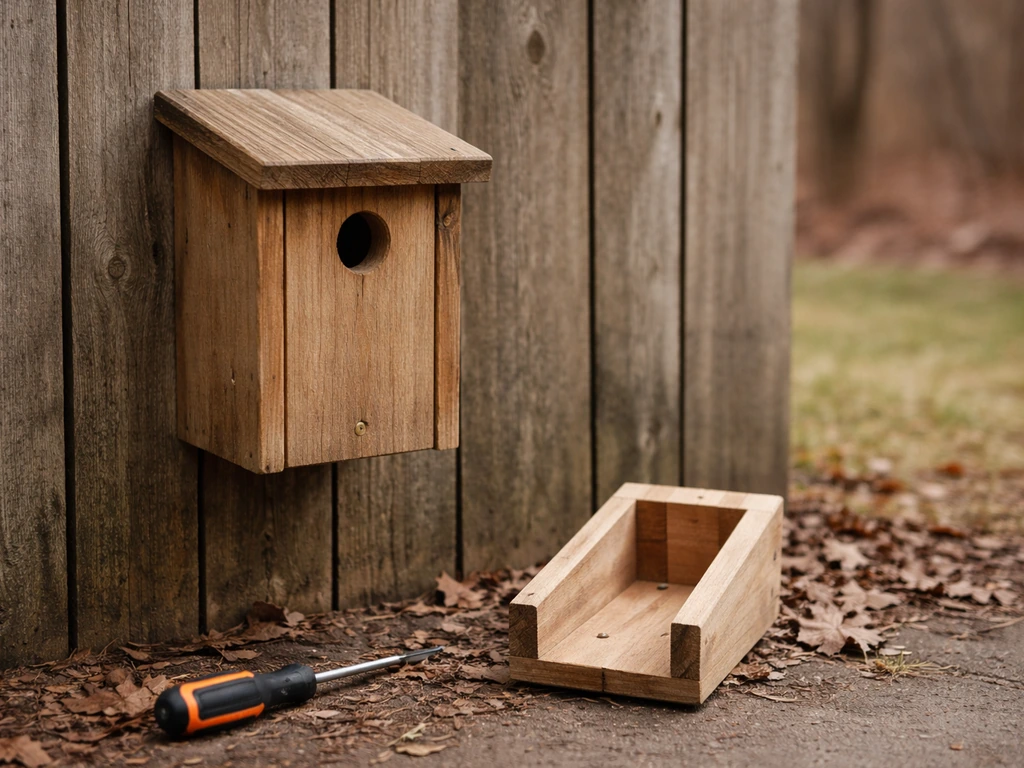
If you do take it down, clean it thoroughly before storing it. Emptying birdhouses after nesting is a key step in preventing pests and keeping winter roosting safer for birds. Remove all old nesting material, scrub the interior with a stiff brush and a dilute bleach solution (one part bleach to nine parts water), rinse well, and let it dry completely before storing in a shed or garage. Use the inverted bag technique to remove bird nests, and then clean the surface that came into contact with the nest to help manage bird mites. Store it somewhere it will not be gnawed by rodents.
If you leave it up: what to actually do before winter
Leaving a box up is not the same as doing nothing. Here is the prep sequence that makes it genuinely useful rather than a hazard: p24s0: Leaving a box up is not the same as doing nothing when to put out bird houses.
- Clean out the old nest completely. Remove all nesting material by hand or with a brush, using an inverted bag technique to contain mites and debris. Do not just compress the old nest down.
- Scrub the interior. Use a stiff brush with a dilute bleach solution (1: 9 bleach to water), working into corners and the underside of the roof. Rinse with clean water and let it air dry fully before closing the box up.
- Check drainage. Confirm floor drainage holes are open and clear. A 1/4-inch hole in each floor corner, or small gaps at the floor edges, is the minimum. Clear any packed debris.
- Inspect the exterior for damage. Look for split panels, a lifted roof, and any gaps larger than the entrance hole that could let in rain or give predators a grip. Make repairs now, not in March.
- Tighten all hardware. Check the mounting screws, the post anchor, and the baffle (if you use one). Snug everything up before the first freeze makes metal hardware harder to work with.
- Verify the entrance hole size is correct for your target species. A house sparrow can squeeze into a hole sized for a bluebird (1.5 inches), so this is a good time to confirm dimensions and add a metal hole reinforcer if the wood is starting to show wear.
- Do not seal ventilation gaps. Leave them as designed.
- Consider a roosting pocket or adding wood shavings. A small layer of clean wood shavings (not cedar, which has irritating oils) on the floor can add a small amount of insulation for roosting birds on very cold nights.
Comparing the two approaches side by side
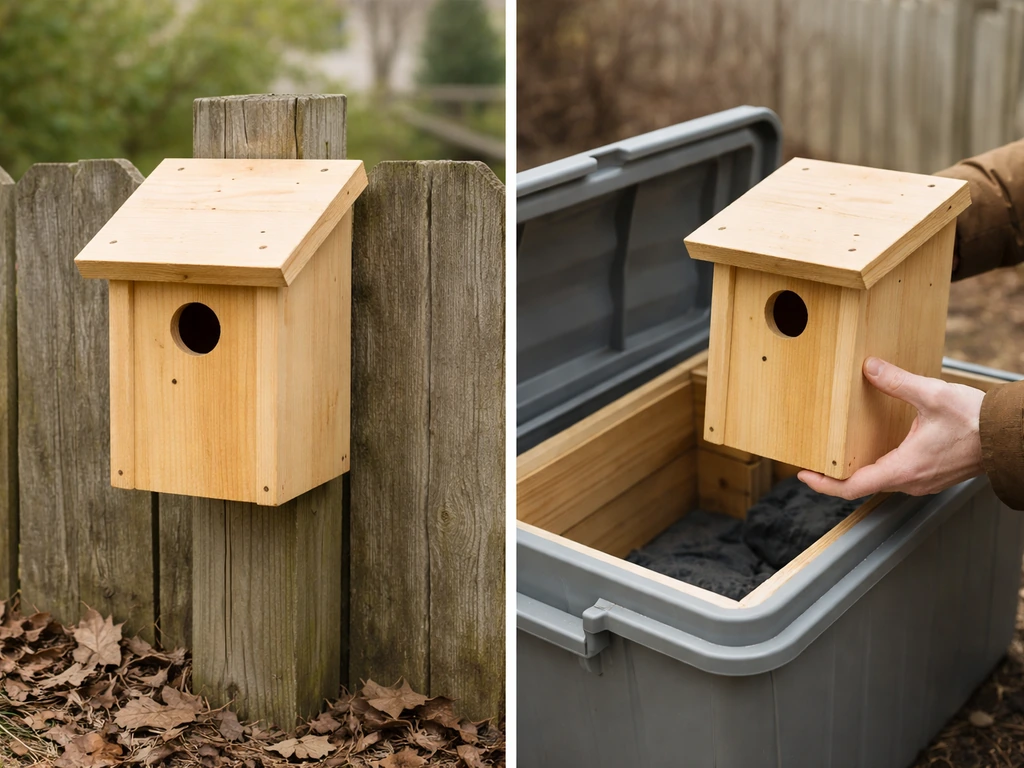
| Factor | Leave up (cleaned and prepped) | Take down for winter |
|---|---|---|
| Best for | Year-round residents: bluebirds, chickadees, nuthatches | Migratory species only (wrens, swallows) or damaged boxes |
| Winter benefit to birds | Roosting shelter on cold nights | None directly; makes spring setup easier |
| Parasite risk | Low if cleaned properly | Eliminated if cleaned before storage |
| Predator risk | Manageable with baffles and stable mounting | No risk during storage |
| Effort required | Full fall cleaning and hardware check | Full cleaning plus storage, then reinstall in spring |
| Recommended timing | Clean October; leave up through winter | Take down after last fledge; reinstall February to March |
For most people with a bluebird or chickadee box in the eastern or central U.S., leaving it up wins. For someone with a house wren box in the upper Midwest who has not cleaned it in two seasons, taking it down, doing a proper overhaul, and reinstalling it in late February is the smarter play.
Your end-of-season and spring reset checklist
Use this checklist in fall (September to October) and again in late winter (February to early March) to stay ahead of the season. The Virginia Bluebird Society refers to this transition as 'winterizing your boxes,' and it is exactly the right frame: a deliberate handoff from active nesting season to winter mode and then back again.
| Task | Fall (Sept-Oct) | Late Winter Reset (Feb-Mar) |
|---|---|---|
| Remove and dispose of old nest material | Yes | If not done in fall |
| Scrub interior with dilute bleach solution | Yes | Yes, especially if any winter roosting occurred |
| Clear drainage holes | Yes | Yes |
| Check and tighten mounting hardware | Yes | Yes |
| Inspect for structural damage or rot | Yes | Yes |
| Confirm entrance hole size and condition | Yes | Yes |
| Check and reset predator baffle | Yes | Yes |
| Add thin layer of wood shavings (optional) | Yes for winter roosting | Remove and replace with fresh |
| Record species observed using box | Yes | Yes, start new season log |
| Reinstall if taken down for storage | N/A | By mid-February in South, early March in North |
The late-winter reinstall timing matters more than most people realize. Mass Audubon specifically notes that putting up a box in fall or winter gives birds time to find it before breeding season starts. Bluebirds in the mid-Atlantic begin scouting nest sites in late February. If you wait until April to reinstall, you have already missed the earliest and most motivated house-hunters of the year.
The bigger picture is that winter is not dead time for your nest boxes. It is the window to get maintenance done without disrupting active nests, give roosting birds a clean and secure space, and set yourself up so that when breeding season kicks off, you are not scrambling to clean a box with a pair of bluebirds already inspecting it. Do the work in fall, check it again in late winter, and you will be ready well before the first eggs of the year.
FAQ
If I see old nests or droppings inside my birdhouse late in the year, should I take it down immediately?
Yes, but only if you can do it without leaving behind fresh nesting material. If you suspect mites or heavy soiling, remove the box from the site, empty and scrub it, then dry it fully before storage or reinstalling. Reinstalling mid-winter can work if you do it on a mild day and the hardware is secure, but the better approach is to winterize in fall and use February as your check window.
Can I seal the ventilation holes or gaps during winter to keep birds warmer?
For winter roosting birds, the exact ventilation style matters less than keeping airflow as designed. If your box has fixed ventilation gaps or a built-in winter roosting feature, do not seal anything shut to “trap heat,” because condensation and moisture issues are more harmful than a slightly cooler roost. If you added modifications yourself, verify they do not block airflow paths.
I live in a mild area with few freezes, should I still leave my birdhouse up all winter?
In mild climates, leaving a box up can still be beneficial, but it should be treated as a roost shelter only if the box remains dry and structurally sound. If you routinely see moisture, staining, or mold inside, prioritize cleaning, improving drainage, and preventing water entry. If the box is chronically wet or you cannot keep it dry, storing it for winter may be the safer option.
What winter damage should I look for beyond old nesting material?
Yes, and that is often an overlooked reason boxes get “worse” after nesting. Repeated wetting and refreezing can crack wood, loosen joints, and warp surfaces that birds need for stable roosting. A practical check is to clear drainage holes before the first hard freeze, then do another quick inspection after major storms.
If my box is wobbly or has loose screws, is it better to leave it up or take it down?
You can reduce risk without taking the whole box down by tightening hardware, confirming the mounting post is stable, and ensuring any predator guards and baffles are intact. If the box can sway or drop from its mount when you nudge it, that is a sign it needs adjustment before cold weather ramps up. If the mount is severely damaged, storing it temporarily is usually better than leaving it at risk.
If I decide to take a birdhouse down for winter, where and how should I store it?
If you must store it, remove nesting material and scrub first, then let the box dry completely. Store it in a rodent-resistant location, and avoid ground-level storage where mice can get in. Also keep the box out of direct sun during drying, so the interior does not trap residual moisture.
When should I reinstall a box if I took it down for winter maintenance?
Late-winter reinstallation is mainly about giving early scouts time, not about waiting for the calendar. A good rule is to put boxes back early enough for February scouting in your region, and to avoid reinstalling right as storms are expected, since birds may be searching when conditions are favorable. If you are uncertain, reinstall after you complete your late-winter inspection work and hardware check.
My yard floods sometimes in winter, does that change whether I should keep the birdhouse up?
Not always, but it is still worth thinking about where it is mounted. If the box is positioned where it will fill with floodwater, get heavy ice buildup, or sit under dripping eaves in winter rain, roosting birds may be exposed to damp, cold conditions. In those cases, storing it until conditions stabilize or relocating it to a better drainage site can be the most practical fix.
Next Article
When to Take Down Bird Houses: Safe Timing and Cleanup
Learn when to take down bird houses, how to confirm nests are finished, and safe cleanup, storage, and rehang timing.