The best time to clean out bird houses is in the fall, shortly after the last brood of the season has fledged, typically between September and October. If you miss that window, late winter (January to February) works just as well, as long as the box is empty and no birds are actively using it. Either way, cleaning once a year at minimum keeps parasites under control, reduces disease risk, and gives birds a fresh start when nesting season rolls back around.
When to Clean Out Bird Houses: Best Timing and Steps
Maya Thompson
14 Apr 2026
Do you have to clean bird houses (and why)
Yes, you really should clean them. It is not just a nice-to-have. Old nesting material accumulates feces, insect debris, mites, lice, and blowfly larvae. Left in place season after season, those parasites have a head start on the next family that moves in. University of Missouri Extension research confirms that removing old nesting material after the season minimizes parasite infestations and also makes the box less attractive to deer mice, which can completely block bird use the following spring.
There is also a structural reason. Every time you open the box to clean it, you get a chance to check for cracks, rotting wood, loose screws, and wasp nests built in the corners. A box that looks fine from the outside can be a mess inside after one full nesting season. Catching those problems in the fall means you have all winter to repair or replace before birds start scouting for nest sites in late winter.
If you are still unsure whether cleaning is truly necessary for your situation, the short answer is almost always yes. You can read a longer discussion of whether you should empty bird houses if you want to dig into the edge cases.
Do birds clean out bird houses themselves
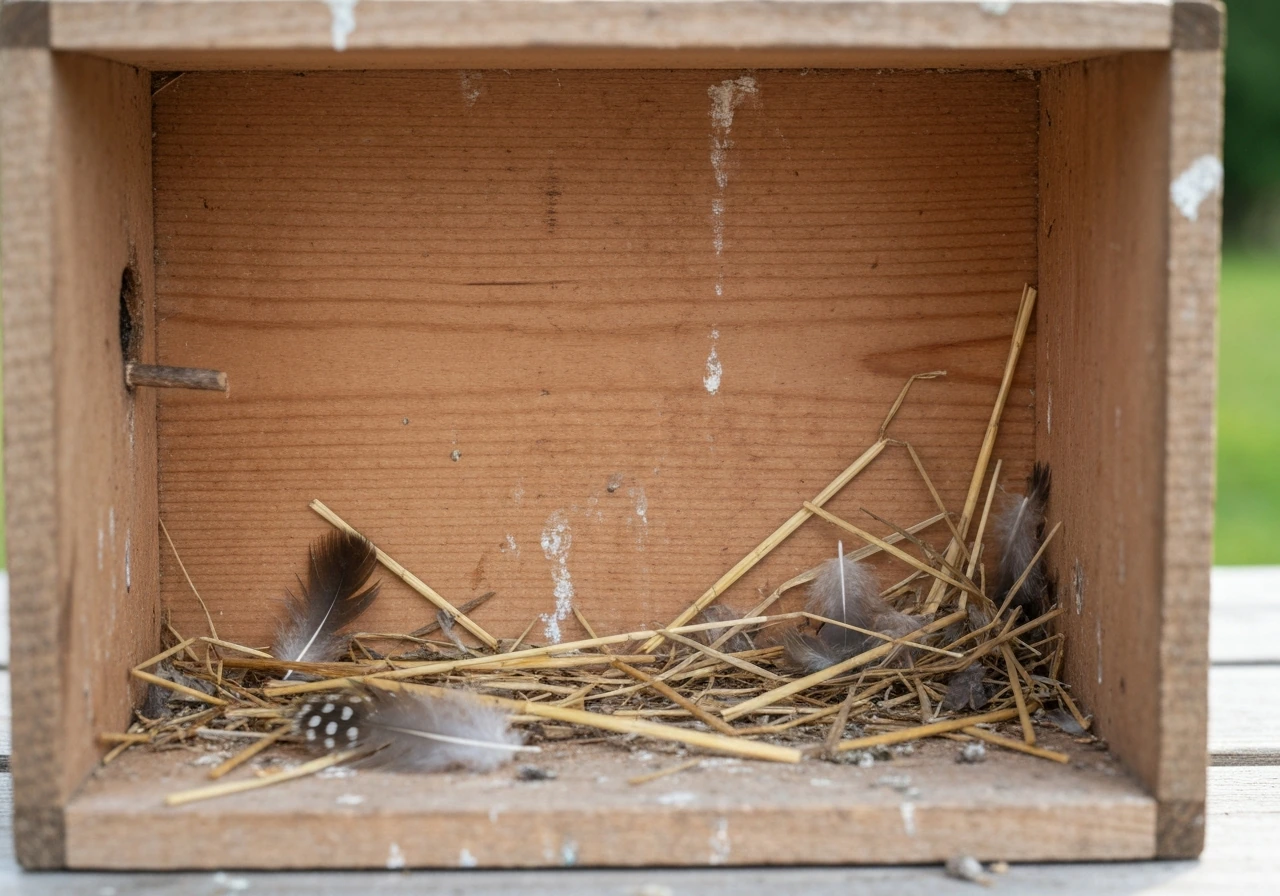
Not really, at least not in any thorough way. Some birds, like house sparrows, will toss old material out of a box and start fresh. Many cavity nesters, however, simply build a new nest directly on top of the old one. That stacked material becomes a warm, humid environment that mites, blowfly larvae, and ants love. Research published in The Auk on eastern bluebird nest-site fidelity found that previously used, debris-filled cavities are genuinely relevant to parasite avoidance when birds decide whether to reuse a box within a season, which suggests the mess matters to them even if they do not clean it themselves.
So while birds may rearrange or add to a nest, they are not scraping down the walls and disinfecting the floor. That job falls to you.
Best time to clean: timing by season (including fall)
Fall is the gold-standard window for cleaning bird houses. Once the final brood has fledged, usually by September or early October depending on your climate, the box is empty and the birds are done with it for the year. Cleaning at this point removes parasites before they can overwinter in the nest material and multiply. The San Juan Preservation Trust specifically identifies September through February as the safe window for cleaning unoccupied nest boxes, which tells you the fall-to-late-winter range is solid for most backyard species.
Late winter, meaning January through early February, is the other practical option. If you forgot to clean in the fall or simply did not get around to it, cleaning now still leaves you time before the earliest scouts start investigating boxes in late February or March. Just make sure the box is truly empty first. Some species like screech owls and gray squirrels use nest boxes through the winter for roosting, so do a quick visual check before you start pulling material out.
Spring cleaning is possible but more complicated. Birds in warmer regions may start nest-building as early as February or March, so your window narrows fast. If you missed both fall and late winter, clean as early in the new year as you can and always verify the box is unoccupied before you touch anything inside.
Summer cleaning between broods is also done by dedicated monitors. Oklahoma Department of Wildlife Conservation recommends cleaning about 7 to 10 days after each nesting season ends to give birds a fresh home for a potential second or third brood. If you go this route, the same rule applies: wait until all chicks have fledged and the nest is definitively inactive before opening the box.
| Season / Window | Timing | Notes |
|---|---|---|
| Fall (recommended) | September to October | After final brood fledges; parasites removed before winter |
| Late winter | January to February | Good catch-up window before spring scouting begins |
| Between broods (summer) | 7 to 10 days after fledging | Only if confirmed inactive; helps reduce mid-season parasites |
| Early spring | Before March in most regions | Last resort; verify box is empty before cleaning |
How often: should you clean every year and when it's optional
Annual cleaning is the standard recommendation. The Wildlife Corridor Trust advises cleaning nest boxes at least once per year in the fall, and Welcome Wildlife recommends cleaning birdhouses at least once a year as a baseline. For most backyard setups, once a year in the fall is exactly right.
Cleaning after every brood is done by more hands-on monitors, and it does make sense from a parasite-control standpoint. The Loudoun Wildlife nest box guide specifically calls for cleaning out boxes after the fledging of each brood so birds can reuse the space for second and third broods. That said, there is genuine debate in the birding community about whether cleaning between broods meaningfully improves outcomes. At least one study found no significant effect on nesting attempts or the number of nestlings fledged when comparing cleaned versus uncleaned boxes between broods, so if life gets busy, skipping the between-brood cleaning is not a disaster.
Where cleaning is non-negotiable regardless of schedule: any box that had a nest fail due to disease, any box with a heavy mite or blow fly infestation, and any box with visible fecal buildup on the walls. Those situations call for thorough cleaning the moment the box is confirmed empty.
Cleaning old nests vs leaving current occupants alone
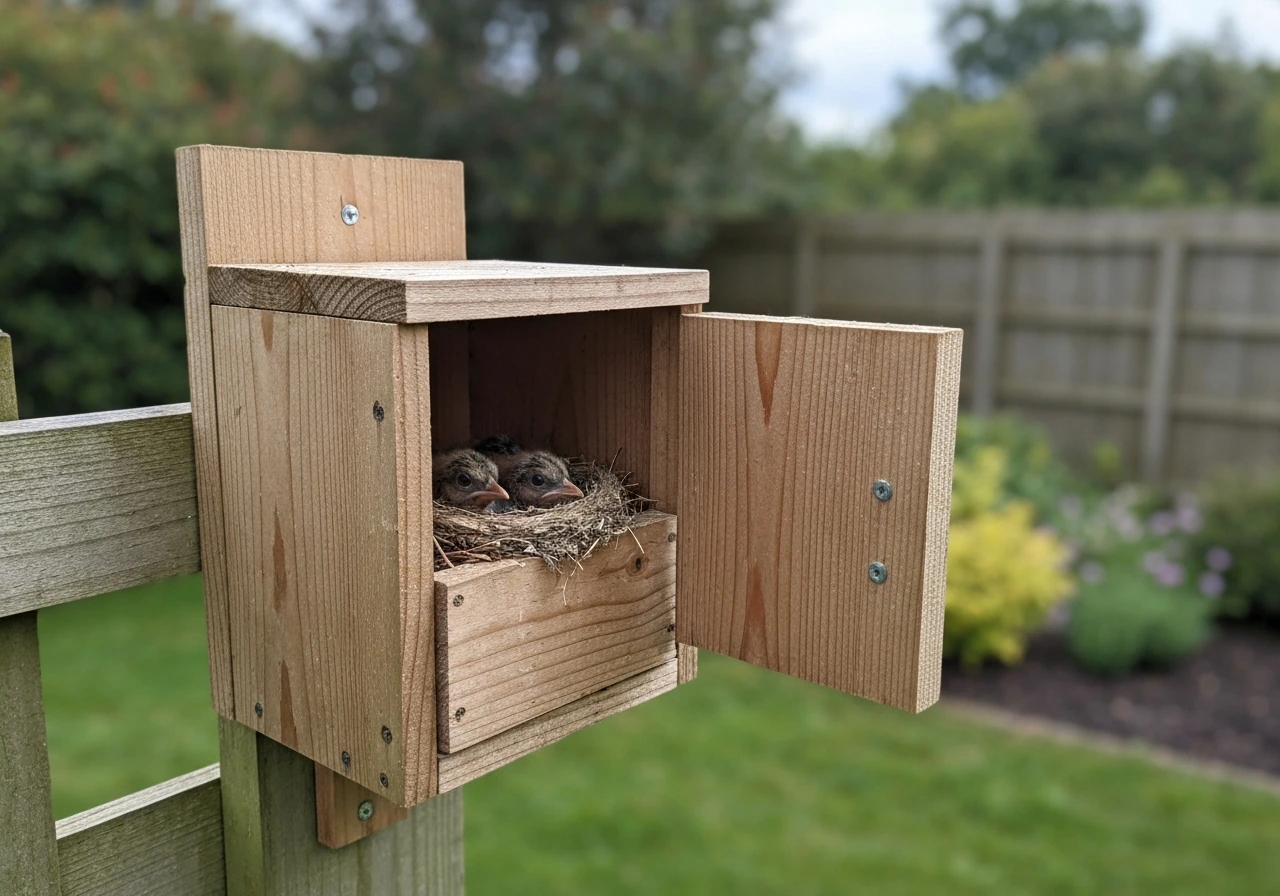
This is where the legal side matters. Under the Migratory Bird Treaty Act, it is illegal to destroy a nest that contains eggs or live young, or young that are still dependent on the adults. That is a federal law in the United States, not just a guideline. The U.S. Fish and Wildlife Service is clear that nest removal permits are only issued when there is a genuine human health or safety concern, so you cannot simply decide you want to clean the box while chicks are still inside.
NestWatch from the Cornell Lab puts it plainly: cleaning should only happen when there is absolutely no sign of breeding activity. If you peek in and see eggs or small chicks, close it back up and wait. If you see a nest that looks complete but you are not sure whether it is active, wait another day and check again. Parents can be away from the nest for stretches of time, especially during incubation, so an empty-looking nest is not always an inactive one.
NestWatch also notes that leaving nesting material in place during the breeding season makes sense because parents may attempt another brood using the same location. So if the current nest has fledged but you suspect a second brood could happen, give it a week or two before cleaning. Once you are confident the season is over for that box, then clean.
If you are wondering about timing in a specific situation, especially if you are past the typical window, the guidance on whether it is too late to clean out bird houses walks through how to assess your specific scenario.
Step-by-step safe cleaning process and hygiene tips
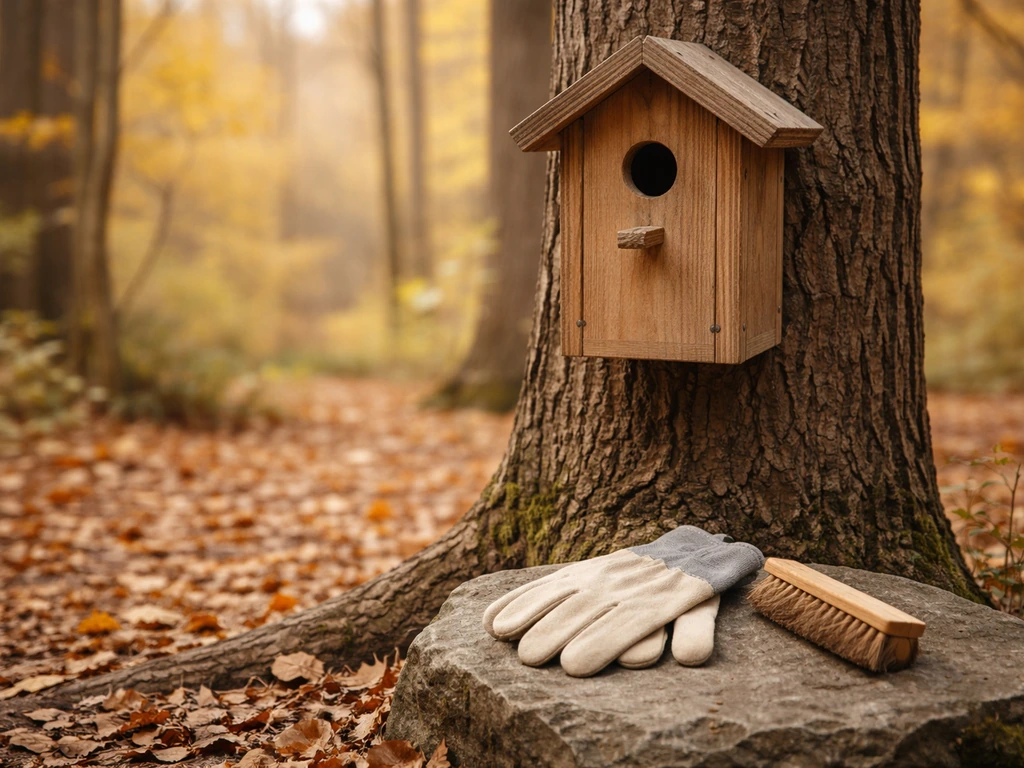
Before you start, work outdoors or at least in a well-ventilated space. Nesting material can contain parasites and should not be handled inside your home. Wear disposable gloves and consider a simple dust mask if the nest is heavily soiled, since dried fecal matter can become airborne when disturbed.
- Confirm the box is unoccupied. Open it slowly, look for eggs, chicks, or a bird inside. If occupied, close it and come back later.
- Remove all old nesting material by hand or with a putty knife or stiff spatula. Get everything out, including loose feathers, grass, and debris packed into the corners.
- Dispose of the material at least 15 feet away from the box. This prevents parasites from finding their way back in.
- Scrape the interior walls, floor, and roof with your putty knife to remove stuck-on droppings, insect nests, and any dead-skin buildup.
- Scrub the interior with a mild dish soap and water solution using an old brush.
- If the box had fecal matter, mites, or any sign of disease, follow up with a 1: 10 bleach solution (1 part bleach to 10 parts water) and scrub again. Some sources suggest a slightly stronger 1:9 ratio; either works well for disinfecting.
- Rinse the box thoroughly with clean water so no bleach residue remains.
- Let the box air-dry completely before closing it back up. A wet interior encourages mold.
Do not use any strong chemical sprays, pesticides, or mothballs inside the box. Birds are sensitive to fumes and residue from those products. Soap, water, and diluted bleach are all you need.
What to check for afterward (damage, pests, next nesting)
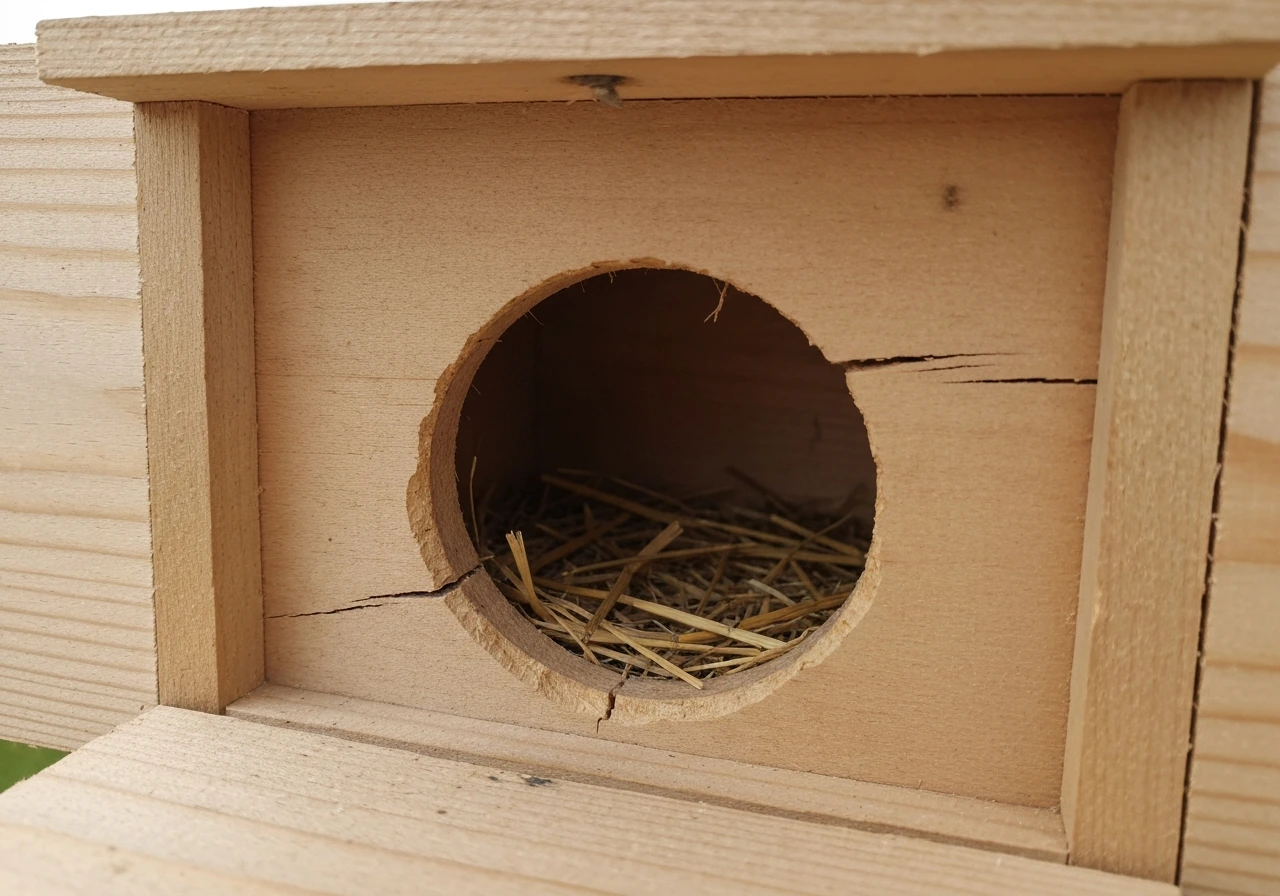
Once the box is clean and dry, do a full inspection before closing it up. This is the part most people skip, and it is genuinely useful. Run through this checklist:
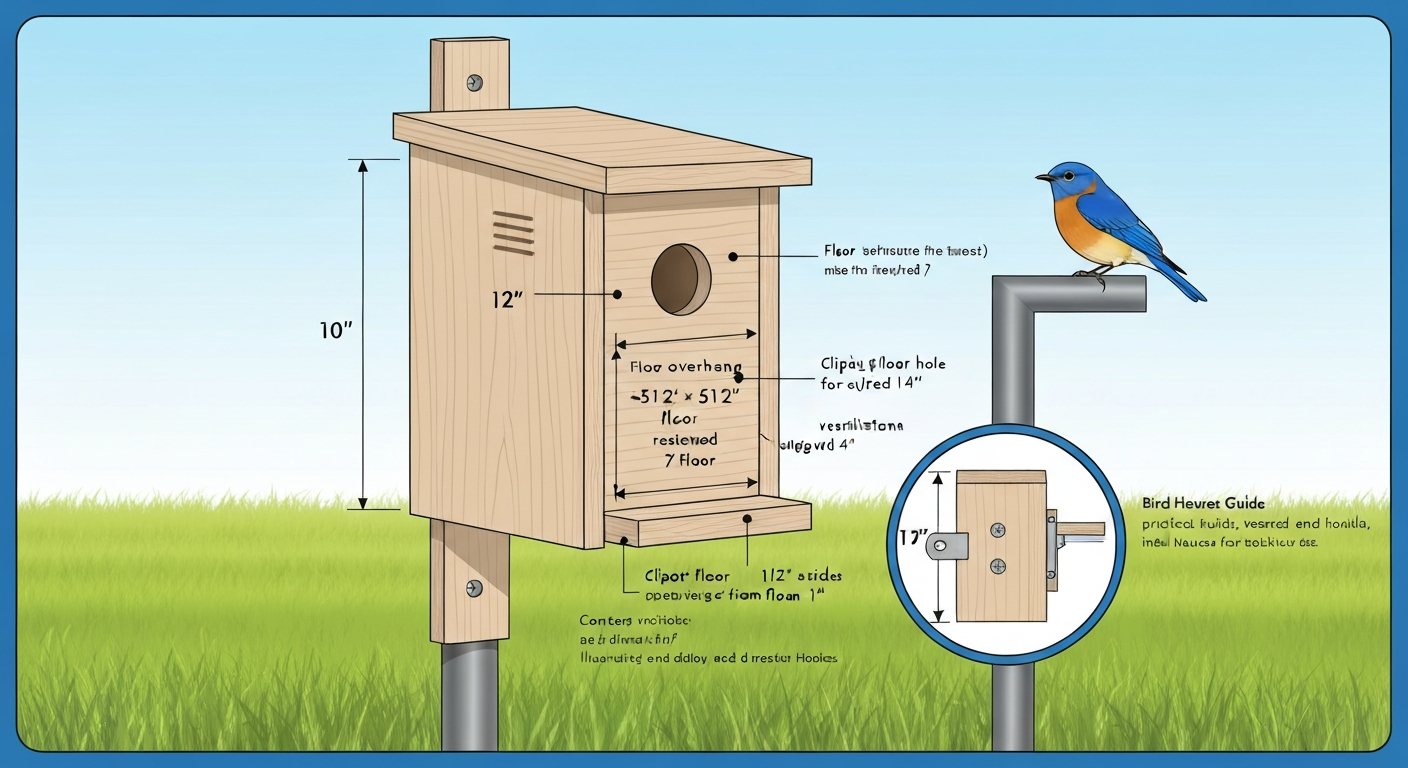
- Check the entrance hole for cracks or enlargement. A hole that has been chewed or weathered larger than the correct diameter for your target species lets in predators and competitors. Sand smooth or replace the front panel if needed.
- Look for cracks or gaps in the walls and roof. Water getting inside a nest box during breeding season can kill eggs and nestlings. Caulk small gaps or replace damaged panels before spring.
- Check that the box drains properly. There should be small drainage holes in the floor corners. Clear them if debris has plugged them.
- Inspect the mounting hardware. A box that wobbles on its pole or post is more vulnerable to predators. Tighten or replace bolts and straps now so you are not doing it in March.
- Look for wasp or mud dauber nests built in corners. Scrape those out completely; wasps will return to last year's location.
- Check for any remaining mite activity on the walls. If you see tiny moving specks, repeat the bleach solution treatment and let the box dry in direct sunlight for a few hours before closing.
After the inspection and any repairs, you have a decision to make about whether to leave the box up through winter or take it down. Species like chickadees and wrens may roost in boxes during cold weather, so leaving them up is often beneficial. If you want to think through that question more carefully, it helps to understand whether you should take down bird houses in the winter for your specific situation.
If you do decide to take a box down temporarily for repairs or storage, knowing when to take down bird houses helps you time it so you are not disrupting any late-winter roosting activity before you are ready to put it back up.
When spring arrives and you are ready to put clean boxes back in place, timing matters there too. Getting boxes up at the right moment maximizes the chance that scout birds find them before they commit to a natural cavity. The guidance on when to put out bird houses gives you the regional timing details to nail that window.
The bottom line: clean in the fall after the last brood fledges, disinfect if the box was heavily soiled, do a full structural check while you have it open, and never disturb a box with active eggs or young birds inside. Do that once a year and your boxes will be ready, safe, and attractive every breeding season.
FAQ
What if I can see old nest material but I am not sure whether birds are still using the box? (How do I decide?)
A good rule is, if you see fresh fecal smears, live insects in the debris, or thick nesting material still inside, treat it as “not ready.” Remove material only when the box has been inactive for long enough that no adults are bringing food and no chicks are present, then clean thoroughly and let the box fully dry before putting it back up.
Can I repair the box while I clean it, or should I wait until later?
Yes, but do it only when the box is truly empty, then reattach or replace the floor during the same visit. If you cannot replace boards right away, leave the box off until repairs are done, because leaving it open with exposed wood and debris can attract wasps and rodents.
What is the safest way to disinfect a nest box if it was really dirty?
To disinfect a heavily soiled box without overdoing chemicals, use a diluted bleach solution (as your article suggests) and rinse well, then dry completely in airflow before reinstallation. If the wood remains damp, mites can survive in moisture and mold can become an issue, especially for boxes stored indoors.
If I want to take boxes down for repairs in winter, how can I tell whether roosting birds will still be using them?
Avoid removing the box early if you notice winter roosting candidates (recent activity signs, droppings under the entrance, or consistent traffic). If you must take it down for repairs, do it when you have confirmed it is not being used, and put it back up promptly after repairs so you do not create an uncovered gap during roosting time.
Should I ever leave old nest material in the box during fall cleaning, or does it need to go every time?
Yes, it is often better to replace the nest material rather than leave it in place once you have determined the box is inactive. Re-using old material can make parasite control harder because you can miss hidden fecal buildup on the underside of the floor or in corners where debris settles.
What should I do differently if I suspect disease or there was a failed nesting attempt due to illness?
If you are handling a box with obvious disease signs, treat it like a “thorough-clean” case: wear disposable gloves, avoid shaking debris, clean the interior surfaces, and do not reuse the same tools between boxes without wiping them down. Let the box dry fully before storage or reinstalling to reduce odor and residual contamination.
What if I find a wasp nest when I open the box to clean it?
If there are wasps using the box, do not clean immediately until the colony is inactive. Otherwise, you can trigger stings and also spread debris. Wait for the activity to stop, then check the corners and entry area while wearing protective clothing, and remove any remaining wasp nest material during the confirmed-empty window.
How do I decide whether “once a year” is enough versus cleaning more often in my yard?
More than one annual cleaning is only worth it for active monitoring setups or if you have known parasite pressure (repeated mite blowfly problems, heavy debris, or a history of failed nests in the same box). For most backyard feeders, one well-timed cleaning in the fall plus repairs as needed gives most of the benefit without constantly disturbing potential repeaters.
How long should I watch or wait to confirm a box is unoccupied before I start cleaning?
Do not assume the box is “unoccupied” just because it looks empty. Incubating adults may briefly leave to forage, and cavity users can be inside without obvious movement. Use a calm observation period (for example, looking for any adults entering the box before cleaning), and if there is any doubt, wait and re-check.
If my bird house has removable panels, can I clean only certain parts instead of the whole box?
If your box has removable parts, like a floor or panel, you can usually clean and disinfect just those components while keeping the rest attached, as long as you have confirmed there is no active breeding. This reduces wear on screws and hinges and speeds drying, but you still need to do a structural inspection of the full interior and corners when possible.
Next Article
Blue Bird House Instructions: DIY Plans, Sizes & Mounting
DIY bluebird house: step-by-step build, exact cuts and hole sizes, mounting, predator guards, cleaning, and care.