It is April 21, and if you're standing in the backyard wondering whether you've missed the window to clean out your bird house, here's the direct answer: it depends entirely on whether a bird is using it right now. If the box is empty, clean it today. If there's an active nest inside with eggs or chicks, leave it completely alone until the young have fledged. That's the whole decision tree.
Is It Too Late to Clean Out Bird Houses and Boxes?
Maya Thompson
21 Apr 2026
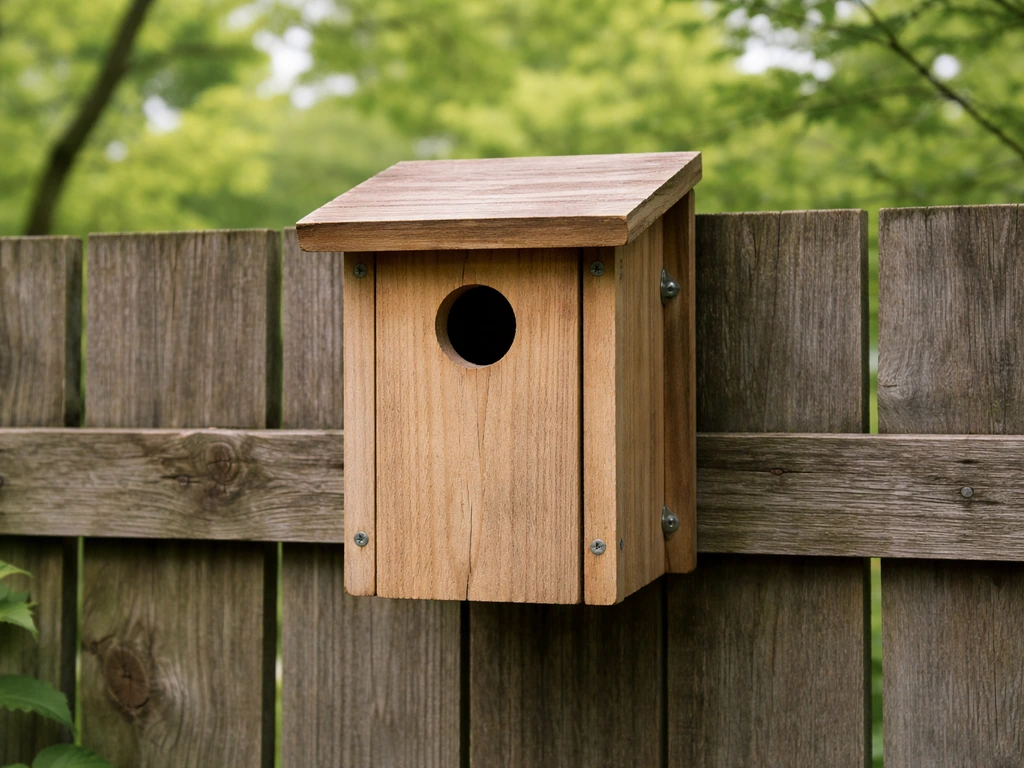
If you want a simple checklist, this is the guide to when to clean out bird houses based on whether the box is in use. Everything below explains how to figure out which situation you're in and exactly what to do next. If you're also wondering when to put out bird houses, the timing depends on local nesting season and whether birds have started scouting for cavities.
If you want the full seasonal timing, use this to confirm when to take down bird houses so new birds have a safe, ready cavity later when to put out bird houses.
Quick answer for today, April 21
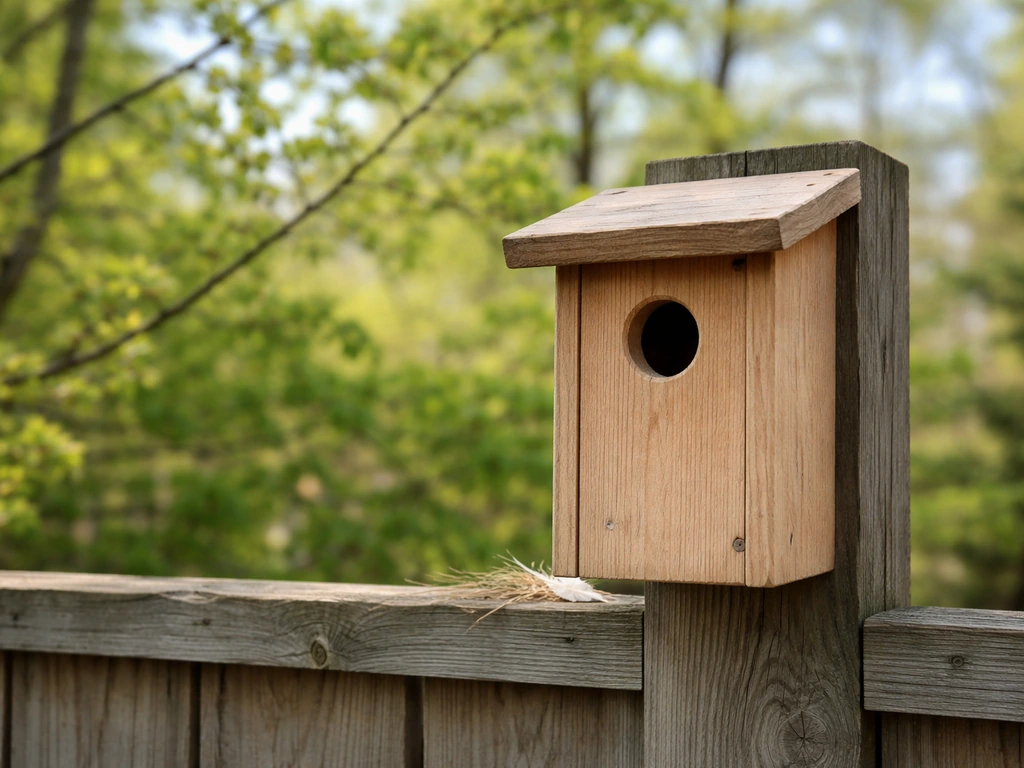
Mid-to-late April sits right in the thick of prime nesting season for most North American and UK backyard cavity nesters. Bluebirds, chickadees, tree swallows, and wrens are all either already incubating eggs or starting their first brood right now. So the honest answer is: cleaning season technically passed its ideal window back in September through February. But "too late" doesn't mean you've ruined anything. It just means you need to check the box before you do anything else, because opening an occupied box at the wrong moment can cause a nest failure.
If you didn't clean in the fall or winter, don't panic. Old nesting material does harbor parasites and bacteria, but birds will often build a fresh nest on top of old material anyway. Your job right now is to figure out whether the box is occupied, then act accordingly. If it's empty, clean it immediately so it's ready for a late first-brood attempt or a second brood later in the season.
Once you know the box is empty, should you empty bird houses right away to keep it ready for the next nesting attempt clean it immediately. If it's active, mark the date on your calendar and check back after fledging.
The Virginia Bluebird Society monitoring protocol similarly advises never opening or cleaning a nest box based on “no activity for a while,” and instead using incubation-linked timing so nesting birds are not disturbed mark the date on your calendar and check back after fledging.
How to tell if the box is occupied right now
Before you touch the box, spend five minutes watching it from a distance. You're looking for any sign that a bird has claimed it: adults perching nearby or on the entrance hole, a bird carrying nesting material in or food in, singing or chattering from the box or surrounding area, or a bird that flew out when you walked over. Any of those signals means the box is active and you should not open it today.
If you see nothing after a few minutes, make a noisy approach. Tap the side of the box firmly two or three times before you open it. This gives any bird inside a chance to fly out on its own rather than being startled. If a bird exits, close the box and walk away. If nothing exits and there's no chirping inside, carefully open the inspection door or roof. What you find tells you what to do next.
| What you see inside | What it means | What to do |
|---|---|---|
| Completely empty, no material | Box was never used or was cleaned already | Clean and re-mount today |
| Old dry nest, no eggs, no birds | Last year's nest, abandoned or from a completed brood | Safe to clean out now |
| Fresh or partly built nest, no eggs | Bird has started building but hasn't laid yet | Close gently, check again in a few days |
| Eggs present | Active incubation, do not disturb | Close immediately, check back in 2 to 3 weeks |
| Nestlings (featherless or partly feathered chicks) | Active brood mid-cycle | Close immediately, wait until fledging |
| Fledglings (fully feathered, eyes open) | Almost ready to leave, usually within days | Close, check daily, clean once they've gone |
One important reassurance: your scent will not cause the parents to abandon the nest. Birds have a relatively poor sense of smell. The real risk is disturbance, not odor. So if you accidentally open a box with eggs or chicks, close it calmly and walk away. The parents will almost certainly return within minutes.
What "too late" actually means by season
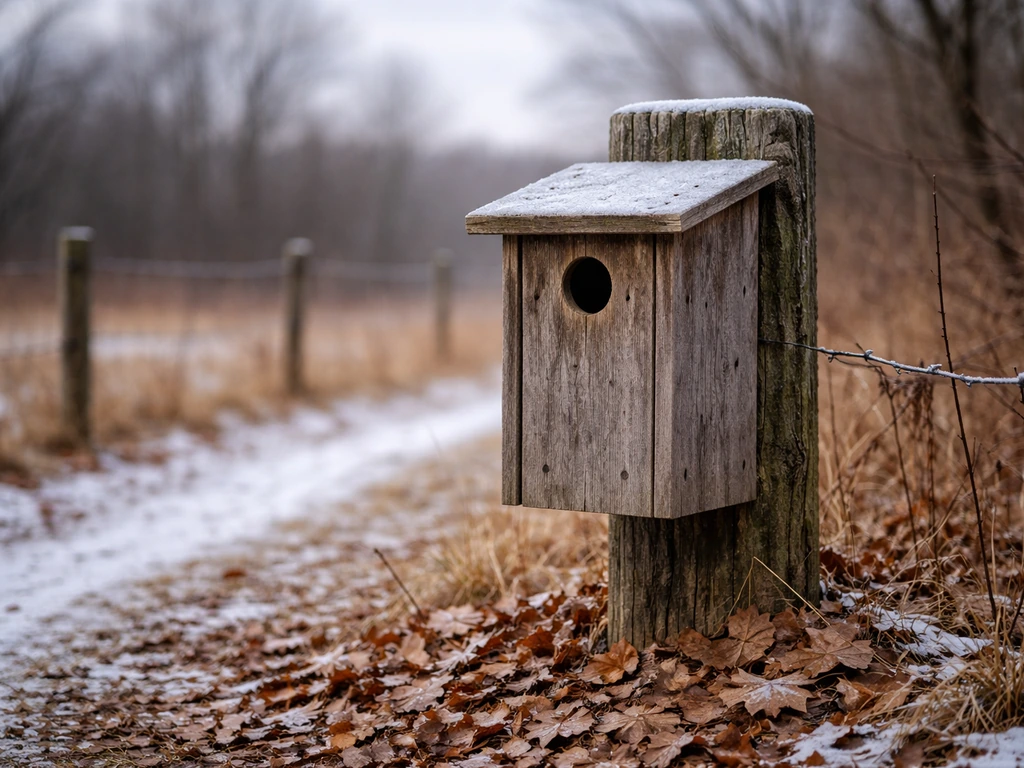
The gold-standard cleaning window runs from late September through February. That window exists because the breeding season is well and truly over, boxes are empty, and you can clean without any risk of disturbing nesting birds. Once March arrives, some early nesters like bluebirds and house wrens may already be prospecting for boxes, so the ideal window is effectively closed. By mid-April, where we are right now, a significant portion of first broods are underway.
That said, most cavity-nesting species raise two or even three broods in a season. A bluebird brood takes roughly 12 to 14 days to incubate and another 16 to 22 days before the chicks fledge. Chickadees follow a similar timeline: 12 to 14 days of incubation and 14 to 16 days to fledge. Tree swallows take 14 to 15 days to hatch and 16 to 22 days to fledge. That means if a first brood started laying in early April, you're potentially looking at fledging by late April or early May. After fledging, you can and should clean the box immediately so it's ready for the next brood.
So there are actually two useful cleaning moments left in this season: right now if the box is currently empty, and after each brood fledges throughout spring and summer. Cleaning after every brood is genuinely good practice. The Mountain Bluebird Trails Conservation Society notes that monitors begin annual fall cleaning after the last bluebird fledglings have left the nest to reduce parasites that collected in nest material Cleaning after every brood is genuinely good practice.. It removes parasites, old fecal matter, and dead insects that would otherwise accumulate and stress the next batch of chicks.
A simple seasonal rule of thumb
- September to February: ideal full annual clean, no birds present
- March to early April: check first, clean only if completely empty before birds arrive
- Mid-April onward (now): check carefully, clean only confirmed-empty boxes or wait for fledging
- After each brood fledges: clean immediately so the box is ready for the next nesting attempt
- Late September: do your thorough end-of-season clean before winter
Step-by-step: how to safely clean a bird house today
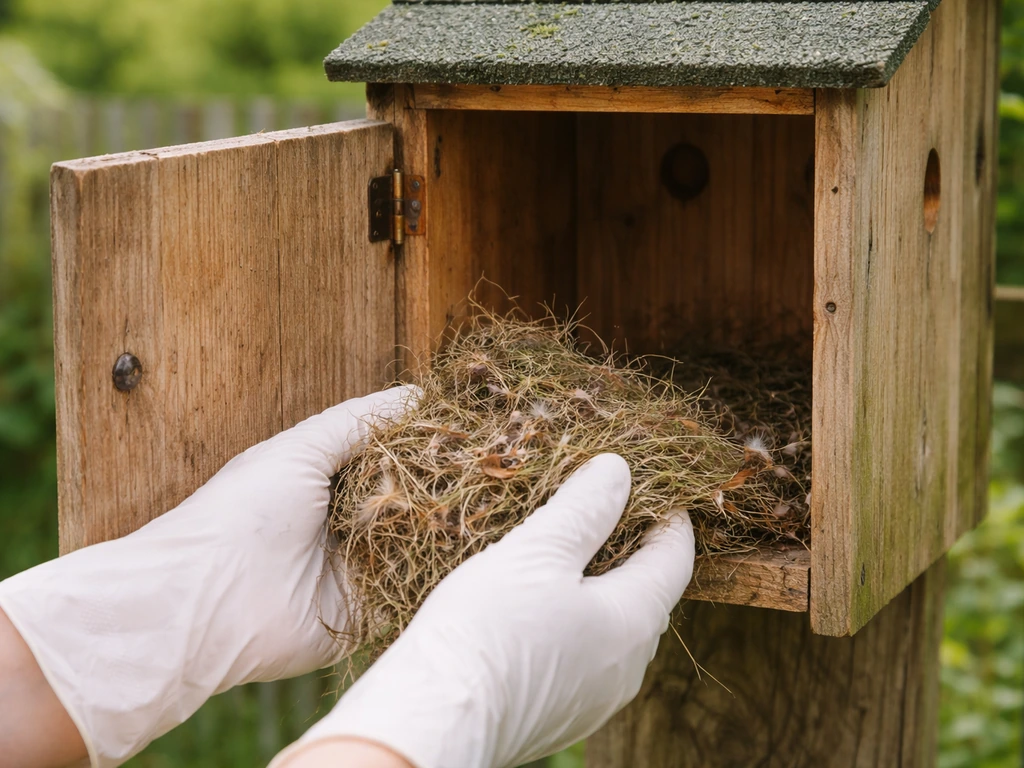
Once you've confirmed the box is empty (no eggs, no chicks, no bird inside), you can clean it right away. Here's exactly how to do it safely and thoroughly.
- Put on rubber or latex gloves before you touch anything. Old nesting material can carry mites, lice, bacteria, and in rare cases Salmonella or other pathogens. Gloves are not optional.
- Use a putty knife or stiff spatula to loosen and lift out the old nesting material in one or two scoops if possible. Scrape the sides and floor of the box to remove crusted droppings, shed skin from parasites, and any insect casings stuck to the wood.
- Bag the old nesting material in a sealed plastic bag and put it in the trash. Do not compost it, as this can spread parasites.
- Scrub the inside surfaces with a stiff brush and mild dish detergent mixed with warm water. Pay attention to corners and the underside of the roof where debris collects.
- If the interior has visible fecal staining or you know the previous nest had a heavy parasite load, follow up with a 1-part bleach to 10-parts water solution. Apply it, let it sit for a couple of minutes, then scrub and rinse.
- For an extra parasite-killing step, you can scald the inside of the box with boiling water poured slowly over all interior surfaces. This is particularly effective against mites and their eggs. Let the wood cool and dry completely before closing the box.
- Leave the box open or propped ajar in a well-ventilated spot for at least a few hours, ideally a full day, so all moisture evaporates. A damp box invites mold and is not good for eggs or chicks.
- Once dry, close the box back up and inspect the exterior: check that the entry hole is clear, the roof is weathertight, the mounting is secure, and any ventilation or drainage holes aren't blocked.
- Remove your gloves, then wash your hands and forearms thoroughly with soap and water even though you wore gloves.
Cleaning products, safety gear, and what to avoid
The two recommended cleaning options are mild dish detergent for routine cleaning, and a 1:10 bleach-to-water solution for heavily soiled boxes. Both are effective and safe for wood once rinsed and dried properly. Boiling water is an excellent additional step for killing mites and requires no chemicals at all.
What you should never use: insecticides, pesticides, or any spray that leaves a residue inside the box. These can harm chicks directly or kill the insects that parent birds rely on to feed them. Scented cleaners, pine oil products, and strong disinfectants beyond diluted bleach are also worth avoiding since residue in a confined wooden box can concentrate to levels that irritate developing chicks. Plain, rinsed, and dried is the goal.
| Product | Use case | Safe? | Notes |
|---|---|---|---|
| Mild dish detergent + water | Routine clean after every brood | Yes | Rinse well and dry fully |
| 1:10 bleach-to-water solution | Heavy fecal soiling or suspected disease | Yes, with rinsing | Let sit briefly, scrub, rinse thoroughly, dry |
| Boiling water scald | Parasite and mite kill step | Yes | Cool and dry before reuse |
| Insecticides or pesticides | Never inside a nest box | No | Harmful to chicks and food-source insects |
| Scented or pine-oil cleaners | Not recommended | No | Residue can irritate chicks in enclosed spaces |
| Strong commercial disinfectants | Not needed | Avoid | Diluted bleach is sufficient and safer |
Personal protection matters more than most beginners expect. Wear rubber gloves for the whole process. If you're scooping out a large or particularly soiled nest, a simple dust mask is worth wearing to avoid inhaling dried fecal dust or mite debris. Wash your hands even after removing the gloves, and don't touch your face during the process.
Re-mounting, predator-proofing, and getting ahead of next season
Once the box is clean and dry, putting it back up correctly matters as much as the cleaning itself. Check that the mounting is still solid: a wobbly post or a box that swings in the wind is more likely to attract predators and less likely to be chosen by nesting birds. If the box was attached to a tree, consider switching to a freestanding post with a predator baffle, which is a cone or cylinder mounted below the box that prevents raccoons, squirrels, and snakes from climbing up.
Make sure the entry hole diameter is still appropriate for your target species. A 1.5-inch hole works well for chickadees and house wrens; bluebirds need 1.5 inches for Eastern and Western species or 1.5625 inches for Mountain bluebirds; tree swallows use 1.5 inches as well. If the hole has been enlarged by woodpeckers or weather damage, fit a wooden hole guard or replace the front panel. A correctly sized hole is one of the simplest predator-proofing steps you can take.
Positioning also affects how quickly birds return after a clean. Boxes mounted facing away from the prevailing wind and direct afternoon sun tend to stay cooler and drier, which matters for chick survival. Four to six feet off the ground is a good general mounting height for most small cavity nesters, though bluebirds are comfortable at four to six feet and tree swallows will use boxes at similar heights as long as there's open space nearby.
One practical habit that makes all of this easier going forward: build a quick inspection schedule into your calendar. Check the box every week or two during nesting season, just a quick look from a distance for activity. When you see fledglings leaving or notice the adults have stopped visiting, that's your cue to clean within a day or two so the box is ready for the next brood. Then do a proper full clean in September before you put the box away for the season or leave it up through winter.
If you're also thinking about whether to leave the box up through winter, or the best time to put a new box out for the first time, those questions tie directly into this same seasonal rhythm. The short version is that autumn is actually the best time to add or reposition a box because birds will scout and get familiar with it over winter before spring nesting begins. Getting your cleaning and remounting done now, mid-season, keeps you in the game for multiple broods this year and puts you in a great position heading into fall prep.
FAQ
I see a bird coming and going, but I cannot tell if there are eggs or chicks. Should I still open the box to check?
No. If any adult is actively using the entrance, carrying nesting material, bringing food, singing from the box area, or a bird flies out when you approach, treat it as occupied. Re-check from a distance later, or wait until you see fledglings leaving and adult visits taper off before opening.
What if I already opened the box once and it seemed occupied, but I closed it quickly. Did I cause damage?
It is unlikely you will permanently harm the nest if you close calmly and leave. The more important factor is whether you keep disturbance brief and stop returning repeatedly. After that first check, back off and avoid further visits until fledging activity confirms the nest stage is past.
How long should I wait before checking again if I suspect the box is active but can't confirm contents?
Use a short observation window first (a few minutes of watching from a distance). If you still cannot confirm occupancy, wait at least a day and then check again from outside. Avoid multiple close approaches on the same day, since repeated disturbance can become the risk.
Can I clean the box while leaving the nest material in place, for example to remove only debris on the floor?
In an active nest, no partial cleaning. Removing material can expose eggs or chicks to cold, injury, or scent marking by predators. For occupied boxes, the safe rule is leave the box completely alone until fledging has occurred.
Do I need to remove every bit of old nesting material when the box is empty?
Yes, for thorough cleaning. Remove old nest material and debris completely, then rinse. If the box is heavily soiled, use the diluted bleach solution you mentioned and rinse well, because residue left behind is the main concern in confined wooden cavities.
Is boiling water enough to kill parasites, or is bleach still necessary?
Boiling water can be an extra killing step, especially for mites, but it does not replace proper removal of debris and rinsing. If the interior is visibly dirty or smells strongly from old fecal material, use diluted bleach as the main disinfecting method and then rinse and dry thoroughly.
What should I do if the box is occupied but I need to fix a broken roof, loose mounting, or damaged predator guard?
Avoid repairs until after fledging. If there is an urgent safety issue (for example, the box is about to fall), prioritize securing the box without opening it and minimize disturbance time. For repairs that require opening the cavity, wait until the nesting attempt is complete.
Are there times when I should clean even if the box looks empty but birds have been prospecting?
If you see birds actively inspecting or perching at the entrance during prospecting, do not assume it is empty. Watch for feeding or nest material behavior. If you consistently see activity on the entrance hole, treat it as potentially occupied and delay cleaning until activity stops or the box is clearly unclaimed.
Should I remove and clean boxes immediately after fledglings leave, or can I wait a week or two?
Ideally clean within a day or two after fledglings are out and adult visits drop. Delaying increases the chance parasites and fecal buildup persist into the next brood attempt. If you must wait, do a quick check from the entrance to confirm no late-chicks remain before cleaning.
How can I tell whether a bird left the nest permanently versus starting another brood in the same box?
Look for renewed adult visits and any carrying of nesting material. If adults stop visiting entirely and you see no behavior from the box for a stretch of time, the nest is likely done. If you notice renewed activity, keep off the box and only clean after fledging is clearly completed for that brood.
Is it okay to disinfect the box and then leave it empty outdoors for a while before rehanging?
Yes, as long as it is fully rinsed, dried, and then protected from rain-soaking or refilling with dirt. Aim to put it back up once dry so new cavity nesters do not find and use a recently cleaned but unattended box that is exposed to weather buildup.
Does cleaning at night or early morning reduce the chance of disturbing birds?
Not reliably. The key determinant is whether birds are currently using the box. If adults are actively visiting, time of day may not change disturbance risk. If the box is truly unoccupied, you can clean whenever you confirm no birds are inside or imminently using the entrance.
My target species is different from the ones you listed. Is the cleaning timing still the same?
The occupancy-based rule still applies. The practical timing differs by species and local climate, but the decision tree remains: if eggs or chicks are present, do not open; if empty, clean. When uncertain, confirm through observation before you touch the box.