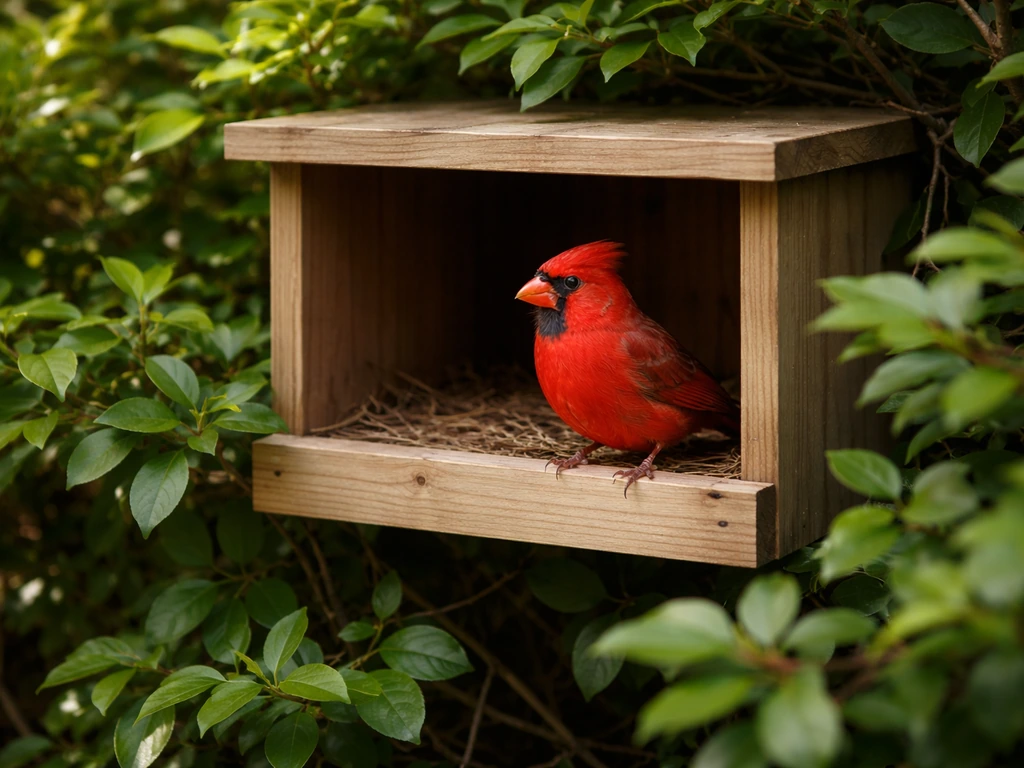
Cardinals don't use the typical enclosed birdhouse with a small round entrance hole. If you are wondering whether cardinals use standard birdhouses, the answer is that they need an open-front nesting shelf instead typical enclosed birdhouse. They're open-cup nesters, which means they build their nests in dense shrubs and low trees rather than inside enclosed cavities. The structure that works best for them is an open-front nesting shelf or platform box: three sides, a roof, a floor, and one open face. Get that right, place it in dense cover at the correct height, and you give a nesting pair a real shot at using it.
What Bird Houses Do Cardinals Like? Size, Setup, Placement

Maya Thompson
21 Jun 2026
How cardinals actually nest
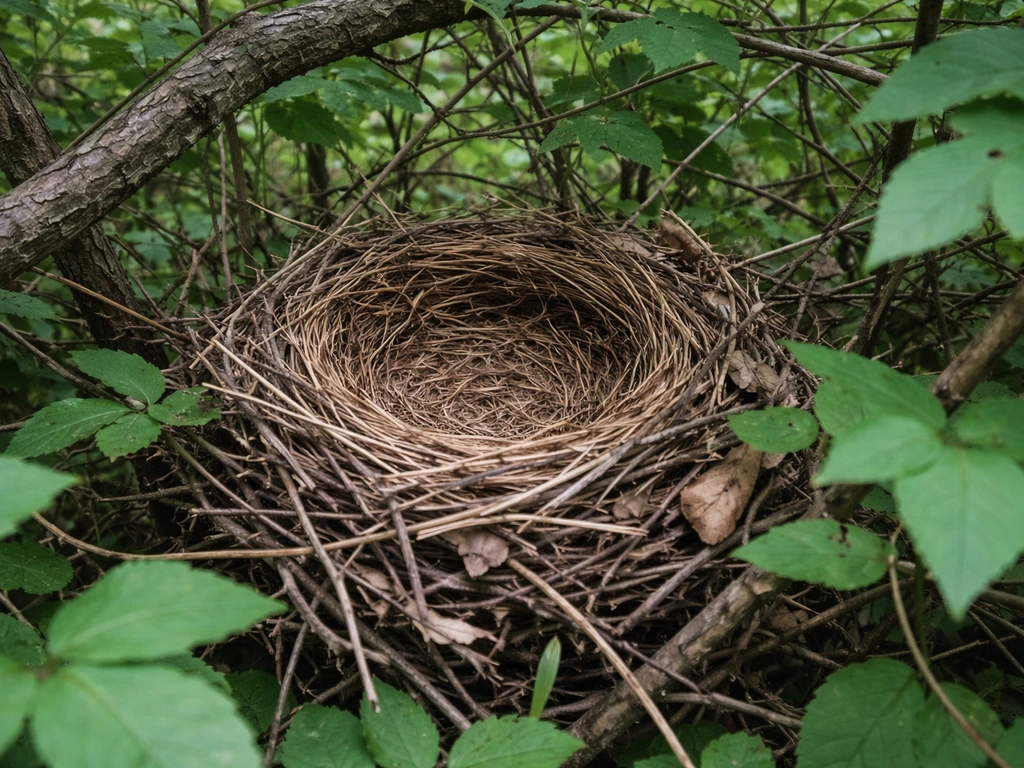
Northern Cardinals build a cup-shaped nest out of twigs, bark strips, grasses, and leaves, tucked into dense shrubs, vines, or low trees. The female does most of the building. According to Audubon and Cornell Lab's All About Birds, nest height typically ranges from 3 to 10 feet above the ground, though nests in dense vine tangles or small trees can occasionally go a bit higher. The key feature isn't height so much as concealment: cardinals want to feel hidden. They gravitate toward forest edges, hedgerows, overgrown fence lines, and backyards with thick shrubby cover.
This nesting strategy is why cardinals almost never use a standard enclosed birdhouse. They have no instinct to enter a small hole and nest in a dark cavity, so those boxes sit empty no matter how nice they look. The same logic applies to hummingbird feeders and open ledges: cardinals aren't looking for a perch or a feeder, they're looking for a sheltered cup site. However, hummingbirds have different nesting needs than cardinals, so bird houses may not attract them the way you expect. An open-front nesting shelf mimics the sheltered-but-accessible feel of a dense shrub fork, which is why it's the only birdhouse design worth building or buying for cardinals.
The right birdhouse type for cardinals
An open-front nesting shelf (sometimes called a nesting platform or open-box shelter) is the correct structure. Choosing the best cardinal bird house is simply a matter of matching the open-front design to how cardinals nest. It has a solid floor, a roof that extends forward to shed rain, two side walls, a back wall for mounting, and a completely open front face. There's no entrance hole because none is needed. The open face gives the cardinal the same quick-escape sightlines it gets from a natural shrub nest, which is critical: a cardinal won't commit to a site where it feels trapped.
It's worth being clear about what won't work, because the search for 'cardinal birdhouse' pulls up a lot of enclosed boxes marketed with cardinal images. Fully enclosed boxes with small circular holes are designed for cavity-nesting species like bluebirds, wrens, or chickadees. Cardinals will investigate them out of curiosity but almost never nest inside. If you've tried an enclosed box and had no luck, that's very likely why. The open-front shelf is the only format that consistently attracts nesting cardinals. Do hummingbirds also use bird houses, and how can you tell which birds will nest there do hummingbirds nest in bird houses.
Dimensions and entrance size
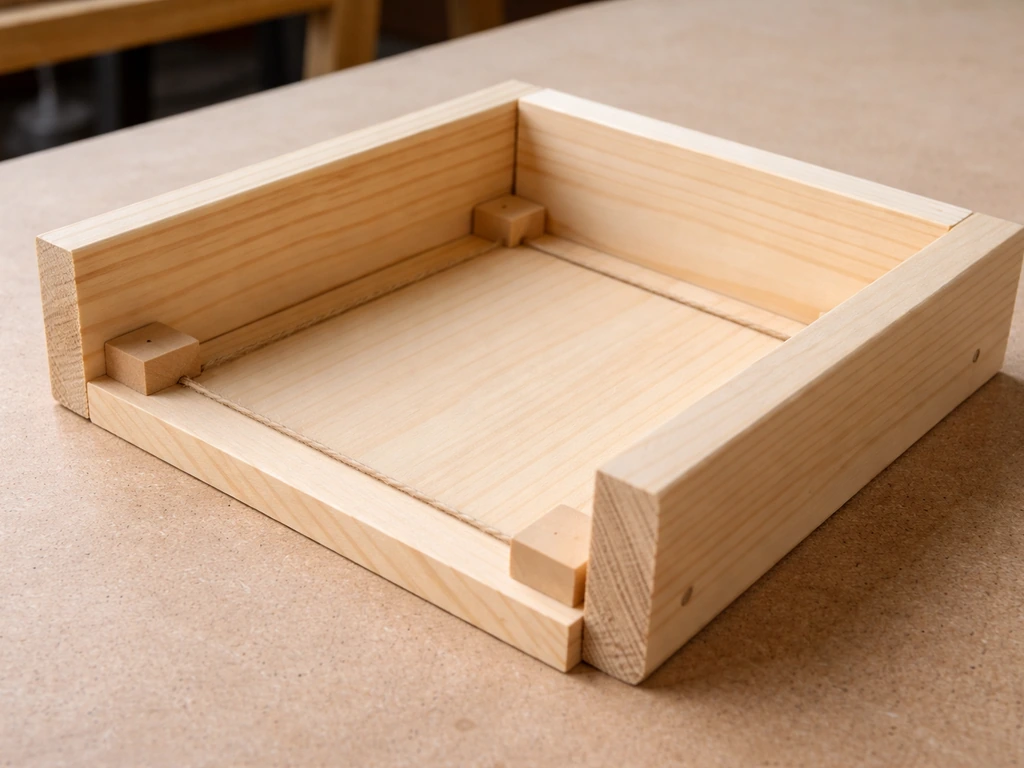
Because the front is open, there's no entrance hole to size. Instead, the interior dimensions and side wall height matter most. A floor area of roughly 7 by 8 inches gives the female enough room to build a stable cup nest without the platform being so large that it feels exposed. Side walls around 6 inches high provide the partial enclosure that makes the site feel sheltered while still leaving the front open for easy entry and escape. The roof should overhang the front edge by at least 3 inches to keep rain off the nest.
| Dimension | Recommended measurement | Notes |
|---|---|---|
| Floor width | 7 inches | Allows room for a stable cup nest |
| Floor depth | 8 inches | Gives the female space to build comfortably |
| Side wall height | 6 inches | Partial enclosure, still open front |
| Roof overhang | 3 inches minimum | Keeps rain and direct sun off the nest |
| Mounting height | 4–8 feet above ground | Matches natural nesting range |
| Drainage holes | 4 x 1/4-inch holes in floor corners | Prevents standing water in the nest |
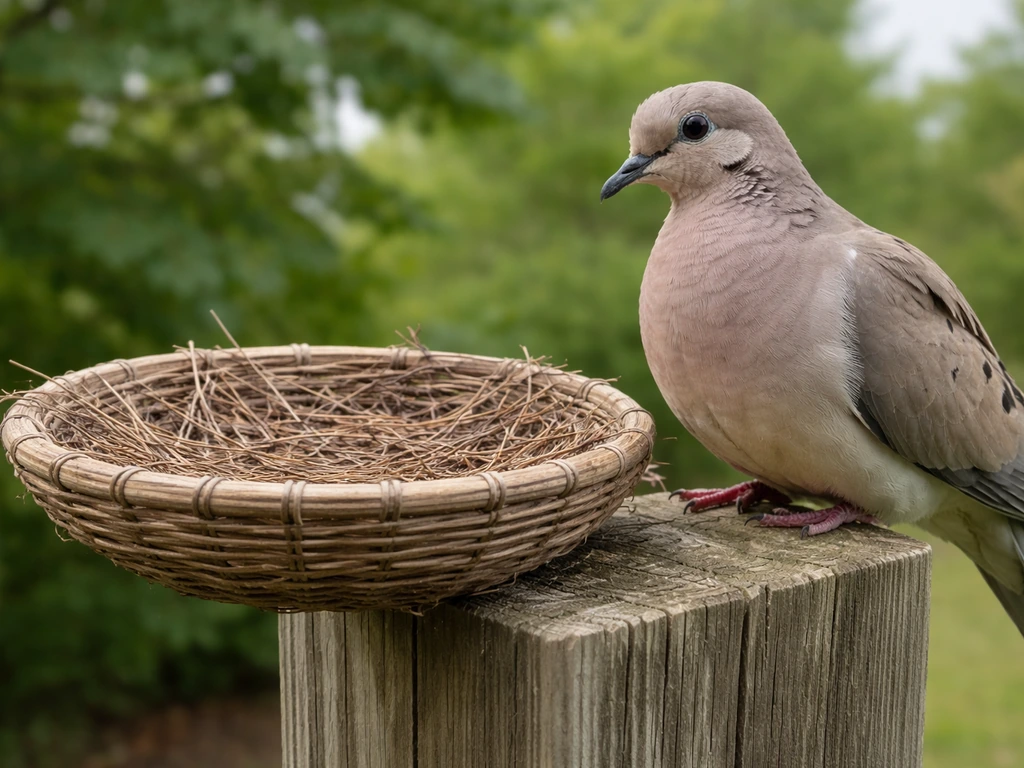
You don't need to worry about deterring other large birds with an entrance hole size the way you would with an enclosed box. However, the open front does mean robins and mourning doves might also be interested. Doves also use open, easy-to-access spots, so the same placement choices can bring them in mourning doves. If you want to favor cardinals specifically, dense surrounding vegetation is your best filter: robins tend to prefer more exposed sites, so a shelf tucked into thick shrub cover will attract cardinals more reliably than it attracts competing species. Doves are similarly drawn to open, elevated platforms rather than sheltered spots.
Where to mount it: placement, height, and cover
Placement is probably the single biggest factor in whether cardinals use your nesting shelf. Mount it at 4 to 8 feet above the ground, ideally on a post or the back of a sturdy shrub, with the open face pointing toward dense vegetation rather than open yard. The Texas Breeding Bird Atlas reports that nest placement is typically in small tree, shrub, vine, or brier tangle about 1, 6 m (3, 20 ft) above the ground at about 1–6 m (3–20 ft) above ground. Cardinals want to be able to drop in from nearby cover and escape quickly if disturbed. A shelf mounted in the middle of a bare lawn, even at the right height, will almost never be used.
The best locations are woodland edges, fence lines with shrubby growth, or within or just behind a hedge of native shrubs like viburnums, hollies, or dense spireas. If your yard has a thicket, a dense evergreen hedge, or a climbing vine on a trellis or fence, those are your prime mounting spots. Mount the shelf so the back of the box is secured to a post or fence, with shrub branches around or above it providing a natural canopy. Avoid spots with heavy foot traffic or that face into prevailing wind and rain.
- Height: 4 to 8 feet above ground (3 to 10 feet is the natural range, but 4 to 8 feet is the sweet spot for yard setups)
- Face the open front toward dense shrubs or vine cover, not toward open lawn
- Avoid direct south or west exposure in hot climates: partial shade keeps the nest from overheating
- Mount on a smooth metal post with a cone or stovepipe baffle rather than on a tree or fence post that predators can climb
- Keep the site at least 10 to 15 feet from high-traffic areas like patios, doorways, or play areas
If your yard doesn't have much natural cover yet, consider planting native dense-growing shrubs nearby as a long-term investment. Cardinals are resident birds in most of their range, so improving habitat now pays off in subsequent seasons. Even a single dense holly or a cluster of native viburnums near the shelf can make a significant difference.
Building or choosing a shelf: materials, construction, and weatherproofing
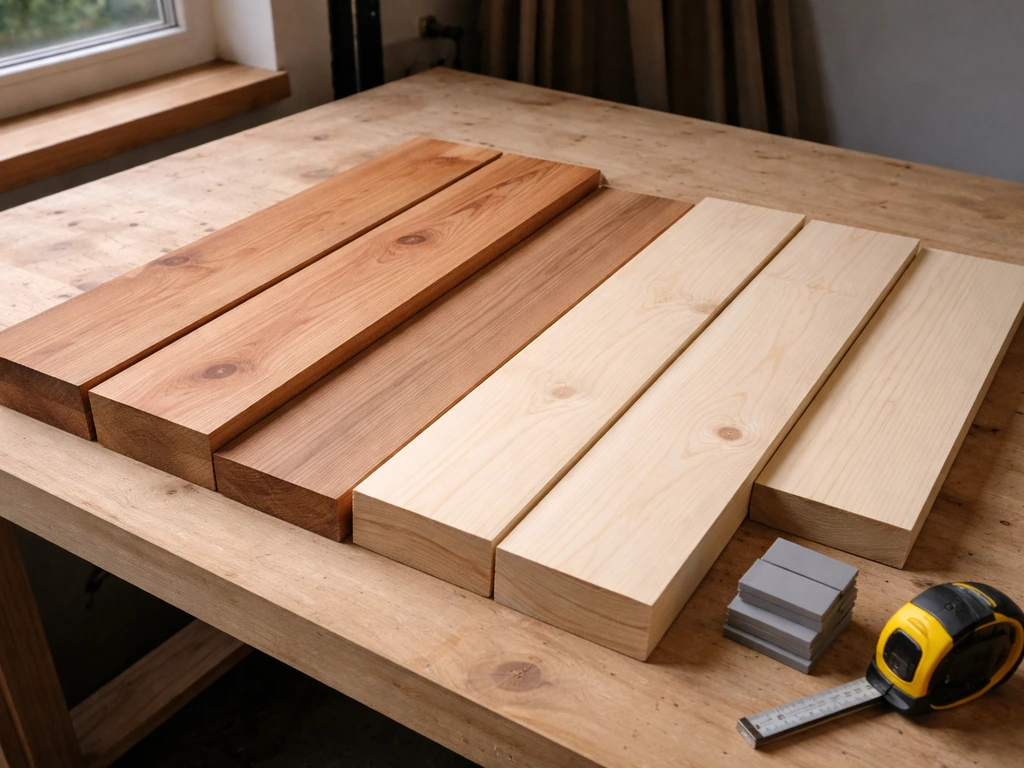
Untreated wood is the right material. Cedar and white pine are the most practical choices: cedar resists rot naturally, while pine is cheaper and widely available. Avoid pressure-treated lumber, plywood with added adhesives, and any wood that's been painted or stained on the inside. NestWatch recommends using untreated, unpainted wood for nest boxes and cautions that heat from treated materials can matter in hot climates Avoid pressure-treated lumber, plywood with added adhesives, and any wood that's been painted or stained on the inside.. Chemical treatments and fumes can harm eggs and nestlings, and painted interiors can get slick, making it hard for the female to anchor her nest material. The exterior of the roof can be sealed with a natural linseed oil finish if you want to extend the wood's life, but the interior should stay bare.
- Cut the floor piece to 7 x 8 inches from 3/4-inch cedar or pine board
- Cut two side pieces to 6 inches tall x 8 inches deep
- Cut a back piece to 6 inches tall x 7 inches wide (this is your mounting panel)
- Cut a roof piece to 7 inches wide x 11 inches deep (the extra depth gives you the 3-inch overhang)
- Drill four 1/4-inch drainage holes in the corners of the floor, set in about 1/2 inch from each edge
- Drill two 5/8-inch ventilation holes near the top of each side wall to allow airflow
- Assemble with exterior-grade screws (1-5/8 inch deck screws work well), pre-drilling to avoid splitting
- Attach the roof so it slopes slightly forward (roughly a 15-degree pitch) to shed rain
- Rough up the interior floor surface lightly with sandpaper or a chisel so nest material grips better
- If using pine, apply a single coat of raw linseed oil to exterior surfaces only and let it cure for 48 hours before mounting
The roof pitch and overhang matter more than they might seem. An overhanging roof keeps rain off the nest cup and also reduces direct sun in summer, which prevents the nest from overheating during incubation. In regions with intense summer heat, positioning the shelf under the natural canopy of a shrub or low tree branch adds another layer of shade protection on top of what the roof provides.
Timing, attracting cardinals, and what to do if they don't show up
Cardinals start scouting nest sites early. NestWatch reports they can begin nest-building as early as late February in the South, and the Indiana DNR notes late March to early April in the Midwest. That means your shelf should be up and in place by late January or early February at the latest if you're in the southern half of the cardinal's range, and by early to mid-March if you're in the Midwest or Northeast. Getting the structure in place before the breeding season starts, rather than after you spot a pair, dramatically improves the odds.
If cardinals visit your yard regularly but don't use the shelf, work through these checks before giving up:
- Check placement first: is the shelf truly surrounded by or adjacent to dense cover, or is it too exposed?
- Look for predator pressure: if cats, raccoons, or squirrels are active near the site, cardinals will avoid it even if everything else looks right
- Verify the open face isn't pointed directly toward heavy foot traffic or a frequently-used door or window
- Give it a full season: cardinals may investigate for weeks before committing, and a pair that doesn't use the shelf this year may return to it next year
- Add or improve nearby shrub cover: even a single additional native shrub planted near the shelf can tip the scale
- Consider whether resident cardinals already have a natural nest site nearby: if suitable dense vegetation exists close by, they may simply prefer their own chosen spot over the shelf
One honest note: cardinals are more reliably attracted to natural shrub cover than to any artificial structure, and some birders find that a nest in a dense viburnum or holly is simply where the pair always ends up, regardless of what you offer. That's not a failure; it just means your habitat is already good. Providing the shelf is still worthwhile because it gives you a known, monitorable site and can be especially valuable in yards without much natural nesting cover.
Cleaning, maintenance, and keeping predators out
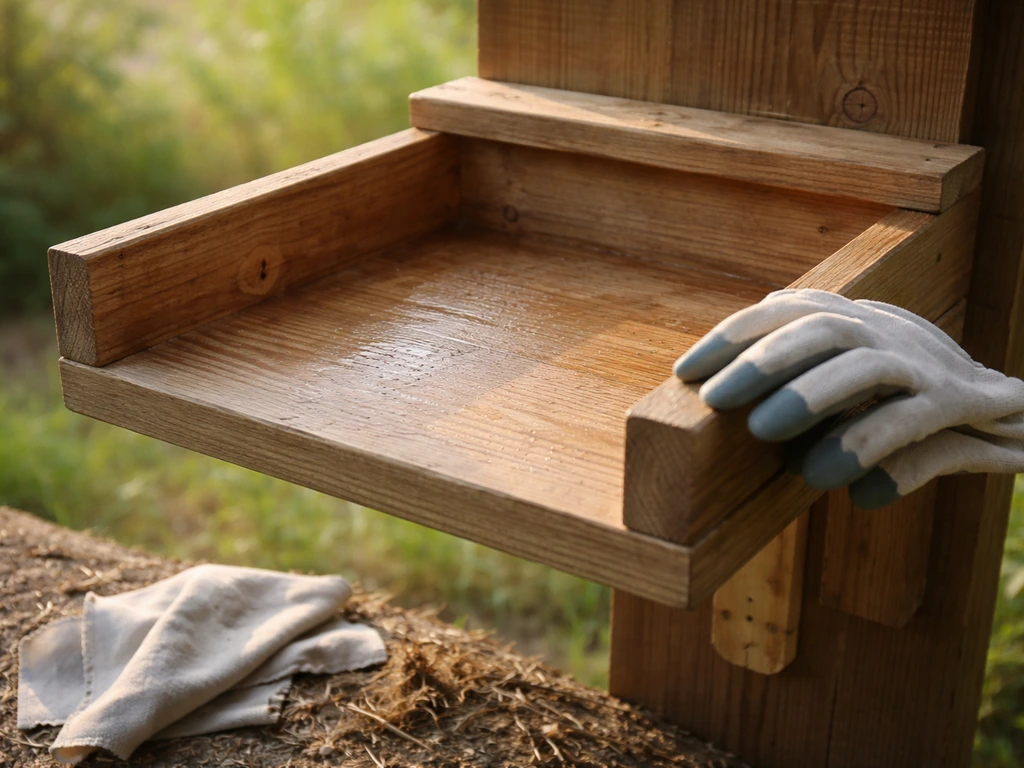
Clean the shelf once at the end of the nesting season, typically in late August or September after the last brood has fledged. Remove old nest material completely, scrub the wood surfaces with a stiff brush and a weak bleach solution (one part bleach to nine parts water), rinse thoroughly, and let it dry completely before reassembling. Old nesting material can harbor mites, lice, and bacteria that harm future clutches, so don't skip this step or simply add new nest material on top of old. Nebraska Extension guidance on nest box sanitation supports clearing all old material between seasons as a core disease-prevention practice.
Inspect the shelf each spring before the breeding season starts. Check for warped or cracked wood, loose screws, and any debris that's blown in over winter. Re-apply linseed oil to exterior surfaces every two to three years if the wood looks dry. The drainage holes in the floor can clog with debris, so clear them out with a small tool during your spring check.
Predator-proofing is where a lot of setups fall short. The most effective approach is mounting the shelf on a smooth metal pipe or conduit pole, then adding a cone or stovepipe baffle below the shelf. NestWatch specifically recommends this combination and notes that mounting on trees or wooden fence posts gives climbing predators (raccoons, squirrels, cats) an easy route to the nest. A baffle positioned 4 to 5 feet above the ground on a smooth pole will stop most climbing predators before they reach the shelf. Avoid adding a perch rod below the open face: it gives predators a handhold and offers cardinals no benefit since they don't need it to land.
If outdoor cats are a known issue in your area, placement in denser shrubs provides some natural protection, but ultimately reducing cat access to the area is the most effective long-term solution. A shelf mounted at 6 to 8 feet on a baffled pole, with dense cover overhead but a clear drop zone to the ground immediately in front, gives nesting cardinals the best combination of predator protection and escape routes.
FAQ
If my birdhouse has a round entrance hole, will cardinals ever use it?
Most enclosed birdhouses marketed for “cardinals” stay empty because cardinals are open-cup nesters. Even if they inspect one, they usually won’t commit to nesting inside a dark cavity with an entrance hole. Use an open-front nesting shelf (platform) instead, with a roof, floor, two side walls, and a fully open front.
Should I add a perch under the open-front shelf to help cardinals land?
They may use it as a temporary looker, but nesting success usually drops. A perch or landing rod below an open-front shelf can unintentionally help predators by giving climbing animals an easy grip. If you want to help birds access the area, focus on dense cover above and around the shelf rather than adding a perch.
What if my open-front platform is larger or smaller than the recommended dimensions?
The exact floor size matters less than whether the platform feels sheltered but not trapped. A common starting point is about 7 by 8 inches of floor area with side walls around 6 inches, and keep the front completely open. If the shelf is larger, it can feel too exposed for many pairs, which can reduce the chance of nesting.
Will an open-front cardinal shelf attract mourning doves or other ground-feeders?
Yes, you can still get doves even when you use an open-front design. If you notice doves lingering, adjust to denser shrub cover immediately behind and beside the shelf, and avoid mounting on the most open, visible edges of the yard. Cardinals tend to select the most concealed sites available, so “shelter-first” placement helps.
Should I put nesting materials or a few twigs on the shelf to attract cardinals?
Don’t add nest material to the shelf. Cardinals bring and arrange their own materials (twigs, bark strips, grasses, leaves). Adding “helpful” material can sometimes disrupt the site selection process or encourage reuse of material that should be cleared between seasons.
Do I need to take the shelf down, or can I leave it up all year?
If you leave a shelf up year-round, you still want to remove old nesting material at the right time and keep wood in good condition. After the breeding season, clean thoroughly (brush and weak bleach solution, rinse, fully dry). Between seasons, avoid putting fresh material directly on top of old nests.
Cardinals visit but never nest, what should I troubleshoot first?
If it’s not used, resist changing multiple variables at once. Instead, verify the big drivers first: the front must face dense vegetation, the back must be securely mounted, and the shelf should be at about 4 to 8 feet. Then check sanitation, roof overhang, and predator protection (baffled smooth pole) before relocating.
When is the best time to install the cardinal nesting shelf?
Start before scouting turns into nesting. In many regions, pairs begin building late winter to early spring, so installing too late can mean you miss the window even if the shelf looks “perfect.” Aim to have it up by late January to early February (South) or early to mid-March (Midwest and Northeast).
What predator protection actually works for open-front cardinal shelves?
Squirrels, raccoons, and cats are the most important threat types for open-front nesting shelves. The most reliable solution is a smooth metal pole or conduit with a cone or stovepipe baffle under the shelf. Tree mounting and rough wood posts often create climbing routes that defeat simple predator guards.
Can I check the shelf during the nesting season to see if they started building?
During the nesting season, keep disturbance low. Avoid frequent hands-on inspections, and do not remove nests once building has started. Plan your inspection for before the breeding season, and only perform emergency checks if there is active damage or severe safety issues.
If I don’t have enough shrub cover yet, will planting help long term?
Yes, but only if it doesn’t turn the area into an exposed perch zone. If you add nearby shrubs, keep the shelf close enough that flight paths from cover remain short, and ensure the shelf’s open front still looks toward dense vegetation. Habitat improvements can take time, but even a single dense native holly or viburnum cluster near the shelf can increase odds over subsequent seasons.
Next Article
Do Doves Like Bird Houses? Nesting Tips That Work
Do doves use bird houses? Get practical nesting tips, placement, timing, and safe setup so doves actually nest.