Mourning doves will not use a standard enclosed bird house with a round entry hole. They are not cavity nesters, so the wooden boxes that work perfectly for bluebirds or chickadees simply do not match how doves build and use nests. What doves actually respond to is an open platform or nest cone that mimics a horizontal branch or ledge. Put the right structure in the right spot, and doves will often claim it within a single breeding season. Get that wrong, and even a yard full of doves will ignore the box entirely.
Do Doves Like Bird Houses? Nesting Tips That Work
Maya Thompson
24 May 2026
Dove nesting basics: do they actually use bird houses?
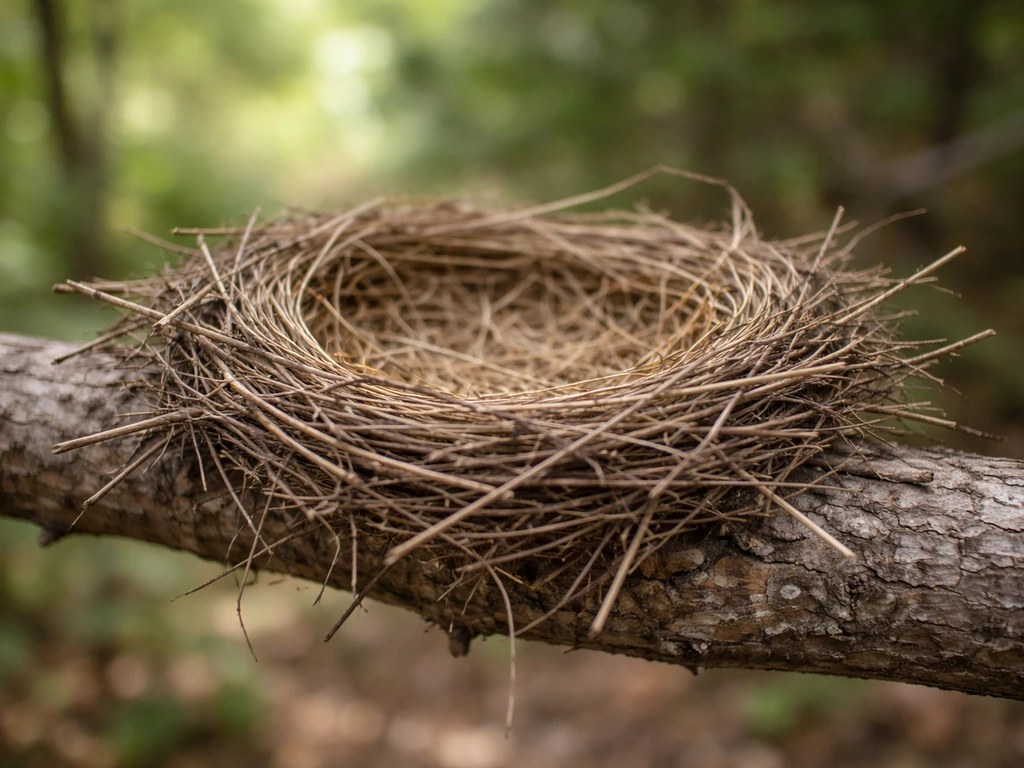
Mourning doves are open-cup nesters. In the wild they build a loose, almost comically flimsy platform of twigs, sometimes with a little grass woven in, placed on a horizontal branch, a ledge, or occasionally directly on bare ground. The nest is not hidden inside a cavity, which is exactly why a closed wooden box confuses them. From a dove's perspective, an enclosed box offers no usable nest site at all.
The good news is that doves are genuinely flexible about where they place that open platform. Research from the US Forest Service puts average mourning dove nest height at around 11 feet, with nests found anywhere from ground level up to about 25 feet. The Minnesota DNR confirms nests range from the ground to 20 feet up. Colorado Parks and Wildlife notes that while most mourning doves nest in trees, ground nesting is also common and important for the species. That flexibility means a man-made open platform, mounted at a reasonable height in a reasonable spot, genuinely has a shot at being used.
It is also worth knowing that doves can nest multiple times between March and September. Illinois DNR marks that window as roughly March through September, so you have a long season to get a structure accepted. Once a pair claims a spot, they often return to it repeatedly.
What to look for: species habits and preferred nest locations
Mourning doves favor nest sites that combine a stable horizontal surface with at least some vertical cover on one side. The US Forest Service FEIS data on ground-nesting mourning doves specifically describes a preference for open cover with bare soil and vertical cover on at least one side. In trees, they gravitate toward horizontal branches of deciduous and evergreen trees, with evergreens being especially popular according to the Illinois DNR. Hedgerows and shelterbelts are also common nesting spots, as noted by the Missouri Department of Conservation.
Doves are not fussy nesters. Missouri Department of Conservation research notes they are not very picky about nest-site selection, which works in your favor when setting up an artificial platform. What they do seem to require is a sense of openness overhead (closed spaces feel wrong to them), a surface stable enough to hold a loose twig nest without it collapsing, and reasonable proximity to open ground where they feed and pick up grit.
Common ground doves, another backyard species in the southern US, show similar habits. Audubon field data places their nests from ground level up to 25 feet, usually on a horizontal branch or fork between 3 and 12 feet. If you have ground doves in your yard, the same open platform approach works for them.
Choosing or modifying a dove-friendly nest box
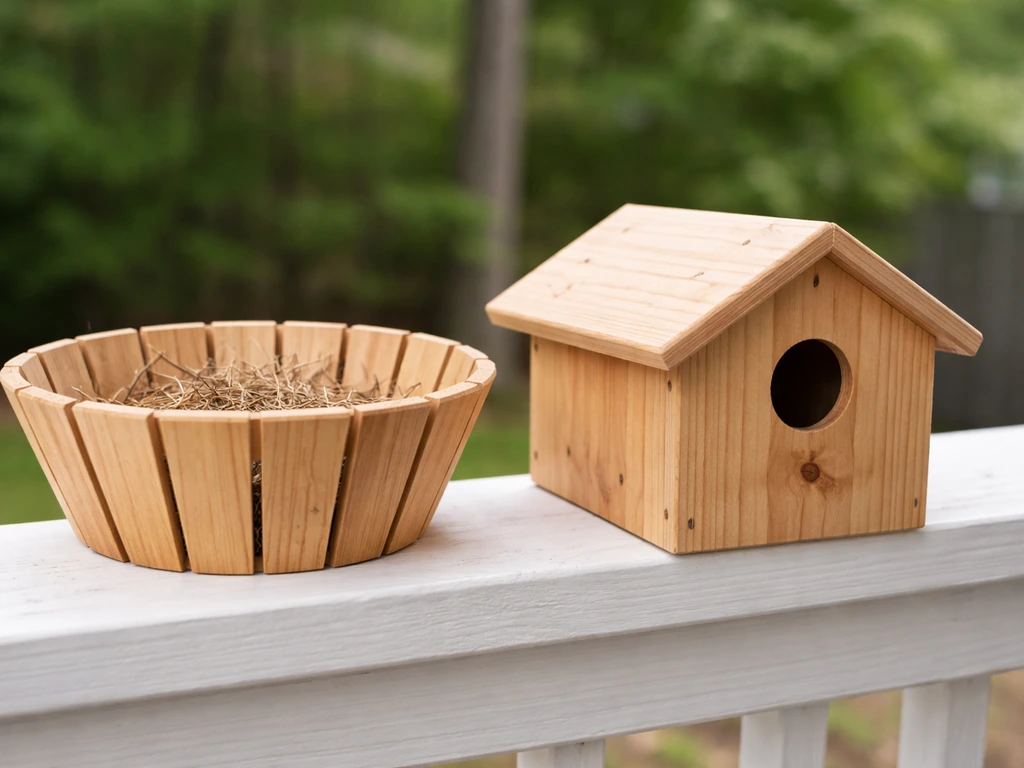
Forget the closed box entirely for doves. What you want is an open platform, sometimes sold as a dove nest basket or nest cone. You can also make one yourself in about 20 minutes. NestWatch, run by Cornell Lab of Ornithology, specifically guides mourning dove enthusiasts toward providing a platform structure rather than a cavity box, and that guidance reflects how doves actually behave.
Dimensions and design
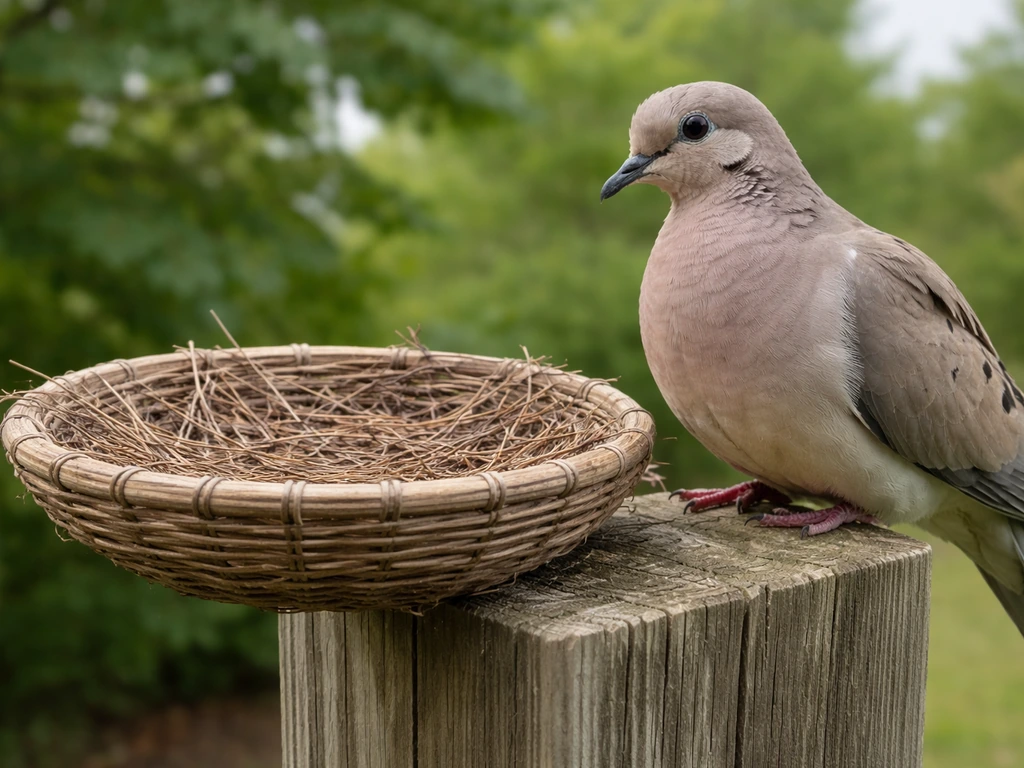
A mourning dove platform should have a floor area of roughly 8 by 8 inches, though going up to 10 by 10 inches gives the birds a little more comfort. The sides should be low, no more than 2 to 3 inches tall, just enough to keep a twig nest from sliding off in wind. There is no roof and no entry hole. The front should be fully open or have only a very low lip. Some people use a simple wire cone or wicker basket, which works well because the texture gives twigs something to grip.
Materials
Untreated cedar or pine are the best wood choices. NestWatch specifically advises against pressure-treated wood for any nest structure because the chemicals used in treatment can be harmful to nesting birds. Cedar is ideal because it resists moisture and does not need any finish. If you use pine, leave it unfinished and unpainting it. Wire mesh or wicker cone baskets available from garden suppliers also work, and doves seem comfortable with both. Avoid any material with sharp edges or splinters on the interior surface.
| Feature | Mourning Dove Platform | Standard Cavity Bird House |
|---|---|---|
| Structure type | Open platform or cone | Enclosed box with entry hole |
| Floor size | 8x8 to 10x10 inches | 4x4 to 6x6 inches (species-dependent) |
| Side height | 2 to 3 inches maximum | 6 to 12 inches |
| Roof | None | Required |
| Entry hole | Not applicable | 1 to 2 inches diameter (species-dependent) |
| Best material | Untreated cedar, pine, or wire/wicker | Untreated cedar or pine |
| Works for mourning doves | Yes | No |
Best placement and mounting for doves in real backyards
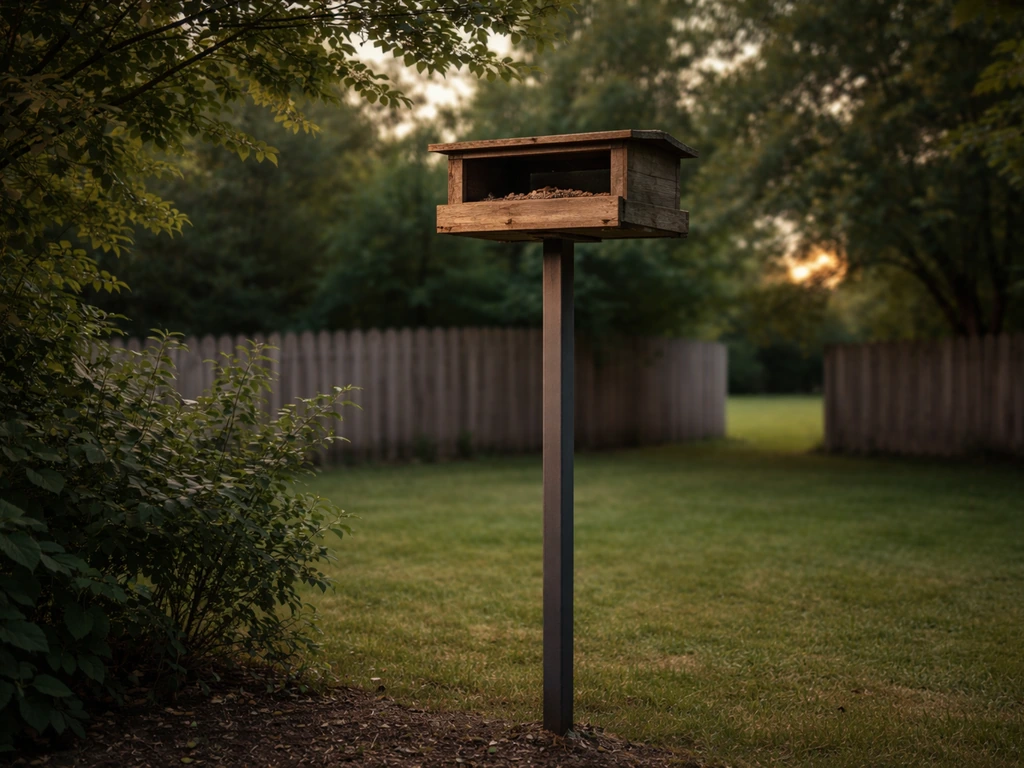
Height is the first variable to get right. Aim for 8 to 12 feet off the ground. That sits right in the middle of the mourning dove's natural nesting range (the US Forest Service average is about 11 feet) and keeps the nest well above most domestic cats while staying manageable for you to check and clean. Going higher is fine if your yard has suitable trees, but anything under 6 feet puts the nest at real risk from ground-level predators.
Placement relative to vegetation matters a lot. Doves like a clear flight path in and out, so avoid mounting the platform deep inside dense foliage. The ideal spot is on the edge of a tree canopy or against a fence or outbuilding where one side offers some shelter and the other side is open. A platform mounted on the south or east face of a tree or structure gets morning sun and is partially shielded from prevailing western winds, which doves seem to prefer.
Open yard versus wooded edge
In a mostly open yard, mount the platform on a post or fence at 8 to 10 feet with a shrub or small tree nearby for the birds to perch and scan from before dropping to the nest. In a yard with a wooded edge, mounting on a branch junction or attaching to a tree trunk at the canopy edge works well. Avoid the deep interior of dense woods because doves are a bird of open and semi-open habitats. They want to see what is coming.
Attracting doves: timing, yard setup, and what to avoid
Get your platform up by late February or early March if you are in the middle or southern US. Illinois DNR puts the nesting season start at March, and in warmer southern states doves may start even earlier. Installing in winter gives the structure time to weather slightly and look less foreign before breeding pairs start scouting sites.
Bare ground near the nest platform is a major attractor. Oklahoma State University Extension specifically notes that mourning doves prefer bare soil or sand for grit, and Missouri Department of Conservation habitat guidance recommends maintaining patches of bare ground to support dove use. A small patch of exposed soil or fine gravel within 30 to 50 feet of the platform serves as both a feeding and grit-picking spot that draws doves into the area repeatedly.
Water is another draw. Texas Parks and Wildlife research notes doves prefer watering sites free of dense ground-level vegetation, so a shallow birdbath or ground-level dish with a clear approach path is more attractive than a cluttered, planted-up water feature. Keep the water clean and the surrounding ground open.
For food, Oklahoma State University Extension recommends planting patches of sunflowers or cereal grains near loafing areas to attract doves. A simple ground-level platform feeder with millet, cracked corn, or safflower seed also works well and keeps doves coming back to the general area where your nest platform is mounted.
What to avoid: dense plantings immediately around the nest site, high-traffic zones (doves flush easily from the nest and may abandon eggs if disturbed repeatedly), and reflective or brightly colored materials on or near the platform. Keep human foot traffic minimal within about 10 feet of the structure during active nesting.
Predator-proofing and dove safety around nesting sites
Doves nesting on open platforms are more exposed than cavity nesters, which means predator management matters more, not less. NestWatch's predator guidance identifies the main threats to nest boxes and platforms as raccoons, cats, snakes, and squirrels. All four are real problems for dove nests.
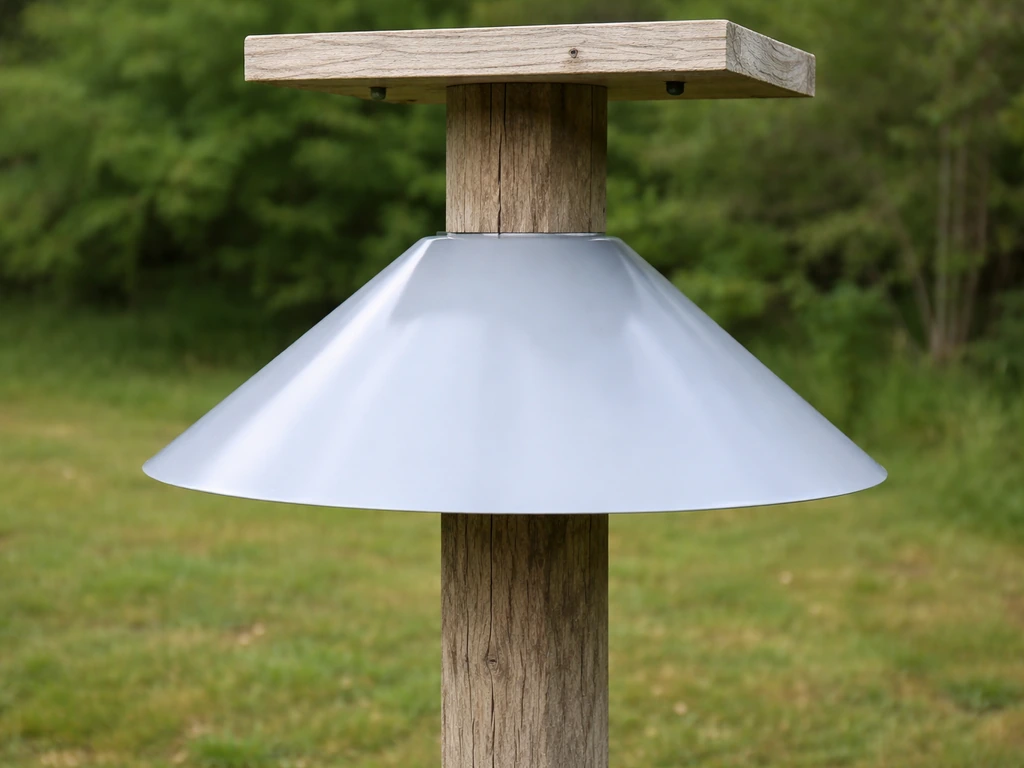
If you mount the platform on a post, add a smooth metal baffle below the platform at around 4 to 5 feet high. A stovepipe baffle or cone baffle works well and stops raccoons and cats from climbing. For tree-mounted platforms, NestWatch research on snake predation notes that predator guards improve success but are not completely foolproof, so site selection also matters. Keeping the platform away from branches that raccoons can use as highways to reach the nest makes a big difference.
Cats are the most consistent threat to low-mounted dove nests. If you or your neighbors have outdoor cats, do not mount the platform below 10 feet and consider a smooth-pole mount rather than a tree, since cats climb trees easily. Domestic cats are responsible for an enormous number of songbird and dove deaths annually, and a nest at 6 to 8 feet on a tree is well within their reach.
- Use a smooth metal pole mount with a cone or stovepipe baffle when possible
- Keep platforms at 8 to 12 feet minimum in yards with cats or raccoons
- Choose locations away from large horizontal branches that raccoons can use to reach the nest
- Avoid placing the platform directly against a fence top where cats walk regularly
- Do not put nest material, food, or water directly under the platform, as this draws ground predators
Maintenance and troubleshooting when doves don't use the box
Sanitation is simpler with dove platforms than enclosed boxes because you can see everything. After a brood fledges, NestWatch guidance recommends checking whether the pair is showing signs of a second nesting attempt before you do anything. Mourning doves commonly attempt multiple broods in a season, and if the nest material is still intact and the birds are visiting, leave it alone. If breeding activity has clearly ended and the nest is heavily soiled, remove the old material and clean the platform with a 1 part bleach to 10 parts water solution, then let it dry completely before the next use.
NestWatch also cautions that leaving old nesting material in place can attract small mammals and mites, so do not skip the end-of-season clean even if the breeding season felt successful. After cleaning, the bare platform is ready for the next season or even for a late-season attempt if you are still within the March through September window.
If doves are nearby but ignoring the platform
This is the most common frustration. Doves are visiting the yard, landing near the platform, but never nesting on it. Work through this checklist before giving up.
- Check the height. If it is below 8 feet, move it up. Doves that are actively foraging at ground level may not register a very low platform as a nest site.
- Check the location relative to open ground. If the platform is buried in dense foliage on all sides, move it to a canopy edge position with clear sightlines.
- Try a different structure. Some doves prefer a cone or basket shape over a flat board. If you started with a flat platform, try a wire cone nest basket available from garden centers.
- Add a few starter twigs. Loosely place 5 to 10 short twigs on the platform to suggest it as a nest site. Doves will rearrange or ignore them, but the visual cue sometimes helps.
- Reduce disturbance. If the platform is near a door, window, or frequently used path, move it to a quieter part of the yard.
- Be patient. Doves scout sites for several days before committing. Give any new placement at least three to four weeks before moving it again.
One thing to avoid is trying to force doves to use a closed cavity box by adding nesting material or modifying the hole. It will not work. The structure itself is wrong for the species, and no amount of interior modification changes that. Stick with open platforms and adjust placement variables instead.
Also worth knowing: there are no legal restrictions on providing a nest platform for native doves in the US, but mourning doves are a migratory species protected under the Migratory Bird Treaty Act. That means you should never disturb an active nest with eggs or chicks in it, and you should always wait for confirmed inactivity before cleaning. When in doubt, wait one more day, just as NestWatch advises.
If you have been exploring nest options for other backyard species alongside doves, it is worth knowing that the platform approach is fairly unique to doves. Cardinals and hummingbirds also have very different nesting preferences than mourning doves, so you may need species-specific setup rather than relying on dove-style platforms Cardinals, hummingbirds. Cardinals also have specific nesting preferences, so look for the open structure and location they prefer rather than a dove-style platform. If you are also trying to attract cardinals, you will want to choose a bird house designed for their nesting habits, which is why a best cardinal bird house guide can help. Cardinals have their own nesting preferences too, so it helps to know whether do cardinals use bird houses before you set up the wrong type of structure. Hummingbirds, for example, do not typically use dove-style platform boxes, so it helps to look for bird house options designed for their nesting needs Cardinals, hummingbirds. Cardinals, hummingbirds, and many other common backyard birds have very different nesting preferences and require their own specific structures and placements, so the solutions that work for doves will not carry over directly to those species.
FAQ
Do doves like bird houses year-round, or only during nesting season?
They usually ignore nesting structures outside the March to September breeding window. Installing in late winter helps, but if you add a platform mid-summer, expect it to be used mostly for a late brood only if pairs are actively scouting and nearby conditions (bare ground, open flight path) already fit.
Will mourning doves ever use a bird house if I remove the roof or entry hole from a standard box?
Sometimes, but not reliably. Doves need an open-cup style site with a stable horizontal surface and no enclosed cavity. If the remaining design still feels like a box (high sides, covered areas, dark interior), they may still treat it as unsuitable.
What height is safest if I have cats or raccoons around?
For cats, mounting below 10 feet is a common failure point. Aim for 10 to 12 feet when possible and add a smooth metal baffle on a post mount to block climbing. If raccoons are active, also position the platform away from branches or routes they can use to reach the area.
How close should I place food and water to the nest platform?
Keep them within about 30 to 50 feet, so doves keep returning to the general area, but do not clutter directly under or around the nest site. For water, prioritize a clear approach path with minimal dense ground vegetation, since doves want an easy route landing and departing.
Can I put the platform directly on the ground?
Ground placement is possible because doves can nest at ground level, but it increases predation risk. If you do it, choose open ground with good visibility and keep cats out. Many people get better results with an elevated platform around 8 to 12 feet.
Do doves reuse the same platform after the chicks fledge?
Often, yes. They may attempt a second nesting round using the same claimed area, sometimes leaving the same structure intact while they rebuild. Wait until you confirm the pair is inactive before cleaning or removing old material.
Is it okay to add a little nest material to help doves get started?
Avoid it. Putting in extra material or altering a cavity-style structure is a common mistake, and it does not convert a box into an appropriate open-cup site. Instead, focus on making the platform correctly sized, open, and placed in an area with bare ground and cover nearby.
How do I know if doves are ignoring the platform due to placement versus the structure itself?
If doves land and browse near it but never commit, check placement first: dense surrounding foliage, poor visibility, or lack of bare ground nearby can prevent nesting. If they never investigate at all, reassess structure openness (no roof, no cavity feel) and ensure the platform has a stable twig-gripping surface.
Do doves prefer deciduous or evergreen trees?
They will use either, but evergreen horizontal branches are often especially popular for mourning doves. If you have a choice, prioritize an evergreen branch or canopy edge that still provides an open overhead flight path and at least some vertical cover on one side.
Can I put a platform near a busy walkway or frequently used patio?
It is usually a bad fit. Doves flush easily and repeated disturbances can lead to abandonment of eggs or chicks. Keep human activity minimal within roughly 10 feet of the structure during active nesting and choose a spot with a natural buffer like a hedge edge or fence line.
Are there legal protections I should follow if a dove starts nesting on my platform?
Yes. Mourning doves are protected as migratory birds, so you should not disturb active nests with eggs or chicks. If you are unsure whether nesting is finished, wait and recheck rather than cleaning immediately.
Next Articles
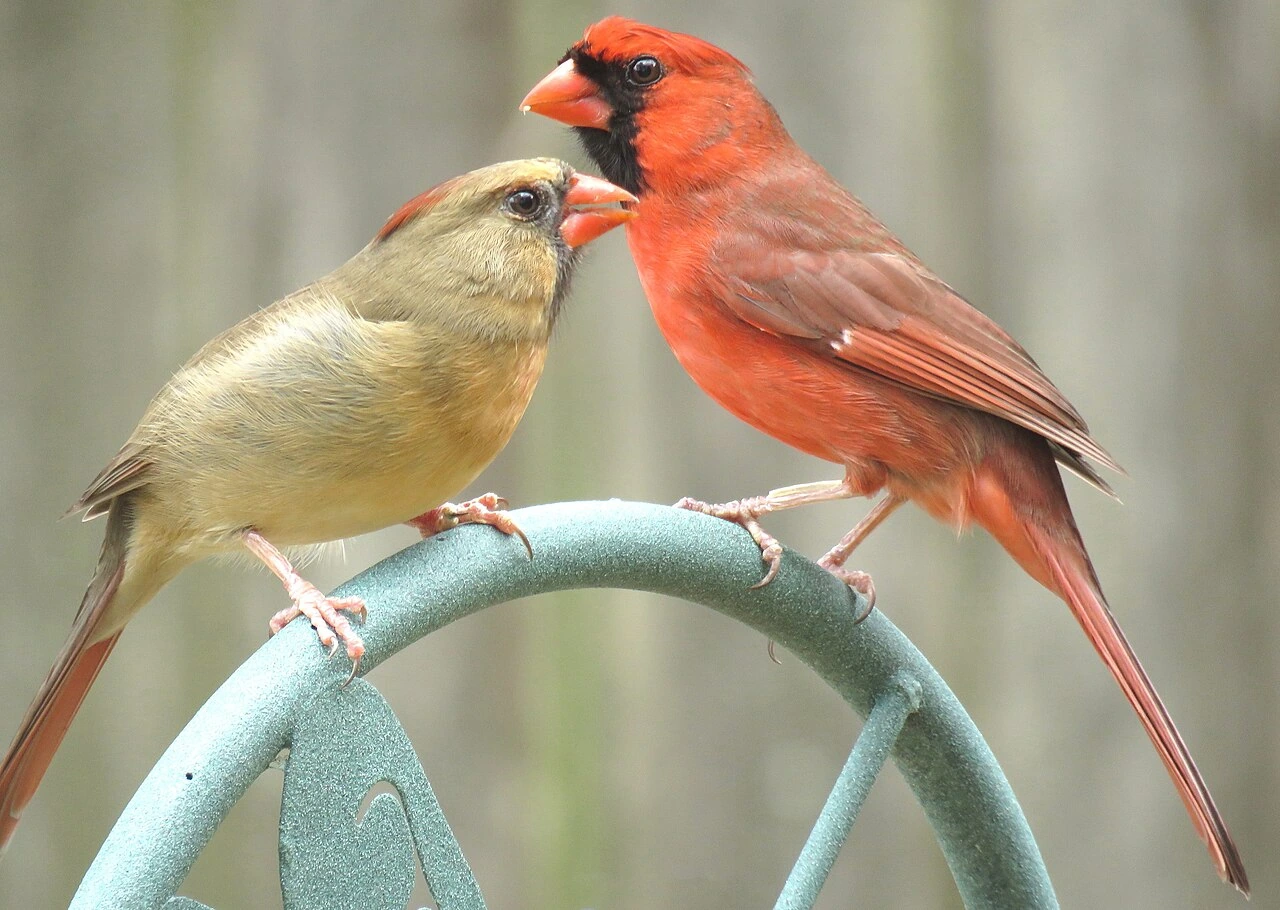
Do Cardinals Use Bird Houses? How to Set Up Nest Boxes
Learn if cardinals use nest boxes, then set up the right cavity-style bird house with dimensions, placement, and mainten
Do Hummingbirds Like Bird Houses? What They Really Need
Hummingbirds rarely use birdhouses; learn what they need for nesting, safe placement, and better ways to attract them.
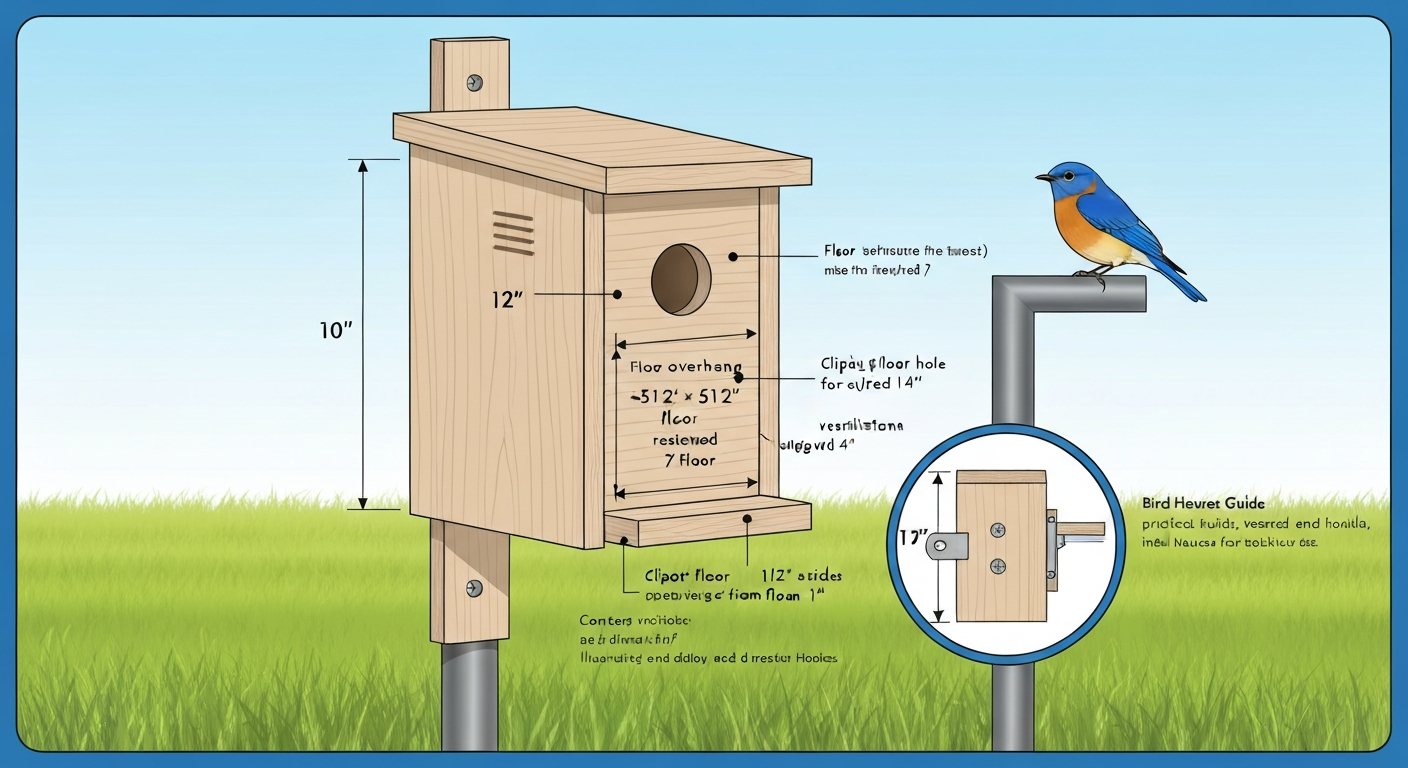
Blue Bird House Instructions: DIY Plans, Sizes & Mounting
DIY bluebird house: step-by-step build, exact cuts and hole sizes, mounting, predator guards, cleaning, and care.