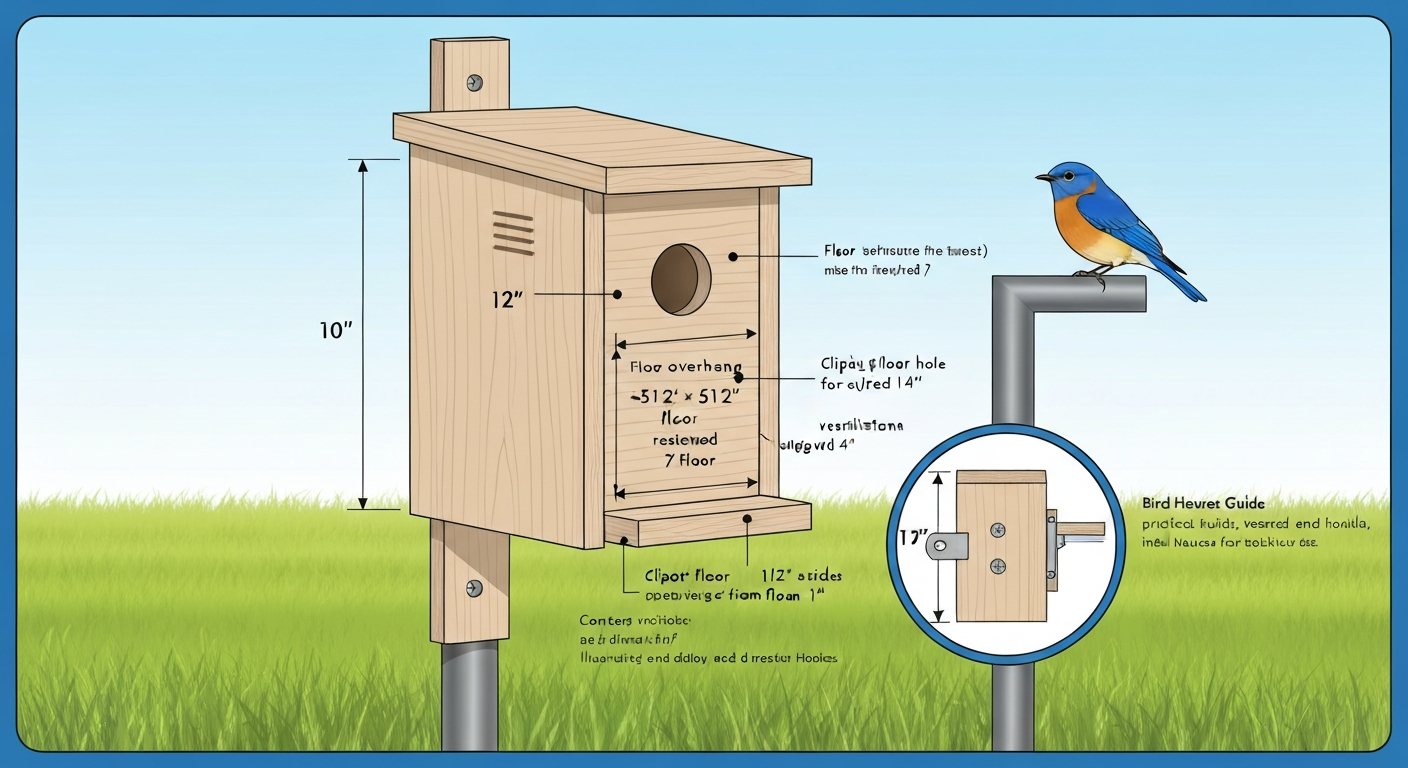
Hummingbirds do not use bird houses. They are not cavity nesters, so a wooden box with a hole in it means nothing to them. No matter what a product label says, a "hummingbird house" is very unlikely to attract a hummingbird for nesting, and NestWatch confirms this directly. If you want hummingbirds in your yard, skip the birdhouse and focus on feeders, native plants, and natural branch structure instead. That combination actually works.
Do Hummingbirds Like Bird Houses? What They Really Need
Maya Thompson
25 Apr 2026
Why hummingbirds don't use bird houses
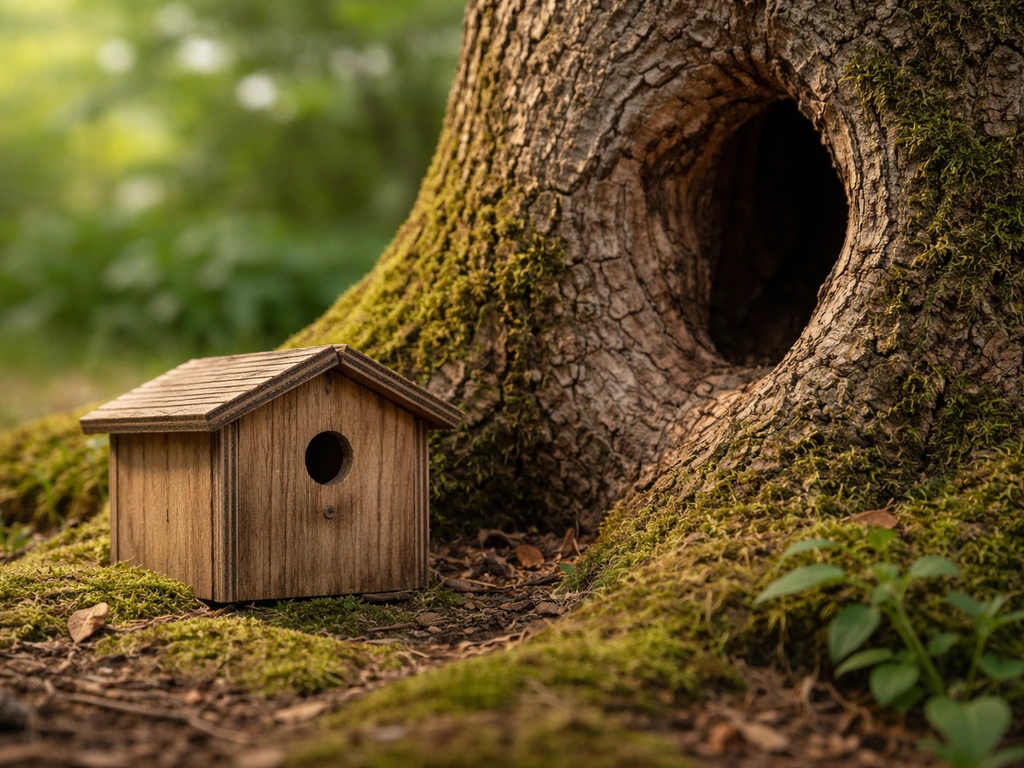
Bird houses are designed to mimic natural hollow cavities in trees. Species like bluebirds, wrens, chickadees, and woodpeckers evolved to nest inside those cavities, so a nest box is a natural substitute. Hummingbirds did not evolve that way at all. They build open cup nests on branches and in shrubs, not inside enclosed spaces. Putting a hole in a box and calling it a hummingbird house does not change that biology.
This is worth knowing because "hummingbird houses" are sold in garden centers every spring. They look charming. But NestWatch is clear: buying one is not necessary and it is unlikely to attract hummingbirds. The same logic applies to any enclosed nest box, regardless of the entrance hole size or the paint color on the outside.
If you are also curious whether other backyard favorites like cardinals or doves use bird houses, those situations have their own answers too, since each species has different nesting preferences. If you are deciding on the best cardinal bird house, make sure it matches the needs of cavity nesters like cardinals instead of trying to use a hummingbird house design. If you are wondering what bird houses cardinals like, it helps to understand that they are cavity nesters and respond best to nest boxes designed for that nesting style. Doves are ground or low-perching nesters, so traditional bird houses usually are not a good fit for them cardinals or doves. Cardinals do not use bird houses in the same way that cavity nesters do, because their nesting preferences differ from enclosed nest boxes cardinals or doves. But hummingbirds are a special case because the mismatch between a box and their nesting style is total, not a matter of getting the dimensions right.
How hummingbirds actually build their nests
The female hummingbird builds a tiny, flexible cup nest entirely on her own. It sits on top of a branch or in a shrub, not inside anything. She uses soft plant fibers, moss, grasses, and plant down, then binds the whole structure together with spider webbing, which lets the nest stretch as the chicks grow. Audubon notes that hummingbirds use blank" rel="noopener noreferrer">spider silk to bind their nests together, stretching it onto other materials like lichen and moss. Nest cups can also use spider webbing to help hold materials together, and lichen decoration is part of the statant-cup style discussed by Cornell Lab’s All About Birds Academy blank" rel="noopener noreferrer">spider webbing to help hold the nest together. The outside gets camouflaged with lichens and moss so it is nearly invisible against the branch. You could walk right past one and not see it.
Nest height and location vary by species. Anna's Hummingbirds typically place their nests 6 to 20 feet off the ground on a horizontal branch of a tree or shrub, sometimes in vines or even under eaves. Broad-billed Hummingbirds often nest much lower, around 3 feet off the ground, on a downward-hanging branch near rocky outcrops or a stream. Black-chinned Hummingbirds build a similar tiny cup on a low tree limb. What all of these share is that the nest sits on a natural surface in open air, not tucked inside a cavity.
What hummingbirds actually need in your yard
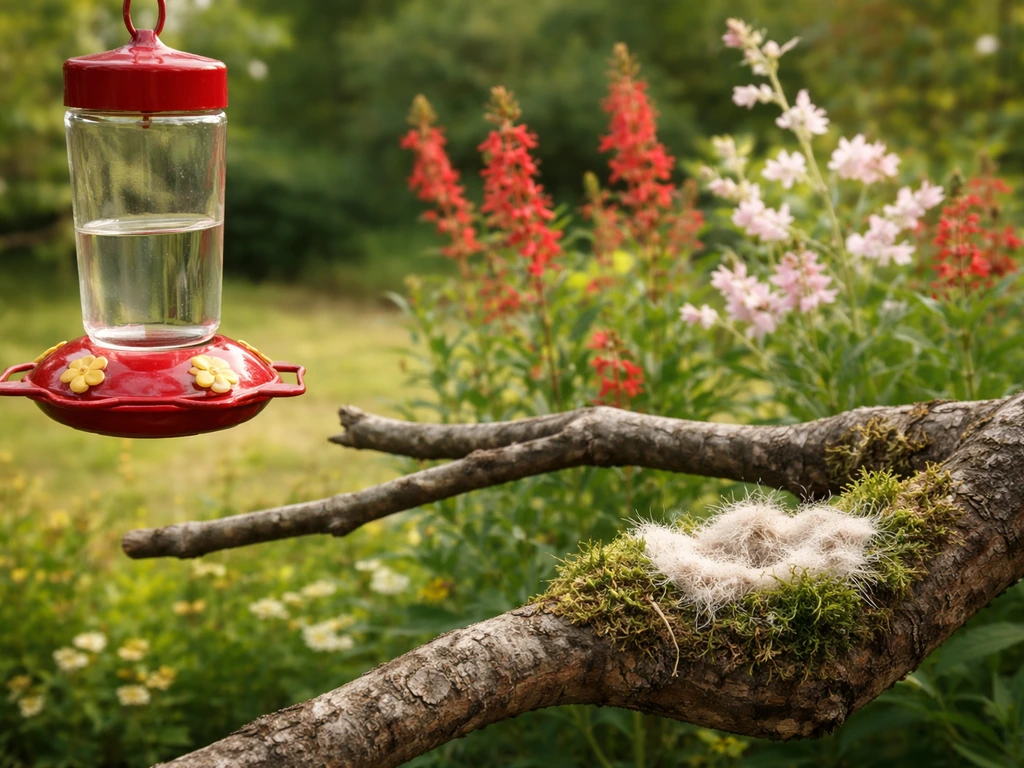
Since a nest box is off the table, here is what actually matters. Hummingbirds need four things from a backyard: reliable nectar, safe perching and resting spots, nesting material, and natural branch structure for nest placement.
- Native flowering plants with seasonal blooms that match your local hummingbirds' calendar. Audubon emphasizes native plants because they provide nectar reliably through the birds' seasonal cycle in ways that non-native cultivars often do not.
- Trees and shrubs with horizontal or gently drooping branches. These give hummingbirds both perching spots between feeding bouts and potential nest sites. The National Wildlife Federation notes that trees, shrubs, and sheltered spots nearby let hummingbirds hide and rest.
- Nesting material left available in the yard. Audubon specifically recommends leaving thistledown and dandelion fibers available since hummingbirds use those soft plant fibers in their cup nests.
- Water for bathing, preferably a mister or dripper rather than a deep birdbath, since hummingbirds prefer to fly through a fine spray.
- A clean, reliable nectar feeder as a supplement to natural flowers.
What to do instead: building a hummingbird-friendly yard
The most practical thing you can do right now is plant natives and hang a feeder. The U.S. Forest Service and Audubon both center their hummingbird habitat guidance on native plant selection rather than any kind of artificial structure. Choose plants that bloom in succession through spring, summer, and fall so nectar is available across the hummingbirds' full season in your region. Trumpet vine, salvia, bee balm, penstemon, and cardinal flower are common favorites depending on where you live.
If you do not have mature trees yet, dense shrubs work well as perching cover. Place them within 10 to 15 feet of your feeder so hummingbirds can dart in, feed, and retreat quickly. That spacing also gives them an escape route if a predator approaches. Avoid placing dense cover right at the feeder because that can make it easier for cats to ambush birds.
Do not over-tidy the yard. Leave some areas with dandelions, thistles, or other fluffy seed heads. A female hummingbird looking for nesting material will appreciate it, and you will be contributing to a nest you will probably never even see.
Feeders matter more than any structure
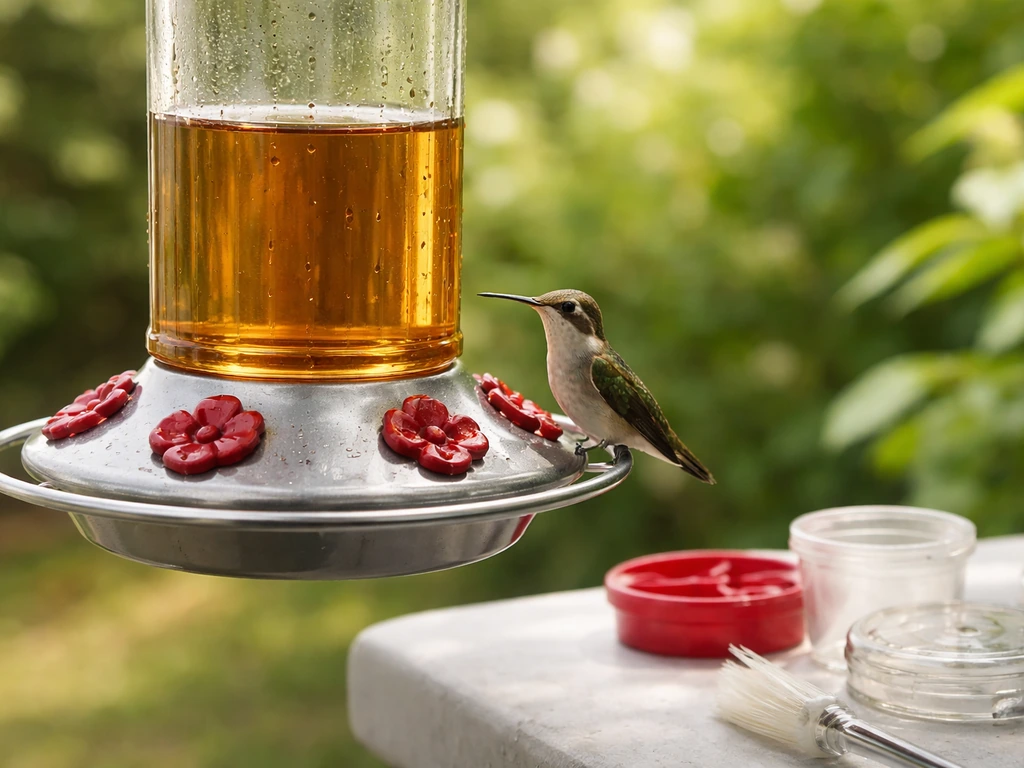
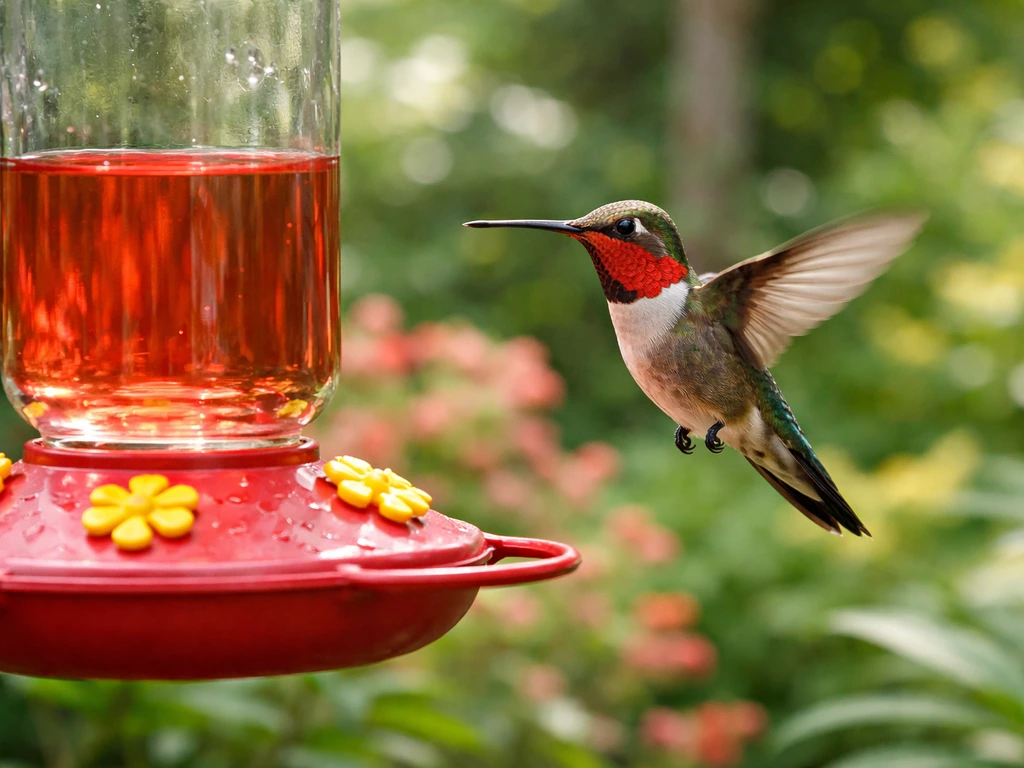
A nectar feeder is the single most effective human-made tool for attracting hummingbirds. Hummingbirds need to visit 1,000 to 2,000 flowers per day to meet their energy needs, so a reliable feeder is genuinely useful to them, not just decorative for you. The nectar recipe is simple and consistent across every credible source: one part plain white sugar dissolved in four parts hot water. No red dye, no honey, no artificial sweeteners. Let it cool before filling the feeder.
Cleaning is where most people fall short. Audubon recommends cleaning feeders every two to three days in normal conditions and every day in hot weather. The Smithsonian National Zoo says to change nectar and thoroughly clean the feeder every other day to prevent mold. If the nectar looks cloudy at all, clean it immediately. Hummingbirds will abandon a feeder with spoiled nectar fast, and mold can harm them. Store extra nectar in the refrigerator for no more than one week.
Feeder placement
Where you hang the feeder matters. Place it 10 to 15 feet from the nearest shrubs or cover so birds have a safe approach. Keep it at least 15 to 20 feet from windows to reduce collision risk. Partial shade is better than full sun because it slows nectar fermentation and keeps the feeder comfortable for hovering birds. If you have multiple feeders, spread them around the yard so dominant males cannot guard all of them at once and more birds can feed.
If you still want to add some kind of structure
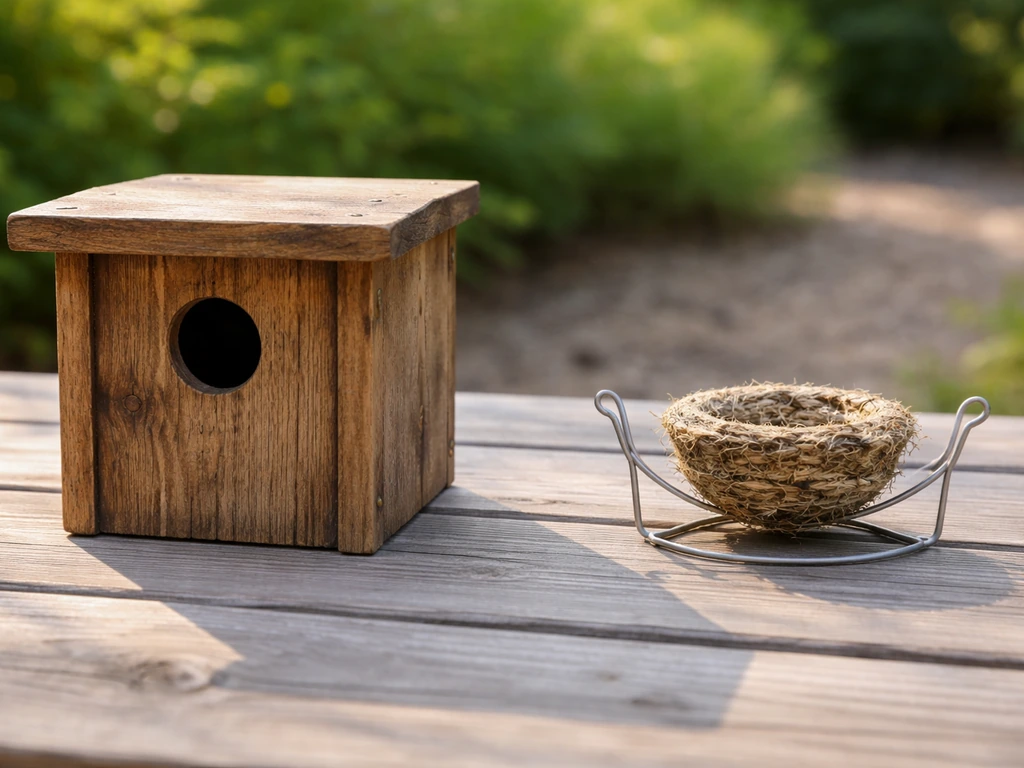
Some companies sell open-cup "nesting shelves" or wire forms specifically for hummingbirds, as opposed to enclosed boxes. These are structurally closer to what a hummingbird might actually use since the nest is not enclosed. However, hummingbirds are selective about nest placement based on camouflage, microclimate, and branch feel, so a bare wire shelf mounted to a post rarely gets chosen. If you want to try one, mount it on or near a shrub or tree branch rather than an open post, tuck it into foliage so it is partly concealed, and place it 5 to 10 feet off the ground in a spot protected from direct wind and afternoon sun.
What you should absolutely avoid is any enclosed wooden box with an entry hole marketed as a hummingbird house. There is no entrance hole size that makes a cavity right for a hummingbird. It is the wrong architecture entirely. If you are curious about how this compares to something like a dedicated hummingbird nesting structure, those deserve their own look, but the bottom line stays the same: the enclosed box format does not suit hummingbirds.
| Option | Will hummingbirds use it? | Practical value |
|---|---|---|
| Enclosed wood birdhouse (any hole size) | No | None for hummingbirds |
| Open-cup nesting shelf mounted in foliage | Rarely, but possible | Low, but better than an enclosed box |
| Nectar feeder (clean, correct recipe) | Yes, reliably | High — most effective tool |
| Native flowering plants | Yes, reliably | High — supports nesting and feeding |
| Trees and shrubs for perching and cover | Yes | High — essential for shelter and nest sites |
Why you might not be seeing hummingbirds (and how to fix it)
If you have a feeder up and no hummingbirds are visiting, run through these common problems before assuming they are simply not in your area.
- The nectar has spoiled. Fermented or moldy nectar smells off and hummingbirds will not touch it. Clean the feeder thoroughly with hot water and a bottle brush, refill with fresh sugar water, and try again.
- You are using red dye or honey. Both are harmful. Red dye is unnecessary since the feeder itself is usually red. Honey ferments quickly and can cause a fatal fungal infection. Use only plain white sugar.
- The feeder is in full sun all day. Heat speeds up fermentation dramatically. Move it to a spot that gets morning sun and afternoon shade.
- There is no nearby cover. Hummingbirds are cautious. If the feeder is out in the open with no shrubs or trees within 10 to 15 feet, they may avoid it. Add cover or relocate the feeder.
- It is too close to a window. Place feeders at least 15 to 20 feet from glass to reduce collision risk. Hummingbirds that get startled may fly into windows.
- You do not have native plants nearby. Feeders supplemented by native nectar plants are far more attractive than a lone feeder in a lawn. Even a few potted native salvias near the feeder can make a difference.
- You are outside the hummingbird season for your region. Hummingbirds migrate, and timing varies by species and location. Check your regional arrival dates and have the feeder up at least a week before the first expected arrivals.
- A dominant male is chasing others away. If one bird monopolizes the feeder, add a second feeder around the corner of the house or on the opposite side of the yard so others can feed out of his line of sight.
The good news is that once you get the feeder clean, the nectar right, and some native plants in the ground, hummingbirds tend to find you quickly. They have excellent spatial memory and will return to reliable food sources year after year. The birdhouse question has a simple answer: skip it. Everything else on this list is where your time and effort will actually pay off.
FAQ
If a bird house is labeled “hummingbird house,” will hummingbirds ever nest in it?
No. Hummingbirds build open cup nests attached to a branch or hidden in a shrub, so an enclosed bird house typically cannot provide the correct nest architecture. Even if the entrance hole is large or you label it for hummingbirds, they will not treat it as a nesting site.
What should I do instead of putting up a hummingbird bird house?
If you want to “help” beyond feeding, focus on planting and structure, not cavities. Dense shrubs, vines, and native flowering plants give both perching cover and nesting material opportunities, while a feeder provides the energy source that actually drives visitation.
I added a feeder but no hummingbirds are coming, what are the most common reasons?
Use the feeder, then adjust placement and maintenance rather than giving up. Common culprits are cloudy nectar, infrequent cleaning, incorrect nectar ratio, feeder too close to a predator path, and full-sun placement that accelerates fermentation. Give it a few days after correcting these, since hummingbirds can take time to locate a new reliable food source.
Can I use red dye, honey, or flavored nectar to attract hummingbirds?
Red dye, honey, and artificial sweeteners can cause problems. Stick to plain white sugar and hot water at a 1:4 ratio, let it cool, then fill the feeder. Honey and some additives ferment faster or can promote unsafe microbial growth.
How can I tell if my nectar has gone bad before I see mold?
It depends on local weather, but a reliable rule is to clean frequently and treat the nectar as perishable. If the nectar looks cloudy, smells off, or has any signs of mold, empty, clean, and refill immediately. In hot weather, expect faster spoilage than in mild conditions.
Do open-cup nesting shelves actually work for hummingbirds?
No, not as a substitute for a feeder. Nesting shelves or open-cup forms may look more natural than enclosed boxes, but hummingbirds still must choose a very specific spot for camouflage and comfort. If you do try one, mount it near real foliage and in a protected microclimate, but do not remove shrubs or branches to make room for it.
If I put out multiple feeders, how far apart should I place them?
More is not always better when feeders compete visually or territorial males can monopolize them. Spacing multiple feeders around the yard helps reduce guarding, but you should still keep each feeder at a safe distance from cover that could help cats ambush birds.
Will adding shrubs or vines near my feeder help with both feeding and nesting?
Yes, it can affect where hummingbirds nest indirectly. Dense cover and natural branches near feeding sites help them feel safe while they search for nest placement, and they also provide perching options. However, they will still build on real branches and shrubs, not inside boxes.
What is the best way to reduce hummingbird collisions with windows?
Window strikes are a major risk. Keep feeders at least 15 to 20 feet from windows, and if you have limited space, consider adding window treatments that break up reflections. Placement affects safety just as much as nectar quality.
Why might I have hummingbirds in my yard but never see a nest?
You will usually see the nest in an open-air location rather than inside anything. A hummingbird nest can be tiny and well camouflaged with moss or lichens, so it is normal to feed and still rarely notice nesting activity.
Next Article
Blue Bird House Instructions: DIY Plans, Sizes & Mounting
DIY bluebird house: step-by-step build, exact cuts and hole sizes, mounting, predator guards, cleaning, and care.