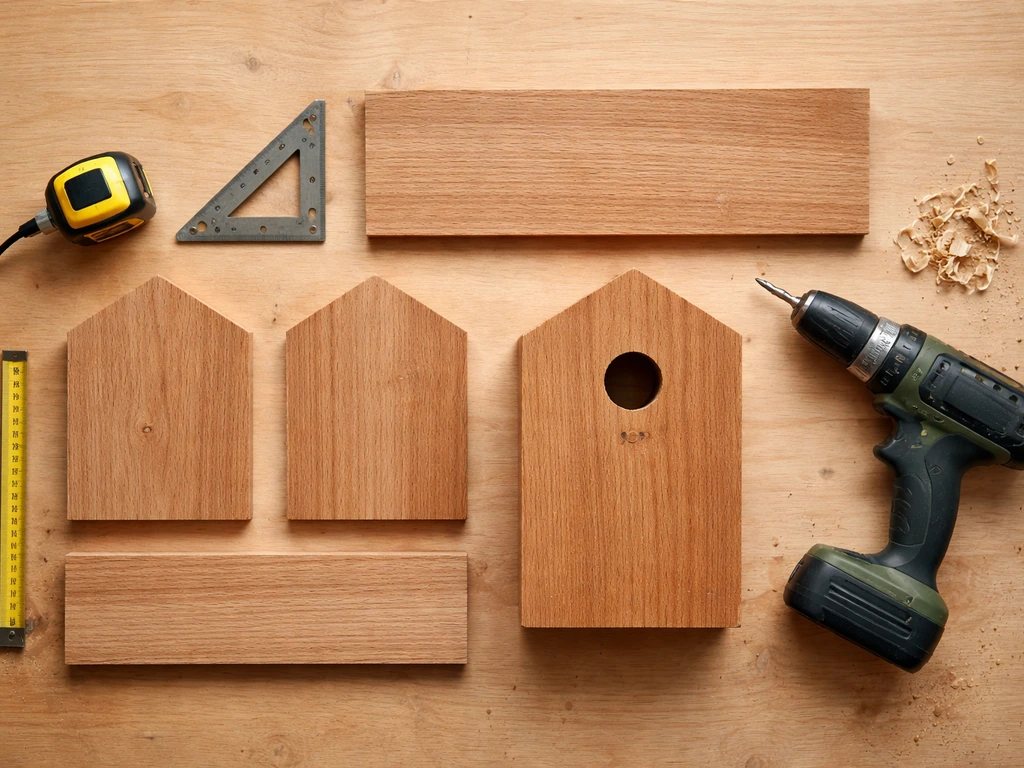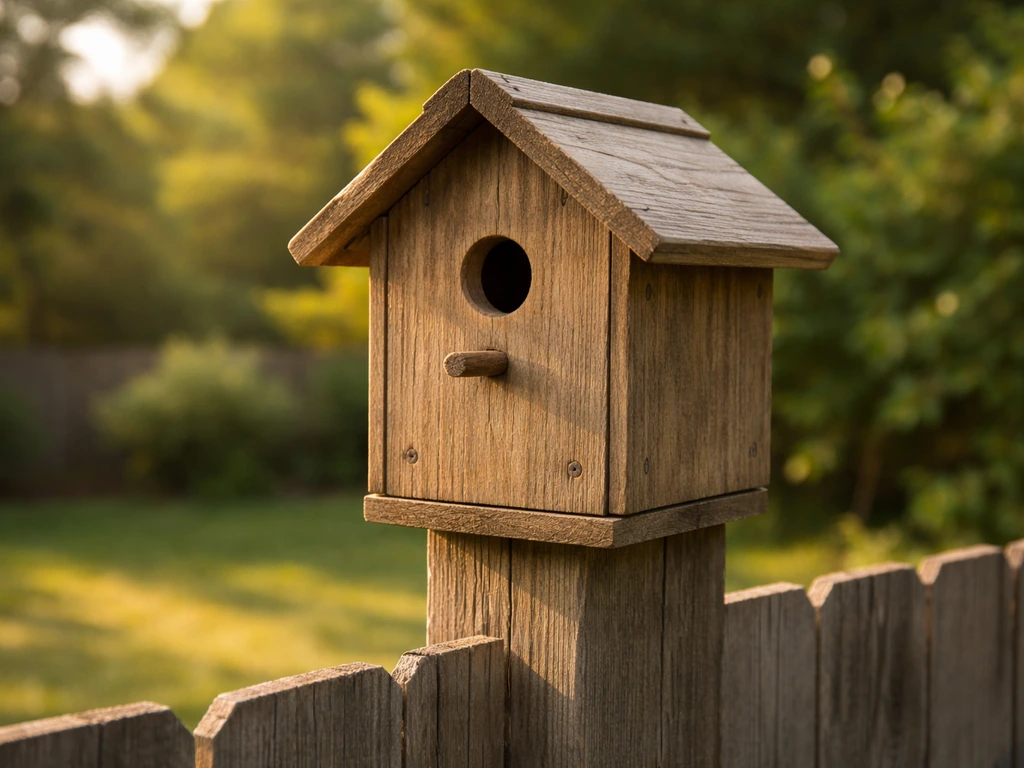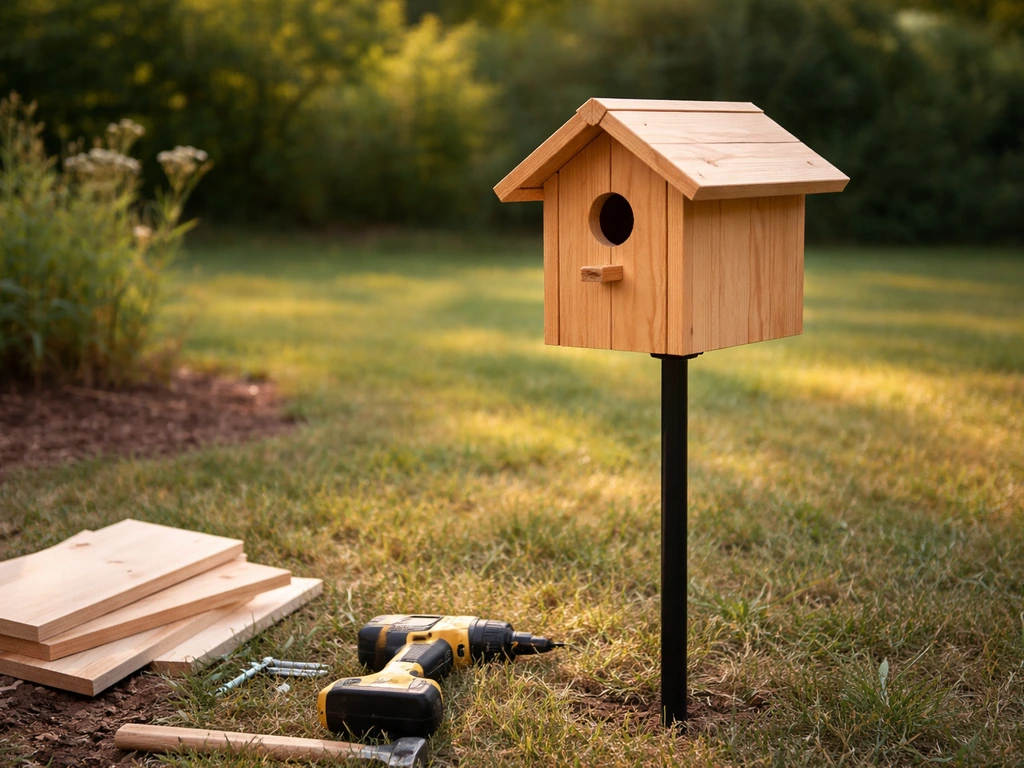
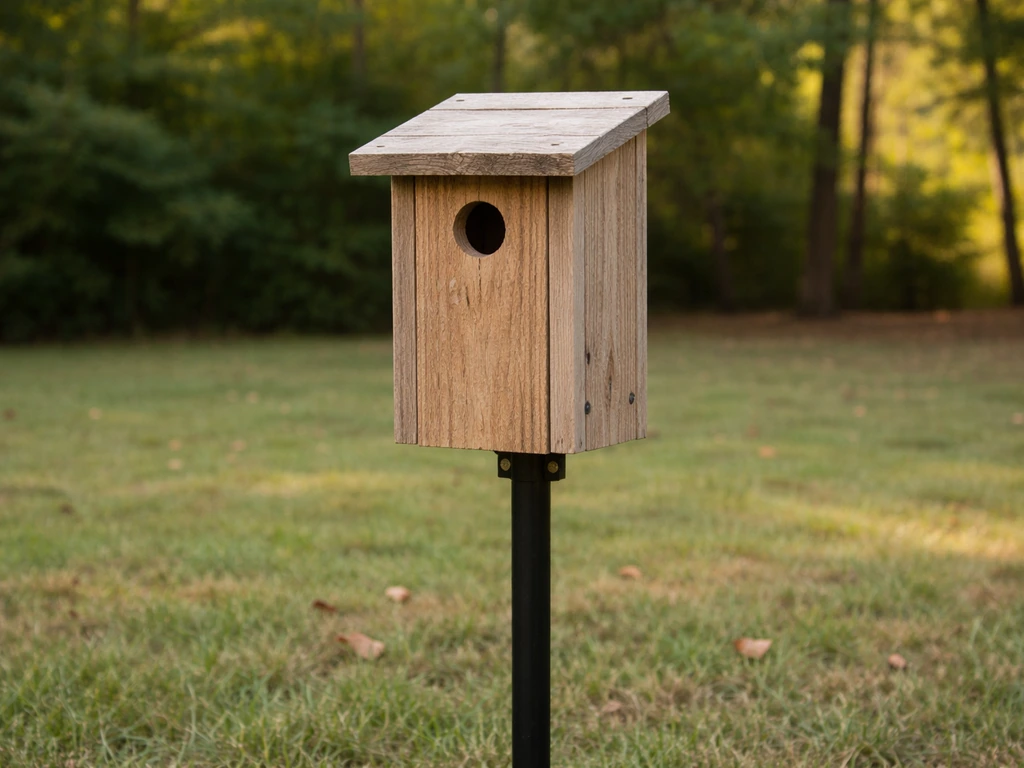
The best bluebird house is a plain, unpainted wooden nest box with a 1 1/2-inch entrance hole (1 9/16-inch for Mountain Bluebirds), a 4x4 to 5x5 inch floor, 5 to 6 inches of depth below the hole, real drainage and ventilation, a hinged side or front panel for clean-out, and a metal predator baffle on the mounting pole. Bluebird house styles like a plain, unpainted wooden nest box are the best way to match what blue jays need. That combination, installed in open habitat at 5 feet above ground facing away from prevailing weather, is what actually gets bluebirds nesting. Decorative blue-painted birdhouses from gift shops almost never work. Here is everything you need to know to get it right. If you are looking for bluebird house instructions, this guide breaks the build down into the exact specs and placement choices that lead to successful nesting everything you need to know. If you want to make a wine cork bird house, start by choosing a weatherproof base and keeping the entrance sized for small birds wine cork bird house instructions.
Best Bluebird House Guide: Choose, Build, Install
Bluebirds vs. 'blue' birdhouses: what you are actually trying to attract
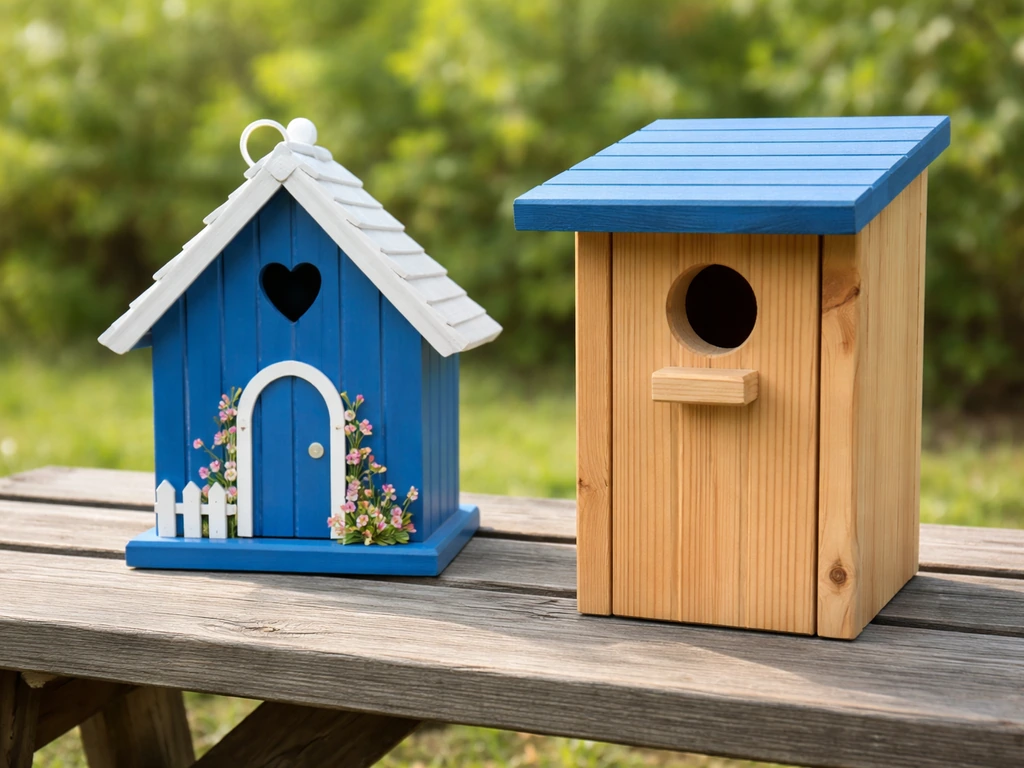
A lot of people search for a 'blue bird house' picturing a charming blue-painted decoration. What they actually want is a bluebird nesting box, a precision-built cavity that matches the physical needs of a specific wild bird. Those two things are almost never the same product.
North America has three bluebird species: Eastern Bluebird (the most common backyard target east of the Rockies), Western Bluebird (Pacific coast and Southwest), and Mountain Bluebird (higher elevations across the West). All three are secondary cavity nesters, meaning they cannot excavate their own holes and depend entirely on ready-made cavities. Your nest box is their only option in most modern landscapes.
Decorative birdhouses fail bluebirds for several reasons: the entrance holes are usually too large (inviting European Starlings) or the wrong shape, the interior floor is too small or too shallow, there is no drainage, no ventilation, and no clean-out access. A bluebird may investigate a wrong box out of curiosity but will rarely commit to nesting in one. The good news is that getting it right is not complicated or expensive. If you want practical good directions for setting up a bluebird house, placement and spacing matter as much as the box itself good news. You just need to match the specs to the species.
Species-specific box specs: hole size, floor, and depth
These numbers are not suggestions. The North American Bluebird Society (NABS) is very clear: Eastern and Western Bluebirds need a 1 1/2-inch (3.8 cm) round entrance hole. Mountain Bluebirds need a slightly larger 1 9/16-inch (4 cm) hole. Do not go larger. A 1 1/2-inch hole is too tight for a European Starling to enter comfortably, which is exactly the point. Going even a fraction larger starts letting the wrong birds in.
| Species | Entrance Hole | Floor Size | Depth Below Hole | Notes |
|---|---|---|---|---|
| Eastern Bluebird | 1 1/2 in (3.8 cm) | 4x4 to 5x5 in | 4.5 to 6 in | Most common backyard target east of Rockies |
| Western Bluebird | 1 1/2 in (3.8 cm) | 4x4 to 5x5 in | 4.5 to 6 in | Pacific coast and Southwest |
| Mountain Bluebird | 1 9/16 in (4.0 cm) | 5x5 to 5.5x5.5 in | 5 to 6 in | Higher elevations in western North America |
The depth below the entrance hole matters because nestlings use the wall below the hole as a ladder when they are ready to fledge. NABS recommends 4.5 to 6 inches from the bottom of the entrance hole to the floor. Michigan Bluebirds specifies about 5 to 6 inches for this measurement, and about 1 1/2 inches from the top of the hole to the underside of the roof to give parents a perch point. Scratch or score the interior wall below the hole with horizontal grooves if you are building your own box. This gives nestlings grip when they climb up to fledge.
Floor size should fall between 4x4 inches (16 square inches) and 5 1/2 x 5 1/2 inches (about 30 square inches). Anything smaller crowds a typical bluebird clutch of 4 to 5 eggs and nestlings. Anything much larger loses the snug thermal insulation that keeps eggs and chicks warm in cool spring weather.
What actually makes a great bluebird house
Wood choice and thickness
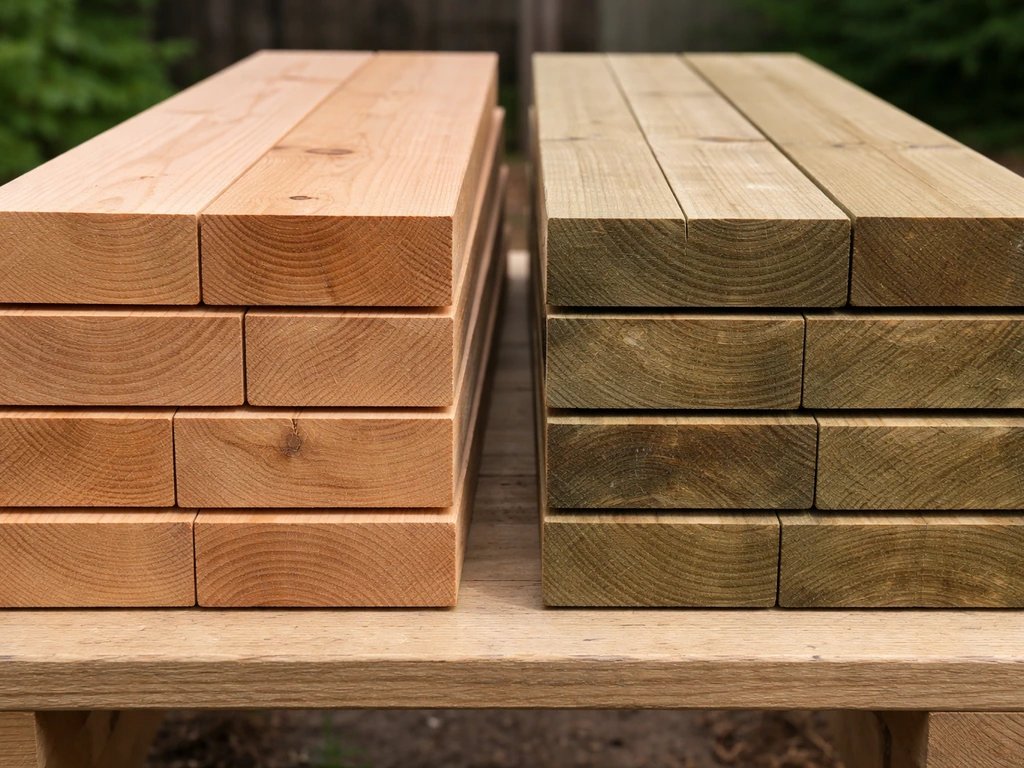
Use untreated, unpainted wood. NestWatch and virtually every bluebird society agree: cedar (red or white), cypress, and pine are the top choices because they are rot-resistant, insulate well, and contain no chemical preservatives that can harm eggs or nestlings. A 3/4-inch board thickness is the practical minimum for insulation and durability. Recycled plastic lumber is also a legitimate option since it is genuinely rot-proof, though it can heat up faster in direct sun so orient the box carefully.
Avoid pressure-treated wood entirely. Skip stain and paint on the interior. On the exterior, a light-colored water-based exterior paint or a natural stain on the roof only is fine if you want to extend the life of the wood, but the cavity itself should remain bare and rough.
Drainage, ventilation, and roof overhang
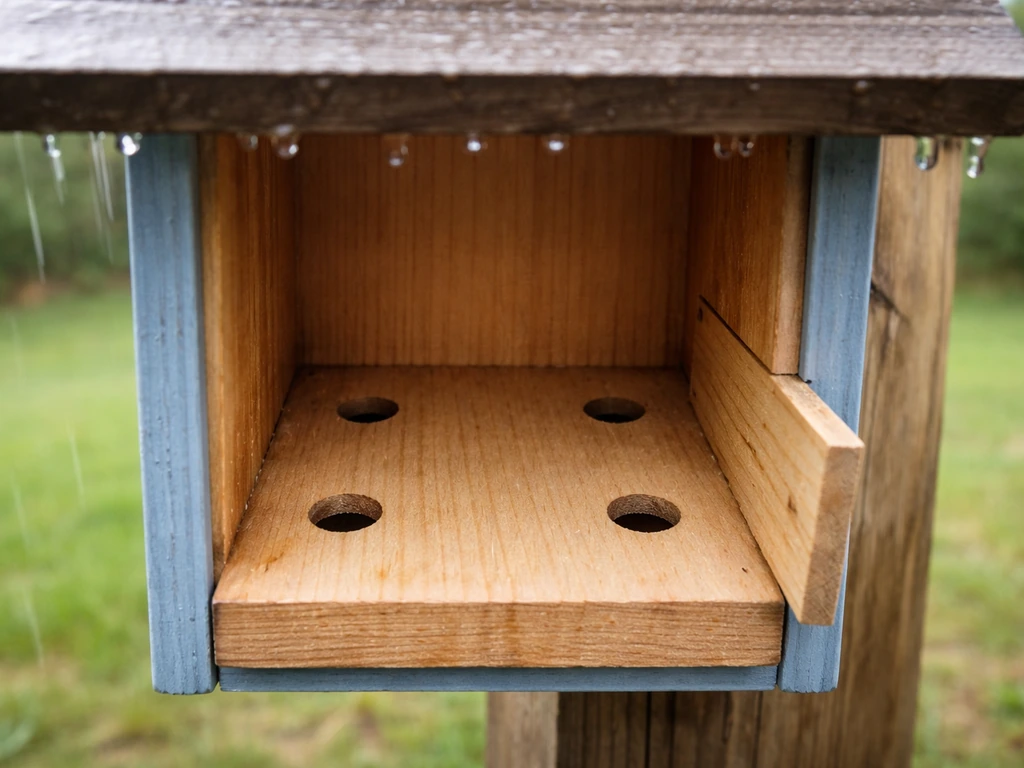
Every bluebird box needs at least four drainage holes in the floor, each 3/8 to 1/2 inch in diameter. Rain gets in no matter how tight your build is, and eggs sitting in standing water will not hatch. Ventilation gaps near the top of the side walls (about 1/4 inch) prevent heat buildup in summer. A roof overhang of at least 5 inches above the entrance hole is strongly recommended by Bluebirds Across Nebraska because it physically blocks raccoon arms and reduces rain splash into the cavity.
Clean-out access
A hinged or pivoting side panel or a front panel that swings open is non-negotiable. You will be opening this box multiple times per season, and a box that requires tools to access is a box that does not get cleaned. A simple pivot screw at the top of a side panel with a nail or screw latch at the bottom takes five minutes to build and makes monitoring and cleaning a thirty-second job.
Features to skip
- Perches below the entrance hole: bluebirds do not need them, and House Sparrows love them
- Decorative cutouts, ornamental roofs, or multi-chamber designs: these do not help bluebirds
- Very large entrance holes (anything over 1 9/16 inch): this invites starlings
- Smooth interior walls under the entrance hole: nestlings cannot climb out
Installation: mounting height, placement, and orientation
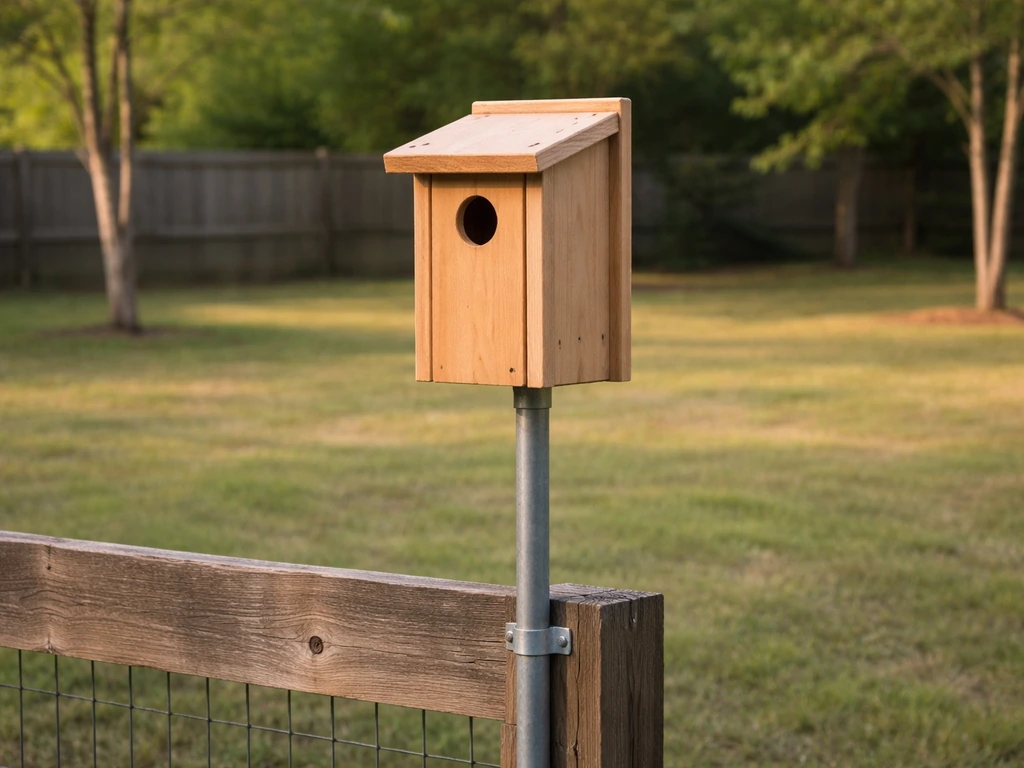
Bluebirds are open-habitat birds. They nest at forest edges, in meadows, along fence lines, and in yards with short grass and scattered trees. If your yard is heavily wooded, they will almost certainly not use a box there. The more open your space, the better your odds.
- Mount the box 5 feet above ground on a smooth metal conduit or galvanized pipe (Connecticut DEEP recommends 5 feet on galvanized pipe, or 7 to 8 feet on metal garden stakes). The height works with a predator baffle to stop climbing predators.
- Face the entrance hole away from prevailing wind and afternoon sun. In most of the US, an eastward or northeastward orientation works well. Avoid south-facing in hot climates where afternoon heat can cook nestlings.
- Place the box in open habitat with a clear flight path to the entrance. Bluebirds like to see the box from a distance and approach in a straight line.
- Keep boxes at least 100 yards apart (300 feet) if you are running multiple boxes. Bluebirds are territorial and will not nest closer than that. You can pair boxes 5 to 15 feet apart as a strategy to attract a bluebird to one while a Tree Swallow takes the other, since the two species tolerate each other at close range.
- Keep the box at least 50 feet away from dense shrubs or brush piles where House Sparrows concentrate.
Predator guards: the part most people skip
A well-placed box without a predator guard is an invitation to raccoons, snakes, cats, and opossums. A predator guard on the mounting pole is not optional if you want nesting to succeed season after season. It is the single most impactful upgrade you can add.
Stovepipe baffles
The stovepipe (or 'Kingston') baffle is the gold standard recommended by Sialis.org and most bluebird societies. A metal stovepipe at least 8 inches in diameter and 24 inches long, mounted on the pole below the box, physically stops snakes and raccoons from climbing past it. NestHollow notes that a commercial stovepipe baffle of at least 8 by 24 inches, combined with a minimum 5-foot mounting height, is the most effective protection available. The key is that the baffle must be wide enough that a snake or raccoon cannot reach around it.
Hole restrictors and entrance guards
A metal hole restrictor plate around the entrance hole protects it from being chewed or enlarged by squirrels and woodpeckers. The Virginia Bluebird Society also describes a heavy wire mesh 'Cat/Raccoon Guard' that mounts on the front of the box, adding a physical buffer between a reaching arm and the entrance. For areas with extremely high House Sparrow pressure, entrance-hole restrictors can be used to reduce the opening slightly, though this is a tradeoff since it also makes entry tighter for bluebirds.
Dealing with House Sparrows and European Starlings
House Sparrows are the biggest competitor threat in most suburban areas. They will evict bluebirds, destroy eggs, and kill adults and nestlings. Starlings are usually excluded by the 1 1/2-inch hole, but they can still be a nuisance around the box. Bluebirds Across Nebraska notes that an oval-shaped entrance hole can further discourage starlings in Eastern Bluebird boxes. Sialis.org points out that sparrows cannot enter a 1 1/8-inch hole, but that is too small for bluebirds as well, so hole size alone is not a solution. The best anti-sparrow approach is a combination of active monitoring, removing House Sparrow nests immediately and repeatedly, and not placing boxes near buildings or feeders where sparrows concentrate. If sparrows continue to be a serious problem in your specific location, detailed blue bird house instructions for sparrow-resistant designs can be worth exploring.
Monitoring, cleaning, and seasonal management
Managing a bluebird box is not a set-it-and-forget-it project. Active monitoring is what separates boxes that produce bluebirds year after year from ones that get taken over by the wrong species or become disease vectors.
When to check
Clean and inspect the box in early March (late February in southern states) before birds begin prospecting, following the guidance from BC Bluebirds. Once nesting starts, check every 4 to 7 days. This lets you track egg laying, confirm hatching, identify predation evidence like broken shells or muddy tracks on the pole, and remove competing nests early. Always check during the middle of the day when parents are away foraging, and keep visits short. The California Bluebird Recovery Program emphasizes that keeping the door open too long can chill nestlings and disturb parents.
When not to open the box
The Virginia Bluebird Society's monitoring protocol is direct: never open the box after day 13 of the nestling period, because nestlings may fledge prematurely when startled. Count from the day the eggs hatch. Once you see the oldest nestlings are feathered and alert near the entrance hole, leave the box alone until the family has fledged.
Cleaning between broods
After each brood fledges, remove the old nest completely. Michigan Bluebirds recommends washing the inside of the box with a 10% bleach and water solution, letting it air dry fully before closing it up. Sialis.org suggests an enzyme cleaner as an alternative, and notes special precautions if you ever find evidence of rodent nesting (wear gloves and a mask due to hantavirus risk, however rare). Cleaning out a used nest promptly encourages a second or even third brood in the same season, which is a genuine conservation win. Bluebirds can raise two to three broods per season where conditions allow.
End-of-season maintenance
After the final brood of the year fledges (usually August or September in most regions), clean the box one last time, check for damage or loose hardware, and leave the door slightly ajar or remove it over winter to prevent mice from moving in and to let the interior dry out. Reinstall and close it up by late February or early March.
Troubleshooting when bluebirds do not use the house
You did everything right but the box sits empty. Here is how to diagnose it systematically. If you want simple bird house instructions, this troubleshooting section helps you pinpoint what is going wrong and what to change next how to diagnose it systematically.
| Problem | Likely Cause | Fix |
|---|---|---|
| Box is completely ignored | Wrong habitat (too wooded, too urban) | Relocate to more open area with short grass and scattered trees |
| Bluebirds visit but do not nest | House Sparrow competition or wrong orientation | Remove sparrow nests repeatedly; try rotating box entrance away from prevailing wind |
| Nest started, then abandoned | Predation or disturbance | Add stovepipe baffle; reduce monitoring frequency during egg laying |
| Nest in box but wrong species | Hole too large or box near buildings | Confirm hole is exactly 1 1/2 inch; move box further from structures |
| Repeated egg or nestling loss | Climbing predator (raccoon/snake) | Install stovepipe baffle if not present; check for muddy tracks on pole |
| Box occupied by House Sparrows only | No active management | Remove sparrow nests immediately every time; consider box relocation away from feeders |
One of the most common mistakes is placing the box too close to a wooded edge or dense shrub line. Bluebirds want to see clear airspace in front of the entrance hole. Even moving a box 20 to 30 feet into a more open area can make the difference between an ignored box and an active nest within the same spring season.
If bluebirds keep starting nests and then abandoning them, look for signs of predation first: broken eggshells inside the box, scratch marks on the pole, or disturbed nesting material. Michigan Bluebirds notes that muddy tracks on the pole are a reliable indicator of raccoon activity. Add or upgrade the predator baffle before the next clutch begins.
Patience matters too. A new box in a good location may sit empty its first spring while local bluebirds evaluate it. Keep it clean, keep the sparrows out, and most boxes in good habitat will attract bluebirds within one to two seasons. Once a pair nests successfully, they tend to return to the same box year after year.
Quick reference: bluebird box checklist
- Entrance hole: 1 1/2 inch for Eastern or Western Bluebird, 1 9/16 inch for Mountain Bluebird
- Floor: 4x4 to 5x5 inches (up to 5 1/2 x 5 1/2 for Mountain)
- Depth from bottom of entrance hole to floor: 4.5 to 6 inches
- Interior wall below hole: scored or grooved for nestling grip
- Wood: untreated cedar, cypress, or pine, 3/4 inch thick minimum
- Drainage: at least four 3/8 to 1/2 inch holes in the floor
- Ventilation: gaps near the top of side walls
- Roof overhang: at least 5 inches above the entrance hole
- Clean-out: hinged or pivoting panel with simple latch
- No exterior perch below the entrance hole
- Mounting height: 5 feet on smooth metal conduit
- Predator baffle: stovepipe style, at least 8 x 24 inches, on the mounting pole
- Orientation: entrance facing away from prevailing wind and afternoon sun
- Placement: open habitat, minimum 100 yards between boxes
- Monitoring: every 4 to 7 days during active nesting
- Cleaning: 10% bleach solution after each brood fledges
FAQ
Can I use one bluebird house design for every bluebird species in my area?
If you are building or buying for Eastern or Western Bluebirds, don’t “split the difference” and choose an intermediate hole size. Use the exact 1 1/2-inch round entrance for those species, because even small increases can let starlings fit comfortably. If you live in an area that hosts multiple bluebird species, you may need separate boxes sized to each species rather than one universal design.
What’s the best way to make the clean-out door easy to open safely?
Yes, but the “right” hinges depend on how you plan to access it. A side or front panel that pivots should open fully enough that you can remove nests without reaching over the entrance, because short access leads to incomplete cleanouts and recurring sparrow or starling issues. Also make sure the latch cannot loosen when bumped by predators or during storms.
How often should I check the box during active nesting, and do frequent inspections hurt?
Spot-checking is better than constant handling. Use the 4 to 7 day schedule once nesting starts, and if you need to confirm progress, look through the entrance first. Repeated long visits can chill nestlings and increase abandonment risk, especially during cool or rainy spells when parents stay away longer.
What should I do if the box stays empty all spring, should I move it?
If the box is unused early in the season, avoid overreacting by moving it every time you see activity. Instead, check key variables in order, predator protection, clear airspace in front of the hole, and sparrow pressure. If you do relocate, do it before mid-season prospecting peaks, and choose a target spot with open sightlines, not just fewer trees nearby.
How do I handle drainage problems if the box seems to stay wet after storms?
Add drainage but also manage debris. If you find wet clumps, soggy nesting material, or standing water after storms, increase floor drainage hole count and ensure the box is mounted level or slightly pitched so water runs out, not inward. Even with correct holes, a poorly oriented mount can keep moisture in the cavity.
What’s the most effective way to stop House Sparrows from taking over my box?
Use the box specs to reduce sparrows, but manage the local attractants too. Place the bluebird box away from feeders and birdbaths that draw House Sparrows, and remove any sparrow nests immediately when found, repeatedly, not just once. The goal is to keep sparrows from establishing a routine nearby, since even a good hole size can be bypassed by aggressive competitors.
My predator guard is installed, how do I know it’s actually working?
If you suspect raccoons or snakes, don’t rely on “close enough” predator guards. Verify the baffle is wide enough that a snake cannot wrap around it and that the box height meets the minimum mounting guidance. Also check after storms for loosening hardware, because a slightly shifted baffle can create an accessible gap.
Should I leave the box open or closed during winter?
In cold regions, leaving the box closed over winter can still be fine, but preventing mice entry matters. A common approach is removing the access door over winter or leaving it slightly ajar so the interior dries out and rodents cannot take refuge. Reassemble and close by late winter so you are ready before bluebirds begin prospecting.
How should I clean the box between broods and what if there are signs of rodents?
Use cleaning as a health and productivity tool, not a regular disturbance. Clean after each brood is finished, and only return to the “deep clean” in off periods. If you find signs of rodent activity, take extra precautions before cleaning, including protecting yourself from dust, and focus on fixing the entry risk so the problem doesn’t repeat.
What’s the most common “looks right, doesn’t work” mistake besides hole size?
A box can look correct but still fail if it is not mounted in the right micro-location. Even in open habitat, bluebirds need clear airspace in front of the entrance, so avoid mounting right beside dense shrubs or where branches overhang the entrance area. If you notice repeated nest failures tied to predation evidence, address predator access first before changing cosmetics or interior adjustments.