Face the entrance hole toward the east or southeast. That single rule covers the majority of backyard cavity nesters in most of North America, and it works because it gives birds warm morning sun at the entrance while shielding the inside from harsh afternoon heat and keeping driving spring and summer storms (which typically arrive from the west and northwest) from soaking the nest. If you can nail that one thing, you are already ahead of most birdhouses sitting in backyards right now. If you are using a wine cork bird house design, follow these same direction and placement principles so the entrance stays dry and safe for the birds wine cork bird house instructions.
Good Directions for Bird Houses: Best Orientation and Placement

Maya Thompson
12 May 2026
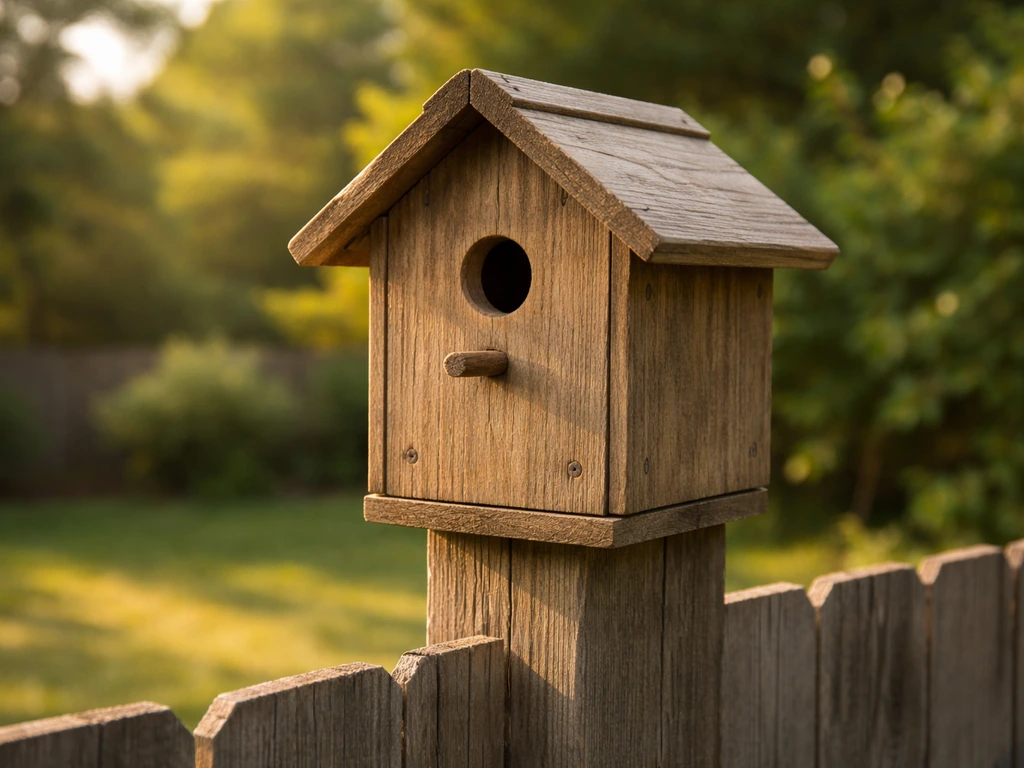
Why birdhouse direction matters more than most people think
Direction is not just about convenience for you when you go to watch from the patio. It directly affects temperature inside the box, moisture intrusion, and how exposed the entrance is to predators approaching from cover. Get it wrong and birds either avoid the box entirely or start a nest, then abandon it when conditions become dangerous.
Heat is the biggest killer people overlook. A wooden box facing southwest in full sun can reach internal temperatures that are lethal to nestlings on a hot afternoon, even when air temperatures seem moderate. Audubon and Cornell's NestWatch both specifically advise orienting boxes toward the north or east and away from afternoon light to prevent heat stress. On days that crack 100°F, that orientation difference can be the line between a successful fledge and a dead brood.
Rain intrusion is the second issue. In most of the eastern and central US, spring and summer storm fronts roll in from the west or northwest. Pointing the entrance hole directly into that wind funnels rain straight onto the nest. Facing east or southeast means the box body itself acts as a windbreak, and the entrance stays dry during most storms.
Predator risk also connects to direction. Placing a box so the entrance faces an open, visible area (rather than dense shrubs where a cat or raccoon can lurk undetected just a foot away) gives adult birds a clear sightline when approaching. Predator guards and baffles are still non-negotiable, but orientation that avoids pointing the hole straight into heavy cover reduces ambush risk.
How to figure out your yard's directions and microclimate
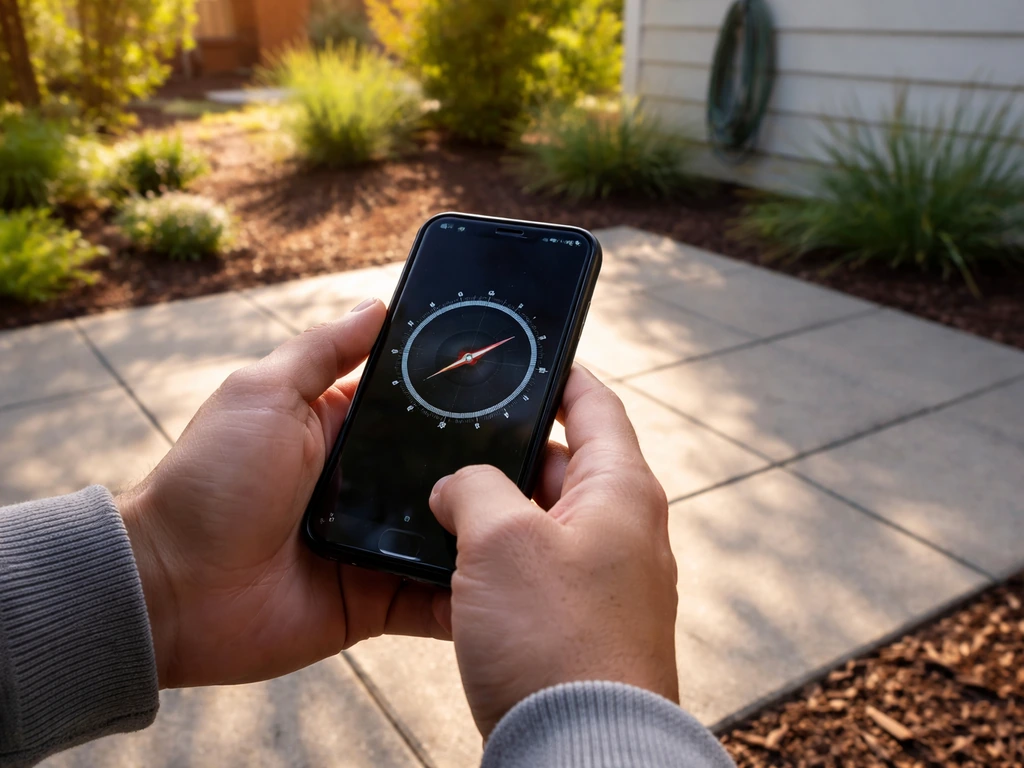
Pull out your phone and open the compass app. Stand at the proposed mounting location and note which direction is east. If your phone compass seems unreliable near metal fencing or wiring, download a dedicated compass app or use a $5 handheld hiking compass. Once you have true east marked, take a few minutes to do a quick microclimate read before you drill anything.
- Note where the afternoon sun hits hardest. Stand at the spot around 2–3 PM on a sunny day. If that location gets full western sun, factor in a shade source (a tree, fence, or the eave of a structure) before committing.
- Identify your prevailing wind direction. Check local weather data for your zip code or just think back to which direction storms approach from in spring. In most of the US it is from the west to northwest.
- Check for microclimatic shade. A spot that looks open on a map might sit in the shadow of a large tree from noon onward. That can actually work in your favor for keeping the box cool.
- Look at the flight path. Birds need a clear, unobstructed approach to the entrance. Mark any branches, wires, or structures within about 6 feet of the hole that could give a predator a launch point.
- Note human traffic. Boxes mounted on the side of a fence facing a busy patio or gate get disturbed constantly. Orient toward a quieter sightline while still staying east or southeast.
Best general compass orientation rules for bird houses
East is the default, southeast is often even better. Morning sun warms the box gently and dries out any overnight moisture at the entrance, which reduces mold and bacterial growth inside. By the time the sun swings past noon and starts delivering its real heat, the entrance is in shade. The North Carolina Bluebird Society puts it plainly: orient the entrance away from the prevailing wind and toward the southeast if possible. Bluebird house instructions often include the same entrance-direction logic, plus the right entrance-hole size and a safe mounting height orient the entrance away from the prevailing wind. That advice applies well beyond bluebirds.
North-facing is an acceptable fallback if east or southeast is truly impossible. It keeps afternoon heat out and rain out, but the box interior stays cooler overall, which can slow nestling development in very early spring when temperatures are borderline. South and west-facing orientations are the ones to avoid: south can work in northern latitudes where heat is less of a concern, but west-facing is the worst choice almost everywhere because it combines afternoon heat with direct exposure to prevailing storms.
| Entrance Direction | Afternoon Heat | Rain/Wind Exposure | Morning Sun | Overall Rating |
|---|---|---|---|---|
| East | Low | Low | Good | Excellent |
| Southeast | Low to moderate | Very low | Good | Excellent |
| Northeast | Very low | Low | Moderate | Good |
| North | Very low | Moderate | Minimal | Acceptable |
| South | Moderate | Low to moderate | None | Fair (northern climates only) |
| West | Very high | Very high | None | Poor |
| Southwest | Very high | High | None | Poor |
| Northwest | Moderate | Very high | None | Poor |
Species-specific direction and placement differences
The east/southeast rule is a solid default, but specific birds have specific preferences that are worth knowing before you mount anything. Here are the most common backyard cavity nesters and what the evidence says about each one.
Eastern Bluebird
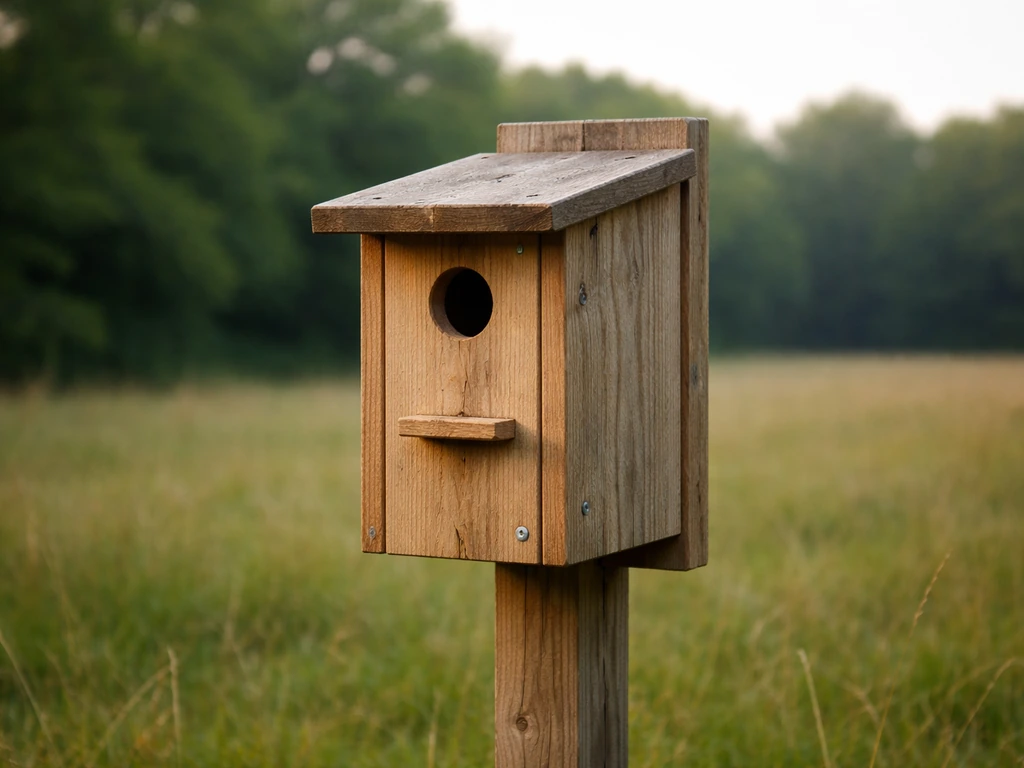
Cornell's NestWatch is direct: position the entrance hole facing east, toward open habitat. The Tennessee Wildlife Resources Agency recommends east specifically to keep the hole away from afternoon sun and north winds that drive rain in. Michigan Bluebirds adds that facing away from the southwest to northwest range is critical because that is where spring and summer storms originate. MSU's KBS Bluebird Trail guidance also emphasizes orienting the hole toward a nearby shrub, grass clump, or low branch that fledglings can land on when they leave for the first time. Mount at about 5 feet off the ground, in an open area at least 50 to 100 feet from woodland edges, on a metal pole with a baffle. Bluebird houses need 1. When you visualize what blue jay bird houses look like, you will notice the usual features: a sturdy wooden box, a weather-ready entrance, and the right size hole for these larger cavity nesters what do blue jay bird houses look like. 5-inch entrance holes.
Black-capped Chickadee and Carolina Chickadee
New Jersey Audubon's nest box placement guidance says the hole should face away from the prevailing wind, which in practice usually means east or northeast. Height range is 5 to 15 feet, and chickadees prefer boxes near woodland edges or shrubby areas rather than open fields. They need a 1-1/8-inch entrance hole and prefer boxes filled partially with wood shavings since they like to excavate. Space them at roughly one box per 10 acres to avoid territorial conflicts.
Tree Swallow and Violet-green Swallow
Swallows are a bit more flexible about orientation but still benefit from east or southeast facing. They are aerial insects, so they need open approaches and clear airspace in front of the hole. Mount at 5 to 8 feet on a metal pole in an open area near water if possible. Because they are highly competitive, space paired boxes at least 5 to 10 feet apart (a paired-box strategy can work well) but keep competing pairs at least 200 feet from another pair. A 1-1/2-inch entrance hole fits both Tree and Violet-green swallows.
House Wren
Wrens are the most adaptable cavity nesters in most backyards and will accept a wider range of orientations, but east still works best to prevent overheating. They prefer boxes near shrubby, brushy areas and woodland edges, mounted at 5 to 10 feet. Entrance hole size is small: 1-1/8 inches. Wrens are prolific box-fillers (males stuff multiple boxes with twigs as dummy nests), so plan to clean each box out after each brood.
Northern Flicker
New Jersey Audubon specifically lists southeast-facing for Flicker boxes, which fits the general rule well. Flicker boxes mount higher than most, at 6 to 30 feet, and need to be completely filled with wood chips or shavings since flickers simulate excavation. They are territorial, so space boxes at least 200 feet apart. Entrance hole is 2-1/2 inches.
Downy and Hairy Woodpecker
Both prefer boxes on dead trees or wooden posts in wooded or semi-wooded settings. East-facing works well. Mount at 8 to 20 feet depending on species. Like flickers, fill the box with wood shavings. They are less common as box users than the species above but will adopt a well-placed box.
| Species | Preferred Direction | Height (ft) | Entrance Hole | Habitat |
|---|---|---|---|---|
| Eastern Bluebird | East / Southeast | 5 | 1.5 in | Open field, away from trees |
| Chickadee (Black-capped / Carolina) | East / Northeast, away from wind | 5–15 | 1-1/8 in | Woodland edge, shrubby areas |
| Tree Swallow | East / Southeast | 5–8 | 1-1/2 in | Open area near water |
| House Wren | East (flexible) | 5–10 | 1-1/8 in | Shrubby, brushy edge |
| Northern Flicker | Southeast | 6–30 | 2-1/2 in | Wooded or semi-open area |
| Downy / Hairy Woodpecker | East | 8–20 | 1-1/4 to 1-1/2 in | Wooded, near dead wood |
Mounting details that interact with direction
Direction is only one piece of the placement puzzle. Height, clearance, mounting angle, and spacing all interact with orientation to determine whether birds feel safe enough to commit to a box.
Height and clearance
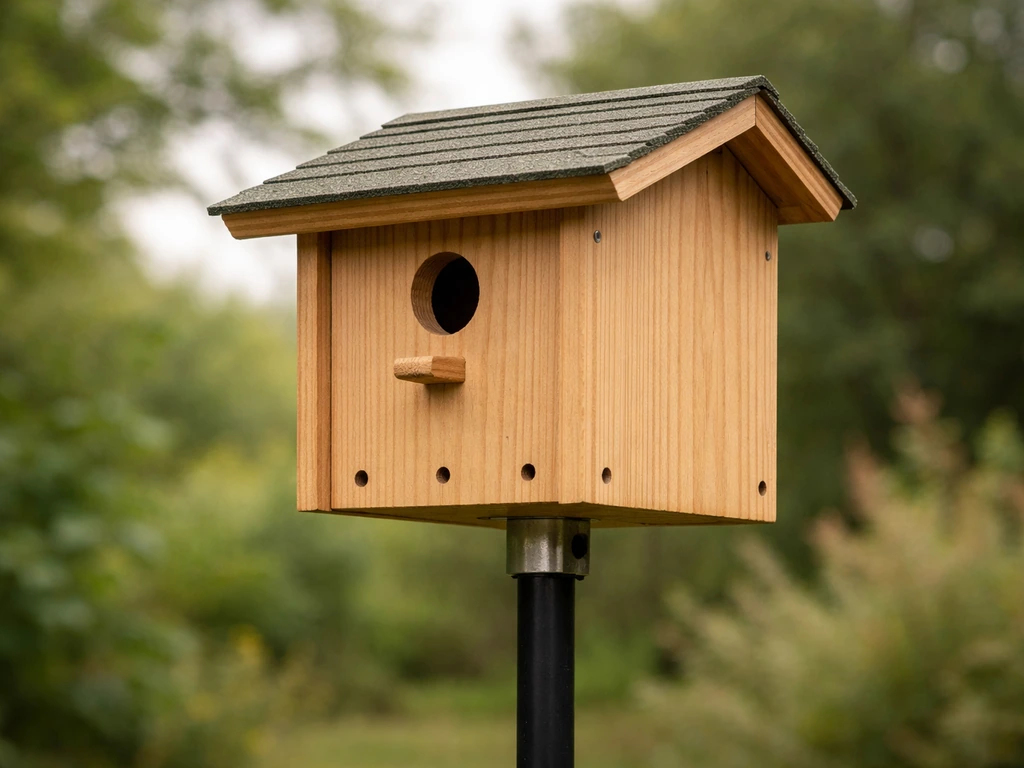
UNH Extension notes that height is of equal importance to other placement factors. For most small cavity nesters, 5 to 8 feet on a metal pole is the sweet spot: high enough to feel safe from ground-level predators, low enough for you to monitor and clean without a ladder. Keep the box far enough from trees, fences, and structures that a cat cannot spring from a nearby surface directly to the top of the box in a single jump. Cornell's NestWatch recommends this specifically. A metal pole with a cone or stovepipe baffle around 3 to 4 feet off the ground is the gold standard.
Mounting angle
Mount the box level or with a very slight forward tilt, no more than 5 degrees forward (entrance slightly lower than the back wall). This helps any water that does get past the entrance run toward the drainage holes in the floor rather than pooling inside. Tipping a box backward even slightly causes water to sit directly on the nest. Make sure all mounting hardware is tight: NestWatch specifically warns that nails can loosen over time, creating gaps that allow rain into the box.
Ventilation and drainage
UNH Extension recommends at least four 1/2-inch drainage holes in the floor and two 5/8-inch ventilation holes near the tops of each side wall (four ventilation holes total) for standard backyard boxes. NestWatch also recommends adding at least four drainage holes to the floor (about 3/8 to 1/2 inch diameter) and installing ventilation holes: two 5/8 inch diameter holes on each side wall near the top for four total. These work with your east/southeast orientation to keep airflow moving through the box without letting driving rain enter. If you are building your own box, do not skip these: a sealed, unventilated box pointed east is still going to overheat in summer.
Spacing between boxes
Most cavity nesters are territorial about nest sites. Placing two same-species boxes too close creates conflict that ends in both being abandoned. A practical rule for most small birds is at least 100 feet between boxes of the same species (more for bluebirds, which prefer at least 100 to 300 feet depending on the source). The Tree Swallow pairing trick (placing two boxes 5 to 10 feet apart) works because swallows will defend a very small territory that includes both boxes, but they will repel other swallow pairs at 200-plus feet. Keep boxes at least 50 feet from feeders: the activity around feeders stresses nesting birds.
Common mistakes and how to fix them
Wrong sun exposure
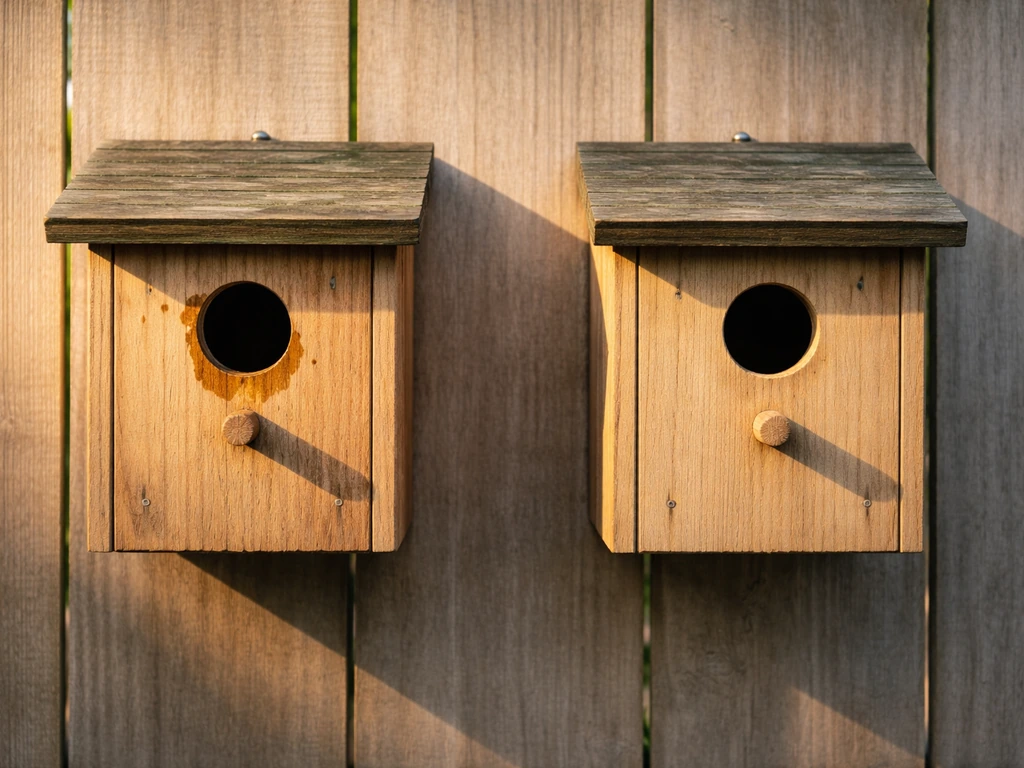
A west or southwest-facing box is the single most common setup error. If you have a box already mounted in that direction and it is currently unoccupied, rotate it now. If it is occupied, wait until after fledging and then remount it. NestWatch is clear that you should not disturb an active box. If you are hitting extreme heat (multiple days over 100°F) and the box is occupied, Cornell suggests adding a heat shield: a second piece of wood or thin metal roofing attached above the box roof with a small air gap to block radiant heat.
Wet entrances and soggy nests
If you are finding wet nests after storms, check two things: entrance orientation (likely facing prevailing wind) and mounting angle (box tipping back). Reorient toward east or southeast and add a slight forward tilt. Also inspect the roof overhang: it should extend at least 2 inches beyond the front of the box to deflect rain. If your box does not have an overhang, add a strip of exterior-grade wood or a piece of metal flashing to the roof edge.
Noisy and high-traffic placement
Boxes mounted on a fence post next to a gate, next to an HVAC unit, or facing a busy window get disturbed constantly. Birds will scout a box but not commit if every visit involves a startle event. Move the box to a calmer side of the yard and orient the entrance away from foot traffic paths. A box that faces east but also looks directly into a busy corner of the patio will be ignored.
Predator-accessible placement
Nests in boxes with predator guards have success rates about 6.7% higher than unprotected boxes, according to NestWatch data. If your box is on a wooden post, fence, or attached to a tree, predators have a path in. Move to a metal pole and add a baffle. NestWatch research also confirms that placing boxes away from trees and fences specifically reduces raccoon and cat access. The direction you face the entrance is less useful if the whole mounting situation is unsound.
Too close to feeders or bird baths
The social activity around feeders stresses nesting birds and attracts House Sparrows aggressively. Keep nesting boxes at least 50 feet from your main feeder station. If you are trying to attract bluebirds, be especially strict about this: bluebirds are skittish about nest disturbance and House Sparrows are a serious threat to their eggs and young.
Seasonal timing and maintenance
When to install and when to make adjustments
NestWatch's consistent advice is to install or reposition nest boxes well before the breeding season begins. For most of the US, that means boxes should be up and oriented correctly by late February or early March for early nesters like Eastern Bluebirds and Tree Swallows. House Wrens and later-season nesters give you until April or May in many regions, but earlier is always better since birds scout potential sites weeks before they commit. If a box is currently occupied, leave everything alone until after the young have fledged. Make any orientation or hardware adjustments only when the box is empty.
Cleaning after fledging
Old nests harbor mites, blowfly larvae, bacteria, and other parasites that can harm subsequent broods. After each brood fledges, remove all nesting material and scrub the interior with a solution of 1 part bleach to 10 parts water, per Cornell's NestWatch guidelines. Rinse well and let the box air dry completely before closing it back up. Michigan Bluebirds emphasizes that a box with an easy-open panel (a hinged side or pivoting front) makes this cleaning practical rather than a frustrating project: build or buy boxes with access panels. Some species like Tree Swallows will use the same box for a second brood in the same season, so check and clean quickly between broods.
End-of-season and winter checks
After the breeding season ends in late summer or early fall, do a final clean and inspection. Tighten all screws and bolts (remember NestWatch's warning about nails loosening and creating rain gaps), inspect the roof for warping or cracks, and check the baffle or predator guard for damage. Some people remove boxes over winter to prevent House Sparrows from roosting and claiming them early; others leave them up because small birds like chickadees and nuthatches use boxes as winter roost sites. Both approaches are fine as long as the box is cleaned and reset before the next breeding season.
Monitoring during the season
Checking the box once a week during nesting season lets you catch problems early: flooded nests, parasites, or House Sparrow takeovers. Do checks quickly and quietly, ideally when adult birds are away foraging. If you see a House Sparrow nest (a loose, messy pile of grass, feathers, and trash), remove it immediately and keep removing it. House Sparrows are not protected under the Migratory Bird Treaty Act and their nests can be legally removed. If you are also interested in building specific styles of boxes for bluebirds or working from dedicated plans, the species-specific placement guidance for bluebird boxes and the general approach to simple box construction connect well with the direction principles covered here. For more detailed step-by-step help, see simple bird house instructions for choosing materials, cutting boards, and assembling a basic box.
FAQ
I already mounted a bird house, but it faces west. Should I flip it now or leave it?
If the box already faces southwest or west and it is unoccupied, rotate it now. If it has an active nest, wait until after the young fledge, because disturbing an occupied box can cause abandonment.
My phone compass says one direction, but the box’s orientation seems off. How do I verify east/southeast correctly?
A “compass direction” should be taken from the exact mounting spot, not from where you think the yard points. If your phone struggles near wiring or metal fencing, mark east with a handheld hiking compass and confirm by sighting where the sun rises.
Does mounting angle matter, or is the entrance direction the only thing that counts?
Yes, but keep it minimal. A slight forward tilt helps water drain toward the floor holes, while a larger tilt (or a backward tilt) can leave water pooling directly inside even if the entrance faces east or southeast.
What should I troubleshoot first if I find a wet nest after storms?
If your nest keeps getting soaked, assume the issue is usually either wind-driven rain (entrance facing the prevailing storm direction) or roof and overhang problems (too little overhang, or a roof that sheds water back into the opening). Start by checking those two before changing anything else.
Can tree growth or seasonal shade change whether east/southeast orientation is still “good”?
Plan for seasonal changes. In many yards, prevailing wind patterns stay similar, but sun exposure and shade lines shift as trees leaf out. If you place a box near a spot that is sun-baked in summer, east/southeast orientation may not fully offset overheating.
My box faces east, but nests still fail in hot weather. What else should I check besides direction?
Not necessarily. A box can face east and still overheat if it lacks airflow. Make sure your design includes floor drainage and side ventilation holes, then consider a heat shield only during extreme multi-day heat when the box is occupied.
If direction is correct, why might birds still avoid or abandon the box?
For most cavity nesters, avoid placing boxes so the entrance is directly in a predator’s or pet’s line of travel, for example along a fence gap, near a known cat path, or adjacent to a tree limb that offers jump access. Direction helps, but mounting location and predator barriers usually determine success.
Can I clean out a bird house while nesting is happening?
If you are attracted to a “clean and disinfect” routine, the key is doing it between broods or after fledging, not during active nesting. Scrubbing a currently occupied box can remove nest material birds are using and can trigger abandonment.
Should I adjust the entrance direction immediately if I notice a nest starting to fail?
Not right after you notice a problem. Wait for the box to be empty before changing the entrance orientation or replacing hardware. During active nesting, quick inspections are fine, but remounting and re-drilling should wait until after fledging.
Does east/southeast orientation guarantee birds will use the box for any species?
Some species prefer a warmer or more stable microclimate than others. If you’re targeting a specific cavity nester, use the right entrance-hole size and spacing rules for that species, because wrong hole size or crowding can block use even when the box is perfectly oriented.
What “build quality” issues commonly ruin an otherwise well-oriented bird house?
In most cases, small drainage and ventilation details matter more than cosmetics. Check that drainage holes are unobstructed, floor is not sealed with excess paint or glue, and ventilation gaps near the top are not blocked by insulation or debris.
Should I remove bird houses over winter, or is it better to leave them up?
It depends on the species and your yard. If a common nuisance species is likely to claim the box early, you may benefit from removing it after the season, but if you want winter roosters like chickadees or nuthatches to use it, leaving it up can be fine as long as you clean it before the next breeding cycle.
Next Articles
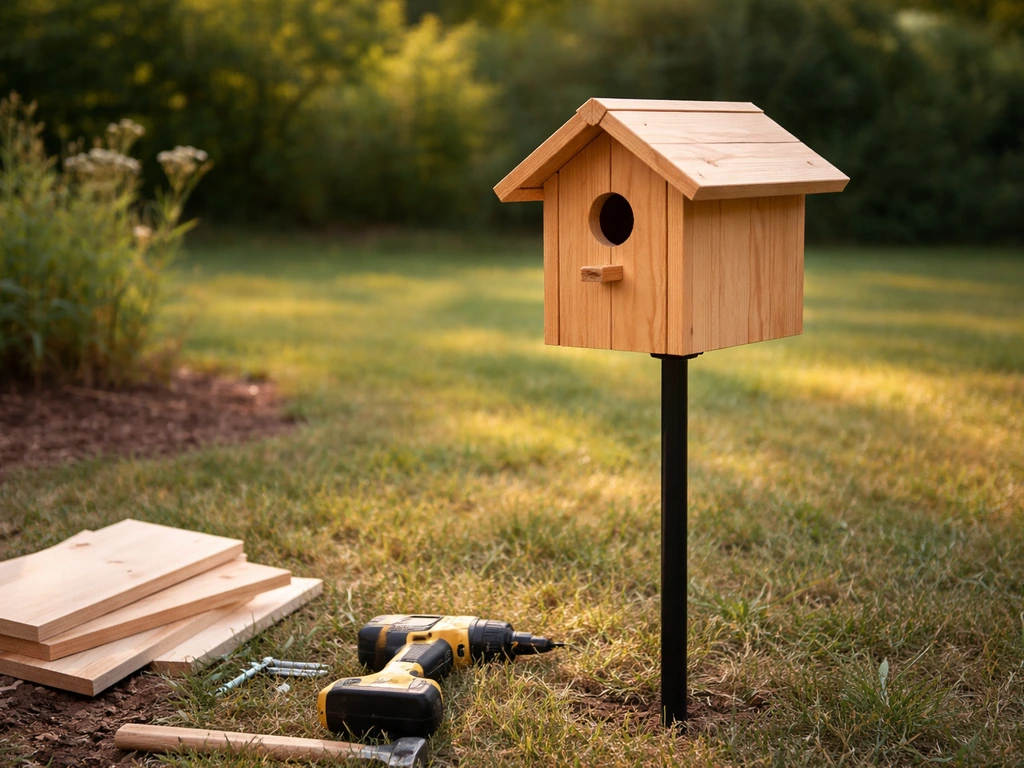
Bird House Instructions: Beginner Step by Step Guide
Beginner bird house instructions: choose design, cut and assemble, add entrance/vent/drain, install safely, maintain and
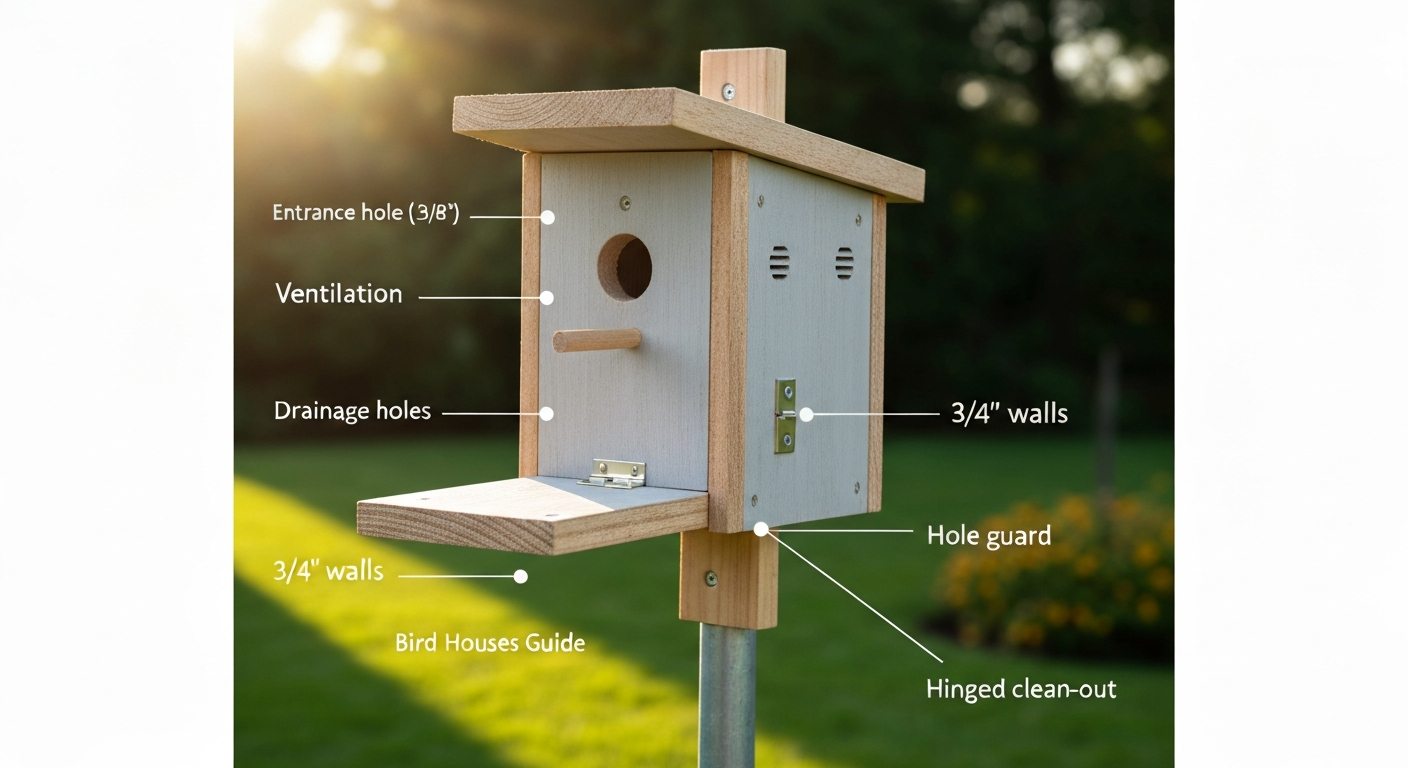
What Makes a Good Bird House: Practical Nest Box Guide for Backyard Birders
Evidence-based guide to building, siting, and maintaining safe, species‑appropriate bird houses for backyard wildlife.
Are Bird Houses Safe for Birds? Practical Guide & Safety Tips
Are bird houses safe for birds? Practical, evidence-based guide to building, siting, and maintaining safe nest boxes.