Here is the short answer: if your main goal is reducing mosquitoes, gnats, or other flying insects in your yard, install a bat house. If you want to attract songbirds, support pollinators, or simply enjoy watching wildlife up close, install a bird house. Both are rewarding, but they work differently, need different setups, and attract animals with very different habits. Getting the placement and design right is what separates a house that gets occupied within a season from one that sits empty for years.
Bat House vs Bird House: How to Choose and Place One
Maya Thompson
22 Mar 2026
What you're really trying to attract: bats vs birds
Bats roosting in a bat house are not nesting, they are using it as a sheltered resting and temperature-regulation spot, much like they would use a crevice behind tree bark or a gap in a building wall. Species like the big brown bat (Eptesicus fuscus), little brown bat, Mexican free-tailed bat, and pallid bat are among the most common users of man-made bat structures in North America. In Connecticut and Massachusetts, for example, big brown bats and little brown bats dominate bat house occupancy. These animals are almost exclusively insect-eaters, and a single bat can consume hundreds to thousands of insects per night. If you have a pond, stream, or any standing water within a quarter mile of your yard, your bat-house odds go up significantly.
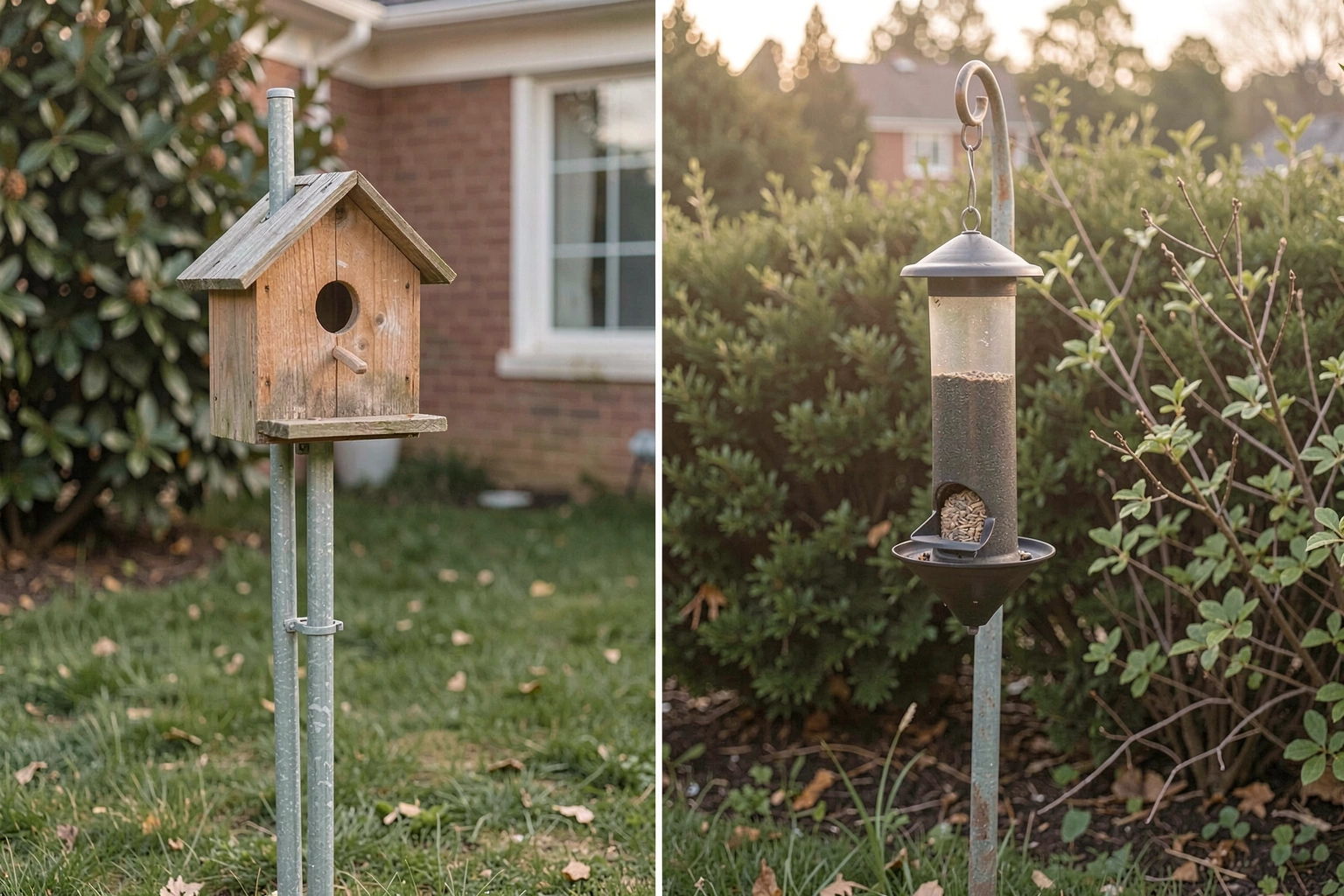
Birds using a nest box are doing something different: they are raising young. If you live in the Cape May area, a bird house of Cape May can help you attract local songbirds that nest in suitable cavities Birds using a nest box. That means they need the right entrance hole size for their species, a dry interior with no perch (perches help predators, not birds), and a location that matches their nesting territory. A house wren, a black-capped chickadee, and an eastern bluebird all need a different box, and putting up the wrong one means nothing moves in. If you want to watch a pair of birds raise a clutch, see fledglings leave the nest, and generally enjoy that kind of hands-on wildlife connection, a bird house is your path. It also works well alongside a bird feeder, though those are two separate decisions. It also works well alongside a bird feeder, though those are two separate decisions, not a bird house vs bird feeder setup. You can also add bird-friendly features like license plate bird houses to make your yard even more appealing to the species you want.
How bat houses work and what they need to succeed
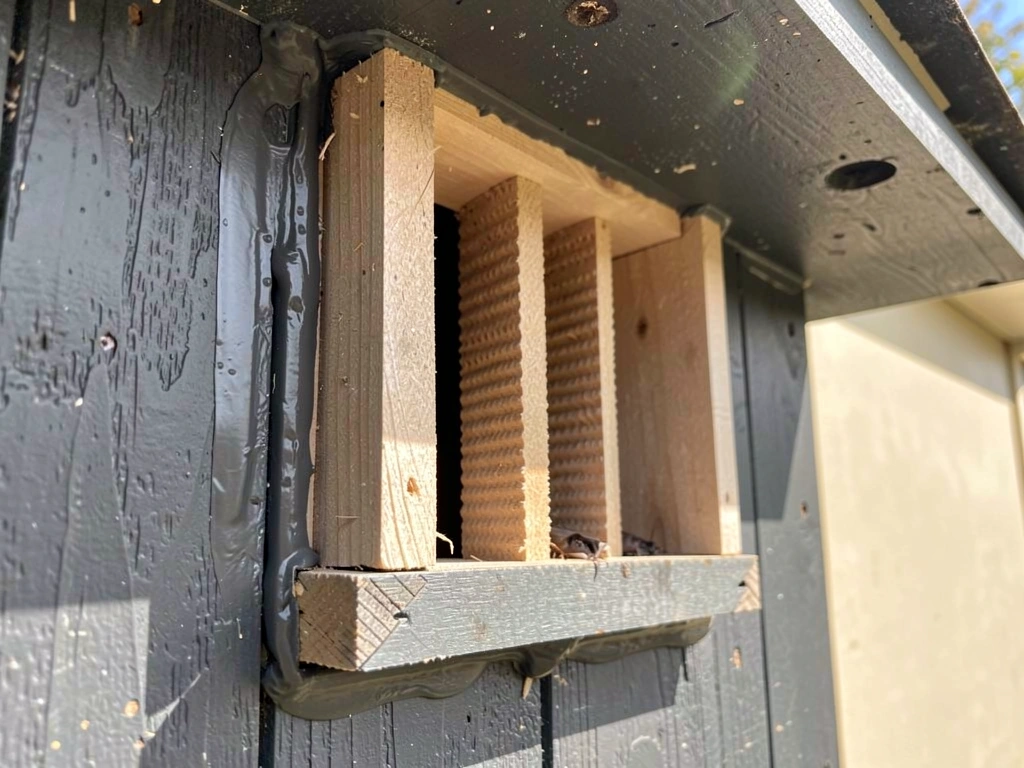
A bat house does not work like a bird house at all. Instead of a hollow box with a hole in the front, a bat house is essentially a set of narrow, dark chambers, usually half an inch to one inch wide, that bats can cling to and squeeze through. They enter from the bottom, not a hole in the front, and they hang upside down inside. The interior surfaces must be rough enough for bats to grip: grooves cut horizontally every half inch or so work well, as does rough-sawn wood. Smooth interiors will not hold bats.
Temperature is the single biggest factor in bat house success. Most bat species prefer interior roost temperatures of roughly 80 to 100 degrees Fahrenheit. A multi-chamber design allows bats to move between warmer and cooler zones depending on the time of day and season, which is why single-chamber bat houses, the kind that look like a small bird house, often fail. The U.S. Fish and Wildlife Service specifically warns against bat boxes that mimic the size and shape of a typical bird house; they overheat or cool too quickly and bats avoid them. Go with a multi-chamber house that is at least 24 inches tall and 14 inches wide, built from untreated wood (no pressure-treated lumber, no chemical finishes on the interior) and caulked well on the exterior to retain heat.
Ventilation matters too, but not in the way you might expect. Bat houses need ventilation slots near the bottom of the chambers to give bats an escape route and to prevent dangerous overheating in extreme heat, but the top and sides should be well-sealed. The exterior is typically painted a dark color in northern climates to absorb solar heat, and a lighter color in southern climates where overheating is the risk. This is not decorative: it directly affects whether the interior hits that 80 to 100 degree sweet spot that bats are looking for.
How bird houses work and what they need to succeed
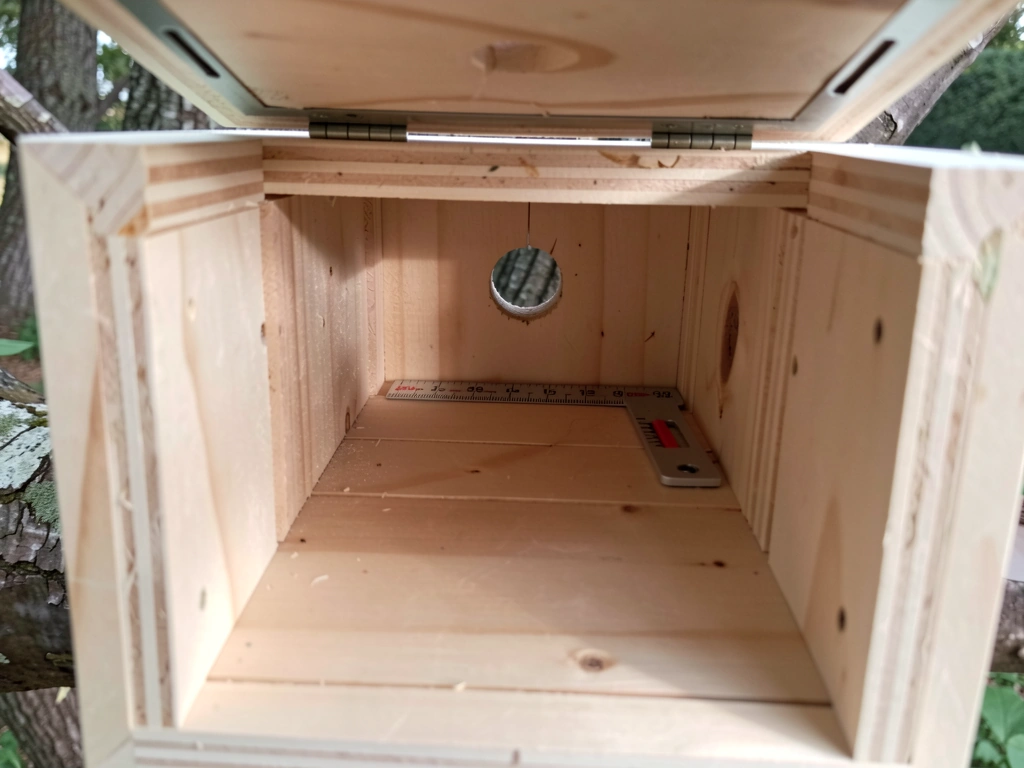
A bird house is a nesting cavity, and birds are remarkably picky about which cavities they use. The entrance hole diameter is the most critical dimension: too large and predators or competing species get in, too small and the target bird cannot enter. Here are the most common species and their entrance requirements:
| Species | Entrance Hole Diameter | Box Interior Floor | Recommended Mounting Height |
|---|---|---|---|
| House Wren | 1 inch | 4 x 4 inches | 5 to 10 feet |
| Black-capped Chickadee | 1 1/8 inches | 4 x 4 inches | 4 to 15 feet |
| Eastern Bluebird | 1 1/2 inches | 5 x 5 inches | 4 to 6 feet |
| Tree Swallow | 1 1/2 inches | 5 x 5 inches | 4 to 8 feet |
| House Sparrow (exclude) | 1 3/4 inches | N/A — avoid this size | N/A |
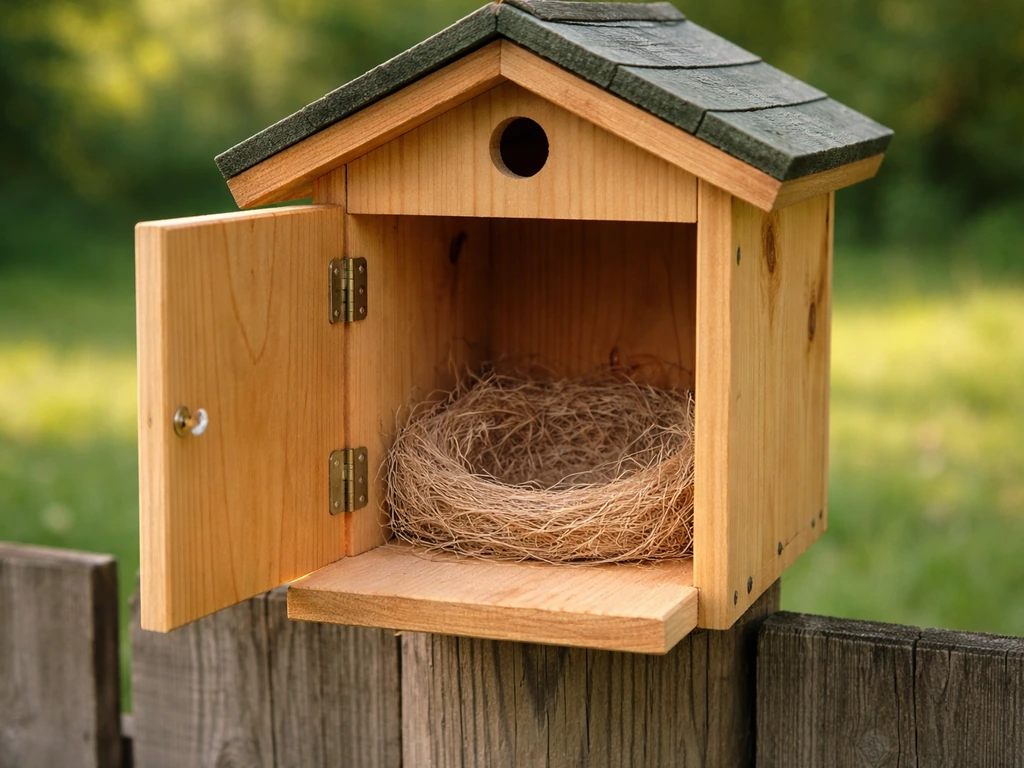
Beyond the hole, bird houses need drainage (small holes or notched corners in the floor so rainwater does not pool), ventilation near the top of the side walls, and no perch on the exterior front. The interior should be unfinished and unpainted. A hinged or removable side or roof is important for monitoring and annual cleanout, which is not optional, it keeps parasites down and gives returning birds a clean start. OSU Extension notes that hole size and box size together are the most critical design features for nest boxes.
Unlike bat houses, bird houses are typically active from early spring through midsummer. Some species like bluebirds may raise two or three broods in a season, so a well-placed box can be in continuous use from March through August. Chickadees and wrens are somewhat more tolerant of varied placement than bluebirds, which are open-country birds and need a clear sight line to the entrance.
Bat house vs bird house: placement, mounting, and timing differences
These two structures need to go in very different places for very different reasons. Getting this wrong is the most common reason housing goes unused, and it is also the easiest mistake to fix if you catch it early.
Bat house placement
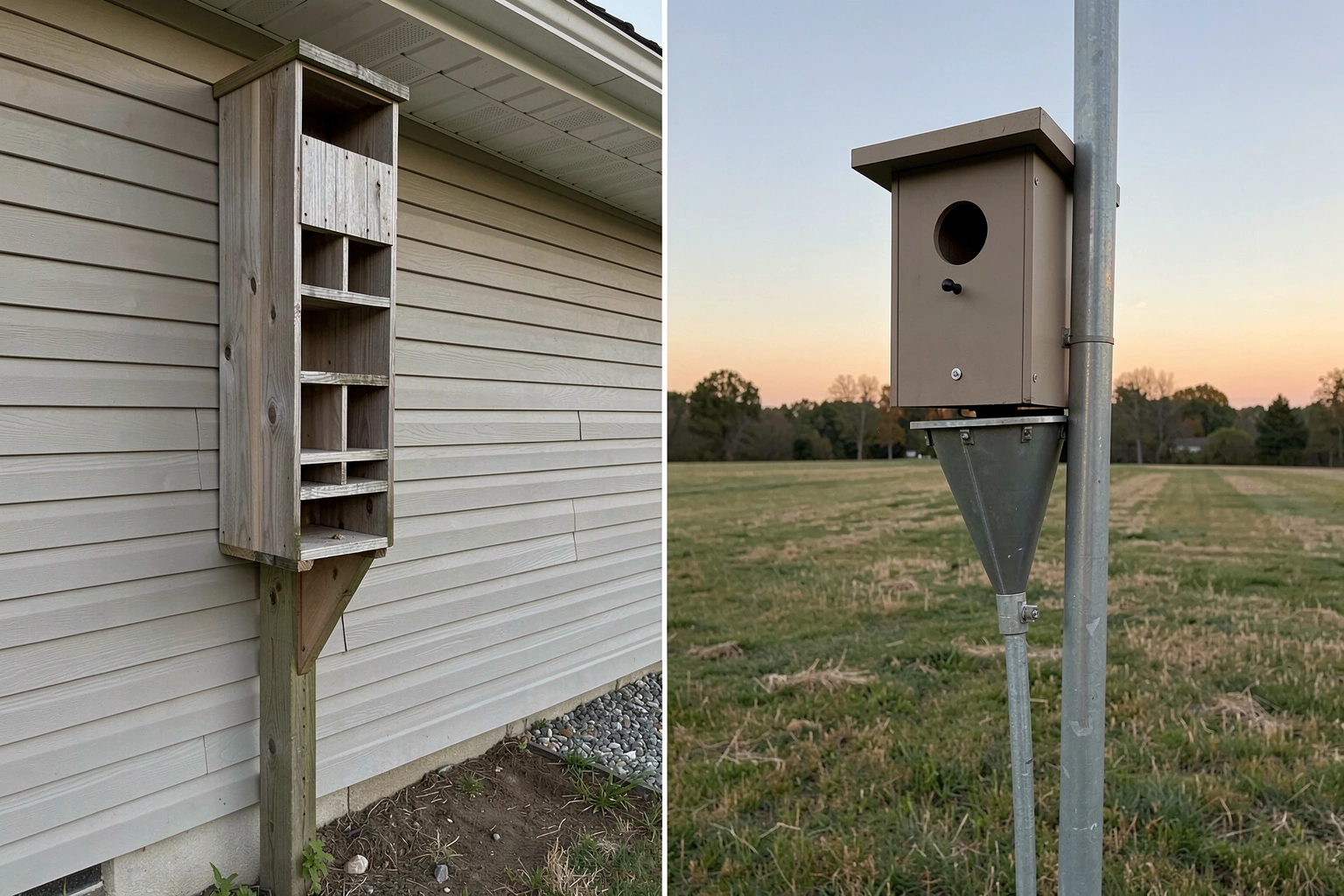
Height is non-negotiable for bat houses. The USDA Forest Service recommends at least 10 feet off the ground, with 15 feet being the preferred minimum. Bats need an unobstructed flight path beneath the house so they can drop and fly out on exit. Mount the house on a building (south or southeast-facing wall is ideal in most of the northern U.S.) or on a dedicated pole. Trees are generally a poor choice: foliage blocks sunlight that the house needs to warm up, and it creates cover for predators. Keep the area within 15 feet below the house clear of vegetation. Position the house within a quarter to half mile of water if at all possible, bats drink on the wing and forage near water sources. Spring is the best time to put a bat house up, before bats start their active season, though you can mount one any time and may see use within the first year or sometimes not until year two or three.
Bird house placement
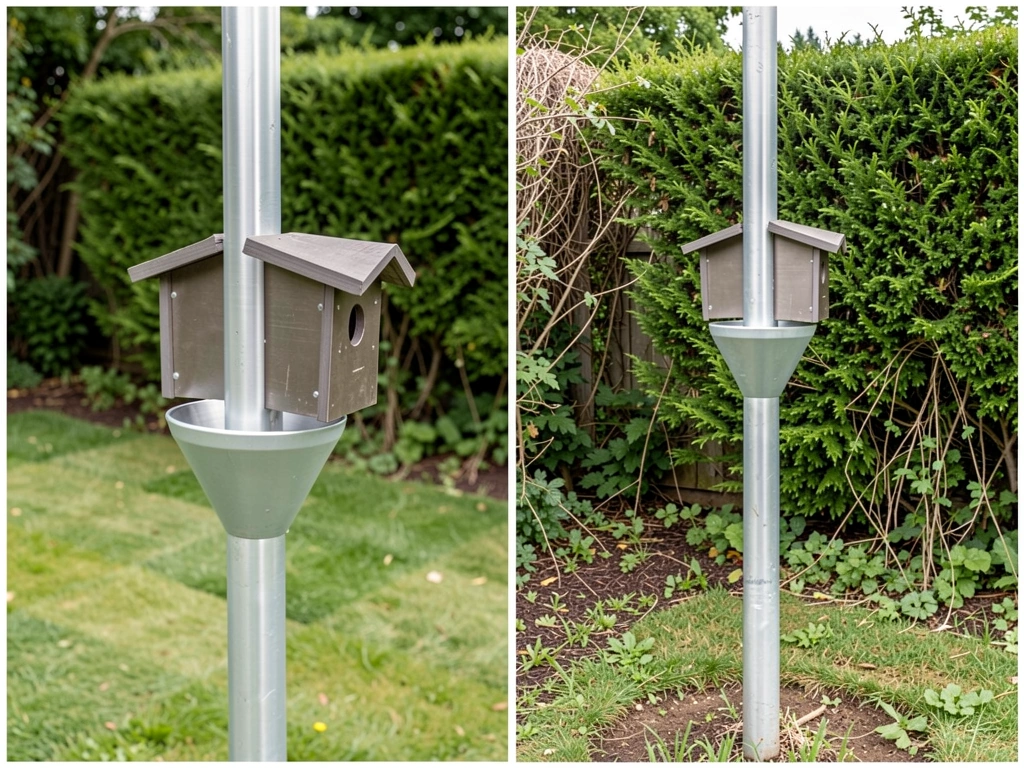
Height and orientation for bird houses are species-specific. Bluebird boxes go 4 to 6 feet off the ground on a metal pole with a baffle (a cone or tube that blocks climbing predators), facing open fields or meadows, entrance hole pointing east or southeast to catch morning sun without overheating. Wren boxes can go much higher, up to 10 feet, and wrens are less fussy about sun orientation. Tree swallow boxes do well near open water on a pole in an open area. Spacing matters if you are putting up multiple boxes: competing cavity-nesting species will fight if boxes are too close together. Bluebird and tree swallow boxes can be paired roughly 25 feet apart (they tolerate each other), but two bluebird boxes should be at least 100 to 300 feet apart. Timing matters too: have boxes up by late February or early March in most of the eastern U.S., before birds start scouting territories.
| Feature | Bat House | Bird House |
|---|---|---|
| Minimum height | 10 feet (15 feet preferred) | 4 to 15 feet (species-dependent) |
| Mounting surface | Building wall or dedicated pole | Pole with predator baffle, fence post, or tree |
| Sun exposure needed | Yes — direct sun most of the day | Partial shade acceptable for most species |
| Entry design | Open slot at bottom | Hole in front face |
| Spacing from others | 10+ feet from other bat houses | 25 to 300+ feet depending on species |
| Best installation timing | Spring before active season | Late winter to early spring before nesting |
| Seasonal use | Spring through fall only | Spring through midsummer (nesting season) |
Safety, cleanup, and common concerns
The rabies question
Yes, bats can carry rabies, all bat species are susceptible. But the actual risk from a bat house in your yard is low if you use common sense. You cannot get rabies from a bat flying near you or even from one being inside your house. Transmission requires direct contact: a bite or exposure of mucous membranes to bat saliva. The CDC and NPS both advise not touching bats with bare hands, ever. If a bat makes direct physical contact with a person or pet, that is the time to contact a public health department or medical provider, not before. A bat house mounted 15 feet up on the side of a building poses no meaningful contact risk under normal circumstances. Do not handle bats. Do not let children or pets get near grounded bats (a bat on the ground during the day is almost certainly sick or injured).
Guano, droppings, and histoplasmosis
Both bat guano and bird droppings can harbor Histoplasma capsulatum, the fungal spore responsible for histoplasmosis. The risk is highest when dried droppings are disturbed and become airborne. A small bat house accumulating droppings on the ground beneath it is generally low risk if left alone in a dry, open area. The problem comes when you clean it up carelessly. CDC and NIOSH both recommend avoiding dry sweeping or any action that creates dust or aerosols. Wet the area down first, wear an N95 or better respirator, use gloves, and bag droppings for disposal. For bird houses, clean out old nesting material at the end of the season (fall) or before the new season (late winter) using the same precautions. This is standard maintenance, not a reason to avoid either structure.
Noise and odor
Bat houses are mostly quiet. You may hear faint chittering in the evening as bats emerge, but it is not loud. Guano has a faint ammonia odor when fresh and concentrated, but a properly mounted outdoor bat house ventilated by open air should not produce noticeable smell at ground level unless it is directly above a frequently-used seating area. If smell or droppings are an issue, reposition the house or add a droppings board below it. Bird houses during nesting season produce sounds from nestlings, audible but not disruptive. Keep both structures away from bedroom windows if sound is a concern.
Distance from living spaces
There is no required setback distance for either structure from your home, but common sense applies. Placing a bat house directly above a patio or frequently-used door means guano accumulation in a high-traffic area. Ten to twenty feet from active outdoor seating is a reasonable buffer. Bird houses near a window can be a delight to watch but may attract cats; install predator guards and keep them away from shrubs and fences that cats can use for jumping.
Troubleshooting: why housing isn't getting used
The most common reason bat houses go unoccupied is not a bad product, it is a placement or temperature problem. Work through this list before giving up or moving the house:
- The house is too low: if it is under 10 feet, bats are unlikely to use it. Remount it higher, ideally 15 feet or more.
- It is not getting enough sun: if the house is shaded for more than a few hours during midday, the interior may never reach the 80 to 100 degree range bats want. Move it to a sunnier spot or switch from a tree to a building wall or pole.
- The interior is too smooth: bats cannot cling to smooth wood or plastic. If the interior does not have horizontal grooves or rough-sawn texture, add it with a wire brush or coarse saw cuts.
- The house is a single chamber: single-chamber designs fail far more often than multi-chamber designs. If you have a single-chamber house, consider replacing or retrofitting it.
- It is the wrong season: bat houses are not used in winter. Wait through a full active season (April through October in most regions) before deciding the location is wrong.
- There are no bats in the area: if you have never seen bats flying at dusk in your neighborhood, there may not be a local population to attract. Check near water sources at dusk before installing.
- Bat Conservation International notes that occasional short-term use by individual bats before full colony occupation is normal. Monitor over two to three seasons before relocating.
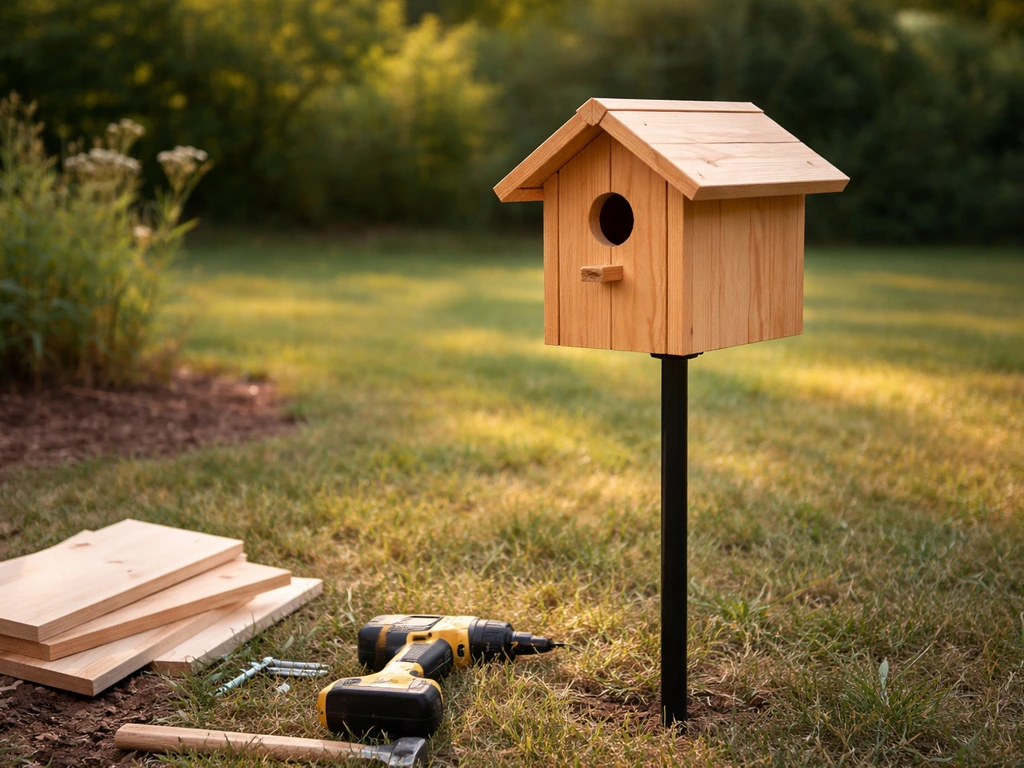
For bird houses, the troubleshooting is faster and more fixable within a single season: If you are also researching bird houses how to build, focus first on the entrance hole size and box specs so the right species can actually use the nesting cavity.
- Wrong hole size: this is the number one reason birds pass by a box. Confirm the hole diameter matches the target species exactly. A 1/8-inch difference matters.
- No predator guard: if the house is on a wood post or tree without a baffle, predators are likely raiding it and birds have learned to avoid it. Add a metal pole and cone baffle.
- Too much vegetation around the entrance: birds, especially bluebirds and tree swallows, want a clear flight path. Trim back any branches or tall grass within 3 to 5 feet of the entrance.
- House sparrows or starlings are taking over: both are non-native species and aggressive nesters. House sparrows can fit through a 1 3/4-inch hole, so keep your hole at or below 1 1/2 inches for bluebird boxes. Remove house sparrow nests promptly and legally (they are not protected in the U.S.).
- The house was put up too late: if it went up in May, many birds have already selected nest sites. Plan for next year and have the box up by late February.
- Old nesting material is still in the box: many birds will not nest on top of old material. Clean it out between seasons.
Choosing today: decision checklist and next-step plan
Use this checklist to make your decision right now. Answer yes or no to each question and tally up which column fits your situation better.
| Question | Points to Bat House | Points to Bird House |
|---|---|---|
| Is insect control your primary goal? | Yes | No |
| Do you see bats flying at dusk in your neighborhood? | Yes — strong signal | No — consider bird house instead |
| Is there a pond, stream, or wetland within half a mile? | Yes — increases bat house success | Not relevant |
| Do you have a south-facing wall or open pole location with full sun? | Yes — bat house can go here | Not required |
| Do you want to watch nesting behavior and fledgling birds? | No — bats roost, not nest | Yes — this is what bird houses offer |
| Do you want a low-maintenance setup after installation? | Yes — bat houses need minimal upkeep | No — bird houses need seasonal cleaning |
| Are you in an area with bluebirds, wrens, or chickadees? | Not relevant | Yes — strong candidate for bird house |
| Do you have kids or pets who might disturb wildlife close to the ground? | Low risk — bat house is high up | Higher management needed for ground-level boxes |
If you chose a bat house: your action plan
- Buy or build a multi-chamber bat house that is at least 24 inches tall and 14 inches wide. Avoid single-chamber designs and anything marketed as a decorative novelty.
- Confirm the interior has rough, grooved surfaces. If it does not, add horizontal grooves with a saw or wire brush before mounting.
- Choose your mounting location: a south or southeast-facing building wall or a dedicated pole in full sun, at least 15 feet high, within half a mile of water.
- Paint the exterior a color appropriate for your climate: dark brown or black in northern states, medium brown or gray in southern states where overheating is a risk. Leave the interior unpainted.
- Caulk all exterior seams to retain heat. Do not caulk interior ventilation slots.
- Mount it this spring. Check for use by watching at dusk for bats exiting the bottom slot, starting in May.
- Give it at least two full active seasons before deciding to relocate. Individual bats may scout before a group moves in.
If you chose a bird house: your action plan
- Identify which species live in your area and what habitat you have. Open fields or meadows: target bluebirds or tree swallows. Wooded edges or gardens: target chickadees or wrens.
- Get or build a box with the exact entrance hole diameter for your target species. Use the table above. Do not guess.
- Mount the box on a smooth metal pole with a predator baffle cone below the box. Avoid wood posts and trees near shrubs or fences.
- Orient the entrance hole facing east or southeast, away from prevailing weather. Check that there is open space (at least 10 feet) in front of the entrance.
- Have the box up by late February or early March. If it is already late spring, put it up now and treat this season as a trial run while birds learn it is there.
- Check the box every one to two weeks during nesting season. Record what you see. Clean it out completely once the season ends in fall.
- If nothing uses it this season, consult species-specific building guides (building a bird house from scratch gives you more control over dimensions) and adjust hole size or location for next year.
You do not have to pick just one. A bat house on the south wall of your garage and a bluebird box on a pole at the edge of your lawn can coexist perfectly well, they attract different animals, serve different purposes, and go in different spots. Many backyard wildlife enthusiasts run both. Start with whichever matches your primary goal today, get it up correctly, and give it a full season to work before making adjustments.
FAQ
Can I put up both a bat house and a bird house to get insect control and bird viewing at the same time?
If your goal is insect control but you also want to see wildlife up close, you can run both, but place them differently. A bat house needs an unobstructed flight path with clear space beneath it, while bird boxes benefit from a nearby perch-free open approach. Keep the bat house away from high-traffic seating areas to reduce guano buildup where you want to relax.
How long should I wait before deciding a bat house or bird house is not working?
Season length is real for both, so avoid changing too fast. With bat houses, it is common to wait a full season or sometimes into year two if the local bats have not located the site yet. For bird houses, once birds start scouting, timing is tighter, so you usually want boxes up by late winter rather than mid-spring.
What are the two most common mistakes people make when they install a bat house vs a bird house?
Temperature is the make-or-break variable for bats, so protect against shade and overheating before you mount. For birds, do not “wing it” on the entrance hole, since species will not enter the wrong size cavity. If you are unsure what species you have locally, prioritize correct entrance dimensions and box type first, then adjust placement.
If I do not have space for a tall multi-chamber bat house, is there a smaller alternative that still has a good chance of being used?
Yes for bats, but only in a way that supports their temperature needs. A single-chamber “bird house looking” box is much more likely to fail. If you are limited by space, pick a multi-chamber tall design, keep it at the recommended height, and ensure the interior is uncoated untreated wood with proper grooves so bats can grip.
My bird house has no activity, what should I check first besides the entrance hole size?
Do not assume a lack of birds means you have the wrong setup. Many cavity nesters avoid boxes when predators have a clear line of access or when the site is too shaded or crowded. For troubleshooting, start with entrance hole size and remove nearby cover that cats can use for jumping, then confirm the box is on the right pole height for the target species.
How should I maintain each box without accidentally harming the animals using it?
Bird houses are best cleaned once the nesting season ends or just before the new season, but avoid cleaning during active nesting. Remove old material with precautions that prevent dust, then let the box air out and rehang it. For bat houses, you generally should not clean the roost itself, the concern is mainly safe, low-dust handling if you ever disturb concentrated guano.
Is it better to place a bat house near water, and should I also consider water for bird houses?
You can, but do it intentionally. If you install near water, bats are more likely to forage locally, but birds may also increase activity depending on species. The key is separation by function: clear space beneath a bat house and keep bird boxes free of nearby shrub or fence perches that predators and competitors can use.
If my main problem is mosquitoes, will a bird house help enough compared with a bat house?
Yes, but it changes the “target species” tradeoff. If you want insect control, rely on the bat house and do not expect a bird box to provide similar mosquito reduction. If you want birds, a multi-species approach with correct entrance hole diameters works better than using a single generic box.
How far apart should multiple bird houses be, and does that differ by species?
Yes, and one detail matters: spacing. Cavity nesters can compete and sometimes fight if boxes are too close, especially for bluebirds. If you plan multiple boxes, follow conservative spacing rules and group species that tolerate each other, rather than clustering identical boxes in one area.
What can I do if I am worried about guano or droppings landing where I walk, sit, or sleep?
Consider a protective plan for “mess control.” For bats, a common fix is repositioning the house or adding a droppings board, but avoid placing it directly above doors, patios, or frequently-used walkways. For bird houses, keep them away from bedroom windows if noise is a concern, and add predator guards if you see cats or squirrels investigating.