Bird houses matter because cavity-nesting birds are running out of places to nest. Dead trees get removed, managed forests stay too young to develop hollow trunks, and introduced species like House Sparrows and European Starlings crowd out the native birds that depend on those shrinking holes. A well-designed, correctly placed nest box directly replaces that lost habitat and gives species like Eastern Bluebirds, Black-capped Chickadees, and Tree Swallows a real shot at raising young successfully. Done right, one box in your backyard can make a measurable difference for local populations. Done wrong, it can become a predator feeding station or a sparrow motel. This guide covers both sides so you get the good outcome.
Why Bird Houses Are Important: Benefits and How to Use Them
Maya Thompson
27 May 2026
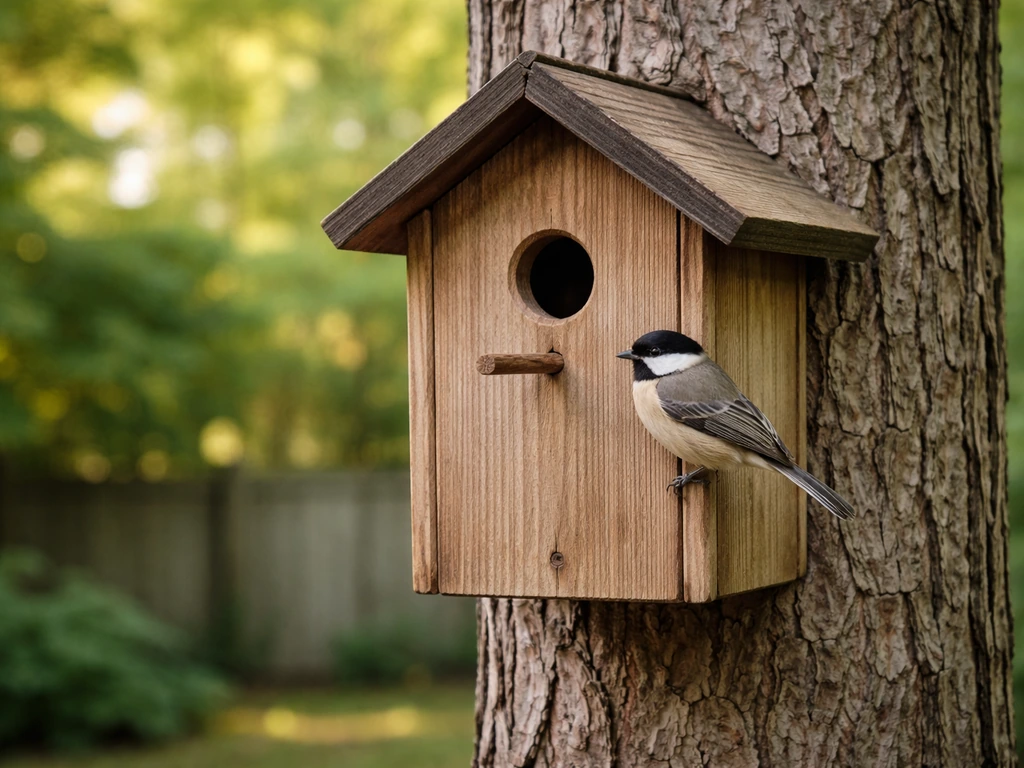
Why cavity-nesting birds need your help right now
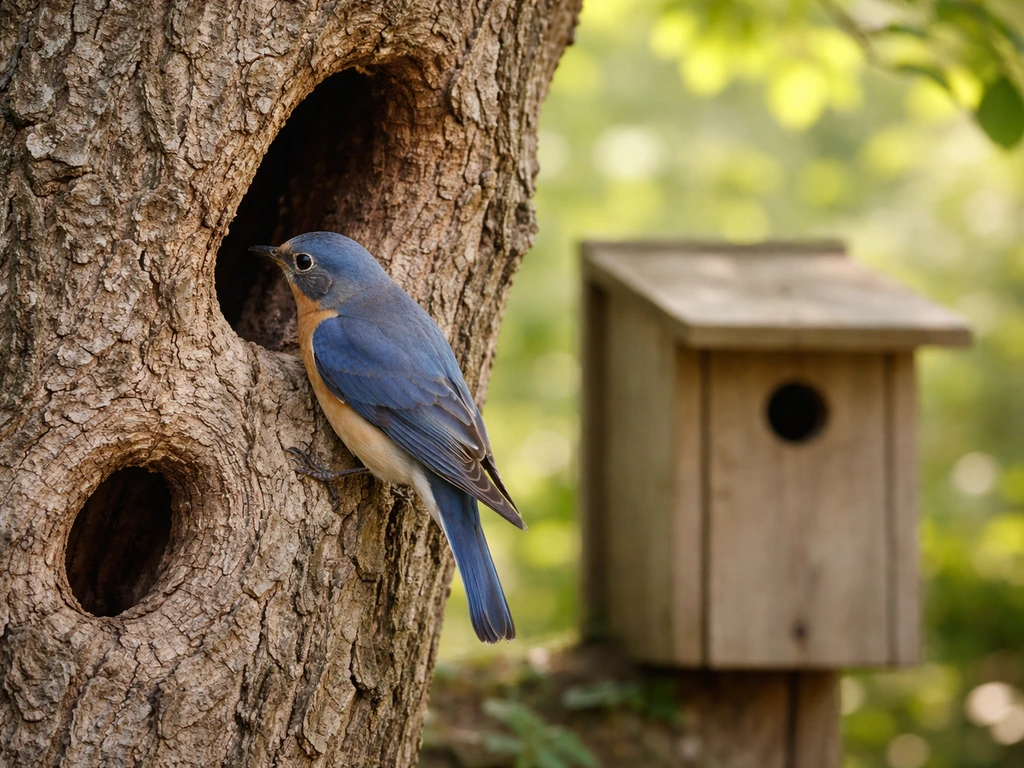
Cavity-nesting birds split into two groups: primary nesters (woodpeckers) that excavate their own holes, and secondary nesters (bluebirds, chickadees, wrens, flickers, small owls) that rely on abandoned cavities or pre-existing hollows. The secondary group is where the crisis is sharpest. Research reviews have found that in managed woodlands and modern tree plantations, hole-nesting bird species are excluded or kept at very low numbers simply because there are not enough usable cavities. Trees need to be old enough and wide enough to develop hollows, and those trees are exactly the ones most likely to be felled as hazards or harvested before they reach that age.
The problem compounds in urban and suburban yards, where large dead-standing trees (snags) get removed for safety reasons and the remaining trees are often too young or too small to hold cavities suitable for larger species like kestrels or screech owls. Bluebirds in particular face a double hit: shrinking cavity supply plus aggressive competition from non-native House Sparrows and European Starlings, which arrived from Europe and now outcompete native birds for every hollow they can find. Audubon has documented this pressure as one of the primary reasons bluebird populations declined sharply through the mid-twentieth century before nest box programs helped reverse the trend.
Environmental and biodiversity benefits of adding nest boxes
Adding nest boxes does more than help a single pair of birds. Studies in managed cottonwood forests showed that providing artificial cavities measurably increased the territory density of cavity-nesting birds, with research citing roughly 1.6 nest boxes per hectare as an effective density in 3-to-10-year-old managed stands. That kind of population-level response ripples through the local food web. Insectivorous cavity nesters consume enormous quantities of caterpillars, beetles, and mosquitoes during the breeding season, providing natural pest suppression. Barn owls in nest-box programs are actively used by landowners and land managers as rodent control, with UC Davis framing nest-box networks as a practical pest-management tool.
Nest boxes also support local biodiversity monitoring. Because boxes concentrate nesting activity in known, accessible locations, they make it easy for backyard observers and citizen scientists to track clutch sizes, fledgling rates, and seasonal timing over years, generating data that would be nearly impossible to collect from scattered natural cavities. That monitoring data feeds into bigger conservation pictures, including how climate shifts are affecting breeding phenology in cavity-nesting songbirds.
One important nuance: a comparison of birds nesting in boxes versus natural tree cavities found that outcomes are species-dependent. Western Bluebirds showed clear benefits from boxes; some other species showed little measurable difference. This means nest boxes are a powerful tool but not a universal fix, and getting the design and placement right matters more than simply putting a box outdoors.
Choosing the right birdhouse for your backyard birds
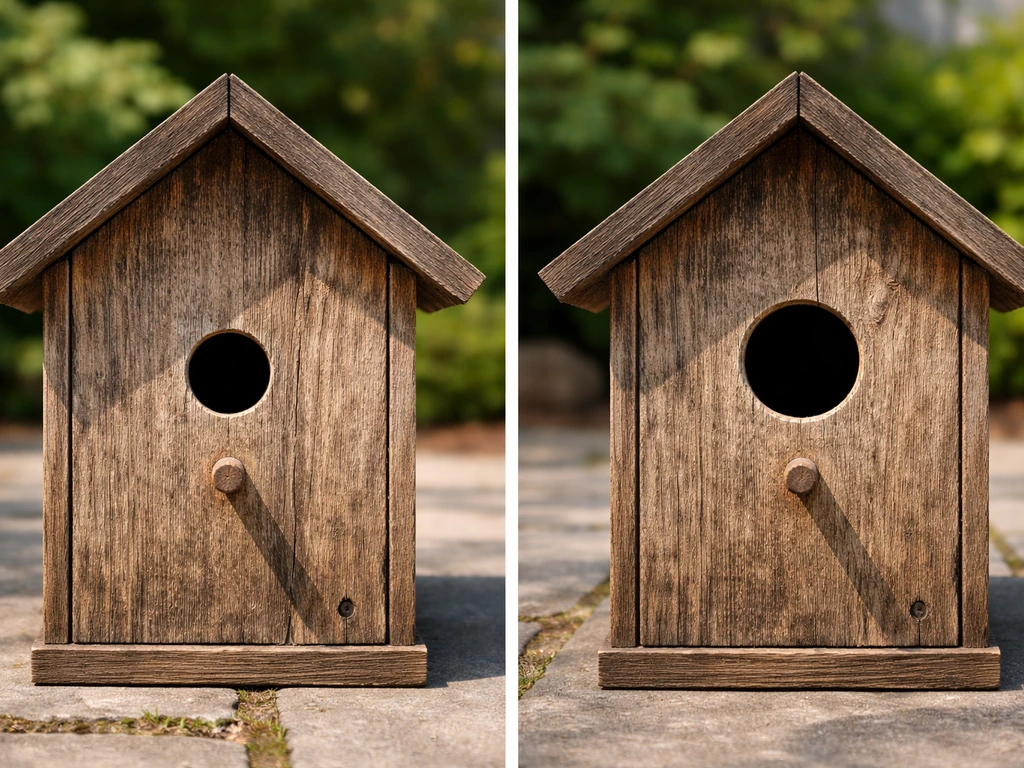
The single most important design decision is the entrance-hole diameter. It controls which species can enter and, critically, which species cannot. A hole sized for a Black-capped Chickadee (1 1/8 inches) physically excludes the larger House Sparrow that would otherwise take over. For California bluebirds, the California Bluebird Recovery Program’s Nestbox Trail specifies different entrance-hole diameters, including 1 1/2 inches for Western Bluebirds and 1 9/16 inches for Mountain Bluebirds blank" rel="noopener noreferrer">hole sized for a Black-capped Chickadee (1 1/8 inches). Large birdhouses are also sometimes called nesting boxes or bird nesting houses, depending on the species large House Sparrow. A hole sized for a European Starling means every native bird in the box is competing with one of the most aggressive nest-site competitors in North America. Get the hole size right and you have already solved the biggest competition problem before you even hang the box.
| Species | Entrance Hole Diameter | Floor Area | Mounting Height |
|---|---|---|---|
| Black-capped Chickadee | 1 1/8" | 4" x 4" | 5–15 ft |
| Eastern Bluebird | 1 1/2" | 5" x 5" | 4–6 ft |
| Western Bluebird | 1 1/2" | 5" x 5" | 4–6 ft |
| Mountain Bluebird | 1 9/16" | 5" x 5" | 4–6 ft |
| Tree Swallow | 1 1/2" | 5" x 5" | 4–10 ft |
| House Wren | 1 1/8" | 4" x 4" | 5–10 ft |
| Eastern Screech-Owl | 3" | 8" x 8" | 10–30 ft |
| Barn Owl | 6" x 7" (oval) | 10" x 18" | 12–18 ft |
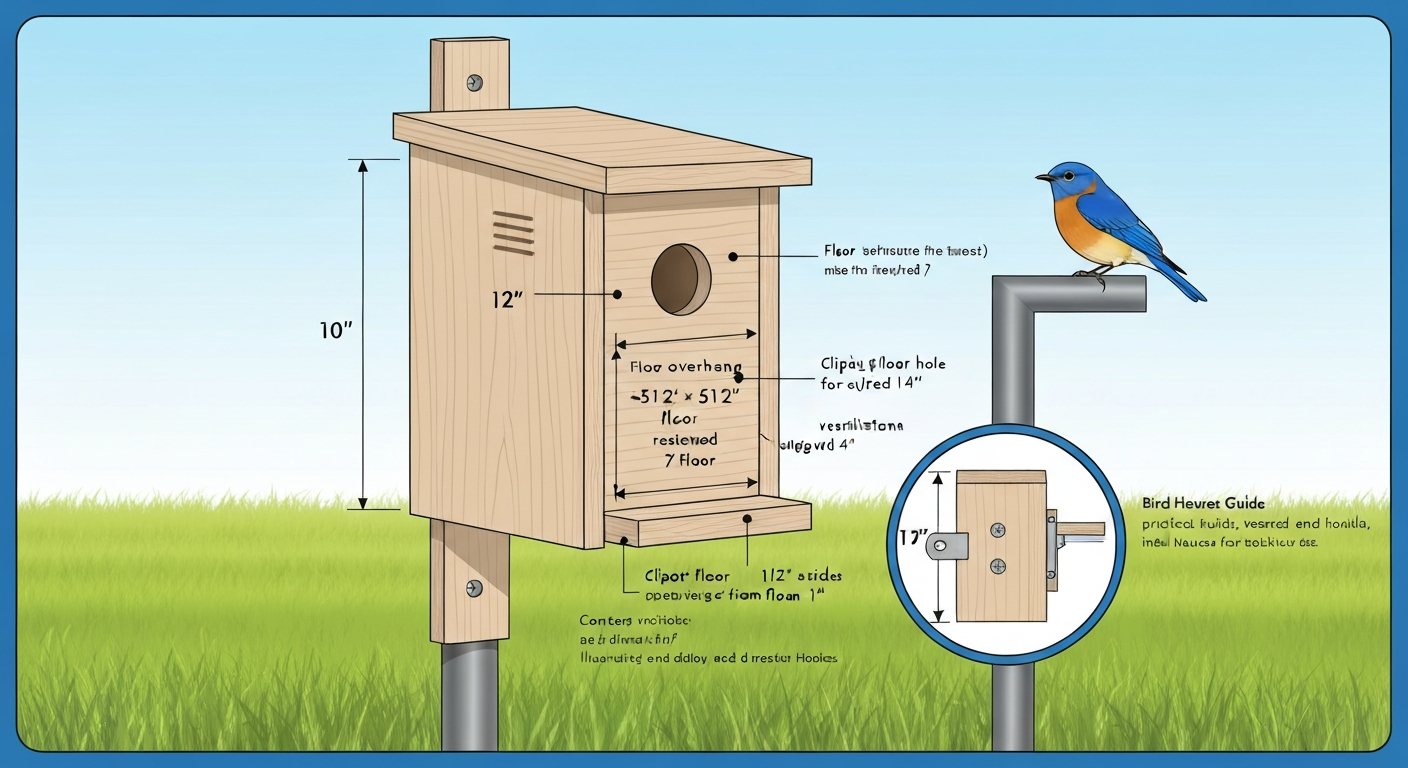
Beyond hole diameter, internal dimensions matter. A box that is too shallow or too small can overheat or crowd nestlings; one that is too deep wastes the birds' energy climbing out. For Eastern Bluebirds, a 5-by-5-inch floor and a cavity depth of around 8 inches work well. Ventilation holes near the top of the side walls (not blocked by the roof) and drainage holes in the floor corners are not optional extras; they are functional requirements that keep the microclimate inside the box closer to what a natural hollow provides. Research has shown that poorly designed boxes can create thermal conditions that differ significantly from natural cavities, which can affect nesting success.
Material choice also affects that microclimate. Untreated wood (cedar, pine, or exterior-grade plywood) insulates far better than metal or plastic and does not off-gas chemicals near eggs and chicks. A roof that extends at least an inch beyond the entrance hole and beyond the ventilation openings shields the interior from rain and direct sun. Avoid decorative boxes with perches below the entrance hole; perches give House Sparrows and predators a convenient foothold and offer no benefit to the target species.
If you are building rather than buying, species-specific dimension tables (including floor area, cavity depth, entrance height above floor, and entrance diameter) are well-established and have been published by organizations like the Wildlife Habitat Management Institute and Purdue Extension. Those dimensions are the evidence-based starting point for any DIY build.
Placement and mounting for safety and success
Where you put the box is almost as important as how it is built. Face the entrance hole away from the prevailing wind, which in most of North America means orienting it toward the east or southeast. This keeps rain from blowing in and gives nestlings a gentler morning warmup. NJ Audubon specifically recommends this orientation for species like Black-capped Chickadees.
Mounting height varies by species but most small to medium cavity nesters do well between 4 and 15 feet. Bluebirds are typically mounted at 4 to 6 feet on a freestanding metal pole, which makes monitoring easier and keeps the box at a height where a predator baffle is effective. Avoid mounting boxes directly on trees or fence posts if you can; those surfaces give raccoons, snakes, and squirrels a natural climbing path straight to the entrance.
Spacing matters too, especially for territorial species. Bluebird boxes placed too close together will simply result in one pair displacing another rather than increasing total occupancy. A general rule is to place bluebird boxes at least 100 yards apart. Tree Swallows are less territorial and can be paired at closer range, sometimes intentionally placed near a bluebird box to satisfy swallow pairs while leaving the other box for bluebirds. Your regional Audubon chapter or state wildlife agency will have habitat-specific spacing guidance that reflects local species density.
Predator-proofing and competition management basics
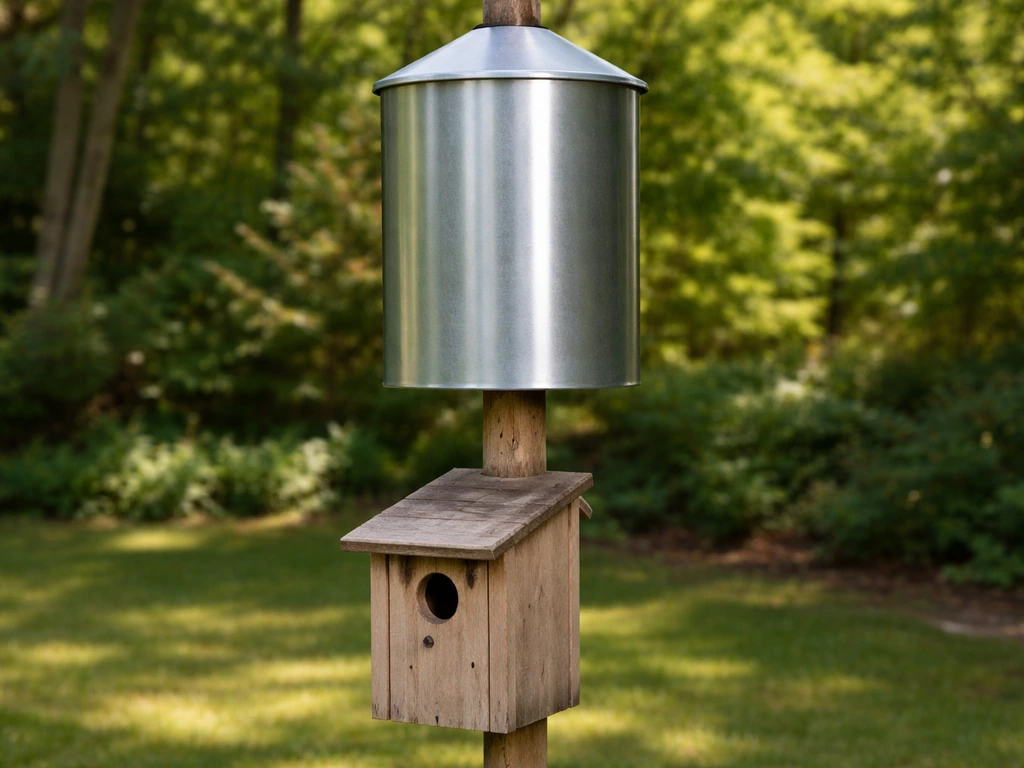
A pole-mounted baffle is the most effective single predator-control step you can take. The standard approach used by bluebird trail operators is a cylindrical metal stovepipe-style baffle mounted on the pole below the box, typically 6 to 8 inches in diameter and at least 24 inches long, with a metal cap on top. Raccoons cannot grip the smooth cylinder and cannot reach around it, and snakes cannot navigate past it. Without a baffle, a box on a smooth metal pole still gives climbing predators a foothold at the bottom of the pole itself, so the baffle needs to be positioned high enough (generally starting around 4 feet from the ground) that a jumping predator cannot bypass it.
Competition from House Sparrows requires active management if you want to protect native cavity nesters. House Sparrows are not native to North America and are not protected under the Migratory Bird Treaty Act, which means their nests and eggs can legally be removed. Tennessee Wildlife Resources Agency guidance and multiple state bluebird programs explicitly recommend removing and destroying House Sparrow nests and eggs from boxes to protect bluebirds. This is not casual advice; House Sparrows will kill adult bluebirds inside the box, not just displace them. If you put up a box in sparrow-heavy suburban habitat and do not manage it, you are effectively building a sparrow apartment complex.
European Starlings are handled mostly by keeping entrance holes at or below 1 1/2 inches for smaller cavity nesters. Starlings cannot fit through a properly sized hole, which is why hole diameter is your first and most passive line of defense. For larger species where a bigger hole is unavoidable (screech owls, kestrels), active monitoring is more important.
Maintenance and sanitation: how to clean safely and when
Nest boxes need annual cleaning to stay healthy for birds. Old nesting material can harbor mites, blow fly larvae, and other parasites that can reduce nesting success in subsequent seasons. The general rule is to clean out boxes after each breeding season, once you are certain the birds have fledged and the box is no longer in use for that season.
For most backyard boxes targeting songbirds, a late-summer or fall cleaning works well. Remove all old nesting material, scrub the interior with a stiff brush and a dilute bleach solution (one part bleach to nine parts water), rinse thoroughly, and let the box dry completely before rehanging. Wear gloves and a dust mask when cleaning, especially with boxes that have been heavily used, because dried fecal matter and nesting debris can carry pathogens.
Barn owl boxes follow a slightly different schedule. UC Davis explicitly recommends fall as the best time to clean barn owl nest boxes, timed around the end of the breeding season. The Barn Owl Trust notes that boxes producing two broods per year may need clearing annually, while less active boxes might only need attention every three to four years. The guiding principle across species is the same: if you open a box and find active birds, eggs, or chicks, close it back up and delay cleaning until the following season. Disturbance during active nesting is more harmful than a slightly messy box interior.
- Wait until the box has been empty for at least two weeks after fledging before cleaning.
- Put on gloves and a dust mask before opening the box.
- Remove all old nest material and dispose of it in a sealed bag.
- Scrub the interior with a stiff brush and a 1: 9 bleach-to-water solution.
- Rinse the box thoroughly with clean water.
- Let it dry fully (at least a day in open air) before closing it up.
- Check for any damage: soft wood, loose roof, cracked floor, or blocked drainage holes. Repair before the next season.
- Record what you found (species, number of eggs or fledglings, any parasites) to build a monitoring record over time.
If you want to monitor during the breeding season, weekly checks from a respectful distance are fine for most species and recommended for anyone managing a bluebird trail. Open the box briefly, note what you see, and close it. Do not check within a week of expected fledging, when disturbance is most likely to cause premature fledging. A simple notebook log or a phone photo each week gives you the seasonal data that makes your nest box genuinely useful to conservation and not just decorative.
Your next steps
Start by identifying which cavity-nesting species are actually present in your area. Your state's wildlife agency, a local Audubon chapter, or eBird data for your county will tell you which species are realistic targets. Then match the box design to that species: get the entrance hole diameter right, build or buy something with proper ventilation and drainage, and choose a mounting method that allows you to add a predator baffle. Place the box in appropriate habitat (open fields and woodland edges for bluebirds; woodland margins for chickadees and wrens), at the right height and orientation, and commit to checking it regularly through the season and cleaning it thoroughly each fall. That full package, the right design plus thoughtful placement plus consistent maintenance, is what turns a decorative wooden box into a genuine conservation tool for the birds in your backyard.
FAQ
Do bird houses actually increase bird populations, or do they just provide extra nesting spots for a few pairs?
They can do both, but the population effect depends on local cavity scarcity and proper species matching. Boxes are most likely to raise total occupancy when (1) natural cavities are limited, (2) you use the correct entrance-hole diameter to prevent exclusion by invasive competitors, and (3) you maintain spacing so one pair does not displace another (especially with bluebirds).
What’s the most common reason nest boxes fail even when the box looks “bird-friendly”?
Using the wrong entrance-hole diameter for the target species. If the hole is slightly too large, House Sparrows or European Starlings can enter and take over, sometimes killing the adults of the native species. Hole sizing is your first, highest-impact defense, before you worry about decorations or “perches.”
Can I put up one bird house and expect multiple bird species to use it?
Usually no. Most cavity nesters need specific entrance sizes and interior dimensions, and a single “universal” box will tend to favor either the wrong species or the most aggressive competitor that can fit the entrance. Better approach, pick the species you want first, then match the design to that species’ requirements.
How do I choose the right height when I am not targeting one specific species?
If you want flexibility, avoid extreme heights and start in the species-typical range for small to medium cavity nesters, commonly 4 to 15 feet. But you still need to match the entrance size to the likely species in your area, because height alone cannot prevent invasive takeover.
Is it okay to mount a bird house on a tree or fence post if I use a predator baffle?
Tree or fence mounting usually increases the odds that climbing predators can reach the entrance pathway. Even with a baffle, a baffle works best on a pole where there is no easy alternate route. If you must mount to another surface, prioritize smooth mounting points and ensure there is no nearby climbing access (branches, lattice, rough wood, or adjacent shrubs).
Should I remove House Sparrow nests immediately when I find them?
Yes, but do it at the right time for your program’s rules and carefully confirm what you are removing. House Sparrows can be lethal to the native birds that are already using the box, so delayed action can matter. Also ensure you are allowed to manage sparrows in your area, since regulations can vary by state and local guidance.
Can I just clean the box once in winter instead of every season?
Not ideal for most nesters. Cleaning after the breeding season reduces parasite and mite buildup and lowers disease pressure for the next attempt. Winter cleaning can still help, but leaving old nesting material through the active season can harm success, especially in heavily used boxes.
How often should I check the box during nesting season without disturbing birds?
For most backyard boxes, brief weekly checks are reasonable, and you should avoid opening the box within about a week of expected fledging. If you are running a managed trail or you see repeated disruptions, shorten visits, use quick observation from a respectful distance, and record dates rather than repeatedly handling the box.
What should I do if the box is occupied but the birds seem stressed or stop nesting?
First reduce disturbance and eliminate likely irritants: keep the box closed, avoid frequent checks, and confirm the entrance size matches the target species so an aggressive competitor is not forcing changes. Also check orientation and microclimate factors, poor ventilation or trapped moisture can cause abandonment even when the species initially accepts the box.
Is “untreated wood” always necessary, or will painted or sealed wood be fine?
Untreated exterior-rated wood is preferred because interior off-gassing from some finishes can affect eggs and nestlings. If you must use coated boards, keep coatings on the exterior only, avoid the inside surfaces, and do not use treated lumber unless it is specifically appropriate for nest boxes. When in doubt, use untreated cedar, pine, or exterior-grade plywood.
If my local birds are not using the box the first year, should I remove it or keep trying?
Keep it if the design and placement are correct. Many people wait one season, then adjust based on what actually appears, but nesters may take time to discover new sites or return in subsequent broods. Use monitoring notes, especially dates of first activity, and only replace the box if you discover a mismatch (for example, the wrong species entering through the entrance).
Next Articles
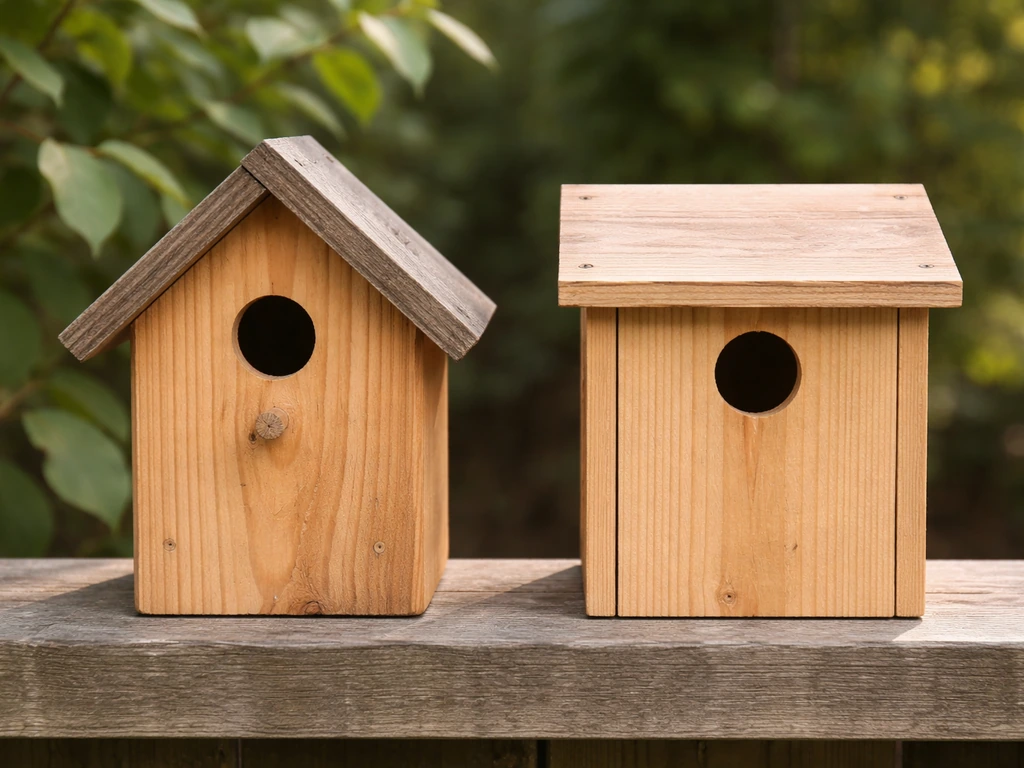
What Is a Bird House Called? Birdhouse vs Bird Box
Birdhouse vs bird box vs nesting box: what to call it and how to choose the right cavity nesting shelter.
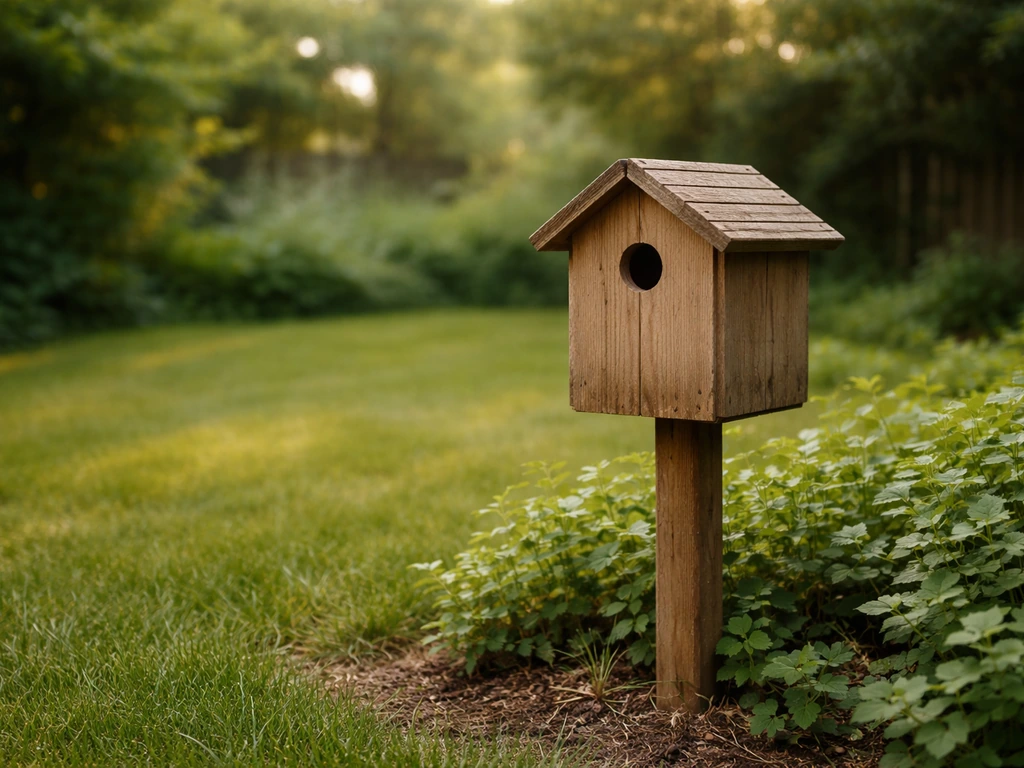
What Are Bird Houses For and How They Help Backyard Birds
Learn what bird houses do and how to choose the right nest box size and placement for safer backyard nesting.
Blue Bird House Instructions: DIY Plans, Sizes & Mounting
DIY bluebird house: step-by-step build, exact cuts and hole sizes, mounting, predator guards, cleaning, and care.