A bird house goes by three main names depending on where you are and what you're building: birdhouse (the most common term in North America), bird box (the standard term in the UK), and nesting box or nest box (used widely by ornithologists and conservation groups everywhere). All three mean the same thing: a man-made enclosure provided for birds to nest in. Pick any of the three and you'll be understood, but "nest box" tends to be the most precise when you're following species-specific building plans.
What Is a Bird House Called? Birdhouse vs Bird Box
Maya Thompson
21 May 2026
The common names and where each one comes from
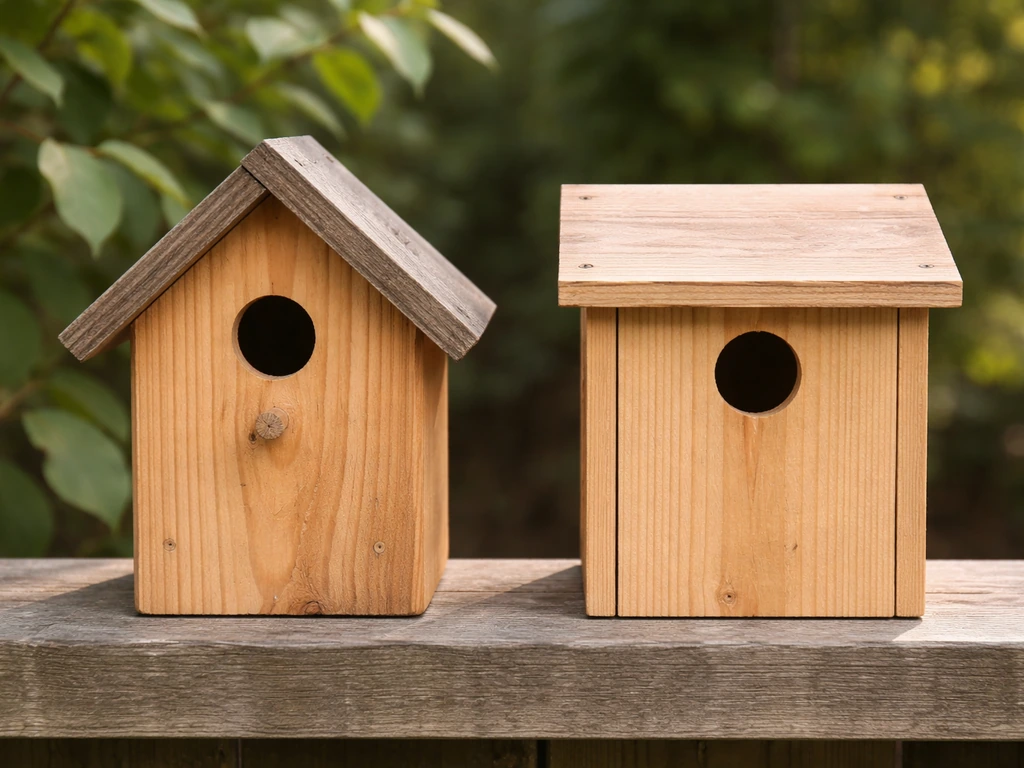
Cambridge Dictionary spells this out directly: "bird box" is the usual UK term, "birdhouse" is the usual US term, and "nesting box" covers both. Wikipedia treats all three as interchangeable, calling it "a man-made enclosure provided for birds to nest in, also called a birdhouse or bird box." In practice, most North American backyard birders say birdhouse in casual conversation, bluebird and bluebird trail enthusiasts almost always say nest box or nestbox, and anyone following Cornell Lab's NestWatch program will use nest box as the working term. None of these is wrong. The name that matters most is the one you use when you're looking up species-specific plans, because that's where precise dimensions live.
Bird house vs bird feeder vs roost box: make sure you mean what you think you mean
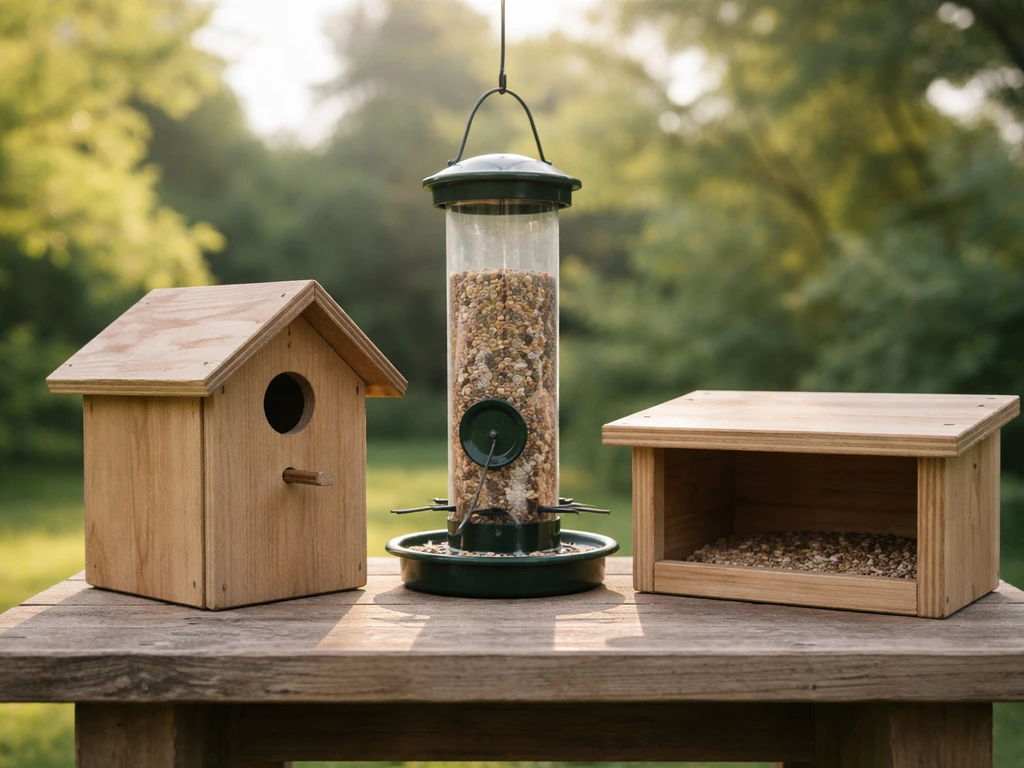
A birdhouse (nest box) is for nesting: a cavity where a bird raises a clutch of eggs from spring through summer. A bird feeder is for food only and has no enclosed cavity. A roost box is for shelter outside the nesting season, typically winter, and is designed differently: the entrance hole sits near the bottom rather than the top (so rising warm air stays inside), and there are multiple interior perches so several birds can huddle together.
Cornell Lab's All About Birds is clear that while birds sometimes use a nesting box for winter roosting in a pinch, a dedicated roost box has features a nesting box doesn't. If you're setting something up for spring nesting, you want a nest box. If you're trying to help birds survive a cold snap, a roost box is the better tool. This article focuses on nest boxes, since that's what most people mean when they search for "bird house.
"
Types of birdhouses by design
Not every birdhouse looks like the little wooden cabin you picture. There are three main designs, each suited to different birds.
Enclosed cavity box
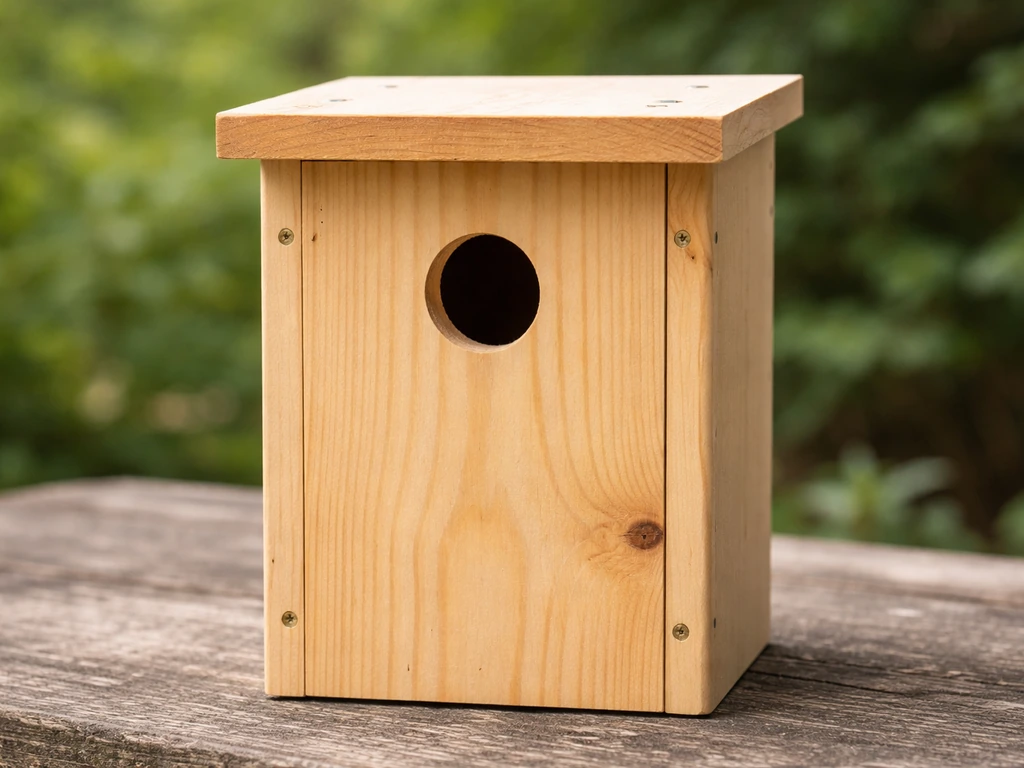
This is the classic design: four walls, a floor, a roof, and a circular entrance hole on the front. It mimics a natural tree cavity and is what cavity-nesting species like bluebirds, chickadees, wrens, nuthatches, tree swallows, woodpeckers, and small owls actually need. The entrance hole diameter is the critical measurement and changes by species. This is the type you'll build from most DIY plans.
Gourd box
A dried natural gourd or a molded artificial gourd hung from a rack. Purple Martins strongly prefer these, and martin landlords typically hang colonies of them. The hollow interior functions exactly like a cavity box, but the round shape and grouped hanging style are specific to martin management.
Open platform or shelf
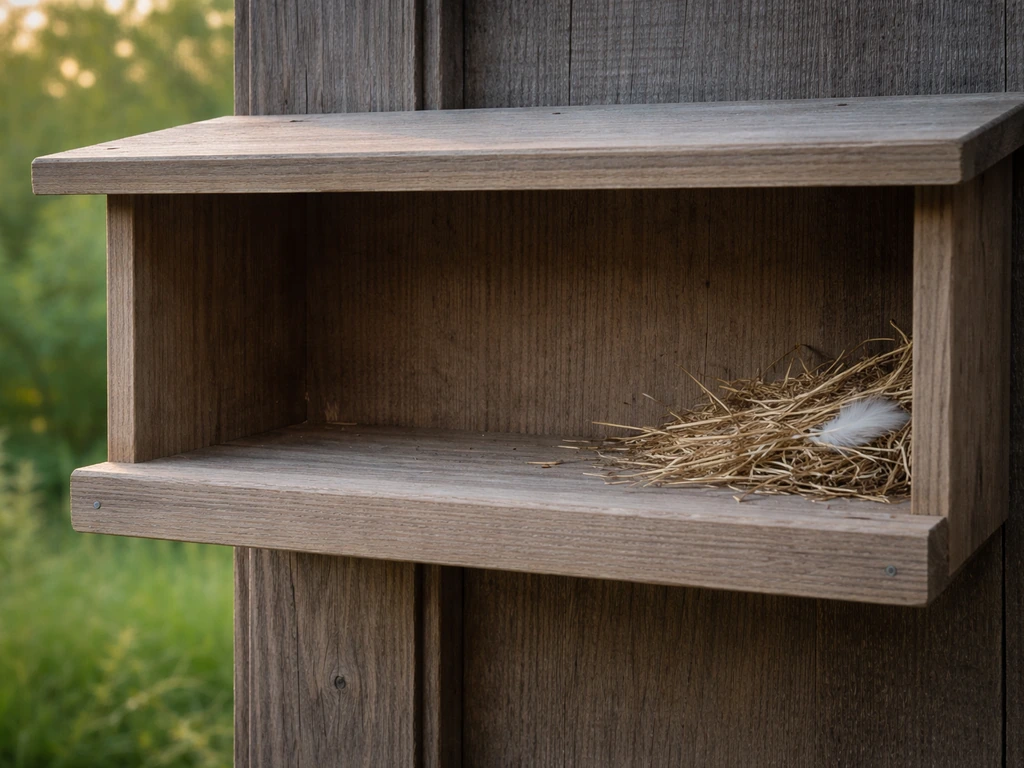
A flat, open shelf with a low lip and a roof overhead. Robins, phoebes, and barn swallows use these because they don't nest in enclosed cavities. They want a sheltered ledge, not a hole. If you're trying to attract these birds, an open platform is the right structure, not an enclosed nest box with an entrance hole.
How to pick the right nest box for your target birds
Start by figuring out which cavity-nesting birds live in your area and habitat. Mass Audubon's species list includes bluebirds, chickadees, wrens, nuthatches, tree swallows, owls, and woodpeckers as common nest-box users. Your region and habitat narrow it down fast: bluebirds want open fields, chickadees want woodland edges, tree swallows like areas near water.
Cornell Lab's NestWatch runs a "Right Bird, Right House" tool that lets you filter by region and habitat type, then pulls up species-specific PDF plans with every measurement you need. NestWatch’s “Right Bird, Right House” tool is designed to match the box design and specifications to the bird species likely to nest in a given region and habitat Right Bird, Right House tool.
That's genuinely the fastest way to go from "I want a birdhouse" to "I have the correct plan in my hands. "
The specs that make it a real nest box, not just a decorative box
Decorative birdhouses sold at gift shops often get every measurement wrong. Here's what actually matters for a functional nest box that birds will use and that's safe for them. Building a functional bird house can boost local nesting success by providing the right shelter and protection for target species functional nest box.
Entrance hole diameter
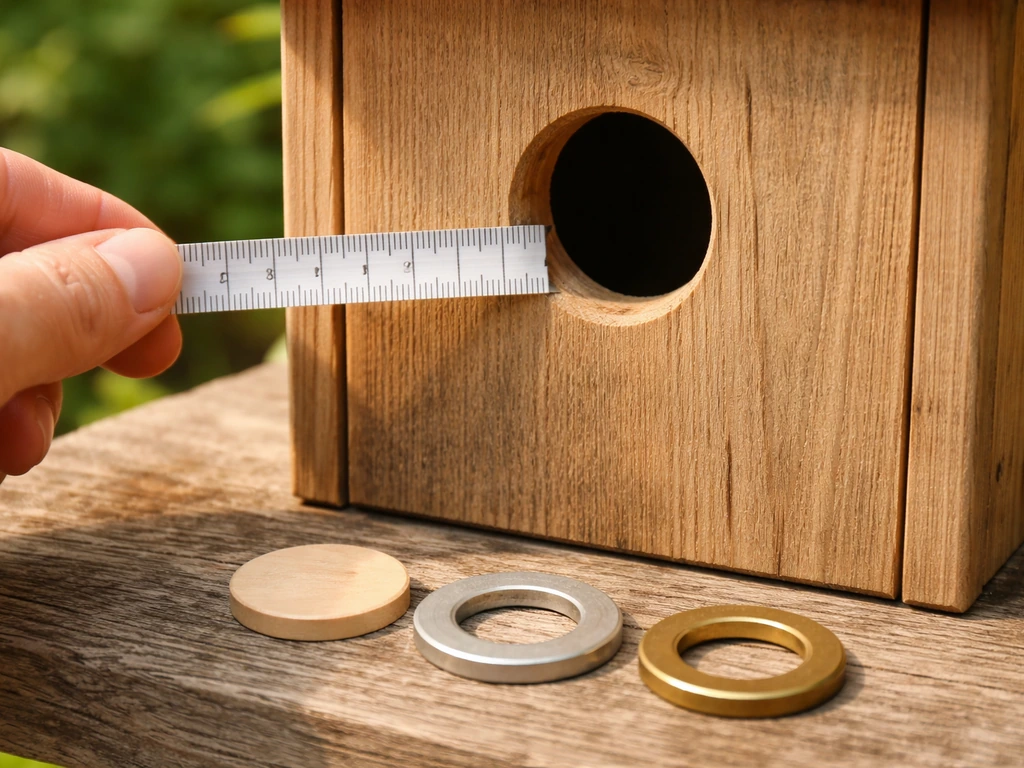
This is the single most important spec. It controls which species can enter and, critically, keeps larger predators and nest competitors out. For a general-purpose small-bird box when you're unsure of the target species, the Natural History Museum recommends 32mm (about 1.25 inches) as a good all-around size for common small hole-nesting birds. For Eastern and Western Bluebirds specifically, the North American Bluebird Society calls for exactly 1.5 inches (38mm). Mountain Bluebirds use 1 9/16 inches. Go larger than you need and you invite starlings or house sparrows; go too small and your target bird can't get in.
Interior floor size and depth
For bluebird-sized cavity nesters, NABS recommends a floor of 4x4 inches (16 sq in) to 5.5x5.5 inches (about 30 sq in). The depth from the bottom of the entrance hole to the floor should be between 4.5 and 6 inches. This depth matters because it protects nestlings from predators reaching through the hole and gives them enough room to develop before fledging.
Other features that count
- Drainage holes in the floor (usually four small holes at the corners) to prevent standing water from drowning nestlings
- Ventilation gaps near the top of the side walls to prevent overheating
- A rough interior surface below the entrance hole so chicks can grip and climb out when it's time to fledge
- A hinged or removable panel for monitoring and cleaning access
- No exterior perch below the entrance hole (perches help predators and nest competitors, not your target birds)
- A roof overhang of at least 2 inches to keep rain from blowing in
Material
Untreated wood is the standard material: cedar, pine, and redwood all work well. Wood breathes, insulates, and doesn't overheat the way metal does in direct sun. Avoid pressure-treated wood inside the box (the chemical preservatives are not safe for nesting birds), painted interiors, and any stain or sealant on the inside surfaces. The outside can be painted or stained with a light exterior color to reflect heat, but the interior should stay raw wood.
| Spec | General small birds | Eastern/Western Bluebird | House Wren |
|---|---|---|---|
| Entrance hole diameter | 32mm (1.25 in) | 38mm (1.5 in) | 28mm (1.125 in) |
| Floor size | 4x4 in | 4x4 to 5x5 in | 4x4 in |
| Depth (hole to floor) | 4–6 in | 4.5–6 in | 4–6 in |
| Mounting height | 4–10 ft | 3–6 ft | 5–10 ft |
| Preferred habitat | Woodland edge | Open field/meadow | Shrubby woodland edge |
Where to mount it and when
Placement is as important as dimensions. A perfectly built nest box in the wrong spot stays empty. Here are the core placement rules.
Height and habitat
New Jersey Audubon's per-species placement table puts Eastern Bluebird boxes at 3 to 6 feet above the ground, facing open habitat, with a minimum spacing of 300 feet between bluebird boxes. House Wrens are more flexible in height (5 to 10 feet works) but should be kept at least 100 feet from other nest boxes to reduce competition. Check species-specific guidance because height, spacing, and habitat type vary significantly.
Which direction to face the entrance
For bluebirds, face the entrance toward open habitat and favor east, north, or south over west. East-facing holes catch morning sun, which helps warm the box and allows the adults to see approaching predators across open ground early in the day. Avoid facing the entrance into prevailing storm winds for your region, since rain blowing directly in can chill eggs and nestlings. NestWatch's monitoring manual even records entrance orientation as a data variable, which tells you how seriously placement direction is taken by researchers.
When to put it up
Earlier is almost always better. Many cavity nesters scout nest sites weeks before they're ready to lay eggs. For spring nesters in North America, having your box up by late winter, around February or early March depending on your region, gives birds time to discover it. Bluebirds in the South may start scouting as early as January. Even if you're reading this in May, put it up now: many species have multiple broods per season and will use a box that appears mid-season.
Predator-proofing and cleaning: the two things most people skip
Predator guards
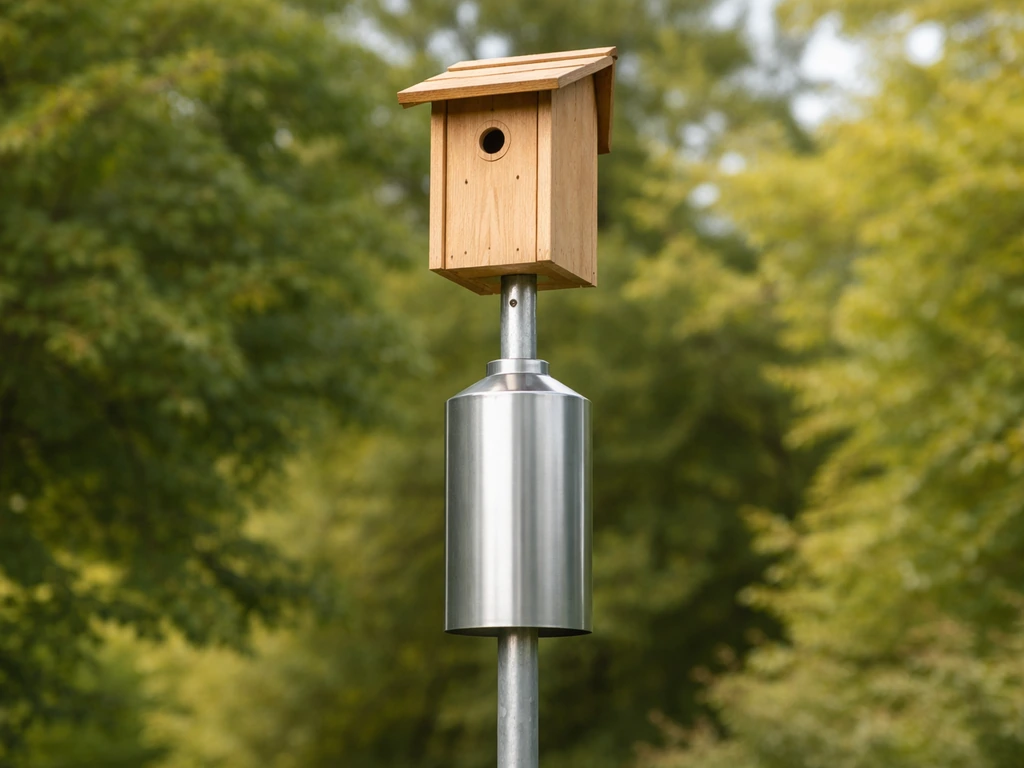
Mounting on a smooth metal pole is the first line of defense. Add a cylindrical stovepipe-style metal baffle below the box on the pole, and climbing predators like raccoons, cats, and snakes are effectively stopped. The Michigan Bluebird Society calls a metal stovepipe baffle one of the easiest and most effective guards available. NABS also recommends a hole guard (a metal plate around the entrance hole) to prevent squirrels and woodpeckers from enlarging the hole and exposing nestlings. Don't attach the nest box to a tree or wooden fence post if you can avoid it: those surfaces are easy to climb and the baffle won't work as well.
Monitoring during the season
Check your box every 5 to 7 days once nesting starts. This lets you catch problems early: a house sparrow takeover, a predator attack, or an abandoned nest. To check, tap the box gently before opening so the adult can leave without flushing in a panic. Never check when eggs are being laid or during incubation on a cold day.
Cleaning after each brood
Once nestlings have fledged and the box is clearly empty, remove the old nest. NestWatch recommends cleaning with a solution of 1 part bleach to 10 parts water, then letting the box dry completely in the sun before closing it back up. This removes parasites (blowfly larvae are common) and pathogens that could affect the next brood. The Michigan Bluebird Society emphasizes that a box with easy cleaning access, via a hinged side or front panel, makes this fast enough that you'll actually do it. Do a final thorough clean at the end of the season before winter.
What to do today now that you know the name
Here's a practical sequence to move from terminology to a box birds will actually use.
- Decide on your target species: look up which cavity nesters live in your region and habitat type. Mass Audubon's list and NestWatch's Right Bird, Right House tool are both free and fast.
- Pull the species-specific plan: NestWatch provides free downloadable PDF plans per species with every dimension, hole size, and placement detail included.
- Check your materials: get untreated cedar, pine, or redwood. You need a jigsaw or hole saw for the entrance hole, a drill for ventilation and drainage holes, and basic fasteners.
- Build or buy to spec: if you're buying rather than building, measure the entrance hole on any commercial box before you buy it. Many decorative boxes have the wrong hole size.
- Set up a predator-proof mount: smooth metal pole plus a stovepipe baffle below the box. Skip this step and you're likely feeding predators, not birds.
- Put it up now, at the right height and facing the right direction for your target species.
- Check it weekly once birds arrive, clean it after each brood fledges, and do a full clean at the end of the season.
One more thing worth knowing as you dig deeper into this: the term "birdhouse" covers a wide range of structures, from a single nest box for a chickadee to a large multi-unit martin house or a screech-owl box the size of a milk crate. If you're building or shopping for a larger structure, the terminology shifts again (a large communal structure is often called a martin house or colony house). And if you're still figuring out exactly why nest boxes matter for bird populations, or what materials hold up best in your climate, those are natural next questions to explore once your first box is up. Understanding why birdhouses are important helps you choose the right design and placement so your local birds actually thrive why nest boxes matter.
FAQ
If I search for “bird house,” will I find the right plans for birds that need a cavity?
Yes, but the “right” name depends on what you’re searching for. If you’re looking up measurements, “nest box” or “bird box” will usually pull up species-specific building plans, while “birdhouse” may return general or decorative models with inconsistent hole sizes.
Can a bird feeder also count as a bird house for nesting?
No, because food-only feeders don’t provide the enclosed cavity birds need for incubation. If you want nesting help, use an enclosed nest box with a correctly sized entrance hole, not a tube, suet cage, or hopper feeder.
Will a nesting box work as a roost box in winter?
It can, but you should avoid assuming it will work. A roost box is built for winter shelter (different entrance placement and interior layout), and a nesting box can be used only as a stopgap, not as a guaranteed replacement for cold weather roosting.
Can the same “birdhouse” design attract more than one type of bird?
Often, yes, but only if you match the design to the bird’s nesting style. Use an enclosed cavity box for cavity nesters (bluebirds, wrens, chickadees), but choose an open shelf for species that need ledges (robins, phoebes, barn swallows).
Is it okay to paint or stain the inside of a bird house for looks or weatherproofing?
Typically no. Most cavity nesters will reject boxes with interiors that are painted, sealed, or treated, and pressure-treated wood should be avoided inside the cavity. If aesthetics matter, paint or stain only the exterior surfaces.
If I’m not sure which bird will use it, can I make the entrance hole larger to be safe?
It depends on the target species, but “bigger” is not always better. Enlarging the entrance hole can invite competitors like house sparrows or starlings, or let larger predators reach in more easily.
How can I tell if a store-bought decorative birdhouse will actually be used for nesting?
Check the box design before buying. Many decorative shop birdhouses have decorative entrances, wrong hole diameters, or insufficient depth, so they may look correct but still fail. Use a species-specific plan or a verified entrance size standard.
What’s the most common reason a nest box stays empty even when it’s the right size?
Mounting choices matter, but the key is preventing climbing predators. A smooth metal pole plus a stovepipe-style baffle works well, and you should also avoid attaching the box directly to climbable surfaces where birds can be accessed past the guard.
When is the best time to clean a bird house, and how often should I do it?
Cleanout timing matters. Remove old nesting material after the brood has fledged and the box is clearly empty, then dry it fully in the sun before closing. Avoid opening during egg laying, cold incubation days, or active nest stages.
Can I leave the old nesting material in the box until next spring?
Yes, many people use mounted nest boxes year after year, but you should not reuse nests. Plan to clean between broods or after the season, and do a more thorough end-of-season clean before winter.
Next Articles
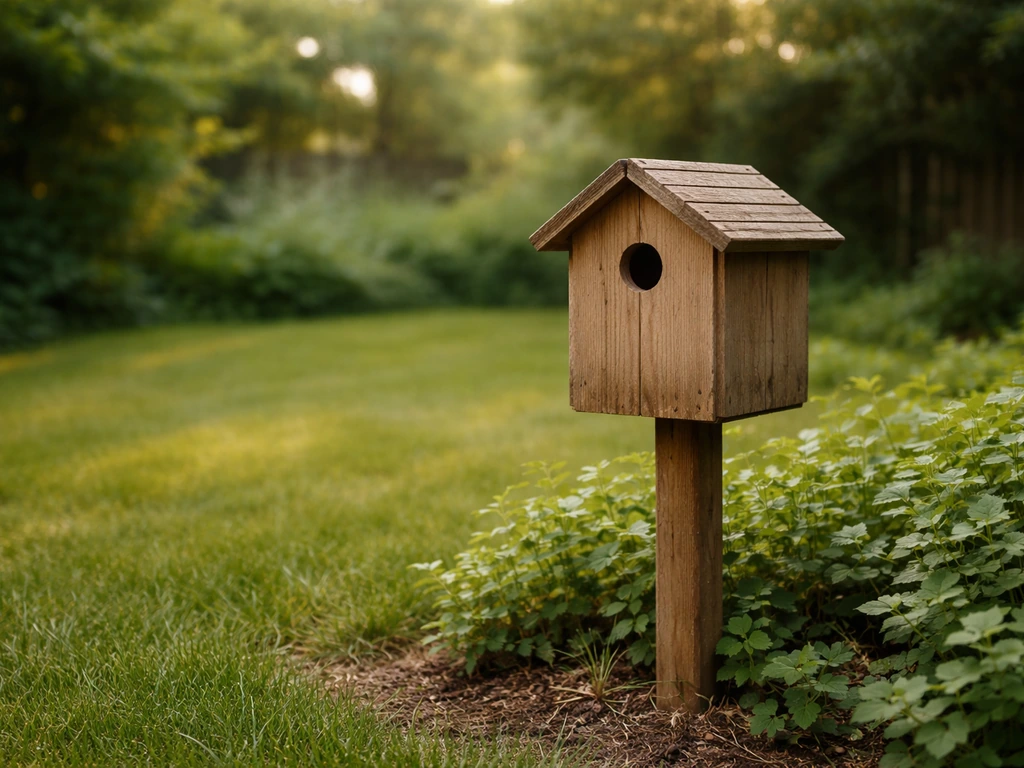
What Are Bird Houses For and How They Help Backyard Birds
Learn what bird houses do and how to choose the right nest box size and placement for safer backyard nesting.
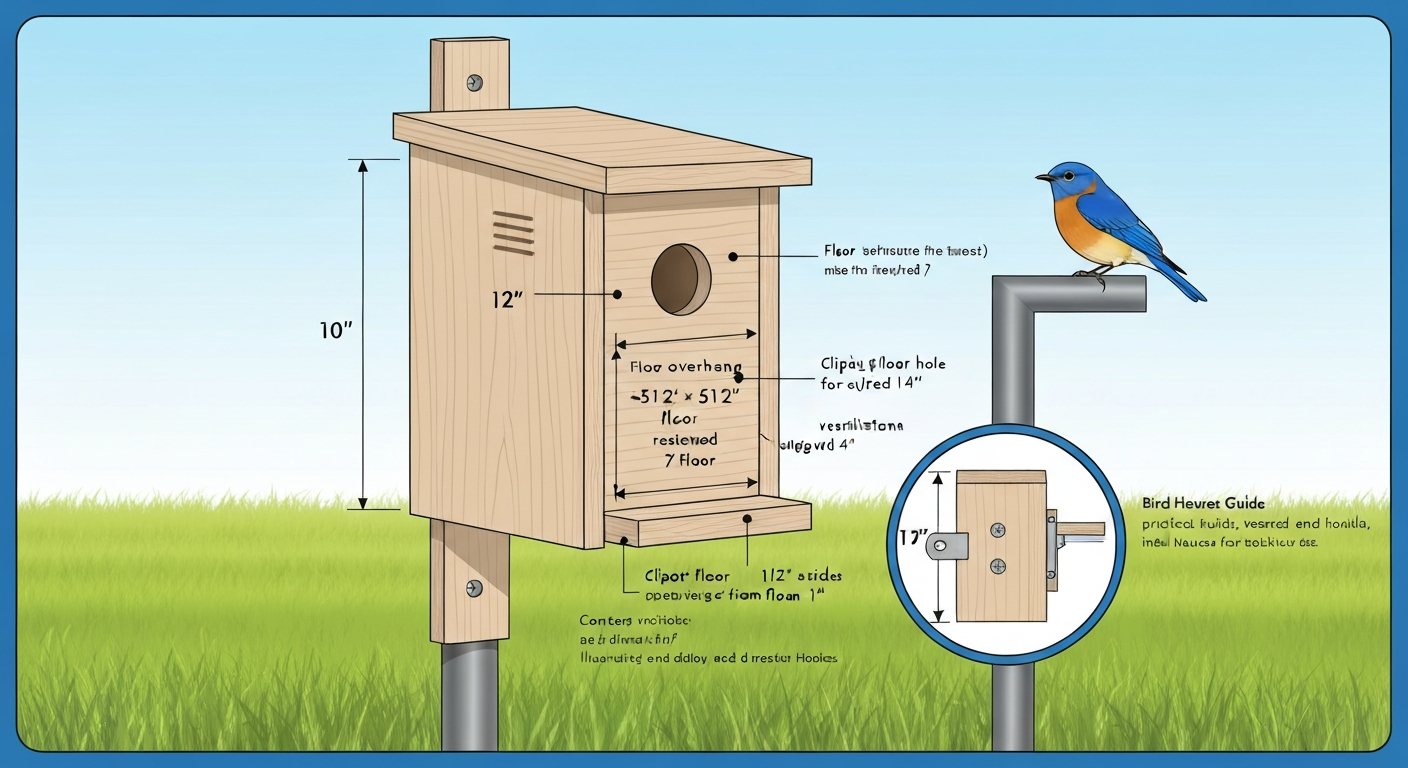
Blue Bird House Instructions: DIY Plans, Sizes & Mounting
DIY bluebird house: step-by-step build, exact cuts and hole sizes, mounting, predator guards, cleaning, and care.
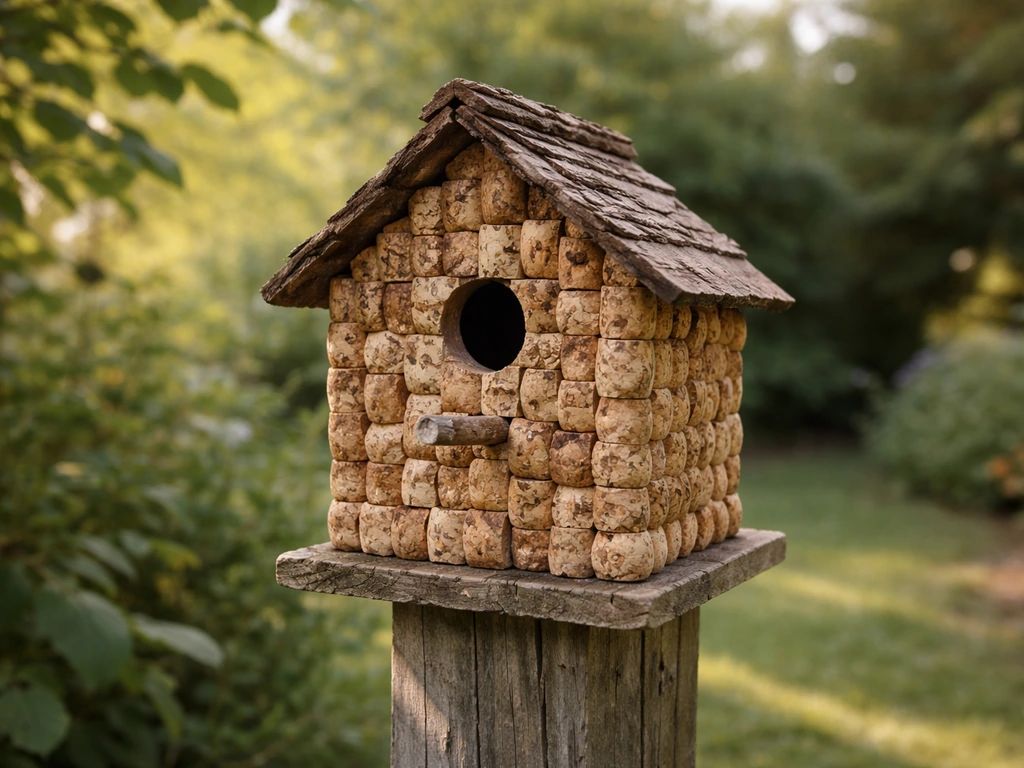
Wine Cork Bird House Instructions: DIY Steps and Bird-Safe Specs
Step-by-step wine cork mini birdhouse build with bird-safe dimensions, safe materials, mounting, cleaning, and weatherpr