Bird houses are for giving cavity-nesting birds a safe place to raise their young when natural tree cavities are scarce. That is the core purpose. A birdhouse mimics a woodpecker hole or rotted-out tree hollow, and without that kind of shelter, birds like bluebirds, chickadees, wrens, and tree swallows simply cannot nest in your yard, no matter how much food or water you put out for them.
What Are Bird Houses For and How They Help Backyard Birds
Maya Thompson
11 May 2026
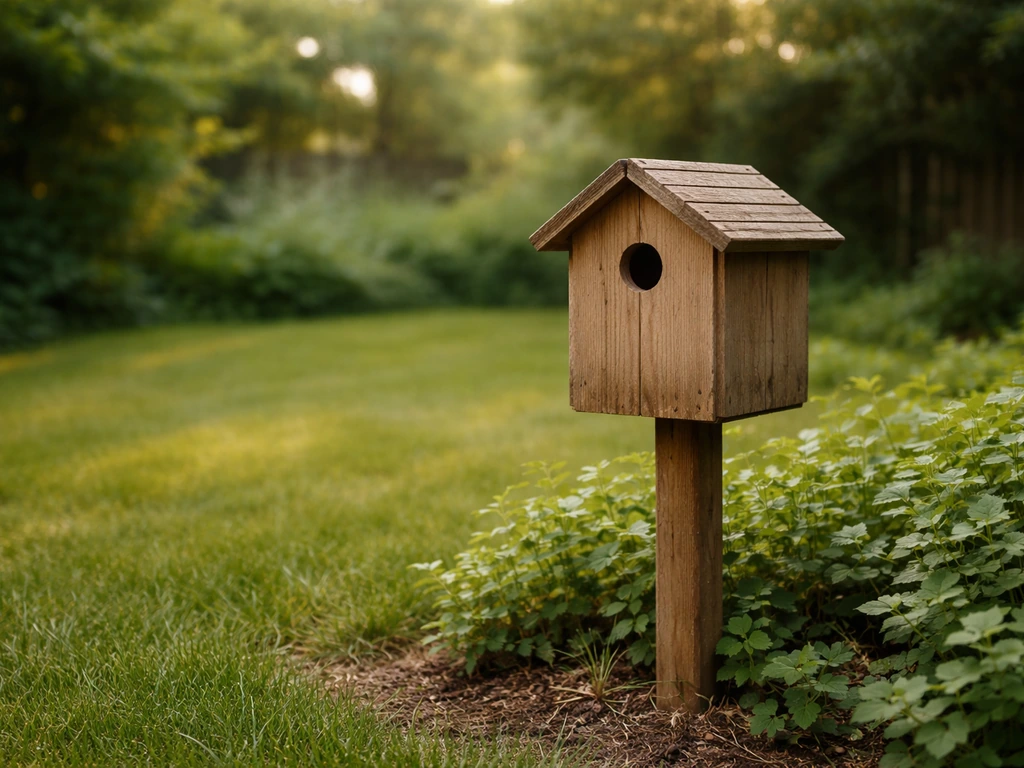
What a bird house is (and what it is not)
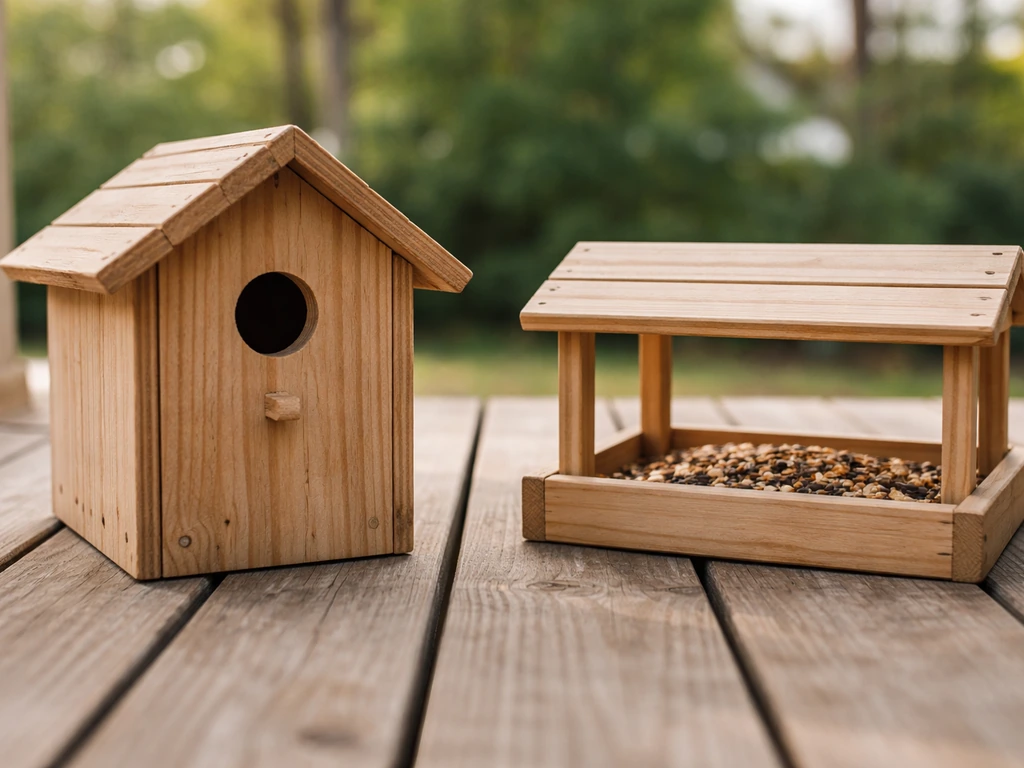
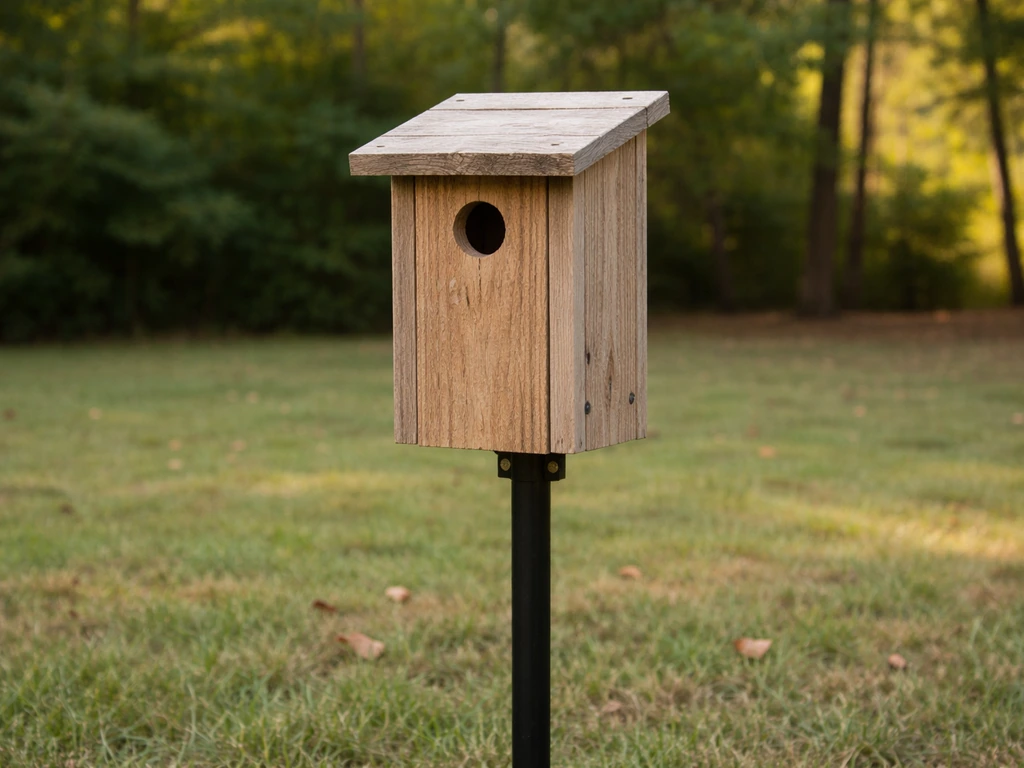
A birdhouse, also called a nest box, is an enclosed wooden structure with a round entrance hole sized to let a specific bird species in while keeping larger competitors and predators out. The interior is where the bird builds its nest, lays eggs, and raises chicks. A good nest box includes ventilation holes near the top to prevent overheating and drainage holes in the floor so rainwater does not pool inside. Those two features alone separate a functional nest box from a decorative object that will never be used. So if you are wondering what a large bird house is called, it is typically referred to as a nest box or birdhouse sized for the species you want to attract what is a large bird house called.
A birdhouse is not a bird feeder. Feeders attract birds to eat; nest boxes attract birds to breed. They serve completely different needs, and a bird that visits your feeder every day may still ignore a birdhouse if it is the wrong design, wrong size, or wrong location. Birdhouses are also not general shelters for all birds. Robins, goldfinches, cardinals, and most other common backyard birds are open-cup nesters and will never use a box under any circumstances. Only cavity-nesting species, which make up roughly 85 species in North America, are candidates.
What bird houses are used for: nesting shelter and habitat support
The primary job of a nest box is to compensate for lost habitat. These benefits of bird houses, especially in areas with fewer natural cavities, make them a practical way to support local nesting birds. Decades of land clearing, dead-tree removal, and urban development have reduced the number of natural cavities available to nesting birds. Wikipedia notes that cavity-mimicking artificial nest boxes can support bird nests, especially where natural cavities are scarce natural cavities available to nesting birds. When you put up a correctly built and placed nest box, you are essentially restoring a resource that used to exist naturally in mature forests and old orchards. For species like the Eastern Bluebird, which declined sharply through the mid-20th century largely because of cavity competition and habitat loss, nest box programs have made a measurable conservation difference.
Beyond nesting, a well-monitored nest box also gives you a window into bird biology. You can track egg-laying dates, clutch sizes, fledging success, and even spot parasite problems early. Organizations like Cornell Lab's NestWatch program rely on data from exactly this kind of backyard monitoring. So the box does double duty: practical shelter for the bird, practical learning for you.
When a bird house helps most vs when it won't
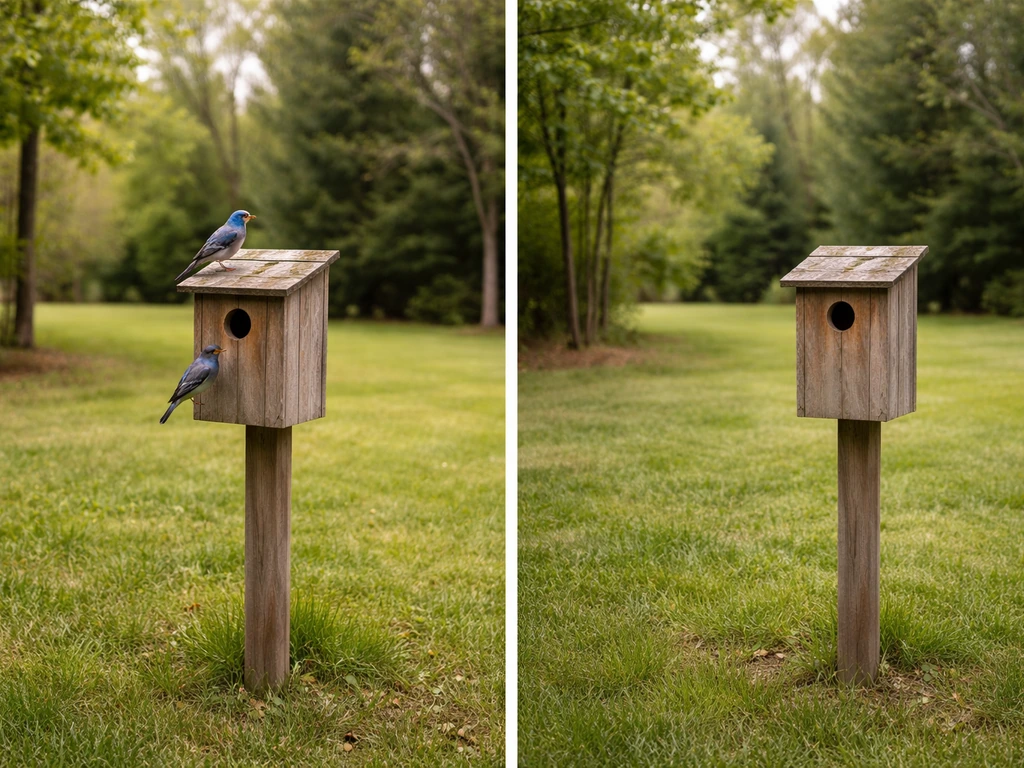
A birdhouse makes the biggest difference in yards and habitats where natural cavities are already in short supply. Open areas, suburban lawns, farmland edges, and newer neighborhoods with young trees are exactly where nest boxes tend to get used quickly and reliably. If your yard backs up to an old-growth forest full of dead snags, you may not see much uptake because the birds already have plenty of options.
A birdhouse will not help if the target species simply does not live in your region or habitat type. No amount of well-designed boxes will bring bluebirds to a dense urban lot surrounded by pavement, because bluebirds need open grassy foraging areas nearby. Similarly, a box will sit empty if the entrance hole is the wrong size, if predators have already scared birds away from the spot, or if house sparrows or European starlings have taken over. Setting realistic expectations upfront saves a lot of frustration.
How to match a birdhouse to target species
Species-appropriate dimensions are not optional. They are the single most important factor in whether a box gets used and whether nesting succeeds. The entrance hole controls everything: too large and predators or competing species walk right in, too small and your target bird cannot enter at all. Interior depth and floor area also matter because they affect how well the nest is protected and how much room chicks have as they grow.
The North American Bluebird Society (NABS) is one of the clearest sources for this kind of species-specific guidance. Their recommendations give you concrete numbers to work from rather than vague ranges.
| Species | Entrance Hole Diameter | Floor Area (approx.) | Hole-to-Floor Depth | Mounting Height |
|---|---|---|---|---|
| Eastern Bluebird | 1 1/2 inches | 16–25 sq inches | 4 1/2 to 6 inches | 3–6 feet |
| Western Bluebird | 1 1/2 inches | 16–25 sq inches | 4 1/2 to 6 inches | 3–6 feet |
| Mountain Bluebird | 1 9/16 inches | 16–30 sq inches | 4 1/2 to 6 inches | 3–6 feet |
| Black-capped Chickadee | 1 1/8 inches | ~16 sq inches | 6–8 inches | 4–8 feet |
| House Wren | 1 1/8 inches | ~12 sq inches | 4–6 inches | 5–10 feet |
| Tree Swallow | 1 1/2 inches | ~16 sq inches | 4–6 inches | 4–8 feet |
The table above gives you a working starting point. Always cross-check against regional guidance from your state wildlife agency or a local Audubon chapter, because species preferences and local conditions can shift these numbers slightly. The materials the box is built from matter too, and that topic is worth its own deep dive if you are planning to build rather than buy. Commonly, bird houses are made from wood, such as untreated cedar or pine, and sometimes from other durable materials like metal or composite boards bird houses made of.
Placement habitat: getting the location right
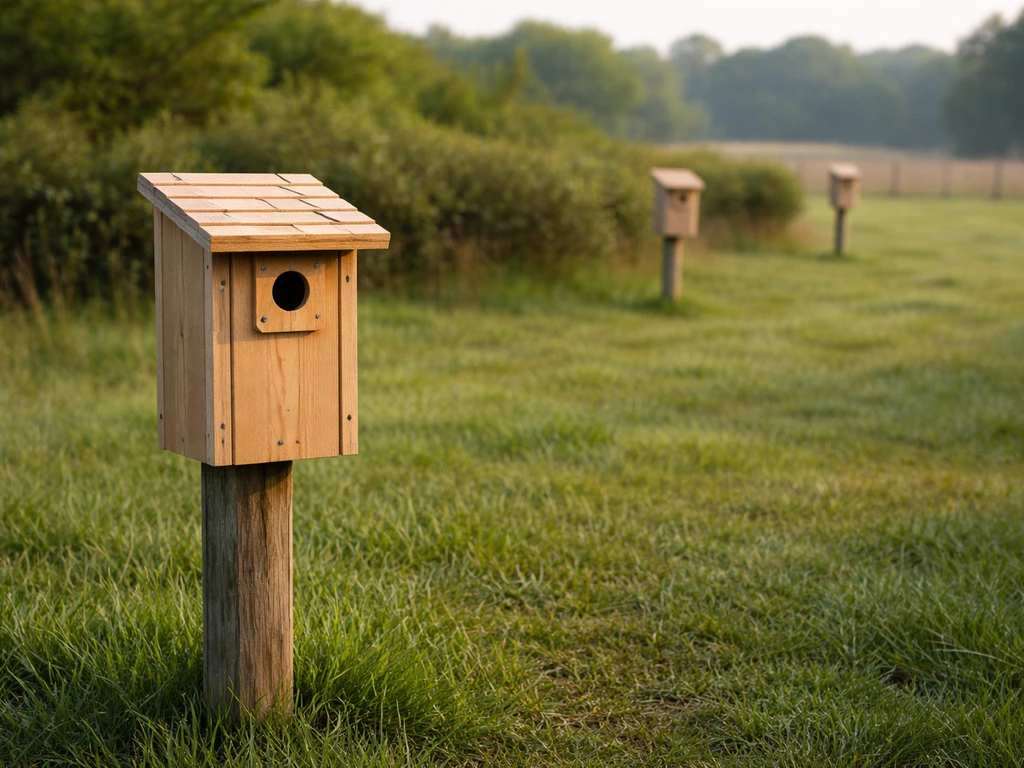
Hole size and dimensions get the bird in the door, but habitat placement determines whether the bird will even find the box worth investigating. Bluebirds need open, short-grass habitat nearby for foraging insects. Chickadees and wrens prefer edges near shrubby cover. Tree swallows need proximity to water and open sky for aerial feeding. Mounting a bluebird box in a shaded, wooded backyard is a common mistake that leads to the box sitting empty or being claimed by house wrens instead.
Spacing between boxes also matters when you are putting up more than one. New Jersey Audubon's placement guidance recommends a minimum of 300 feet between Eastern Bluebird boxes to reduce competition between pairs. For tree swallows, boxes can be paired closer together because they are more colonial, but even then a clear buffer from other species' boxes is smart.
Installation basics for safety and success
Mounting a nest box on a smooth metal pole is almost always better than nailing it to a tree, fence post, or building. The reason is predator guards. A round metal baffle slid onto a pole below the box physically blocks snakes, raccoons, and squirrels from reaching the nest. Once a box is fastened to a tree or a fence, adding an effective predator guard becomes very difficult or impossible. Tennessee Wildlife Resources Agency is blunt on this point: do not mount a box anywhere you cannot also attach a predator guard, because an unguarded box in a predator-rich environment can actually increase nest losses compared to having no box at all.
- Mount on a smooth metal conduit pole, not a wooden post, tree, or structure where guards cannot be added.
- Slide a cone or cylinder baffle onto the pole below the box before securing the box at the top.
- Face the entrance hole away from prevailing weather (in most of North America, facing east or southeast works well).
- Keep the box out of direct afternoon sun in hot climates; partial morning sun is ideal.
- Set height according to target species (3 to 6 feet for bluebirds, 5 to 10 feet for house wrens, and so on).
- Clear the flight path in front of the entrance hole so birds can approach without obstruction.
- Space multiple boxes according to species-specific minimums to limit territorial conflicts.
One detail beginners often miss: the box should be level or tilted very slightly forward (a degree or two). This lets any water that gets past the roof run toward the drainage holes in the floor rather than pooling at the back where the nest sits.
Maintenance, cleaning, and humane nesting timing
A nest box that never gets cleaned becomes a liability. Old nesting material harbors mites, blowfly larvae, and bacteria that can affect the next clutch. The standard recommendation from both Cornell Lab's NestWatch program and Oklahoma Department of Wildlife Conservation is to clean boxes seven to ten days after each brood fledges, and at minimum once at the end of each breeding season. At the end of the season, NestWatch recommends removing nesting material and scrubbing the inside, and if there is fecal soiling, cleaning with a solution of 1 part bleach to 10 parts water remove nesting material and scrub the inside, and if there is fecal soiling, cleaning with a solution of 1 part bleach to 10 parts water.
Cleaning is simple but must be done at the right time. Never open a box during active nesting unless you are doing a quick, careful monitoring check. Wait until you are completely sure no eggs, chicks, or brooding adults are present. If you are not certain, come back the next day rather than risk disrupting a live nest.
- Remove the old nest completely once the brood has fledged and the box is clearly empty.
- Scrub the interior walls and floor with a stiff brush to dislodge debris.
- If there is significant fecal buildup or evidence of mites, wash the interior with a 1 part bleach to 10 parts water solution.
- Rinse thoroughly and let the box dry completely in the sun before closing it back up.
- Inspect for damage: check that ventilation holes are clear, drainage holes are not clogged, and the roof has no gaps letting water in.
- Recheck the predator guard and tighten any loose hardware before the next season begins.
Weekly monitoring during the nesting season, as recommended by New Jersey Audubon, lets you catch problems early: an egg that has not hatched, a parasitic blowfly infestation, or a house sparrow attempting to take over. A quick peek (done calmly and briefly, avoiding loud noise or lingering) does not disturb most cavity-nesting species and gives you the information you need to intervene if something goes wrong.
Finally, resist the urge to interfere with nests you did not intend to attract. If a species you did not target moves in, like a Carolina wren in a box you set up for bluebirds, give it space and enjoy the surprise. The goal is to support nesting birds humanely, not to force a specific outcome. When the box is clean, maintained, and mounted safely, the birds make the best decisions about whether to use it.
FAQ
What are bird houses for, exactly (nesting vs feeding)?
They are meant for species that nest in cavities, meaning birds that can use an enclosed box with an entrance hole sized for them. If you are hoping for songbirds that build open cup nests, a birdhouse will usually stay unused no matter how good the placement is.
If I already have a bird feeder, will adding bird houses attract the same birds?
No. Feeders draw birds to eat, while birdhouses are for breeding. It is normal to see active birds at a feeder but still find an empty box if the design or location does not match the target cavity nester.
Will common backyard birds like robins or cardinals use a bird house?
Most open-cup nesters, such as robins, goldfinches, and cardinals, do not use nest boxes. Cavity-nesters are the only reliable users, so first check whether the species you want is known to nest in boxes in your area.
Why is my birdhouse empty, even though birds are around?
An empty box usually comes down to either wrong species match (your target does not live nearby) or wrong fit (entrance size, internal dimensions, or placement). Start by verifying entrance-hole size for the species and confirm you have suitable nearby habitat, especially for foraging.
Can bird houses attract invasive species instead of the ones I want?
Yes, the biggest conflict is often between native cavity nesters and non-native competitors. If house sparrows or European starlings occupy a box, your target birds may be displaced, so you may need to follow local control or management guidance from your state or local wildlife group.
Can I use any house-shaped decoration as a bird house?
General shelters do not work well for most cavity nesters. A birdhouse is designed to restrict entry to the right species and protect the nest from predators and weather, so using the wrong style (open front, wide openings, or decorative houselike boxes) typically prevents use.
What materials should a birdhouse be made of, and do metal or composite boxes work?
Wood is common, and many people choose untreated cedar or pine because it is durable and breathable. If you consider metal or composite, make sure ventilation and temperature management are still appropriate for the local climate, since overheating can still be a problem.
How close can I place multiple bird houses to each other?
More boxes can be good, but spacing matters because neighboring boxes can compete for the same birds. Use species-appropriate spacing guidance, and do not place boxes so close that one pair can repeatedly exclude another.
Is mounting on a tree good enough, or do I really need a predator guard?
Predator-guarding changes everything. If you mount a box where you cannot use an effective baffle or guard (for example, on a surface that blocks proper installation), nest losses can increase, especially in predator-rich areas.
Should a birdhouse be level, tilted, or angled?
Slight forward tilt is beneficial so any water that gets in runs toward the drainage and away from the nest. If the box is perfectly level, pooled water can increase sanitation problems and make nests less comfortable.
When should I clean a birdhouse?
Clean-out timing matters. You generally wait until after the brood fledges, typically about a week later, so you remove old debris without disrupting eggs or nestlings.
Is it okay to check inside the birdhouse during nesting season?
You should avoid opening during active nesting unless you are doing a brief, necessary check and are confident no eggs, chicks, or brooding adults will be harmed. If you are unsure, leave it alone and revisit later to prevent abandonment or injury.
Can I monitor birdhouses without hurting the birds?
Yes. Monitoring can help you catch issues like failed incubation, parasites, or takeover attempts early, which makes it easier to respond appropriately. Keep visits calm and brief so you do not increase stress.
What placement mistakes most often cause nest box failure?
Placement depends on species needs, including nearby habitat and sky access. For example, shaded yards often reduce use for birds that forage in open areas, while species that feed in flight often do better when they can scan a wider area and approach easily.
If my birdhouse is empty this year, should I move it right away?
A good rule is to give each birdhouse time and track a season’s outcome, because some cavity nesters start later or take time to scout new sites. If the entrance size and habitat are correct, an empty box for one season might still turn into use the next year after birds learn the location.
What should I do if a bird I did not target moves into the box?
Yes, but only if it is the right setup. Many people choose to enjoy unexpected visitors, yet you should not remove an occupied box or try to force a particular species. The ethical approach is to maintain the box safely and let the birds make the decision.
Next Articles
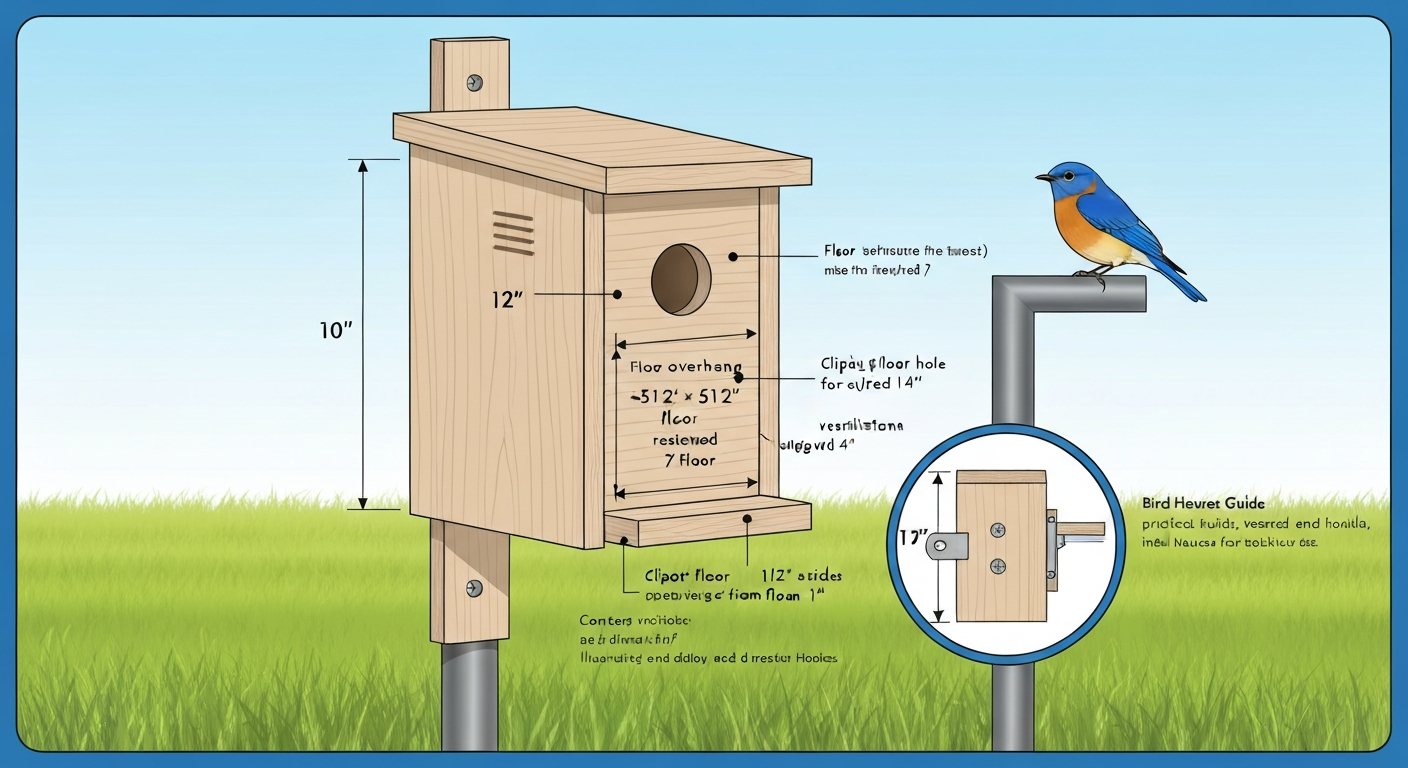
Blue Bird House Instructions: DIY Plans, Sizes & Mounting
DIY bluebird house: step-by-step build, exact cuts and hole sizes, mounting, predator guards, cleaning, and care.
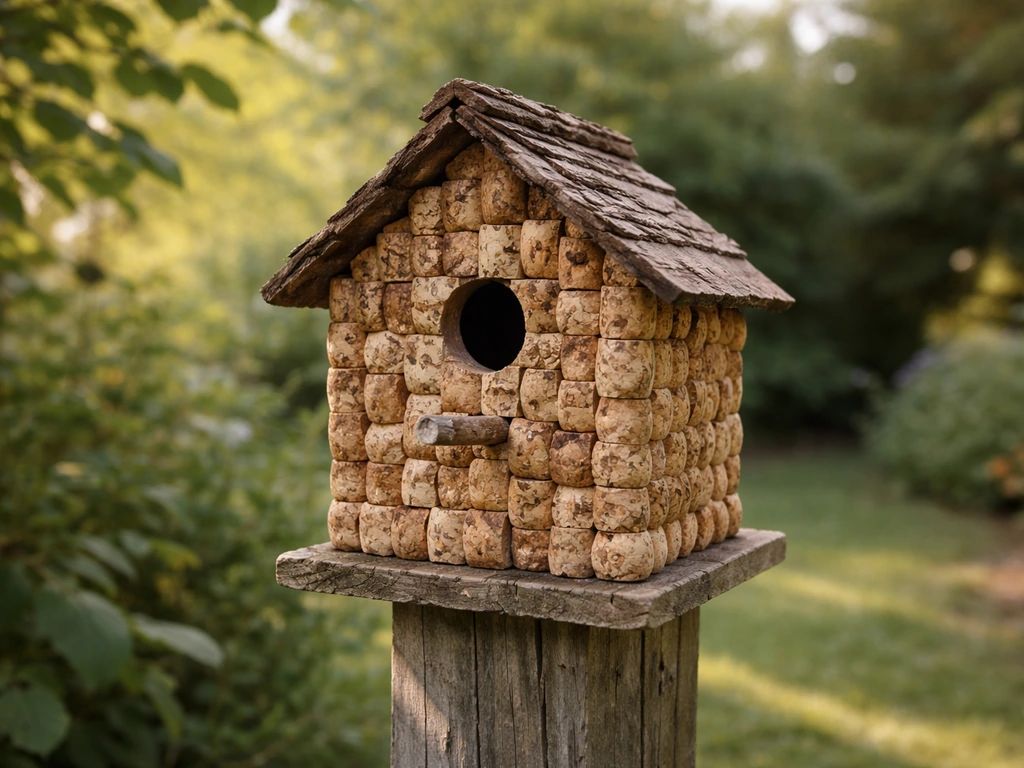
Wine Cork Bird House Instructions: DIY Steps and Bird-Safe Specs
Step-by-step wine cork mini birdhouse build with bird-safe dimensions, safe materials, mounting, cleaning, and weatherpr
Best Bluebird House Guide: Choose, Build, Install
Pick and install the best bluebird house with species-specific hole size, mounting, predator guards, and safe seasonal c